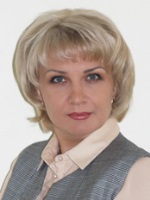
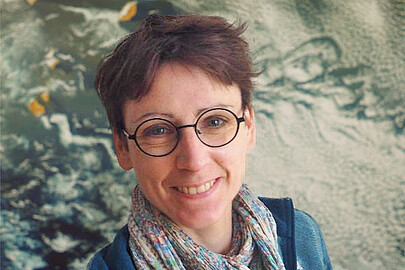
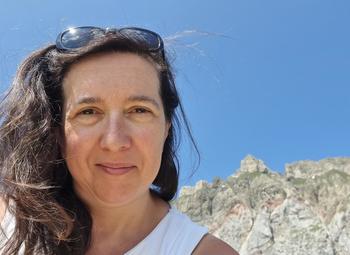
Elena Anatolyevna Babushkina is a Professor at the Department of Construction and Economics of Siberian Federal University. She serves as director and scientific consultant of the Scientific and Educational Laboratory 'Dendroecology and Environmental Monitoring' . Her work spans dendrochronology, climate change impacts on tree growth, wood anatomy, and environmental monitoring in Siberian ecosystems. Doctor of Biological Sciences (2020) Corresponding Member of the Russian Academy of Sciences Extensive collaborations with international institutions like University of Arizona, University of Cambridge, and Swiss Federal Institute for Forest, Snow and Landscape Research Her research focuses on climatic reconstruction through tree rings , moisture-limited forest ecosystems , and environmental drivers of xylogenesis . Recent studies analyze earlywood/latewood dynamics, drought sensitivity, and cross-species growth patterns in Siberian larch, spruce, and Scots pine populations. Elena’s publications (100+ scientific, 10+ methodological) include 15 recent articles on tree-ring-based climate proxies , crop yield modeling , and seasonal growth regulation . Key journals include Forests , Dendrochronologia , and Scientific Reports . Notable scientific awards include the 2021 Honorary Worker of Education of the Russian Federation title and multiple Presidential and Ministerial Certificates of Appreciation . She leads national grants (RFBR, RSF) on climate-crop interactions and genetic adaptation to environmental stress .
Dr. Sebastian Birk is an environmental scientist and researcher at the Aquatic Ecology department within the Faculty of Biology at the University of Duisburg-Essen. His work focuses on the science-policy interface for aquatic ecosystems in Europe, emphasizing large-scale bioassessment and management under multiple stressors. He served as coordinator for the EU project MARS (2014-2018) and currently manages freshwater science initiatives at the European Topic Centre for Inland, Coastal and Marine Waters (ETC-ICM) supporting the European Environment Agency (EEA). Research Interests : Multiple stressors, ecosystem services, restoration ecology, environmental policy assessment, bioassessment methods, and climate change impacts. Teaching : Scientific writing, surface water ecology, taxonomic identification, and fieldwork in river/lake systems. Recent publications highlight integrated frameworks for freshwater restoration, stressor interactions, and policy-driven water management. Key themes include agricultural land use effects on rivers, diversification of restoration funding, and challenges in harmonizing ecological assessment across Europe. His work bridges ecological theory with practical implementation for sustainable water resource management. Projects like MARS and MERLIN reflect his leadership in addressing complex environmental issues through collaborative science and stakeholder engagement. Dr. Birk's role in the Water Framework Directive intercalibration exercises underscores his technical expertise in standardizing ecological assessment across national borders.
Dr. Gaël Kermarrec is a researcher at the Boundary Layer Meteorology Group , part of the Institute of Meteorology and Climatology within the Faculty of Mathematics and Physics at Leibniz University Hannover . His work focuses on atmospheric turbulence, GNSS applications, and remote sensing for environmental monitoring. Boundary layer meteorology Turbulence theory GNSS signal processing Terrestrial laser scanning Climate change impacts Geodetic time series analysis His research integrates advanced mathematical models like LR B-splines and Matérn covariance with large eddy simulations to study: Atmospheric turbulence effects on optical/GNSS signals Hydrospheric mass loading Deformation analysis of terrain/port infrastructure Climatic sea-level changes Machine learning for remote sensing The 15 most recent articles (2025-2023) demonstrate his focus on: GNSS-based turbulence detection AI-enhanced climate mapping Advanced surface approximation techniques Multi-sensor data fusion Stochastic modeling of geodetic observations Environmental impacts on optical measurements He has developed tools like the Klimascanner QGIS plugin for urban climate resilience and contributes to: Understanding atmospheric scale lengths Improving TLS/GNSS deformation monitoring Analyzing hydrospheric changes Wavefront modeling Ionospheric corrections
Jens Kattge is an Independent Research Group Leader at the Max Planck Institute for Biogeochemistry in Jena, Germany, specializing in Functional Biogeography. His career spans roles from Research Associate (2002–2005) to Senior Scientist (2010–2012) and current group leadership since 2013. He focuses on plant functional traits, their role in terrestrial ecosystems, and their integration into Earth system models. He coordinates the global TRY Initiative , a plant trait database for biodiversity research, and contributes to the German Centre for Integrative Biodiversity Research (iDiv). His research spans functional biogeography, trait-climate relationships, ecosystem modeling, and biodiversity-ecosystem functioning. Key projects include developing the rtry R package for trait data preprocessing and analyzing global datasets like CoRRE Trait Data and sPlotOpen. Recent publications investigate leaf cuticle thickness, drought responses in tree species, trait controls on biomass, global biodiversity patterns, and the integration of citizen science with Earth observation data. His work emphasizes trait data representativeness and future-proofing ecological science.
Prof. Dr. René Orth is a Professor at the University of Freiburg, leading the Modelling of Biogeochemical Systems group. He focuses on land-atmosphere interactions, climate change impacts on vegetation and water systems, and Earth system modeling, with a particular emphasis on soil moisture-vegetation-climate feedbacks and extreme weather events. Education: MSc and BSc in Atmospheric and Climate Science from ETH Zurich (2010), BSc in Earth Science (2008), Erasmus exchange at University of Leeds. His research integrates biophysical and societal perspectives to improve climate projections and hydroclimatic forecasts. Key projects include the EU H2020 MYRIAD multi-hazard framework and the DFG Emmy Noether Group on Hydrology-Biosphere-Climate Interactions. His publications highlight vegetation responses to climate change, drought impacts, and the robustness of modeling approaches. He has supervised over 15 BSc, MSc, and PhD theses and actively reviews manuscripts and proposals for leading journals and funding agencies. Scientific awards include the ETH Excellence Scholarship, SNF Advanced Postdoc Mobility Grant, and DFG Emmy Noether Group Grant. René Orth is affiliated with the Max Planck Institute for Biogeochemistry (Jena), Die Junge Akademie, and the institute's graduate school (IMPRS-gBGC), contributing to science-policy interfaces and advancing climate science through interdisciplinary research.
Prof. Dr. Nadine Göppert is a University Professor (W3) of Hydrogeology at the Institute of Geological Sciences , Freie Universität Berlin , Germany. She previously served as an Akademische Rätin and Senior Scientist at the Karlsruhe Institute of Technology (KIT) from 2011–2024, and held research positions at the Weizmann Institute of Science (2009–2011) and University of Karlsruhe (2008–2009). Her academic background includes a Dr. rer. nat. (2008) and Diploma in Geology (2002) from the University of Karlsruhe. Education Doctorate in Hydrogeology (2008), University of Karlsruhe Diploma in Geology (2002), University of Karlsruhe Her research focuses on karst hydrology , groundwater tracing , particle transport dynamics , and water quality monitoring in alpine and subtropical karst systems. Recent publications analyze tracer experiments , microplastic transport , and hydrochemical variability across diverse karst environments. Her teaching portfolio includes Applied Hydrogeology , Field Methods , and Laboratory Techniques for students in Geosciences and Water Engineering. She has supervised numerous theses on topics like karst groundwater dynamics and fluorescence-based water quality analysis .
Dr. Florian Börgel is a Senior Research Scientist and leader of the Junior Research Group Large-Scale Circulation and North European Climate Variability at the Leibniz Institute for Baltic Sea Research (IOW) in Warnemünde. He holds a Dr. rer. nat. in Physical Oceanography (2020) from IOW, an M.Sc. in Engineering Physics from the University of Oldenburg (2017), and a B.Eng. from the University of Applied Sciences Münster (2014). His research focuses on large-scale ocean-atmosphere interactions, regional climate dynamics in Northern Europe and the Baltic Sea, and the application of machine learning to improve climate models and river runoff forecasting. Key areas include Atlantic Multidecadal Variability (AMV), teleconnections between the North Atlantic and regional climates, and the impacts of climate drivers on marine environments. Notable achievements include the Outstanding Early Career Scientist Award (EGU 2023) and membership in expert groups such as the UN’s World Ocean Assessment III and the CMIP7 Data Analysis Working Group. He co-leads the Baltic Earth Teleconnections Working Group, focusing on North Atlantic-Baltic Sea linkages. Awards: EGU Early Career Award (2023), Fulbright Scholarship (2015-16) Grants/Positions: IOW appointee to Deutsches Klima-Konsortium (DKK), Parental Leave (2019-2020) Labs/Teams: Leads the Large-Scale Circulation group; contributes to the Baltic Sea Model Intercomparison Project (BMIP) and Validator tool development
David Schlipf is a Professor at the Fachbereich Energy and Life Science, Hochschule Flensburg, leading the Wind Energy Technology Institute. His expertise spans lidar-assisted control systems, floating offshore wind turbines, and aeroelastic modeling. He actively collaborates with international initiatives like IEA Wind Task 32 and contributes to projects such as the 'Lidar Knowledge Europe (LIKE)' network. His research focuses on enhancing wind turbine efficiency through advanced control strategies and sensor technology integration. He has been instrumental in developing the TorqTwin open-source framework for multibody modeling and has published extensively on topics including wind field reconstruction, load mitigation, and floating platform dynamics. His work bridges academic research with industrial applications, emphasizing practical solutions for offshore wind energy challenges. Notable projects include the evaluation of lidar-assisted control performance, optimization of floating turbine designs, and contributions to wind energy education's role in climate resilience. His research outputs span over 200 publications, highlighting his global impact in advancing renewable energy systems.
Dr. Bronwyn Cahill is a Senior Scientist and Research Group Leader leading the Integrated Optical Remote Sensing Research Group at the Leibniz Institute for Baltic Sea Research Warnemünde (IOW), Germany. Her interdisciplinary research integrates optical remote sensing, in situ data, data science, and bio-optical process modeling to address challenges in coastal and marine ecosystems, with a focus on land-ocean connectivity, underwater lightscapes, and biogeochemical cycles. Education: Ph.D. in Oceanography (2006) – University of Rhode Island, USA BSc (Honours) in Ocean Science (1993) – University of Plymouth, UK BA (Honours) in French and Philosophy (1989) – Trinity College Dublin, Ireland Research Interests: Her work centers on understanding how changing light climates impact marine ecosystems and carbon cycles. Key themes include optical remote sensing applications, climate change effects on coastal seas, marine heatwaves, phytoplankton dynamics, and the development of advanced biogeochemical models for marginal seas like the Baltic. Publication Trends: Her 15 most recent articles (2011-2025) predominantly explore marine biogeochemistry, climate impacts on coastal systems, and ocean-atmosphere interactions. Over 60% focus on Baltic Sea dynamics, employing modeling, remote sensing, and field data to analyze carbon fluxes, algal blooms, and ecosystem responses to environmental stressors. Projects & Grants: She leads several major initiatives: SEAGUARD (2025-2027): AI-driven seagrass adaptation research (BMUKN-funded) ISOLUME (2025-2028): Lightscape indicators in marine ecosystems (BMFTR-funded) KIVib Küste (2025-2026): AI-based Vibrio risk assessment (EFRE-funded) SkaMix-WMT (2025-2028): Water mass transformation in Skagerrak (DFG-funded) Leadership: Heads the Integrated Optical Remote Sensing Research Group at IOW, fostering collaborations across physical, biological, and chemical oceanography to advance predictive capabilities for marine environmental change.
Prof. Dr. Hannes Taubenböck holds the Chair of Global Urbanization and Remote Sensing at the Julius-Maximilians University of Würzburg (Faculty of Philosophy, Institute of Geography and Geology) since 2022 and collaborates with the German Aerospace Center (DLR). His research bridges remote sensing with urban geography, focusing on: Global urbanization patterns and structural analysis Informal settlements (slums/refugee camps) Climate change and natural hazard vulnerability Migration dynamics via remote sensing and social media He obtained his PhD (2008) and habilitation (2019) at JMU Würzburg, preceded by geography studies at LMU Munich (1999-2004). His recent publications analyze: Climate impacts on African agriculture Urban permeability and walkability Border region disparities Heat exposure modeling Methodologically, he specializes in: Deep learning for earth observation Multi-modal data fusion Urban pattern classification Building stock analysis His work informs policy applications in: EU cohesion programs Disaster risk reduction Environmental justice Urban sustainability
Prof. Dr.-Ing. Annette Eicker is a Professor of Geodesy and Adjustment Calculations at the HafenCity University Hamburg (HCU), where she has been serving since 2016. Prior to her current position, she was an Academic Councillor at the Institute of Geodesy and Geoinformation at the University of Bonn (2014-2016), and has held visiting research positions at NASA's Jet Propulsion Laboratory in Pasadena, USA (2015) and the University of Rennes 1 in France (2014). Her research focuses on satellite gravimetry, particularly utilizing GRACE (Gravity Recovery and Climate Experiment) and GRACE-FO (Follow-On) mission data to monitor terrestrial water storage, study climate-related mass changes, and develop advanced methods for gravity field recovery. Her work bridges geodesy, hydrology, and climate science, with significant contributions to understanding global water cycle dynamics and developing next-generation gravity missions like MAGIC (Mass-change And Geosciences International Constellation). Analysis of her recent publications reveals a strong emphasis on improving the accuracy and applications of satellite gravity data for hydrological monitoring, with increasing focus on next-generation missions and daily gravity field solutions. Her research spans from fundamental method development (e.g., GROOPS software toolkit) to practical applications for water resource management and climate change monitoring. Prof. Eicker's work demonstrates leadership in the field of satellite gravimetry, with numerous publications in high-impact journals addressing critical challenges in Earth observation and climate monitoring. Though specific awards aren't mentioned in the provided materials, her extensive publication record and leadership in major projects like MAGIC indicate significant recognition within the geodetic and hydrological communities. Her research has strong implications for understanding climate change impacts on water resources, with applications in drought monitoring, flood risk assessment, and sustainable water management. She maintains active collaborations with international institutions including NASA's Jet Propulsion Laboratory and has contributed to major initiatives like the GlobalCDA Project, which integrates geodetic and remote sensing data with hydrological models.
Miguel Mahecha is Professor of Environmental Data Science and Remote Sensing at the University of Leipzig, where he serves as Institute Head of the Institute for Earth System Science and Remote Sensing. He is also affiliated with the Remote Sensing Centre for Earth System Research, a collaboration between Leipzig University and the Helmholtz Centre for Environmental Research (UFZ). Mahecha is a member of the German Centre for Integrative Biodiversity Research (iDiv) and serves as Principal Investigator in the Centre for Scalable Data Analytics and Artificial Intelligence. Additionally, he is a Fellow of the European Laboratory for Learning and Intelligent Systems and co-spokesperson for the National Research Data Infrastructure for Earth System Sciences (NFDI4Earth). Full Professor for Modelling Approaches in Remote Sensing, University of Leipzig (since 03/2020) Research Group Leader: Empirical Inference in the Earth System, Max Planck Institute for Biogeochemistry, Jena (12/2012 - 03/2020) PostDoc, Max Planck Institute for Biogeochemistry, Jena (10/2009 - 11/2012) PhD in Environmental Sciences, ETH Zürich (06/2006 - 09/2009) Diploma in Geoecology, Bayreuth University (10/2000 - 04/2006) Mahecha's research focuses on understanding ecosystem responses to climate extremes and human-environment relationships during these events. He investigates macro-ecological dynamics and ecosystem functioning using data-driven methods and high-dimensional Earth observations. A key contribution is his co-development of the Earth System Data Cube concept, which integrates empirical methods with theoretical understanding to analyze complex Earth system interactions. His work spans biogeography, ecosystem functioning, and advanced data science methodologies for environmental monitoring. His recent publications demonstrate a strong emphasis on analyzing compound climate extremes, particularly heatwaves and droughts, and their impacts on ecosystems. Mahecha has pioneered methods using Earth System Data Cubes to integrate diverse environmental datasets, enabling novel insights into biosphere-atmosphere interactions. His research increasingly incorporates artificial intelligence and machine learning approaches to understand spatiotemporal patterns in ecological systems, with applications in real-time forest monitoring and biodiversity assessment. Fellow of the European Laboratory for Learning and Intelligent Systems Co-spokesperson for NFDI4Earth (National Research Data Infrastructure for Earth System Sciences) Mahecha leads multiple significant research projects including Digital Forest (real-time forest monitoring), NFDI4BioDiversity, and XAIDA (extreme events: AI for Detection and Attribution). His work receives funding from diverse sources including EU, DFG, and Stiftungen Inland. He collaborates extensively with the German Centre for Integrative Biodiversity Research (iDiv) and the Centre for Scalable Data Analytics and Artificial Intelligence. His research group, Earth System Data Science (ESDS), focuses on developing methods to extract valuable information from long-term environmental observations to understand coupled Earth system dynamics. At the Remote Sensing Centre for Earth System Research, Mahecha's ESDS group investigates how ecosystem functions respond to climate extremes, societal vulnerability to environmental hazards, and nonlinear interactions in coupled Earth systems. The group leverages citizen science data, remote sensing observations, and advanced computational methods to address pressing environmental questions.
Prof. Arndt Feuerbacher is a Junior-Professor (W1) at the University of Hohenheim, leading the Ecological-Economic Policy Modeling Research Group within the Institute of Agricultural Policy and Markets. He specializes in analyzing agricultural and environmental policies, with a focus on sustainability, biodiversity, and computable general equilibrium (CGE) modeling. His research explores policy impacts on rural livelihoods, land-use transitions, and climate change adaptation. Education: PhD in Agricultural Economics (Humboldt University of Berlin, 2019) MSc in Agricultural Economics (University of Hohenheim, 2014) MBA in Finance (Portland State University, 2010) Research Interests: Policy modeling for biodiversity-friendly agriculture Economic impacts of pollinator declines and climate change Organic farming and agro-ecological transitions Agrivoltaic systems and dual land-use efficiency Awards & Grants: Recipient of the 2022 Best Paper Prize at GEWISOLA Lead investigator for the BMBF-funded BEATLE project (€1.2M) Joachim Herz Foundation Fellowship (2020) Teaching & Service: Developed the top-ranked 'Advanced Policy Analysis Modeling' course Serves on the University of Hohenheim's Senate Research Committee Supervised multiple master's theses and led three PhD candidates Professional Activities: World Bank consultant on green growth and environmental policy Organized international workshops in Bhutan and Germany Referee for journals including Nature Communications and Food Policy
Dr. Shahin Ghaziani is affiliated with the University of Hohenheim, serving in dual roles across two departments. As a researcher in the Department of Agricultural Business Administration (410b), he contributes to the EDIF and NOcsPS projects, focusing on agricultural policy and public relations. Concurrently, he supports the Department of Societal Transaction and Agriculture (430b) as an IT specialist and webmaster. His work bridges technical support, policy analysis, and research in food systems sustainability. Research interests include food loss/waste reduction, agricultural data systems, refugee nutrition, and policy-driven interventions. Notable projects address digital maturity in food certification and value stream mapping for wheat lifecycle analysis in Iran. Publications span 2014-2025, emphasizing cross-sector collaboration in policy design and quantitative methods for food waste mitigation. His work highlights gaps in household self-reporting and advocates for hybrid data approaches. Shahin collaborates with organizations like Caritas on asylum seeker nutrition and explores livestock sustainability in tropical regions. Though no awards are listed, his interdisciplinary projects reflect impactful contributions to food systems and refugee welfare.
Dr. Jianbei Huang is a Group Leader at the Max Planck Institute for Biogeochemistry in Jena, Germany, within the Department of Biogeochemical Processes (BGP). His research focuses on understanding mechanisms driving plant-soil carbon cycling, particularly in dryland ecosystems and plant allocation strategies. Key areas include how environmental stresses like drought affect carbon partitioning, tree defense mechanisms, and ecosystem resilience. His work integrates field experiments, isotopic labeling (e.g., 13C, 14C), and advanced analytical techniques (e.g., LC/GC-MS, PTR-MS) to study carbon dynamics, secondary metabolites, and BVOC emissions. Collaborations with Prof. Susan Trumbore and Prof. Sönke Zaehle highlight interdisciplinary approaches to model ecosystem responses under climate change. Research themes emphasize trade-offs between growth, carbon storage, and defense in trees, as well as the impact of extreme climate events on vegetation and soil carbon. Current opportunities include postdoc and PhD positions on dryland forest ecology and carbon-water relations in changing climates. Affiliations: Max Planck Institute for Biogeochemistry (Jena, Germany) Labs/Teams: Dryland Ecosystem Processes Group, Plant Allocation Research Notable projects include investigating Mediterranean forest responses to drought, carbon storage prioritization in spruce trees, and modeling tree defense against bark beetles in drying environments.