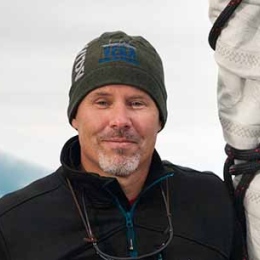
Martin Jakobsson is a Professor of Marine Geology and Geophysics at Stockholm University's Department of Geological Sciences. His career spans international research expeditions and leadership roles, including Dean of Earth Science (2021) and Head of Department (2012-2018). A key member of the Marine Geology group, he studies Arctic and Antarctic glacial history through sediment analysis and seafloor mapping. PhD from Stockholm University (2000) Academy Fellow, Royal Swedish Academy of Sciences (2004-2009) Professor II position at University Centre of Svalbard (2011-) His research focuses on marine geological archives to reconstruct glacial cycles, ice-ocean interactions, and bathymetric mapping. As GEBCO Vice-Chair (2013-2020), he led initiatives for global seabed mapping through the Seabed 2030 project. Recent publications reveal expertise in: Arctic Ocean paleocirculation Methane release from thawing permafrost Ice sheet sensitivity to oceanic warming High-resolution bathymetric analysis Scientific recognition includes: Election to Royal Swedish Academy of Sciences (2012) 1st Vice President, Royal Swedish Academy of Sciences (2016-2019) Membership in Norwegian Scientific Academy for Polar Research (2016) He leads international collaborations on polar research vessels, with over a year of cumulative ship time and multiple Co-Chief Scientist roles on Arctic expeditions.
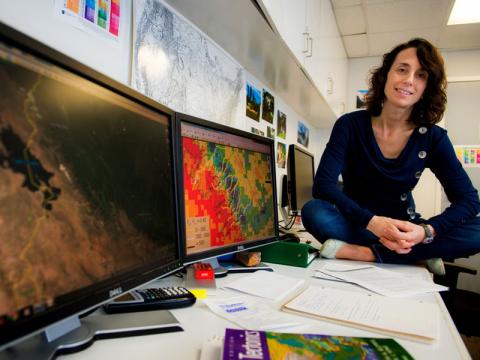
Nicole M. Gasparini is an Associate Professor in Tulane University's Department of Earth and Environmental Sciences, School of Science & Engineering. She holds a Ph.D. from MIT (2003) and researches fluvial/tectonic geomorphology, landscape evolution modeling, and climate-erosion interactions using tools like Landlab. Her work investigates sediment transport, river network evolution, and human impacts on landscapes. Research integrates field data with numerical models to quantify erosion processes across diverse environments. Publications demonstrate expertise in geomorphic model development, particularly through contributions to the Landlab toolkit. Recent articles focus on climatic controls on erosion, fault geomorphology, and uncertainty quantification in earth-surface models. Awards: Marguerite T. Williams Award for contributions to geosciences and advocacy against harassment in STEM Leads collaborative projects on landscape response to climate change and mentors students/postdocs in geomorphology and computational modeling.
Jennifer C. McIntosh is a Professor and University Distinguished Scholar in the Department of Hydrology and Atmospheric Sciences at the University of Arizona (UA), with a joint appointment in the Department of Geosciences. She is also an Adjunct Professor at the University of Saskatchewan. Her academic roles include teaching advanced hydrogeology courses and advising graduate students. She holds a BA in Geology-Chemistry from Whitman College, MS and PhD in Geology from the University of Michigan, and completed a postdoctoral fellowship at Johns Hopkins University. Her research focuses on the interplay between hydrology, geochemistry, and microbiology in the Earth’s crust, spanning micro-to-macro scales. Key projects include studying subsurface fluid dynamics, microbial methane production, and the impacts of climate and human activities on groundwater systems. She has applied these methods to critical zones, sedimentary basins, and oil/gas reservoirs, with fieldwork in the Colorado Plateau, Paradox Basin, and Western Canada. McIntosh has received numerous awards for research and teaching, including the Blitzer Award for Excellence in Teaching Physics-Related Sciences (2019) and the UA Distinguished Scholar Award (2017). She actively serves on national committees for the US EPA, National Academies, and Nuclear Waste Technical Review Board. Education: BA (Whitman College), MS/PhD (University of Michigan), Postdoc (Johns Hopkins University) Notable Awards: GSA Fellow (2019), CIFAR Earth 4D Program (2019), Morton K. Blaustein Fellowship (2004) Labs/Teams: Jemez River Basin Critical Zone Observatory, Siljan Impact Structure Research Group Future Works: Investigating anthropogenic impacts on deep groundwater systems and astrobiology of subsurface microbes
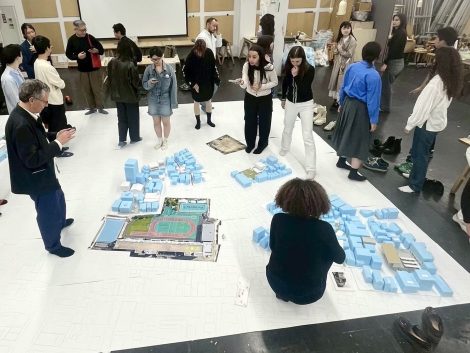
Marcos Cruz is Professor of Innovative Environments at The Bartlett School of Architecture, University College London (UCL), where he leads research in bio-integrated design. He runs Bio-ID with Dr. Brenda Parker, a multidisciplinary research platform investigating design driven by biotechnology, computation, materials, and fabrication. Previously, he served as Director of The Bartlett from 2010-2014 and founded the BiotA Lab (2014-2018). His academic career spans multiple institutions including University College London (where he ran MArch Unit 20 for 19 years), University of Westminster (2008-2010), UCLA (2010), and IAAC (2014-present). Professor Cruz holds a Licenciatura from ESAP Porto, a Masters with distinction from UCL, and a PhD from UCL (2007), sponsored by the Portuguese Foundation for Science and Technology. His doctoral research on 'Neoplasmatic Architecture' earned him the RIBA President's Research Award in 2008. He is a registered architect with both the Architects Registration Board (ARB) and the Portuguese Architecture Chamber. His primary research area is Bio-Integrated Design, which explores how biotechnology and computation can reshape our built environment in response to climate change. This work goes beyond using nature as inspiration; instead, it treats nature as the medium for a multi-layered design approach. His key research project, Poikilohydric Living Walls, investigates integrating growth systems directly on building facades using algae and mosses that can switch photosynthetic activity on and off without additional maintenance. Another significant research area is The Body in Architecture, which examines the relationship between human flesh and architectural flesh, proposing a 'thick embodied flesh' that creates truly inhabitable architectural interfaces. His recent publications demonstrate a strong progression toward integrating living systems directly into building materials and facades. The research spans from microbial to tectonic scales, with increasing focus on biomaterials, robotic fabrication, and sustainable design approaches that actively participate in urban ecosystems rather than merely responding to them. RIBA President's Research Award (2008) for 'Neoplasmatic Architecture' Multiple Best Unit awards at Bartlett Summer Show (awarded by Thom Mayne, Paul Finch, Richard Rogers, Claude Parent, and Ross Lovegrove) Work part of permanent collection at FRAC Orleans Exhibitions at Venice and São Paulo Biennales Professor Cruz has supervised numerous PhD students through UCL's Research-by-Design programme and currently directs the MArch/MSc in Bio-Integrated Design. His research has been supported by EPSRC and involves industrial partners including Laing O'Rourke, Pennine Stone Limited, and Amorim, with academic partners at UCL Biochemical Engineering, University of Coimbra, and IST Tomar. He co-founded MAM-ARCH London (formerly marcosandmarjan) in 2000, whose work has built buildings and pavilions, won international competitions including the Kunsthaus Graz, and been exhibited globally. His practice represents a significant bridge between architectural design and biological systems, positioning him at the forefront of bio-integrated architectural research.
Sanne Cottaar is a researcher at the Department of Earth Sciences, University of Cambridge, specializing in seismology and deep Earth structure. Her work integrates seismic waveform analysis, mineral physics, and geodynamic modeling to investigate mantle plumes, ultra-low velocity zones (ULVZs), and core-mantle boundary dynamics. Key research areas include: Seismic imaging of deep Earth heterogeneity Core-mantle boundary and mantle transition zone structure Multidisciplinary approaches with mineral physics and geodynamics Development of seismic tools like BurnMan for thermodynamic modeling Public engagement through educational initiatives such as Deep Earth Explorers Her recent publications focus on mapping ULVZs using Sdiff and Pdiff waves, resolving mantle plume origins, and benchmarking seismic methods against geodynamic constraints. She actively supervises doctoral projects in seismology and deep Earth dynamics.
California Institute of Technology (Caltech)United States
John C. Doyle is the Jean-Lou Chameau Professor of Control and Dynamical Systems, Electrical Engineering, and BioEngineering at the California Institute of Technology (Caltech), where he holds appointments in the Division of Engineering and Applied Science with primary affiliation in the Control and Dynamical Systems Department. His research bridges theoretical foundations with applications across biological, technological, medical, and ecological networks. He earned a BS and MS in Electrical Engineering from MIT (1977) and a PhD in Mathematics from UC Berkeley (1984), followed by consultancy at Honeywell Systems and Research Center (1976-1990). MIT: BS & MS in Electrical Engineering (1977) UC Berkeley: PhD in Mathematics (1984) Doyle's research centers on universal laws and architectures in complex systems, emphasizing robustness-efficiency tradeoffs, speed-accuracy tradeoffs (SATs), diversity-enabled sweet spots (DeSS), bowtie/hourglass structures, and evolvability. His work pioneers System Level Synthesis (SLS) for control systems with sparse, local, saturating, delayed, noisy, quantized, and distributed (SLSDNQD) components, integrating control theory, computation, communication, and machine learning to address challenges from neural networks to infrastructure resilience. Key concepts include virtualization, horizontal transfer, and virality in multiscale systems. Analysis of his publication trends reveals consistent interdisciplinary impact across neuroscience (brain connectivity modeling), systems biology (metabolic oscillations), network science (internet topology), and physics (turbulence, earthquakes), with recurring themes of robust-efficiency limits and architectural principles governing complex networks. His work demonstrates exceptional translation from abstract theory to practical tools like the Matlab Robust Control Toolbox and Systems Biology Markup Language (SBML). His scientific recognition includes: 1990 IEEE Baker Prize (ranked among top 10 most important mathematics papers 1981-1993) Three IEEE Automatic Control Transactions Awards (1998, 1999, 2021) ACM Sigcomm Paper Prize (2004) and Test of Time Award (2016) IEEE Control Systems Field Award (2004) Multiple early-career honors including IEEE Centennial Outstanding Young Engineer (1984) Doyle has mentored generations of students whose contributions include foundational software tools adopted globally. His research has secured sustained funding from NSF, NIH, and other agencies supporting theoretical advances in control frameworks and their applications to biomedical systems, network infrastructure, and environmental modeling. The SBML initiative exemplifies his group's impact in standardizing computational biology research. He leads a highly collaborative research ecosystem at Caltech that integrates engineers, biologists, neuroscientists, and computer scientists to develop universal principles for complex networks. Current efforts focus on translating theoretical insights into health technologies, resilient infrastructure, and climate-responsive systems through the application of robust-efficiency frameworks to emerging challenges in cyber-physical and biological domains.
Dr. Mark Hoggard is an ARC DECRA Research Fellow at the Research School of Earth Sciences, The Australian National University (ANU). His research focuses on geodynamics, sea-level modelling, nuclear test monitoring, and critical mineral systems. He holds a PhD from ANU and has studied at institutions including Cambridge University, Harvard, and Columbia. Hoggard’s work integrates geophysical data with numerical modelling to explore Earth’s dynamic processes, including mantle convection, glacial isostatic adjustment, and lithospheric evolution. Affiliations: Research School of Earth Sciences (ANU), Geoscience Australia (collaborative projects). Education: PhD (ANU), MA (Cambridge), BSc (ANU). Research Interests: Dynamic topography and its influence on sea-level records. Mantle structure and its relationship to mineral systems. Glacial cycles and ice sheet dynamics. Seismic monitoring of underground nuclear tests. Recent Article Trends: Recent work emphasizes geodynamic corrections to Pliocene sea-level estimates, mantle rheology influences on ice sheet models, and statistical methods for distinguishing seismic events from explosions. Key themes include linking deep Earth processes to surface observations and advancing methods for critical mineral exploration. Grants & Projects: Leads projects such as CoastRI GIA Modelling (2024–2027) and Next Generation Sea-Level Modelling (2022–2025). Collaborates with institutions like Los Alamos National Laboratory on nuclear test detection algorithms. Labs/Teams: Part of ANU’s Geodynamics group and the Exploring for the Future program at Geoscience Australia, focusing on Australia’s crustal structure and mineral potential.
Keigo Kobayashi is an Associate Professor at Waseda University's Faculty of Science and Engineering, School of Creative Science and Engineering, Department of Architecture. He has served in this position since 2016, previously holding the rank of Assistant Professor from 2012 to 2016. His professional journey includes significant experience at the Office for Metropolitan Architecture (OMA) in Rotterdam, where he worked as a Senior Architect and Project Architect from 2007 to 2012. His educational background includes a Master of Architecture II from Harvard University's Graduate School of Design (2005), a Master of Architecture from Waseda University's Graduate School of Science and Engineering (2003), and a Bachelor's degree in Architecture from Waseda University's School of Science and Engineering (2002). Kobayashi's research focuses on architectural planning and city planning, with particular interests in food-related architecture, spatial behavior, and sustainable design. His work explores the intersection of architecture with everyday life, examining how spatial configurations influence human behavior and community formation. Recent research has investigated food systems in urban contexts, playful approaches to spatial design, and the relationship between architectural form and environmental performance. His publications demonstrate a strong focus on practical applications of architectural theory, with projects spanning from food truck design in Shodoshima to zero-energy housing solutions and innovative approaches to architectural education. His work shows a consistent interest in how architecture can respond to contemporary social challenges while maintaining theoretical rigor. Excellence in Concrete Construction Award 2019, American Concrete Institute (ACI), Qatar National Library / OMA Kobayashi actively contributes to architectural education through various committee memberships, including serving as Chief of the Subcommittee on Strategies for International Compatibility in Architectural Education at the Architectural Institute of Japan and leading the Caberra Accord Correspondence Subcommittee at the Japan Accreditation Board for Engineering Education. His teaching portfolio at Waseda University is extensive, covering architectural design studios from undergraduate to doctoral levels. He leads several research initiatives, including the Wakusei Project in Tosa, Kochi, NPO PLAT (Platform for Architectural Thinking), and the European Thinkbelt/McDonald's Radio University project which represents an innovative approach to architectural education and community engagement, particularly in contexts of migration and cultural exchange.
Freya Morris is a Visiting Assistant Professor in the Department of Geosciences at Hamilton College, appointed in 2025. Previously, she served as a Visiting Assistant Professor at Whitman College during the 2023-2024 academic year following her Ph.D. defense in summer 2023, and took a gap year for solo global travel. Her research integrates field-based sedimentology and structural geology to reconstruct paleoenvironments and basin evolution, focusing on climate-tectonics interactions and life's evolution through Earth history. Dr. Morris holds a Ph.D. and M.S. from the California Institute of Technology and a B.S. from Lafayette College. She employs geochemical methods and glacial isostatic adjustment modeling to support lithostratigraphic correlations and sea-level history reconstructions during deglaciation events. Her recent publications examine Ediacaran cap carbonates in Namibia and Marinoan Snowball Earth deglaciation dynamics, advancing understanding of ancient climate systems and extreme climate change records. These works demonstrate interdisciplinary approaches combining field geology with quantitative modeling. Scientific Awards: National Science Foundation Graduate Research Fellowship (2017-2022) Supported by the NSF Graduate Research Fellowship during doctoral studies, Dr. Morris now develops her research program at Hamilton College while mentoring undergraduate students in geoscience through field-based courses like Principles of Geoscience: Our Interconnected Earth.
Neal Driscoll is a Professor of Geology and Geophysics at the Geosciences Research Division, Scripps Institution of Oceanography, UC San Diego. He specializes in tectonic deformation, landscape evolution, and seafloor imaging, with a focus on understanding Earth's processes through sediment records. Driscoll co-directs UC San Diego’s Center for Public Preparedness (CP2) and leads ALERTCalifornia, a critical infrastructure network monitoring wildfires, floods, and earthquakes via over 1,000 cameras. His work bridges geohazard mitigation, climate impacts, and disaster response. Education: B.S., Geology, University of New Hampshire M.S., Oceanography, University of Rhode Island Ph.D., Columbia University (Lamont-Doherty Earth Observatory) Research Interests: Driscoll investigates tectonic deformation’s role in shaping landscapes and seascapes, particularly in response to climate and sea-level changes. His fieldwork includes high-resolution seafloor imaging and seismic data analysis in regions like Iceland and California. He also studies neotectonics, geohazards, and coastal processes, with recent focus on the San Andreas Fault system and Salton Trough rift dynamics. ALERTCalifornia: This program uses advanced camera networks to monitor natural disasters, providing real-time data for first responders and researchers. Its infrastructure, originally for earthquake monitoring, now supports multi-hazard tracking, including wildfires and landslides, enhancing public safety and environmental understanding. Awards: Office of Naval Research Young Investigator Award Heezen Award and Storke Award (Lamont-Doherty Earth Observatory) Scripps Undergraduate Teaching Award MIT Distinguished Crosby Lecturer Advising & Grants: Driscoll has mentored students in geology and geophysics, with grants supporting his research on fault systems, climate impacts, and disaster preparedness. His collaborative projects include the Salton Seismic Imaging Project and Arctic Ocean sediment studies. Labs & Teams: Leads ALERTCalifornia and CP2 teams, collaborates with Scripps’ Geosciences Research Division on marine geophysics and tectonic studies, and partners with global institutions like WHOI and Icelandic research groups.
Sally Gibson is a researcher at the Department of Earth Sciences, University of Cambridge, specializing in mantle geodynamics and volatile cycling processes. Her work integrates field observations, geochemical analysis, and numerical modeling to investigate how deep Earth processes influence surface environments over 3.5 billion years of planetary evolution. Research focuses on volatile cycling (CO₂, H₂O, F, Cl, S) in mantle systems Key projects include mantle plume-ridge interactions with collaborators in the US and Ecuador Operates a LA-ICP-MS laboratory for high-resolution geochemical analyses Supervises PhD students in petrology, geochemistry, and numerical modeling Her research addresses fundamental questions about Earth's habitability through studies of mantle-derived volatiles critical for climate regulation and energy transition metal deposits. Fieldwork in remote regions like Antarctica, Lesotho, and the Galápagos Islands provides empirical data for her interdisciplinary approach. Recent publications highlight her expertise in mantle xenolith analysis, plume dynamics, and volatile quantification in large igneous provinces. Her group's work combines 3He/4He isotopic analysis with seismic tomography to constrain lithospheric evolution and mineral deposit formation. Students under her supervision develop expertise in petrology and geochemical modeling while engaging with environmental and societal impacts of geological research. She actively promotes scientific outreach and community engagement, fostering connections between academia and broader society.
Dr. Julie Fosdick is an Associate Professor in the Department of Earth Sciences at the University of Connecticut. She directs the Basin Analysis and Helium Thermochronology Laboratory and serves as Undergraduate Research Coordinator. Her educational background includes: PhD and MS in Geological & Environmental Sciences (Stanford University) BS in Geological Sciences (UC Santa Barbara, high honors) She completed an NSF Earth Science Postdoctoral Fellowship at the University of Arizona. Fosdick's research reconstructs: mountain-building and erosion processes through: Detrital thermochronology of orogenic systems Sedimentary basin analysis Tectonic-sedimentation interactions Paleotopography evolution Her NSF CAREER Award supports studies of sediment recycling in Argentina's Sierras Pampeanas. Current investigations examine: Post-glacial landscape evolution in Arctic Canada Andean hinterland tectonic development San Andreas Fault dynamics through Neogene deposits Greenland paleoclimate from subglacial sediments Her lab employs multi-method geochronology and thermal history modeling. Fieldwork spans global locations including: Argentine Andes Alaskan Range Greenland ice sheet California fault systems She maintains active collaborations across geoscience disciplines.
Eric Roberts is a Professor of Geology and Geological Engineering and Director of the Potential Gas Agency at the Colorado School of Mines. His research focuses on basin analysis, energy exploration, and sedimentary geology with specializations in Mesozoic-Cenozoic basins of Gondwana and North America. He leads projects in U-Pb geochronology, critical minerals exploration, and paleoenvironmental reconstruction through vertebrate paleontology and stratigraphy studies. Roberts' work integrates advanced geochronological techniques with field-based analyses to address questions in paleobiology, resource exploration, and earth system dynamics. Key research themes include: Geochronology of sedimentary and volcanic deposits Paleoclimate reconstruction using paleosols Stratigraphic frameworks for dinosaur fossil records Resource potential of helium/hydrogen reserves Antarctic and African vertebrate paleontology His exploration of hominin burial practices in the Rising Star Cave System has provided critical insights into early human behavior. Roberts' interdisciplinary approach bridges geological, biological, and environmental sciences to advance understanding of Earth's history and resource management strategies.
James Scoates is a Professor in the Department of Earth, Ocean & Atmospheric Sciences at the University of British Columbia (UBC), affiliated with the Faculty of Science. His research focuses on magmatic processes, including the origin and evolution of silicate magmas, geochemical and isotopic studies of layered intrusions and anorthosite suites, and the formation of magmatic ore deposits. He has held positions at UBC since 2002, following roles at Université Libre de Bruxelles (1995-2001). Education: B.Sc. (Honours), 1987, Queen's University at Kingston, Canada Ph.D., 1994, University of Wyoming, USA Research Interests: His work spans igneous petrology, geochronology, and mineral deposit geology. Key areas include physical volcanology of Large Igneous Provinces (LIPs), the geochemical evolution of magma plumbing systems in layered intrusions like the Skaergaard and Bushveld Complexes, and the application of isotopic techniques to trace mantle sources. He also investigates convergent margin Ni-Cu-PGE deposits and their tectonic contexts. Awards: Faculty Teaching Award, 2021 (EOAS-UBC) Killam Teaching Award, 2018 (UBC) Young Scientist Award, 2001 (Mineralogical Association of Canada) Teaching & Leadership: Dr. Scoates teaches courses in mineralogy, geochemistry, mineral deposits, and field geology. He has led initiatives to innovate geoscience education through virtual field experiences and peer-learning strategies. He chairs the MAGNET NSERC CREATE program and serves on the Pacific Centre for Isotopic and Geochemical Research (PCIGR) steering committee. Key Projects: Investigating the geochemical evolution of Hawaiian plumes and mantle heterogeneity. Studying magma storage and differentiation in the Muskox intrusion (Mackenzie LIP). Developing geochronological frameworks for layered intrusions like the Stillwater Complex.
Suzanne M. Carbotte is a Bruce Heezen Lamont Research Professor at the Lamont-Doherty Earth Observatory (LDEO) and affiliated with the Columbia Climate School . She holds a PhD in Marine Geophysics from the University of California, Santa Barbara (1992), an M.Sc. in Geophysics from Queen's University (1986), and an H.B.Sc. in Geology and Physics from the University of Toronto (1982). Marine and Polar Geophysics Department, LDEO Key focus areas: Mid-ocean ridges, subduction zones, seismic imaging, geoinformatics Research Interests : Carbotte specializes in marine geophysical studies of oceanic crust formation, subduction zone dynamics, and cyberinfrastructure development for geoscience data. Her work integrates seismic reflection, sonar mapping, and geoinformatics tools to analyze crustal evolution, magma chamber processes, and sediment dynamics in regions like the East Pacific Rise, Juan de Fuca Ridge, and Hudson Estuary. Scientific Trends : Recent publications highlight 3D/4D seismic imaging of magmatic-hydrothermal systems, sediment consolidation in subduction zones, and data infrastructure innovations. Key subfields include melt sill dynamics, fault distribution in oceanic plates, and mantle temperature gradients. Scientific Awards 2015 AGU Fellow 2010 Ridge2000 Distinguished Lecturer 2008 Birch Lectureship & UCSB Distinguished Alumni Award 2007 Bruce C. Heezen Research Chair 1982 Governor General's Silver Medal Grants & Projects : Her career spans funding for initiatives like the Rolling Deck to Repository (R2R) program, EarthCube Building Blocks , and Integrated Earth Data Applications (IEDA) . She has led 16 marine expeditions, emphasizing seismic studies from ridge to trench.