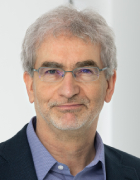
Armin Falk is a Professor of Economics at the University of Bonn, leading the BonnEconLab since 2004 and co-founding the briq Institute on Behavior & Inequality. He holds affiliations with the IZA, DIW, CEPR, and Max-Planck-Institut. His research focuses on behavioral economics, exploring how social preferences like fairness and trust influence decision-making, and investigates early childhood development's role in inequality. Falk has received prestigious awards, including the Leibniz Prize and Yrjö Jahnsson Award. His work combines lab experiments, field studies, and representative data analysis. Education includes a PhD in Economics from the University of Zurich after studies in Economics, Philosophy, and History at the University of Cologne. Key research highlights include global climate action support studies (Nature Climate Change, 2024), socioeconomic disparities in child development (JPE, 2021), and global economic preferences surveys (QJE, 2018). He co-authored the book *Warum es so schwer ist, ein guter Mensch zu sein* to popularize behavioral economics. Awards include recognition for contributions to behavioral and development economics. Mentoring programs like *Balu und Du* aim to reduce educational inequality. His work bridges academic research with public discourse through media contributions and policy engagement.
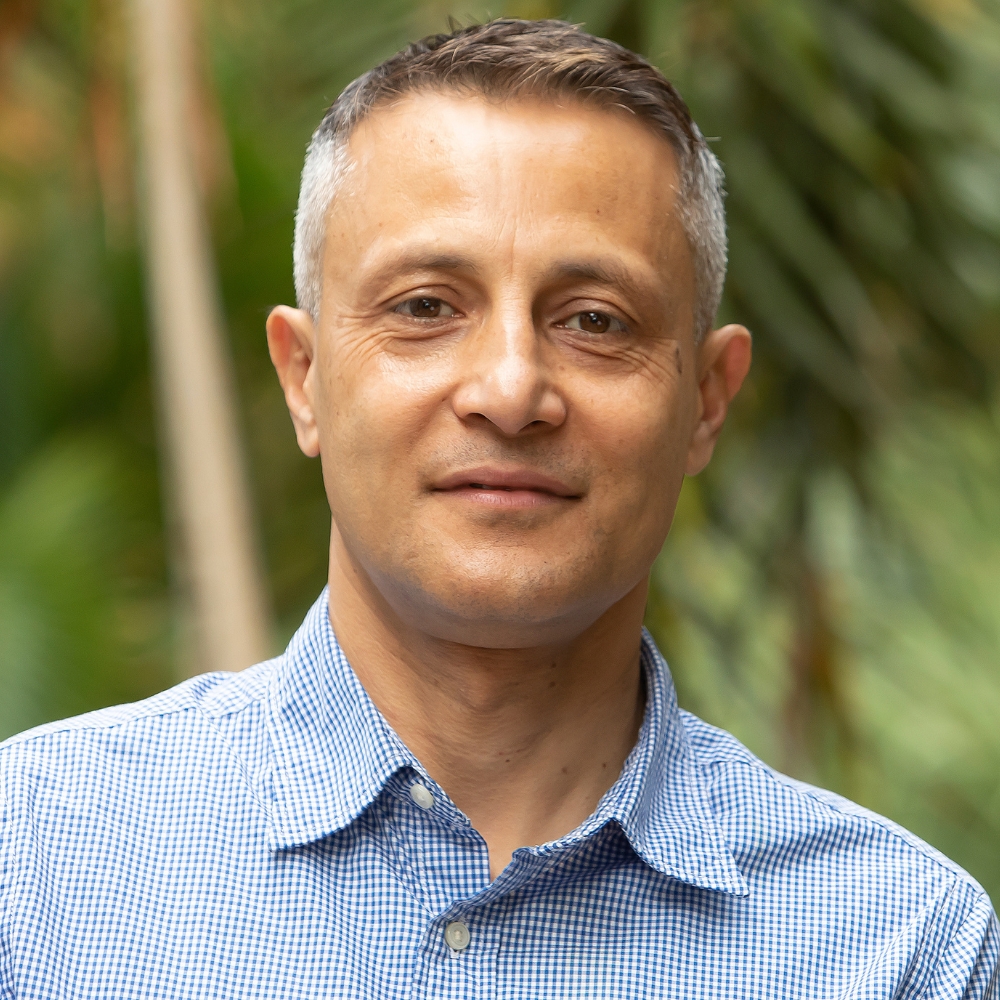
Prof. Senthold Asseng is a Professor of Digital Agriculture at the Technical University of Munich (TUM), leading the Hans Eisenmann Forum for Agricultural Sciences since 2021. His research focuses on climate-plant-soil systems modeling, addressing global food security, sustainable agriculture, and digital technologies like vertical farming and autonomous robotics. He holds a PhD from Humboldt University Berlin and habilitation from TUM, with prior roles at CSIRO Australia and the University of Florida (as Full Professor and Director of the Florida Climate Institute). His honors include AAAS Fellow, Web of Science Highly Cited Researcher, and multiple teaching/mentorship awards. Education: BSc/MSc in Agronomy & Horticulture, Humboldt University Berlin (1989-1990) PhD in Agronomy, Humboldt University Berlin (1994) Habilitation in Agronomy, TUM (2004) Research Interests: Climate change impacts on crops, digital agriculture technologies, systems analysis for autonomous farming, and vertical farming sustainability. His work integrates modeling, robotics, and environmental control to enhance agricultural resilience and productivity. Awards: AAAS Fellow (2019) Highly Cited Researcher (2019) UF Research Foundation Professor (2016-2019) Grants & Leadership: Led interdisciplinary projects like AgMIP-Wheat, SECC, and FAO advisory roles. Active in editorial roles for journals like Global Change Biology and Environmental Research Letters . Labs/Teams: Chair of Digital Agriculture at TUM, collaborating on projects like Smartfield and Proteins4Singapore , focusing on automation, controlled environment agriculture, and climate-smart solutions.
Pawan Adhikari is a Professor of Accounting at Essex Business School, University of Essex , where he serves as Director of Impact and Enterprise and Director of Essex Accounting Centre . He is an Associate Editor of the Journal of Public Budgeting, Accounting and Financial Management and a Executive Board Member of the Comparative International Governmental Accounting Research Network (CIGAR) . Previously, he led accounting reforms at Nepal’s Accounting and Auditing Standards Board and lectured at Nord University, Norway. PhD, Nord University Business School Fellow of the Higher Education Academy His research focuses on public sector accounting in developing countries, particularly accounting reforms , public value creation , and climate accountability . He explores how accrual accounting and participatory budgeting can enhance transparency in South Asian and African contexts. His work has influenced policy-making in Nepal and is recognized with the 2023 Best International Research Impact award by the University of Essex. Recent publications analyze wellbeing economies (2025), NGO accountability in disasters (2024), and climate budgeting (2023). He collaborates with institutions like the World Bank , European Commission , and British Academy , focusing on projects related to financial resilience , circular economy , and health sector accountability . Supervising 8 current PhD students, his advisees have produced work on topics like accrual accounting in Bangladesh and NGO accountability in Palestine . World Bank/PEFA Research Award African Accounting and Financial Association (AAFA) Award ESRC IIA Impact Fund GCRF and SeNSS Grants 2019 Best Postgraduate Supervisor (Essex)
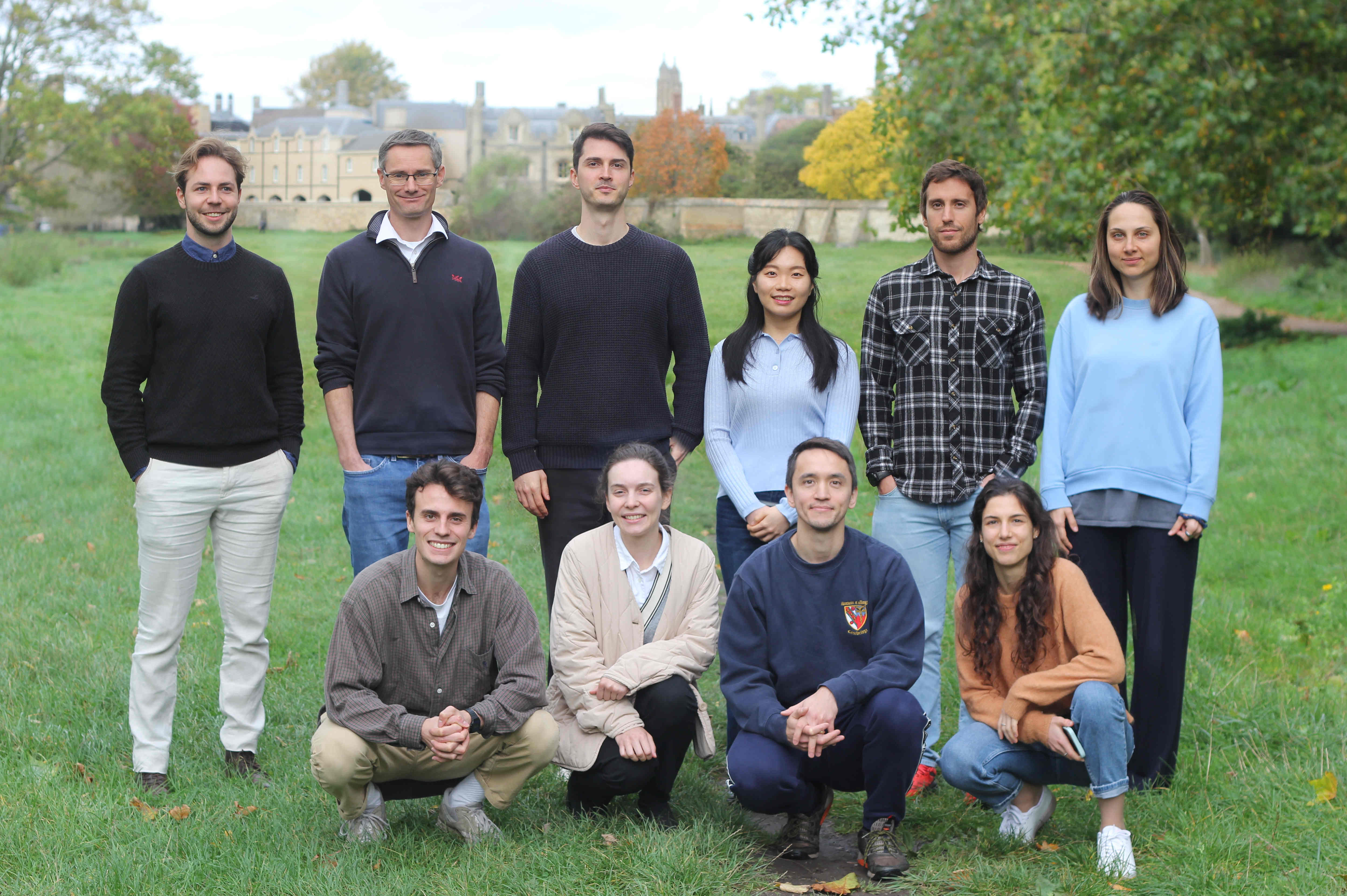
Richard E. Turner is a Professor of Machine Learning at the University of Cambridge's Department of Engineering and Research Lead for AI for Weather Prediction at the Alan Turing Institute. He serves as Cambridge Lead for the EPSRC Probabilistic AI Hub and previously held roles including Visiting Researcher at Microsoft Research, Co-Director of the AI4ER CDT, and Course Director for the Machine Learning and Machine Intelligence MPhil program. Current research focuses on probabilistic machine learning fundamentals, environmental prediction (weather/climate), and spatio-temporal modeling combining deep learning with Bayesian methods Supervised 26 PhD students (13 graduated) and 7 research assistants/associates Secured over £30M in research funding from EPSRC, Microsoft, Toyota, Google, DeepMind, Amazon, and Improbable Featured in BBC Radio 5 Live's The Naked Scientist, BBC World Service's Click, and Wired Magazine His recent publications demonstrate expertise in diffusion models for PDE simulations, Gaussian Processes for environmental applications, and Bayesian methods for spatio-temporal forecasting. Key trends include climate modeling using ML, neural PDE solvers, and scalable probabilistic inference. Awards : Cambridge Students' Union Teaching Award for Lecturing; supervised Qualcomm Innovation Fellowship winner Collaborations : Microsoft Research (AI4Science), Alan Turing Institute, EPSRC Probabilistic AI Hub Turner leads the Turner Group within Cambridge's Machine Learning Group, focusing on uncertainty-aware ML for scientific applications. Current research assistants work on topics like meta-learning, Bayesian inference, and climate science applications.
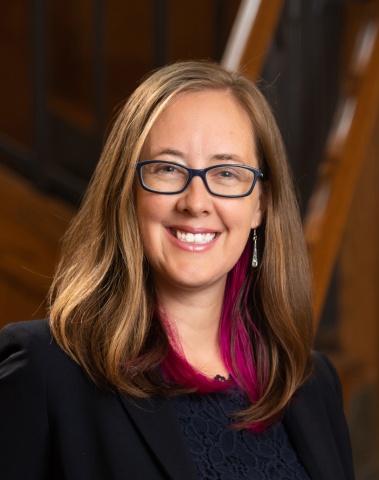
Catherine H. Hausman is an Associate Professor at the Gerald R. Ford School of Public Policy, University of Michigan, and a Research Associate at the National Bureau of Economic Research (NBER). Her work bridges environmental economics, energy policy, and climate change mitigation. BA in Economics from University of Minnesota PhD in Agricultural and Resource Economics from University of California, Berkeley (2013) Her research explores: Electricity transmission barriers and corporate profit alignment Methane emissions and carbon intensity in fossil fuel production Climate change impacts on grid reliability and pricing Pollution inequality and nuclear power economics Recent publications examine decarbonization strategies, ancillary service market spillovers, and methane leak quantification. She has received a Fulbright grant for pre-graduate work in Peru and contributes policy insights through the Hamilton Project and NBER working papers.
Katherine T. Faber is the Simon Ramo Professor of Materials Science at the California Institute of Technology, part of the Division of Engineering and Applied Science. She leads the Faber Research Group, focusing on mechanical behavior of brittle materials, ceramics for extreme environments, porous solids, and cultural heritage science. Her work bridges engineering, art conservation, and space technology. Education: B.S., Alfred University, 1975; M.S., Penn State, 1978; Ph.D., UC Berkeley, 1982. Academic roles include Ramo Professor since 2014 and leadership in the American Ceramic Society. She collaborates with NASA, JPL, and institutions like the Art Institute of Chicago for cultural heritage projects. Research interests span energy materials (thermal barrier coatings, lunar regolith electrolysis), functional porous ceramics (battery separators, biomedical filters), and art conservation (nanoparticle analysis in historical artifacts). Recent projects include shape-memory ceramics and fracture mechanics studied via synchrotron X-rays. Publications highlight innovations in freeze-casting, environmental barrier coatings, and interdisciplinary studies. Awards include the W. David Kingery Award (2024) and American Academy of Arts and Sciences membership. Her group emphasizes sustainability, with a Platinum Green Lab certification. Advises numerous graduate and undergraduate students, including those in SURF and WAVE programs. Grants and collaborations span NASA, NSF, and industry partnerships. Labs focus on ceramic processing, advanced characterization, and additive manufacturing.
Professor Ana Mijic is a leading academic in water systems integration at Imperial College London's Department of Civil and Environmental Engineering (Faculty of Engineering). Her work focuses on developing systems tools to balance economic growth with sustainable water use, flood management, and water quality under future uncertainties. She leads high-profile projects like the EPSRC VENTURA initiative and the NERC CAMELLIA impact programme, emphasizing adaptive planning and grey/green infrastructure integration in urban systems. Education: BEng (First Class) in Civil Engineering from the University of Belgrade (Serbia), MSc (Distinction) in Hydrology for Environmental Management, and PhD in Earth Science & Engineering from Imperial College London (2013). Previously served as a teaching assistant in Fluid Mechanics and Hydrometry at Belgrade University. Research interests include whole-water system modelling, socio-hydrological interactions, and nature-based solutions for resilient urban water systems. Her work bridges academia and practice through partnerships with regulators like the UK Environment Agency and global initiatives like the IAHS HELPING programme. Awards include the Satish Dhawan Visiting Chair Professorship (2022) and the 2019 Imperial President’s Award for Excellence in Research (as part of her Hydrology team). She co-leads Imperial’s Transition to Zero Pollution (TZP) Urban Ecosystems theme and serves on editorial boards for journals like Water Security . Her contributions span over 50 peer-reviewed articles (2020–2025), focusing on integrated water management frameworks, AI-driven monitoring, and systemic approaches to urban resilience. She advocates for participatory decision-making and policy coherence in water governance.
Carol Smith is an Associate Professor in the Department of Soil & Physical Sciences at Lincoln University, New Zealand, where she serves as Head of Department since 2017. She has been an elected academic staff member of the Lincoln University Council from 2018-2022. Dr. Smith holds a PhD from the University of Aberdeen, an MSc from the University of Reading, and a BSc(Hons) from the University of Portsmouth, forming the foundation of her expertise in soil science and physical geography. Her research spans both fundamental and applied aspects of pedology. On the fundamental side, she investigates Quaternary pedology and paleoenvironmental reconstruction using loess stratigraphy, geomorphology, and micromorphology, which provides critical data for verifying future climate change predictive models. Applied research focuses on sustainable use of recycled organic matter and rehabilitation of degraded soils. She collaborates internationally on multidisciplinary projects involving paleoclimate reconstruction, paleoliquefaction, Antarctic soils, and viticulture. Dr. Smith is passionate about teaching and science communication, employing experiential learning methods to develop practical field skills in soil science through 'soil judging competitions' in New Zealand and Australia. Her research addresses UN Sustainable Development Goals including Life on Land (15), Climate Action (13), and Quality Education (4). Among her notable recognitions are the Norman H Taylor Memorial award 2020 from the New Zealand Society of Soil Science for outstanding contributions to soil science in New Zealand and Fellowship in the Royal Geographical Society, London. She serves as Associate Editor of Natural Sciences Education and was previously editor of Quaternary Australasia. Dr. Smith has supervised numerous graduate students through research-based supervision, with completed projects covering diverse topics from soil patterns in Southland to Antarctic soil ecology. She teaches advanced courses in field research, soil science, and physical landscapes, and has developed innovative approaches to teaching during the pandemic, including virtual field trips.
Paolo Gardoni is the Alfredo H. Ang Family Professor and an Excellence Faculty Scholar in the Department of Civil and Environmental Engineering at the University of Illinois Urbana-Champaign, with additional professorial appointments in Industrial & Enterprise Systems Engineering and Biomedical & Translational Sciences. He also serves as Director of the MAE Center and Editor-in-Chief of Reliability Engineering & System Safety. Education Ph.D. in Civil Engineering, University of California, Berkeley (2002) M.A. in Statistics, University of California, Berkeley (2001) M.Eng. in Structural Engineering, University of Tokyo (1997) Laurea (BS+MS equivalent) in Structural Engineering, Politecnico di Milano (1997) Research Interests Gardoni’s scholarship integrates probabilistic methods with large-scale infrastructure systems to advance reliability, risk, and life-cycle analysis. His work quantifies the performance of deteriorating systems under natural and anthropogenic hazards, models societal impacts of disasters, and develops decision frameworks for sustainable and resilient infrastructure. He also examines ethical, social, and legal dimensions of risk, and investigates optimal strategies for hazard mitigation, disaster recovery, and climate adaptation. Across more than 250 refereed journal papers, he has advanced sub-fields ranging from probabilistic mechanics and earthquake engineering to catastrophe bond pricing and engineering ethics, leveraging tools such as stochastic differential equations, Bayesian networks, and physics-informed machine learning. Awards & Honors Alfredo Ang Award on Risk Analysis and Management of Civil Infrastructure (ASCE, 2021) Best Paper Awards in ASCE Journal of Sustainable Water in the Built Environment (2019) and Geotechnical Research (2018 Telford Premium Prize) Fellowships and named professorships: Alfredo H. Ang Family Professor, Excellence Faculty Scholar, and courtesy or honorary professorships at Tsinghua, IIT Guwahati, Tongji, Jianghan, and Loughborough universities. Research Leadership & Funding Gardoni has secured over $58 million in research funding from NSF, DHS, NIST, USAID, Qatar National Research Fund, and other agencies. He directs the MAE Center—formerly an NSF Engineering Research Center—focused on multi-hazard engineering approaches, and is Editor-in-Chief of Reliability Engineering & System Safety (Elsevier, IF 9.4). He founded and formerly led the journal Sustainable and Resilient Infrastructure (Taylor & Francis) and serves on editorial boards of nine additional journals. Advising & Mentorship He has graduated 27 PhD and 35 Master’s students, many of whom now hold faculty positions worldwide. His group maintains an active pipeline of doctoral and post-doctoral researchers working on resilience analytics, infrastructure monitoring, and risk-informed decision-making. Laboratories & Collaborations He leads the MAE Center and is affiliated with the Critical Infrastructure Resilience Institute (CIRI) and the Biomedical and Translational Sciences group. International collaborations span the UK (Loughborough), India (IIT Guwahati), and China (Tsinghua, Tongji, Jianghan), fostering cross-disciplinary research in reliability and resilience engineering.
Moshe E. Ben-Akiva is the Edmund K Turner Professor at the Massachusetts Institute of Technology (MIT), affiliated with the School of Engineering and the Department of Civil and Environmental Engineering. He holds a B.S. from Technion-Israel Institute of Technology (1968), and M.S. and Ph.D. degrees in transportation systems from MIT (1971, 1973). His research focuses on transportation systems analysis, intelligent transportation systems, demand modeling, econometrics, and infrastructure management. He has been recognized with prestigious awards, including election to the National Academy of Engineering (2025) for contributions to transportation systems modeling and demand analysis. His work spans theoretical and applied domains, including agent-based microsimulation for freight logistics, tradable credit schemes for congestion management, and behavioral dimensions of transport decarbonization. Ben-Akiva collaborates with industry and policymakers to design sustainable mobility solutions. His notable publications include foundational texts on discrete choice analysis and stated preference elicitation. He advises on transportation policy, urban planning, and emerging mobility technologies such as automated vehicles and urban air mobility. Current research explores impacts of automated mobility-on-demand systems, real-time tolling strategies, and e-commerce delivery demand modeling. His team develops tools like SimMobility Freight, an agent-based urban freight simulator. He remains active in teaching, focusing on demand modeling and econometrics courses at MIT.
Amilcare Porporato is the Thomas J. Wu '94 Professor of Civil and Environmental Engineering at Princeton University, with joint appointment at High Meadows Environmental Institute. His research integrates hydrology, ecology, and thermodynamics to study soil-water interactions and sustainable resource management. Education includes: Ph.D. Polytechnic of Milan (1996) M.S. Civil Engineering, Polytechnic of Milan (1992) Research explores nonlinear hydrologic systems, soil moisture dynamics, ecohydrology, and environmental complexity using theoretical and experimental approaches. His work advances understanding of water-biota interactions across scales from pore-level processes to landscape evolution. Honors and Awards: Hydrologic Sciences Award, AGU Borland Lecturer American Geophysical Union Fellow Inaugural Landolt Chair, EPFL Teaches courses on Environmental Thermodynamics (ENV 385/CEE 385) and Ecohydrology (CEE 587/ENV 587).
Suzanne Staggenborg is a Professor and Director of Graduate Studies in the Department of Sociology at the University of Pittsburgh's Dietrich School of Arts & Sciences. Her research focuses on social movements, political sociology, environmental sociology, and qualitative methods. She holds a PhD from Northwestern University (1985), an MA from Washington University (1979), and a BA from Miami University (1977). Staggenborg’s work examines grassroots environmental activism, abortion politics, and coalition-building in social movements. Her book Grassroots Environmentalism (2020) explores challenges faced by local groups opposing fracking and promoting sustainability. She has served as Chair of the Department of Sociology at the University of Pittsburgh (2012–2019) and McGill University (2005–2008). Her research highlights strategic challenges in environmental movements, gender dynamics in activism, and the interplay between social movements and political opportunity structures. Awards include the John D. McCarthy Award (2019) and grants from the National Science Foundation and Social Sciences and Humanities Research Council. Education: PhD, Sociology, Northwestern University, 1985 MA, Sociology, Washington University, 1979 BA, Sociology and Psychology, Miami University, 1977 Key Awards: John D. McCarthy Award (2019) Member, Sociological Research Association (1997) Professional Service: Editorial boards for Mobilization , Social Movement Studies , and others Co-editor, Cambridge University Press Series on Contentious Politics
Dr. Federico Cammelli is a Researcher at the Department of Environmental Systems Science (ETH Zurich) within the Professorship for Sustainable Agroecosystems. His work focuses on environmental sustainability, deforestation mitigation, and equitable policy design in tropical regions. He investigates the effectiveness of supply chain policies, fire management strategies, and smallholder livelihood challenges in regions like the Amazon, West Africa, and Indonesia. Key research areas include zero-deforestation commitments in cattle and soy sectors, cocoa sustainability in West Africa, and the interplay between fire use, poverty, and conservation. He employs experimental methods and interdisciplinary approaches to address complex environmental governance challenges. Based at ETH Zurich’s Sonneggstrasse 33 campus, Dr. Cammelli collaborates with international institutions to advance sustainable agroecosystems and climate-resilient development. His research bridges environmental science, policy analysis, and socioeconomic dimensions of conservation.
Martijn Kuller is Assistant Professor of Nature-Based Solutions and Water at Utrecht University's Copernicus Institute of Sustainable Development. He holds a PhD in Urban Water Management from Monash University, an MSc in Urban Environmental Management from Wageningen University, and a BSc in Economics and Policy. Research expertise includes: Nature-based solutions for urban water management Spatial planning support systems (SSANTO tool developer) Climate adaptation strategies for cities Publications demonstrate strong focus on blue-green infrastructure planning, flood vulnerability assessment, and decision-making frameworks for sustainable urban development, with recent work in Colombian cities. Awarded the prestigious Marie Sklodowska-Curie Fellowship for transnational research. International experience includes positions at Eawag (Switzerland), Université Laval (Canada), and University of New South Wales (Australia), working on projects ranging from flood early warning systems to stormwater quality modeling.
Maurizio Dallocchio is a Full Professor of Corporate Finance at Bocconi University and SDA Bocconi School of Management. He served as Dean of SDA Bocconi (2003–2007) and has held leadership roles in academic and professional institutions, including Chair of the Audit Committee of the European Investment Bank (EIB). His research focuses on corporate valuation, mergers & acquisitions (M&A), and sustainable finance. Dallocchio founded DGPA & Co., a corporate finance consultancy, and advises public and private entities globally. He has taught at leading institutions like London Business School and NYU Stern School of Business. Educational Background: Ph.D. in Business Administration, Bocconi University Advanced studies at London Business School and New York University Stern School of Business Research Interests: Prof. Dallocchio’s work emphasizes corporate restructuring, ESG integration in finance, and strategic valuation methodologies . Recent studies explore environmental performance in emerging markets and the resilience of conglomerates during economic crises. He advocates for sustainable investment strategies that balance financial returns with societal impact. Professional Engagements: Board member roles at Klepierre Management, General Finance, and Podravska Banka Past Director of the Master in Corporate Finance program at SDA Bocconi Labs/Teams: Leads research initiatives at Bocconi’s Corporate Finance and Real Estate Department, collaborating with global institutions on projects involving corporate governance, M&A analytics, and sustainable development.