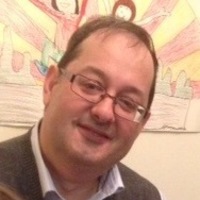
Dr Thomas White is a Senior Lecturer and ARC Discovery Early Career Fellow at the School of Life and Environmental Sciences, University of Sydney. He leads the Sensory and Evolutionary Ecology (SEE) Lab, focusing on understanding how organisms gather and exchange information to solve ecological challenges. His research spans adaptive evolution, communication systems, and the ecological consequences of sensory interactions, with particular emphasis on insects and invertebrates. Current research themes include predator-prey deception (e.g., spider lures), pollinator behavior, and the ethics of invertebrate welfare. He coordinates courses such as LIFE4000 and BIOL2033, integrating field experiments, modeling, and meta-analysis. Notable awards include the ARC DECRA Fellowship and grants from the Hermon Slade Foundation. His lab actively collaborates on interdisciplinary projects, including software tools for color analysis (e.g., pavo package in R). Students advised include Georgie Brennan, Kristin Hubakk, and Rui Shi, exploring topics like pollination systems and spider communication. Key Projects: Nocturnal pollination resilience, invertebrate sociality, and defensive displays Grants: ARC DECRA (2020), Australia & Pacific Science Foundation (2024) Labs/Teams: Sensory and Evolutionary Ecology (SEE) Lab at University of Sydney
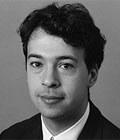
Professor Thomas Astell-Burt is a Professor of Cities and Planetary Health at the University of Sydney's School of Architecture, Design and Planning. His work focuses on the intersection of urban environments, green spaces, and public health. He is a member of the Sydney Environment Institute and the Charles Perkins Centre. His research examines how urban planning and green infrastructure can mitigate health inequities, combat climate change, and improve mental/cardiometabolic health. Key areas include nature prescriptions, heat-related mortality, and the role of green spaces in reducing loneliness. Recent grants include projects on aged care workforce sustainability, nature-based strategies for loneliness reduction, and the PANDA Trial for cardiometabolic disease prevention. Over 180+ publications span peer-reviewed journals like Scientific Reports , Climate , and PloS One , with a focus on global health trends and urban environmental policies. His work bridges epidemiology, urban design, and interdisciplinary collaboration to inform evidence-based health policies. Key affiliations include leadership roles in global health initiatives and collaborations with institutions like the University of Glasgow. His research has been cited in policy frameworks addressing urban sustainability and planetary health.
University of North Carolina at Chapel HillUnited States
Jakob Wiedekind is a DAAD Visiting Assistant Professor of Political Science at the University of North Carolina at Chapel Hill (UNC), effective Summer 2024. He holds a PhD from Leibniz Universität Hannover (Germany, 2023) and previously served as a postdoctoral researcher and teaching fellow there. His research focuses on American and European politics, transatlantic relations, climate change policy, and foreign policy analysis. He has conducted research at UNC as a visiting scholar in 2021 and holds prestigious fellowships including the John-F.-Kennedy Memorial Fellowship (Harvard) and a Feodor-Lynen Postdoctoral Fellowship (Humboldt Foundation). PhD: Faculty of Philosophy, Leibniz Universität Hannover (2023) Postdoctoral Research: Department of Political Science, Leibniz Universität Hannover Visiting Scholar: UNC Chapel Hill (2021) His work bridges comparative politics and international relations, with current projects emphasizing transatlantic climate policy collaboration. Recent publications include studies on polarization, US foreign policy assertiveness, and the 2020 US presidential election’s sociopolitical context. Awards: John-F.-Kennedy Memorial Fellowship, Feodor-Lynen Fellowship Research and advising: Active in mentoring through his academic roles, though specific advisee names are not listed here. Continues research on American politics alongside transatlantic climate initiatives. Labs/Teams: Engaged in collaborative projects on climate policy and transatlantic governance, though formal lab affiliations are unspecified.
Jing Zeng is an Assistant Professor of Computational Communication Science at the University of Zurich, Switzerland. She holds a PhD in Media and Communication from Queensland University of Technology (2017), an MSc in Social Science of the Internet from the Oxford Internet Institute (2013), and a BA in International Communications from the University of Nottingham (2012). Her research focuses on digital platforms, computational social science, AI governance, and misinformation dynamics. She has held academic appointments at Utrecht University (2022–2024) and fellowships at institutions including the Max Planck Institute for the History of Science and the Weizenbaum Institute. Zeng is a leader in digital media research, serving on editorial boards for journals such as Big Data & Society and Convergence , and co-editing the Technology, Power & Society book series. Her work bridges critical platform studies with empirical analyses of conspiracy theories, climate communication, and TikTok culture. Zeng’s research has been recognized through awards including the ICA Computational Methods Interest Group Top Paper (2020) and the Utrecht University Teaching Award (2023). She actively engages in public discourse through media commentaries in The Guardian , The Atlantic , and Science|Business , addressing topics like AI ethics, platform governance, and disinformation. Her current projects explore AI imaginaries, visibility moderation on TikTok, and cross-cultural digital activism. Education: PhD (QUT), MSc (Oxford), BA (Nottingham) Affiliations: Association of Internet Researchers (AoIR Executive Board), IPIE Scientific Network
Dr. David Burton is a Professor in the Department of Plant, Food, and Environmental Sciences at Dalhousie University's Faculty of Agriculture. He serves as Director of the Centre for Sustainable Soil Management and leads initiatives in soil health, greenhouse gas emissions, and sustainable agricultural practices. His teaching spans undergraduate and graduate courses in soil science, nutrient management, and climate change. Research focuses on microbial metabolism in soil, nitrogen cycling, and the environmental impacts of agricultural practices. He co-founded the Atlantic Soil Health Lab and manages the Greenhouse Gas Analysis Lab. Key affiliations include the Canadian Society of Soil Science (Fellow), Soil Conservation Council of Canada, and Fertilizer Canada's 4R Research Network. Recent work emphasizes soil's role in climate resilience, including presentations on regenerative farming and soil carbon sequestration. He collaborates with government and industry to develop climate-smart soil management policies and tools for nitrogen management optimization. Awards: Fellow of the Canadian Society of Soil Science Labs: Centre for Sustainable Soil Management, Greenhouse Gas Analysis Lab, Atlantic Soil Health Lab Grants: NSERC CREATE Climate Smart Soils
Teresa Bonacci is an Associate Professor in the Department of Biology, Ecology and Earth Sciences at the University of Calabria (UNICAL), where she conducts research and teaches in zoology with a focus on entomology. She is also the Scientific Director of the Zoology Museum within the university's museum system (SIMU). Her academic affiliations include membership in the PhD School of Life Science and Technology and leadership roles in degree program coordination. Laurea in Natural Sciences, University of Calabria PhD in Animal Biology, University of Calabria Socrates/Erasmus Scholarship, University of Kiel, Germany Research Grant (Assegno di ricerca), SSD BIO/05, University of Calabria National Scientific Qualification for Full Professor (I fascia) Her research spans applied and medico-veterinary entomology, forensic entomology, and conservation biology. She investigates saproxylic beetles (e.g., Cucujus spp.), pollinators (bees, flies, beetles), and insect behavior, especially in forensic contexts such as post-mortem interval estimation and myiasis. Her work integrates taxonomy, morphology, ecology, and chemical signaling, often in collaboration with chemists, legal experts, and conservation agencies. She has published extensively in high-impact journals, with over 80 scientific publications and strong citation metrics. The most recent articles reflect a multidisciplinary trend, combining taxonomy, forensic science, biodiversity monitoring, and veterinary entomology. Topics include the discovery of new insect species in Italy, the role of beetles in decomposition, insect damage in cultural heritage, and myiasis in domestic and wild animals. These works highlight her expertise in both fundamental zoological research and practical applications in forensics and conservation. Scientific Contributions: Over 80 scientific publications Scopus h-index: 15; Google Scholar h-index: 20 Key researcher in saproxylic beetle conservation Pioneer in forensic entomology studies in Southern Italy Active collaborator with legal and medical institutions She supervises numerous PhD and master's students and has directed over 90 theses. Her teaching responsibilities include courses in Zoology, Entomology, Forensic Entomology, and Medical-Veterinary Entomology. She is deeply involved in student mentorship, thesis supervision, and academic service, including examination boards and curriculum development. She also leads biodiversity monitoring projects in Calabrian national parks and has contributed to the development of machine learning tools for insect identification. Her research team collaborates with national and international institutions, including the CNR, University of Milan, and forensic pathology units. She leads projects on bioindicators, insect-plant interactions, and the impact of climate change on mountain species. The Zoology Museum under her direction supports both research and public outreach.
Dr Stella Bolaki is Reader in American Literature and Medical Humanities at the School of English, University of Kent, and Co-Director of the Centre for Health and Medical Humanities. She has been a faculty member since 2011, after holding positions at the University of Glasgow and the University of Edinburgh, where she also held a postdoctoral fellowship at the Institute for Advanced Studies in the Humanities (IASH). Her educational background includes a BA from Athens and an MSc and PhD from the University of Edinburgh. BA, Athens MSc, University of Edinburgh PhD, University of Edinburgh Stella’s research spans interdisciplinary fields including contemporary American literature, medical humanities, disability studies, and Black feminist theory. Her work critically examines narratives of illness, chronic conditions, self-care, and the intersection of art and health. She has pioneered research on artists’ books as tools for wellbeing, testimony, and community engagement, particularly in contexts of trauma and social injustice. Her recent publications and projects reveal a consistent focus on expanding narrative forms in medical humanities—moving beyond traditional literary modes to include photography, performance, film, and digital storytelling. Themes of inequality, mental health, climate anxiety, and embodiment recur across her work, especially in her ongoing monograph on self-care. Fellow of the Higher Education Academy Wellcome Trust funding recipient British Academy funding recipient Research England grant awardee Kent’s AHRC Impact Acceleration Account funding Stella supervises doctoral research across a wide range of interdisciplinary topics and has co-supervised a CHASE-funded project on health zines. She contributes to teaching in American literature and medical humanities at the Kent and Medway Medical School. Her professional service includes editorial roles for Contemporary Cultural Studies in Illness, Health and Medicine and the Journal of Literary & Cultural Disability Studies , and leadership in the Eastern Arc Medical and Health Humanities Network and the Kent Medical Humanities Network. She leads public-facing research through creative workshops, exhibitions, and events such as ‘Artists’ Books and the Medical Humanities’ and ‘Mending the Psyche: Art as Reparation’, often in collaboration with NHS partners and community organizations.
Dr. Tan Viet Tuyen Nguyen is a New Frontiers Fellow (Lecturer) in AI at the University of Southampton, specializing in Human-Centered Artificial Intelligence and Social Human-Robot Interaction. His research focuses on multimodal learning for robots to adapt their behavior to human social needs, with applications in healthcare, education, and service environments. Prior to this role, he was a Research Associate at King’s College London and a Research Assistant on the EU-funded CARESSES project, developing culturally-aware assistive robots for elderly support. Education: PhD in Information Science (Robotics) from Japan Advanced Institute of Science and Technology. He has organized conferences such as the IEEE RO-MAN 2022 special session on nonverbal communication and served as a reviewer for top-tier robotics and AI conferences. Research Interests include: Human-Robot Collaboration, Multimodal Perception, Generative AI for Social Interaction, and Context-Aware Robot Behavior Generation. His work has been recognized with awards including the Best Paper Award at ROMAN 2022 and the Prospective Research Award at ICServ 2023. Teaching Responsibilities include courses on Biologically Inspired Robotics, High-Level Programming, and MSc/Undergraduate project supervision. He currently oversees two PhD students and collaborates on projects like 'Exploring the impact of AI-driven writing of engagement in climate change' and 'Bridging Generations and Cultures through Generative AI.' Labs/Teams: Member of the Agents, Interaction and Complexity Centre and the Centre for Robotics Research at Southampton.
Philippe Hamman is a Professor of Sociology and Director of the Institute of Urban Planning and Regional Development (IUAR) at the Faculty of Social Sciences, University of Strasbourg. He leads the Master’s program in City and Environment and holds significant leadership roles, including Scientific Assessor and President of the Faculty Scientific Commission since 2016. He is the holder of the Jean Monnet Chair 'GoInUSE' and the Chaire MAKErS on agricultural methanization in Europe, reflecting his central role in sustainability research. His research focuses on urban and regional sustainability, energy transitions, cross-border cooperation in the Upper Rhine region, environmental governance, and socio-ecological issues. He leads major projects funded by Interreg, CNRS, and ADEME, often in trinational collaborations with Germany and Switzerland. His work bridges sociology, environmental studies, and policy analysis. His recent publications explore citizen energy cooperatives as commons, urban sustainability governance, agricultural methanization, and the social dimensions of environmental issues such as tick-borne diseases and pandemic-era urban planning. The articles reflect a consistent focus on sustainability transitions, territorial governance, and citizen participation, with a strong comparative and interdisciplinary approach, particularly between France and Germany. Scientific Assessor, Faculty of Social Sciences, University of Strasbourg (since 2016) President, Faculty Scientific Commission (since 2016) Member, Council of the Faculty of Social Sciences (2016–2026) President, Committee of Experts, Faculty of Social Sciences (2019–2024), then IUAR (2025–2028) Expert for ANR, ANRT, HCERES, INRAE, and multiple European research funds Member of editorial boards for Espaces et sociétés , Revue de l’Allemagne et des Pays de langue allemande , and others He supervises doctoral students Aude Dziebowski and Romane Joly and teaches courses in urban sociology, sustainable development, and the sociology of urban projects. He is deeply embedded in academic service, peer review, and the editorial direction of research journals and book series. His laboratory, SAGE (UMR 7363), is a key hub for interdisciplinary research on societies, actors, and governance in Europe, where he co-leads research axis 3 on urban and environmental issues.
Bryan Brown is an Adjunct Assistant Professor at the School of Integrative Plant Science , Horticulture Section , and an Integrated Weed Management Specialist with Cornell Integrated Pest Management . His work focuses on minimizing agricultural and environmental risks through innovative weed control strategies. Ph.D., University of Maine, 2017 B.A., Colby College, 2009 Dr. Brown’s research emphasizes integrated weed management informed by weed species biology, including weed seedbank dynamics and culturally appropriate extension . His projects explore ecologically-based solutions like stacked cultivation, electrical weed control, and cover cropping to address herbicide resistance and labor shortages. He also investigates the interplay between weed management and soil health or economic viability in organic and conventional systems. Dr. Brown’s extension efforts prioritize farmer collaboration through on-farm demonstrations , educational media , and slow-motion analysis of cultivation tools. His outreach includes addressing glyphosate-resistant waterhemp in New York State and clarifying public health risks through the Into the Weeds podcast.
Helmholtz Centre for Environmental ResearchGermany
Joakim Nivre is a Professor at Uppsala University's Department of Linguistics and Philology. He is a leading researcher in computational linguistics, with a focus on dependency parsing, Universal Dependencies (UD) framework development, and multilingual NLP applications. His recent work explores LLMs in climate change discourse analysis, pharmacovigilance explainability, and historical text processing. Key research areas: Dependency parsing theory, Universal Dependencies standardization, LLM evaluation Collaborations: SweSAT-1.0 benchmark development, ClimateEval project, PARSEME integration His 2025-2023 publications demonstrate expertise in explainable AI for healthcare, synthetic data generation for idioms, and multilingual benchmark design. Notably, he co-developed SweSAT-1.0 to evaluate Swedish LLMs and contributed to typology-informed UD revisions. Despite extensive work in NLP, no scientific awards are mentioned in available texts.
Matteo Magnani is a Professor in the Division of Computing Science at the Department of Information Technology, Uppsala University. He leads the Uppsala University Information Laboratory and is a founding member of the Uppsala University Computational Social Science Lab. His research spans network science, artificial intelligence, data science, and computational social science, with a focus on social data mining and multilayer networks. PhD in Computer Science, University of Bologna, 2006 Graduated with honours in Information Sciences, University of Bologna, 2002 Studies in Computer Science at University of Marne la Vallée and Imperial College London Matteo Magnani's research interests include social network analysis, multilayer and probabilistic networks, community detection, visual analytics, and the application of AI to digital media and climate communication. His work bridges computer science and social sciences, particularly in analyzing online discourse and digital intermediaries. He has contributed significantly to the understanding of network structures, uncertainty in networks, and the ethical dimensions of algorithmic analysis. His recent publications highlight trends in fairness in community detection, visual saliency in network layouts, emotional reactions to climate visuals online, and deep learning applications in social media. Topics frequently involve YouTube, Twitter, and online public debates, using advanced network and machine learning methods. Rotary Prize for best student of the Science Faculty Best Paper Award Funniest Presentation Award Best Poster Award Pedagogical Prize from UTN Distinguished University Teacher (Sweden) Docent title (Sweden) Magnani has supervised numerous students and collaborated widely, particularly with Luca Rossi, Alexandra Segerberg, and Davide Vega. He has secured funding from major sources including VR, H2020, STINT, and MIUR. He leads active research labs focused on information systems and computational social science, fostering interdisciplinary collaboration and innovation in network-based research.
Luca Somigli is a Professor at the University of Toronto, holding the Emilio Goggio Chair in Italian Studies. His research focuses on European and Italian modernism, avant-garde movements, futurism, detective fiction, genre literature, and comics. Born in Florence, he earned a Laurea from the Università degli Studi di Firenze and a PhD in Comparative Literature from SUNY Stony Brook. Educational Background: PhD, State University of New York at Stony Brook Laurea, Università degli Studi di Firenze Luca's scholarship explores tensions between modernism and postmodernism, colonial narratives in Italian crime fiction, and the intersection of visual narratives with cultural themes. His recent publications include co-edited volumes on futurism and modernism, alongside articles analyzing authors like Marinetti, Pirandello, and Camilleri. Key research trends include: Colonialism in Italian historical fiction Symbolist and avant-garde artistic movements Visual storytelling in comics and film The legacy of fascist ideology in literature Scientific awards highlight his contributions: the 2019 Visiting Scholar at Université de Haute-Alsace and the 2003 American Association for Italian Studies Book Award. Luca has co-authored works with scholars like Federico Luisetti and Eleonora Conti, and his conference presentations address neomodernist novels and modernist historiography. He serves as Chair of the Department of Italian Studies (2021-present) and previously as Associate Chair – Graduate (2020-2021).
Andrea Carminati is a Full Professor at the Department of Environmental Systems Science, ETH Zurich. His research focuses on soil-plant hydraulics , rhizosphere dynamics , and drought adaptation mechanisms in crops and forest species. He investigates how root traits , soil texture , and biogenic substances like mucilage influence water uptake , gas exchange , and soil microbial activity . Key Research Areas: Soil-Plant Water Relations Rhizosphere Hydrology Drought Resistance in Maize and Trees Microplastics in Agricultural Soils Hydraulic Redistribution and Isohydricity Contact: Email: andrea.carminati@usys.ethz.ch Phone: +41 44 633 61 60 Recent studies highlight his work on soil texture-specific transpiration responses , rhizosheath properties under drought , and microplastic impacts on soil hydrology . He employs advanced techniques like X-ray computed tomography and neutron radiography to visualize root-soil interactions.
David Al-Attar is a Professor at the University of Cambridge's Department of Earth Sciences, actively involved in theoretical and computational geophysics research. He serves as a supervisor within the Cambridge NERC Doctoral Landscape Awards (Training Partnerships) program, particularly in the CREATES initiative focusing on climate and environmental science. Education: While specific educational details aren't provided in the text, his extensive publication record and professorial position at Cambridge indicate advanced training in geophysics and applied mathematics. Research Interests: Professor Al-Attar's work spans several interconnected areas within geophysics. His primary focus includes theoretical and computational problems in geophysics, with particular emphasis on continuum mechanics as applied to Earth systems. He develops new physical and mathematical theories for understanding Earth processes, including rigorous function space methods for inverse problems and uncertainty quantification. His sea level change research aims to constrain ice sheet evolution during the last glacial period to better understand modern contributions to sea level rise. Additionally, he investigates solid Earth dynamics including seismic free oscillations, body tides, and Earth rotation, contributing to our understanding of deep Earth structure and mantle dynamics. Research Themes: His publications demonstrate expertise in adjoint methods, glacial isostatic adjustment, mantle viscosity, planetary seismology, and computational methods for geophysical problems. Recent work emphasizes 3-D Earth modeling, sensitivity analysis, and the integration of satellite observations with theoretical models. Current Projects: Potential projects for students include inverse problems related to deglacial sea level change with focus on uncertainty quantification, modern sea level monitoring using satellite data, and solid Earth dynamics particularly regarding outer core viscosity in tidal and rotational dynamics. Contact: He can be reached at da380@cam.ac.uk for research inquiries and collaboration opportunities.