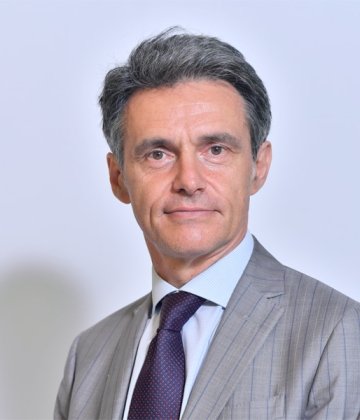
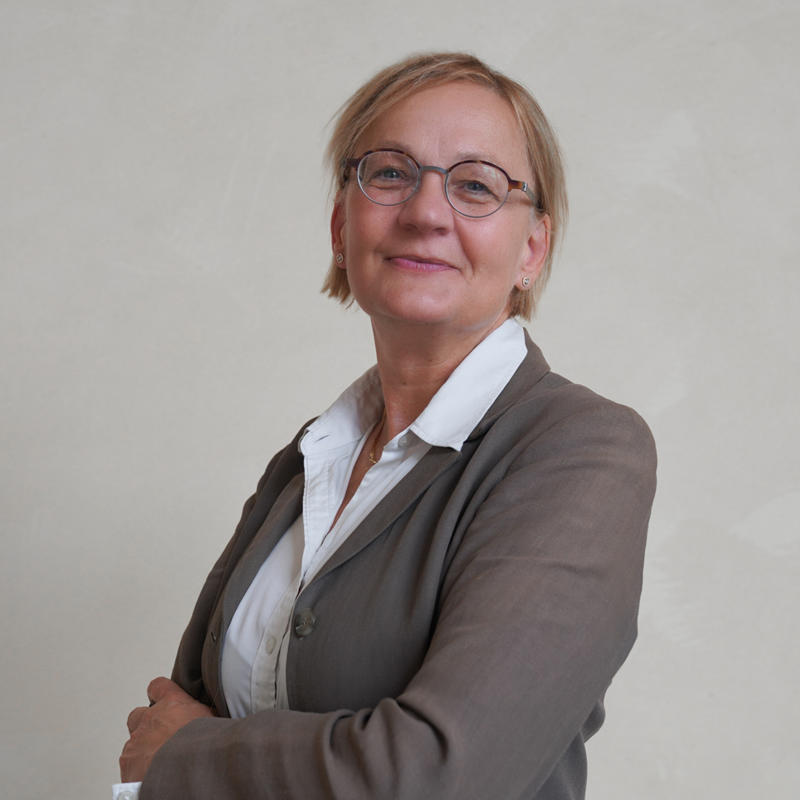
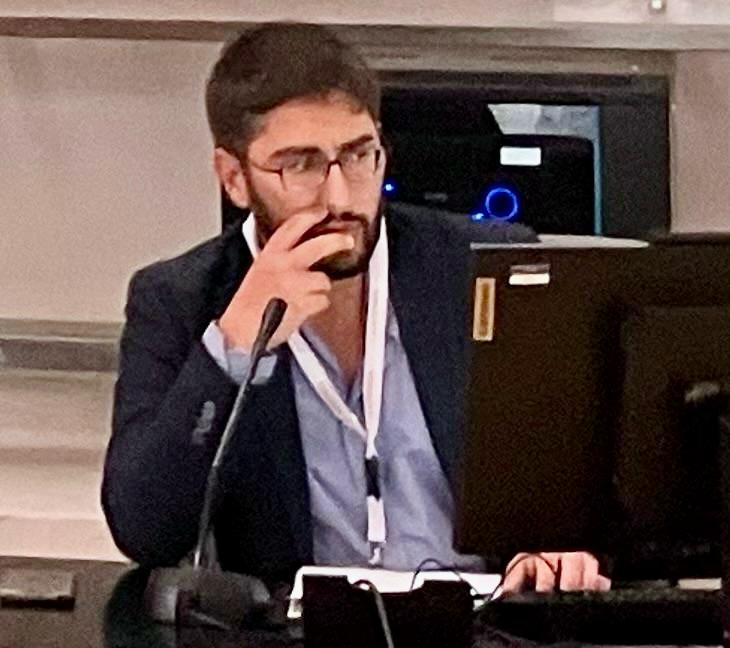
Barbara Caputo is a Full Professor at Politecnico di Torino, leading the VANDAL Laboratory and directing the AI@PoliTo Interdepartmental Lab. She holds a double affiliation with the Italian Institute of Technology (IIT) and has held roles at Idiap-EPFL and Sapienza University. Her research focuses on AI, computer vision, domain adaptation, and federated learning. She contributes to national AI policy, including the Italian Strategy on AI and the National PhD on AI for Industry 4.0. She is an ERC Laureate and ELLIS Fellow, co-founding ELLIS society. Her work spans visual place recognition, action recognition, and cross-domain learning. Education: PhD in Computer Science from KTH Royal Institute of Technology (2005). Major roles include Rector’s Advisor on AI at PoliTo, Board Member of ELLIS, and coordinator of the AI & Industry 4.0 vertical in the National PhD program. Awards include ERC Laureate (2017), ELLIS Fellow (2019), and Inspiring Fifty Italy (2018). Her research emphasizes federated learning, domain adaptation, and AI ethics. Recent articles explore domain generalization, resource-efficient federated models, and AI-environment interactions. She collaborates with institutions like MUR, CNR, and the European Commission on AI policy and tech initiatives.
Luca De Benedictis is a Professor of International Economics and Network Analysis at the University of Macerata's Department of Economics and Law. His research focuses on international trade empirics, including trade specialization measurement, network analysis, and causal models. He has authored numerous articles on topics like gravity models, migration impacts, and historical trade networks. His work spans journals such as the Journal of the Royal Statistical Society and Network Science . He teaches courses in International Economics and Network Analysis. His research interests include economic geography, policy evaluation, and applied econometrics. Notable projects include analyzing the Erasmus Program's inclusivity, Roman road networks' legacy, and immigration's effect on trade. De Benedictis has secured funding from EU initiatives like COSTNET and GeComplexity, focusing on network data science and economic systems. He serves on editorial boards of journals like Italian Economic Journal and Journal of Historical Network Research . His work bridges theoretical models with empirical applications in trade, migration, and policy.
Andrea Beltratti is a Full Professor at Bocconi University, specializing in financial economics and asset pricing. He holds a Ph.D. in Economics from Yale University (1989) and a B.A. in Economics from the University of Turin (1982). His research focuses on stock and bond volatility, mortgage markets, environmental economics, and financial crises. Notably, his work on asset price dynamics was mentioned during the 2013 Nobel Prize Ceremony. He teaches courses on equity portfolio management, financial investments, and real estate valuation. Education: Ph.D., Yale University; B.A., University of Turin Key Research Areas: Financial markets, banking systems, sustainable development, and macroeconomic policy Beltratti’s publications span journals like the Journal of Banking and Finance, Journal of Financial Economics, and Oxford Economic Papers. His award-winning contributions include analyses of global credit crises and asymmetric contagion effects in European sovereign debt markets. He actively contributes to academic discussions through teaching and research on fintech, infrastructure finance, and alternative investments.
Ruba Salih is a Full Professor of Anthropology at the Department of the Arts, University of Bologna. She holds a Laurea in Political Science from the University of Bologna (1994) and a PhD in Social Anthropology from the University of Sussex (2000), supported by a Marie Curie grant. Previously, she served as Full Professor at SOAS, University of London (2010–2022), and as Senior Lecturer at the University of Exeter (2007–2010). Her work focuses on transnational migration, diasporas, colonialism, Palestinian refugee politics, gender, and trauma studies. Research highlights: aesthetics of waiting among Palestinian refugees, decolonial environmental justice, and intersectional solidarity movements Leadership roles: Board Member of the Arab Council for the Social Sciences (2015–2019), Executive Board member of Insaniyyat (Palestinian Anthropologists Association) Publications include Gender in Transnationalism and Musulmane Rivelate (winner of Premio Pozzale 2011). Recent work explores the Anthropocene through colonial ecological destruction in Palestine.
Glenda Sluga is a Full-time Professor with a Joint Chair in the Department of History at the European University Institute (EUI) and also holds a concurrent appointment at the Robert Schuman Centre for Advanced Studies. She is a leading scholar in international history, capitalism, and globalization, with a strong focus on 20th-century economic and diplomatic thought. Her research is widely recognized and funded by prestigious grants, including an ERC Advanced Grant and an Australian Research Council Laureate Fellowship. Her research interests span a broad range of fields including: International and Diplomatic History Global and Transnational History Capitalism and Economic History Environmental and Cultural History European Integration and Decolonisation Intellectual and Political History Recent publications highlight her engagement with global economic thinking, climate and capitalism, the history of international organizations, and the construction of international order. Her work often bridges conceptual and empirical analysis, focusing on figures like Barbara Ward and Margaret Mead, as well as major events such as the 1972 UN Conference on the Human Environment. Themes of memory, nationalism, and global publics recur across her recent output, indicating a deepening exploration of the cultural dimensions of internationalism. Her scientific honors include: European Research Council Advanced Grant (2020) Australian Research Council Kathleen Fitzpatrick Laureate Fellowship (2013) Fellow of the Australian Academy of the Humanities Glenda Sluga actively mentors PhD students and serves as second reader for numerous candidates, demonstrating strong commitment to academic training. She leads major research initiatives such as the project on ‘Twentieth Century International Economic Thinking’ and participates in working groups on business history, diplomatic history, and planetary futures. There is no indication of lab-based research, but her leadership in interdisciplinary clusters and grant-funded programs underscores her role in shaping collaborative academic environments.
Sveva Vitellozzi is a Research Fellow at the Department of Economics and a Teaching Tutor in the Departments of Management and Political and Social Sciences at the University of Bologna. She holds a PhD in Development Economics from the Universities of Trento and Florence. Her research focuses on behavioral development economics, applied microeconomics, and mental health economics with a strong emphasis on gendered perspectives. Her work examines themes such as gender earnings gaps in Kenya, the impact of natural shocks on women’s empowerment in Bangladesh, and mental load disparities in Italy. Collaborative projects include studies on masculinity norms and mental health in Italy, and gender differences in time use and mental health in Ghana. She also investigates the effects of climate stress on intimate-partner violence in sub-Saharan Africa and depression’s economic implications in Mexico. Her publications appear in journals like European Economic Review and World Development , with working papers exploring policy framing for gender equality and breadwinner strain effects on economic decisions in Kenya. She actively contributes to interdisciplinary research teams and is affiliated with the CEPR.
Daniele Musumeci is a Research Fellow in the history of science at the Department of Humanities, University of Catania. He teaches Models of Science Communication in the undergraduate program in Communication Sciences and Languages and co-teaches History of the Environment and Climate Change in the master's program in Languages for International Cooperation. His academic work is supervised by Scientific Director Luigi Ingaliso. He earned his PhD in Interpretation Sciences from the University of Catania in 2023 with a dissertation titled "L'interpretazione dei vulcani e della loro attività. L'evoluzione della vulcanologia internazionale dalla modernità alla contemporaneità (secoli XVII-XX)". His research primarily focuses on the historical development of volcanological studies from the 17th to 20th centuries, examining paradigmatic shifts in Earth Sciences and the historical documentation of seismic phenomena. Musumeci's scholarly work reveals a strong emphasis on the history of volcanology, particularly regarding Mount Etna and significant figures like Alfred Rittmann. His publications demonstrate interdisciplinary approaches combining historical analysis with earth sciences, often exploring how historical documentation can inform modern scientific understanding. He has made notable contributions to understanding the evolution of volcanic theories and the documentation of seismic events. His scientific achievements have been recognized through several prestigious awards: AIV/IAVCEI scholarship (2018) Best Poster Award to a young scholar from INHIGEO (2019) Premio SGI "Quintino Sella per la Storia delle Geoscienze" (2021-2022) INHIGEO Early Career Award (2023) Musumeci is actively involved in research projects related to historical seismological archives, particularly through the PNRR MEET project (Monitoring Earth's Evolution and Tectonics) under WP 11.3 IPSES - Italian Platform for Solid Earth Science. His current research focuses on analyzing historical documentation of seismic and volcanic phenomena to enhance INGV's seismological databases. His work spans multiple institutions and collaborations, particularly with the National Institute of Geophysics and Volcanology (INGV), where he contributes to historical volcanic studies and database development projects.
Matteo Bolner is a Post-Doctoral Research Fellow at the University of Bologna's Department of Agricultural and Food Sciences, specializing in livestock genomics and metabolomics. He holds a PhD in Agricultural and Food Sciences (defended March 2025) and an International Master in Bioinformatics from the University of Bologna. His research integrates genomic and metabolomic data to improve livestock sustainability, particularly in pig production systems. Key focuses include identifying metabolic pathways influencing production traits, analyzing pig viromes for disease outbreaks, and leveraging big data for One Health applications. His educational background includes a Biological Sciences degree (2018) and a bioinformatics master's (2021). He interned at CINECA's SCAI department, focusing on HPC software containerization. Current affiliations include membership in the Animal and Food Genomics group, where he explores genomic solutions for breed conservation and sustainable production. Research trends in his articles emphasize multi-omics integration to understand pig metabolism, stress responses, and breed-specific adaptations. He also applies genomics to authenticate food products and enhance conservation strategies for endangered livestock breeds like the Mora Romagnola pig. His work bridges animal science, computational biology, and agricultural sustainability. Notable contributions include developing genomic tools for honey bee population analysis and creating a catalog of mitochondrial insertions in pig genomes. Future directions involve advancing metabolomics-based precision livestock farming and applying big data analytics to livestock One Health challenges.
Teresa Bonacci is an Associate Professor in the Department of Biology, Ecology and Earth Sciences at the University of Calabria (UNICAL), where she conducts research and teaches in zoology with a focus on entomology. She is also the Scientific Director of the Zoology Museum within the university's museum system (SIMU). Her academic affiliations include membership in the PhD School of Life Science and Technology and leadership roles in degree program coordination. Laurea in Natural Sciences, University of Calabria PhD in Animal Biology, University of Calabria Socrates/Erasmus Scholarship, University of Kiel, Germany Research Grant (Assegno di ricerca), SSD BIO/05, University of Calabria National Scientific Qualification for Full Professor (I fascia) Her research spans applied and medico-veterinary entomology, forensic entomology, and conservation biology. She investigates saproxylic beetles (e.g., Cucujus spp.), pollinators (bees, flies, beetles), and insect behavior, especially in forensic contexts such as post-mortem interval estimation and myiasis. Her work integrates taxonomy, morphology, ecology, and chemical signaling, often in collaboration with chemists, legal experts, and conservation agencies. She has published extensively in high-impact journals, with over 80 scientific publications and strong citation metrics. The most recent articles reflect a multidisciplinary trend, combining taxonomy, forensic science, biodiversity monitoring, and veterinary entomology. Topics include the discovery of new insect species in Italy, the role of beetles in decomposition, insect damage in cultural heritage, and myiasis in domestic and wild animals. These works highlight her expertise in both fundamental zoological research and practical applications in forensics and conservation. Scientific Contributions: Over 80 scientific publications Scopus h-index: 15; Google Scholar h-index: 20 Key researcher in saproxylic beetle conservation Pioneer in forensic entomology studies in Southern Italy Active collaborator with legal and medical institutions She supervises numerous PhD and master's students and has directed over 90 theses. Her teaching responsibilities include courses in Zoology, Entomology, Forensic Entomology, and Medical-Veterinary Entomology. She is deeply involved in student mentorship, thesis supervision, and academic service, including examination boards and curriculum development. She also leads biodiversity monitoring projects in Calabrian national parks and has contributed to the development of machine learning tools for insect identification. Her research team collaborates with national and international institutions, including the CNR, University of Milan, and forensic pathology units. She leads projects on bioindicators, insect-plant interactions, and the impact of climate change on mountain species. The Zoology Museum under her direction supports both research and public outreach.
Luca Sebastiani is a Full Professor in Horticultural Sciences (AGR/03) at Scuola Superiore Sant'Anna in Pisa, Italy, since 2014. He currently coordinates the PhD Course in AgroBioSciences and has previously served as Director of the Institute of Life Sciences (2016-2021). His academic career includes roles as Associate Professor (2002-2014) and Assistant Professor (1998-2002) at the same institution. PhD in Plant Biology from Scuola Superiore Sant'Anna (1996) MSc in Agricultural Sciences from University of Pisa (cum laude, 1991) Postdoctoral research in agricultural biotechnology (1996-1998) Research Interests: Focus on plant-environment interactions, particularly abiotic and biotic stress responses in crops. Key areas include: Physiological and molecular responses to climate change stressors Nutraceutical enhancement of food crops Plant germplasm conservation using molecular markers Agriculture 4.0 integrating AI, IoT, and robotics Phytoremediation using poplar and Brassica species Scientific Contributions: His work bridges molecular mechanisms (aquaporin function, heavy metal transport) with ecosystem-level applications (precision irrigation, contaminant phytoremediation). Recent publications emphasize genome sequencing, stress tolerance modeling, and nutraceutical food development. ISHS Medal for SapFlow Workshop organization (2011) Giovanni Spitali Foundation Award for PhD dissertation (1998) Collaborations: Extensive international collaborations with institutions like Beijing Forestry University, Comenius University, and Purdue University. Currently supervises projects in plant phenotyping, omics technologies, and sustainable crop management.
Chiara MIO is a Full Professor at the Department of Management, Venice School of Management, Ca' Foscari University of Venice. She holds a prominent academic and leadership role, serving as Director of the Sustainability Laboratory and Director of the Master's Degree in Sustainability (MA.So.). She is also a member of the teaching staff in the PhD program in Science and Management of Climate Change at the same university. Her research focuses on sustainability, corporate governance, integrated reporting, social and environmental accountability, management control systems, and performance measurement in both private and public sectors. She has led multiple master's programs and served on university committees related to teaching and sustainability. Prof. MIO is highly engaged internationally, having served as Chair of the ESG Reporting Task Force at Accountancy Europe and currently serving on the IFAC Board and EFRAG Sustainability Reporting TEG. She has also contributed to European Commission expert groups and sustainability policy development. She has received significant recognition, including the Premio Donna di Eccellenza from AIDDA Friuli Venezia Giulia in 2017. Corporate Reporting Sustainability and Climate Change Management Integrated and Social Reporting Management Control Systems Performance Measurement Corporate Governance Her professional experience is extensive, including board memberships in major Italian companies such as Banco BPM, OVS, Aquafil, and Sofidel. She previously served as President of Crédit Agricole FriulAdria and held advisory roles in sustainability for Benetton Group and Atlantia. She has also held public office as an Assessor in Pordenone and contributed to national and regional sustainability policy. She is actively involved in editorial and scientific committees of journals such as Corporate Social Responsibility and Environmental Management , Social and Environmental Accountability Journal , and International Journal of Environmental Protection and Policy , and is affiliated with academic associations including AIDEA, AAA, and SIDREA.
Federico Miretti is an Assistant Professor at the Polytechnic University of Turin, affiliated with the Department of Energy and the interdepartmental center Cars@PoliTo. His research focuses on hybrid and electric vehicles, with emphasis on energy management strategies, battery state estimation, and sustainable transport solutions. PhD in Energetics from Polytechnic University of Turin Research areas include: Optimization-based Energy Management Strategies for hybrid propulsion systems Simulation and digital twinning of hybrid systems Thermal management for electrified vehicles Techno-economic assessment of mobility solutions Recent publications highlight advancements in battery temperature anomaly detection, wireless power transfer feasibility, and control algorithms for energy efficiency. His work aligns with SDGs 7 (Clean Energy) and 9 (Innovation). Teaching roles include: Fluid Machinery (2019-2025) Energy Management in Hybrid/Electric Vehicles (2021-2025) Projects: PRoSIT (2025): Predictive thermal management demonstrator Consulting contract with MIDAC SpA (2025): Battery Digital Twin development EBOAT project (2025-2026): Technical support for Vulkan
Elena Turco is an Associate Professor in the Department of Chemical, Life and Environmental Sustainability Sciences at the University of Parma, Italy, holding this position since 2015 after serving as a University researcher from 2000 to 2015. Her academic foundation includes a post-doctoral fellowship at Utrecht University and doctoral training through a consortium of Italian universities. Education: PhD in Earth Sciences (1995), consortium of Universities of Ferrara, Florence, Parma and Pavia Degree in Geological Sciences (1991), University of Parma Her research centers on high-resolution biostratigraphy and biochronology of planktonic foraminiferal assemblages across the Oligo-Miocene boundary, utilizing astronomical and magnetostratigraphic calibration. She investigates paleoceanographic and paleoclimatic dynamics of Miocene Mediterranean and oceanic environments, with emphasis on sedimentary cyclicity and foraminiferal-sediment facies relationships. Her work integrates micropaleontology with geochemical proxies to reconstruct paleoenvironmental shifts. Recent publications (2019-2024) demonstrate consistent focus on Neogene stratigraphic refinement, particularly GSSP definitions for Miocene stages and Mediterranean paleoenvironmental evolution. These studies employ integrated methodologies including bio-magnetostratigraphy, stable isotope analysis, and rock magnetism to establish chronostratigraphic frameworks and climate models. Turco actively participates in national research projects (Prin 2006, Cofin series) and international collaborations (NWO, ESF, EU), including industry partnerships with Petrobras and British Gas. Her leadership roles include Vice-Chair of the Subcommission on Neogene Stratigraphy (ICS/IUGS) since 2020 and prior service as Secretary (2004-2020), directing global efforts to standardize Miocene chronostratigraphy through GSSP working groups.
Begüm Demir is a Professor and Head of the Remote Sensing Image Analysis (RSiM) Group at the Faculty of Electrical Engineering and Computer Science, Technische Universität Berlin. Her research focuses on scalable machine learning methods for remote sensing and Earth observation data analysis. Previously, she held positions at the University of Trento, where she was promoted to Associate Professor in 2017 and received an ERC Starting Grant for her BigEarth project. Key research interests include: Deep learning for satellite image analysis Big data processing in geosciences Earth observation data democratization Noise-robust machine learning models Recent projects highlight collaboration with Huawei in wireless communication-EO integration and leadership in initiatives like Agora-EO and TreeSatAI . Awards include the 2018 IEEE GRSS Early Career Award. Grants include funding from the German Research Foundation (DFG) and Federal Ministry of Education and Research (BMBF). Active in editorial roles for IEEE Geoscience and Remote Sensing Letters, and guest editorships in leading journals. Publicly accessible datasets like BigEarthNet and code repositories enhance her contributions to open science.
Paolo Sellari is an Associate Professor in the Department of Political Science at Sapienza University of Rome, where he contributes significantly to research and teaching in political and economic geography, geopolitics, and infrastructure security. He is affiliated with the research group Geopolitics of the Sea and plays a key role in the Master in Geopolitics and Global Security , contributing to curriculum development and academic supervision. Department: Department of Political Science University: Sapienza University of Rome Email: paolo.sellari@uniroma1.it His research interests span a broad yet interconnected spectrum, including maritime geopolitics, Mediterranean and Arctic strategic dynamics, Chinese foreign policy (especially the Belt and Road Initiative), infrastructure as instruments of power, and the geopolitics of climate change. He also explores unconventional intersections such as sports and geopolitics. His scholarly work emphasizes spatial dimensions of power, resilience, and connectivity in a rapidly transforming global order. The analysis of his recent publications (2023–2025) reveals a strong thematic consistency focused on maritime routes, infrastructure security, and the evolving geopolitical roles of the Mediterranean and Arctic regions. His work frequently addresses the interplay between physical geography and power projection, with a particular interest in how climate change, technological evolution, and strategic investments reshape global and regional orders. He contributes to both academic journals and reference works, including the Italian Encyclopedia. While specific scientific awards are not listed in the provided texts, his consistent publication record in reputable venues and leadership in advanced academic programs suggest recognition within the academic community. Sellari advises students through the Master in Geopolitics and Global Security and is involved in organizing seminars and educational content. Although no direct mention of grants is made, his editorial roles and institutional leadership imply active engagement in academic projects and collaborations. He supervises thesis work and contributes to academic discourse through prefaces, introductions, and editorial reviews. He is a core member of the Geopolitics of the Sea research group, which focuses on maritime spatial dynamics, naval security, and the geopolitical implications of oceanic infrastructure and climate change. This group serves as a hub for interdisciplinary research connecting geography, political science, and security studies.