David Howe is a Researcher at the School of Health Sciences, University of East Anglia, with a focus on Mental Health and Social Care. His work bridges social work theory, attachment dynamics, and environmental ethics, emphasizing the interplay between human relationships and systemic practice. Research Associate, School of Health Sciences Member, Mental Health and Social Care University of East Anglia Howe's research spans attachment theory , child welfare , and critical social work practice . He explores how empathy , trauma , and family systems inform professional interventions, particularly in adoption and neglect cases. His recent work extends to environmental ethics, questioning humanity's relationship with natural resources. Key article trends reveal a focus on attachment theory (12 entries), child protection (8 entries), and empathy (7 entries), with interdisciplinary connections to environmental studies and cultural geography in recent publications.
Tobias Andermann serves as an Assistant Professor at Uppsala University's Department of Organismal Biology, specializing in Systematic Biology. He leads the Biodiversity Data Lab, an interdisciplinary research group combining ecology, molecular biology, geomatics, and machine learning to address the biodiversity crisis through innovative computational approaches. His research focuses on quantifying biodiversity loss using AI-driven analysis of environmental DNA, remote sensing data, and fossil records. Key interests include modeling extinction rates across geological timescales, developing standardized biodiversity assessment methods, and predicting species distribution changes under anthropogenic pressures. His work demonstrates current extinction rates are 2000-10,000 times higher than natural background levels, comparable to historical mass extinction events. Methodologically, Andermann integrates machine learning with large-scale environmental DNA datasets and high-resolution remote sensing to develop predictive models of biodiversity distribution. His lab pioneers field sampling protocols for environmental DNA collection and AI frameworks that translate remote sensing data into biodiversity metrics for unsurveyed sites. The Biodiversity Data Lab maintains a dynamic, non-hierarchical research environment focused on high-impact solutions to the biodiversity crisis. Current projects include developing environmental DNA protocols for fungi and insects, analyzing land-use impacts on species communities, and creating neural network models for cross-scale biodiversity forecasting. The lab emphasizes practical applications for conservation policy, notably supporting the UN's 30% protected area target established at COP15.
Assoc. Prof. Dr. Fatih Buğra Erdem is an Associate Professor at the Department of Commercial Law within the School of Law at Ankara Social Sciences University (since 2021), holding a full-time position. He also serves as a part-time faculty at Freie Universitaet Berlin 's Law School (Department of Competition Law) since 2021. Education: LL.B. in Law from Atılım University (2010-2015) LL.M. in Commercial Law from Birkbeck College, University of London (2023) Ph.D. in Commercial Law from Brunel University London (2018-2021) Postdoctoral Research at Trinity College Dublin 's Law Faculty (2024) Research Interests focus on Competition Law , Corporate Law , and Intellectual Property Law , with a particular emphasis on intersections between legal theory and practical applications in maritime contracts , corporate governance , and digital economies . Publication Trends include analyses of force majeure in maritime contracts , business judgment rules , and comparative advertising regulations , reflecting his expertise in EU competition law and innovation policy . Recent works explore blockchain technology's legal implications and cross-border consumer protection mechanisms. Advising includes supervising graduate theses on topics like crowdfunding in Turkey , social media trademark violations , and blockchain in data protection , with students such as Firuze Nazlıcan Göktolga and Kübra Nur Buyur .
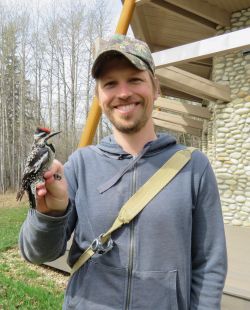
Brian Weeks is an Associate Professor in the School for Environment and Sustainability at the University of Michigan, where he joined as an Assistant Professor in 2019. His research focuses on understanding how species and communities respond to human-induced environmental changes, with particular emphasis on avian systems. Weeks leads an active research group that integrates museum specimen-based work, genomics, and field studies to investigate biodiversity responses to global change. Weeks' research interests span evolutionary ecology, climate change biology, and biodiversity conservation. His work primarily examines how bird species and communities have responded to environmental change through morphological adaptations. He combines museum-, field-, and lab-based approaches to study evolutionary processes across multiple scales, from macroevolutionary patterns in the Solomon Islands to contemporary changes in North American migratory birds. His lab has developed innovative methods like Skelevision for high-throughput measurement of functional traits from museum skeletal specimens. His publication record shows a strong focus on climate-driven morphological changes in birds, with recent work demonstrating how warming temperatures drive size reductions while simultaneously increasing wing length. His research has revealed that smaller-bodied species change at faster rates, and that migration timing shifts are decoupled from morphological changes. Weeks' lab also investigates biodiversity-ecosystem functioning relationships and extinction risk prediction. Packard Fellowship in Science and Engineering (2022) Ecological Society of America's George Mercer Award (2022) Katma Award, American Ornithological Society ISI Highly Cited paper (2021) Weeks advises multiple PhD and Master's students, and his lab collaborates extensively with researchers across institutions. His work has received significant media attention, with coverage in Science, The Wall Street Journal, The Washington Post, BBC News, and numerous international outlets. His research on birds shrinking due to climate change achieved an Altmetric score higher than 99.98% of papers tracked, reflecting its substantial scientific and public impact.
Katarina Hedlund is a Professor at Lund University's Department of Biology and serves as Director and Manager of the Centre for Environmental and Climate Science (CEC). She is also a Professor within BECC (Biodiversity and Ecosystem services in a Changing Climate), a Soil Ecology Profile area member of the LU Profile Area: Nature-based future solutions, and a Professor in Biodiversity and Evolution. Her extensive academic profile demonstrates leadership in multiple interdisciplinary research initiatives focused on environmental sustainability. Dr. Hedlund's research interests span the complex relationships between soil ecology, ecosystem services, and sustainable land management. Her work encompasses molecular studies of functional genes and microorganism interactions, above- and below-ground ecological relationships, and large-scale assessments of soil biodiversity. She investigates how knowledge and values of nature-based solutions can accelerate the transformation toward more sustainable development, with particular focus on soil resources, agricultural biodiversity, and urban ecosystem services. Her research directly contributes to multiple UN Sustainable Development Goals, particularly those related to environmental protection and sustainable resource management. Analysis of her 116 research outputs reveals consistent themes in soil ecology, biodiversity-ecosystem service relationships, and nature-based solutions for climate challenges. Her recent publications demonstrate increasing integration of economic and environmental assessment methods, with growing emphasis on urban applications and policy implementation. The research shows strong European collaboration patterns, particularly in agricultural and urban soil studies across diverse landscapes. Her scientific recognition includes: Excellent Teaching Practice award (2007) The Swedish King's 50th anniversary foundation award (2001) Dr. Hedlund has secured substantial research funding through 19 projects, including multiple Horizon Europe initiatives running through 2027. She has supervised numerous students (10 supervised works documented) and actively contributes to academic discourse through 33 recorded activities including workshops, seminars, and media engagements. Her current major projects include UGPplus (Enhancing urban green planning), NATURESCAPES (Nature-based Solutions for Climate Resilient Communities), and SOLO (Soils for Europe), reflecting her leadership in translating soil science into practical sustainability solutions. She leads research teams within the Centre for Environmental and Climate Science and collaborates extensively through the LU Land network, which brings together over 60 researchers from diverse disciplines to address complex land use challenges. Her work bridges fundamental soil science with practical applications for policymakers and land managers across Europe.
Sarah Adams is an Assistant Professor at the University of Oregon School of Law and a faculty member of the Environmental and Natural Resources Law Center. Her work bridges climate change law, land use, and state and local government law, with a focus on coastal resilience and floodplain management. Ph.D. and M.Jur. advising in environmental law Principal Investigator on New York Sea Grant Editorial board member: Urban Lawyer Her research explores climate resilience through state-level legislation , zoning reforms , and legal frameworks for floodplain and wildland urban interface planning. Recent publications highlight intersections between racial equity and land use law . Adams' University of Oregon work includes grants for annotated zoning codes and wind energy development . She has testified before national bar committees and presented at major symposia including the Columbia Journal of Environmental Law Climate Change Symposium . 2025 : Land Law Localism and Climate Resilience Paradox 2023 : White Supremacist Structure of Zoning Law Awards include the Hans Linde Fellowship. She previously chaired OGALLA: The LGBT Bar Association of Oregon and serves on the Urban Lawyer editorial board, contributing to legal education reforms and empirical studies in law. Adams earned her J.D. from Lewis & Clark Law School and M.A. in Economics from the London School of Economics, combining economic analysis with environmental law in her scholarship.
Professor Daniel Donoghue is a Professor in the Department of Geography at Durham University, specializing in remote sensing applications for archaeology, forestry, and coastal ecology. He has developed processing methods for high spectral resolution optical imaging, including the commercial T-Spectra package, and leads research on woodland structure assessment, archaeological prospection using declassified satellite imagery (e.g., CORONA), and catchment sensitivity modelling. His work is supported by organizations such as NERC, the European Commission, and the Environment Agency. His research focuses on airborne and satellite remote sensing for archaeological landscape assessment, forest monitoring, and coastal habitat change. He has pioneered techniques for using thermal infrared imagery in archaeology, quantifying woodland volume in UK upland forests, and analyzing land cover change in Bangladesh. His interdisciplinary approach integrates geographical information systems with environmental modelling to address challenges in resource management and ecological conservation. Analysis of his recent publications reveals a strong emphasis on forest dynamics under climate stress, mangrove ecosystem conservation, and archaeological heritage protection. His work leverages satellite and LiDAR data to monitor drought impacts on European beech forests, carbon sequestration in mangroves, and looting in conflict zones like Syria. This reflects a consistent trajectory toward solving real-world environmental and cultural preservation challenges through advanced remote sensing. Professor Donoghue has supervised over ten PhD students, including Anthony Beck (NERC studentship on satellite archaeology), Nikolaos Galiatsatos (HSSF scholarship on declassified imagery), and Commonwealth scholars studying Bangladesh's land cover changes. His externally funded projects include a European Commission LIFE-Environment grant (€249,000), a British National Space Centre partnership (£44,000), and Environment Agency contracts for sediment analysis. He co-founded the Archaeological Special Interest Group of the Remote Sensing Society and the Scottish Fisheries Co-ordination Centre, where he oversees IT systems for catchment management. His collaborations with the British Geological Survey and Durham County Council demonstrate applied research translating into environmental policy and conservation practice.
Sarah Cobey is a Professor in the Department of Ecology and Evolution at the University of Chicago. Her research focuses on the coevolution of pathogens and host immunity , particularly influenza , using computational and mathematical models . Education: AB from Princeton (2002), PhD from University of Michigan (2009), Postdoc at Harvard School of Public Health (2013) Research Interests : The Cobey Lab studies adaptive immunity dynamics , including antibody repertoire evolution , vaccine effectiveness , and immune-mediated pathogen competition . Key areas include influenza evolution , vaccination strategies , and B cell response predictability . Publication Trends (2023–2025): Recent work examines longitudinal immune modeling , influenza antigenic diversity , and cross-reactive antibody dynamics . Collaborations span immunology , virology , and public health . Scientific Awards : NIH New Innovator Award (2014) James S. McDonnell Scholar (2014) Neubauer Fellowship (2016) NSF GRF (2005) Grants : Past and current NIH funding includes U01AI187063 (2025–2029) on Adaptive Immunity to Influenza and R01AI170116 (2022–2027) on Influenza Vaccine Response Variability . Labs & Collaborations : Leader of the Cobey Lab , with collaborations at Harvard, NIH, and WHO. Projects often involve multi-scale modeling linking individual immune responses to population-level viral evolution .
Romaric Servajean-Hilst is a Lecturer in Strategy at KEDGE Business School , where he also teaches courses on purchasing and collaborative innovation management. He holds a doctorate in testing sciences from ESSEC and serves as an associate researcher at École Polytechnique's Management Research Center. His work bridges academic research with industry practice through collaborations with professionals in innovation and entrepreneurship. Doctorate in testing sciences, ESSEC Associate researcher, École Polytechnique's Management Research Center His research focuses on collaborative and disruptive innovation , with particular emphasis on purchasing's strategic role in open innovation ecosystems. He explores topics like supplier risk management, trust dynamics in vertical partnerships, and curiosity-driven procurement strategies. His work combines theoretical frameworks with actionable insights for corporate practitioners. His publications from 2024 to 2018 demonstrate consistent contributions to understanding open innovation , supplier integration , and strategic purchasing . Notable themes include secrecy in military firm collaborations, innovation climates in purchasing teams, and CSR tool limitations. At KEDGE BS, he teaches strategy and purchasing management , translating his research into practical applications for students. His publications span leading journals like Research Policy and Revue Française de Gestion, plus books including Collaborating to Innovate . Key research areas include: Collaborative innovation Open innovation climates Supplier relationship dynamics Strategic purchasing Curiosity in procurement Co-innovation frameworks
Sarah Jamal is a Lecturer in Public Law at the University of Paris-Panthéon-Assas, specializing in international legal frameworks. She teaches United Nations Human Rights System, Public International Law, European Union Law, Immigration Law, and Administrative Law while conducting research through the Center for Research on Human Rights and Humanitarian Law (CRDH). Her academic credentials include: Doctorate in Public Law (Public International Law specialization), University of Paris 2 Panthéon-Assas Master 2 Research in Human Rights and Humanitarian Law, University of Paris 2 Panthéon-Assas Professional Master 2 in Public Litigation, University of Paris 1 Panthéon Sorbonne Research interests center on public international law and human rights law, with particular focus on environmental-human rights intersections, digital technologies in legal investigations, and decolonization jurisprudence. Her work critically examines the Universal Declaration of Human Rights' applicability to emerging issues like environmental protection and digital surveillance, while analyzing tensions between international human rights bodies through case studies like face-covering bans. Recent publications (2019-2021) reveal three dominant trends: (1) jurisdictional challenges in international courts (Palestine/ICC case), (2) environmental-human rights linkages (Portillo Caceres case), and (3) systematic commentary on ICESCR articles addressing science, culture, and international cooperation. These works demonstrate consistent engagement with treaty interpretation and evolving state obligations. As Editorial Director of Fundamental Rights journal and lead researcher for the externally funded project "Individual participation in surveys through social networks" (Institute for Studies and Research on Law and Justice), she bridges academic scholarship with practical legal applications. Her CRDH affiliation facilitates interdisciplinary collaboration on human rights monitoring methodologies.
Prof. Dr. Pierre L. Ibisch is a Professor of Social Ecology of Forest Ecosystems at Hochschule für nachhaltige Entwicklung Eberswalde (HNEE). He serves as Founding Director of the Centre for Econics and Ecosystem Management and co-founded the Biosphere Reserves Institute. His work integrates ecological, social, and ethical dimensions of forest conservation. Current academic affiliation: HNEE (since 2024) Previous roles: Professor for Nature Conservation (2004-2024), Research Professorships (2009-2024) Research Focus: Ecosystem-based sustainable development, adaptive vulnerability management, and econics. He emphasizes transdisciplinary approaches to forest conservation and climate protection. Scientific Contributions: Recent publications analyze post-fire forest recovery, climate change impacts on forests, road infrastructure effects, and policy implementation challenges. His work demonstrates systemic understanding of forest ecosystems through empirical and conceptual studies. Notable 2025 studies: Post-fire regeneration dynamics, EU restoration policy implementation, roadless area conservation Awards & Memberships: Advisory Board Member, German Federal Ministry for the Environment (2024) Founding Program Director, B.Sc. Social-Ecological Forest Management Board member of multiple conservation organizations
Dr. Agnieszka Gruszczyńska is a researcher specializing in paleoenvironmental studies at an academic institution in Poland, working within the Department of Dynamics of Past Landscapes. She completed her PhD in 2023 after conducting extensive research on the paleogeographic development of the Great Sertei Lake Basin in the Vitebsk Lake District, using paleoecological analyses as her primary methodology. Education: 2016-2023: PhD studies on Paleogeographic development of the Great Sertei Lake Basin in the Vitebsk Lake District in the light of paleoecological studies 2014-2016: Master's degree in Environmental Protection, Faculty of Biology and Environmental Protection, University of Lodz, specialization in ecology and water protection 2012-2014: Master's degree in Pedagogy with physical and health education, Faculty of Geographical Sciences, University of Lodz Dr. Gruszczyńska's research centers on ecosystem responses to violent and extreme events throughout geological history, with particular expertise in Chironomidae ecology where she investigates non-temperature factors influencing population dynamics and community quality. Her work spans paleoecological analysis of aquatic invertebrate remains and examines climate change patterns throughout the Pleistocene and Holocene epochs. She frequently employs multi-proxy approaches to reconstruct past environmental conditions, with fieldwork concentrated in Eastern Europe, particularly Western Russia's Serteya region and various Polish lake districts. Her extensive publication record demonstrates a methodological focus on paleolimnology and paleoenvironmental reconstruction using lake sediments, peat bogs, and other natural archives. Recent work shows increasing emphasis on human-environment interactions throughout history, particularly regarding historical land use practices like charcoal production and their long-term ecological impacts. Her collaborative research bridges Quaternary science, archaeology, and modern environmental concerns, often examining how past environmental changes can inform contemporary ecological challenges. Dr. Gruszczyńska actively participates in international research collaborations, particularly with institutions in Russia and other European countries, contributing to our understanding of long-term environmental changes and human adaptation to these changes across the East European Plain.
Prof. Dr. Edgar Kreilkamp is a full-time Professor at Leuphana University of Lüneburg , affiliated with the Institute for Management & Organization (IMO) . His academic and research expertise spans business administration , tourism management , and sustainability science , with a strong focus on integrating sustainable practices into tourism systems through digital innovation and strategic stakeholder collaboration. Research Focus: Sustainable tourism development and policy Digital transformation and big data in tourism Service marketing and consumer behavior Climate adaptation and environmental impact assessment Gamification and experiential design in tourism Projects & Contributions: Prof. Kreilkamp has led and contributed to multiple high-impact projects funded by the Federal Ministry of Education and Research (BMBF), including: Green Travel Transformation : Developing models for sustainable tourism management and labeling of travel packages. Digitalization as a Success Factor in Tourism : Exploring how digital tools can enhance sustainability and competitiveness. Climate-Neutral Island of Juist : A long-term initiative to transform Juist into a global model for climate-neutral tourism. KUNTIKUM : Investigating climate trends and sustainable tourism development in coastal and low mountain regions. Publications & Media: He has authored and co-authored numerous scholarly articles, book chapters, and policy reports. His work has appeared in both peer-reviewed journals and industry-focused publications, and he is a frequent keynote speaker at international conferences and policy forums. His media contributions include expert commentary on sustainable travel, climate-conscious tourism strategies, and digital innovation in the tourism sector. Contact: Email: edgar.kreilkamp@leuphana.de Phone: +49.4131.677-2171 Office: C6.124, Universitätsallee 1, 21335 Lüneburg, Germany
David Obura is a Founding Director of CORDIO East Africa, based in Mombasa, Kenya, and maintains an academic affiliation with the University of Queensland. He is a leading expert in coral reef resilience, particularly regarding climate change impacts, and the biogeography of the Indian Ocean. His work bridges science and action, integrating conservation and development through inclusive blue economy principles aligned with global sustainability goals. Dr. Obura serves in several prestigious expert roles including: Chair of the IUCN Coral Specialist Group Coordinating Lead Author for the IPBES Global Assessment National Geographic Explorer Member of the Earth Commission, Global Commons Alliance/Future Earth Technical Working Group member for the High Level Panel on Ocean Sustainability His research spans multiple scales from local community engagement through regional initiatives like the Northern Mozambique Channel alignment to global policy influence. Dr. Obura's work emphasizes critical connections between marine ecosystem health, human wellbeing, and sustainable development in the Western Indian Ocean region. As a prolific researcher, he has published extensively on coral reef ecology, climate change impacts, and sustainable ocean governance. His recent work focuses on Earth system boundaries, climate tipping points, and integrating biodiversity conservation with climate action through frameworks like the Global Biodiversity Framework. Dr. Obura is recognized for translating scientific knowledge into actionable policy recommendations. His leadership with CORDIO East Africa has been instrumental in building regional capacity, fostering stakeholder engagement, and developing innovative coral reef management approaches across the Western Indian Ocean.
Dr. Allison M. Macfarlane is Professor and Director of the School of Public Policy and Global Affairs within the Faculty of Arts at the University of British Columbia. She is a leading expert in energy and environmental policy, with a specialized focus on nuclear policy. Dr. Macfarlane has held significant positions in both academic and government sectors, including her notable role as the first geologist and third woman to chair the U.S. Nuclear Regulatory Commission from 2012-2014. Dr. Macfarlane earned her Ph.D. in Earth Science from MIT in 1992, with a thesis on metamorphism, deformation and plutonism in the Langtang region of the central Nepal Himalaya. She received a National Science Foundation Fellowship from 1988-1991. Her undergraduate degree is a B.Sc. with Summa Cum Laude from the University of Rochester (1986), where she received Highest Distinction in Geology for her work on strontium and neodymium isotopic studies of Bermuda's volcanic rocks. Her research expertise spans energy policy, science and technology policy, and sustainable resource policy, with particular emphasis on nuclear energy production, nuclear waste management and disposal, regulation, nuclear nonproliferation, and broader energy policy frameworks. Dr. Macfarlane's work bridges technical, social, and policy dimensions of nuclear issues, informed by her unique background as both a geologist and policy expert. Analysis of Dr. Macfarlane's recent publications reveals a consistent focus on nuclear waste management challenges, particularly regarding small modular reactors, deep borehole disposal, and long-term policy solutions. Her work demonstrates an interdisciplinary approach that combines geological knowledge with policy analysis, addressing both technical aspects of nuclear waste disposal and broader governance issues. She has increasingly focused on the relationship between nuclear energy and climate change mitigation efforts. Wilson Center Scholar, Woodrow Wilson Center for International Scholars (2019-2020) Fulbright Distinguished Chair, Flinders University and Carnegie Mellon University (2018) Member of the Board, American Institute of Physics (2018-present) Alumni Achievement Award, University of Rochester (2017) Chairman, U.S. Nuclear Regulatory Commission (2012-2014) Commissioner, U.S. Blue Ribbon Commission on America's Energy Future (2010-2012) Chair of the Science and Security Board, Bulletin of Atomic Scientists (2008-2012) Dr. Macfarlane has demonstrated leadership in numerous collaborative research initiatives and policy projects. During her tenure at the Nuclear Regulatory Commission, she pushed for greater public dialogue, international engagement among nuclear regulators, and stricter safety protocols following the Fukushima accident. She has also advocated for more family-friendly workplace policies. Her research supervision spans interdisciplinary projects connecting earth sciences with policy analysis, particularly in nuclear waste management contexts.