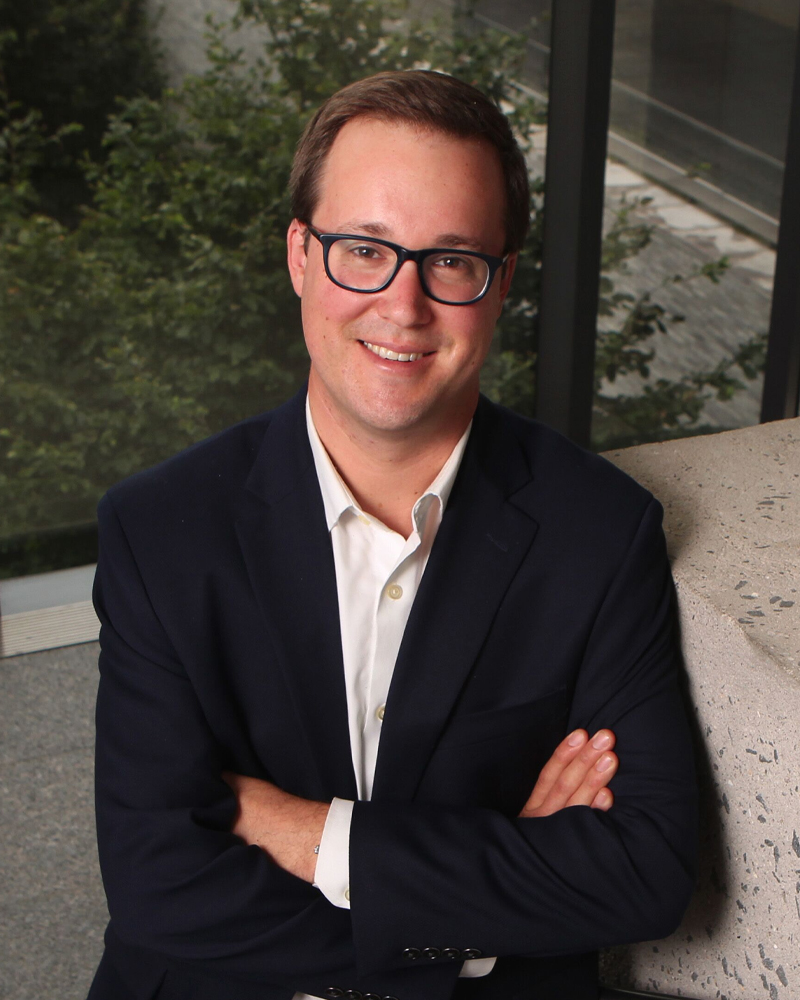
Jesse D. Jenkins is an Associate Professor of Mechanical and Aerospace Engineering and the Andlinger Center for Energy and the Environment at Princeton University. His joint appointment bridges the School of Engineering and Applied Science and the Andlinger Center, focusing on macro-scale energy systems engineering. He holds a Ph.D. in Engineering Systems from MIT (2018) and completed a postdoctoral fellowship at Harvard Kennedy School. Research Interests: Energy systems modeling, deep decarbonization pathways, low-carbon technologies, and energy policy. He leads the Princeton ZERO Lab, which develops optimization-based models to evaluate clean energy transitions and inform policy. Key Awards: Howard B. Wentz Jr. Junior Faculty Award, Princeton Engineering Teaching Excellence Award, TIME100 Next (2024), and recognition in ENR's 2022 Top 25 Newsmakers for leadership in climate policy analysis. Professional Contributions: Serves on advisory boards for Eavor Technologies, Rondo Energy, and Dig Energy. Co-hosts the podcast Shift Key on energy transition strategies. Labs/Teams: Directs the ZERO Lab and co-leads the REPEAT Project, analyzing U.S. decarbonization pathways and federal policy impacts.
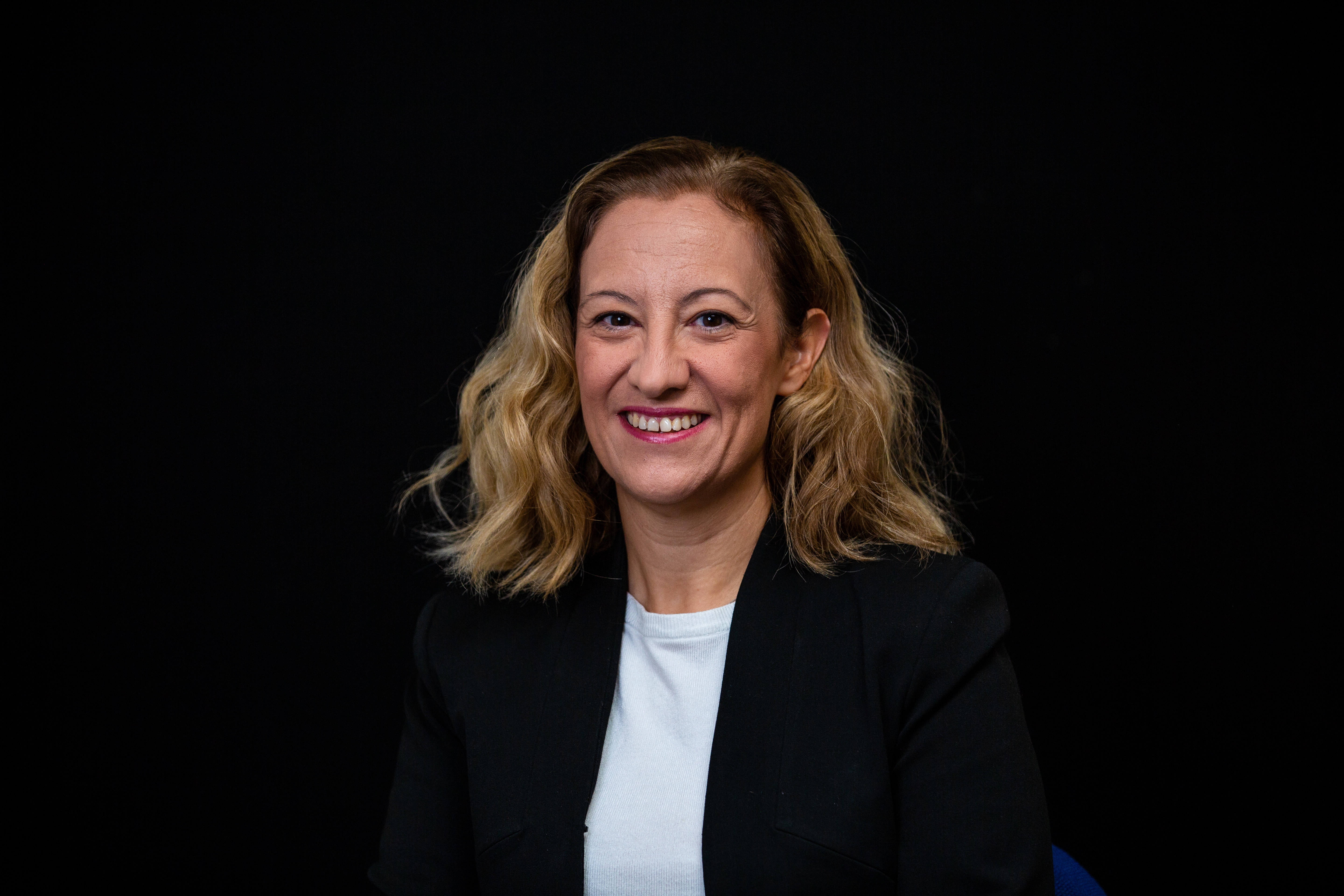
Professor Irem Dikmen is a leading academic in Construction Engineering and Management at the University of Reading, where she serves as School Director of Internationalisation in the Chancellor's Building. Her research integrates engineering, management, and information sciences to advance construction project risk management, particularly focusing on climate resilience, digital technologies, and social value in infrastructure systems. PhD, MSc, and BSc in Civil Engineering from Middle East Technical University Her work leverages systems thinking, artificial intelligence, and digital tools to develop decision-support frameworks for megaprojects and climate adaptation. Recent publications highlight innovations in NLP contract analysis, energy performance ontologies, and risk visualization techniques. She supervises students on topics spanning IoT lifecycle management, ESG risks, and NLP defect detection. Key collaborations include the Climate and Finance Research Cluster and Walker Institute , with contributions to digital construction technologies and sustainability risk assessment. Teaching modules include Construction Risk Management, Economics, and Business Organisation.
Christian FISCH is an Associate Professor in Business Economics and Entrepreneurship at the University of Luxembourg's Interdisciplinary Centre for Security, Reliability and Trust (SnT). His research focuses on the intersection of entrepreneurship with digital technologies, venture finance, and socio-cultural influences. Key areas include blockchain-based financing mechanisms (e.g., ICOs), the psychological and digital identity aspects of entrepreneurs, and the impact of environmental/climate factors on entrepreneurial activity. He has published extensively in top journals, addressing topics such as B Corp certification signaling effects, venture capital decision-making, and the paradox of technology adoption among SMEs. His work spans both theoretical contributions (e.g., extending Schumpeterian frameworks) and applied analyses (e.g., post-pandemic entrepreneurial resilience). FISCH collaborates with global institutions, leveraging mixed-methods approaches including digital trace analysis from platforms like Twitter to study investor behavior and entrepreneurial traits. He has no listed awards but maintains active research agendas in decentralized finance, climate entrepreneurship, and cross-cultural entrepreneurial motivations. Professional activities include editorial roles in entrepreneurship journals and advising on innovation policy. His research often addresses emerging trends such as NFTs in creative industries, DAO governance structures, and the role of trademarks/patents in regional innovation ecosystems.
Stefano Galelli is a tenured Associate Professor in the School of Civil and Environmental Engineering at Cornell University, where he leads the Critical Infrastructure Systems Lab. He also holds an adjunct position as a Research Scientist at the Lamont-Doherty Earth Observatory, Columbia University. His career spans roles in Singapore, including a Postdoctoral Research Fellow at NUS (2011–2013) and faculty at the Singapore University of Technology and Design (2013–2023). Dr. Galelli earned his B.Sc. (2004), M.Sc. (2007), and Ph.D. (2011) in Environmental and Land Planning Engineering and Information Technology from Politecnico di Milano, Italy. His research focuses on the interactions between critical infrastructure systems and natural environments, emphasizing adaptive management solutions for water-energy systems. Techniques include process-based modeling, climatology, statistical learning, control theory, and optimization. He explores topics like hydro-climatic variability impacts, dam re-operation for environmental flows, and cyber-physical security in infrastructure. His contributions to journals such as Nature Sustainability, Earth’s Future, and Environmental Modelling & Software have earned him multiple awards, including the Early Career Research Excellence Award (2014) and SUTD Excellence in Research Award (2017). He has served as an editor for several journals and is recognized for advancing interdisciplinary approaches to water-energy nexus challenges. Teaching highlights include foundational mathematics courses and advanced topics in data analytics, optimization, and water-energy management. He is developing new courses on data-driven control of coupled human-natural systems and risk management for interconnected systems.
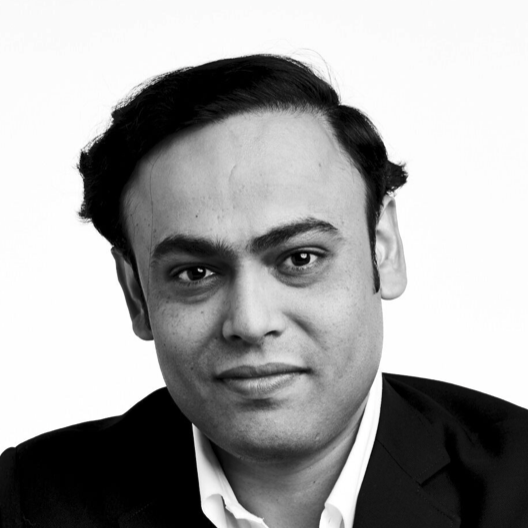
Saurabh Amin is a Professor in the Department of Civil and Environmental Engineering at the Massachusetts Institute of Technology (MIT), where he also serves as the Edmund K. Turner Professor and Undergraduate Officer. He is a Principal Investigator at the Laboratory of Information and Decision Systems and holds affiliations with the Operations Research Center and the Center for Computational Science and Engineering. His educational background includes: B.Tech. 2002, Indian Institute of Technology (IIT) Roorkee M.S. 2004, University of Texas (UT) Austin Ph.D. 2011, University of California (UC) Berkeley Saurabh Amin's research focuses on the design and control of infrastructure systems using game theory and optimization in networks. His work spans three main areas: resilient network control, information systems and incentive design, and optimal resource allocation in large-scale infrastructure systems. By concentrating on critical infrastructure domains including highway transportation, electric power distribution, and urban water networks, his research develops innovative theory and tools to enhance system performance against both stochastic and adversarial disruptions. His approach involves modeling cyber-physical interactions in infrastructures to assess vulnerabilities, developing detection and response tools for failures at various scales, and designing economic incentive schemes that improve aggregate public good while accounting for dependencies and private information among strategic entities. Amin's work bridges mathematical systems theory with practical civil engineering applications, creating a rigorous theoretical foundation for infrastructure resilience that addresses diverse failure mechanisms from natural disasters to deliberate malicious actions. His recent publications demonstrate a strong focus on decarbonization of energy systems, resilient infrastructure planning under climate uncertainty, optimization methods for complex networked systems, and game-theoretic approaches to sustainable infrastructure management. His work increasingly integrates artificial intelligence and machine learning techniques with traditional control theory to address contemporary challenges in infrastructure resilience and sustainability. The research shows a clear trajectory toward addressing climate change impacts on infrastructure systems while maintaining economic efficiency and operational reliability. Professor Amin has received numerous prestigious awards and honors: Common Ground Excellence in Teaching Award, 2025 HSCC Test-of-Time Award, 2024 MIT CEE, Distinguished Service and Leadership Award, 2023 Samuel M. Seegal Prize (SoE) – inspiring students in pursuing and achieving excellence, 2022 Earll M. Murman for Excellence in Undergraduate Advising, 2022 C3.ai Digital Transformation Institute Research Award, 2020 MIT, Ole Madsen Mentoring Award, 2020 MIT, Energy Initiative Research Award, 2020 National Academy of Engineering, China-America Frontiers of Engineering Symposium speaker, 2019 MIT, Robert N. Noyce Career Development Professor, 2015-2018 Google Faculty Research Award, 2015 National Science Foundation CAREER Award, 2015 Siebel Energy Institute Research Award, 2015 MIT, Solomon Buchsbaum AT&T Research Fund Award, 2012 Professor Amin has been actively involved in significant research projects including the C3.ai DTI project on Causal Reasoning for Real-Time Attack Identification in Cyber-Physical Systems and another on Learning in Routing Games for Sustainable Electromobility. He serves as the chief scientist on multi-institutional NSF grants, including the $9 million Foundations of Resilient Cyber-Physical Systems (CPS) project. His teaching portfolio includes courses such as 1.008 Engineering for a Sustainable World, 1.104 Sensing and Intelligent Systems, 1.020 Engineering Sustainability: Analysis and Design, and 1.208 Resilient Networks. As Undergraduate Officer, he plays a key role in shaping the educational experience for civil and environmental engineering students at MIT. Professor Amin leads the Resilient Infrastructure Networks Lab at MIT, where his team develops theoretical foundations and practical tools for infrastructure resilience. The lab focuses on the intersection of control theory, game theory, and optimization applied to cyber-physical infrastructure systems. Current research directions include pandemic-resilient urban mobility and hurricane-resilient smart grid operations, reflecting the lab's commitment to addressing pressing societal challenges through rigorous systems engineering approaches.
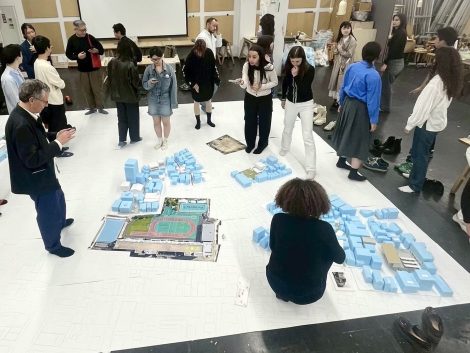
Keigo Kobayashi is an Associate Professor at Waseda University's Faculty of Science and Engineering, School of Creative Science and Engineering, Department of Architecture. He has served in this position since 2016, previously holding the rank of Assistant Professor from 2012 to 2016. His professional journey includes significant experience at the Office for Metropolitan Architecture (OMA) in Rotterdam, where he worked as a Senior Architect and Project Architect from 2007 to 2012. His educational background includes a Master of Architecture II from Harvard University's Graduate School of Design (2005), a Master of Architecture from Waseda University's Graduate School of Science and Engineering (2003), and a Bachelor's degree in Architecture from Waseda University's School of Science and Engineering (2002). Kobayashi's research focuses on architectural planning and city planning, with particular interests in food-related architecture, spatial behavior, and sustainable design. His work explores the intersection of architecture with everyday life, examining how spatial configurations influence human behavior and community formation. Recent research has investigated food systems in urban contexts, playful approaches to spatial design, and the relationship between architectural form and environmental performance. His publications demonstrate a strong focus on practical applications of architectural theory, with projects spanning from food truck design in Shodoshima to zero-energy housing solutions and innovative approaches to architectural education. His work shows a consistent interest in how architecture can respond to contemporary social challenges while maintaining theoretical rigor. Excellence in Concrete Construction Award 2019, American Concrete Institute (ACI), Qatar National Library / OMA Kobayashi actively contributes to architectural education through various committee memberships, including serving as Chief of the Subcommittee on Strategies for International Compatibility in Architectural Education at the Architectural Institute of Japan and leading the Caberra Accord Correspondence Subcommittee at the Japan Accreditation Board for Engineering Education. His teaching portfolio at Waseda University is extensive, covering architectural design studios from undergraduate to doctoral levels. He leads several research initiatives, including the Wakusei Project in Tosa, Kochi, NPO PLAT (Platform for Architectural Thinking), and the European Thinkbelt/McDonald's Radio University project which represents an innovative approach to architectural education and community engagement, particularly in contexts of migration and cultural exchange.
J. Eric Bickel is a Professor at The University of Texas at Austin, serving as Director of the Operations Research & Industrial Engineering (ORIE) and Engineering Management programs. He holds a courtesy appointment in the Department of Petroleum and Geosystems Engineering and directs the Center for Engineering & Decision Analytics (CEDA). His academic background includes a PhD and MS in Engineering-Economic Systems from Stanford University and a BS in Mechanical Engineering from New Mexico State University. His research focuses on decision analysis under uncertainty, addressing topics like probabilistic modeling, climate engineering, risk management, and applications in sports and energy sectors. His work has been featured in major media including The New York Times and Wall Street Journal , and his climate engineering research was endorsed by Nobel Laureates as a top climate change response strategy. Professor Bickel has extensive industry experience, having previously served as Senior Engagement Manager and Co-Director of Client Education at Strategic Decisions Group (SDG), where he remains on the Board of Directors. His consulting spans oil/gas, energy trading, and financial services sectors. He has received recognition as a Fellow of the Society of Decision Professionals and contributed to the Copenhagen Consensus on Climate Project. His teaching extends to executive education through Texas Executive Education and McCombs School of Business. Research highlights include novel methods for probabilistic dependence modeling, value-of-information analysis in shale reservoirs, and critiques of risk assessment tools like heat maps. His climate engineering work emphasizes economically viable solar radiation management strategies.
Andrew Rowe is a Professor in Mechanical Engineering at the University of Victoria (UVic), with affiliations to the Institute for Integrated Energy Systems (IESVic) and the Advanced Mechanical Research Laboratory (AMRLab). He holds a BEng from the Royal Military College of Canada, MASc and PhD from UVic, and is a licensed Professional Engineer (P.Eng). His research focuses on thermodynamics, energy systems, cryogenics, and heat transfer, with particular expertise in caloric cycles, hydrogen systems, and energy systems analysis. His research emphasizes decarbonization strategies, including hydrogen integration into natural gas networks, grid flexibility under electrification scenarios, and the optimization of magnetocaloric materials for energy-efficient cooling. AMRLab, led by Rowe, develops technologies for energy conversion, storage, and system optimization, addressing challenges in low-temperature thermal systems and integrated energy networks. Recent work explores the systemic impacts of electrification in transportation and buildings, leveraging open-source tools like the NExus Solutions Tool (NEST) for multi-scale energy-water-land system modeling. His projects often address regional energy challenges, such as British Columbia’s transition to renewable energy and grid infrastructure resilience. Key contributions include studies on gas system decarbonization via hydrogen blending, thermal-hydraulic modeling of energy systems, and experimental validation of magnetocaloric materials. Rowe’s publications highlight interdisciplinary approaches to climate mitigation, emphasizing the interplay between technological innovation and systemic policy frameworks.
René M. Stulz is the Everett D. Reese Chair of Banking and Monetary Economics at The Ohio State University's Max M. Fisher College of Business , where he also serves as Director of the Dice Center for Research in Financial Economics . He has held academic positions at MIT, University of Chicago, and University of Rochester. Ph.D., Massachusetts Institute of Technology Marvin Bower Fellowship (Harvard Business School) Doctorat Honoris Causa (University of Neuchâtel) Risk Manager of the Year (Global Association of Risk Professionals) His research spans corporate finance , financial institutions , and asset pricing , with recent work on unicorns , cyberattack economic impacts , and banking regulation . His articles show expertise in market volatility , governance , and financial globalization . Stulz has won multiple scientific awards and served as editor of the Journal of Finance and Journal of Financial Economics . He consults for the IMF , World Bank , and major financial institutions , and has testified in federal/state courts .
Paul Dodds is Professor of Energy Systems at University College London's Bartlett School of Environment, Energy & Resources, where he holds joint appointments at the UCL Energy Institute and the Institute for Sustainable Resources. He serves as the Faculty Graduate Tutor for the Bartlett Faculty of the Built Environment, overseeing all doctoral research programs. His academic progression at UCL has been steady, moving from Research Associate (2011-2014) to Senior Research Associate (2014-2015), Lecturer (2015-2016), Senior Lecturer (2016-2018), Associate Professor (2018-2020), and finally to Professor. His educational background includes a PhD from the University of Leeds (2010) focused on climate change and agriculture in Senegal, where he developed a new crop model for adaptation research and created detailed meteorological datasets for West Africa. He also holds a Master of Natural Science (Honours) from the University of Nottingham (2000). Dodds specializes in energy systems modelling with particular expertise in hydrogen and bioenergy systems, and the importance of energy storage. His research examines the interactions between society and the environment, with a focus on energy and food systems. He has developed the UK TIMES energy systems model, which has replaced the UK MARKAL model and is now co-developed with the UK Department of Business, Energy and Industrial Strategy (BEIS). This model has provided underpinning evidence for the UK's Clean Growth Strategy and Net Zero Strategy. His methodological contributions include formalizing a theoretical approach to analyzing the evolution of energy system models using 'model archaeology'. Analysis of his recent publications reveals a strong focus on hydrogen energy systems, with multiple papers examining hydrogen trade pathways, integration methods, and environmental impacts. His work increasingly addresses the geopolitical dimensions of energy transition, as seen in studies about Russian gas pivots to Asia and global energy scenarios. He maintains expertise in energy system modeling techniques while expanding into practical applications for policy development, particularly regarding the UK's net-zero transition. Dodds has supervised 15 PhD students at UCL, with eight under his primary supervision. His professional activities include serving as the UK Alternate Delegate to IEA Hydrogen since 2017, acting as a PhD External Examiner at the University of Edinburgh, and participating in the EPSRC Peer Review College. He has contributed to multiple government initiatives, including the UKERC Future of the Gas Networks workshop and representing the UK Government at IEA ETSAP meetings. He teaches an undergraduate module on 'Energy and Environmental Systems Modelling' and guest lectures on several MSc courses. His research group focuses on energy system modeling, with particular emphasis on the UK TIMES model development and application. His work often involves collaboration with government bodies, particularly BEIS, and he has coordinated significant projects like seven reports on overshoot pathways for the UK Government.
Meltem ŞENOL BALABAN is an Associate Professor in the Department of City and Regional Planning at Middle East Technical University (METU), Ankara, Turkey. She holds a dual PhD in City and Regional Planning (METU, 2009) and Urban Engineering (University of Tokyo, 2012). Her academic career includes roles as Director of METU Disaster Management Implementation and Research Center (since 2018), Minor Program Coordinator, and Board Member of the Applied Ethic Research Center. She specializes in disaster risk management, urban resilience planning, GIS-based modeling for evacuation/shelter optimization, and climate change adaptation in urban contexts. Her research focuses on flood risk mitigation in riverine cities, institutional frameworks for cultural heritage protection (e.g., UNESCO sites), and earthquake resilience strategies. Notable projects include developing Turkey's provincial risk reduction guidelines, a climate change risk assessment framework (CRAFT) for cultural heritage, and international cooperation initiatives like the UK-funded CRAFT and NET projects. She has authored over 40 peer-reviewed publications and supervised 10+ theses. Key contributions include GIS-based evacuation models for Istanbul, comparative studies of UK/Japan/Turkey disaster policies, and post-disaster resilience assessments. Awards include JICA Scholarship (2009-2012), ProVention Research Grant (2007-2008), and multiple international recognitions for her work on urban risk reduction. Her teaching portfolio includes courses on GIS in planning, disaster management principles, and urban resilience strategies.
Dr. Alfred Chong is an Associate Professor in the Department of Actuarial Mathematics and Statistics at Heriot-Watt University (HWU). Previously, he served as an Assistant Professor at the University of Illinois at Urbana-Champaign (UIUC) and co-founded the Illinois Risk Lab. His research focuses on Actuarial Science, Financial Mathematics, and Quantitative Risk Management, addressing emerging risks like cyber, pandemic, and climate risks, leveraging machine learning, optimization, and stochastic control. He holds a PhD from The University of Hong Kong and King's College London, and is an Associate of the Society of Actuaries. Chong actively contributes to academic governance, including roles in the EPSRC Mathematical Sciences Early Career Forum and the Maxwell Institute's Data and Decisions research theme. Education: PhD in Actuarial Science, University of Hong Kong & King's College London Research Interests: Chong explores risk sharing mechanisms, forward preferences in insurance, and mitigation strategies for large-scale risks. His work integrates data analytics and machine learning to solve decision-making challenges, such as cybersecurity risk assessment, pandemic resource allocation, and climate risk modeling. Recent projects include incident-specific cyber insurance design and delegated investment strategies for retirement savings. Awards: Michael V. Colla Prize for Mathematics Related to Medicine (2022) Best of 2020 in the Annual Meeting of the Casualty Actuarial Society (2021) Advising & Grants: Chong supervises PhD students in holistic risk management, forward preferences, and reinforcement learning applications. He has secured grants supporting interdisciplinary research in risk modeling and insurance innovation. Labs & Teams: Co-founder of the Illinois Risk Lab (UIUC), now leading research at HWU's Actuarial Mathematics & Statistics department. Engaged with the International Centre for Mathematical Sciences for knowledge exchange initiatives.
Dr. Lisa Wang is a tenure-track Assistant Professor in the Department of Civil & Environmental Engineering at Old Dominion University (ODU). She holds a Ph.D. and Postdoctoral Fellowship in Structural Engineering from Colorado State University (CSU), with additional research at NIST’s Center for Risk-Based Community Resilience Planning. She is a licensed California Professional Engineer (PE) and has expertise in multidisciplinary community resilience assessment, mitigation strategies, and policy analysis. Her research focuses on integrating physical, socio-economic, and infrastructural systems to enhance disaster resilience in coastal and hazard-prone communities. Education: Ph.D. and Postdoc (CSU, 2022-2024), M.S. in Structural Engineering (University of Colorado Denver & Jilin University, 2015), B.S. in Civil Engineering (Jilin University, 2012). Professional licenses include CA PE #94251 and CO EIT #007558. Research Interests: Community resilience under multi-hazards (tornadoes, floods, climate change), resilience-based design of structural systems, data fusion across disciplines, and equitable decision-making for disaster resilience. Recent grants include $31k for AI-driven coastal resilience strategies and $10k for minimum building portfolio development. Grants & Awards: Principal Investigator (PI): Trustworthy AI in Coastal Resilience (ICAR, $31k), AI-Driven Building Portfolios (ODU PURS, $10k) Awards: O. H. Ammann Fellowship (ASCE), ICAR Travel Grant, AGU NSF Travel Grant, Jack E. Cermak Fellowship Labs & Teams: Wang Research Group and Structural Engineering Research Laboratory at ODU.
Seth Blumsack is a Professor at the Pennsylvania State University in the Department of Energy and Mineral Engineering and serves as Director of the Center for Energy Law and Policy . He holds an Adjunct Research Professor position at the Carnegie Mellon Electricity Industry Center and is affiliated with the Santa Fe Institute as an External Faculty member. His research spans energy economics , power grid reliability , and complex infrastructure networks . Key projects include: Interdependent natural gas and electricity systems analysis Governance of regional transmission organizations Smart grid consumer behavior studies Power grid reliability tools development He has secured funding from the U.S. National Science Foundation , Department of Energy , Environmental Protection Agency , and private industry. His Best paper award at Hawai’i International Conference on System Sciences (2011) and John T. Ryan, Jr. Fellowship (2011-17) highlight his scientific recognition. Publications emphasize electricity market deregulation , energy infrastructure resilience , and consumer response to smart grid technologies . His work has been cited in major media outlets like The New York Times and The Los Angeles Times , and he has consulted for National Renewable Energy Laboratory , U.S. Department of Energy , and other industry stakeholders.
Di Bu is an Associate Professor in the Department of Applied Finance at Macquarie University, leading the Macquarie University FinTech and Banking Research Centre. He holds a PhD in Finance from the University of Queensland (2015). His research focuses on FinTech innovations, climate finance, household finance, and behavioral finance, with an emphasis on embedding sustainability into financial systems. He has secured over AUD 4 million in research funding through ARC Linkage and Discovery projects, focusing on AI-driven credit assessments, Open Banking, ESG analytics, and climate resilience. Education PhD in Finance, University of Queensland (2015) Research Interests Di's work explores belief formation in financial decisions, sustainable lending practices, and climate adaptation tools. He pioneers projects such as AI credit scoring systems, behavioral interventions for sustainable investing, and digital platforms for climate resilience. His interdisciplinary approach bridges industry, government, and academia to address financial and environmental challenges. Projects & Funding AUD 4M+ in grants including two ARC Linkage and one ARC Discovery projects Current initiatives: Greenwashing detection, ESG rating divergence analysis, and climate-resilient finance platforms Labs/Teams Director of the FinTech & Banking Research Centre and affiliated with Data Horizons Research Centre and Frontier AI Research Centre at Macquarie University.