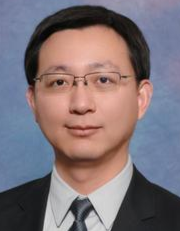
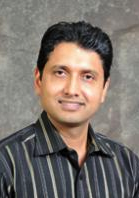
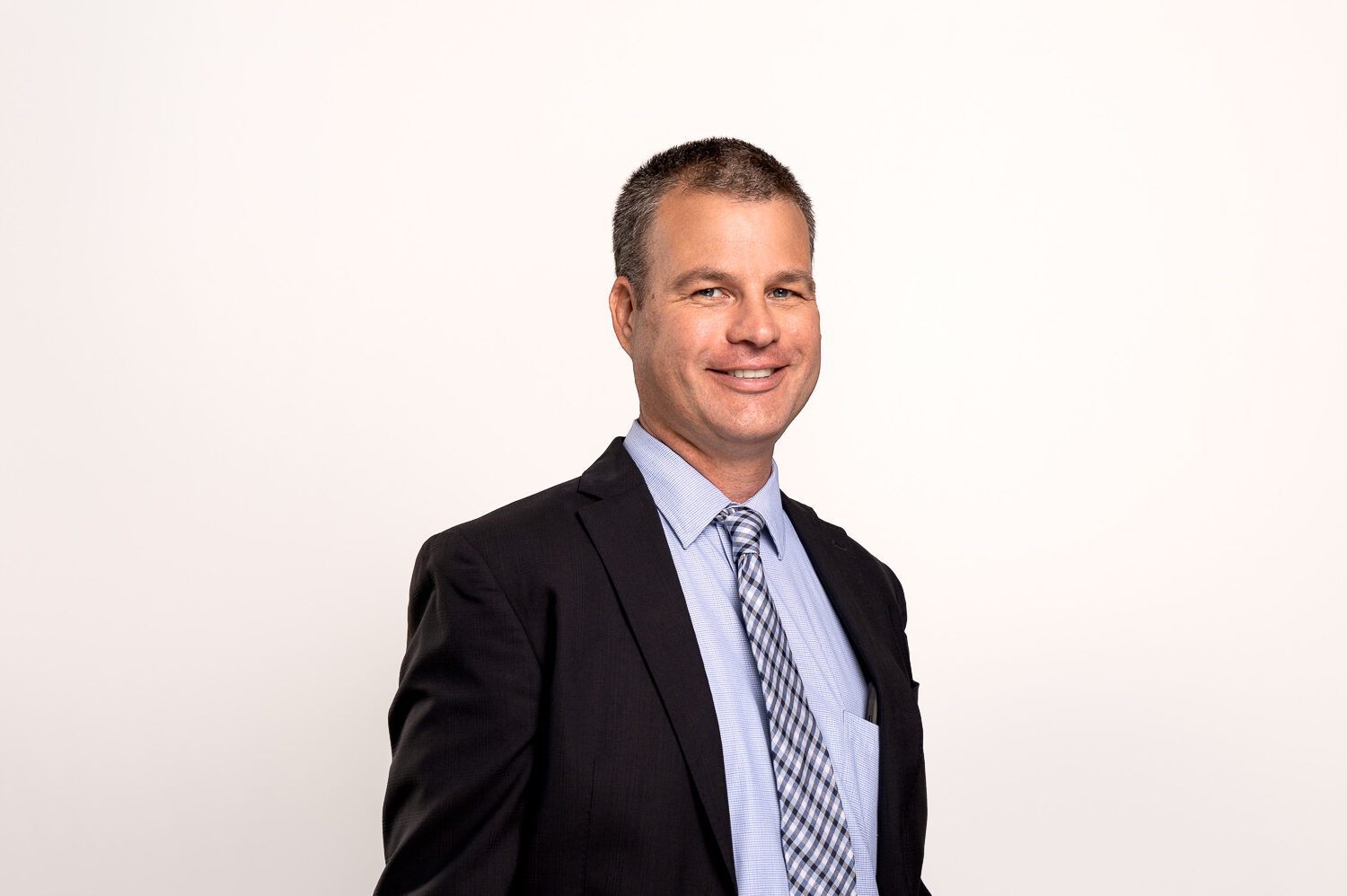
Jonathan Abbatt is a Professor of Chemistry at the University of Toronto, specializing in environmental chemistry with a focus on atmospheric processes. His research examines multiphase chemistry in indoor and outdoor environments, particularly aerosol particle interactions and their impacts on climate and air quality. He leads the Abbatt Group, which investigates topics such as Arctic chemistry, indoor chemical transformations, and brown carbon aging. Research interests span indoor/outdoor chemical reactions, aerosol physics, and environmental modeling. Notable projects include studies on ozone deposition on indoor surfaces, biomass burning emissions, and reactive chlorine sources in urban areas. His work integrates lab experiments, field measurements, and computational models. Recent studies highlight indoor surface reactivity, wildfire impacts on ozone, and multiphase oxidation mechanisms. Collaborations with institutions like Environment and Climate Change Canada ensure practical applications of his findings. Students and postdocs in his lab contribute to advancing knowledge in air quality and climate change mitigation.
Min Chen is an Assistant Professor in the Department of Forest and Wildlife Ecology at the University of Wisconsin–Madison, affiliated with the Russell Labs. His research focuses on terrestrial ecosystem modeling, remote sensing applications, and human-Earth system interactions. He holds a PhD in Earth & Atmospheric Sciences from Purdue University, an MS in Remote Sensing and GIS from Beijing Normal University, and a BS in Computer Science from Beijing Normal University. His postdoctoral work included roles at the Carnegie Institution for Science and Harvard University. Research interests include forest carbon dynamics, methane emissions from wetlands, wildfire risk analysis, and the integration of remote sensing with Earth system models. His work emphasizes advancing methods for global-scale environmental monitoring using satellite and drone technologies. Notable contributions include studies on forest edge dynamics, vegetation-climate feedbacks, and the application of machine learning in ecological modeling. Recent publications highlight advancements in leaf trait prediction using transfer learning, global wetland methane flux modeling, and the impacts of climate change on land-use patterns. His lab develops innovative approaches to track terrestrial carbon cycles and assess human-driven environmental changes. Ongoing projects explore urban land expansion effects on carbon balances and phenological shifts under global change scenarios.
Professor Hilary Bambrick is a distinguished environmental epidemiologist and anthropologist at the Australian National University (ANU), leading the National Centre for Epidemiology and Population Health. She specializes in climate change and health, focusing on adaptation strategies, vector-borne diseases, and urban resilience. Her work bridges research, policy, and practice, with significant contributions to global health initiatives like the WHO and UNDP. Bambrick has over 180 publications and $11M in research funding, addressing climate impacts on vulnerable populations, including First Nations communities and Pacific Island nations. She serves on the Climate Council of Australia and the Australia Institute, advocating for evidence-based climate policies. Her research integrates epidemiology, anthropology, and environmental science to enhance health resilience in changing climates. Education: PhD (ANU, 2003), BA (Hons), BSc, Grad Cert Higher Ed. Key Research Focus: Climate change health impacts, adaptation strategies, vector-borne diseases, urban design, and health equity. She leads interdisciplinary projects on climate litigation, heatwaves, and infectious disease forecasting. Grants & Funding: Over $11 million in research grants, including projects on bushfire preparedness, dengue transmission modeling, and climate-sensitive disease surveillance. Labs/Teams: National Centre for Epidemiology and Population Health (ANU), collaborating with global networks like the Lancet Countdown and MJA-Lancet Countdown.
Sarah Green is a Professor at the University of Helsinki's Faculty of Social Sciences, Department of Social and Cultural Anthropology. Her research focuses on the anthropology of borders, livestock and microbial movements, and Mediterranean and Balkan regional dynamics. She has led projects such as "Crosslocations in the Mediterranean" and "Opening Pandora’s Box: Assessing The Risks of Permafrost Thaw" , exploring environmental and health intersections. As Editor-in-Chief of Social Anthropology , she has shaped academic discourse. Her recent work examines zoonotic disease control and nonhuman animal migration. She advises doctoral theses on topics ranging from Roma policy to digital intimacy in Egypt. Affiliated with Helsinki One Health, she bridges social and medical sciences. Education: Not explicitly detailed in texts, but her academic roles imply advanced anthropological training. Research Projects: Includes "InterEarth RESET" (climate change), "Trade, Transit and Travel in the Mediterranean" , and "EastBordNet" . Grants: Recipient of University profiling funding and Research Council of Finland grants. Her theoretical contributions include "Crosslocations" theory, analyzing spatial entanglements. She frequently participates in conferences like the American Anthropological Association meetings and contributes to editorial boards. Recent publications address border entanglements, postmodern gender theory, and Mediterranean geopolitics.
Daniel Jacob is the Vasco McCoy Family Professor of Atmospheric Chemistry and Environmental Engineering at Harvard University, affiliated with the Harvard University Center for the Environment and the Department of Earth & Planetary Sciences. His research focuses on atmospheric chemistry, greenhouse gas emissions, and satellite remote sensing, with a strong emphasis on methane monitoring and climate policy applications. He leads the Atmospheric Chemistry Modeling Group and has pioneered tools like the Integrated Methane Inversion (IMI) system using TROPOMI satellite data. Recent work includes high-resolution global methane emission quantification, stratospheric ozone contributions, and urban landfill emissions assessment. His research integrates satellite observations with advanced modeling to inform environmental policy. Notable contributions include developing methodologies for diagnosing particulate nitrate sensitivity, quantifying aviation NOx impacts on air quality, and analyzing transpacific transport of pollutants. He advises students like Hannah Nesser (Ph.D. '23) and collaborates on NASA missions such as Carbon-I for greenhouse gas observation. His lab's work spans environmental chemistry, geostationary satellite data analysis, and interdisciplinary climate solutions. Awards and recognitions are not explicitly listed in the provided texts, but his extensive publications and leadership roles reflect significant academic impact. His research has implications for global climate mitigation strategies, air quality management, and sustainable agricultural practices.
Julie Zimmerman is the Senior Associate Dean of Academic Affairs at the Yale School of the Environment and a Professor in both the Department of Chemical & Environmental Engineering at the Yale School of Engineering and Applied Science and the School of the Environment . She also holds an appointment in Epidemiology (Environmental Health Sciences) and serves as Deputy Director of the Center for Green Chemistry and Green Engineering at Yale. Additionally, she is the Editor-in-Chief of Environmental Science & Technology , a premier journal in the environmental sciences. Ph.D., University of Michigan at Ann Arbor B.S., University of Virginia Her research is centered on green chemistry and green engineering , with a focus on designing sustainable products, processes, and systems. Key areas include developing water treatment technologies for inorganic contaminants using nanomaterials like chitosan-metal composites, advancing integrated biorefineries using supercritical fluid technologies, and promoting the design of safer chemicals and nanomaterials . Her work integrates life cycle assessment, policy analysis, and industrial ecology to address sustainability challenges. Her recent publications reflect a strong trend toward emerging environmental health issues , particularly the chemical composition and health implications of e-cigarettes and novel tobacco products . She also publishes on circular economy modeling, nanomaterial synthesis , and environmental policy . Her editorial leadership further amplifies her influence in shaping the direction of environmental science research. Elected Member, National Academy of Engineering, 2025 Fellow, Royal Society of Chemistry, 2015 Elected Member, Connecticut Academy of Science and Engineering, 2015 Walter L. Huber Civil Engineering Research Prize, ASCE, 2012 Multiple EPA Medals for Commendable Service University of Michigan Distinguished Dissertation Award, 2004 Dr. Zimmerman advises a large group of PhD students and postdoctoral researchers , many of whom have gone on to academic and leadership positions. Her lab is supported by major grants from the National Science Foundation (NSF) , National Institutes of Health (NIH) , and other agencies, including the NSF Nanosystems Engineering Research Center for Nanotechnology Enabled Water Treatment (NEWT) and the Yale Tobacco Center of Regulatory Science. Her lab, the Zimmerman Lab , fosters interdisciplinary research at the intersection of engineering, chemistry, and public policy.
Drew R. Gentner is an Associate Professor of Chemical & Environmental Engineering at Yale University, with an additional appointment in the School of the Environment. His research focuses on air quality, atmospheric chemistry, and their intersections with climate, energy, and health. He holds a B.S. from Northwestern University and a Ph.D. from UC Berkeley. Affiliations: Yale School of Engineering & Applied Science, Yale School of the Environment Research Interests: Complex organic mixtures, urban air quality, non-traditional emissions (e.g., volatile chemical products), indoor air pollution, climate impacts of energy systems. Dr. Gentner leads the Gentner Research Group, which employs advanced analytical techniques and sensor networks to study atmospheric processes. Recent work highlights the role of asphalt and commercial cooking emissions in urban pollution. His team collaborates on large-scale field campaigns like AEROMMA and ASCENT. Key findings include identifying gaps in emissions reporting and demonstrating the health risks of aged wildfire smoke. His group develops low-cost sensors and calibration methods for high-spatiotemporal air quality monitoring. Grants & Funding: NSF, NOAA, EPA, and private foundations support his work on energy efficiency, sensor networks, and pollution mitigation. Labs/Teams: SEARCH Center at Yale, Atmospheric Science and Chemistry mEasurement NeTwork (ASCENT), and collaborations with Environment and Climate Change Canada.
Bruno Carvalho is a Professor of Romance Languages and Literatures and African and African American Studies at Harvard University, affiliated with the Graduate School of Design. He holds roles as Co-Director of the Harvard Mellon Urban Initiative and Co-Chair of the Art, Film, & Culture Committee at the David Rockefeller Center for Latin American Studies. His research focuses on urban studies, literature, and film, with a particular emphasis on Brazil's cultural and urban history. Carvalho earned his Ph.D. in Romance Languages and Literatures from Harvard in 2009. He specializes in interdisciplinary approaches linking history, literature, and social sciences to explore urbanization, race, and futurism. His award-winning book Porous City: A Cultural History of Rio de Janeiro analyzes structural inequalities and cultural dynamics in urban spaces. Current projects include a cultural history of futures and collaborations on environmental justice in the Amazon. Carvalho serves on numerous committees, including the Brazil Studies Program and the Weatherhead Initiative on Global History. He co-edits the Lateral Exchanges book series on design and the built environment. His recent op-eds address deforestation, urban inequality, and political extremism in Brazil and beyond.
Scott L. Stephens is a Professor in the Department of Environmental Science, Policy, and Management (ESPM) at the University of California, Berkeley. He holds a Ph.D. in Wildland Resource Science from UC Berkeley (1995) and a B.S. in Electrical Engineering from Sacramento State University (1985). His research focuses on wildland fire science, fire ecology, and forest management, with an emphasis on how climate change and policy influence fire regimes. He leads the Stephens Lab, which conducts interdisciplinary studies on fire behavior, ecosystem resilience, and policy reform. Key contributions include advocating for prescribed burning and Indigenous stewardship practices to mitigate wildfire risks. Stephens has testified before congressional committees on forest health and has been recognized as a Clarivate Highly Cited Researcher (2024). His work integrates ecological, policy, and management perspectives to address contemporary fire challenges. Education: Ph.D., Wildland Resource Science, UC Berkeley, 1995 B.S., Electrical Engineering, Sacramento State University, 1985 Research Interests: Wildland fire behavior and effects Fire ecology and ecosystem interactions Climate change impacts on fire regimes Policy and management of fire-adapted landscapes Scientific Contributions: Stephens has authored or co-authored over 150 peer-reviewed articles, including seminal works on prescribed fire efficacy, forest restoration, and policy reform. His lab’s research has been featured in BioScience , Ecological Applications , and policy briefs for federal agencies. Lab and Collaborations: The Stephens Lab collaborates with Indigenous communities, federal agencies, and international researchers to advance fire science. Notable projects include the Fire and Fire Surrogate Study (FFS) and the Stewardship Project, which advocate for integrating Indigenous burning practices into federal policies.
Samuel W.K. Wong is an Associate Professor in the Department of Statistics and Actuarial Science at the University of Waterloo. He holds a Ph.D. in Statistics from Harvard University (2013) under Prof. Samuel Kou. His research focuses on statistical methodology for complex data science challenges in protein structure modeling, dynamic systems inference, and reliability engineering of wood-based products. He has held academic positions at the University of Florida (2013–2018) and has been at Waterloo since 2018. His research interests include Bayesian computation, statistical inference for dynamic systems, and spatial-temporal data analysis. Notable contributions include the development of manifold-constrained Gaussian processes (MAGI package) and sequential Monte Carlo methods for protein folding studies. He has advised over 15 graduate students and researchers, many of whom are now in academic or industry roles worldwide. Wong has received teaching distinctions at Harvard and holds awards including the Nash Medal (2008) for academic excellence. His work bridges computational statistics with applications in bioinformatics, structural engineering, and environmental science. He has published extensively in top-tier journals like Journal of Computational and Graphical Statistics and Biometrics , and collaborates with wood scientists to improve real-time lumber quality assessment using laser imaging data. His teaching portfolio includes courses on probability theory, statistical inference, and spatial data analysis at both undergraduate and graduate levels. Beyond academia, he maintains an active passion for classical piano performance, having performed recitals combining music with his statistical research interests.
Owen Price is an Associate Professor and Director in Bushfire Risk Management at the School of Earth, Atmospheric and Life Sciences (SEALS), University of Wollongong. His roles include leading research on wildfire impacts on ecosystems, human health, and infrastructure. He holds a PhD from the Australian National University (1998), an MSc from the University of Strathclyde (1986), and a BSc (hons) from the University of York (1985). Director, Centre for Environmental Risk Management of Bushfire (since 2020) Principal Fellow, SEALS (2019–2021) His research integrates fieldwork, GIS/remote sensing, and statistical modeling to address landscape-scale wildfire risks. Key interests include fire severity effects on biodiversity, smoke pollution impacts, and cost-effective fire management strategies. He supervises postgraduate students in topics like coastal wetland vulnerability and fire regime analysis. Recent grants include studies on coastal wetlands' fire resilience (2023–2026), Bayesian fire spread modeling (2023–2026), and evaluating aerial firefighting efficacy (2023). His work bridges ecological, social, and technical dimensions of wildfire risk. Notable awards and recognitions are not explicitly listed in the provided materials. His contributions to fire policy and community adaptation are highlighted through collaborative projects with government and environmental agencies.
Stephanie Rogers is an Assistant Professor of Geosciences at Auburn University's College of Sciences and Mathematics, specializing in geospatial technologies and environmental applications. She leads the GeoIDEA Lab, focusing on GIScience, water quality modeling, and environmental impacts on honey bee colonies. Her research integrates emerging technologies like drones for ecological monitoring and addresses interdisciplinary challenges such as groundwater management and pollution tracking. Education: PhD in Geosciences from the University of Fribourg, Switzerland. Research Interests: Rogers' work bridges geospatial innovation with real-world problem-solving. Key areas include: GIS-driven environmental monitoring and modeling Drone-based assessment of water quality and algal blooms Groundwater contamination dynamics and public health implications Honey bee colony health through spatial analysis Advising & Grants: Currently mentors two trainees (Bethany Foust and Mallory Jordan) and collaborates on projects funded by environmental agencies. Her grants focus on geospatial data integration for ecological decision-making. Labs/Teams: GeoIDEA Lab coordinates multidisciplinary efforts in environmental geoscience, with active projects in Alabama's Black Belt region and international glacial archaeology initiatives.
Kuanshi Zhong is an Assistant Professor in the Department of Civil and Architectural Engineering and Construction Management at the University of Cincinnati. He holds a PhD from Stanford University (2021) in Civil and Environmental Engineering, with prior degrees from Stanford (Master, 2017) and Tongji University (Bachelor, 2015). His research focuses on earthquake engineering, structural resilience, and advanced computational methods for infrastructure safety. Key research interests include seismic design of tall buildings, probabilistic modeling of structural response (e.g., using Probabilistic Learning on Manifolds), and material failure mechanisms in reinforced concrete. He also explores multi-hazard resilience, regional risk assessment, and software tools for disaster simulation (e.g., R2DTool and EE-UQ). Dr. Zhong has secured grant funding as PI/Co-PI, including a National Science Foundation grant (2023-2026) for equitable building decarbonization strategies and a Concrete Reinforcing Steel Institute grant (2024-2025) for bar performance improvements. He teaches graduate/undergraduate courses on concrete design and structural mechanics. His work spans collaborations with institutions like Stanford University and the SimCenter, contributing to open-source tools for regional loss assessments and hurricane impact modeling. Current projects address cascading hazards, steel reinforcement durability, and high-resolution seismic risk evaluation.
Rajesh Karki is a Professor in the Department of Electrical and Computer Engineering at the University of Saskatchewan’s College of Engineering. He holds a B.E., M.Sc., and Ph.D. in related fields. His research focuses on power system reliability, renewable energy integration, and microgrid resilience, with particular emphasis on addressing challenges posed by extreme weather, cyber threats, and decarbonization targets. Dr. Karki’s work spans theoretical modeling, probabilistic analysis, and practical implementation strategies for smart grids, energy storage systems, and distributed generation. His educational background includes advanced degrees in electrical engineering, complemented by professional engineering licensure (P.Eng.). His research has explored diverse topics such as wind energy curtailment mitigation, energy storage optimization, and demand response mechanisms in developing economies like Nepal. He has authored numerous peer-reviewed publications on grid resilience, reliability economics, and cyber-physical system security. Key themes in his work include: (1) quantifying the reliability value of energy storage in active distribution systems, (2) modeling cyber-physical threats to microgrids, and (3) developing frameworks for extreme weather-resilient infrastructure. Despite the volume of his publications (over 50 articles), no specific awards or grants are explicitly listed in the provided materials. His research often intersects technical, economic, and policy dimensions of sustainable energy systems.
Dr. Paul G. O'Brien is an Associate Professor in the Department of Mechanical Engineering at York University, Canada, affiliated with the Lassonde School of Engineering. His research focuses on interdisciplinary clean energy solutions, including energy storage, thermophotovoltaic systems, decarbonization of buildings, and life cycle assessments. He leads the Advanced Materials for Sustainable Energy Technologies (AM-SET-Lab) and has authored over 50 journal articles. His work spans materials science, photonic crystal engineering, and radiative cooling technologies. Research interests include optimizing thermal energy storage systems, photonic crystal-based filters for solar applications, and CO2 capture via direct air capture systems. His lab develops materials for passive cooling, solar-thermal integration, and advanced photocatalytic CO2 reduction. Dr. O’Brien collaborates across engineering disciplines to address global energy challenges. Recent publications highlight innovations in ellipsoidal optical cavities for thermophotovoltaics, radiative cooling materials, and techno-economic assessments of carbon capture technologies. His work bridges fundamental material science with applied engineering solutions for sustainable energy systems.