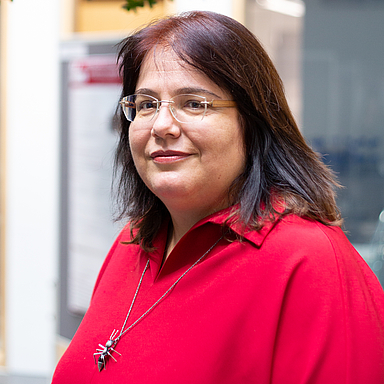
Mariam Zachariahمشاهده پروفایل
پژوهشگر ارشد
Mariam Zachariah serves as a Research Fellow at the Centre for Environmental Policy within the Faculty of Natural Sciences at Imperial College London. She is a core contributor to World Weather Attribution (WWA), an international scientific collaboration conducting rapid climate change attribution analyses for extreme weather events globally. Her work bridges climate science, vulnerability assessment, and policy-relevant research. Her educational foundation includes a PhD from the Indian Institute of Technology Bombay (IITB), where she investigated climate impacts on Indian agriculture. This research focused on drought and extreme temperature effects on crop yields in major agrarian regions, recognizing agriculture's critical role in India's climate-vulnerable economy. Zachariah's research centers on near-real-time attribution of extreme events to quantify human-induced climate change influences. Her expertise spans climate modeling, statistical analysis of extreme weather, and integrating vulnerability frameworks to assess compound impacts on communities. She examines how climate change interacts with socioeconomic factors to exacerbate disasters, particularly in agricultural systems and flood-prone regions worldwide. Analysis of her recent publications reveals a dominant focus on rapid attribution of droughts, floods, and heatwaves across diverse global contexts - from the Horn of Africa to Central Europe and South America. These studies consistently demonstrate climate change as a significant amplifier of event severity, while emphasizing how pre-existing vulnerabilities determine actual impacts. Her work increasingly addresses compound hazards and the intersection of climate change with infrastructure failures and land management. As a key member of the World Weather Attribution initiative, Zachariah collaborates with climate scientists, social scientists, and vulnerability experts in a unique operational framework that delivers scientific assessments within days of extreme events. This work directly informs policymakers, media, and affected communities about climate change's role in contemporary disasters.