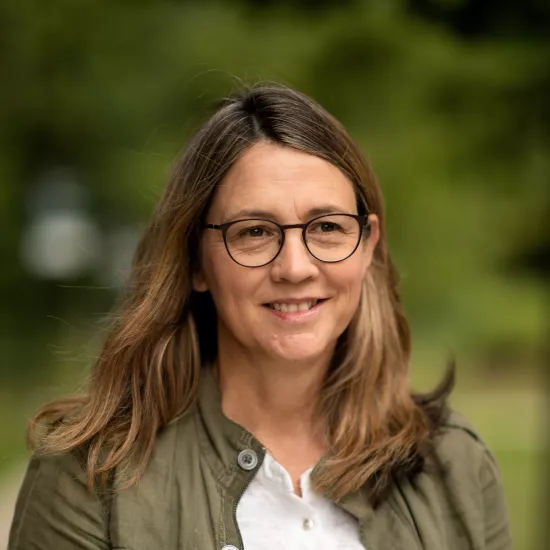
Britney Schmidt is Associate Professor in Earth and Atmospheric Sciences and Astronomy at Cornell University, where she leads the Planetary Habitability and Technology Lab. She develops robotic tools like the Icefin underwater vehicle to study Earth's ice shelves and glaciers, providing insights into climate change and analogs for ocean worlds like Europa. Her research bridges glaciology, planetary science, and astrobiology. Research focuses on ocean world habitability, ice-ocean interactions, and Antarctic climate systems. Fieldwork includes extensive campaigns in Antarctica and the Arctic using robotic explorers. Recent publications explore Europa's habitability, Thwaites Glacier dynamics, microbial communities in hypersaline environments, and planetary analog studies. Technical developments include novel instrumentation for under-ice exploration. Awarded the 2024 Blavatnik National Award for groundbreaking research. Leads multiple international collaborations including NASA's Europa Clipper mission and Thwaites Glacier projects.
Adam Wickberg is a researcher in the Division of History of Science, Technology and Environment at KTH Royal Institute of Technology in Stockholm. He serves as co-director of the VR Excellence Centre for Anthropocene History and deputy director of the KTH Environmental Humanities Lab . His work critically examines the intersections of digitalization, sustainability , and the Anthropocene , focusing on their social, political, and historical dimensions. He leads the research project The Mediated Planet: Claiming data for environmental SDGs and has held visiting positions at the Max Planck Institute for the History of Science in Berlin. Education : Not explicitly stated His research spans media studies, environmental history, critical data studies , and postcolonial science and technology studies . Key themes include: Digital twins and marine futures AI ethics for climate justice Colonial histories of environmental data Temporal dimensions of Anthropocene governance Environing media as epistemological tools Planetary datafication systems Recent publications explore how data infrastructures shape environmental governance and how historical media practices inform contemporary sustainability challenges. He has contributed to journals like New Media and Society , Nature , and Critical Inquiry , while engaging in public debates through op-eds in Dagens Nyheter and Aftonbladet . Teaching : Courses include Artificial Intelligence and Sustainable Development (AK122V), Environmental History (AK2210), and The Anthropocene (AK126V). Labs/Teams : Leads the Environmental Humanities Lab and collaborates with the WASP-HS Community .
Adi Ćorović is an Assistant Professor at the International University of Sarajevo , specializing in architectural heritage and conservation. He has served as an expert for the Commission to Preserve National Monuments of Bosnia and Herzegovina since 2007. His work includes coordinating the Preventive Conservation of the National Museum of BH (2019-2022) and overseeing the executive project for the Museum of Contemporary Art in Sarajevo (2022-2023). Notably, he was awarded the Knight Honorship by Italy's President Sergio Mattarella in 2018 for his restoration work on the Red Cross Building. Academic Role: Assistant Professor, International University of Sarajevo Key Projects: Museum of Contemporary Art (Renzo Piano layout), National Museum of BH Conservation Awards: Knight Honorship (2018) Research focuses on architectural heritage, Ottoman hammams, modernization trends in Bosnian architecture, and preventive conservation strategies. His publications span topics from 19th-century Sarajevo Bazaar facilities to intercultural dialogue through heritage restoration. Scientific awards include Knight Honorship by President of Italy (2018)
Dr. Jiaqi Gong serves as Associate Professor in Computer Science and Adjunct Associate Professor in Mechanical Engineering at The University of Alabama's College of Engineering, while directing the Alabama Center for the Advancement of Artificial Intelligence. His academic foundation includes: B.S. in Engineering, China University of Geoscience (2004) Ph.D. in Engineering, Huazhong University of Science and Technology (2010) Dr. Gong's research pioneers human-AI convergence through cyber-physical systems and smart health technologies, developing mobile/wearable platforms to enhance human perceptual, cognitive, and physical capabilities. His work spans artificial intelligence, machine learning, computer vision, and IoT with applications in healthcare, environmental monitoring, and education. The Sensor-Accelerated Intelligent Learning (SAIL) laboratory he founded drives innovation in behavior change interventions, human movement modeling, and educational data mining. Recent publications reveal strong interdisciplinary trends: healthcare AI dominates with medication adherence prediction and surgical classification systems, while environmental applications feature flood-risk communication and drought analysis. His work increasingly integrates generative AI and LLMs across domains, demonstrating methodological innovation in federated learning, knowledge graphs, and explainable storytelling frameworks. Notable recognitions include: Best Student Paper Award, IEEE/ACM Connected Health Conference (2022) Best Student Paper Award, Body Sensor Networks Conference (2019) Data Challenge Win, IEEE Biomedical Health Informatics (2018) Best Paper Award, Body Area Networks Conference (2014) Best Demonstration Award, IEEE Wireless Health Conference (2014) Dr. Gong leads significant funded projects including a $2M CDC/NIOSH grant for first responder safety and $3M NSF funding for hydrologic research. As SAIL laboratory director, he mentors students in developing clinically deployed technologies for multiple sclerosis, dementia, and mental health. Future work focuses on scaling AI applications in chronic disease management and climate resilience through the Alabama AI Center. The SAIL laboratory (founded 2017) operates as a multidisciplinary hub developing wearable/mobile systems for health applications, with active collaborations across medical clinics and engineering departments for real-world deployment of behavior change interventions and movement analysis tools.
Dr. Anthony Filippi is an Associate Professor and Director of Graduate Programs at Texas A&M University. His research focuses on remote sensing, geographic information systems (GIS), and machine learning applied to aquatic and terrestrial environments. He leads the Fluvial-GEOS Lab, studying riverine/floodplain systems using remote sensing and GIS technologies. Educational Background: Ph.D. in Geography, University of South Carolina (2003) M.S. in Geography, University of South Carolina B.A. in Geography, Kansas State University Research Interests: Imaging spectroscopy, hyperspectral remote sensing of rivers and coastal oceans, GIS-based modeling, data fusion, aquatic optics, and machine learning. His work addresses coastal ocean bathymetry estimation, floodplain dynamics, and applications in environmental monitoring, including hazardous waste site tracking and agricultural studies. Recent Research Trends: Recent publications highlight advancements in UAS-based image analysis, LSTM networks for floodplain classification, and environmental policy impacts on forest resources. His work integrates machine learning with remote sensing to improve ecological and geomorphological understanding. Labs/Teams: Director of the Fluvial-GEOS Lab, focusing on remote sensing and GIS applications in riverine environments.
Miyuki Hino is an Assistant Professor in the Department of City and Regional Planning and an Adjunct Assistant Professor in the Environment, Ecology, and Energy Program at the University of North Carolina at Chapel Hill. She holds a Ph.D. in Environment and Resources from Stanford University and a B.S. in Chemical Engineering from Yale University. Her research focuses on climate hazards, governance, and public policy , with emphasis on equitable adaptation to climate change. Key areas include sea level rise impacts, flood risk on property markets, and managed retreat strategies. She has conducted extensive work on floodplain development policies, household relocation programs, and community resilience frameworks. Dr. Hino's interdisciplinary approach integrates environmental science, urban planning, and social equity . She collaborates with academic and municipal partners, such as the Center for Urban and Regional Studies and Annapolis, MD local governments, to develop actionable solutions for climate adaptation. Her work bridges technical analyses (e.g., sensor networks, machine learning) with policy design to ensure both effectiveness and justice in climate responses. Recent projects emphasize preventing future 'trapped households' by analyzing zoning policies and market dynamics that drive risky development. She advocates for climate-smart growth strategies to balance economic needs with environmental safety, while addressing disparities in vulnerability across communities. Her research has been featured in Science Advances , Nature Climate Change , and interdisciplinary journals. She actively engages with policymakers to translate findings into practical measures, such as equitable buyout programs and floodplain management reforms.
Astrid Wagner is a Senior Scientist and Deputy Director at the Institute of Philosophy (IFS) of the Spanish National Research Council (CSIC) in Madrid. She holds a PhD in Philosophy from Technische Universität Berlin, recognized by the National University of Distance Education (UNED), and previously served as professor for 20 years at TU Berlin. Her research focuses on philosophy of culture, science epistemology, and digital society challenges. Key interests include philosophy of language, perception phenomenology, pragmatism, and ethical implications of digital transformation. Recent work examines uncertainty dynamics, trust frameworks, post-truth phenomena, infodemics, conspiracy theories, cognitive vulnerability, and digital citizenship. Wagner leads major research initiatives including the INconRES project on ethical-epistemological keys to digital social dynamics (2021-2025), the ORTEGA-CM interdisciplinary innovation consortium on José Ortega y Gasset's legacy (2024-2026), and previously directed the RESPONTRUST project combating COVID-19 disinformation (2021-2023). She co-leads the DESTERRA project analyzing disinformation's societal foundations (2022-2025) and participates in UCM's Rationality, Knowledge and Action research group. She serves on Spain's Committee of Experts for National Security against disinformation, advises the Congressional Science Office, and holds editorial positions at the Journal of Ortega Studies. Wagner contributes to GENET Association's Gender Studies Network and juries for the Princess of Asturias Award and Javier Muguerza Philosophy Prize.
Devis Tuia serves as Associate Professor at the Swiss Federal Institute of Technology Lausanne (EPFL), holding appointments in the Institute of Environmental Engineering (IIE) within the School of Architecture, Civil and Environmental Engineering (ENAC). He leads the Environmental Computational Science and Earth Observation Laboratory (ECEO) since 2020 and contributes to EPFL's Doctoral Program in Civil and Environmental Engineering. His academic journey began in Lausanne with studies at UNIL and EPFL, culminating in a PhD in remote sensing from UNIL. Postdoctoral research followed at institutions in Valencia, Boulder, and EPFL, focusing on machine learning model adaptation. He progressed from Research Assistant Professor at University of Zurich to Associate and Full Professor at Wageningen University before joining EPFL. Tuia's research bridges Earth observation with artificial intelligence, specializing in interpretable deep learning for environmental applications. His lab develops algorithms for making remote sensing accessible, with particular emphasis on digital wildlife conservation through automated censuses using drone and satellite imagery. Current projects tackle the 'black box' problem in environmental modeling while advancing spatial intelligence for sustainable urban development. His 2023-2025 publication portfolio reveals three dominant trends: (1) species distribution modeling using incomplete observations, (2) multimodal fusion of satellite/drone data with textual descriptions, and (3) interpretable AI frameworks for environmental decision-making. This work consistently addresses real-world challenges like wildfire forecasting and biodiversity monitoring. As an educator, Tuia supervises 12 current PhD students and has graduated 4 former EPFL doctoral candidates. His teaching portfolio includes Frontiers of Deep Learning for Engineers , Sensing and Spatial Modeling for Earth Observation , and Image Processing for Earth Observation courses. The ECEO laboratory maintains active collaborations with ESA-NASA initiatives and conservation organizations globally.
Jim Hall is a Professor of Climate and Environmental Risk at the University of Oxford's School of Geography and the Environment, and serves as Director of Research there. He is also a Visiting Fellow at Linacre College and holds leadership roles including Chair of the Science Advisory Committee at IIASA, and Expert Advisor to the UK's National Infrastructure Commission. His work focuses on systemic risk analysis, infrastructure resilience, and policy implications of climate change adaptation. Prof Hall has pioneered methodologies like the National Infrastructure Systems Model (NISMOD) and chairs the Data and Analytics Facility for National Infrastructure (DAFNI). His research spans flood risk management, energy systems decarbonization, and transboundary water resource conflicts in regions such as the Eastern Nile Basin and the Caribbean. Key research areas include robust decision making under uncertainty, info-gap theory applications, and integrated assessments of human-environmental systems. He has contributed to major international assessments, including the IPCC's Fourth Assessment Report, and developed frameworks for multi-hazard stress testing of infrastructure networks. Scientific Awards: George Stephenson Medal (2001), Prince Sultan Prize for Water (2018), Royal Academy of Engineering Fellowship (2010) His advising and grants work includes mentoring a DPhil student Erin Canning and leading projects like MARIUS and ENHANCE. He has also developed innovative modeling tools for coastal erosion prediction and probabilistic assessments of global shipping fuel transitions. Prof Hall’s research groups actively engage in interdisciplinary projects, including the Oxford Martin Programme on Resource Stewardship and the UK Infrastructure Transitions Research Consortium. His work emphasizes bridging scientific analysis with actionable policy solutions for climate adaptation.
Dr. Maud Borie is a Senior Lecturer in Environment, Science & Society at King’s College London’s Department of Geography, within the School of Global Affairs. Her work bridges Human Geography and Science and Technology Studies (STS), focusing on biodiversity governance, environmental policy, and green finance. She holds a PhD from the University of East Anglia and has held visiting fellowships at Harvard Kennedy School. Borie’s research explores the politics of environmental knowledge and its societal implications, including nature-based solutions and green finance mechanisms. She has contributed to global initiatives like the Intergovernmental Platform on Biodiversity and Ecosystem Services (IPBES) and co-founded the Mediterranean Alliance for Wetlands. Her recent projects include analyzing green finance’s reliance on scientific legitimacy and mapping resilience strategies in cities. She teaches courses on environmental policy, qualitative methods, and geographies of financialization. Borie has been awarded grants for interdisciplinary projects such as ‘deep listening with machines for equitable environmental futures’ and ‘forestscapes’ immersive soundscapes. Her research outputs span over 18 peer-reviewed articles, with topics ranging from climate change framing to urban resilience in the Global South. Awards: Planetary-scale interpretation (2023), Rethinking environmental policy (2022), Forestscapes collaboration (2023) Grants: Creative Collaboration Seed Fund (2023), EU/PEARL disaster resilience projects Labs/Teams: KingsCAT (Social Media Research), Political Ecology, Biodiversity & Ecosystem Services (PEBES) group
Dr. Manisha Kulkarni is a Professor at the School of Epidemiology and Public Health, University of Ottawa, where she holds the University Research Chair in Climate Change and Emerging Diseases. She is also the Director of the INSIGHT (Interdisciplinary Spatial Informatics for Global Health) research lab and serves as Scientific Director of the Canadian Lyme Disease Research Network (TickNet Canada). Her work spans global public health, with a focus on vector-borne and zoonotic diseases. PhD in Medical Entomology, McGill University (2006) BSc in Environmental Biology, McGill University (2001) Dr. Kulkarni's research centers on the socio-ecological determinants of infectious disease emergence, particularly malaria, Lyme disease, and West Nile virus. She applies population surveys, entomological field sampling, molecular diagnostics, and GIS to study spatio-temporal patterns and the impacts of climate change and landscape transformation on disease transmission. Her work emphasizes One Health approaches and capacity building in low-resource settings. Her recent research trends show a strong focus on geospatial modeling of vector-borne diseases, climate change adaptation, urban tick surveillance, and international collaborations in Tanzania, Benin, and Latin America. She leads interdisciplinary projects integrating drone mapping, citizen science (e.g., eTick.ca), and community participation to identify disease risk factors. Scientific awards and recognitions include: University Research Chair in Climate Change and Emerging Diseases Ontario Early Researcher Award Faculty of Medicine Award for Leadership in Global Health (2023) Researcher of the Year, Faculty of Medicine (2019) Member, College of New Scholars, Royal Society of Canada NSERC Discovery Grant and CIHR funding Dr. Kulkarni has successfully advised multiple PhD and Master’s students and leads major funded projects supported by CIHR, PHAC, CFI, IDRC, and NSERC. She has held leadership roles as Associate Dean of Global Health (2021–2024) and currently serves on the CIHR Institute of Infection and Immunity advisory board. Her lab, INSIGHT, fosters an interdisciplinary training environment combining field, lab, and analytical methods for global health research. Key research teams and collaborations include: INSIGHT Lab, University of Ottawa Pan-African Malaria Vector Research Consortium (PAMVERC) Canadian Lyme Disease Research Network (TickNet Canada) London School of Hygiene & Tropical Medicine (LSHTM) National Microbiology Lab, PHAC Centre de Recherche Entomologique de Cotonou (CREC), Benin
Fabio Miranda is an Assistant Professor at the Department of Computer Science, University of Illinois at Chicago (UIC) . His research bridges visualization , machine learning , data management , and computer graphics to enable interactive visual analysis of large-scale urban datasets . He has developed systems like UrbanRama (for VR navigation) and The Urban Toolkit (a grammar-based framework), which have been deployed in academia, industry, and government agencies. Education: Ph.D., Computer Science , New York University (2018) M.S., Computer Science , Pontifical Catholic University of Rio de Janeiro (2011) B.S., Computer Science , Federal University of Minas Gerais (2009) Research Interests center on urban visual analytics , 3D analytics , and machine learning for accessibility . His work addresses challenges like sunlight access , sidewalk quality assessment , and commuting flow modeling , often collaborating with urban planners, climate scientists, and occupational therapists. Scientific Recognition includes awards at IEEE VIS , SIBGRAPI , and SIGMOD . His research is funded by NSF , NIH , DOT , and DPI , with media coverage in The New York Times , The Economist , and Architectural Digest . Teaching includes courses like CS 524: Big Data Visualization and Analytics and CS 424: Visualization and Visual Analytics . He emphasizes web-based systems, dataflow frameworks, and interdisciplinary collaboration, with open positions for PhD , MSc , and undergraduate researchers .
Tracey Galloway is an Associate Professor in the Department of Anthropology at the University of Toronto Mississauga (UTM), where she conducts critical research on Indigenous health disparities and policy interventions in northern Canada. Her work bridges medical anthropology, public health, and community-based participatory research to address systemic inequities affecting circumpolar populations. Education: PhD, McMaster University, 2008 MA (institution unspecified) BA (institution unspecified) BScN (institution unspecified) Dr. Galloway's research program centers on chronic disease risk assessment and health system improvement in Indigenous communities, with specific expertise in nutrition transition, food security, child growth patterns, and public health policy evaluation. She examines the impact of federal programs like Nutrition North Canada while developing community-led solutions for health equity. Her methodological approach combines quantitative analysis of health outcomes with qualitative community engagement, emphasizing Indigenous research sovereignty and decolonizing methodologies. Her publication record reveals consistent thematic focus across 15 recent articles, demonstrating interdisciplinary collaboration between anthropology, epidemiology, and health economics. Key trends include rigorous evaluation of colonial impacts on Indigenous food systems, innovative analysis of subsidy program effectiveness, and centering Indigenous patient experiences in healthcare design. Her work consistently prioritizes community-defined research questions and actionable policy recommendations. Dr. Galloway actively mentors graduate students including Darci Belmore, Carly Checholik, Neda Maki, and Hiliary Monteith, guiding research on Indigenous health determinants and policy interventions. While specific grant details aren't publicly enumerated, her collaborative projects involve partnerships with Indigenous communities across Northern Canada and interdisciplinary teams addressing complex health system challenges. She maintains strong community partnerships for her applied research, particularly in Nunavut and Northwestern Ontario, working directly with Anishinabeck and Inuit communities to translate findings into culturally safe health initiatives and policy reforms that address the root causes of health inequities.
John W. van de Lindt is the Harold H. Short Endowed Chair Professor in Civil and Environmental Engineering at Colorado State University and Co-director of the NIST Center of Excellence for Risk-Based Community Resilience Planning. His research develops performance-based engineering frameworks for natural hazards including earthquakes, tsunamis, hurricanes, and tornadoes. Research integrates physical testing (full-scale shake tables), computational modeling, and field reconnaissance to quantify community resilience. Key areas include: multi-hazard fragility assessment; coupled physical-socio-economic recovery modeling; climate adaptation strategies; and resilient timber structural systems. Recent projects include longitudinal tornado impact studies, earthquake-tsunami risk assessment for coastal communities, and life-cycle analysis of sustainable buildings. Publications document innovations in resilience-informed design, validation of recovery models using disaster reconnaissance, and development of the IN-CORE computational platform for community resilience planning. Research consistently bridges structural engineering with social science for multidisciplinary disaster impact reduction. Awards include ASCE Fellow (2019), Ernest E. Howard Award (2017), and multiple best paper awards. Van de Lindt has led disaster reconnaissance following major US events including the 2021 Midwest tornado outbreak.
Tim Ibell is a Professor in the Department of Architecture & Civil Engineering at the University of Bath, affiliated with the Centre for Climate Adaptation & Environment Research (CAER). He has held leadership roles including Head of Department, Associate Dean (Graduate Studies), and Associate Dean (Research). His career includes a Fulbright Distinguished Scholar Award (2002) and a stint as Sir Kirby Laing Professor of Civil Engineering at the University of Cambridge. He is a Fellow of the Royal Academy of Engineering and has received six best journal-paper awards. Education: Postdoctoral research at the University of Cambridge following industry experience. Joined Bath in 1997. Research focuses on sustainable construction materials, FRP reinforcement, and embodied carbon reduction in concrete structures. His work aligns with UN SDGs on climate action and sustainable cities. Key innovations include fabric-formed concrete structures and low-carbon pile foundations. Recent projects include EPSRC-funded studies on pile optimization, creative design teaching, and resource efficiency in industrial strategy. Collaborations span UK and international institutions. Awards include the Institution of Structural Engineers' recognition and Royal Academy of Engineering Fellowship. Advising and grants: Supervises PhD students in sustainable construction. Leads multi-million-pound research projects addressing embodied carbon and material efficiency. Labs/Teams: Directs CAER and collaborates with interdisciplinary teams on projects like ACORN (Automating Concrete Construction) and MEICON (Minimising Energy in Construction).