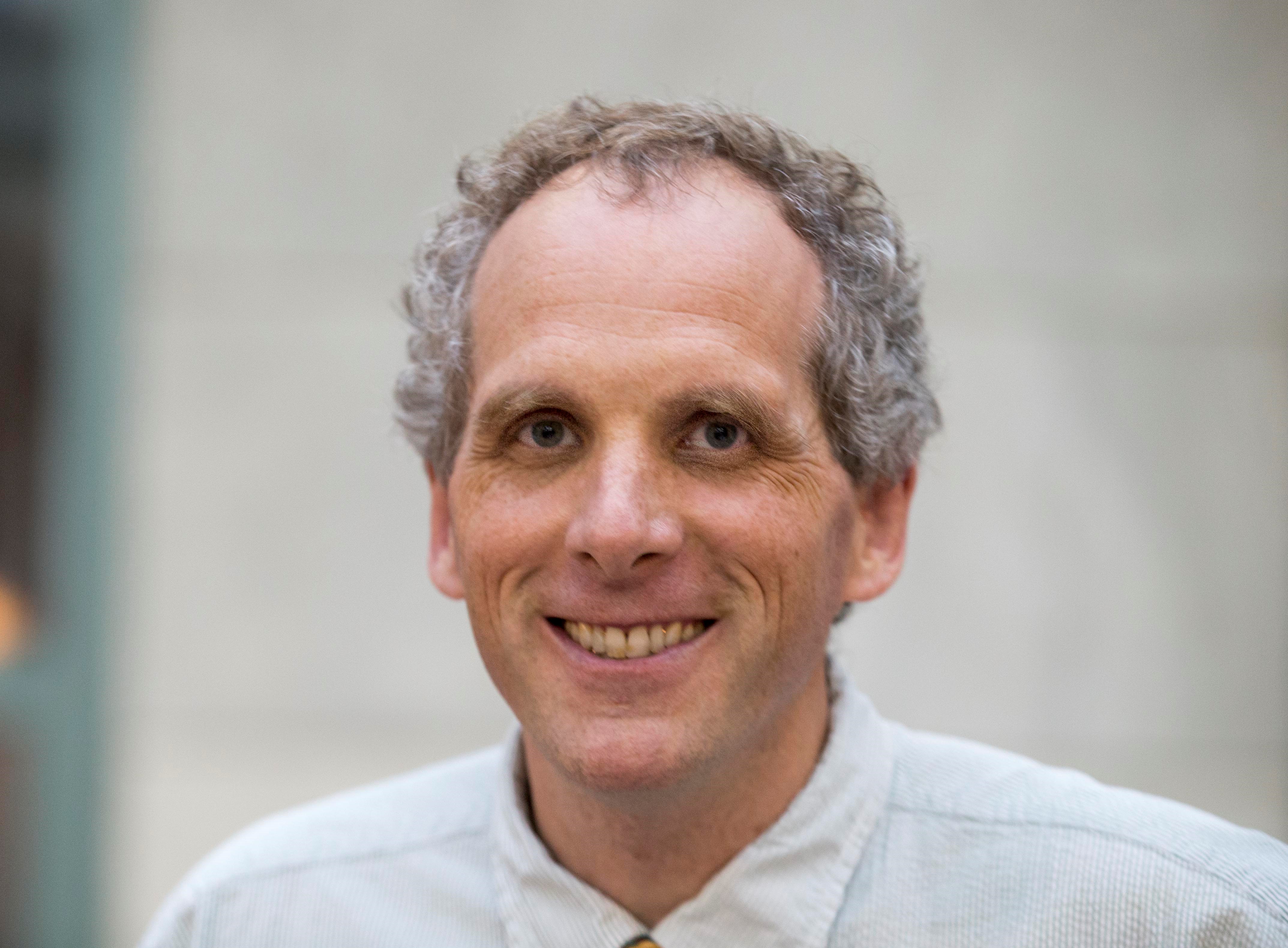
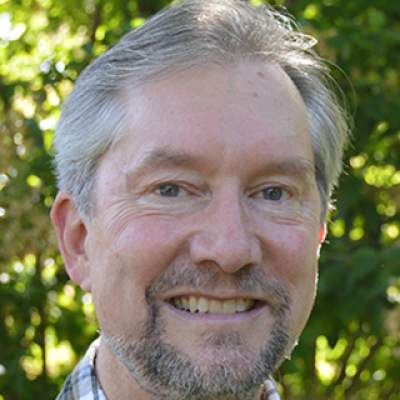
Dr. Anne-Marie Nicol is an Associate Professor of Professional Practice in Health Sciences at Simon Fraser University. Her multidisciplinary research spans health communication, toxicology, social marketing, risk perception, and risk assessment, with emphasis on environmental and occupational health exposures. She leads CAREX Canada, a national carcinogen surveillance program, and has developed public health campaigns including Wash with Care and Tick Talk. Her work focuses on translating scientific information about carcinogens to policymakers and cancer prevention stakeholders. She teaches Human Health Risk Assessment, Toxicology for Public Health, and Health Communication. Her research has been funded by CIHR, Michael Smith Foundation, and Canadian Cancer Society. Current projects include studies on radon exposure, infodemic communication strategies, and community resilience to wildfire smoke. She holds a BA from SFU, MES from York University, and PhD from UBC.
John E. Taylor is the Frederick Law Olmsted Professor and Associate Chair for Faculty Development and Research Innovation at the Georgia Institute of Technology's School of Civil and Environmental Engineering within the College of Engineering. His research focuses on the intersection of human and engineered networks, with particular emphasis on creating resilient infrastructure systems that serve society's needs while creating more livable communities. Taylor's research interests span multiple domains including Smart City Digital Twins , Urban Infrastructure Resilience , Network Dynamics , and Building-Occupant Interaction . His work examines how human behavior, infrastructure systems, and environmental factors interact during normal operations and extreme events. He has developed innovative approaches to understanding urban systems through the lens of network theory and computational modeling. His publication record demonstrates consistent contributions to the fields of urban analytics and infrastructure resilience, with a recent focus on digital twin technologies for urban systems. Taylor's work shows a clear trajectory toward increasingly sophisticated integration of AI, network science, and civil infrastructure engineering to address complex urban challenges. His research has particular relevance for cities facing climate change impacts and seeking to build more equitable and resilient communities. Taylor leads the Network Dynamics Lab at Georgia Tech, where he mentors PhD students and postdoctoral researchers. His lab has produced significant work on human-infrastructure interaction, particularly during disasters and extreme events. The lab's research combines computational modeling, data analytics, and field studies to understand and improve urban systems. His work has been applied to real-world challenges including river emergency response systems, urban heat exposure forecasting, and disaster response optimization. Taylor has collaborated with city officials and agencies to implement systems that have demonstrable community benefits, such as the AI-enabled camera system for drowning prevention on the Chattahoochee River and crime reduction systems using mobile cameras guided by AI algorithms.
David Jones, M.D., Ph.D., holds the A. Bernard Ackerman Professorship of the Culture of Medicine at Harvard Medical School and Harvard’s Faculty of Arts & Sciences. He also serves as a Professor in the Department of Epidemiology at the Harvard T.H. Chan School of Public Health, and an Affiliate of the Department of History (FAS). His academic journey includes an AB in History and Science from Harvard College (1993), a dual PhD in History of Science and MD from Harvard (2001), followed by medical training in pediatrics, psychiatry, and emergency psychiatry. He transitioned from MIT (2005–2011) to Harvard full-time, where he directs the Arts and Humanities Initiative at HMS and received the 2018 Everett Mendelsohn Excellence in Mentoring Award and Harvard College Professor designation (2020). His research focuses on the history of medicine, medical ethics, and the social dimensions of health. Key themes include the historical roots of medical racism, climate change impacts on health, and the integration of humanities into medical education. He has directed initiatives like MIT’s Center for Diversity in Science and Technology and co-led symposia addressing race and science. His recent work analyzes NEJM’s historical complicity in systemic racism, the legacy of eugenics, and climate health curricula. Dr. Jones has published extensively on topics ranging from colonial medicine in India to the ethics of race-based clinical algorithms. Awards include MIT’s MacVicar Faculty Fellow (2009) and the 2010 Donald O’Hara Teaching Prize. His interdisciplinary approach bridges history, public health, and policy, emphasizing historical perspectives to address contemporary challenges like healthcare inequities and environmental crises.
Dr. C. Rhett Jackson serves as the Associate Dean of Academic Affairs and holds the John Porter Stevens Distinguished Professorship in Water Resources at the University of Georgia's Warnell School of Forestry and Natural Resources. His research focuses on the impacts of land use (forestry, agriculture, urbanization) on water quality and aquatic habitats, with particular emphasis on riparian vegetation, stream temperatures, and hydrological processes. He leads trans-disciplinary projects involving collaborators from environmental engineering, ecology, and geology. Education: PhD in Hydrology (University of Washington), MSE and BSE in Environmental Engineering (Duke University). Affiliations: Institute for Resilient Infrastructure Studies (IRIS), River Basin Center, and Coweeta LTER. Research interests include interflow dynamics, nitrogen cycling in mountain catchments, and the effectiveness of best management practices for nonpoint source pollution. He has authored over 100 peer-reviewed articles and has been recognized for his contributions to environmental science through the Distinguished Professor title. Key labs/centers: Water Resources Area, IRIS, and Coweeta LTER. His work bridges basic hydrologic science with applied water resource management, addressing both rural and urban challenges such as bioenergy crop impacts, karst groundwater interactions, and urban stream restoration.
Dr. Yijing Li is a Senior Lecturer in Urban Informatics at King’s College London, Department of Informatics. She joined King’s in 2018 and previously held roles at the University of Warwick and China Executive Leadership Academy Pudong. Her research focuses on spatial analysis of urban crime, counter-terrorism strategies, climate change impacts on crime, and risk management using big data. She holds a PhD in Geography of Crime from the University of Cambridge and an MSc in Urban Ecology from Peking University. Her work integrates theories from sociology, criminology, and economics with quantitative and qualitative methods. Key research areas include crime patterns during pandemic lockdowns, One Belt One Road security strategies, and environmental sustainability assessments. She has authored over 30 publications, including studies on London’s crime dynamics, spatial disparities in crime data, and vegetation change modeling using remote sensing. Dr. Li is affiliated with the Centre for Urban Science and Progress (CUSP) London and the Computing Education Research Centre (CERC). She has supervised interdisciplinary projects on employability in data science programs and collaborated with organizations like Transport for London and Westminster City Council. Her recent work examines health resilience in European countries post-pandemic and employs Bayesian models to analyze crime patterns during lockdowns.
Yulia Gel is a Professor in the Department of Statistics at Virginia Tech and serves as a Part-Time Program Director-Expert at the National Science Foundation (NSF). She holds a MSc (summa cum laude) and PhD in Mathematics from Saint Petersburg State University (Russia) and completed a postdoc in Statistics at the University of Washington. Her research focuses on uncertainty quantification in AI, statistical foundations of data science, spatio-temporal processes, and applications in climate science, healthcare, and blockchain analytics. She has received prestigious awards including the NSF Director’s Award (2023), ASA Distinguished Achievement Medal (2018), and TIES Abdel El-Shaarawi Award (2014). Gel has led grants on wildfire prediction, climate informatics, and blockchain data science. She serves on editorial boards of Statistica Sinica, Electronic Journal of Statistics, and Technometrics, and organizes workshops on AI for climate sustainability and fragile Earth systems. Her research group develops topological and geometric methods for graph neural networks, with applications to digital twins, environmental justice, and public health. Education: MSc (1997), PhD (2000) in Mathematics from Saint Petersburg State University; Postdoc in Statistics at University of Washington (2001–2003). Past roles include Professor at University of Texas at Dallas (2015–2024) and Associate Professor at University of Waterloo (2004–2014). Selected visiting positions include NASA Jet Propulsion Lab (2016–2017) and Isaac Newton Institute (2016–2017). She has pioneered statistical software packages like snowboot and funtimes for network inference and time-series analysis. Awards highlight her contributions to environmetrics and statistical methodologies. Current projects include NSF-funded research on AI-driven wildfire prediction and blockchain analytics for climate resilience. Her lab’s recent work emphasizes topological methods (e.g., zigzag persistence) for graph-based forecasting and adversarial robustness.
Robert Goodspeed is an Associate Professor of Urban and Regional Planning at the University of Michigan's Taubman College of Architecture and Urban Planning. His work bridges urban planning with information technologies, focusing on tools like GIS and sociotechnical systems to enhance planning processes and outcomes. Education: Ph.D. in Urban and Regional Planning, Massachusetts Institute of Technology M.C.P., University of Maryland B.A. in History, University of Michigan (dissertation on Detroit’s Gratiot Area Redevelopment Project) His research explores digital planning tools, smart cities, and collaborative practices. He leads initiatives like the Justice InDeed project addressing racial housing covenants and the Michigan Eviction Project analyzing eviction dynamics. Scientific Awards: Donald Schön Award for Excellence in Learning from Practice (2013) Planetizen Leading Thinker in Urban Planning and Technology Goodspeed teaches courses in scenario planning, negotiation techniques, and planning methods, with recent offerings including URP 526 (Scenario Planning) and URP 522 (Negotiation, Collaboration & Equitable Engagement).
Maria Papathoma-Köhle is an Associate Professor at the Institute of Alpine Natural Hazards , University of Natural Resources and Life Sciences, Vienna. She holds a PhD in Tsunami Vulnerability Assessment from Coventry University (UK) and has held roles as Academic Coordinator of the MSc 'Risk Prevention and Disaster Management' at University of Vienna. Her research focuses on natural hazard vulnerability , particularly wildfire and flood risks in alpine regions, with methodological expertise in indicator-based vulnerability assessment and physical vulnerability indices . Education: PhD in Natural Hazards (Coventry University, UK) MSc in Environmental Management (University of Durham, UK) Geology Degree (University of Athens, Greece) Research: Specializes in wildfire vulnerability indices, flood risk modeling, and climate change adaptation frameworks. Developed the Physical Vulnerability Index (PVI) for buildings and contributed to EU-funded projects like FLOODLABEL and EXTEND. Awards: Elise Richter Scholarship (2016) Back to Research Grant (2012) Young European Scientist Award (2002) Projects: Led FWF-funded research on physical vulnerability indicators and collaborated on EU programs for wildfire preparedness. Current work includes climate change adaptation tools for Austrian infrastructure. Advising: Supervised 6 Master's/PhD students on wildfire and flood vulnerability topics. Publications: Over 106 peer-reviewed works; recent articles focus on wildfire indices, IPCC risk diagrams, and dynamic flooding assessment.
Mercedes Bravo is an Assistant Professor at Duke University, affiliated with the Duke Global Health Institute (DGHI) as the Associate Director for Community. She holds joint appointments in the Department of Global Health, Department of Population Health Sciences, and the Division of Environmental Science and Policy. Education: PhD from Yale University Bachelor of Science from the University of North Carolina at Chapel Hill Dr. Bravo's research investigates the interplay between social and environmental exposures and their impact on health and developmental disparities. She prioritizes underserved populations and aims to advance health equity through granular analysis of exposure and outcome disparities. Her recent publications focus on air pollution, racial and educational isolation, residential instability, and lead exposure effects on child development. While no specific scientific awards were mentioned, her work bridges public health, environmental science, and biostatistics. In her role at DGHI, she contributes to the Global Network of Climate Observatories and advocates for localized climate solutions. She teaches the course GLHLTH 707: Biostatistics and Epidemiology for GH Science II .
Sarah Keenan is a Senior Lecturer in Land Law at Queen Mary University of London School of Law , where she joined in September 2024. Previously, she held academic positions at Birkbeck, SOAS, and Oxford Brookes, co-founding the Centre for Research on Race and Law at Birkbeck. Her research spans legal and political thought, geography, feminist and postcolonial theory, and law’s intersections with the more-than-human world. Keenan’s work critically examines property in land, particularly its role in shaping spatial and temporal order. Supported by a Leverhulme Fellowship (2017–2018), she has analyzed how title registration systems erase Indigenous histories and advance property as a malleable relation of belonging. Her current focus on climate crisis and plantlife, exemplified by Japanese knotweed, challenges conventional legal boundaries and agency frameworks. 2025: Plants Against Property (Theory, Culture and Society) 2023: Articles on property pedagogy, Gweagal Shield restitution, and electronic conveyancing 2022: Chapter on mortgage finance and property destabilization 2021: Essays on race/time/title registration and legal belonging 2020: Analysis of Terra Nullius in the Pacific Keenan remains a Visiting Reader at Birkbeck School of Law and engages in public discourse through blogs, podcasts, and media commentary. Her scholarship has influenced artistic projects like Before Law and debates on decolonizing legal objects.
Rose Pritchard is a Presidential Fellow in Socio-Env Systems at the Global Development Institute, University of Manchester. Her research focuses on environmental sciences, forest restoration, and data-driven development. She holds a PhD from the University of Edinburgh (2018), focusing on woodland transitions and rural livelihoods in Zimbabwe. Her work aligns with UN Sustainable Development Goals, emphasizing equity in conservation and digital transformation for development. Key research areas include forest governance, socio-ecological systems, and the ethical application of remote sensing in conservation. She collaborates internationally on projects like the AfriCultuReS initiative, exploring Earth Observation data's role in food security. Recent studies highlight sustainable forest transitions, digital development illusions, and rights-based restoration approaches. Her work has been cited widely, particularly in conservation biology and policy circles. Publications span interdisciplinary journals such as One Earth , Biological Conservation , and Conservation Biology . She actively participates in global debates on data justice, climate resilience, and equitable conservation strategies.
Richard Bradley is Professor of Philosophy at the London School of Economics , focusing on decision theory, formal epistemology, and philosophy of science. His work bridges rational decision-making under uncertainty, conditional reasoning, and policy implications of probabilistic models. Key affiliations: London School of Economics, Department of Philosophy, Logic and Scientific Method Education: University of Witwatersrand (undergraduate), LSE (MSc), University of Chicago (PhD) Research covers: Decision theory with human-centric uncertainty models Formal epistemology of conditionals and belief revision Philosophy of climate change and pandemic policy decisions Bayesian utilitarianism and social choice theory His 2017 book Decision Theory with a Human Face integrates these themes. Scientific contributions include: 15+ peer-reviewed articles on conditionals, uncertainty, and social ethics Collaborations with H. Orri Stefánsson on risk attitudes Work with Roman Frigg on model ensemble decision-making Philosophy of Climate Science in IPCC assessments Major projects address confidence trade-offs in climate science and pandemic policy frameworks.
Mikael Wiberg is full Professor of Informatics at Umeå University, Sweden, where he leads research groups in Design Informatics and Digital Interaction & Design. He is co Editor-in-Chief of ACM Interactions and has held chaired and guest professorships at Uppsala, Södertörn and Chalmers universities. His work sits at the intersection of human-computer interaction, materiality, architecture and emerging technologies. Education: PhD in Informatics, Umeå University, 2001 Docent (Associate Professor) in Informatics, Umeå University, 2004 Research interests revolve around interactivity, mobility, materiality and architecture . Wiberg coined the notion of “materiality of interaction” to study how digital resources merge with physical materials, spaces and artefacts. Recent strands include more-than-human design, human-building interaction, autonomous systems UX, and social justice in HCI, all interrogating how interactive technologies shape—and are shaped by—human and non-human actors. Across more than two decades he has published in top venues such as ACM TOCHI, Design Issues, Int. Journal of Design, Human-Computer Interaction journal and the magazine ACM Interactions . His 2018 MIT Press monograph The Materiality of Interaction consolidates his theoretical stance and has become a touchstone for architectural and material HCI discourse. Editorial & scientific awards: Co Editor-in-Chief, ACM Interactions (2019-) Member, Royal Skyttean Society (Kungliga Skytteanska Samfundet) Board member, Professors’ Association, Umeå University He currently leads interdisciplinary projects on digital heritage archives, autonomous vehicle experiences for children with intellectual disabilities, and sustainable interaction infrastructures. Although the provided text does not enumerate specific grants or doctoral students, his continuous project leadership and editorial roles evidence sustained funding and supervisory activity. Wiberg directs the Design Informatics research environment and is a core member of Umeå’s Internet of Things group, fostering collaboration between informatics, architecture, design and social sciences. His overarching agenda asks how interactive technologies can support just, sustainable and aesthetically rich futures at architectural and urban scale.
Arianne Teherani, PhD, is Professor in Residence in the Department of Medicine at the University of California, San Francisco (UCSF) School of Medicine. She serves as Founding Co-Director of the UC Center for Climate, Health and Equity and Director for Program Evaluation and Education Continuous Quality Improvement at the UCSF School of Medicine. She earned her undergraduate degree in Social Ecology from the University of California, Irvine, her master's and doctorate in Education from the University of Southern California, and completed a fellowship in Higher Education at the University of British Columbia. Dr. Teherani’s research advances equity, social justice, and climate solutions in health professions education. Her work identifies and dismantles practices that perpetuate educational disparities. She leads initiatives in equitable clinical assessment, climate-health education, and sustainable healthcare training. Her scholarship focuses on educational reform, faculty development, and community-engaged learning. She has published extensively on topics including clerkship equity, professionalism, longitudinal integrated clerkships, and the integration of climate change into medical education. Her recent publications demonstrate a strong trend toward climate-health education, healthcare decarbonization, and equity in assessment. She frequently collaborates with national and UC-system-wide teams on sustainability and educational innovation. Her work emphasizes systems-level change and the translation of research into policy and practice. UCSF Faculty Sustainability Award UC Sustainability Champion Award Faculty Climate Action Champion (University of California system) Dr. Teherani mentors students, residents, fellows, and faculty in health professions education. She has led numerous educational initiatives, including the Aspiring Physicians Program and the Academic Leadership Academy, aimed at supporting underrepresented students. She has also driven continuous quality improvement in medical education through rigorous evaluation of innovative programs. Her leadership extends to national organizations including the Association of American Medical Colleges, the American Educational Research Association, and the National Academies of Science, Engineering, and Medicine. She leads the Equity and Justice in Education initiative and is deeply involved in antiracism and DEI efforts. She co-leads faculty development programs focused on sustainable healthcare and climate education across the UC system.
Zorana Jovanovic Andersen is an Associate Professor at the University of Copenhagen, Department of Public Health, Section of Environmental Health, specializing in Environmental and Occupational Epidemiology. Her research focuses on health impacts of air pollution , noise exposure , and lifestyle factors across large cohorts including the Danish Nurse Cohort and Diet, Health, and Cancer cohort. Primary research areas: Environmental Epidemiology, Breast Cancer Risk, Air Pollution, Noise Studies, Physical Activity Interactions Key projects: Hyperion (road traffic noise), ELAPSE (low-level air pollution), TAPAS (climate-transportation health risks) Research Themes She investigates long-term exposure to air pollution and noise in relation to breast cancer , diabetes , cardiovascular disease , and brain cancer , while exploring how factors like physical activity modify these risks. Recent work includes dementia and COVID-19 mortality analyses. Scientific Contributions Her 15 most recent publications address: 1) Air pollution disparities in Europe 2) Dementia-air pollution links 3) Stroke-noise interactions 4) Airport ultrafine particle exposure 5) Asthma-COPD overlap 6) Breast cancer-mammographic density relationships. Major Grants Danish Working Environment Research Fund (1.79M DKK, 2017) Danish Heart Association (433K DKK, 2016) Danish Council for Independent Research (1.93M DKK, 2015) Teaching & Leadership Course Leader for Data Processing in Health Care and Public Health Informatics at UCPH since 2011. Organized Danish Health Registries seminars and served on scientific committees for environmental conferences.