Johannes Riquet is a Professor in the Department of English at Tampere University , Finland, and Head of English. He directs the Spatial Studies and Environmental Humanities research group and leads interdisciplinary projects such as Mediated Arctic Geographies funded by the Academy of Finland (EUR 480,000, 2019–2023). Research Interests : Spatial theory, literary geography, environmental humanities, Arctic studies, mobility, and deconstruction. Recent Publications include monographs on island aesthetics, Arctic geopoetics, and co-edited volumes with Wesleyan UP and Manchester UP. His work spans cinematic geographies, Arctic comics, and hip-hop narratives. Grants : Principal Investigator for Mediated Arctic Geographies (Academy of Finland, 2019–2023). Collaborative Projects : Co-curated Circumpolar Connections with Indigenous scholars, integrating Arctic and Indigenous knowledges.
Professor Richard Powell is a Cultural, Political, and Historical Geographer with expertise in the Polar Regions. He is currently the Professor of Arctic Studies and Director of the Scott Polar Research Institute at the University of Cambridge, while also serving as a Fellow of Fitzwilliam College. His career spans roles at the University of Oxford and the University of Liverpool, with a focus on the Arctic and its geopolitical, cultural, and environmental complexities. BA Geography, St. John's College, University of Oxford (Double First Class Honours) MA Geography, University of British Columbia (Distinction) PhD Geography, Emmanuel College, University of Cambridge PG Cert. Learning and Teaching in Higher Education, University of Liverpool Richard's research explores historical and cultural geographies, the geopolitics of the Arctic, geographies of science, and the interplay between environment and politics in the Circumpolar Region. His ERC-funded project ARCTIC CULT investigates colonial representations in Arctic studies, while prior work includes ethnographic studies of Arctic scientific practices and the political implications of resource extraction. He has authored a monograph, Studying Arctic Fields , and edited volumes on polar geopolitics. His recent publications emphasize the intersection of Arctic governance, colonial histories, and environmental science. Notable awards include the ERC Consolidator Grant and the Gill Memorial Award , alongside teaching accolades like the Teaching Excellence Award at the University of Oxford. He has supervised over 30 postgraduate students and leads interdisciplinary teams in projects funded by the Leverhulme Trust, AHRC, and ESRC. ERC Consolidator Grant (2016) Gill Memorial Award (2013) Teaching Excellence Award (2012) Environment and Planning A Ashby Prize (2007) RGS-IBG Area Prize (2002) H.O. Beckit Memorial Prize (1998) Gibbs Book Prize (1998) Richard collaborates with institutions like the Royal Society, Royal Geographical Society, and National Museum of Denmark, and has hosted seminars and workshops on Arctic geopolitics. He is a member of the UK Arctic and Antarctic Partnership Steering Committee and contributes to policy discussions on polar governance.
Olivia Badoi is a faculty member in the Department of English at Saint Louis University-Madrid. She holds a Ph.D. in English from Fordham University and contributes to the academic mission through teaching and research in modernist studies, graphic narratives, and ecocriticism. Education: Ph.D. in English, Fordham University M.A. in English, Wroclaw University B.A. in American Studies, University of Bucharest Dr. Badoi's research lies at the intersection of modernist literature, visual culture, and environmental thought. Her work explores how wordless narratives, particularly woodcut novels, engage with ecological themes and nonhuman agency. She introduces the concept of arboreal modernism to describe how trees and forests serve as structural and symbolic models in modernist art. Her scholarship spans ecocriticism, feminist modernism, adaptation studies, and the representation of animals and nature in media. She is currently completing her first book, Arboreal Modernism and the Woodcut Book , under contract. Her recent publications and conference presentations reveal a strong interdisciplinary trajectory, combining literary analysis with visual culture, environmental philosophy, and translation studies. Themes such as deep time, materiality, liminality, and nonverbal communication recur across her work, reflecting a sustained engagement with the boundaries between human and nonhuman, word and image, nature and culture. Scientific Awards: No scientific awards listed in the provided text. Dr. Badoi actively contributes to academic discourse through peer-reviewed publications and international conference presentations. While specific grant funding is not mentioned, her book contract and scholarly output indicate a robust research profile. She mentors students through her academic role, though no named advisees are listed. Her work is supported by her affiliation with Saint Louis University-Madrid, where she participates in scholarly events such as the Landscape, Narrative, and Deep Time conference. She is associated with academic teams and initiatives focused on modernism, adaptation, and environmental humanities, as evidenced by her conference organization and participation.
Arjan F. Kirkels is an Assistant Professor and University Lecturer in the Department of Technology, Innovation & Society within the School of Industrial Engineering and Innovation Sciences at Eindhoven University of Technology (TU/e). His work focuses on sustainability assessments, decision-making in transitions, and interdisciplinary education for sustainable innovation. His research interests include Life Cycle Assessment (LCA), Multi-Criteria Assessment (MCA), sustainability transitions, industrial ecology, and systems engineering. He applies these to emerging technologies such as batteries, hydrogen systems, and heat pumps, with a strong emphasis on integrating stakeholder values and addressing deep uncertainties in sustainability decisions. The recent articles highlight a consistent focus on assessing emerging technologies, particularly in renewable energy and circular economy applications. Trends include prospective LCA, experience curves in solar technology, socio-technical impact assessment, and educational innovations in sustainability. His work bridges technical analysis with social and governance dimensions of sustainability transitions. Best Teacher Award, 1st year Bachelor Sustainable Innovation, for course 0SV20 'Industrial Ecology' (2013) Best Teacher Award, 1st year Bachelor Sustainable Innovation, for course 0SV20 'Industrial Ecology' (2018) Best Teacher Award, 1st year Bachelor Sustainable Innovation, for course 0SV20 'Industrial Ecology' (2020) Educational award nomination, bachelor Sustainable Innovation, course 0SK30 Inter-University Sustainability Challenge (2023) Education Award 2024 - master Innovation Sciences (2025) Arjan F. Kirkels has supervised over 100 thesis students and more than 100 interdisciplinary student groups. He has developed and taught over 20 courses and co-authored 4 textbooks and 7 publications on educational innovation. He is currently supervising four researchers: Huiying Liu, Prapti Maharjan, Rishi Bhatnagar, and Seyed Mousavi. His research is supported by projects such as the EU-funded cVPP (Community-based Virtual Power Plant) and studies on Dutch sustainability transitions. He is actively involved in educational initiatives, including MOOC development and challenge-based learning, and contributes to public discourse through media appearances and workshops on sustainability education and systems thinking.
Sarah Harper is the Clore Professor of Gerontology at the University of Oxford and Director of the Oxford Institute of Population Ageing. She was appointed a CBE in 2018 for services to Demography and serves as Chair of HelpAge International. Professor Harper has held numerous influential positions including serving on the Prime Minister's Council for Science and Technology and as Director of the Royal Institution of Great Britain. Her educational background includes an MA from Cambridge and a DPhil from Oxford. Prior to her academic career, she trained with the BBC as a News and Current Affairs Reporter and Producer. She subsequently held academic positions at the University of London and the University of Chicago before returning to Oxford to found the Oxford Institute of Population Ageing. Professor Harper's research focuses on demographic change, particularly the implications of falling fertility and increasing life expectancy. Her work examines life course factors in healthy ageing, social and economic drivers of health and well-being, with emphasis on life transitions. She has conducted significant research on eldercare in China, fertility patterns in sub-Saharan Africa (revealing that ideal family size remains high despite girls' education), and demographic changes in Vietnam and Myanmar affecting agricultural production and food security. Her publication record demonstrates consistent focus on global demographic trends, with recent work increasingly addressing the intersection of population change with environmental challenges. She has authored influential books including 'How Population Change Will Transform Our World' (Oxford University Press, 2016) and is working on a new book for Cambridge University Press on Population and Environmental Change. Scientific Awards and Honors CBE (Commander of the Order of the British Empire) in 2018 for services to Demography Royal Society for Public Health: Arts and Health Research Award (2011) Fellow of the Academy of Medical Sciences Fellow of the Royal Anthropology Institute Professor Harper has supervised numerous PhD students across diverse topics from biodiversity conservation in Southeast Asia to intergenerational solidarity in Turkey. Her advisory work extends globally, having served on the Scientific Advisory Board of Natural England, the Royal Society's Working Group on Population and Environment, and as an advisor to governments including the UK, Malaysia, Singapore, and the European Commission. She has received research funding from organizations including the US National Institutes of Health, which supported the founding of the Oxford Institute of Population Ageing. As Director of the Oxford Institute of Population Ageing, Professor Harper leads a multidisciplinary team examining demographic trends and their societal implications. The Institute serves as a hub for international collaboration on ageing research, working with organizations including Population Europe and the International Association of Research Universities. She also serves as founding editor of the Journal of Population Ageing and editor of the Handbook of Ageing and Public Policy.
Yoel Inbar is an Associate Professor at the University of Toronto, affiliated with the Department of Psychology and the Morality, Affect, and Politics (MAP) Lab. His research explores the intersection of moral intuitions, emotions, and political/social beliefs, with a focus on disgust sensitivity and its implications. He also investigates public acceptance of emerging technologies like genetic engineering. Contact: yoel.inbar@utoronto.ca . PhD, Cornell University BA, University of California at Berkeley His research spans moral psychology, political ideology, and behavioral responses to technological innovation. Recent studies employ natural language processing to analyze morality in real-world contexts, such as political discourse and environmental attitudes. The MAP Lab emphasizes interdisciplinary approaches, integrating psychology, behavioral economics, and computational methods to study moral decision-making and its societal consequences. Alumni from the lab include researchers now at institutions like UC Berkeley, University of the Fraser Valley, and Cornell University, reflecting his mentorship of advanced psychological and behavioral science scholars.
David S. Caudill is a Professor of Law and the inaugural Arthur M. Goldberg Family Chair at Villanova University’s Widger School of Law since 2005. He also holds the title of Senior Fellow at the University of Melbourne Law Faculty. Caudill has held visiting appointments at the University of Texas, Southern Illinois University, Cardozo School of Law, and the University of Florida. Education: J.D., University of Houston Law Center (1981) Ph.D., Philosophy, Free University of Amsterdam (1989) B.A., Philosophy, Michigan State University (1973) Postdoctoral work: Science & Technology Studies at Virginia Tech (2001) and Washington Psychoanalytic Institute (1994-95) Caudill’s research bridges law and science studies , law and literature , and sports and entertainment law . His recent work examines the legal implications of scientific consensus, confidentiality in business contexts, and the ethical dimensions of literary narratives in jurisprudence. His five 2025 publications reflect interdisciplinary engagement with legal ethics, scientific evidence in courtrooms, and the intersection of law with cultural and scientific discourse. Articles address topics like non-disclosure agreements, climate change litigation, and the use of literature in legal ethics training. Scientific Awards: SKAPP grant (2007) Société de Chimie Industrielle Fellow (2007/2008) Before academia, Caudill practiced real estate and sports law, clerked for the Fifth Circuit, and taught as an adjunct professor at the University of Texas. His presentations span themes like expertise crises, psychoanalytic theory in law, and religious aspects of legal epistemology.
Anne-Lise François is an Associate Professor in the Departments of English and Comparative Literature at the University of California, Berkeley. She earned her PhD in Comparative Literature from Princeton University. Her work bridges 18th- and 19th-century British literature with contemporary environmental humanities, focusing on themes of ecological ethics, literary minimalism, and non-productive temporalities. Current research explores pastoral worldliness and commons-based economies in Romantic and modernist texts. Key scholarly contributions include her prize-winning book *Open Secrets: The Literature of Uncounted Experience* (2007), which examines 'affirmative reticence' in works by Jane Austen, Mme de Lafayette, and Emily Dickinson. Her recent projects address climate crisis narratives, food politics, and the intersection of aesthetic theory with ecological urgency. Teaching emphasizes transhistorical literary studies and environmental criticism Active in interdisciplinary collaborations across literature, philosophy, and environmental science Current book project: *Provident Improvisers: Parables of Subsistence from Wordsworth to Benjamin* Her writing synthesizes close textual analysis with broader socio-ecological frameworks, challenging Enlightenment models of productivity and advocating for 'recessive fulfillment' in both art and life.
Professor Kecia Ali is a scholar of Religion and Islamic Studies at Boston University, with a PhD from Duke University. Her research focuses on Islamic law, gender studies, ethics, and biography, emphasizing feminist critiques of religious texts and institutions. She has authored influential books like Sexual Ethics and Islam and The Lives of Muhammad , exploring intersections of gender, law, and culture in Islamic traditions. Ali has held fellowships at Brandeis University and Harvard Divinity School before joining BU in 2006. She actively contributes to organizations like the American Academy of Religion and served as President of the Society for the Study of Muslim Ethics (2014–2016). Her work bridges religious studies with popular culture, analyzing themes in J.D. Robb's fiction and critiquing academic sexism. Courses taught include Islamic law, Quranic studies, and representations of Muhammad.
Alessandra Arcuri is Full Professor of International Economic Law at the Department of Law and Markets, Erasmus School of Law, Erasmus University Rotterdam, and a member of the Erasmus Initiative on Inclusive Prosperity. Her academic leadership spans critical intersections of law, sustainability, and democratic governance within global economic frameworks. Her research interrogates the tensions between international economic law and planetary boundaries, focusing on how investment treaties constrain climate action through cases like Rockhopper v. Italy . She exposes how fossil fuel interests exploit legal mechanisms like the Energy Charter Treaty while analyzing glyphosate regulation failures and corporate influence on EU Green Deal implementation. Her work consistently challenges technocratic governance models that marginalize democratic participation in environmental decision-making. Recent scholarship reveals an intensified focus on supply-side climate policies, where investment law clashes with state efforts to phase out fossil fuels. She documents how tribunals prioritize investor protections over ecological imperatives, using Dutch river pollution cases to demonstrate states' international obligations to prevent toxic emissions. Her analysis of boundary-work in investment law reveals systemic exclusions of public interest perspectives. Scientific Awards: Jean Monnet Fellow (2011-12) Fernand Braudel Fellow (2021-22) Hauser Global Research Fellow (2003-04) Marie Curie Fellow (2001) Professor Arcuri supervises PhD candidates including Abdurrahman Erol, with whom she co-authored pivotal research on Dutch river degassing that directly influenced national policy banning toxic emissions from inland vessels. Her policy impact extends through commissioned reports for the Dutch Parliament, Ministry of Foreign Affairs, European Commission, and NGOs, translating academic rigor into tangible regulatory change. She actively bridges scholarly critique with public advocacy, as seen in open letters correcting ministerial misinterpretations of environmental law. As a core contributor to the Erasmus Initiative on Inclusive Prosperity, she collaborates across disciplines to reconfigure economic governance toward ecological sustainability and democratic accountability, challenging the fossil fuel economy through legal innovation and grassroots empowerment.
Filip Johnsson is a Full Professor in Energy Technology at Chalmers University of Technology, where he leads research on measures to reduce the climate impact of the energy system. His work addresses both technical issues regarding electricity and heat production and how the entire energy system can be transformed by 2050 through technical-economic studies. Professor Johnsson's research spans multiple critical areas in the transition to sustainable energy systems: Energy Systems Analysis: Comprehensive modeling of energy systems to identify cost-effective pathways for decarbonization Industrial Decarbonization: Electrification of energy-intensive industries and carbon capture technologies Renewable Energy Integration: Grid stability, storage needs, and system flexibility with high shares of variable renewables Transportation Electrification: Real-world EV usage patterns and infrastructure requirements Fluidized Bed Technology: Advanced combustion and carbon capture processes Energy Policy: Critical analysis of Swedish and European climate policies and implementation strategies Johnsson's extensive publication record demonstrates a consistent focus on practical, implementable solutions for deep decarbonization across multiple sectors. His recent work shows increasing emphasis on industrial decarbonization pathways, grid integration challenges with high renewable shares, and critical evaluation of policy mechanisms. The research often employs technical-economic modeling approaches, combining engineering analysis with economic evaluation to identify cost-optimal pathways for climate mitigation. Professor Johnsson actively engages with Swedish energy policy debates, contributing to public discourse through newspaper articles and government reports. His work frequently addresses the practical implementation challenges of Sweden's ambitious climate goals, particularly regarding industrial decarbonization and grid infrastructure requirements.
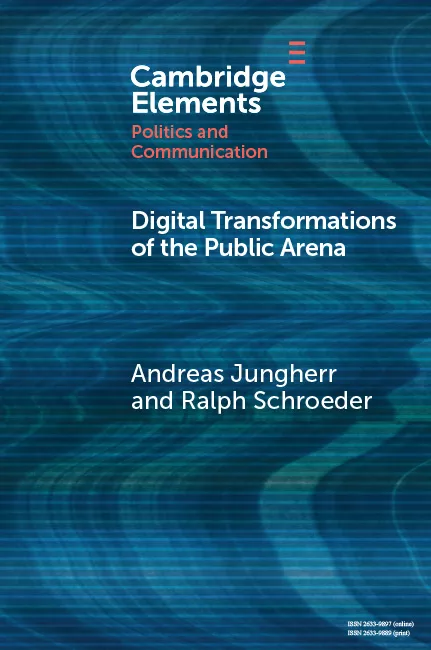
Ralph Schroeder is a Professor of Social Science of the Internet at the University of Oxford’s Oxford Internet Institute (OII). He has held roles including Programme Director of the MSc in Social Science of the Internet (2018–2023), Director of Research (2009–2012), and Senior Research Fellow since 2009. He previously held academic positions at Chalmers University, Royal Holloway, and Brunel University. His research focuses on digital media and populism, AI-driven social theory, and virtual environments. He has authored/co-authored over 170 papers and books, including Social Theory after the Internet (2018) and Knowledge Machines (2015). His work examines how digital technologies transform political communication, governance, and social interaction in countries like India, China, and Sweden. Education: Ph.D. in Government (London School of Economics, 1988), M.Sc. in Political Philosophy (LSE, 1981), B.A. in Philosophy and History (Williams College, 1980). Grants & Awards: Recipient of the 2023 Social Sciences Teaching Excellence Award, Erskine Fellowship (2023), and multiple research grants from the Swedish Research Council, EU Horizon 2020, and the Tencent Internet and Society Institute. His work explores AI ethics, digital misinformation, and the societal implications of emerging technologies. Labs & Collaborations: Leads projects on AI governance, digital media transformations, and the radicalization of Sweden’s global image. Collaborates with institutions globally, including the Chinese University of Hong Kong and the Indian Institute of Management Kozhikode.
Dr Anandadeep Mandal is an Associate Professor in Finance and the Scotcoin Distinguished Chair of Digital Finance at the University of Birmingham , within the Birmingham Business School and the Department of Finance . He is the founding director of the MSc Financial Technology programme and the Programme Director for the MBA (Distance Learning), demonstrating significant leadership in academic program development. Education: PhD in Probability Distribution Fitting, Cranfield University (2016) MRes in Management Science, Cranfield University (2012) MSc in Finance and Investments, Durham University (2008) Bachelor’s in Electronics Engineering Research Interests: Dr Mandal’s interdisciplinary research lies at the intersection of mathematical modelling, artificial intelligence, finance, and digital innovation . His work focuses on AI-enabled investment strategies , blockchain for financial transparency , ESG performance measurement , and the development of the Sustainable Efficiency Index (SEI) . He also pioneers AI applications in digital education , including a patent-pending platform for automated grading of multi-modal student submissions using ensemble AI methods. Publication Trends: His recent scholarly output spans high-impact journals and conferences, reflecting a strong focus on digital finance , climate and social media analytics , cryptocurrency regulation , and AI in financial forecasting . His work combines advanced data science techniques with real-world policy and financial applications, particularly in sustainability and public health. Scientific Awards: No specific awards are mentioned in the provided text. Advising and Grants: Dr Mandal has secured over £2 million in research funding from sources including UKRI, UoB QR Funding, and industry partners. While specific students are not listed, his role as programme director and research leader suggests active mentorship. His research has direct policy impact through collaborations with the NHS Trusts , NIHR , and the UK Government . Labs, Teams, and Impact: Dr Mandal leads a research agenda that bridges academia and public policy. His work extends beyond the university through public engagement at science festivals, outreach for young learners, and expert contributions to UK Parliamentary consultations on AI, sustainability, and financial innovation. He is a key figure in advancing digital finance education and research at the University of Birmingham.
Professor Merje Kuus is a distinguished political geographer at the Department of Geography , Faculty of Arts , University of British Columbia . Her work bridges political geography , international relations , and sociology to examine knowledge production in policy-making contexts. PhD from Syracuse University (1999) WSET Level 3 Award in Wine holder Active in Arctic Circle's Mission Council on the GlobalArctic Research focuses on expertise in diplomatic practices , with empirical specializations in European Union and Arctic governance . She also explores geographical imaginaries in wine production , connecting policy analysis to cultural geography. Key publications include: Geopolitics and Expertise: Knowledge and Authority in European Diplomacy (Wiley Blackwell, 2014) Geopolitics Reframed: Security and Identity in Europe’s Eastern Enlargement (Palgrave Macmillan, 2007) Ashgate Research Companion to Critical Geopolitics (co-edited, 2013) Recent scientific awards include: Fulbright Fellowship Killam Fellowship SSHRC Canada grants Her supervision portfolio spans climate governance, disaster response expertise, and transnational policy networks, with completed PhD theses on topics ranging from Vancouver's climate governance to Arctic resource governance .
Laurence Bertrand Dorléac is a Full Professor of Contemporary History (Art History) at Sciences Po Paris, affiliated with the Centre for History (CHSP). She serves as Chairperson of the Fondation Nationale des Sciences Politiques and leads the bilingual "Art and Society" seminar since 2004, publishing its newsletter. Research focuses on cultural history, art history, and political history of art Specializes in visual history, war representations, and material culture Active in editorial collaborations and international exhibitions Her recent work explores intersections of art with AI, environmental politics, and historical trauma. She supervises multiple HDR and PhD students in art history and cultural analysis. No explicit scientific awards mentioned, though her projects receive institutional support like Fondation de France. Her publications span monographs, exhibition catalogs, and interdisciplinary essays.