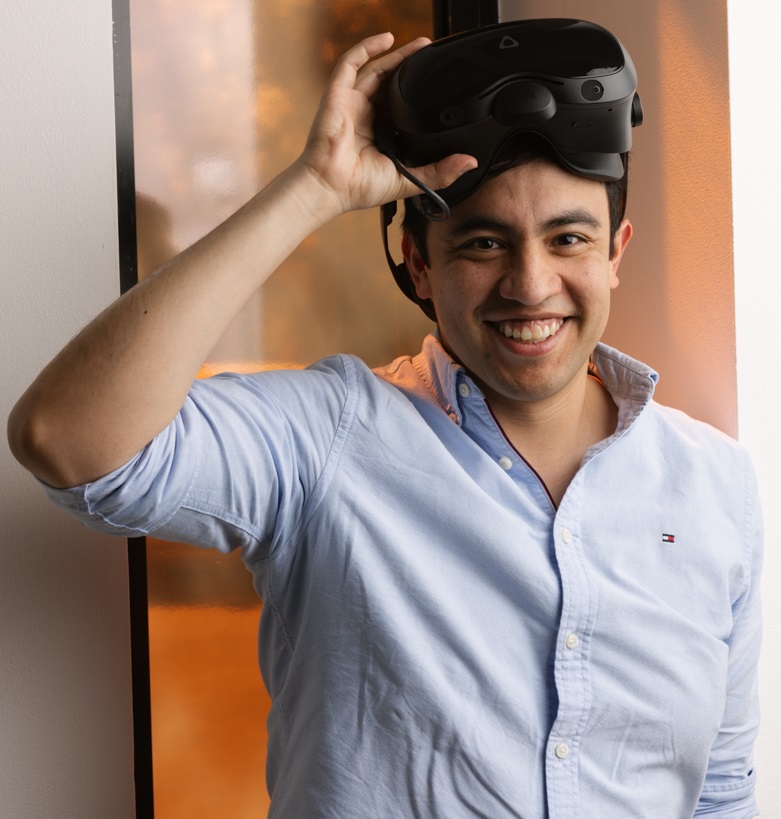
Carlos Tirado Cortes is a Lecturer in Interaction Design at the Discipline of Design Lab , Faculty of Architecture, Design and Planning, University of Sydney. As a virtual environments researcher, he focuses on Human-Computer Interaction and data visualization in immersive systems. Ph.D in Human-Computer Interaction (University of Technology Sydney, 2021) M.S. in Computer Game Engineering (Newcastle University, UK, 2015) B.S. in Engineering and Information Technology (Monterrey Institute of Technology, Mexico, 2012) His research explores immersive visualization for wildfire training (iFire project), VR sickness analysis, and brain-body dynamics during virtual navigation. Recent publications examine: AI-powered wildfire visualization systems Metaverse safety for children Postural instability in VR environments Fire-atmosphere interaction modeling Balance recovery techniques in immersive spaces
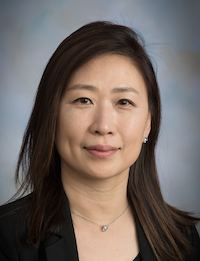
Sangmi Lee Pallickara is a Professor of Computer Science and the Clare Booth Luce Professor at Colorado State University. She is affiliated with the Department of Computer Science in the College of Natural Sciences. Her research is supported by major agencies including the National Science Foundation, Department of Homeland Security, ARPA-E, and NIFA, with ongoing projects in AI Institutes, Cyberinfrastructure, and CyberPhysical Systems. Research Interests: Her work focuses on Big Data systems for scientific applications, including scalable storage, retrieval, metadata management, predictive analytics, and interactive visualization. She applies these to domains such as agriculture, atmospheric science, environmental monitoring, and epidemiology. Her research integrates data science, distributed systems, and deep learning to enable scalable knowledge extraction from high-velocity, voluminous datasets. Publication Trends: Her recent publications emphasize scalable solutions for geospatial and spatiotemporal data, including efficient storage (e.g., ATLAS), visualization (e.g., Glance, Iris), and deep learning (e.g., Argus, CloudNet). There is a strong focus on real-world applications such as wildfire prediction, satellite data imputation, and precision agriculture, leveraging generative models, embeddings, and ensemble methods. Scientific Awards: NSF CAREER Award IEEE TCSC Award for Excellence in Scalable Computing Best Paper Award at IEEE/ACM UCC 2019 Best Paper Award at IEEE CLUSTER 2019 Best Paper Award at IEEE/ACM UCC 2014 Finalist for Best Paper Award at IEEE BDCloud 2018 Advising and Grants: She advises numerous Ph.D. and Master’s students, many of whom have gone on to careers in industry and academia. Her research is funded by the NSF (AI Institutes, CPS), DHS, ARPA-E, NIFA, and the Environmental Defense Fund. She also leads the SWiFT outreach program for K–12 STEM education. Labs and Teams: She leads a vibrant research group focused on Big Data systems, with students working on distributed storage, deep learning for satellite imagery, spatiotemporal analytics, and interactive visualization. The team collaborates with domain scientists in agriculture, climate, and public health.
Jay Alder is a Research Associate at the College of Earth, Ocean, and Atmospheric Sciences (CEOAS) at Oregon State University, holding a courtesy appointment. He is also a Research Physical Scientist with the U.S. Geological Survey (USGS) in Corvallis, Oregon, where he has been employed since 2012. His work bridges academic and federal research, focusing on climate and hydrological modeling. Education: PhD in Geography, Oregon State University (2011) MS in Geography, Oregon State University (2009) BS in Environmental Science, University of California, Riverside (2004) BS in Computer Science, University of California, Riverside (2004) Jay Alder specializes in climate modeling across temporal scales—past, present, and future—utilizing General Circulation Models (GCMs) and Regional Climate Models (RCMs). His research emphasizes dynamical downscaling , hydroclimate analysis , and the visualization and dissemination of climate data . He is particularly interested in making climate projections usable for interdisciplinary applications, including ecosystem and water resource management. His expertise also includes data communication, mathematical modeling, and software development for scientific applications. The available articles highlight a focus on hydrological impacts of climate change in western U.S. watersheds and paleoclimatic studies of North Pacific warming. These works reflect a consistent theme of applying climate models to real-world environmental planning and adaptation challenges, particularly for Indigenous communities and ecosystem resilience. Scientific Contributions: Lead contributor to streamflow projection studies for the Tongue River, supporting Northern Cheyenne water management. Team member on the POP3 project, using geological records of past warming to inform future climate predictions. Jay has been actively contributing to climate science since at least 2009. His grants and collaborative projects are primarily conducted through the USGS and involve partnerships with climate adaptation centers and water science programs. Though no formal advisees are listed, his role supports interdisciplinary science translation. He leads efforts in climate data usability, interactive mapping, and model visualization, contributing to broader scientific accessibility. Labs and Teams: He is affiliated with the Geology, Minerals, Energy, and Geophysics Science Center at USGS and collaborates with the Climate Adaptation Science Centers and Water Resources Mission Area. At Oregon State, he works through CEOAS, particularly in climate modeling and data dissemination initiatives.
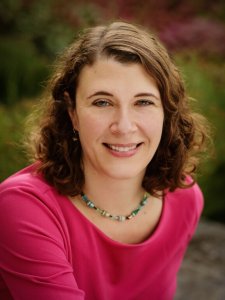
Christina Grozinger is a Professor in the Department of Entomology at Pennsylvania State University and serves as the Director of the Huck Institutes of the Life Sciences. Her research integrates genomics, molecular biology, and ecology to understand social behavior, chemical communication, and health in honey bees and other pollinators. She leads a highly collaborative and interdisciplinary research program focused on improving pollinator conservation and management. Her research interests include: Genomic and molecular basis of social behavior in insects Chemical communication and pheromone signaling in honey bees Host-parasite interactions and immune responses in pollinators Landscape genomics and environmental stress responses Pollinator conservation and sustainable beekeeping practices The recent articles (2024–2025) reflect a strong focus on applying cutting-edge molecular tools—such as transcriptomics, DNA metabarcoding, and machine learning—to address urgent conservation challenges. Themes include climate change impacts on bee fertility, viral infections in insect hosts, landscape-level pathogen dynamics, and the use of citizen science for monitoring firefly populations. Her work bridges fundamental biology with applied solutions for pollinator decline. Scientific awards and recognitions include: Distinguished Professor at Pennsylvania State University Publius Vergilius Maro Professor of Entomology Appointment to the National Academies Committee on Insect Declines Dr. Grozinger leads major research initiatives, including Scialog grants on environmental impacts on animal behavior, and advises numerous graduate students and postdoctoral researchers. She has secured significant funding for interdisciplinary projects, such as those combining ecological modeling with decision support systems for land managers. Her leadership extends to directing the Huck Institutes, where she fosters innovation across life sciences. She is actively involved in science communication and education, including courses on pollinator conservation that assess cognitive impacts on students. She leads research teams focusing on: The Grozinger Lab at Penn State, which studies molecular mechanisms of social behavior Interdisciplinary collaborations in landscape ecology, genomics, and conservation Citizen science and machine learning applications in pollinator monitoring Development of spatial decision support tools for ecological management
Christopher Pal is a Full Professor in the Department of Computer Engineering and Software Engineering at Polytechnique Montréal. With a Ph.D. from the University of Waterloo, he has held academic positions at the University of Rochester and the University of Toronto, and industry roles at Interval Research and Microsoft Research's Interactive Visual Media Group. Fields of Expertise: Artificial Intelligence, Computer Vision, Pattern Recognition, Machine Learning, and Natural Language Processing Affiliations: CIFAR Chair in Artificial Intelligence, Institute for Data Valorization (IVADO) Member His research focuses on deep learning applications in visual question answering , medical image segmentation , and generative models . Recent work involves multimodal data analysis for climate modeling and vision-language systems for code generation. Key projects include CarbonSense for climate flux modeling and GeoCoder for geometry problem-solving AI. His 15 most recent publications (2023-2025) span topics from diffusion models to multi-agent systems , with emphasis on video generation , 3D animation , and environmental applications . Scientific recognition includes: CIFAR Chair in Artificial Intelligence IVADO Institute Membership Top-2% cited researcher (2021) He has supervised 22 Ph.D. and Master's students, with recent graduates working on generative AI , reinforcement learning , and medical imaging . Current research grants include MITACS-funded projects in software engineering agents and drone imagery analysis for tropical forest conservation.
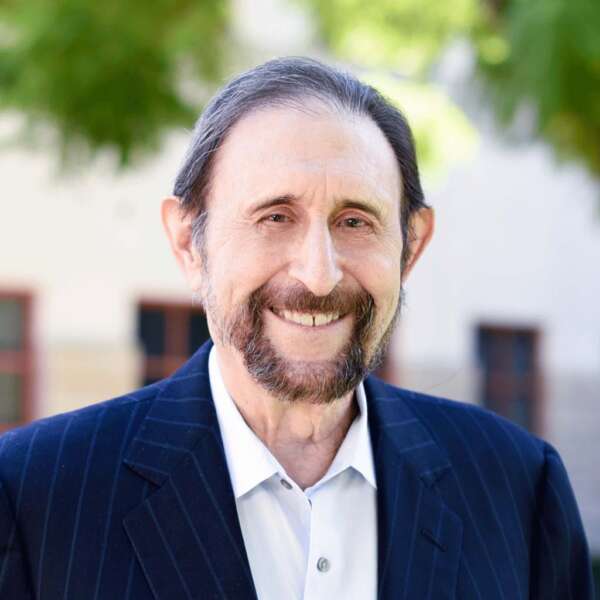
David E. Drew is a Professor of Education at Claremont Graduate University (CGU) , holding the Joseph B. Platt Chair in the Management of Technology. He has served as Dean of the School of Educational Studies for a decade and maintains active roles in academic leadership, research, and consulting. PhD in Sociology of Education from Harvard University Research focuses on STEM education reform , social justice , and technology's societal impact Author of over 200 publications including books like STEM the Tide and What They Didn't Teach You in Graduate School Recent work examines digital technology's tipping point and its disproportionate effects on social inequality His research spans education policy , public health , and higher education management , with 15 recent publications analyzing topics from data science ethics to gun violence epidemiology . Key scientific awards include Kozmetsky Fellowship and multiple advisory roles for NSF, National Research Council, and White House initiatives. As a consultant, he advises institutions like the College Board , Patagonia , and NASA , while maintaining active engagement in global education conferences . His teaching emphasizes quantitative research methods and data analytics .
Audrey Baneyx is a researcher at Sciences Po's médialab , specializing in digital methods, knowledge modeling, and pedagogical tool development. With a PhD in Artificial Intelligence from Paris 6 University, her work bridges computational approaches with social science research. Co-leader of the CNRS' Gender and Digital Spaces working group Principal contributor to tools like Hyphe, Khartis, and ANTA v2 Research Focus : Analyzing digital data heterogeneity through ontologies to map knowledge communities Exposing scientific production mechanisms in social sciences via platforms like Scholarscape Designing pedagogical frameworks for digital method training Publication Trends : Recent work emphasizes feminist perspectives in digital methods (2024), web archive utilization (ResPaDon 2022), climate adaptation controversy mapping (MEDEA 2015), and epistemic network analysis from 2016's multipositionality studies. Teaching & Community Building : Leads MetAt methodological workshops and develops practitioner communities around digital tools. Active in interdisciplinary research engineering since 2008.
Daniel Oto Peralias is a Professor in the Department of Economics, Quantitative Methods and Economic History at Universidad Pablo de Olavide (UPO), specializing in Fundamentals of Economic Analysis. He actively contributes to the Macroeconomics, Labor and Public Economics (MLPE) research group within the Social and Legal Sciences area, focusing on interdisciplinary economic research spanning historical and contemporary contexts. Dr. Peralias earned his doctorate from UPO in 2014 with the thesis Essays on colonialism, institutions and legal traditions , supervised by Dr. Diego Romero de Ávila Torrijos. His academic foundation combines rigorous quantitative methods with deep historical analysis. His research integrates Economic History , Institutional Economics , and Gender Economics to examine how historical events like colonialism and warfare shape modern economic geography, inequality, and social capital. Recent work investigates gender representation through urban street naming practices across Europe and the US, while earlier studies analyze land concentration in renewable energy projects and the spatial distribution of population in Spain. His methodology consistently employs spatial and historical data to reveal institutional legacies in contemporary policy outcomes. Analysis of his 15 most recent publications reveals a clear trajectory: 2022-2024 works center on urban gender studies and commemorative policies, with street naming as a cultural indicator. Pre-2020 research focuses on historical frontiers , colonialism, and legal traditions, demonstrating how medieval conquests and institutional frameworks influence current economic disparities. A unifying thread is the use of municipal-level data to trace persistent effects of historical shocks on social capital and regional development. No scientific awards were documented in the source materials. As a professor at UPO, Dr. Peralias engages in academic advising and research supervision, though specific student names are not provided in available records. His work within the MLPE group generates policy-relevant insights without explicit mention of external grant funding in the current documentation. Dr. Peralias is an integral member of the Macroeconomics, Labor and Public Economics (MLPE) research group, where he collaborates on projects examining labor market dynamics, public finance mechanisms, and long-term economic development patterns through historical and spatial lenses.
Professor Onno Bokhove holds the Chair in Geophysical Fluid Dynamics at the School of Mathematics, Faculty of Engineering and Physical Sciences, University of Leeds. With extensive expertise in applied mathematics of geophysical fluid dynamics, he bridges theoretical mathematical approaches with practical environmental solutions, particularly in flood mitigation and wave dynamics. His research encompasses: Design and testing of laboratory configurations for mathematical model validation Computational techniques for PDEs using discontinuous Galerkin FEM Hamiltonian fluid dynamics frameworks Idealised models for weather prediction Hydraulic solutions of hyperbolic systems Flood mitigation strategies through flood-excess volume analysis Analysis of his recent publications reveals a strategic shift toward practical applications of geophysical fluid dynamics with significant societal impact. Professor Bokhove pioneered the concept of "flood-excess volume" as a communication tool for flood mitigation effectiveness, which evolved from the Wetropolis demonstrator into a REF2021 Impact Case Study. His work increasingly integrates mathematical rigor with policy-relevant applications, particularly through the EU-funded Eagre project on high-seas wave-impact modeling, where he serves as principal investigator collaborating with MARIN (Maritime Research Institute Netherlands). Professor Bokhove has supervised numerous PhD students across diverse fluid dynamics applications: Tom Kent (2014-2016): EPSRC Case Met Office project with Steve Tobias Floriane Gidel (2015-2018): EU project with Mark Kelmanson Tomasz Salwa (2015-2019): EU project with Mark Kelmanson Luca Cantarello: NERC Case with Met Office Current students Yang Lu and Wajiha Rehman working on the EU Eagre project His research has been supported by significant grants including: EU European Industrial Doctorates project "Eagre" (2020-2023, project 859983) NERC-funded projects on flood mitigation EPSRC Case projects with the Met Office REF2021 Impact Case Study funding Professor Bokhove leads research teams within the Leeds Institute for Fluid Dynamics focusing on: The Wetropolis flood demonstrator project, now a policy-relevant analytical framework The Eagre project developing numerical wavetanks for extreme wave modeling Collaborations with MARIN on wave-energy devices and offshore structures
László Pintér is a Professor at the Department of Environmental Sciences and Policy, Central European University (CEU), with over three decades of global expertise in sustainable development governance, the Sustainable Development Goals (SDGs), and nature-based solutions (NBS). He coordinates the MESPOM program and leads EU Horizon 2020 projects like NATURVATION and NATURESCAPES. His work bridges academic research, policy advising, and practical implementation across institutions such as UNEP, OECD, and the World Bank. PhD in Natural Resources, University of Minnesota (2002) MNR in Natural Resources Management, University of Manitoba (1994) M.Sc. in Agronomy, St. Stephen University, Hungary (1988) His research focuses on integrated environmental assessment , climate adaptation strategies , and sustainability transitions , particularly in cities and post-conflict regions. He emphasizes measuring progress through frameworks like the Bellagio STAMP principles and contributes to UNEP's Global Environment Outlook (GEO-5, GEO-6) and the European Environment Agency's SOER 2025. The NATURVATION and IMPRESSIONS projects highlight his work on urban NBS and high-end climate scenarios. He also launched a CEU-incubated startup, Physi Solutions, to advance NBS business cases in urban planning. Scientific awards include the title of Honorary Professor at the University of Pannonia, Hungary. He has served on steering committees for the Balaton Group and The Integrated Assessment Society. Pintér leads global collaborations through projects like the Okavango Basin climate risk assessment (with CRIDF) and SDG implementation studies in Asia-Europe regions. His work spans academic research, policy advising, and community-based initiatives.
Giovanni Leonelli is an Associate Professor at the University of Parma in the Department of Chemical, Life and Environmental Sustainability Sciences . His work integrates geomorphology , climatology , and stable isotope analysis to study climate reconstruction and environmental dynamics in alpine and glacial systems. Focuses on climate change impacts in mountainous regions like the Alps, Northern Apennines, and Chilean Andes Utilizes tree-ring isotopes and GIS analysis for reconstructing environmental shifts Teaches courses on Cartography and GIS , Applied Geomorphology , and Geomorphological Hazards His recent publications emphasize debris flow characterization , glacier retreat effects , and dendrochronological climate proxies . Scientific awards include recognition for his master’s thesis in Natural and Environmental Sciences by the Lombardy Institute (2003).
Associate Professor Ainslie Murray is an interdisciplinary artist and academic at UNSW Sydney within the Faculty of Arts, Design & Architecture . Trained in Architecture at the University of Adelaide (1993-1998) and holding a PhD in Visual Arts from the University of Sydney (2011), her work bridges architecture, visual arts, and environmental practice through walking, site-specific installations, and explorations of immaterial spatial forces. Research Interests : Ainslie investigates essentiality and minimalism in architectural space, focusing on ephemeral, immaterial, and participatory forms. Her practice includes immersive installations, films, textiles, and performative works, often emphasizing ecological themes like air quality, dust, and climate adaptation. Recent projects, such as the Registry of Itinerant Architectures and A.W.E. Collective collaborations, expand architecture's disciplinary boundaries via landscape and mobile practices. Scientific Awards : Notable accolades include the 2022 National Research Award (AILA), 2022 Red Dot Design Award , and 2007 Beth Winspear Scholarship . She has been shortlisted for international events like the Venice Architecture Biennale (2017) and received grants for projects such as Breathing Buildings (2017). Teaching & Supervision : At UNSW, she leads architectural design studios informed by walking practice and supervises PhD candidates in areas like Environmental Art , Nomadic Architecture , and Landscape Anthropocene . Her supervision emphasizes practice-based research across art, architecture, and spatial practices.
Crystal Lee is an Assistant Professor in Computational Media and Design at the Massachusetts Institute of Technology (MIT), with a joint appointment in the Schwarzman College of Computing and Comparative Media Studies/Writing. She also holds affiliations as a Faculty Associate at Harvard's Berkman Klein Center for Internet and Society and a Senior Fellow at Mozilla's Responsible Computing Challenge (2022–2025). PhD in History, Anthropology, Science, Technology, and Society from MIT (2022) MA in History of Science, Stanford University (2016) BA (high honors) in History of Science, Stanford University (2015) Her research focuses on the life-cycle of data representations , including data visualization, critical data studies, digital media, science and technology studies, human-computer interaction, and disability studies. She explores how datasets are curated, visualized, and manipulated, with particular emphasis on ethical tech , accessible systems , and technoableism . Recent publications examine participatory AI , medical racism in computational diagnosis , decolonial AI , and global data governance . Notable awards include NSF grants , Honorable Mentions at EuroVis and CHI , and MIT and Harvard fellowships . She has advised students on projects related to accessible visualization , climate data , and participatory AI . Advisory Board Member, Disability Inclusion Fund (Borealis Philanthropy) Co-organizer, Toward Accessible Data Representations Workshop (IEEE Vis) Keynote: "On Data Justice and Accessible Systems" (Code4Lib, 2022)
Mohamed Aly is a Professor at the University of Arkansas, affiliated with the Department of Geosciences, Center for Advanced Spatial Technologies (CAST), Arkansas Center for Space & Planetary Sciences, and Environmental Dynamics (ENDY) Program. His research integrates Synthetic Aperture Radar Interferometry (InSAR), GIS, GNSS, and machine learning for geohazard assessment and environmental monitoring. Education: PhD in Geology (Radar Interferometry), Texas A&M University MS in Geology (Remote Sensing & GIS), Zagazig University Research focuses on InSAR for crustal deformation, machine learning in geospatial analysis, wildfire and landslide susceptibility modeling, and geothermal process monitoring. Recent publications emphasize multisensor data fusion and Google Earth Engine applications. Scientific awards include NASA EPSCoR Early Career Investigator, Fulbright College Teaching Commendation, and Academic Excellence from Texas A&M. He mentors students in geohazard research and geospatial technologies.
Francesca Coccetta is an Associate Professor at Ca' Foscari University of Venice , affiliated with the Department of Comparative Linguistic and Cultural Studies and the Interdepartmental Center SELISI in Treviso. Her research focuses on Multimodal Discourse Analysis , Corpus Linguistics , and English Language Teaching with a specialization in Scientific and Medical Discourse . She teaches multimodal analysis and translation across various degree programs including Medicine, International Economics, and Communication Studies. Recent publications analyze video abstracts (2024-2022) as emerging academic genres, with methodological frameworks for multimodal corpus construction and phase-based structural analysis . Her work extends to medical communication and cultural discourse studies , including European Capital of Culture promotional materials and Twilight Saga narrative analysis. She employs data-driven learning and intersemiotic competence frameworks in educational contexts. Active in international research projects like the Living Knowledge EU initiative (2009-2011) and PRIN (2005-2007), she has presented at conferences including EUROCALL , Learner Corpus Research Conference , and International Symposium on Multimodal Environments . Her academic career includes visiting positions at University of Sydney (2018) and Universidad Autónoma de Madrid (2020) under Erasmus+ mobility programs.