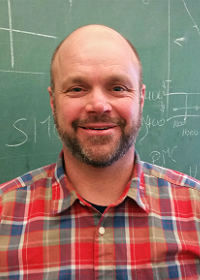
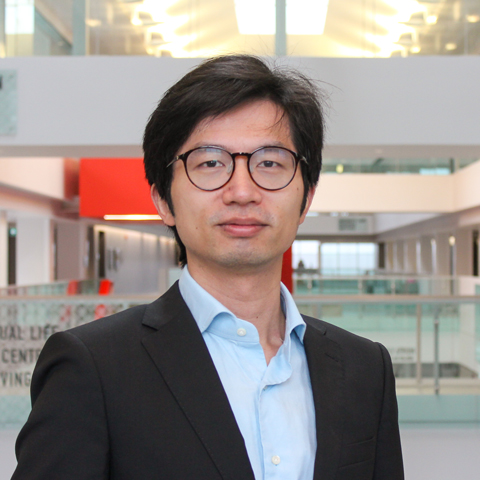
Prof. Dr. Erik Rodner is a faculty member at the University of Applied Sciences Berlin (HTW Berlin), where he serves as a Professor for Machine Learning and Data Science. He also contributes to the School of Engineering Sciences - Technology and Life. His research spans computer vision, machine learning, and biomedical applications, with a focus on learning with limited data, robust visual recognition models, and medical image analysis. He has developed innovative methods for medical diagnostics, industrial classification, and anomaly detection. Recent publications (2025-2016) highlight his expertise in visual in-context learning, semi-weakly segmentation, and active learning frameworks. He has collaborated with institutions such as ZEISS Group, Friedrich Schiller University Jena, and UC Berkeley. Scientific Awards: Award for Excellent Teaching (2023)
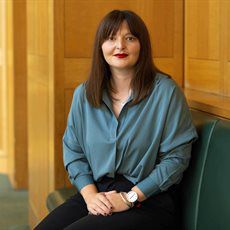
Louise Reardon is Professor of Governance and Public Policy at the University of Birmingham's School of Government, Department of Public Administration and Policy. She serves as School Deputy Director of Research (Impact) and is Thematic Research Lead for Transport at UK Parliament. Her internationally recognized expertise spans transport policy and governance, with research focusing on institutional collaboration across scales to advance local transport goals, technological innovation, and sustainability. Louise earned her PhD in Political Science from the University of Sheffield (2014), MA in Governance and Public Policy from the University of Sheffield (2009), and BA (hons) in Philosophy, Politics and Economics from the University of Durham (2008). She holds a Post-Graduate Certificate in Higher Education (2018) and is a Senior Fellow of the Higher Education Academy (2020). Her research interests center on transport policy and governance, with specific focus on multilevel governance, agenda setting, policy implementation, smart mobility transitions, urban governance, and wellbeing. As a political scientist, she advances theoretical understanding of policy processes through transport analysis, examining how local dynamics influence issue recognition, agenda setting, policy change, and approaches to wicked problems. Her work consistently bridges academic theory with practical policy application. Louise's research portfolio demonstrates a clear trajectory toward increasingly complex, interdisciplinary climate-related transport research. Her recent publications show strong emphasis on net-zero transitions, smart city governance, and pandemic recovery implications for transport systems, with growing international collaboration particularly with Indian and Australian institutions. The trend indicates deepening engagement with practical policy implementation challenges alongside theoretical contributions. Senior Fellow of the Higher Education Academy, 2020 Louise regularly provides scientific advice to diverse stakeholders and serves on the UK Department for Transport's Transport Research Innovation Grant advisory board. She co-edited the Handbook of Transportation and Public Policy (2025) and previously co-chaired the Governance and Decision-Making Processes Special Interest Group for the World Conference on Transport Research Society. She serves on editorial boards for Research in Transportation Business & Management and Local Government Studies. As an educator, Louise led the College of Social Science's first Degree Apprenticeship programme and specializes in blended teaching approaches. She has supervised PhD students on evidence use in local policymaking, center-local government relations, and walking's role in climate change agendas. She actively seeks new doctoral students interested in multi-level governance, policy change, sustainable transitions, and urban governance topics.
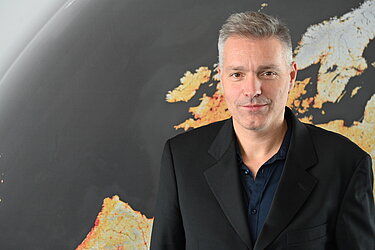
Lukas Papritz is a Lecturer at the Department of Environmental Systems Science at ETH Zürich , Switzerland. He specializes in atmospheric dynamics, focusing on large-scale weather systems, Arctic climate processes, and air-sea interactions. Research Interests : Dynamics of extratropical cyclones and atmospheric blocking Arctic climate system, including air mass transformations Atmospheric and oceanic energy exchanges Physics of temperature extremes (cold/warm) Development of dynamical frameworks for weather system analysis His recent publications examine baroclinic wave energetics, heatwave thermodynamics, cold-air outbreak dynamics, and synoptic-scale moisture transport. These works integrate Lagrangian methods, climatological analysis, and regional climate modeling. Current Affiliation : Professorship for Atmospheric Dynamics (Professur für Atmosphärendynamik), ETH Zürich
Dr. Christian Zeman serves as a Lecturer at the Department of Environmental Systems Science, ETH Zurich, based at the Institute for Atmospheric and Climate Science (CHN N 17.1) in Zurich, Switzerland. His research focuses on high-resolution atmospheric modeling with emphasis on kilometer-scale climate simulations and deep convection processes. Zeman's work centers on advancing regional climate modeling capabilities through rigorous model verification techniques and convection-resolving simulations. His research addresses critical challenges in simulating complex phenomena like island-induced vortex streets, tropical climate dynamics, and the impacts of reduced floating-point precision on model accuracy. Key methodologies include ensemble-based statistical verification and systematic model calibration for improved predictive reliability. Analysis of his 2020-2025 publications reveals a consistent trajectory toward higher-resolution climate modeling, with significant contributions to model intercomparison frameworks and computational efficiency optimization. His research bridges theoretical atmospheric science with practical applications in regional climate projection, particularly for island systems and tropical regions. Zeman operates within Prof. Christoph Schär's research group at ETH Zurich, contributing to cutting-edge developments in the Consortium for Small-scale Modeling (COSMO) and Integrated Forecasting System (IFS) frameworks. His work supports ETH Zurich's leadership in high-resolution climate simulation and verification methodologies.
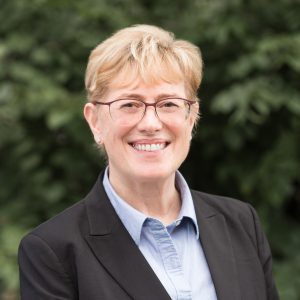
Angela Sasic Kalagasidis is a Professor and Department Head at Chalmers University of Technology , leading the Building Physics research group. She serves as a board member of the Moisture Center at Lund University of Technology , contributing to interdisciplinary research in building science. Building Physics Heat and Mass Transfer Energy Efficiency Moisture Safety Indoor VOC Emissions Climate Change Adaptation Her recent publications focus on aerogel-based materials for insulation, urban heat island mitigation , and thermal energy storage systems . Key methodologies include CFD simulations , field testing , and life cycle assessment frameworks . Research trends show emphasis on: Advanced computational tools for hygrothermal analysis Integration of phase change materials in building systems Climate resilience in building envelopes Optimization of ventilation and moisture control
María Lois is a Lecturer in the Department of History, Theories and Political Geography at the Complutense University of Madrid, Faculty of Political Sciences and Sociology. She is a member of the 'Space and Power' Research Group and 'Polarts (The Politics and the Arts)', a Standing Research Group within the ECPR. María serves as board member of the Research Committee 15 (Political and Cultural Geography) of the International Political Science Association and co-editor of the journal Geopolítica(s). Her research focuses on Political and Cultural Geography , with particular emphasis on border studies, cultural governance, and the heritageization of European borders. She explores geographies of nationalism, spatial interpretations of artistic processes, and geopolitics of globalization, with specialized expertise in literary geographies and cultural dimensions of border regions, particularly the Spanish-Portuguese border. Her work demonstrates how borders transform rather than disappear, examining cross-border cooperation projects that create new spatial configurations while maintaining elements of national security frameworks. María Lois's scholarly contributions reveal consistent focus on spatial arrangements reflecting power relations. Her analysis of border heritage through multiple scales shows parallel versions of the past serving different political purposes. Her research on the Spanish-Portuguese border examines how smuggling routes have been transformed into tourist experiences, re-signifying historical practices for contemporary cultural consumption. She has also made significant contributions to understanding the geopolitics of the COVID-19 pandemic, analyzing border closures as territorial solutions to exceptional situations. Her teaching aligns closely with research interests, particularly in political geography. She has developed innovative approaches using film as a learning tool in political geography education, creating shared teaching resources among faculty members through her project 'APRENDIZAJE A TRAVÉS DEL CINE.' María Lois is actively engaged with research teams focusing on border studies and cultural geography. Her work with the 'Space and Power' Research Group and 'Polarts' suggests collaborative environments where theoretical and empirical border studies are developed. Her participation in EU-funded cross-border cooperation projects indicates practical engagement with policy applications of her research.
Jonathan Remo is a Professor in the Department of Geography and Environmental Resources at Southern Illinois University. His research focuses on river science, flood hazard assessment, and disaster mitigation planning, with expertise in fluvial geomorphology and hydraulic modeling. Education: Ph.D., Southern Illinois University (2008) M.S., West Virginia University (1999) B.S., Edinboro University of Pennsylvania (1997) Dr. Remo’s research investigates interactions between river systems and human activities, emphasizing floodplain dynamics, levee vulnerability, and climate impacts on hydrology. He employs geospatial tools and hydrodynamic modeling to address flood risk and ecosystem restoration. Recent publications highlight his work on nitrogen mitigation in floodplains, strategic levee reconnection, and sedimentation patterns in the Mississippi River basin, spanning topics from hydrological modeling to socio-hydrology and cultural geography. He has secured grants from The Nature Conservancy and American Rivers for projects like the Dogtooth Bend Floodplain Science Project , focusing on floodplain monitoring and restoration.
Ann Bostrom is the Weyerhaeuser Endowed Professor in Environmental Policy at the Evans School of Public Policy & Governance, University of Washington, where she joined the faculty in 2007 after serving as Associate Dean for Research and Professor at Georgia Tech's Ivan Allen College. She co-directed the NSF Decision Risk and Management Science Program and serves on the AAAS and Washington State Academy of Sciences boards. Her educational background includes: Ph.D. in Public Policy Analysis, Carnegie Mellon University M.B.A., Western Washington University B.A. in English, University of Washington Postdoctoral studies in Engineering and Public Policy, Carnegie Mellon University Postdoctoral studies in cognitive survey methodology, Bureau of Labor Statistics Bostrom's research centers on risk perception, communication, and management in environmental policy and uncertain decision contexts. She investigates causal misconceptions about climate change, earthquake risk awareness, and pandemic risk communication, bridging social/behavioral sciences with weather and climate risk management through efficacy-focused frameworks. Her 2017-2021 publications reveal concentrated work on climate change communication, natural hazards, and pandemic risks. Key themes include causal thinking's impact on policy support, risk message design efficacy, and cross-cultural risk perception comparisons, frequently contributing to National Academies reports on science communication and hazard management. Major scientific recognitions include: 2020 Distinguished Educator Award (Society for Risk Analysis) 1997 Chauncey Starr Award Elected fellow of AAAS, WSAS, and Society for Risk Analysis ASA/NSF/BLS Research Associateship (1991-92) Fulbright Fellowship (1989-90) Patricia Roberts Harris Fellowship (1988-89) She has secured major funding from NSF, EPA, and NIH, currently co-leading the Cascadia Coastlines and Peoples Hazards Research Hub and NSF AI Institute for Trustworthy AI in Weather/Climate. Advisory roles include National Renewable Energy Laboratory Decision Science Committee and Earthquake Hazards Reduction Advisory Committee. At UW, Bostrom co-chairs Environments and Populations research in the Center for Studies in Demography and Ecology, serves on EarthLab's steering committee, and participates in the Program on Climate Change Governing Board, while maintaining affiliations with Carnegie Mellon's Center for Climate and Energy Decision Making.
Dr. Qian Zhang serves as Assistant Professor in the Robert M. Buchan Department of Mining at Queen's University's Smith Engineering, leading the Green Mining Value Chain (GreeMVC) Lab. His research develops strategic frameworks for sustainability and resilience throughout mining value chains, with emphasis on climate change mitigation and resource efficiency in global mineral systems. His academic foundation includes a Ph.D. in Urban Engineering from the University of Tokyo (awarded Japanese Government MEXT Scholarship), complemented by MSc and BSc degrees in Environmental Science plus a Minor in Economics from Peking University. Prior to his current role, he conducted postdoctoral research at the University of Victoria and University of Tokyo while consulting for the World Resources Institute on climate-energy initiatives. Dr. Zhang's expertise spans carbon footprint analysis , life-cycle assessment , and industrial ecology applied to mining systems. He employs advanced methodologies including input-output analysis and material flow accounting to model environmental pressures across urban infrastructure and mineral supply chains. His work specifically addresses greenhouse gas accounting, water-energy nexus challenges, and circular economy implementation in resource-intensive sectors. Recent publications reveal strong methodological convergence between artificial intelligence and environmental assessment, particularly in optimizing mining operations through reinforcement learning and geospatial analysis. Key thematic clusters include carbon accounting standardization, critical mineral sustainability, and policy-oriented modeling of environmental pressures throughout mineral value chains. His research program is supported by major competitive grants: NSERC Discovery Grant (2022-2027) SSHRC Institutional Grant (2023, 2025) NSERC Alliance Missions Grant (2023, 2024) Mitacs Accelerate Grant (2023, 2025) NFRF Exploration Grant (2025-2027) NRCan Energy Innovation Program (2025) Dr. Zhang actively mentors a dynamic research group comprising 10+ graduate students and postdocs, securing collaborative funding through institutional and federal channels. His GreeMVC Lab maintains active partnerships with industry leaders and government agencies to translate research into practical sustainability solutions for the mining sector, with current projects focusing on AI-driven fleet management and life-cycle assessment of mineral supply chains. The GreeMVC Lab operates as a multidisciplinary hub with structured mentorship programs, regular industry engagement events, and international collaborations including the COM symposium on sustainable circularity. The lab's physical space in Goodwin Hall supports advanced computational analysis of mining value chains while fostering innovation in green mining technologies through student-led research initiatives.
Prof. Dr. Hannes Taubenböck holds the Chair of Global Urbanization and Remote Sensing at the Julius-Maximilians University of Würzburg (Faculty of Philosophy, Institute of Geography and Geology) since 2022 and collaborates with the German Aerospace Center (DLR). His research bridges remote sensing with urban geography, focusing on: Global urbanization patterns and structural analysis Informal settlements (slums/refugee camps) Climate change and natural hazard vulnerability Migration dynamics via remote sensing and social media He obtained his PhD (2008) and habilitation (2019) at JMU Würzburg, preceded by geography studies at LMU Munich (1999-2004). His recent publications analyze: Climate impacts on African agriculture Urban permeability and walkability Border region disparities Heat exposure modeling Methodologically, he specializes in: Deep learning for earth observation Multi-modal data fusion Urban pattern classification Building stock analysis His work informs policy applications in: EU cohesion programs Disaster risk reduction Environmental justice Urban sustainability
Gideon Hartman is an Associate Professor in the Anthropology Department at the University of Connecticut, where he conducts interdisciplinary research at the intersection of paleoenvironmental reconstruction, plant and animal eco-physiology, anthropology, and archaeology. His work primarily employs stable isotope methods to reconstruct past environments, human mobility patterns, paleodiets, and ancient economic systems. Dr. Hartman received his Ph.D. from Harvard University in 2008. His educational foundation in anthropology and archaeological science has enabled his innovative approach to stable isotope analysis. Rather than treating isotopic values as static markers, he investigates the mechanisms causing variability in stable isotope ratios as they move along foodwebs from soil and atmosphere to plants and then to animals and humans. Hartman's research program uniquely begins in the contemporary world to establish principles that can be reliably applied to archaeological settings. His work spans diverse geographical regions including the Eastern Mediterranean, Levant, Jordan Valley, and Armenian Highlands, with temporal coverage from the Middle Pleistocene to the Early Bronze Age. He has made significant contributions to understanding how environmental factors like water availability, temperature, and soil conditions affect isotopic signatures in modern ecosystems, creating robust models for archaeological interpretation. His publication record demonstrates consistent productivity in high-impact journals, with research trends showing increasing sophistication in multi-isotope approaches applied to complex archaeological questions about pastoralism, trade networks, human migration, and human-environment interactions. His work increasingly integrates zooarchaeological, archaeobotanical, and geochemical evidence to build comprehensive pictures of past societies. As director of the Stable Isotope Preparation Lab at UConn, Hartman leads a research team that processes and analyzes samples from archaeological sites worldwide. His laboratory serves as a hub for interdisciplinary collaboration between archaeologists, anthropologists, geoscientists, and biologists seeking to apply isotopic methods to their research questions. His work has been instrumental in refining methodologies for interpreting strontium, carbon, nitrogen, and oxygen isotope data in archaeological contexts, particularly regarding animal and human mobility patterns in the Eastern Mediterranean region.
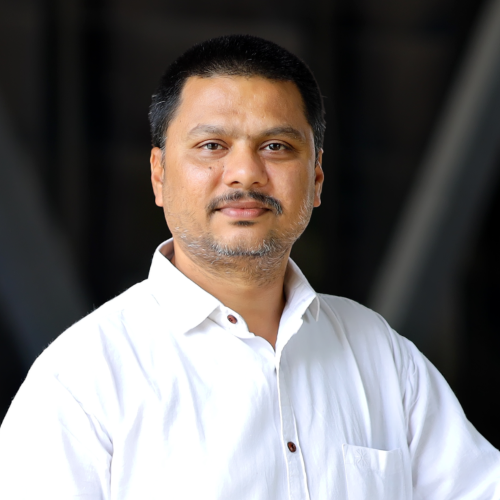
Phanindra K.B.V.N. is a Professor and Head of the Department of Civil Engineering at the Indian Institute of Technology Hyderabad . His research focuses on groundwater modeling, soil-water-plant interactions, remote sensing & GIS, eco-hydrological processes, and climate change impacts. Research Interests: Groundwater Modeling, Soil-Water-Plant Interactions, Remote Sensing & GIS, Eco-Hydrological Processes, Climate Change Contact: Office Address: Room A-705, Academic Block A, IIT Hyderabad, Kandi-502284, Sangareddy, Telangana, India
Deg-Hyo Bae is a Professor in the Department of Civil and Environmental Engineering at Sejong University, serving since 2001, and concurrently holds the position of University President since 2018. His academic career spans leadership roles including Assistant/Associate Professor at Changwon National University (1996-2001), Senior Researcher at Yonsei University (1994-1996), and Researcher at the US Department of Agriculture-ARS (1992-1994). His research focuses on critical water security challenges through advanced hydrological modeling and climate impact assessment. His academic credentials include a Ph.D. (1992) and M.S. (1989) from the University of Iowa, and a B.S. from Yonsei University (1983). These qualifications form the foundation for his interdisciplinary expertise bridging civil engineering, atmospheric science, and environmental informatics. Professor Bae's research program centers on atmosphere-surface interactions, climate-driven hydrological extremes, and real-time prediction systems. His work integrates radar meteorology, GIS analytics, and climate modeling to develop operational tools for flood forecasting, drought monitoring, and transboundary water management. Major achievements include the Global Water Bank system and coupled atmosphere-urban flood models, directly supporting UN Sustainable Development Goals for clean water and climate action. Recent publications (2024-2025) reveal a strategic shift toward AI-enhanced hydrology, combining Bayesian uncertainty quantification with deep learning for streamflow prediction. His work increasingly addresses climate change impacts on extreme events in vulnerable regions like Burundi while exploring teleconnection mechanisms such as ENSO-ozone interactions through CMIP6 frameworks. Professional activities include media coverage of Sejong University's research impact (2021-2022) and international collaborations with Slovak presidential advisors. While specific grant details and student advising records aren't documented in the source material, his 111 publications and h-index of 25 demonstrate significant scholarly influence in water resources engineering.
Professor Satoshi Kurokawa is a full Professor of Environmental and Administrative Law in the School of Social Sciences at Waseda University, Japan. Holding Ph.D. and LL.M. degrees from Kyoto University and a B.A. in Political Science from Waseda, he has taught continuously since 1994, first at Tezukayama University and, from 2004 onward, at Waseda, where he served as Associate Professor (2003-2004) before promotion to Professor. Education: Ph.D. (Kyoto University) LL.M. (Kyoto University) Bachelor of Political Science (Waseda University) Research interests revolve around the intersection of public law and sustainability: environmental law, administrative law, energy law, climate-change policy, nuclear-risk regulation, energy justice, and the legal challenges posed by artificial-intelligence in government decision-making. His recent work pays particular attention to achieving Japan’s 2050 carbon-neutrality target through an “energy-justice” lens, examining social acceptance of high-level radioactive-waste disposal, and assessing the rule-of-law implications of algorithmic administration. Grants & projects: He currently leads a JSPS KAKENHI multi-year project (2024-2028) on “Long-Term Disaster Preparedness and Intergenerational Equity in Light of Uncertainty in Predicting Mega-Earthquakes,” and has completed earlier JSPS projects on climate policy under the Trump administration, California’s sub-national leadership, and social acceptance of geological disposal of nuclear waste. Professional memberships: Japan Public Law Association, Environmental Law Policy Association, and Japan-US Law Society. He teaches an extensive range of courses including “Environmental Law in Japan,” “Environmental Issues and Sustainable Society,” “Sustainability Study,” and “Social Science for Energy Innovation” across Waseda’s graduate and undergraduate programmes, and is concurrently affiliated with several interdisciplinary research institutes.
Paul O. Wennberg is the R. Stanton Avery Professor of Atmospheric Chemistry and Environmental Science and Engineering at the California Institute of Technology . His research focuses on atmospheric photochemistry, the terrestrial carbon cycle, and oxidative chemistry of trace gases, with applications in climate modeling and satellite validation. Institution: California Institute of Technology Lab: Wennberg Laboratory Contact: wennberg@caltech.edu His group developed the Total Carbon Column Observing Network (TCCON) for global greenhouse gas monitoring and collaborates with NASA's Orbiting Carbon Observatory program. Research themes include coupling radiation, climate, and chemistry in the troposphere, anthropogenic impacts on atmospheric composition, and novel mass spectrometry methods for airborne/satellite data. Recent publications emphasize atmospheric oxidation processes (e.g., peroxy radical isomerization), urban air quality (e.g., Seoul and Southern California), satellite validation (e.g., MOPITT and OCO-2), and tropospheric methane dynamics. Key trends involve isoprene chemistry, NOx cycling, and aerosol formation mechanisms. Scientific Awards: R. Stanton Avery Professorship He contributes to NASA missions and international networks like TCCON, with expertise in chemical ionization mass spectrometry and reactive trace gas analysis. His lab integrates field measurements, laboratory experiments, and satellite observations to study global atmospheric change.