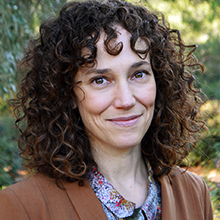
MARIA LUZ LOUREIRO GARCIA is a Professor in the Department of Fundamentals of Economic Analysis at the Faculty of Economic and Business Sciences, University of Santiago de Compostela. She is affiliated with the Interuniversity Research Center in Economics and Business for Society (ECOBAS) and leads the ECO-IURIS Legal-economic analysis group, while also collaborating with the ECOAGRASOC group focused on Agri-Food and Environmental Economics, Rural Development, and Social Economy. Her research spans Environmental Economics , Climate Change , Energy Economics , and Tourism Economics , with a focus on public sentiment analysis , behavioral economics , and ecosystem services valuation . Recent work applies choice experiments and big data to assess preferences for nature-based solutions , clean energy adoption , and tourism demand dynamics . Her publications (2011–2025) cover broad disciplines including Climate Change Mitigation , Energy Transition , Wildfire Economics , and Behavioral Analysis , with specific subfields such as sentiment analysis in Spain , gender roles in rural energy access , blue carbon valuation , wine consumer emotions , and policy evaluation for invasive species .
Dr. Eduardo Sánchez Jacob is a Visiting Researcher at the Institute for Research in Technology (IIT) of Comillas Pontifical University and affiliated with the Center for Innovation in Technology for Human Development (itdUPM). He holds a PhD in Environmental Engineering from the Polytechnic University of Madrid (2022) and has extensive experience in international development cooperation, particularly in energy access and climate change projects. His work spans over 30 countries across Latin America, Africa, and the Middle East. Education: PhD in Environmental Engineering, Polytechnic University of Madrid (2022) Diploma in Regulation for Universal Access to Energy, European University Institute (2018) Diploma in Advanced Studies in Economics & Innovation Policy, Polytechnic University of Madrid (2004) Specialist in Development Cooperation, Complutense University of Madrid (1994) Industrial Engineering, University of Valladolid (1993) His research focuses on synergies between clean cooking solutions and electrical infrastructure, particularly in low-income regions. He teaches in masters programs on CSR, Renewable Energy, and Development Strategies at UNED, Jaume I University, and the Polytechnic University of Madrid. Research Contributions: Key publications address universal energy access frameworks and integrated planning models for energy systems in developing nations. His doctoral thesis (2022) explores accelerating electric cooking adoption in LMICs. Affiliations & Roles: Former President of the Spanish Development Platform NGO Consultant for AECID, Doctors of the World, and Action Against Hunger Member of the National Council for Development Cooperation Labs & Teams: Active in IIT's Energy Economics and Regulation group and collaborates with itdUPM's technology innovation initiatives.
Cathryn Tonne is an environmental epidemiologist specializing in the health impacts of air pollution, with a focus on both high- and low/middle-income countries. She co-directs the Lancet Countdown for Health and Climate Change in Europe , leads the Catalyse Horizon Europe project, and has previously directed the European Research Council-funded Cardiovascular Health effects of Air pollution in Telangana, India initiative. Doctoral training in Epidemiology and Environmental Health at Harvard School of Public Health (ScD) Master of Public Health (MPH) from Columbia University Bachelor of Science (BS) in Chemistry from UC Berkeley Her research prioritizes the health co-benefits of climate change mitigation , air pollution exposure patterns, and intersections with urban environments, global health, and planetary health frameworks. Publications highlight multidisciplinary approaches to assessing PM2.5 exposure, cardiovascular impacts, and policy synergies in sustainable development. Notable accolades include the Tony McMichael Mid-term Career Award (2022) and the Ramon y Cajal Fellowship (2017-2021) , reflecting her contributions to environmental epidemiology and competitive recognition in the US, UK, and Spain.
Pablo Dueñas Martínez serves as a Research Assistant Professor at the Institute for Research in Technology (IIT) of the ICAI School of Engineering at Comillas Pontifical University, where he teaches Operations Research. He maintains significant external affiliations as a research scientist at the MIT Energy Initiative, Gas-Electricity Advisor for the Florence School of Regulation at the European University Institute, and member of the directive board of the Spanish Association for Energy Economics (AEEE). Dr. Dueñas Martínez's research centers on economic and regulatory modeling related to energy systems transformation within carbon-constrained environments. His work spans both developed and developing countries, with particular focus on gas and electricity market regulation, energy security in decarbonizing economies, distributed energy resource integration, universal energy access, and mathematical energy system modeling. He has collaborated extensively with power and gas utilities, government agencies, and regulatory bodies worldwide to improve energy system operations and investments. His recent publication portfolio reveals a strategic focus on synthetic grid modeling, energy market design, and decarbonization pathways. The research demonstrates increasing integration of spatial and temporal dimensions in energy technology adoption modeling, with growing emphasis on distribution system challenges arising from electrification, distributed generation, and hydrogen integration. His work bridges theoretical modeling with practical applications across diverse geographical contexts from Texas to India to rural Africa. Dr. Dueñas Martínez has supervised multiple PhD students including F. Heymann (2020) and D. Fioriti (2019), and currently mentors H. Meresa Weldu and O. Rico Díez on off-grid energy systems and clean cooking initiatives. His active research portfolio includes major projects with the National Renewable Energy Laboratory, Sustainable Energy for All, and Enagás, addressing critical challenges in energy system planning and decarbonization.
María Luz Loureiro García is Professor in the Department of Fundamentals of Economic Analysis at University of Santiago de Compostela's Faculty of Economic and Business Sciences. Her research focuses on environmental and resource economics, climate change policy, and behavioral economics with applications to energy transitions and ecosystem valuation. Her recent work analyzes climate change sentiment using social media data, adoption of clean energy technologies in developing regions, and economic valuation of coastal ecosystems. She employs innovative methods including choice experiments with facial expression analysis and big data approaches to environmental economics. Research trends show strong focus on: 1) Climate policy fairness and EU targets, 2) Nature-based solutions for resilience in Nigeria, 3) Tourism demand during crises, and 4) Behavioral aspects of environmental decision-making. Her methodological contributions include advanced stated preference techniques and sentiment analysis applications.
Ignacio Pérez Arriaga is a Professor at the Massachusetts Institute of Technology's Sloan School of Management and maintains strong affiliations with Comillas Pontifical University in Madrid, his alma mater where he graduated as an engineer in 1970. With over 50 years of experience in energy systems, he has advised governments and companies in more than 40 countries on electricity regulation and universal energy access. His work bridges academic research with practical implementation, focusing on creating viable frameworks for bringing electricity to underserved populations worldwide. Pérez Arriaga's research centers on power sector regulation, universal energy access, regional electricity markets, and off-grid electrification. He pioneered the development of the Reference Electrification Model (REM), a computational tool that creates detailed electrification plans for developing countries by analyzing technical, economic, and geographical factors. This work led to the creation of Waya Energy, a spin-off company implementing national electrification plans in 22 countries across Latin America, Africa, and Asia. He also co-founded the African School of Regulation (ASR) to improve energy policy across the continent, currently serving as its interim president. His publications reveal a consistent focus on integrated approaches to universal energy access, with recent work emphasizing the Integrated Distribution Framework (IDF) that combines on-grid and off-grid solutions under viable business models. His research spans from high-level policy frameworks to detailed technical implementation, with particular attention to the economic and regulatory mechanisms needed to attract private investment for universal energy access. He recognizes that over 600 million people in sub-Saharan Africa lack electricity, viewing this not just as a technical challenge but as a moral imperative that requires innovative business models and regulatory frameworks. Life Member of the Spanish Royal Academy of Engineering Co-founder of the African School of Regulation (ASR) Principal Investigator for the Global Commission to End Energy Poverty Co-founder of Waya Energy, implementing electrification plans in 22 countries Creator of the Reference Electrification Model (REM) Pérez Arriaga has mentored numerous researchers and PhD students who now work in energy sectors worldwide. His approach emphasizes practical implementation over theoretical work, focusing on creating actionable frameworks that can be implemented immediately. He currently splits his time between MIT, Comillas University, and field work across Africa, Asia, and Latin America, maintaining an active travel schedule despite being 76 years old. His work with the MIT Energy Initiative and the Rockefeller Foundation demonstrates his commitment to bridging academic research with real-world impact.
Fernando de Cuadra García is a Full Professor at the ICAI School of Engineering and the Technological Research Institute (IIT) of Comillas Pontifical University in Madrid. He holds a PhD in Industrial Engineering from the same institution and has served as Dean of ETSI ICAI from 2001 to 2010. His research focuses on smart grids, power systems, railway systems, and optimization techniques. He has led over 40 projects for entities like the World Bank, MIT, and the U.S. Department of Energy. His work includes developing synthetic electricity networks, electrification planning models, and energy policy frameworks. He has supervised eight PhD theses and contributed to over 26 journal articles and 23 conference papers. Recognitions include the 2016 Distinction from the ICAI Engineers' Association. Education: Industrial Engineering (1985) and PhD in Industrial Engineering (1990), both from Comillas Pontificia University. Research interests span large-scale system modeling, knowledge engineering, control theory, and sustainable energy systems. His recent articles address Texas electricity grid modeling, universal energy access strategies, and renewable mini-grid management. He actively collaborates with international organizations like Sustainable Energy for All and the Rockefeller Foundation on global electrification initiatives. Grants and projects include Rwanda’s Clean Cooking Plan, Colombia’s grid expansion models, and Canada’s synthetic distribution networks. He chairs sessions on energy transitions and advises on railway traffic control systems. Current projects include integrated clean cooking planning tools and market models for mini-grids. Labs/Teams: Leads IIT’s Smart Grids research group and collaborates with global partners on energy systems innovation.
Olga Rico Díez is a Predoctoral Researcher in the Intelligent Systems Area of the Technological Research Institute (IIT) at Comillas Pontifical University's Higher Technical School of Engineering (ICAI), where she has been affiliated since January 2022. Her work bridges artificial intelligence with sustainability and health applications. She earned her academic credentials from the Polytechnic University of Madrid: Bachelor's in Telecommunications Technologies and Systems Engineering (2020) Master's in Biomedical Engineering (2021) Her research spans artificial intelligence, virtual reality, and IoT, specifically targeting decarbonization initiatives, demand flexibility in energy systems, clinical medicine integration, and socio-environmental health impacts. This interdisciplinary focus drives her contributions to climate action and sustainable development projects. Her publication output centers on sustainable energy solutions for developing regions, exemplified by her work on Rwanda's clean cooking infrastructure. This aligns with her project involvement in energy flexibility and consumer engagement systems, demonstrating practical applications of AI in global sustainability challenges. Her research is funded through competitive grants including Sustainable Energy for All (SE4All) and the European Commission's Horizon 2020 program (REDREAM project), reflecting her role in high-impact energy transition initiatives. As part of the Intelligent Systems research team at IIT, she contributes to cross-disciplinary efforts connecting engineering, public health, and environmental policy through advanced technological solutions.