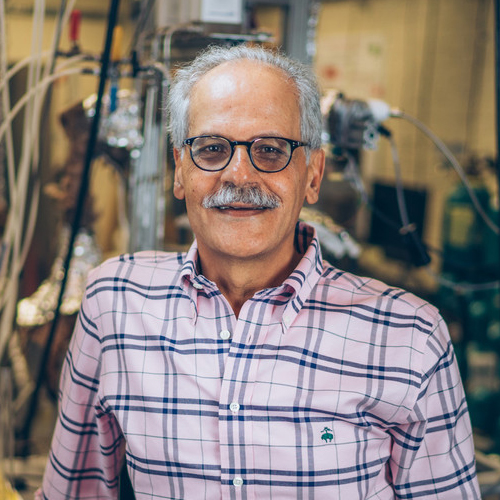
Laureate Professor Behdad Moghtaderi is a globally recognized chemical engineer at The University of Newcastle's School of Engineering. He leads research in clean energy technologies, including the GRANEX heat engine, greenhouse gas abatement, and chemical looping processes. His work addresses critical challenges in energy efficiency, renewable energy systems, and reducing fugitive methane emissions from coal mines. With over $48M in research funding and 220+ publications, he directs the Newcastle Institute for Energy and Resources (NIER) and holds leadership roles in national and international energy initiatives. Education: PhD (University of Sydney), MEng (University of Sydney), BSc (Shiraz University) Administrative Roles: Director of NIER, former Head of School of Engineering, and member of global energy advisory bodies Research interests span energy systems, combustion science, and sustainable technologies. Notable innovations include the VAMCO system for methane abatement and solar thermal GRANEX installations. Awards include the Carrick Teaching Citation and multiple engineering excellence recognitions. Scientific contributions include 14 PhD completions and over 20 funded projects. Current focus areas include hydrogen safety, carbon capture, and thermochemical energy storage. His labs (NIER) collaborate with industry partners like Siemens Energy and the Australian Hydrogen Council.
Hisham Zerriffi is an Associate Professor at the University of British Columbia (UBC) in the Department of Forest Resources Management, Faculty of Forestry. He also serves as Associate Dean for Equity, Diversity, and Inclusion. His research intersects technology, energy, and the environment, focusing on rural areas in the Global South. Affiliation: BioProducts Institute Affiliation: Clean Energy Research Centre Affiliation: Institute for Resources, Environment and Sustainability His research examines institutional factors in technology diffusion, household energy choices, and welfare impacts of energy use. Current projects include analyzing forest density's ecological impact, clean cooking transitions in India, and decentralized energy systems. Recent publications address just transitions, biomass energy economics, and policy misalignments in Indigenous communities. He has authored works on climate change mitigation via forest carbon credits and rural electrification strategies. Scientific Award: Ivan Head South/North Research Chair As a PhD supervisor, he has guided Natalie Payer on urban energy poverty in the U.S. He collaborates on interdisciplinary grants and leads the Energy Resources, Development and Environment Lab (ERDELab).
Swiss Federal Institute of Technology in LausanneSwitzerland
Michaël Aklin is an Associate Professor of Economics and Management of Innovation at the École Polytechnique Fédérale de Lausanne (EPFL), holding the Chair of Public Policy and Sustainability since joining in 2023. He co-directs the Enterprise for Society (E4S), a joint initiative with IMD and the University of Lausanne. Previously, he was an Associate Professor at the University of Pittsburgh, with a PhD from New York University and postdoctoral work at the University of Pennsylvania. Education: PhD in Economics, New York University MA in Politics, University of Essex BSc in International Studies, Graduate Institute of International and Development Studies Research Interests: Focuses on the political and economic dimensions of sustainable development, energy policy, and climate change. His work bridges environmental economics, public policy analysis, and political economy, with emphasis on just transition policies, renewable energy adoption, and equitable energy access. Recent projects include studies on coal-dependent communities, just transition frameworks in national climate plans, and socio-economic impacts of clean energy transitions. Key Roles: Head of Enterprise for Society (E4S) Member of CDM Management and Doctoral Program Committee (EDMT-GE) Teaching responsibilities include courses on sustainability, technology policy, and econometrics Advising & Grants: Supervises four doctoral students (Bataillard, Fernandez, Touré, Zollner). His research has been supported through grants analyzing energy transitions, policy effectiveness, and socio-economic impacts of green initiatives. Labs & Initiatives: Leads E4S, a multidisciplinary center addressing societal challenges through business and technology innovation. Collaborates on global projects assessing climate policies, energy access disparities, and just transition strategies.
Thomas C. Hilde is an Associate Research Professor at the University of Maryland’s School of Public Policy, leading the environment/energy/climate/sustainability strategic focus area and co-directing the Indonesia research program at the Center for Global Sustainability (CGS). He also co-leads the university-wide Sustainability minor and advises the student-led Sustainability, Environment, and Energy Council (SEEC). As a Senior Fellow at CISSM and GoTech, he bridges policy, security, and technology governance. His research integrates philosophical pragmatism with practical climate policy, focusing on land use, energy decarbonization in Indonesia, Amazon deforestation conflicts, and climate ethics. He directs field courses in Indonesia and Peru, studying socio-ecological systems and policy interfaces. Key publications (2020–2025) analyze climate policy pathways, methane mitigation, EV infrastructure equity, and renewable energy investment in China. Recent work emphasizes the nexus between illegal gold mining, deforestation, and migration in the Amazon. Education: PhD in Philosophy (Pennsylvania State University) Awards: Fulbright Scholar (Venezuela, 2005), Edmond J. Safra Fellow (Harvard, 2014–2015) Grants/Consultancies: Worked with the Heinrich Böll Foundation, China’s Ministry of Ecology, and Indonesia’s National Development Planning Agency. His field courses (since 2011) combine interdisciplinary methods to address complex challenges in sustainable development and climate adaptation, emphasizing local knowledge systems and global policy coherence.
Akshaya Jha is an Associate Professor of Economics and Public Policy at Carnegie Mellon University’s Heinz College of Information Systems and Public Policy , as well as a Faculty Research Fellow at the National Bureau of Economic Research (NBER) . His work combines economic modeling with causal inference to analyze energy and environmental policy impacts on electricity markets. Education: Ph.D. in Economics, Stanford University B.S. in Economics and Statistics, Carnegie Mellon University Research Interests span energy economics , environmental economics , industrial organization , and public policy , focusing on quantifying economic and environmental trade-offs in electricity supply policies. Recent work includes financial trading in California’s electricity market, Germany’s nuclear phase-out, rooftop solar growth in Western Australia, and electricity blackout determinants in India. Scientific Contributions appear in American Economic Review , Management Science , and PNAS . Article trends reveal expertise in regulatory distortions , market design , environmental externalities , and policy communication . Scientific Awards: Hicks-Tinbergen Award (best paper in Journal of the European Economic Association ) Heinz College Martcia Wade Teaching Award (2023) USAEE Young Professional Research Award (2021)
Valerie Karplus is a Professor in the Department of Engineering and Public Policy at Carnegie Mellon University (CMU) and Associate Director of the Wilton E. Scott Institute for Energy Innovation. She holds a Ph.D. in Engineering Systems from MIT and a B.S. in Biochemistry and Political Science from Yale University. Her research focuses on resource and environmental management in global industrial contexts, emphasizing institutions, management practices, and policy design. Key areas include decarbonization pathways, hydrogen energy systems, and the intersection of public policy with workforce resilience. Dr. Karplus leads the Laboratory for Energy and Organizations (LEO) at CMU and is affiliated with MIT’s Energy Initiative and environmental policy centers. She previously directed the MIT-Tsinghua China Energy and Climate Project (2011–2016), analyzing China’s energy policies and their global impacts. Her work bridges academia and practice, addressing challenges like steel industry decarbonization and clean energy workforce development through interdisciplinary approaches. Notable contributions include modeling China’s carbon neutrality targets (C-REM 4.0), evaluating hydrogen hub risks, and assessing energy audit effectiveness. She has secured grants such as a $500,000 ARISE planning grant to analyze Appalachian workforce skills for decarbonization. Media engagements include commentary on EU energy strategies, green hydrogen viability, and nuclear energy for AI systems.
The Chinese University of Hong Kong (CUHK)Hong Kong SAR
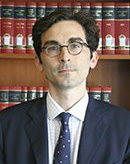
Anatole Boute is Professor at The Chinese University of Hong Kong's Faculty of Law, specializing in energy, environmental, and investment law with focus on sustainable energy transitions in emerging economies and Belt and Road contexts. His academic credentials include: PhD in Law (2011, University of Groningen) Advanced Master (LLM) in Energy and Environmental Law (2005, University of Leuven) Law degree (2004, University of Leuven) Political Sciences degree (2003, University of Leuven) Professor Boute's research examines legal frameworks for renewable energy adoption, emissions trading systems, and investment protection in energy transitions. His work analyzes geopolitical dimensions of energy security, regulatory stability challenges, and adaptation of international law to regional contexts—particularly Central Asia and China—through interdisciplinary lenses combining law, economics, and political science. His publication trends reveal concentrated expertise in China's emissions trading mechanisms, Belt and Road energy investments, and regulatory stability for renewable projects. Recent work critically examines carbon pricing integration in electricity markets, geopolitical tensions in EU-Russia energy relations, and legal innovations for climate adaptation in resource-constrained regions. His scientific recognition includes: Willoughby Prize (2009) for Journal of Energy & Natural Resources Law publications Outstanding Fellow of the Faculty of Law at CUHK As founder and coordinator of CUHK's LLM program in Energy and Environmental Law, Professor Boute mentors graduate students while leading major research initiatives. He secured General Research Fund grants for projects on China's emissions trading (2016) and Eurasian energy market shaping (2018), and co-organized the 2017 conference on Belt and Road energy investments. His advisory work spans the World Bank's Russia Renewable Energy Program (2011-2016), International Energy Agency, and United Nations Conference on Trade and Development. Professor Boute directs research on energy transitions through collaborations with international organizations and government bodies, focusing on practical implementation of legal frameworks for decarbonization in Asian and Eurasian contexts.
Lidia Morawska is a Distinguished Professor and Australian Laureate Fellow at Queensland University of Technology (QUT), leading the International Laboratory for Air Quality and Health (ILAQH), a WHO Collaborating Centre. She specializes in air quality science and its health impacts, particularly particulate matter research. Her roles include Director of ILAQH, Co-Director of the Australia-China Centre for Air Quality Science and Management, and Adjunct Professorships at Jinan University and the University of Surrey. Education: PhD (Physics) and MSc from Jagiellonian University, Kraków, Poland. Early career included research in Canada and Poland before joining QUT in 1991, where she was promoted to Professor in 2003. Established the Environmental Aerosol Laboratory (now ILAQH) in 1992. Research interests focus on aerosol science, air pollution, and policy guidance for WHO guidelines since 1990. Awards include the 2023 L'Oréal-UNESCO International Award, 2022 AAAR Susanne V. Herring Award, and 2021 TIME100 recognition. She is a Fellow of the Australian Academy of Science and Queensland Academy of Arts and Sciences. Grants and projects include leadership of the ARC Training Centre for Advanced Building Systems Against Airborne Infection Transmission (THRIVE). Collaborates globally on clean air initiatives and indoor/outdoor exposure risks. Active in policy advising, including co-chairing WHO guideline development.
Massachusetts Institute of TechnologyUnited States
Professor Ahmed F. Ghoniem is the Ronald C. Crane (1972) Professor of Mechanical Engineering at MIT, directing the Center for Energy and Propulsion Research and the Reacting Gas Dynamics Laboratory. He holds a B.Sc. and M.Sc. from Cairo University and a Ph.D. from the University of California, Berkeley. His research focuses on computational methods in fluid-thermal sciences, turbulent combustion, energy conversion systems, and CO2 capture technologies. He has authored over 500 publications and mentored over 100 students, many of whom are leaders in academia and industry. His research interests include multiscale simulations of turbulent reactive flows, clean energy systems, and advanced combustion technologies. He has pioneered work on oxy-fuel combustion, gasification processes, and ion transport membrane reactors. Ghoniem’s contributions span fundamental science and applied engineering, addressing challenges in sustainable energy and environmental sustainability. Honors: ASME James Harry Potter Gold Medal (2015), AIAA Propellant and Combustion Award (2016), Fellowships from ASME, APS, and The Combustion Institute. Service: Leadership roles in MIT’s Energy initiatives, KAUST collaborations, and advisory boards for energy research centers. Extensive contributions to curriculum development and graduate education in mechanical engineering. Labs/Teams: Directs the Reacting Gas Dynamics Lab and leads the Center for Energy and Propulsion Research, focusing on integrated energy systems and CO2 capture innovations.
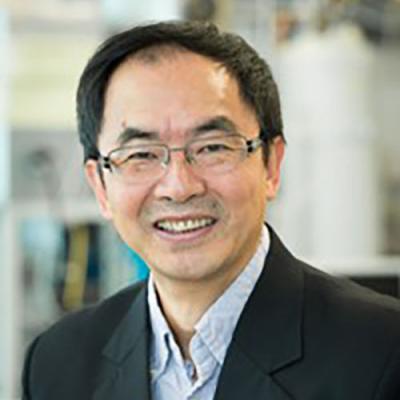
Xiaotao Bi is a Professor in the Department of Chemical and Biological Engineering at the Faculty of Applied Science, University of British Columbia. He is a Fellow of The Canadian Academy of Engineering, recognized for his significant contributions to the field of chemical engineering, particularly in biomass energy systems and environmental technologies. Dr. Bi's research focuses on developing environmental systems analysis and life cycle assessment tools to model and evaluate biomass energy systems. His work encompasses Canadian wood pellets, animal wastes, agricultural residues, and integrated impacts assessment of various biomass conversion processes including combustion, gasification, torrefaction, and pelletization. Current research interests include electrostatic charging of dielectric particles in gas-solids fluidized beds, dual fluidized bed for biomass steam gasification, and novel i-CFB reactors for catalytic NOx reduction. His extensive publication record demonstrates expertise across multiple domains of sustainable energy and environmental engineering. Recent work shows a strong emphasis on biomass conversion technologies, particularly microwave-assisted processes, fluidized bed systems, and waste valorization. There's a clear trend toward developing more efficient and environmentally friendly processes for converting various biomass feedstocks into energy and valuable products, with particular attention to addressing technical challenges like tar formation in gasification and electrostatic issues in particle handling. Dr. Bi has been recognized with the prestigious honor of being named a Fellow of The Canadian Academy of Engineering, which acknowledges his significant contributions to engineering research and practice in Canada. As a research leader, Dr. Bi has supervised numerous graduate students and secured funding for his research team to investigate innovative approaches to biomass conversion and environmental engineering challenges. His work bridges fundamental research with practical applications for sustainable energy systems. Dr. Bi leads a research team focused on developing advanced technologies for biomass conversion and environmental protection. His laboratory facilities likely include specialized equipment for fluidized bed operations, biomass processing, and analytical tools for characterizing biofuels and byproducts.
Henner Busch is an Associate Professor at LUCSUS (Lund University Centre for Sustainability Studies), part of Lund University's Faculty of Social Sciences. His academic journey includes a background in Governmental Studies from Erfurt, Germany, an MSc in Environmental Studies and Sustainability Science (LUMES) from Lund University (2010), and a PhD in Sustainability Science from Lund University (2016). Before his current position, he worked at the Department of Human Geography at Lund University from February 2018 to November 2020, and as a researcher at LUCSUS from 2016 to 2017. His previous professional experience includes work at the Leibniz Institute for Agricultural Engineering in Potsdam-Bornim, Germany. Busch's research primarily focuses on the intersection between energy systems, climate policies, and society, with particular emphasis on questions of justice within energy transitions. His work examines who benefits from energy projects and who bears the burden, whose interests are served by different energy developments, and who has power to shape debates on future energy systems. He approaches these questions through multiple ongoing projects including JUSTIT (Just Swedish Transport Industry Transitions), Workers as Agents of a Green and Just Transition, Burying problems? Imaginaries of Carbon Capture and Storage in Scandinavia, and Of People, PV, Power Lines: Energy Islands in the Nordics. His research spans theoretical frameworks including energy justice, community energy development, urban climate governance, and the social dimensions of carbon capture and storage. Analysis of Busch's recent publications reveals a strong focus on energy justice frameworks across multiple contexts - from coal phase-outs to community energy initiatives and carbon capture technologies. His work consistently examines the distributional, procedural, and recognition dimensions of justice within energy transitions, with particular attention to Scandinavian and European contexts. The publications demonstrate interdisciplinary approaches combining political science, environmental sociology, and sustainability science to address complex questions of power, representation, and equity in energy systems. Researcher at LUCSUS (Lund University Centre for Sustainability Studies) Associate Professor at Lund University Member of LUCID research school (Lund University Centre of Excellence for Integration of Social and Natural Dimensions of Sustainability) Busch actively engages in teaching at undergraduate, master's, and PhD levels, with supervisory experience spanning approximately 40 master's theses on topics ranging from community energy to urban development and climate change depictions in video games. His educational approach integrates methodology-oriented content such as systems thinking and energy justice with empirical examinations of energy systems and globalization. His work contributes to multiple United Nations Sustainable Development Goals, particularly those related to sustainable cities and communities, affordable and clean energy, and climate action.
Professor Sankar Bhattacharya is a distinguished academic at Monash University's Department of Chemical & Biological Engineering within the Faculty of Engineering. His career spans industry roles in India, Thailand, Australia, and France, followed by an academic focus on advanced coal and biomass utilization, gasification, biofuels, and catalysis. He leads a research group of 16 PhD students and two research fellows, having supervised 12 PhD completions. His work contributes to UN SDGs related to affordable and clean energy, industry innovation, and climate action. Research focuses on gasification of coal/biomass/algae, liquid fuels from brown coal, and CO₂ utilization. He advises Japan's METI on clean coal and the IEA's Cleaner Fossil Fuels program. Awards include Fellow of the Australian Institute of Energy and membership in the American Chemical Society. Key projects include leadership in ARC Research Hubs for carbon waste valorization and battery recycling. His 240+ publications span catalysis, energy systems, and waste-to-value technologies. Research highlights include catalyst development for hydrogen production, critical metal recovery from coal ash, and ammonia fuel cell innovations. Teaching commitments include courses on energy-environmental systems and biorefinery processes. Collaborations span global institutions, emphasizing sustainable energy solutions and circular economies.
Prof. Feridun Boylu is a Professor in the Department of Mineral Processing Engineering at Istanbul Technical University (ITU), affiliated with the Faculty of Mines. His research focuses on mineral processing techniques, coal technology, and industrial raw materials. He holds a PhD in Ore Coal Preparation and Evaluation from ITU and has extensive experience in academic leadership roles, including Head of Department and Advisor to the Rector at ITU. His work spans over 30 years, with contributions to coal flotation, dense medium cyclones, and bentonite characterization. Prof. Boylu has supervised numerous theses and leads projects funded by national and international grants, including EU initiatives like FineFuture. His research emphasizes sustainable mining practices and advanced separation technologies. Education: PhD (Ore Coal Preparation and Evaluation, ITU, 2004), MSc (Ore Coal Preparation, ITU, 1998), BSc (Mining Engineering, ITU, 1993) Key Roles: Professor at ITU, Former Head of Department (2021–2021), Erasmus Coordinator (2020–present), and International Student Coordinator (2021–present) Research Interests: Chemical-biological recovery techniques, coal water slurries, flotation optimization, and mineral beneficiation. His work addresses challenges in fine particle flotation, coal preparation, and sustainable utilization of industrial raw materials. Recent Projects: Includes the EU-funded FineFuture project (2019–2023) and studies on three-product dense medium cyclones and machine learning for mill liner wear prediction. His research bridges theoretical modeling and industrial applications in mineral processing.
Dr. Judith Chow is a Research Professor and holds the Nazir and Mary Ansari Chair in Entrepreneurialism and Science at the Desert Research Institute (DRI) in Reno, Nevada. She is also a member of the graduate faculty in the Department of Environmental Science and Atmospheric Sciences Program within the Department of Physics at the University of Nevada, Reno (UNR), where she advises graduate students pursuing Masters and Doctoral degrees. With over 40 years of experience in atmospheric, air quality, and environmental health research, Dr. Chow leads DRI's Environmental Analysis Facility (EAF), directing a team of research scientists and technicians in developing and applying advanced analytical methods for characterizing atmospheric particles. Sc.D. in Environmental Science and Physiology from Harvard University (1985) M.S. in Environmental Health Sciences from Harvard University (1983) B.S. in Biology from Fu-Jen Catholic University, Taiwan (1974) Dr. Chow's research spans multiple critical areas in atmospheric science, with particular focus on ambient air and source sampling, chemical and physical analysis of suspended particulate matter, field study design and management, and source apportionment modeling. Her work integrates chemistry, physics, biology, engineering, biostatistics, toxicology, epidemiology, and medicine to address complex air quality challenges. She has established international collaborations across Asia, the Americas, Europe, Africa, Australia, and Antarctica, demonstrating the global relevance of her research. Analysis of Dr. Chow's most recent publications (2023-2025) reveals a continued emphasis on advanced particulate matter characterization, with growing attention to emerging pollution sources like battery fires, spacecraft materials, and industrial processes. Her work increasingly incorporates sensor technology and real-time monitoring approaches, reflecting the evolving nature of air quality research. There's also a noticeable expansion into environmental justice applications and health-focused studies, particularly examining the impacts of air pollution on vulnerable populations. ISI Highly Cited Researcher in ecology and environment with over 28,000 citations and an h-index of 83 Recognized as one of Stanford University's Top 2% of the World's Most Cited Scientists Appointed to U.S. EPA's Clean Air Science Advisory Committee (2015-2018, re-appointed 2021) Member of U.S. National Academy of Sciences committees addressing airborne particulate matter research priorities Co-editor for Aerosol and Air Quality Research and Particuology journals Dr. Chow advises numerous graduate students at UNR and has secured funding for over 50 large atmospheric studies throughout her career. She has led international projects assessing port operations' air quality impacts in southern California, measuring emissions in Canada's Oil Sands Region, designing air quality networks for the World Bank in developing countries, and evaluating photochemical aging effects on biomass burning emissions. Her Environmental Analysis Facility serves as a hub for advanced analytical methods development, particularly for characterizing suspended atmospheric particles and their effects on health, climate, visibility, ecosystems, and cultural artifacts. As founder and leader of DRI's Environmental Analysis Facility, Dr. Chow heads a multidisciplinary team that develops and applies advanced analytical methods to characterize atmospheric particles. Her facility has expanded capabilities to obtain more information from archived samples using thermal and mass spectrometric technologies, with current priorities including improved detection of brown carbon, application of microsensors to human exposure estimates, and simulation of source profile changes using photochemical flow tube reactors.
Professor Elizabeth Thurbon is a leading academic in International Political Economy at UNSW Sydney, affiliated with the School of Social Sciences within the Faculty of Arts, Design and Architecture (ADA) . She serves as Deputy Head of School, Director of Research, and Director of the Green Energy Statecraft Project , a multi-university collaboration. Education: PhD in Government (International Political Economy) from the University of Sydney; BEc. (Soc. Sci) with First-Class Honours and University Medal. Her research focuses on developmental states , clean energy transitions , and economic statecraft , particularly in East Asia. Her work synthesizes Schumpeterian and Developmental State theories to analyze green energy strategies, including hydrogen fuel cells , smart grid technology , and electric vehicle industries . Recent research trends include: Strategic state interventions in renewable energy sectors Impact of geostrategic rivalry on global green shifts Policy frameworks for energy transition governance Scientific Awards: AIPEN Richard Higgott Journal Article Prize (2019) for 'Power Paradox' She has secured major grants including: Australian Research Council Discovery Project (DP190103669) Academy of Korean Studies Laboratory Grant (AKS-2018-LAB-1250001) Commonwealth Department of Defence Strategic Policy Grant (Weaponised Trade) UNSW Scientia Fellowship (2019-2022)