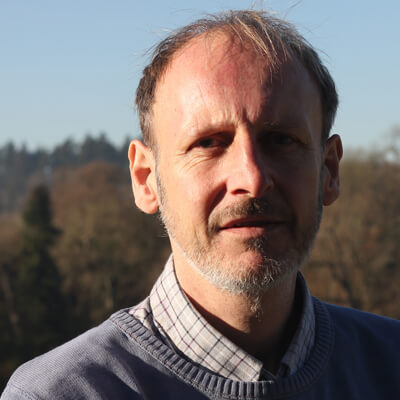
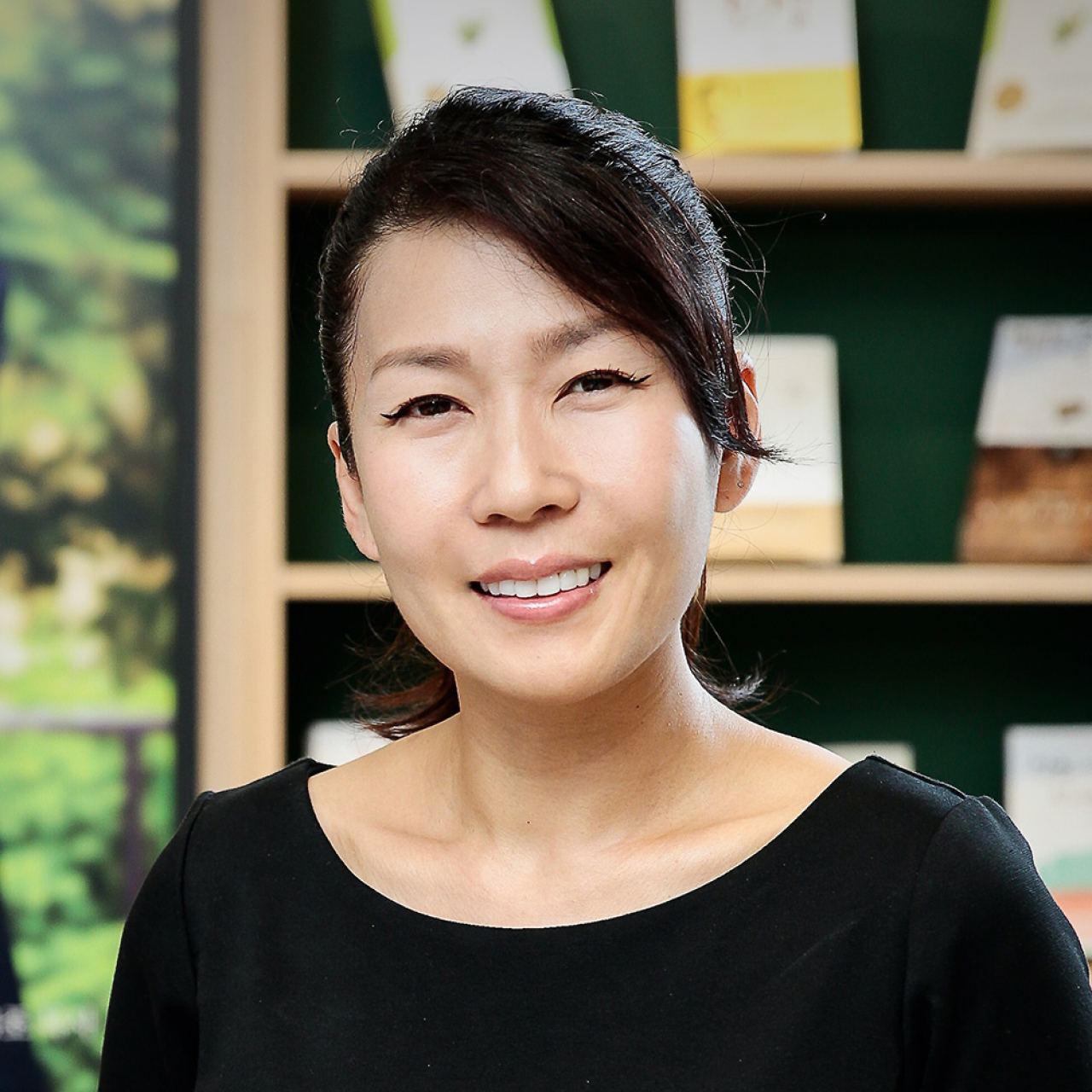
Leyton Schnellert is an Associate Professor in the Department of Curriculum and Pedagogy at the University of British Columbia (UBC) and holds the Eleanor Rix Professorship of Rural Teacher Education. He leads the Pedagogy and Participation research cluster at UBC’s Institute for Community Engaged Research (ICER) and co-chairs British Columbia’s Rural Education Advisory. His work focuses on inclusive education, teacher professional development, and community-based collaborative inquiry, emphasizing participatory, place-conscious, and culturally sustaining practices. Dr. Schnellert’s research spans inclusive pedagogy, metacognition, literacy, and rural education. His scholarship challenges deficit models through community funds of knowledge and critical disability studies, often employing arts-based methods like disability theatre. His recent publications highlight outdoor learning, educational transformation, and participatory action research. His scientific contributions include the Eleanor Rix Professorship, a chair recognizing his expertise in rural teacher education. While specific grants are not mentioned, his work is widely cited, and he has authored influential books and films referenced internationally.
Bernd Zinn is a full-time Professor at the University of Stuttgart , serving as Managing Director of the Institute of Educational Science and Dean of Studies for Vocational Education, Technology Education, and the NwT teaching degree. His research spans teaching-learning research , digital educational technologies , and inclusion in vocational settings . Key Research Areas: Virtual Reality (VR) applications in education, epistemological beliefs, STEM competence development, inclusive pedagogy, AI integration in teacher training, and international vocational Education. Recent Trends: Focus on VR stress analysis for teachers, AI chatbot usage in academia, and digital competence assessments. Scientific Distinctions: Awarded the Hans-Messer Prize (1996) and Ludwig-Lenz Foundation Award (2002-2003) , with a 'magna cum laude' dissertation.
Christopher Collier serves as a Senior Lecturer in Primary Science at Bath Spa University's School of Education, where he teaches on the Education Studies programme and leads modules including Environment and Education and Understanding Classrooms. He acts as a dissertation tutor and Academic Advisor while contributing to the Centre for Research in Scientific and Technological Learning and Education (CRiSTLE). His academic background includes a BA (Joint Honors) in Geology and Biology from the University of Keele, a PGCE from University College Chichester, and an MSc in Hydrogeology from University College London. Prior to academia, he worked as a primary school teacher (including assistant headteacher and science subject leader) and as an environmental geologist. Collier's research centers on science and environmental education with specific focus on assessment of science in primary schools, transition between educational stages, and creativity in science teaching. His work examines teacher assessment practices, development of creative pedagogies, and integration of technology like dataloggers for science enquiry skills. Current scholarship investigates assessment without levels and eco-monitoring for data interpretation skills. Analysis of his 15 most recent publications reveals consistent focus on primary science assessment frameworks, teacher development resources, and creative pedagogical approaches. His work bridges practical classroom applications with theoretical assessment models, particularly through the Teacher Assessment in Primary Science (TAPS) project, while increasingly incorporating technology-enhanced learning tools. Professional activities include extensive consultancy funded by the Primary Science Teaching Trust and AstraZeneca Science Teaching Trust, focusing on science assessment and eco-monitoring projects. He serves as a governor for a teaching federation in Somerset and has completed evaluations for initiatives like the Active Learning in Primary Science project. Collier actively participates in research networks through CRiSTLE and regularly presents at major conferences including ASE Annual Conferences and ICASE World Conferences, maintaining strong connections with both academic and practitioner communities in science education.
Jenny Hatley is a Senior Lecturer and Programme Leader in Education at Bath Spa University's School of Education. With a career spanning museum education, international NGO programs in conflict zones, and primary/tertiary education, she specializes in global citizenship education, social justice, and resilience development. PhD in Education and Social Justice Senior Fellow, Higher Education Academy Co-chair of national working group on Global Citizenship Leading Teaching Award recipient Her research examines global education policy through Nancy Fraser's democratic justice framework, focusing on how values shape citizenship education and social justice outcomes. Recent work explores intersectionality in SDG4.7 implementation and Close to Practice research methodologies. Jenny's publications demonstrate interdisciplinary engagement with critical discourse analysis, educational psychology, and sustainability pedagogy. She serves as a BERA journal reviewer and contributes to the 'Our Shared World' Coalition, advancing evidence-based global education practices.
James W. Stigler is a Distinguished Professor of Psychology at the University of California, Los Angeles (UCLA), specializing in Cognitive and Developmental Psychology within the Department of Psychology. His work bridges educational research with cognitive science, focusing on cross-cultural teaching methodologies and technology-enhanced learning environments across K-12 and higher education. Education: Brown University (A.B.) University of Michigan (Ph.D. in Developmental Psychology) Research Focus: Stigler investigates teaching and learning processes in mathematics, statistics, and science education through cross-cultural lenses (particularly U.S., China, and Japan). His work integrates embodied cognition principles, examining how gestures, visualizations, and physical interactions enhance conceptual understanding. Current emphases include equity-centered curriculum design, AI applications in education, and the development of practical frameworks for improving instructional practices through rapid-cycle R&D. Publication Trends: Recent work (2023-2025) reveals intensive exploration of embodied learning techniques, equity-focused statistics pedagogy, and AI-human collaboration in educational contexts. His research consistently applies cognitive theory to solve practical classroom challenges, with growing emphasis on leveraging real-time student interaction data for continuous improvement of learning materials through platforms like CourseKata. Leadership Initiatives: As founder of UCLA's Teaching and Learning Lab (TALL) and nonprofit CourseKata.org, Stigler develops evidence-based educational technologies. His legacy includes directing the TIMSS video studies and co-founding educational startups LessonLab and Zaption, demonstrating sustained commitment to transforming educational research into scalable classroom solutions through practitioner-researcher partnerships.
Josephine M. Kim is a Senior Lecturer on Education at Harvard University and former faculty director of the Office of Diversity and Inclusion at Harvard School of Dental Medicine. She is a licensed mental health counselor and affiliated faculty at the Center for Cross Cultural Student Emotional Wellness at Massachusetts General Hospital. Education: Ph.D., University of Virginia (2005) Her research focuses on cultural and racial identity development in youth, intergenerational trauma in immigrant families, mental health promotion in children and adolescents, intercultural understanding, and anti-racist pedagogy. She also specializes in designing equity-focused interventions for educational and organizational settings. Scientific Awards: The William Van Hoose Memorial Award (2005) Robert T. Canevari Scholarship (2004) The Buffett Fellowship Award (2004) Emerging Leaders Award (2003) Dr. Kim's publications emphasize self-esteem in education, cultural-specific counseling, and family therapy frameworks for Asian-American communities. She serves on multiple professional associations, including the National Board of Certified Counselors and the American Counseling Association, and is a sought-after expert in DEI initiatives and mental health across global institutions.
Dr. Osamu Amazaki is a Senior Lecturer at the Centre for Language Studies, National University of Singapore (NUS), specializing in Japanese Language Education through the Department of Japanese Studies. With a PhD and MA in Linguistics from the State University of New York at Buffalo and an MA in Area Studies from the University of Tsukuba, Japan, his work bridges Functional Linguistics and foreign language pedagogy. PhD in Linguistics, SUNY Buffalo, USA MA in Linguistics, SUNY Buffalo, USA MA in Area Studies, University of Tsukuba, Japan His research focuses on leveraging Internet media for language learning, particularly through blog reading assignments to enhance authentic exposure and independent learning . He advocates for contextualized conversational exercises over mechanical drills to improve learners' sensitivity to speech styles and contextual cues. Recent publications include studies on Japanese numeral quantifier constructions and a 2008 report on Asian youth culture. His teaching philosophy emphasizes student motivation , self-reflection , and technology integration to create a relaxed yet effective classroom environment. Dr. Amazaki also explores how input size and type affect language memorization and reproduction, aiming to develop methodologies that foster long-term language proficiency and cultural engagement.
Melanie Ripsam is a Scientific Associate at the Chair of Life Sciences Didactics within the Technical University of Munich (TUM) School of Social Sciences and Technology . Her work focuses on integrating augmented reality (AR) into chemistry and biology education, with a focus on improving understanding of the matter-particle concept and promoting the use of scientific terminology in teacher training. Since 2023, she has been a key employee in the DigiProMIN project , designing cross-curricular teacher training programs for digital media in STEM education. Her research spans development of AR-based learning environments evaluation of digital innovations in schools design of vignette tests for media use assessment supervision of virtual inter-school learning communities Melanie holds a Doctorate (2023) from TUM for her dissertation "Effectiveness of Augmented Reality in Promoting Understanding of the Matter-Particle Concept" , and has contributed to publications and presentations at conferences like GDCP and ERIDOB . She actively designs training materials for science teachers and evaluates the usability of digital tools in both classroom and laboratory settings. Her recent projects include DigiProMIN (professionalization of STEM teachers) and DigitUS (digitalization of teaching in schools), where she developed interview guidelines and category systems for analyzing cooperation processes.
Dr. Kimon Krenz is a Senior Research Fellow at the Bartlett School of Architecture, University College London, where he works at the Space Syntax Laboratory. As a spatial data scientist and urban health researcher, his work focuses on the spatial determinants of health and inequality. He has developed novel methodologies to measure individual-level environmental exposures and link them to large-scale health datasets, resulting in internationally recognized publications. With over £9 million secured in research funding, he bridges architecture, urban planning, and public health through interdisciplinary collaboration. Doctorat, University College London (2018) Master of Science, University College London (2013) Bachelor of Science, University of Applied Sciences (2012) Recognized by the HEA as a Fellow (2017) Dr. Krenz's research centers on using computational methods to quantify and analyze the built environment to study how space shapes human behavior, particularly focusing on how spatial data science can uncover social, health, and spatial inequalities. His expertise lies in spatial data science and space syntax, with particular emphasis on advanced computational methods to analyze and model the built environment and its use. His work informs evidence-based planning and public health interventions, often working with cohort studies, primary and secondary health data, and in data anonymization and secure research environments. His research spans urban morphology, environmental exposure, network analysis, and the intersection of architecture with public health. Analysis of Dr. Krenz's recent publications reveals a consistent focus on the relationship between urban form and health outcomes. His work employs sophisticated spatial analysis techniques to measure environmental exposures across multiple domains including air quality, road traffic, greenness, public transport, food environment, and street centrality. He frequently works with the Born in Bradford cohort study, examining how spatial factors influence mental health, social isolation, childhood obesity, and common mental disorders. His methodological contributions include developing innovative approaches to measure individual-level environmental exposures and creating taxonomies of urban form. ATQ03 - Recognised by the HEA as a Fellow (2017) Dr. Krenz has extensive teaching experience since 2014 as a Course Coordinator, Tutor, and Teaching Fellow for MSc programmes at UCL, specializing in spatial analysis, GIS, and urban health. He has supervised student projects including field trips to Rio de Janeiro and Venice, with a focus on informal settlements. His research funding includes projects such as ActEarly – Healthy Places, Connected Bradford Health and Environment, Migrant Mobility and Access to Public Urban Resources, and the Urban Dynamics Lab. He combines a flipped classroom approach with active learning and real-world applications in his teaching methodology. Dr. Krenz leads and participates in the Space Syntax Laboratory seminars series and is actively involved in the Urban Dynamics Lab at UCL, which is part of a five-year EPSRC-funded research project exploring questions at the intersection of city and regional economic development and urban modeling.
Thomas W. Price is an Assistant Professor in the Department of Computer Science at North Carolina State University's College of Engineering. He directs the Help through INTelligent Support (HINTS) Lab and is affiliated with NCSU's Center for Educational Informatics. His work bridges computer science, education, and artificial intelligence to create intelligent learning environments. Dr. Price earned his M.S. and Ph.D. in Computer Science from NC State University in 2015 and 2018 respectively, and was named the College of Engineering Doctoral Scholar of the Year in 2018. His research focuses on computing education with an emphasis on automatically generating programming hints and feedback using student data. He has evaluated innovative programming environments including block-based and frame-based systems, and designs intelligent support tools that integrate with these technologies. His work examines how students seek and use help in both classroom and online settings, with particular interest in open-ended programming projects, data-driven feedback systems, and understanding student programming behaviors. His recent publications reveal a strong trend toward integrating AI and educational data mining techniques to support programming education. His work spans from fundamental research on student help-seeking behaviors to practical tools that provide immediate feedback, detect student struggles, and offer personalized support. A significant portion of his recent work addresses emerging challenges like student use of generative AI tools and detecting AI-generated code submissions. College of Engineering Doctoral Scholar of the Year (2018) Exemplary Paper Award from International Conference on Educational Data Mining Exemplary Paper Award from ACM Technical Symposium on Computer Science Education Recognition by STARS Computing Corps for leadership in computing outreach Dr. Price mentors several Ph.D. students including James Skripchuk, John Thomas Bacher, and Keith Tran. He has secured over $4 million in research funding from the National Science Foundation for projects including infrastructure for sustainable innovation in computer science education, data-driven technologies for STEM instruction, and intelligent support for creative programming projects. His research has practical applications in classroom settings and aims to create scalable solutions that don't place additional burden on instructors. As director of the HINTS Lab, Dr. Price leads a team investigating how to re-imagine educational programming environments as adaptive, data-driven systems. The lab focuses on supporting students working in creative, open-ended contexts through automated tools for planning, hint generation, and progress monitoring. Their research emphasizes practical methods that can scale to new classrooms and contexts while providing personalized support tailored to individual student needs.
Robert Talbert is a mathematician and educator affiliated with the mathematics department at Grand Valley State University. His professional work focuses on innovative teaching methodologies, educational technology integration, and assessment systems in higher education. His primary research interests include cryptology, computer science, STEM education, flipped learning, specifications grading, inquiry-based learning, and educational technology . Talbert has been particularly active in exploring how technology can enhance teaching practices, with significant contributions to the understanding of flipped classroom models and alternative grading systems. An analysis of his recent publications reveals a strong emphasis on practical applications of educational theory. His work consistently addresses challenges in mathematics education while developing transferable strategies for broader STEM disciplines. Talbert's research shows particular innovation in specifications grading systems and the adaptation of flipped learning models for online environments. Talbert has been actively involved in academic discussions around the Legacy of R. L. Moore and Inquiry Based Learning Conference, connecting flipped classroom methodologies with traditional inquiry-based approaches. His work bridges theoretical educational frameworks with practical classroom implementation. As an academic, Talbert has explored productivity systems for faculty, notably applying the Getting Things Done (GTD) methodology to academic work. His writings demonstrate a commitment to both scholarly rigor and practical applicability, often sharing insights from his own classroom experiences.
Hana Bida is a researcher at the University of Geneva's Faculty of Psychology and Educational Sciences, actively contributing to the Technologies de formation et d'apprentissage (TECFA) research group. Her work centers on digital education implementation within Swiss educational contexts, particularly examining how beginning teachers develop and apply digital competencies in classroom settings. Her research investigates critical intersections between educational psychology and technology integration, focusing on teachers' self-efficacy, digital skill transfer from training to practice, and environmental barriers to technology adoption. Key themes include the psychological dimensions of digital competence development, curriculum reform implementation challenges, and individual factors influencing teachers' capacity to integrate digital learning objectives. This work directly addresses Switzerland's Romandy curriculum digital reform (plan d'étude romand), providing empirical insights for educational policymakers. Analysis of her 2023-2024 publications reveals a cohesive research trajectory examining beginning teachers' experiences through multiple methodological lenses. Her studies consistently identify environmental constraints and individual variables as primary determinants of successful digital education implementation, while highlighting gaps between teacher training programs and classroom realities. The research demonstrates how perceived value of training correlates with effective digital skill application, offering practical frameworks for improving teacher preparation. Scientific Awards: No awards documented in available sources Advising and Grants: Hana Bida has not supervised any theses or dissertations per institutional records (Supervised works: 0). No research grants or funding sources are explicitly referenced in her publication metadata, though her work aligns with Swiss educational reform initiatives that typically involve institutional funding. Labs and Teams: She operates within TECFA (Technologies de formation et d'apprentissage), a prominent UNIGE research group specializing in technology-enhanced learning design, implementation, and evaluation. TECFA's interdisciplinary work bridges educational theory, cognitive science, and digital innovation, providing the methodological foundation for Bida's classroom-focused investigations into digital pedagogy and teacher development.
Eleonora Igorevna Leskina is an Associate Professor and Leading Researcher at the Faculty of Law, Department of Digital and Biolaw at the National Research University Higher School of Economics (HSE) in Moscow, where she has been employed since 2024. Previously, she served as an Associate Professor at Saratov State Law Academy in the Department of Information Law and Digital Technologies (2020-2024) and the Department of Labor Law (2017-2020). She holds a Candidate of Law degree from Saratov State Law Academy (2012) with a dissertation on "Axiological aspects in civil procedural law" and a Jurisprudence degree from Saratov State Academy of Law (2009). Dr. Leskina's research focuses on the intersection of law and emerging technologies, with particular expertise in Big Data regulation, artificial intelligence legal frameworks, personal data protection, blockchain applications, and digital labor relations. Her work addresses critical challenges in data governance, including synthetic data usage, sustainable data turnover, and the legal implications of metaverse environments. She has made significant contributions to understanding the legal regimes of data in various contexts, from healthcare to environmental protection. Her scholarly output demonstrates a consistent focus on contemporary digital law challenges, with numerous publications in leading Russian legal journals and edited volumes. Recent work examines the legal support for synthetic data in AI development, characteristics of Big Data legal regimes, and sustainable data turnover frameworks. Her research shows a clear trajectory toward addressing the most pressing regulatory questions emerging from technological advancement, particularly in the Russian legal context. Gratitude from the Ministry of Justice of the Russian Federation (2023) for effective assistance in solving tasks assigned to the Ministry of Justice, contribution to legal science and education, and training of highly qualified legal personnel Dr. Leskina actively participates in national and international academic discourse, regularly presenting at major conferences including the International Scientific and Practical Conference "Legal Regulation in the Era of Artificial Intelligence" in Samarkand (2025), where she presented on synthetic data for AI development. She has also participated in the Moscow Innovative Legal Forum, conferences at Lomonosov Moscow State University, and the State Duma roundtable on court fees. Her work bridges academic research with practical policy development in the rapidly evolving field of digital law.
Alejandra Magana serves as the W.C. Furnas Professor in Enterprise Excellence of Applied and Creative Computing and Professor of Engineering Education at Purdue Polytechnic, Purdue University. She directs the ROCkETEd Lab and holds significant editorial roles including Deputy Editor for the Journal of Engineering Education and Co-Editor of the Education Department for IEEE Computer Graphics & Applications. Her leadership extends to multiple editorial boards in engineering and science education journals. Ph.D. in Engineering Education, Purdue University (2009) Post-doc in Engineering Education, Purdue University (2010) M.S. in Educational Technology, Purdue University (2007) M.S. in Electronic Commerce, Instituto Tecnologico y de Estudios Superiores de Monterrey (2003) B.S. in Information Systems Engineering, Instituto Tecnologico y de Estudios Superiores de Monterrey (2000) Magana's research focuses on how students develop computer and data science self-regulated learning skills through computational cognitive apprenticeship and authentic modeling practices. She investigates how learning analytics and AI can support student learning in computing-intensive domains and engineering thinking in K-12 education. Her work bridges educational theory with practical applications in STEM fields, emphasizing the integration of computational thinking across disciplines. She employs design-based research methodologies to create and evaluate innovative learning environments that leverage simulation, visualization, and emerging technologies. Analysis of Magana's recent publications reveals a strong emphasis on collaborative learning in digital environments, with growing attention to AI applications in education. Her work spans multiple domains including virtual reality for STEM education, teamwork dynamics in software development, AI ethics education, and computational thinking assessment for teachers. A consistent theme is the development of representational competence through modeling and simulation practices, with increasing integration of learning analytics to understand student cognition and team processes. Fellow Member, American Society for Engineering Education (2024) Fulbright Specialists Appointment (2024) Purdue Polytechnic Charles B. Murphy Outstanding Undergraduate Teaching Award (2021) W.C. Furnas Professorship (2020) Purdue University Faculty Scholar (2016) ASEE-ERM Apprentice Faculty Grant (2012) Magana leads multiple significant research grants totaling over $15 million, primarily from NSF, focusing on computational education, AI in learning environments, and engineering education transformation. Her ROCkETEd Lab serves as the hub for these research activities, which often involve interdisciplinary collaborations across engineering, computer science, and education. She has mentored numerous graduate students who appear as co-authors on her publications, though specific advising relationships aren't explicitly documented. Her research program demonstrates strong continuity from foundational work on modeling and simulation to current projects integrating generative AI and immersive technologies. The ROCkETEd Lab (Research in Organizing Computational Knowledge for Engineering Thinking and Education) functions as Magana's primary research unit, focusing on computational cognitive apprenticeship approaches. The lab investigates how students develop representational fluency through modeling and simulation practices, with recent expansion into AI-enabled learning environments. Current projects examine hidden curricula in computer science education, high-performance computing virtual environments for AI education, and culturally relevant programming learning experiences. The lab maintains strong industry and international partnerships, particularly with institutions involved in advanced manufacturing and educational technology development.
Marilyn B. Eggers, PhD, is an Associate Professor at Loma Linda University School of Public Health. Her work focuses on educational technology, online learning, and distance education, with a particular emphasis on Adventist educational initiatives. Doctor of Philosophy (1999), Andrews University Master of Arts (1995), San Jose State University Bachelor of Arts (1986), San Jose State University Her research explores the integration of digital technologies in education, including web-based course design, virtual learning environments, and the use of tools like digital photography to enhance pedagogy. She co-founded the Adventist Virtual Learning Network (AVLN) in 1999 and has led initiatives such as the Excellence in Science Experiential Education (EXSEED) since 2011. Publications highlight her contributions to e-learning frameworks, collaborative learning models, and digital pedagogy. She has served on numerous accreditation teams, educational committees, and curriculum development groups across Adventist institutions and K-12 boards.