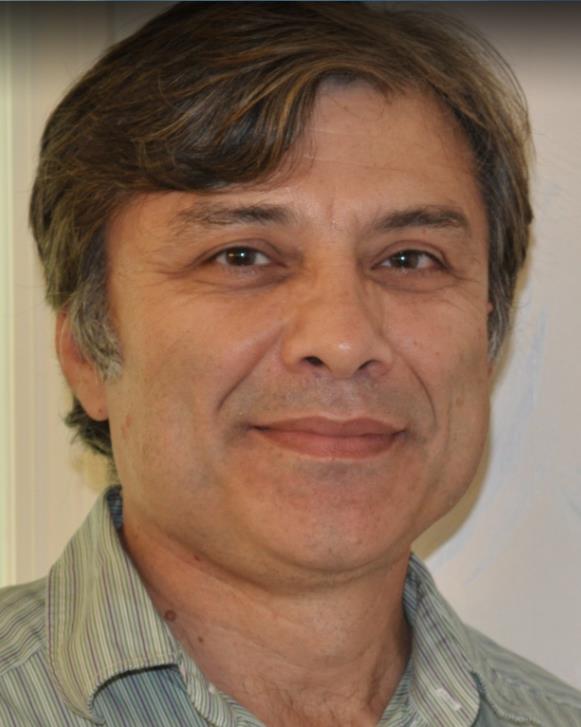
Akshay Rangamani is an Assistant Professor in Data Science at the New Jersey Institute of Technology (NJIT). His research focuses on deep learning theory, neural network dynamics, generalization bounds, and optimization algorithms. He explores topics such as neural collapse, low-rank layers in neural networks, and the interplay between architecture design and performance. His work bridges theoretical insights with practical applications in signal processing, computer vision, and recurrent network analysis. Notable contributions include studies on skip connections enhancing associative memory capacity, weight decay effects on neural collapse, and generalization guarantees for interpolating kernel machines. Rangamani has published widely in top conferences and journals, with over 190 citations and an h-index of 19. His research has been highlighted in media outlets, emphasizing advancements in understanding deep classifier dynamics and neural network training mechanisms.
Greville G. Corbett is a Distinguished Professor of Linguistics at the University of Surrey, with a concurrent appointment in Russian Language. He is a Fellow of the British Academy, Member of Academia Europaea, and Academician of the Academy of Social Sciences, reflecting his status as a leading figure in linguistic typology and morphology. Education: PhD in Russian/Linguistics (University of Birmingham, 1976), M.A. Russian with Linguistics (Birmingham, 1971), B.A. French and Russian (Birmingham, 1970) Key Collaborations: ARC Centre of Excellence for Dynamics of Language, Centre for Advanced Study (Norway), and extensive international partnerships in Slavonic, Daghestanian, and Oceanic language studies His research spans three major areas: Canonical Typology (exploring deep linguistic similarities across systems), Morphosyntactic Features (gender, number, case, person), and Inflectional Morphology (notably developing Network Morphology with Norman Fraser). Recent work includes analyzing possessive classifiers in Vanuatu and New Caledonia languages. Articles highlight his expertise in agreement systems (revisiting the Agreement Hierarchy), split phenomena (internal/external), color term typology, and acoustic analysis of English plurals. His methodological innovations include free-listing experiments and visualizing complex inflectional paradigms. Scientific honors include: ESRC Professorial Research Fellowship (2004-2007) European Research Council Advanced Grant (2009-2014) Center for Advanced Study Fellowship (2001) ALT Pāṇini Award Jury Membership (2007) He has supervised numerous PhD students, including Dunstan Brown (Network Morphology), Jenny Audring (Pronoun Gender), and Alison Long (Russian Adjectives), while maintaining active roles in editorial boards and international linguistic panels.
Mengnan Du is an Assistant Professor in Data Science at New Jersey Institute of Technology (NJIT). Their research focuses on artificial intelligence, machine learning, and natural language processing with a strong emphasis on fairness, explainability, and bias mitigation in AI systems. Key areas include large language models (LLMs), neural network interpretability, and ethical AI. Dr. Du leads the Collaborative Research: III: Medium: Towards Effective Detection and Mitigation for Shortcut Learning project funded by the National Science Foundation (2023-2027), exploring framework development for addressing shortcut learning in deep neural networks. They are also involved in interdisciplinary work combining AI with solar physics and financial systems. Research themes include: 1) XAI (explainable AI) techniques for LLMs, 2) bias detection/mitigation in NLP systems, 3) robustness in neural networks, and 4) AI applications in healthcare/finance. Notable contributions include fairness-aware classifier generalization methods and novel approaches for debiasing knowledge graphs. Recent work has addressed topics like concept depth analysis in LLMs, generative AI ethics in advertising, and neural operator networks for scientific computing. Their publications span top conferences like ACL, COLING, and WWW, with a focus on bridging theory and real-world AI system development.
Patricia L Seymour serves as Associate Professor in the Department of Family Medicine and Community Health at UMass Chan Medical School, affiliated with the T.H. Chan School of Medicine. Her academic appointments are centered at UMass Memorial Medical Center in Worcester, Massachusetts, where she maintains active clinical and research roles within the institution's medical framework. Her educational foundation includes a BS in Biology and MS in Neuroscience & Behavior from the University of Massachusetts Amherst, culminating in an MD from the University of Massachusetts Medical School. This multidisciplinary training bridges basic neuroscience with clinical medicine. Dr. Seymour's research program investigates neuroendocrine regulation of reproductive behavior through animal models, with particular emphasis on how nutritional factors modulate estrous cycles via corticotropin-releasing hormone pathways. Her work sits at the intersection of physiological neuroscience and behavioral endocrinology, utilizing Syrian hamster models to dissect receptor-level mechanisms affecting sexual behavior. Though only one 2005 publication appears in the provided profile, it demonstrates consistent focus within physiological neuroscience disciplines. The research shows strong alignment with NLM-classified fields of Physiology and Animal studies, revealing specialized expertise in receptor-mediated behavioral suppression. Within UMass Chan's academic ecosystem, she collaborates with departmental colleagues including Suzanne Cashman, James Comes, and Kylee Eagles, while maintaining proximity to clinical researchers like Laurel Banach and Kristin Foley at UMass Memorial Medical Center. Her position enables integration of basic science discoveries into family medicine contexts through the Department of Family Medicine and Community Health.
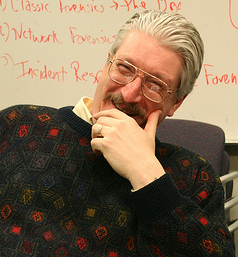
Charles Nicholas is a Professor of Computer Science and Electrical Engineering at the University of Maryland, Baltimore County (UMBC). He holds a Ph.D. in Computer and Information Science from Ohio State University (1988), an M.S. from the same institution (1982), and a B.S. in Computer Science from the University of Michigan–Flint (1979). His research focuses on applying data science and machine learning to cybersecurity challenges, particularly in ransomware analysis, malware detection, and threat intelligence. He previously served as Chair of UMBC’s Department of Computer Science and Electrical Engineering (2004–2010) and has chaired the Conference on Information and Knowledge Management five times. His work spans cutting-edge topics such as quantum algorithms for malware classification, knowledge graph generation, and efficient feature extraction methods for malware detection. Notable contributions include frameworks for evaluating malware datasets, improving classifier robustness, and leveraging antivirus scan data for large-scale analysis. Dr. Nicholas is a Senior Member of both ACM and IEEE, reflecting his longstanding contributions to the field. His research emphasizes practical applications of machine learning to cybersecurity, with a focus on scalable solutions for real-world threats.
Gursel Serpen is a Professor in the Department of Electrical Engineering and Computer Science at the University of Toledo's College of Engineering. His research focuses on intelligent systems, machine learning, neural networks, wireless sensor networks, and cybersecurity. He has contributed extensively to areas such as adaptive systems, biometric authentication, and optimization algorithms. Dr. Serpen's work bridges theoretical advancements with practical applications in robotics, healthcare, and network security. Affiliations: University of Toledo, College of Engineering. Research Themes: Ensemble classifiers, Bayesian networks, neuromorphic systems, and wireless sensor network optimization. His research interests include developing algorithms for real-time systems, improving security through data analysis, and advancing computational models for complex problems. Notable projects include automated parking systems and anomaly detection frameworks. Dr. Serpen has collaborated on interdisciplinary projects, integrating machine learning with healthcare diagnostics and materials science.
Mariusz Rybnik is a Lecturer at the Institute of Informatics, University of Bialystok. He holds an MSc in fuzzy c-means classification from Bialystok University of Technology and a PhD in task decomposition and Artificial Neural Networks from Paris XII Val-de-Marne University. His research focuses on cognitive modeling, music information processing, biometric systems, and embedded safety technologies. He contributes to projects like Religion, Ideology & Prosociality , implementing computational models to study secularizing societies. Education: MSc: Fuzzy C-Means Classification (Bialystok University of Technology) PhD: Task Decomposition & Artificial Neural Networks (Paris XII Val-de-Marne University) Research Interests: Artificial Intelligence & Machine Learning applications Cognitive modeling and agent-based simulations Biometric authentication systems (e.g., keystroke dynamics, face recognition) Music information retrieval and harmonization models Embedded systems for automotive safety (eCall, accident detection) Projects & Contributions: Lead developer for computational models in the Religion, Ideology & Prosociality project Advances in eCall systems for vehicle safety and emergency response Innovations in fusion of biometric traits for security initiatives Advising & Grants: No formal advisees listed; active in collaborative research projects. Labs/Teams: Affiliated with the Institute of Informatics' research groups in AI and embedded systems.
Russell C. Hardie is a full-time Professor at the University of Dayton , holding positions in the Department of Electrical and Computer Engineering with joint appointments in Electro-Optics and Photonics and Bioengineering . His academic journey began with a B.S. in Engineering Science from Loyola College (1988), followed by M.S. and Ph.D. in Electrical Engineering from the University of Delaware (1990, 1992). Prior to joining the University of Dayton in 1993, he served as a Senior Scientist at Earth Satellite Corporation (now MDA Federal). Research Interests : Digital signal/image processing, medical imaging, super-resolution techniques, hyperspectral/infrared imaging, pattern recognition Key Awards : 2006 Alumni Award in Teaching (University of Dayton) 1998 Rudolf Kingslake Medal (SPIE) 1999 School of Engineering Excellence in Teaching 2002 IEEE Professor of the Year 1997 Epsilon Delta Tau Engineering Professor of the Year Recent Work : Focuses on machine learning applications for medical imaging (lung segmentation, nodule detection), atmospheric turbulence mitigation, and hyperspectral data analysis. His 15 most recent publications span topics from zero-shot chest X-ray analysis to methane plume detection and turbulence-corrected imaging systems. Contact: rhardie1@udayton.edu
Constantinos Patsakis is an Associate Professor at the Department of Informatics, University of Piraeus, and an adjunct researcher at the Institute for the Management of Information Systems (IMIS) of Athena Research and Innovation Centre. He holds a Mathematics degree from the University of Athens, an M.Sc. in Information Security from Royal Holloway, University of London, and a PhD in Security from the University of Piraeus. Previously, he worked as a Researcher at the UNESCO Chair in Data Privacy at Rovira i Virgili University, a Research Fellow at Trinity College Dublin, and a Senior Researcher at the Luxembourg Institute of Science and Technology. His primary research areas include cryptography, security, privacy, data anonymization, malware analysis, and blockchain technology. With over 190 publications to his name, his work spans from theoretical security frameworks to practical applications in digital forensics and malware detection. He has contributed significantly to the development of datasets for security research, including the Malicious MS Office documents dataset, Social Live Streaming Service Grooming dataset, and the HYDRA dataset for Domain Generation Algorithm research. His recent publications (2024-2025) reveal a strong focus on emerging security challenges, with particular emphasis on LLM applications in security analysis, novel malware detection techniques, privacy-preserving protocols, and blockchain security. His work bridges academic research with practical security solutions, addressing both technical and human aspects of cybersecurity. As an editor for journals including Computers and Security, International Journal of Information Security, Scientific Reports, and Blockchain: Research and Applications, he plays a significant role in shaping the discourse in his field. He currently teaches undergraduate courses in Information & Code theory, Security Governance, Introduction to Computer Science, and Cryptography, as well as graduate courses in Digital Forensics & Malware Analysis, Cryptographic protocols, and Blockchain development. Principal Investigator for ALUNA (ISFP-2021-AG-CYBER) Coordinator for LAZARUS (HORIZON-CL3-2021-CS-01) Principal Investigator for Cut the Cord (ISFP-2020-AG-CYBER) Principal Investigator for HEROES (H2020-FCT-01-2020) His research group actively contributes to multiple EU-funded projects addressing critical cybersecurity challenges, with a particular focus on digital forensics, blockchain security, and privacy-preserving technologies. The team maintains strong collaborations with international institutions and industry partners, ensuring their research has real-world impact.
Juris Pauls is a Lecturer in the Department of String Instruments at the Jurmala Vocational Lyceum of Music and Art. He is classified under the Administrative Staff, indicating potential dual roles in both teaching and institutional operations. While specific educational background details are not provided in the text, his affiliation with the Department of String Instruments suggests expertise in music pedagogy and instrumental training. Research interests likely center on practical aspects of string instrument instruction, performance techniques, and musicological studies pertinent to classical or traditional music disciplines. No academic articles, grants, or formal advising records are explicitly listed in the provided information. Similarly, no scientific awards or participation in labs/teams are mentioned. The text focuses on his current position and contact details without elaborating on additional professional milestones or contributions.
Kalyan Veeramachaneni is a Principal Research Scientist at the Laboratory for Information and Decision Systems (LIDS) at the Massachusetts Institute of Technology (MIT). He leads the Data-to-AI group, focusing on developing AI systems to address societal challenges through big data science and machine learning. His research emphasizes statistical modeling, automated feature engineering, and human-data interaction for impactful applications. His work spans synthetic data generation, anomaly detection, adversarial machine learning, and explainable AI frameworks. Key contributions include the Synthetic Data Vault, Cardea, and Ballet collaboration tools. He collaborates across industries to deploy interpretable ML systems in healthcare, energy, and cybersecurity. Notable projects include OrionBench (time series benchmarking), Explingo (AI explanations via LLMs), and frameworks like Pyreal and ATM for automated machine learning. His research bridges theoretical advancements with practical usability, emphasizing end-user priorities in system design. Current affiliations: LIDS MIT | MIT Institute for Data, Systems, and Society (IDSS). Office: 32-D714, Cambridge, MA.
Dr. Sherry H. Suyu is an Associate Professor at the Technical University of Munich (TUM) and a Max Planck Fellow at the Max Planck Institute for Astrophysics. Her research focuses on gravitational lensing applications for cosmology, particularly in measuring the cosmic expansion rate and studying dark energy/dark matter. She leads the HOLISMOKES program funded by an ERC Consolidator Grant. Her research group at TUM School of Natural Sciences Department of Physics investigates: Dark cosmos through gravitational lensing Supernova observations and Tidal Disruption Events Bayesian inference methods for astrophysical modeling Machine learning applications in lensed system analysis Scientific achievements include: 2021 Berkeley Prize from American Astronomical Society ERC Consolidator Grant for HOLISMOKES program Discovery of 330 high-quality lens candidates in Pan-STARRS survey She teaches courses including: Experimental Physics 1 (Winter 2024/5) Gravitational Lensing (Winter 2024/5) Introduction to Nuclear/Particle/Astrophysics (Summer 2025) The group includes 13 active members and 14 alumni across 7 institutions. Current work integrates HST and LSST imaging for next-generation lens discovery.
Dr. Nicos Pavlidis is a Senior Lecturer in the Department of Management Science at the Management School LUMS, Lancaster University. His research focuses on developing novel methods for clustering and classification in high-dimensional data and time-varying environments. He teaches courses including MSCI 562: Intelligent Data Analysis and Visualisation and MSCI 331: Data Mining for Direct Marketing and Finance , supported by DataCamp. Pavlidis is affiliated with research groups such as STOR-i Centre for Doctoral Training and the Centre for Marketing Analytics & Forecasting. His research interests span statistics, data mining, and machine learning, with an emphasis on adaptive algorithms for complex data challenges. He has led projects like Efficient clustering for high-dimensional data sets (2017–2021). He actively participates in conferences like the IEEE Congress on Evolutionary Computation and serves on editorial boards for journals including IEEE Transactions on Evolutionary Computation and Computational Statistics and Data Analysis . A PhD student under his supervision is Danielle Notice. Pavlidis has contributed to peer-reviewed work on topics ranging from niche optimization methods to dynamic GARCH models. His work bridges theoretical advancements and practical applications in data-driven decision-making.
Professor Il-Min Kim is a Full Professor in the Department of Electrical and Computer Engineering at Queen's University (Smith Engineering). He leads the Wireless Artificial Intelligence Laboratory (WAI Lab), focusing on AI-driven wireless systems, IoT/IoE/IIoT, federated learning, edge computing, and 6G/V2X communications. His work integrates machine learning, signal processing, and cybersecurity with wireless infrastructure. Education: B.S. (Yonsei University, 1996), M.S./Ph.D. (KAIST, 2001). Postdoctoral research at MIT (2001-2002) and Harvard (2002-2003) preceded his faculty role at Queen's since 2003. Promoted to Associate Professor (2009) and Full Professor (2014). Research emphasizes Wireless AI , including on-device AI, federated learning, geoscience AI (Geo-AI), and secure communication protocols. Key areas: AI for 6G/V2X, energy-efficient edge computing, and robust spectrum sensing. His lab develops frameworks for distributed systems, compressive sensing, and nonlinear energy harvesting. Notable contributions include hybrid replay mechanisms for incremental learning, diffusion models for industrial IoT, and deep learning-based channel estimation. His work addresses challenges in data security, model robustness, and real-time inference under resource constraints.
Bodan Velkovski is an academic at the Faculty of Electrical Engineering and Information Technologies, Ss. Cyril and Methodius University in Skopje, holding the rank of Assistant. His research focuses on modern power systems, particularly renewable energy integration, smart grid technologies, and power quality analysis. With an institutional email (bodan@feit.ukim.edu.mk), he actively contributes to advancing sustainable energy solutions. Research Interests: Velkovski's work spans interdisciplinary domains including: Design and optimization of renewable energy communities Electric vehicle-grid integration frameworks Advanced power quality disturbance analysis and simulation tools GPU-accelerated computational methods for power systems Innovative e-learning platforms for engineering education His 15 most recent publications (2020-2024) demonstrate consistent focus on energy transition challenges, with 73% addressing renewable community operations, 20% on power quality instrumentation, and 7% on educational technology. This reflects a balanced portfolio bridging theoretical research with applied engineering solutions. Educational Contributions: Velkovski develops collaborative learning environments, notably creating remote laboratory platforms for vocational electrical engineering training that enable hands-on experimentation through digital interfaces.