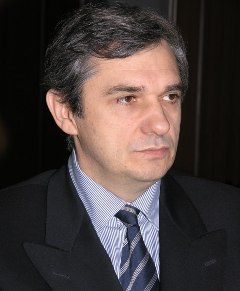
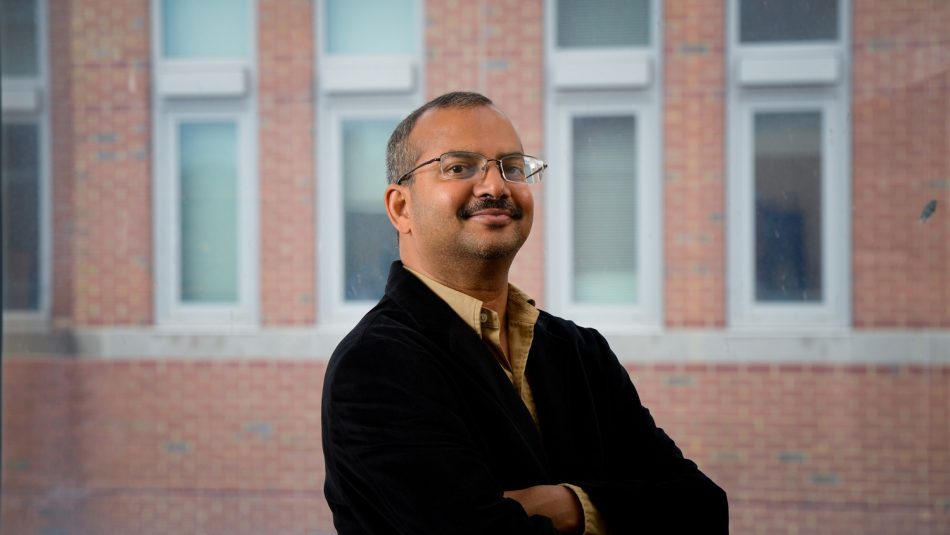
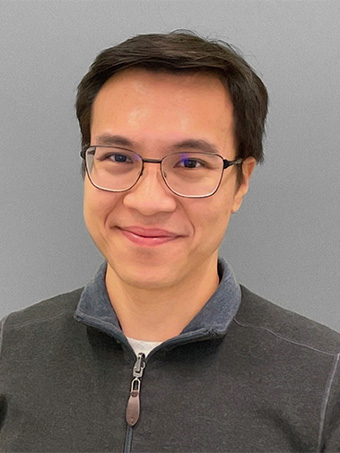
Charles-Henry Bertrand Van Ouytsel is a Research Assistant and Visiting Lecturer at Université catholique de Louvain , affiliated with the Louvain Polytechnic School (EPL) and the Computer Engineering Center (INGI) . His work focuses on malware analysis , symbolic execution , and machine learning for cybersecurity applications. Research Areas : Packing detection, intrusion detection systems, side-channel security, and adversarial machine learning. Teaching : Involved in courses like Secured systems engineering (LINFO2144) and Software engineering and programming systems seminar (LINFO2359) . His recent publications emphasize malware obfuscation techniques and security evaluation frameworks . Collaborations with Axel Legay and others highlight his contributions to tool development (e.g., Packing-Box , SEMA ). No scientific awards are explicitly mentioned.
Dr. Tiffany Ho is an Assistant Professor in the Department of Psychology at the University of California, Los Angeles (UCLA). She is also affiliated with the Cognition, Affect, and Neurodevelopment in Youth (CANDY) lab, where she leads research on adolescent neurodevelopment, depression, and the neurobiological impacts of early adversity. Her work integrates neuroimaging, psychophysiology, and immunology to understand how stress and adversity shape brain circuits underlying emotion and behavior during adolescence. Education: Ph.D. in Psychology, University of California, San Diego B.A. in Cognitive Science, University of California, Berkeley Postdoctoral Fellowship in Clinical Neuroscience, University of California, San Francisco Postdoctoral Training in Affective Science, Stanford University Research Interests: Dr. Ho’s research focuses on understanding how brain circuits underlying thoughts, emotions, and behaviors change during adolescent development. She investigates how experiences of adversity and perceptions of stress shape neurodevelopment, and how these changes impact the etiology, course, and treatment of depression. Her lab uses a multimodal approach, including behavioral, cognitive, endocrine, immune, and neuroimaging techniques, and leverages big data and global initiatives to identify robust brain imaging markers associated with depression and related conditions. Grants and Funding: Her research has been generously funded by the Klingenstein Third Generation Foundation and the National Institute of Mental Health . Publications and Impact: Dr. Ho has published extensively in high-impact journals, with over 100 peer-reviewed articles. Her recent work includes studies on the effects of COVID-19 on adolescent mental health, the role of inflammation in depression, and the use of machine learning to classify major depressive disorder using neuroimaging data. She is also a key contributor to the ENIGMA consortium, a global initiative aimed at understanding brain alterations in psychiatric disorders.
Lingyang Chu is an Assistant Professor at McMaster University's Department of Computing and Software, previously serving as a postdoc fellow at Simon Fraser University under Jian Pei. He earned his Ph.D. in Computer Science from the University of Chinese Academy of Sciences. Research interests span data mining , machine learning , and statistics , with focus on trustworthy AI (privacy, interpretability, security, robustness, fairness), federated learning , and graph-based machine learning . His work includes scalable data mining on large graphs and deploying systems like personalized federated learning on Huawei Cloud's Harmony OS devices. Publications emphasize adversarial attacks, medical AI, graph robustness, and federated learning frameworks. His advising record includes 28 mentees across Ph.D., M.Sc., and internship levels. Scientific achievements include Best paper candidate at ICME'13 Best demo award at ICMR'13 Academic service roles include: Program Committee: NeurIPS, SIGKDD, CVPR, ICML, and 12+ other top-tier conferences Journal Reviewer: IEEE TKDE, ACM Transactions on KDD, and 8+ journals Editorial Board: ACM Transactions on KDD (Associate Editor) Grant Reviewer: Hong Kong RGC Labs/teams: Maintained open-source ALID algorithm (VLDB'15) for dominant cluster detection, demonstrating technical leadership in scalable graph mining
Adjunct Professor Evgeny Osipov is affiliated with La Trobe University's Business Analytics department. His research spans artificial intelligence, hyperdimensional computing, and neural network architectures. Academic Rank: Adjunct Professor Department: Business Analytics Email: E.Osipov@latrobe.edu.au Research interests include: Hyperdimensional computing and vector symbolic architectures Spiking neural networks and reservoir computing Hardware-efficient AI implementations Causal reasoning in large language models Self-organizing maps and spatiotemporal sequence learning Applications in smart cities and robotic navigation Recent research outputs demonstrate expertise in: Developing unsupervised learning frameworks using hypervectors Optimizing reservoir computing with cellular automata Creating memory-efficient neural network models Advancing hyperdimensional classification techniques Exploring causal graph integration in language models
Cheng Zhang is an Associate Professor (with Tenure) in Information Science and a Field Member in Computer Science at Cornell University. He directs the Smart Computer Interfaces for Future Interaction (SciFi) Lab , focusing on integrating human-centered AI with advanced sensing technologies to empower everyday wearables. Ph.D. in Computer Science, Georgia Institute of Technology (2020) M.S. in Software Engineering, Chinese Academy of Sciences B.S. in Software Engineering, Nankai University His research examines how to solicit information on and around the human body to address real-world challenges in interaction, health sensing, and activity recognition. He builds novel sensing systems spanning hardware prototypes, algorithm design (machine learning and physics-based modeling), and high-impact applications in accessibility and health. Article Trends : His recent work includes low-power, minimally intrusive wearables (e.g., EchoForce for muscle activity tracking, Ring-a-Pose for hand poses, SeamFit for smart clothing) using acoustic sensing and machine learning. The 15 most recent articles span 2025–2023, with applications in silent speech, authentication, and pose estimation. Scientific Awards : NSF CAREER Award Ubicomp 10-Year Impact Award Best Paper Honorable Mentions at ISWC’24 and ISWC’23 Advising : Mentored Ph.D. students like Ruidong Zhang (Qualcomm Fellowship recipient) and Ke Li, with research featured in Cornell Chronicle and IEEE Spectrum .
Peter Johnstone is Professor of Foundations of Mathematics at the University of Cambridge, affiliated with the Department of Pure Mathematics and Mathematical Statistics within the Faculty of Mathematics. His academic profile shows consistent contributions to foundational mathematical research over several decades, with current contact information indicating active engagement in his position. Johnstone's primary research focus lies in category theory, specifically topos theory and its connections with mathematical logic. His work explores the deep structural relationships between algebraic structures, logical systems, and geometric interpretations within categorical frameworks. His research has significantly advanced our understanding of locales, realizability toposes, and the categorical foundations of mathematical logic. Analysis of his recent publications reveals a consistent trajectory in topos theory with emphasis on geometric morphisms, realizability structures, and categorical logic. His work demonstrates sophisticated interplay between abstract category theory and concrete mathematical structures, particularly in how logical systems can be represented and manipulated within topos-theoretic frameworks. Johnstone maintains an active academic presence with a personal homepage at the University of Cambridge and standard university contact information including email (P.T.Johnstone@dpmms.cam.ac.uk), office location (Room C0.01), and telephone number (01223 337985). His extensive publication record spanning from the 1980s through the 2010s indicates sustained scholarly activity in his specialized field.
Asunción Gómez Pérez is a Spanish computer scientist and Full Professor at the Technical University of Madrid (UPM) . She currently serves as Vice-Rector for Research, Innovation and Doctoral Studies at UPM and holds a seat at the Real Academia Española . She has authored over 300 publications and accumulated 20,000 citations. Education : PhD in Computer Science (UPM, 1993), MBA (Comillas Pontifical University) Leadership Roles : Director of the Department of Artificial Intelligence (2008–2016), Academic Director of AI Master’s/PhD programs (2009–2016), Executive Director of UPM’s Artificial Intelligence Lab (1995–1998) Her research focuses on Semantic Web and Ontology Engineering , with applications in knowledge representation, machine-machine communication, and multilingual data integration. She pioneered methods for ontology validation, metadata licensing, and AI-driven social inclusion. Key publication trends include: Ontology evaluation frameworks (e.g., OOPS!) Linked Data quality models and validation tools Multilingual and cross-lingual AI applications Interoperability solutions for smart cities and healthcare Machine Learning for social exclusion prediction Ontology-driven library and lexicography systems Scientific Awards Fellow of the European Academy of Sciences Ada Byron Prize She has led projects like the NeOn Methodology for ontology development and contributed to the European framework for linked data rights (LD Terms). Her work bridges theoretical research with practical implementations in AI and Semantic Technologies.
Jonathan Boualavong is an Assistant Professor in the Department of Civil, Structural and Environmental Engineering at the University at Buffalo, State University of New York. His research focuses on electrochemical separations for climate change mitigation, public health, and environmental justice, integrating engineering and critical science and technology studies perspectives. PhD, Environmental Engineering, Pennsylvania State University (2023) MPhil, Chemical Engineering, University of Strathclyde, Scotland (2019) BS, Biomedical Engineering, University of Rochester (2017) His work examines: Electrochemical CO2 capture and its energy implications Mechanistic understanding of metal separations Ethical dimensions of scientific measurement Integration of renewable energy systems with chemical processes Current projects analyze: Air-water interface manipulation for CO2 absorption Electrochemical controls on lead/copper corrosion Coordination chemistry in transition metal redox processes Ethical citation networks in separation science Contact: jboualav@buffalo.edu
Ljubisa Stankovic is a Full Professor at the University of Montenegro with extensive academic and political experience. He has served as Rector of the University of Montenegro (2003-2008), Member of the National Academy of Sciences and Arts (CANU) since 1996, and Ambassador of Montenegro to the United Kingdom since 2010. As an IEEE Fellow (2012), he has made significant contributions to signal processing research. His research focuses on Signal Processing , particularly Time-Frequency Analysis , Data Processing in Joint Time and Frequency Domain , Analysis of Non-Stationary Signals , and Radar Signal Processing . With about 300 technical papers published (83 in leading international journals, mainly IEEE editions) and several textbooks in Signal Processing, his work has substantially influenced the field. The analysis of his recent publications reveals a consistent focus on advanced time-frequency methods applied to radar systems, non-stationary signal analysis, and emerging applications in machine learning and quantum processing. His research shows evolution from theoretical foundations toward practical implementations in communications, radar, and biomedical applications. His notable scientific achievements include: Member of the National Academy of Sciences and Arts (1996) Highest State award of Montenegro '13. jul' (1997) Fellow of the IEEE (2012) Fulbright fellowship (1984-1985) Alexander von Humboldt fellowship (1997) Volkswagen award grant (2001) Scientific Achievement Award by Montenegrin Academy of Science and Art (1991) Stankovic has held significant editorial positions including Associate Editor for IEEE Transactions on Image Processing, IEEE Signal Processing Letters, and IEEE Transactions on Signal Processing since 2003. He was also a member of the IEEE Signal Processing Society's Technical Committee on Theory and Methods (2002-2008). His research group received a Volkswagen Foundation research grant (2001-2003), demonstrating his ability to secure competitive funding. Beyond academia, he has held prominent political positions including Vice-president of Montenegro (1989-1991) and Member of Yugoslav Parliament (1992-1996).
George Kesidis is a Professor in Computer Science and Engineering and Electrical Engineering at Penn State University. His research spans deep learning security, virtual reality optimization, and cloud computing. College of Engineering (Penn State University) Research Focus: Backdoor Attacks, DNN Robustness, Edge Caching Active in NSF and U.S. Navy-funded projects (2022-2026) His work addresses backdoor data poisoning , test-time evasion attacks , and DNN overfitting mitigation . He develops techniques like activation clipping, perturbation analysis, and statistical defense models. Recent projects include edge caching systems for VR and security-driven AI frameworks. Key article trends reveal expertise in adversarial deep learning, immersive media delivery, and cloud resource optimization. Current grants focus on multi-user VR, GPU scheduling, and serverless-cloud hybrid architectures. He collaborates extensively with researchers like David J. Miller and Xinyu Li, particularly on cloud-based adversarial defense mechanisms and VR streaming benchmarks.
Stephen M. Shore is a Clinical Associate Professor at Adelphi University's Ruth S. Ammon College of Education and Health Sciences, specializing in autism and Asperger Syndrome with expertise in educational practices, social inclusion, and successful transition to adulthood for individuals on the autism spectrum. Dr. Shore earned his Ed.D. in Education from Boston University (2008), M.A. in Music Education from Boston University (1992), and dual B.A. degrees in Music Education and Accounting and Information Systems from the University of Massachusetts at Amherst (1986). He holds professional teaching licenses in Music and Business Management for Massachusetts public schools (grades 5-12). His research focuses on multiple critical areas including successful transition to adulthood, employment opportunities, comparative approaches for treating children with autism, socially-based inclusion methods, self-advocacy development, teaching musical instruments to individuals on the spectrum, and international perspectives on autism diagnosis and treatment. His work uniquely bridges academic research with practical applications, informed by his personal experience as someone on the autism spectrum. Dr. Shore's publications demonstrate a consistent emphasis on practical applications of autism research across diverse contexts, with recurring themes in educational strategies, inclusion methodologies, and strength-based approaches that leverage individual capabilities rather than focusing on deficits. Member, Interagency Autism Coordinating Committee (2008-present) Vice President, Autism Society of America - Massachusetts Chapter (2007-present) Board Member, Autism Society of America - National (2001-2004, 2005-present) Former Board President, Asperger's Association of New England (2001-2006) As an educator, Dr. Shore teaches specialized courses including 'Diagnosis Of And Intervention In Autism,' 'Educating Students With Autism Classified At Level 1,' and 'Classroom Management,' emphasizing evidence-based practices that accommodate neurodiversity while promoting academic and social success.
Hossein Valavi is a Lecturer and Assistant Director of Undergraduate Studies at Princeton University, contributing to advancements in computer architecture and hardware acceleration. His research focuses on in-memory computing, neural networks, and energy-efficient systems, with notable work in reconfigurable architectures and mixed-signal processing. He has received multiple teaching awards, including recognition for innovative pandemic-era Car Lab courses and collaborative work honored by the Edison Patent Award. His academic contributions span academic positions since 2018, emphasizing both research and pedagogical excellence. Key technical areas include scalable in-memory computing systems, analog neural network accelerators, and low-power matrix factorization algorithms. His work addresses critical challenges in data movement reduction and hardware-software co-design for modern computing systems. Awards: Teaching Excellence Awards (2021, 2023), Edison Patent Award (2023) Grants & Projects: Leading developments in in-memory computing accelerators and embedded microprocessor designs Research teams under his guidance have produced impactful IP in semiconductor layouts, CNN accelerators, and programmable architectures, aiming to bridge theoretical computer science with practical hardware implementations.
Raju Vatsavai is an Associate Professor in the Department of Computer Science at North Carolina State University, affiliated with the Center for Geospatial Analytics. He joined NC State in 2014 as part of the Chancellor’s Faculty Excellence Program cluster hire in Geospatial Analytics. Education: PhD and MS in Computer Science from University of Minnesota Prior Roles: Lead Data Scientist at Oak Ridge National Lab, roles at University of Minnesota, IBM Research, AT&T Labs, and C-DAC (India) His research in geospatial analytics spans big data management , spatiotemporal data mining , deep learning for remote sensing , and high-performance computing , with applications in national security, climate change, and crop monitoring. Recent work includes deep learning frameworks for cloud imputation , multi-sensor satellite data harmonization , and transfer learning applications in crop classification . He has been a leading investigator on grants from the National Geospatial-Intelligence Agency, Department of Energy, and Department of Homeland Security. Labs: Associate Director of the Center for Geospatial Analytics Expertise: Spatial computing, Earth observation, nuclear proliferation detection via remote sensing
Ziming Zhang is an Assistant Professor in the Department of Electrical and Computer Engineering at Worcester Polytechnic Institute (WPI) , with additional affiliations in Data Science and Robotics Engineering. He previously held research roles at Mitsubishi Electric Research Laboratories (MERL) and Boston University. PhD in Computing (2013) from Oxford Brookes University , UK MS in Computing Science (2010) from Simon Fraser University , CA BS in Computer Science and Technology (2005) from Northeastern University , China Research interests span computer vision , machine learning , and their applications in point cloud processing , medical imaging , autonomous driving , and IoT . He leads the Vision, Intelligence, and System Laboratory (VISLab) at WPI. Recent publications focus on 3D reconstruction , hyperbolic learning , and robust classifiers . Awards include the R&D100 Award 2018 and NSF funding for data-efficient deep learning. PhD Students: Yecheng Lyu (co-supervised), Guojun Wu (co-supervised), Hangrui Zhang, Xuechu Yu Master's Students: Yun Yue, Yuping Shao Visiting Scholars: Fangzhou Lin His lab partners with industry and academic institutions, focusing on autonomous systems , robotics , and scientific imaging projects.
Marc HON is an Assistant Professor at the National University of Singapore (NUS) under the NUS Presidential Young Professorship, specializing in time-domain astronomy and machine learning applications for NASA missions including Kepler, TESS, and the Roman Space Telescope. His work focuses on characterizing stellar populations and discovering novel astrophysical phenomena through data-driven methodologies. His research spans asteroseismology for probing stellar interiors and Galactic archaeology to map the Milky Way's evolution using variable stars, alongside exoplanetary science investigations into planetary system evolution, habitable worlds, and James Webb Space Telescope atmospheric characterization. A core methodology involves developing machine learning frameworks like deep learning classifiers and generative models for large-scale astronomical datasets. HON's publication trends (2018-2024) reveal consistent innovation at the astrophysics-ML intersection, with emphases on red giant asteroseismology, exoplanet dynamics, and scalable analysis pipelines for space telescope data. Key contributions include flow-based stellar evolution emulators, deep learning oscillation detectors, and large-scale TESS Galactic archaeology studies. Scientific recognition includes: NASA Hubble Fellowship (2020) He actively contributes to major international collaborations as a member of both the TESS and Kepler Asteroseismic Science Consortia, with direct involvement in MIT's TESS mission operations and data pipelines.