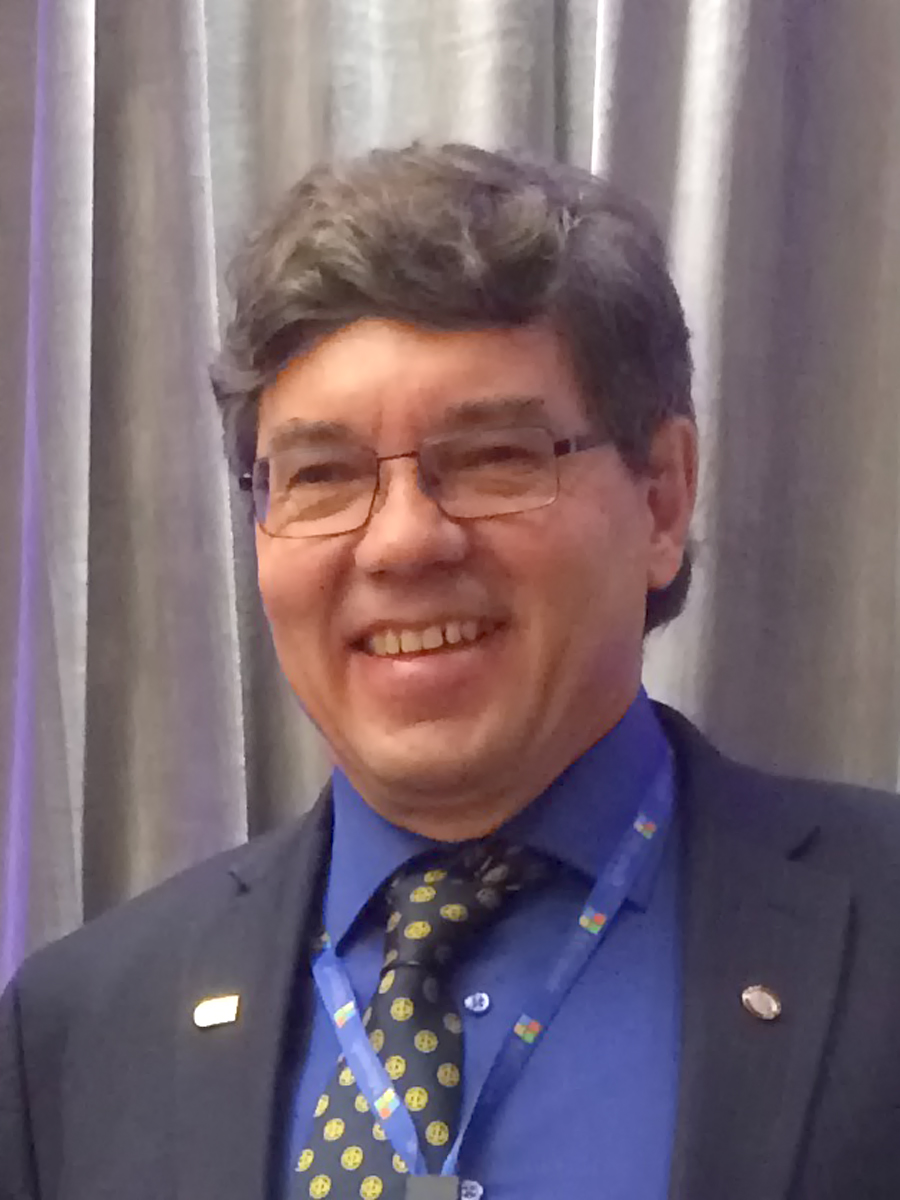
Hausi A. Müller is a Professor at the Department of Computer Science , University of Victoria , and serves as Associate Dean of Research in the Faculty of Engineering. He holds leadership roles in IEEE, including Vice President of the IEEE Computer Society Technical & Conferences Activities Board (T&C) and 2024-25 Chair of the IEEE Quantum Technical Community (QTC) . Research focuses on Quantum Computing , Self-Adaptive Systems , and Cyber-Physical Systems Key projects include NSERC CREATE grants for Quantum Computing and Dependable IoT systems Developed foundational frameworks like DYNAMICO and SmarterContext for context-aware systems Scientific Awards include: 2011 IBM Canada CAS Research Project of the Year Award CASCON 2012 Best Paper Award ACM Senior Member (2016) Fellow of the Canadian Academy of Engineering (FCAE) and IEEE (LMIEEE) His quantum computing research explores hybrid quantum-classical algorithms, educational frameworks like QNotation , and bioinformatics applications such as RNA folding via QUBO models. Current work emphasizes practical quantum applications and proactive AIOps using digital twins.
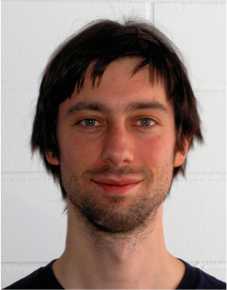
Stefan Heusler is a Professor of Physics Education at the Westfälische Wilhelms-Universität Münster, within the Faculty of Mathematics and Natural Sciences. He holds a professorship at the Institute for Physics Education. His academic career includes a Habilitation in Physics Education (2012), a Doctorate (2004) from the University of Duisburg-Essen, and a diploma in Physics from Heidelberg University (1997). He has conducted research abroad, including at Kyoto University (1995–1996) and the University of Tokyo (1998). Teaching roles include leading seminars on quantum physics, research methodologies, and educational innovation. Research focuses on quantum education, digital tools in teaching, and climate-related education. He has co-authored numerous publications on quantum education, experimental setups, and educational technology. His work emphasizes low-cost experiments, mixed reality, and smartphone integration in teaching. Collaborations include projects like MiReQu (Mixed Reality Learning Environments). Awards: None explicitly mentioned. Labs/Teams: Involved with the Institute for Physics Education and contributed to the QuantumVisions Münster initiative.
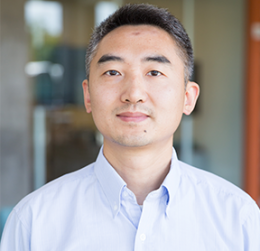
Martijn Wubs is a Professor and group leader of the Quantum Photonics of Low-Dimensional Systems (QLDS) Group at DTU Electro, Technical University of Denmark. His research spans nanophotonics, quantum optics, and 2D materials, focusing on nonlocal response in nanoplasmonics, quantum plasmonics, and collective physics in driven and open quantum systems. Quantum Optics and Multiple Scattering (PhD thesis) Co-applicant, NanoPhoton Center of Excellence (2019) Principal Investigator, NATEC Center of Excellence (2016) His recent work includes light-matter interactions in MoS2/WSe2 heterostructures, superradiance in solid-state environments, and nonlocality in photonic materials. He has supervised multiple PhD students, including Qiaoling Lin and Mads A. Jørgensen, and contributed to editorial boards of Journal of Optics and Nanomaterials . Awards include grants from the Danish Council for Independent Research (2020, 2013), Villum Fonden (2016), and the CeNS Publication Award (2007).
Farnaz Alipour Shakib is an Assistant Professor in Chemistry and Environmental Science at New Jersey Institute of Technology (NJIT). Her research focuses on computational chemistry, materials science, and quantum mechanics simulations. She holds grants from the National Science Foundation for projects on electrically conductive materials and lithium-sulfur battery cathodes. PhD: Not explicitly stated in text but implied by academic rank Research interests include design of metal-organic frameworks (MOFs), quantum chemistry simulations using DFT-B3LYP calculations, and development of advanced computational tools like DL_POLY Quantum and SHARP pack. Her work intersects machine learning applications in material modeling and electronic properties analysis of coordination polymers. Recent articles explore path integral methods for vibrational spectra, neural network-based potential energy surfaces for MOFs, and spin crossover phenomena in magnetic materials. She has secured federal funding for inverse design of conductive coordination polymers and lithium-sulfur battery research. Grants: CDS&E: Inverse Design (2024-2027), Lithium-Sulfur Batteries (2023-2026) Labs/Teams: Involved in computational materials research groups at NJIT collaborating on software development for quantum dynamics simulations.
Jeffrey K. Lawson is a Professor of Mathematics at Western Carolina University (WCU) and currently serves as Dean of the Graduate School and Research. He joined WCU in 2005 as an Associate Professor, advancing to Full Professor in 2010. His academic leadership extends beyond mathematics, including roles as Interim Associate Vice Chancellor for Student Success (2021), Chair of the Undergraduate Retention Strategic Planning Task Group, and Commencement Coordinator. He holds a Ph.D. in Mathematics from NC State University, a Master’s in Applied Mathematics from the University of Colorado, and a Bachelor’s from Georgia Institute of Technology with highest honors. Lawson’s research focuses on geometric mechanics, symplectic geometry, and mathematical physics, with notable publications on control theory, geometric phase phenomena, and multisymplectic structures. He has been a visiting researcher at institutions including the Fields Institute, University of Surrey, and Caltech. His administrative expertise includes managing a $2.3M budget and overseeing student success initiatives. In his new role as Dean, he oversees graduate education policy, chairs the Graduate Council committees, and collaborates with faculty to enhance graduate programs. His work integrates academic leadership with interdisciplinary innovation, reflecting his commitment to student success and scholarly excellence.
David Craig is a Courtesy Faculty member in the Department of Forest Engineering, Resources & Management at Oregon State University's College of Forestry. His work bridges theoretical physics and academic leadership, focusing on departmental transformation and physics education. He collaborates with Jim Kiser and Jim Rivers through a funded appointment (4/2023–3/2026). Craig's research spans quantum cosmology and initiatives to enhance physics program sustainability. His educational background and prior roles are not explicitly detailed, but his professional contributions emphasize interdisciplinary approaches to academic challenges. Recent work prioritizes supporting physics departments through initiatives like the Departmental Action Leadership Institute (DALI) and EP3 program, addressing enrollment management and curricular innovation. Key research areas include spin foam models in loop quantum gravity and strategies for fostering thriving physics programs. Though no awards are listed, his collaborative projects highlight impactful contributions to both theoretical physics and academic institutional development. Advising activities and grant details are not specified in available texts. Craig maintains an active website and can be reached at dpcraig@willamette.edu.
Dr. Aysel Ramazanova is a researcher at the University of Duisburg-Essen, Germany, working within the Faculty of Mathematics as part of Prof. Dr. Arnd Rösch's Nonlinear Optimization Group. Originally from Azerbaijan, she holds a Ph.D. from Baku State University and has established herself as a specialist in mathematical physics and differential equations. Her research focuses on inverse problems and optimal control theory with applications to mechanical systems. Educational Background: B.Sc. (2005-2009): Baku State University M.Sc. (2009-2011): Baku State University Ph.D. (2012-2017): Baku State University Dr. Ramazanova's research centers on equations of mathematical physics , particularly direct and inverse problems for partial differential equations and optimal control in processes described by ordinary and partial differential equations . Her work has significant applications in vibration analysis of mechanical systems, especially concerning flexural-torsional oscillations of bars and rods. She has extended her research to fractional calculus and fractal systems in recent years, demonstrating the evolution of her expertise toward more complex mathematical frameworks. Analysis of her publication record reveals a consistent focus on inverse problems related to vibration equations, with a clear progression from classical PDEs to fractional-order equations and fractal systems. Her work shows strong interdisciplinary connections between pure mathematics, mechanical engineering, and mathematical physics, with particular emphasis on the mathematical modeling of physical phenomena in elastic structures. Dr. Ramazanova actively contributes to academic education through teaching courses on nonlinear optimization, numerical analysis of optimal control problems, and inverse problems. Her teaching assignments at the University of Duisburg-Essen include organizing exercise sessions that complement theoretical lectures with practical computational approaches. As a member of the Nonlinear Optimization research group, she collaborates with colleagues including Prof. Dr. Arnd Rösch, Felix Beer, M.Sc., Niklas Windhuis, M.Sc., and Nicole Obszanski. Her research has been presented at numerous international conferences across Europe and Azerbaijan, reflecting her active participation in the global mathematical community.
Zoakos Dimitrios is an Assistant Professor in the Department of Theoretical and Mathematical Physics, Astronomy and Astrophysics at the University of Patras, affiliated with the School of Sciences. His research focuses on theoretical physics, particularly holography, conformal field theories, and quantum gravity, with applications to string theory and strongly coupled systems. He is available via email at dzoakos@upatras.gr and holds office hours on Tuesdays 11:00-13:00 and Wednesdays 12:00-13:00 (prior notice requested). His research interests include holographic dualities (AdS/CFT correspondence), defects in conformal field theories, supersymmetric field theories, and non-relativistic systems like Schrödinger geometries. He explores phenomena such as magnetic catalysis, anisotropic fluids, and finite-temperature/finite-density effects in holographic setups. Notable recent work involves codimension-2 defect CFTs, universal SUSY RG-flows, and thermodynamic properties of anisotropic fluids. His studies bridge high-energy physics with condensed matter systems, leveraging string theory to model complex quantum phases. While no formal advising or grant information is listed, his contributions span over 30 publications since 2004, reflecting deep engagement with cutting-edge theoretical physics topics. He is part of the University of Patras Physics Department, contributing to its research infrastructure and educational mission.
James A. Hendler is a Professor at Rensselaer Polytechnic Institute, renowned for pioneering work in Artificial Intelligence, Semantic Web, and Web Science. His research spans knowledge graphs, explainable AI, and biomedical informatics Rensselaer Polytechnic Institute, Troy, NY, USA Research Interests : Hendler's work bridges AI and Semantic Web technologies, focusing on knowledge integration, quantum machine learning applications, and mental health prediction through NLP. He develops explainable systems for medical imaging and contributes to open government data frameworks Publications & Collaborations : Recent articles highlight collaborations in quantum ML for climate modeling, clinical decision support semantics, and chest X-ray pathology explainability. He explores active learning architectures and human-in-the-loop AI systems Scientific Recognition : AAAS Fellow ACM Fellow AAAI Fellow Advising & Grants : Co-authored over 100 publications with researchers in biomedical NLP, quantum computing, and social network analysis. Key grants include NIH and NSF funding for semantic health data projects
James Kirkpatrick is a Researcher at the Max Planck Institute for Polymer Research, focusing on multiscale modeling of charge transport in conjugated materials. His work integrates atomistic simulation, quantum chemical methods, and numerical charge transport simulations to understand electronic properties in organic semiconductors. He completed his PhD at Imperial College (2007), where his research involved developing computational tools for calculating electrostatic disorder and transfer integrals in conjugated materials, with applications in organic solar cells and molecular disorder studies. Key research areas include molecular dynamics of discotic liquid crystals like hexabenzocoronene, charge carrier mobility in columnar mesophases, and the relationship between molecular structure and electronic transport properties. His studies combine ab initio quantum chemistry with large-scale simulations to predict material behavior for organic electronics. Publications emphasize computational methodologies for charge transport analysis, including a software toolkit for simulating organic semiconductors. His work bridges theoretical and applied aspects of materials science, with implications for next-generation optoelectronic devices.
Jingzhi Pu serves as Associate Professor and Director of Graduate Studies at Indiana University, conducting interdisciplinary research at the nexus of computational chemistry and biophysics. His work focuses on deciphering biomolecular motor mechanisms and developing advanced simulation methodologies for biological electron transfer processes. His academic foundation includes: B.S. in Chemistry from Peking University (1999) Ph.D. in Chemistry from the University of Minnesota (2004) Postdoctoral research at University of Minnesota (2004-2005) Postdoctoral fellowship at Harvard University (2005-2010) Research centers on biomolecular dynamics and computational methodology development , with dual emphases on ABC transporter mechanisms (linked to cystic fibrosis and cancer drug resistance) and electron transfer in DNA photolyases . His lab pioneers multiscale approaches integrating coarse-grained modeling, QM/MM, and free energy calculations to bridge structural biology with functional dynamics. Publication analysis reveals sustained expertise in enzyme catalysis (particularly hydride transfer in dihydrofolate reductase) and molecular motor mechanics (F1-ATPase, ABC transporters). His methodological innovations span polarizable force fields, tunneling corrections, and hybrid quantum-classical simulations, consistently addressing fundamental questions in biomolecular energetics and kinetics. He directs the Pu Group laboratory, which employs computational frameworks to investigate conformational dynamics in membrane transporters and develop simulation tools for biological electron transfer systems. Current projects focus on chemomechanical coupling in ABC transporters and quantum mechanical aspects of DNA repair enzymes.
Jerzy Dajka is a Professor of Physics at the University of Silesia in Katowice , affiliated with the Faculty of Science and Technology through the Institute of Physics and Institute of Computer Science . His academic journey includes a Master’s in Theoretical Physics (1999), Ph.D. in Physics (2003), habilitation (2010), and formal professor title (2017). Research interests span quantum open systems quantum information physics entanglement dynamics geometric phase phenomena nanophysics and mesophysics econophysics with applications in neutrino oscillations, quantum games, and mesoscopic transport. Recent publications analyze neutrino oscillations under environmental interactions (2025) quantum speed limits in fermionic systems (2024) medical image analysis for pediatric fractures (2024) decoherence in Jaynes-Cummings models (2024) quantum attacks on classical cryptography (2023) highlighting interdisciplinary breadth. Scientific awards include Scholarship for Young Scientists from the Foundation for Polish Science (2005, 2006) multiple Rector’s Awards at the University of Silesia (2008, 2009, 2013) Recognized for leadership as Director of the Institute of Physics (2016–2019) and Deputy Dean for Research (2019–2020).
Tobias Hartung is an Associate Professor in Computer Science at Northeastern University London, affiliated with the CoMENS Faculty and the Computing and Information Systems department. He holds a PhD in Mathematics from King’s College London (2015) and a Diplom in Mathematics with a Physics minor from TU Dresden (2013). His academic positions prior to Northeastern included roles at King’s College London and the University of Bath. His research focuses on the intersection of functional analysis, mathematical physics, quantum computing, and algorithm design for high-energy physics simulations. He develops mathematical frameworks to design quantum and classical algorithms for overcoming computational bottlenecks in physics simulations, particularly lattice gauge theory and particle physics. Recent work emphasizes error mitigation in quantum computing, parametric quantum circuit expressivity, and lattice field computations using advanced numerical integration techniques. Teaching includes courses on discrete structures, algorithms, and quantum computing at Northeastern, the University of Bath, and King’s College London. His courses emphasize algorithmic foundations and mathematical rigor in computer science. Publications span quantum algorithms for particle track reconstruction, error mitigation strategies, and theoretical advancements in lattice field theory. Current research trends include applying quantum computing to solve problems in high-energy physics, optimizing quantum circuits, and addressing noise limitations in NISQ-era devices. No scientific awards are explicitly listed, but his work demonstrates significant contributions to quantum computing and mathematical physics. Grants and advising details are not provided in the source material. He is affiliated with Northeastern University London’s campus in Devon House, London.
Guanyang Wang is an Assistant Professor in the Department of Statistics at Rutgers University, New Brunswick. His research focuses on Monte Carlo methods, generative AI, quantum computing, and probability, supported by NSF grants (DMS-2210849, FET-2403007) and an Adobe Data Science Award. He earned his Ph.D. in Mathematics (with a Statistics minor) from Stanford University (2020) and B.S. in Mathematics from USTC (2015). He co-organizes a weekly Monte Carlo methods seminar and advises several Ph.D. students in Statistics and Computer Science. Notable research includes quantum computing integration with classical simulation, antithetic noise in diffusion models, and spectral analysis of Gibbs samplers. Recent publications span topics like constrained sampling via diffusion models and phase transitions in Restricted Boltzmann Machines. His Erdős number is 2, reflecting his collaborative network in mathematics and computer science. Education: Ph.D., Stanford University (2020); B.S., USTC (2015) Grants: NSF DMS-2210849, NSF FET-2403007, Adobe Data Science Award Labs/Teams: Co-organizer of weekly Monte Carlo methods seminar
Thomas Christensen serves as Associate Professor in the Department of Electrical and Photonics Engineering at Technical University of Denmark (DTU), where he leads research within the Quantum and Laser Photonics group and NanoPhoton – Center for Nanophotonics. His work spans theoretical and experimental nanophotonics with emphasis on quantum effects in optical materials. His research fingerprint reveals deep expertise in graphene plasmonics (100%), photonic crystals (54%), and surface plasmons (46%), with significant contributions to two-dimensional materials (39%) and nanosphere optics (38%). Current investigations focus on quantum surface responses, nanoscale 3D printing of photonic structures, and adaptive optical systems using 2D materials. Recent publications demonstrate a clear trajectory toward quantum-classical hybrid systems, with 2024-2025 works exploring Feibelman d-parameters, multimodal AI for materials discovery, and visible-spectrum photonic crystal fabrication. His collaborative network spans 25 publications showing strong international engagement in nanophotonics. As main supervisor for Wang, M.'s ongoing PhD project 'Symmetry and topology in photonic systems' (2023-2026), he maintains active mentorship. His previous doctoral work 'Graphene Plasmonics' (2012-2016) established foundational contributions to plasmonic multipole theory and hydrodynamic modeling. Christensen operates within DTU's NanoPhoton infrastructure, leveraging advanced nanofabrication capabilities for quantum optics experiments. His research integrates theoretical modeling with experimental validation through collaborations highlighted by significant social media attention (31 X users, 2 news outlets) for key publications.