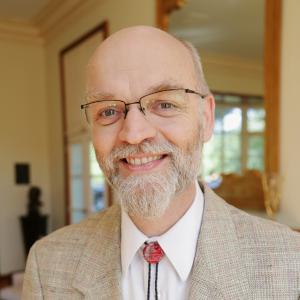
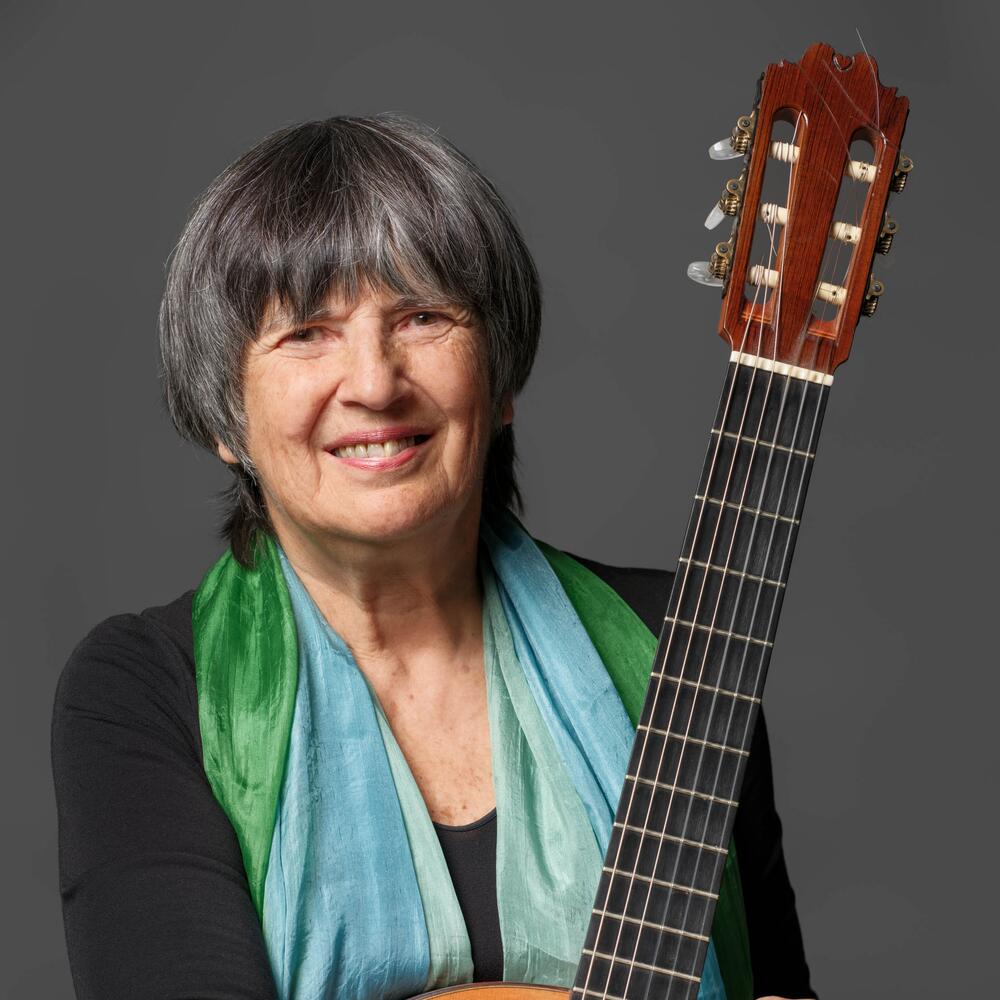
Edward Nesbit is Senior Lecturer in Composition at King's College London's Department of Music within the Faculty of Arts & Humanities. He studied at Cambridge University, Guildhall School of Music and Drama, and King's College London under Julian Anderson and George Benjamin. His compositions are regularly performed by major ensembles including the London Sinfonietta, BBC Symphony Orchestra, and Philharmonia Orchestra at venues like Wigmore Hall and Royal Festival Hall. Research interests focus on: Contemporary choral and vocal composition techniques Integration of literary and dramatic elements in musical works Collaborative performance practices Community music engagement methodologies Recent compositions demonstrate diverse approaches to narrative storytelling through music, with frequent exploration of biblical/historical themes and nature-inspired programmatic elements. His work includes collaborations with the Choir of King's College London, resulting in commercial recordings on the Delphian label. Nesbit has secured funding including an AHRC Impact Acceleration Award for community music projects. He leads the 'Singing for Wellbeing' initiative developing choral repertoire for community engagement and directs composition studies at undergraduate/postgraduate levels.
Sylwia Janiak-Kobylińska is a Polish conductor, educator, and artistic leader currently serving as the Dean of the Faculty of Conducting, Composition, and Music Theory at the Stanisław Moniuszko Academy of Music in Gdańsk. She is President of the SAJ Foundation Supporting Young Artists, founder of the Baltic Philharmonic Orchestra of the Youth, and an active participant in international music competitions and festivals. Her work spans symphonic and opera conducting, artistic direction of multidisciplinary projects, and pedagogical leadership. Her research interests focus on Orchestral Conducting Contemporary Music Interpretation Artistic Education for Youth Symphonic and Opera Collaboration Cultural Management in Music Interdisciplinary Art Projects Her recent artistic projects, such as the inUnity. Contemporary Music from Gdańsk album and the Homage to Szymborska concert series, highlight collaborations between classical and jazz composers, youth orchestras, and interdisciplinary teams. These works emphasize themes of unity, cultural heritage, and innovation in music education. Scientific awards and recognitions include Meritorious for Polish Culture badge (2023) Antoni Wit Award at the G. Fitelberg Conducting Competition Multiple Rector’s Awards at the Academy of Music in Gdańsk Pomeranian Artistic Award in 'Artistic Hope' category As an educator, she leads orchestral workshops, mentors students across multiple faculties, and pioneered the 4C’s in Music Art program (Creativity, Collaboration, Critical Thinking, Communication). Her leadership in the SAJ Foundation and Baltic Philharmonic Orchestra of the Youth has fostered over 1000 young musicians since 2011.
Dr. hab. Eugenia Rozlach is a Professor at the Department of Vocal Studies, Faculty of Vocal and Acting, Fryderyk Chopin University of Music. A renowned opera singer, she specializes in Rossini’s music and 19th–20th-century Polish vocal lyrics, with a career spanning performances at the Warsaw Chamber Opera and international theaters (Paris, Madrid, Montpellier). Her recent roles include the Nanny in Tchaikovsky’s Eugene Onegin , Stara Buryjowska in Janacek’s Jenufa , and Mrs. Quickly in Verdi’s Falstaff . Graduate: Fryderyk Chopin Academy of Music, Warsaw Rozlach actively contributes to academic research on Polish vocal music, conducting workshops like On the Wings of Songs and organizing conferences such as the International Scientific Conference Polish Song . She has premiered contemporary works, including Marta Ptaszyńska’s Sonnets to Orpheus and Aleksandra Garbal’s opera Polonica rustica . Her chamber music collaborations include performances with pianists Tatiana Szebanowa, Maciej Paderewski, and Jerzy Godziszewski. Scientific Awards: Silver Cross of Merit (2005) Second-degree Rector’s award (2009) Rozlach has led masterclasses at the Chopin-Górecki Festival and the Keimyung-Fryderyk Chopin University of Music program (South Korea). She contributed to the UMFC research committee’s commemorative edition of Ignacy Jan Paderewski’s manuscripts and serves on the editorial team of Musica Intellectualis .
Maye Christian Harun serves as a Lecturer in the Department of Media Studies within the Faculty of Humanities at the University of Basel, Switzerland. Based at Holbeinstrasse 12 in Basel, Harun maintains an active research profile spanning media studies, literature, and cultural analysis. Harun's research interests focus on the intersection of literary traditions and contemporary media forms. Specializing in poetry performance, German Romantic literature, and horror genre adaptations, their work examines how classical texts are reinterpreted through modern media frameworks. Particular attention is given to vocal delivery in poetry readings, emotional impact of illustrated literary works, and transmedia adaptations of horror literature. Recent publications demonstrate expertise across diverse media contexts, analyzing Thomas Kling's poetry performances, illustrated editions of Goethe's Werther, and Lovecraftian horror in role-playing games. This multidisciplinary approach bridges traditional literary scholarship with contemporary media studies concerns. Harun maintains professional engagement through the University of Basel's academic channels, contributing to the Department of Media Studies' scholarly output while connecting literary traditions with evolving media landscapes.
Dmitri Tymoczko is a Professor of Music at Princeton University, where he has taught composition and theory since 2002. His work bridges the gap between academic music theory and contemporary composition, creating a unique interdisciplinary approach that has earned him recognition as a leading figure in modern music scholarship and creation. Tymoczko's research interests focus on the geometric modeling of musical structures, polystylistic composition that draws from genres spanning Renaissance to rock, and the mathematical foundations of tonality. His theoretical work explores how harmonic structures can be represented geometrically, revealing fundamental patterns that connect diverse musical traditions. He approaches composition as 'a logical deduction from absurd premises,' blending rigorous structural thinking with playful musical exploration. His scholarly publications and compositions reveal a consistent interest in the intersection of mathematical precision and expressive freedom. The articles demonstrate expertise across music theory, composition, and the cognitive aspects of musical perception, with recurring themes of geometric modeling, tonal structure, and genre hybridization. His work often challenges traditional boundaries between academic and popular music forms. Guggenheim fellowship Rhodes Scholarship Leonard Bernstein fellowship from Tanglewood Fellowship from the Radcliffe Institute for Advanced Study Block lectureship from the Society for Industrial and Applied Mathematics First music-theory article published in Science magazine Tymoczko maintains an active performance career alongside his academic work, with his compositions performed by leading ensembles including the Brentano Quartet, Newspeak, and Roomful of Teeth. His teaching integrates theoretical insights with practical composition, fostering a generation of musicians who understand music's structural foundations while embracing creative freedom. He has developed innovative tools like the musical programming language 'arca' to explore new compositional possibilities.
Keith Obadike is a Professor in the Department of Art at Cornell University's College of Architecture, Art, and Planning (AAP), where he also serves as Director of Undergraduate Studies. He is an acclaimed interdisciplinary artist and composer, known for his collaborative work with Mendi Obadike, which spans sound art, digital media, public installations, performance, and internet-based projects. His artistic and academic work critically engages with technology, race, history, and identity. Obadike earned a B.A. in Visual Art from North Carolina Central University and an M.F.A. in Sound Design from Yale University. Prior to joining Cornell, he taught at William Paterson University and held visiting positions at Princeton University, Columbia University, Northwestern University, and the Art Institute of Chicago. His research and creative practice focus on sound art, digital media, public art, performance, and collaborative practice , with strong interdisciplinary connections to Afrofuturism, data sonification, and social justice. He explores how sound and technology mediate racial identity, memory, and liberation, notably through the concept of acousmatic blackness , which he and Mendi developed to describe the racial perception of sound when its source is unseen. Obadike’s selected works include large-scale public sound installations such as Blues Speaker (for James Baldwin) , Free/Phase , Compass Song (Times Square Arts), and GuideStar (Space Needle, Seattle). His projects often use data sonification, archival research, and mythic storytelling, blending historical inquiry with futuristic vision. Notable series include the Opera-Masquerades , Americana Suites , and Numbers Station works, which transform databases of violence into sonic experiences. His honors include: Rockefeller New Media Arts Fellowship (2004) Louis Comfort Tiffany Biennial Award (2015) New York Foundation for the Arts Fellowship in Fiction New Music USA Creator Development Fund (2022) Obadike has received commissions and support from institutions such as the Vera List Center, Harlem Stage, Times Square Arts, the American Composers Orchestra, and the Cornell Mui Ho Center for Cities. He has exhibited and performed at The New Museum, The Whitney Museum of American Art, MoMA, and The Studio Museum in Harlem. His writings and publications include contributions to Studies into Darkness (2022), and artist books such as Four Electric Ghosts and Big House / Disclosure (both 2014). He has also released albums like Crosstalk (2008) and created internet artworks such as Blackness for Sale (2001) and The Interaction of Coloreds (2002), which are foundational in new media and critical race art. While specific advisees are not listed, his role as Director of Undergraduate Studies and Professor indicates active mentorship. His work is deeply collaborative, often co-created with Mendi Obadike, and supported by interdisciplinary teams and institutions.
Judith A. Peraino is a Professor in the Music Department at Cornell University's College of Arts and Sciences, with significant affiliations to the Feminist, Gender and Sexuality Studies Program, American Studies Program, Lesbian, Gay, Bisexual and Transgender Studies Program, and Medieval Studies Program. Her educational background includes a Ph.D. and M.A. from The University of California, Berkeley, and a B.A. from The University of Chicago. Peraino's research spans both medieval song and contemporary rock music, focusing on the intersection of subject formation, social identity, and musical expression across historical periods. Her primary research areas include: LGBT and Queer Theory in musical contexts Medieval song traditions and troubadour culture Rock, punk, and synthpop music genres Gender and sexuality in musical expression Sound and media studies across historical periods Peraino's scholarly work reveals two major interconnected trajectories: medieval musical traditions (particularly Guillaume de Machaut and troubadour songs) and contemporary popular music studies (focusing on punk, rock, and queer musical identities). Her research demonstrates how music has been historically used to challenge norms of gender and sexuality, from ancient times to the present. She has received prestigious recognition including a National Endowment for the Humanities Fellowship (2020), the H. Colin Slim Award, the Philip Brett Award, and Cornell's Stephen and Margery Russell Distinguished Teaching Award. Peraino gained significant public attention for discovering previously unknown Lou Reed recordings created for Andy Warhol in 1975, which was featured in The New York Times, The Washington Post, and Rolling Stone. She has co-curated major exhibitions including 'Anarchy in the Archive: Cornell's Punk Collections' and 'Electrifying Music: The Life and Legacy of Robert Moog,' and conducted interviews with prominent musical figures like Masha Alyokhina (Pussy Riot), John Doe and Exene Cervenka (X), and Gary Numan. As an educator, she teaches undergraduate courses including The History of Rock Music, Punk Culture, The Beatles, and Music and Queer Identity, as well as graduate seminars on The Velvet Underground Archive, Medieval Song traditions, and Gender and Glam Rock. She also performs as a conga drummer with Cornell ensembles and local Latin jazz groups.
David Brodbeck is a Professor in the Department of Music at the University of California, Irvine. His research and teaching focus on Central European music and musical culture during the long nineteenth century, as well as rock music. He has published extensively on composers such as Schubert, Mendelssohn, and Brahms, exploring connections between biography and musical analysis, and has extended his scholarship to intertextuality in rock recordings by the Beatles and the Beach Boys. Ph.D., University of Pennsylvania (1984) Previous faculty: University of Pittsburgh, University of Southern California His research spans from technical analysis of Brahms's symphonic and chamber works to broader social questions, including antisemitism in Wagnerian circles, cosmopolitan patriotism in Austro-Hungarian music, and the role of Heimat in Goldmark's compositions. His forthcoming monograph Brahms Patriotic and Political (2025) continues this political and cultural exploration. His publications have garnered significant recognition, including the Virgil Thomson Award for Outstanding Book in Music Criticism and the American Musicological Society's Award for Excellence in Jewish Studies and Music. He has also received fellowships from the National Endowment for the Humanities, the Alexander von Humboldt Foundation, and grants from the American Council of Learned Societies and the American Philosophical Society. Brodbeck's work bridges historical, analytical, and cultural methodologies, with a focus on music's intersection with politics and identity. He has served as President of the American Brahms Society, underscoring his leadership in Brahms scholarship.
Prof. Nicola Jürgensen is a distinguished German clarinetist and Professor of Clarinet at Faculty 1 of Folkwang University of the Arts in Essen, Germany. She also serves as Dean of Faculty 1 and is a Confidential Lecturer for the German Academic Scholarship Foundation. Her career seamlessly integrates performance, education, and artistic leadership. She is the Artistic Director of WDR 3 Campus Concerts and a board member of the Folkwang University Foundation. Professor of Clarinet, Folkwang University of the Arts (2018–present) Dean, Faculty 1 Artistic Director, WDR 3 Campus Concerts Board of Directors, Folkwang University Foundation Principal Clarinet (former), WDR Symphony Orchestra Cologne (2001–2018) Regular coach, German National Youth Orchestra (2020–present) Nicola Jürgensen's research and artistic interests center on clarinet performance, chamber music, and contemporary repertoire. She is deeply committed to historical performance practice, evidenced by her recordings on basset clarinet, and to expanding the global reach of classical music through international masterclasses and festivals. Her work bridges traditional European repertoire and modern experimental works, including performances in avant-garde operatic productions. She has collaborated with leading orchestras and ensembles worldwide, from Berlin and Leipzig to New York, Bangkok, and Auckland. Her recent artistic output reveals a strong focus on rediscovered works (e.g., Wilms' concerto), contemporary compositions (e.g., Kancheli, Zwilich), and cross-cultural collaborations (e.g., German Masters Music Festival in Thailand). She emphasizes pedagogical innovation and performance excellence, mentoring students who now hold principal roles in Germany’s top orchestras. Her recordings and performances consistently highlight expressive depth, technical mastery, and scholarly engagement with historical instruments and arrangements. Scientific and Artistic Awards: Mozart Prize, Wiesbaden Mozart Society German Music Competition Soloists' Prize (1999) Germany Radio Promotion Prize (2002) Nicola Jürgensen has been instrumental in guiding numerous students into prestigious orchestral positions and leads the ensemble 'Folkwang Clarinets' with her students. She holds multiple leadership roles in academic and artistic institutions and continues to perform as a guest principal clarinetist with major orchestras like the Mahler Chamber Orchestra and NDR Elbphilharmonie Orchestra. Her involvement in grants and funding appears indirect through institutional roles and festival organization. She is actively involved with several artistic initiatives, including the 'Spannungen' festival, WDR 3 Campus Concerts, and international masterclass programs. Her ensemble collaborations and educational outreach reflect a sustained commitment to excellence, innovation, and accessibility in classical music.
Akito Miura is an Associate Professor at the Faculty of Human Sciences of Waseda University , with a career spanning over 15 years in embodied cognitive science and movement research. His work bridges dance science , neuroscience , and biomechanics , focusing on sensorimotor coordination in performing arts and sports. PhD in Academic Studies from the University of Tokyo Research Experience at Waseda University, University of Tokyo, and EuroMov Institute (France) Editorial board member for Journal of Dance Medicine & Science and Advances in Cognitive Psychology Research interests include embodied cognition , rhythmic coordination , and interpersonal motor dynamics , with applications to dance, golf, and violin ensembles. His recent articles examine foot pressure in ballet, auditory-motor synchronization, and groove perception in music. Key awards include the Incentive Paper Award (2024) , Progress in Motor Control Scholarship (2011) , and multiple grants from the Japan Society for the Promotion of Science. He has also contributed to media coverage on rhythm perception in sports and performing arts. Current projects explore machine learning in motor learning, social interaction dynamics, and ACL rehabilitation metrics Professional memberships in the International Association for Dance Medicine & Science and Japan Cognitive Science Society
Jonathan Kulp is Professor of Music History and Theory at the University of Louisiana at Lafayette's School of Music and Performing Arts, where he has served on faculty since 2001. He held significant administrative positions including Director of the School of Music and Performing Arts from 2016-2020 and Interim Associate Dean of the College of the Arts from 2021-2022. Dr. Kulp earned his Ph.D. in Historical Musicology from the University of Texas at Austin in 2001, following a Master's in Music Theory from the same institution and a Bachelor's in Guitar Performance from the University of Tennessee at Chattanooga. His research focuses primarily on Argentine composer Carlos Guastavino, with multiple publications in the Latin-American Music Review and contributions to major reference works including The New Grove Dictionary of Music and Musicians and Die Musik in Geschichte und Gegenwart. As a composer, his works for guitar, voice, and various ensembles have been published by Les Productions D'Oz and G. Schirmer, with recordings appearing on several albums. Dr. Kulp has pioneered digital educational resources, creating accessible digital editions of historical music theory texts and developing open-source educational materials. His publications reveal consistent scholarly interest in Latin American music, counterpoint pedagogy, and digital accessibility in music education. Winner of G. Schirmer's 1995 Young Americans Art Song Competition Described by Classical Guitar Magazine as having 'a mesmerizing montage of rhythmic patterns' Contributor to major music reference works including New Grove Dictionary Creator of innovative open-source digital music theory textbooks As an educator, Dr. Kulp has developed novel approaches to music appreciation and theory instruction, with particular focus on universal design principles and accessibility standards. His creative work extends beyond traditional academic boundaries, including building his own recumbent bicycle and having been a former competitive skateboarder.
Maria Isabel Siewers De Pazur is a distinguished Professor of Guitar at Mozarteum University in Salzburg, Austria, where she has led the Guitar Department since 1989. She also maintains connections with the Department of Music Education in Innsbruck. Born in Argentina, she has established an international career as both a performer and educator, with her work deeply rooted in Latin American musical traditions while embracing contemporary classical repertoire. Her research and performance interests center on Classical Guitar Performance, Latin American Music, Chamber Music with Guitar, 20th Century Guitar Repertoire, Contemporary Classical Music, Argentine Music, and Guitar Education. Siewers has dedicated her career to expanding the guitar repertoire through commissions of new works and premieres of contemporary compositions, with a particular focus on Latin American composers. Her recordings demonstrate remarkable diversity across musical eras and styles, with special emphasis on 20th century masterpieces, Latin American repertoire, and chamber music collaborations. The trajectory of her work shows a consistent commitment to bridging traditional and contemporary forms, with increasing focus on cross-cultural musical dialogues and innovative arrangements that honor historical contexts while speaking to modern audiences. Critic's choice (Gramophone) Best record of the year (Acoustic Guitar) Latin Grammy Award 2018 in the category Classical Throughout her career, Siewers has maintained a strong commitment to education, founding the Musicampus Classical Guitar program that has nurtured over 170 guitarists from throughout Latin America. Her teaching philosophy emphasizes chamber music, community engagement through public performances, and fostering international musical exchange. She has also been involved in recording projects that serve both educational and artistic purposes, documenting important repertoire and commissioning new works that expand the guitar's expressive possibilities. Siewers maintains active collaborations with composers, orchestras, and fellow musicians worldwide, regularly performing with ensembles such as the Prague Virtuosi, Bohemian Chamber Orchestra, and various string quartets. Her work with the Musicampus program demonstrates her commitment to developing the next generation of guitarists while preserving and innovating within the classical guitar tradition.
Prof. Katarzyna Nowak-Stańczyk serves as Professor of Musical Arts and Head of the Acting and Stage Movement Department at the Feliks Nowowiejski Academy of Music in Bydgoszcz's Faculty of Vocal and Acting, where she has taught since 2003 after earning her postdoctoral degree in 2005 and receiving the professor title in 2012. Her educational background includes graduating with distinction from the Academy of Music in Łódź in 1989 under Jadwiga Pietraszkiewicz. Professional highlights span 700+ opera performances across major Polish theaters and 2,000+ concert songs in works by Verdi, Mozart, Puccini, and Chopin. Her artistic research focuses on Vocal Performance and Opera interpretation, evidenced by her mastery of 30+ soprano roles including Verdi's La Traviata and Mozart's Don Giovanni, alongside concert repertoire ranging from Bach's Magnificat to Górecki's 'Copernican' Symphony. Her major awards include: Special Award at the Ada Sari Vocal Competition (1987) Finalist at the International Vocal Competition in Pretoria (1990) Special Award at the 1st International Moniuszko Competition (1992) She has recorded for SABC Johannesburg, Polish Radio Channel 2, and Polish Television while maintaining dual careers as a performer (Opera Nova soloist since 2003) and educator (previously at Zduńska Wola State School of Music).
Professor Adam Gorb is a renowned composer and academic, serving as Professor of Composition and former Head of the School of Composition at the Royal Northern College of Music (RNCM) from 2000 to 2023. He holds a PhD in Composition from the University of Birmingham (2013), alongside degrees from Cambridge University (BA 1980) and the Royal Academy of Music (RAM, MMus with Principal’s Prize 1993). His research and creative output focuses on orchestral, operatic, and wind ensemble composition. Notable works include operas Anya 17 (2012) and The Path to Heaven (2018), which explore themes like human trafficking and the Holocaust. His wind ensemble pieces, such as Towards Nirvana and Farewell , have won British Composer Awards and are performed globally. Awards include three British Composer Awards and a House of Commons accolade for Anya 17 . He advises PhD students in composition while maintaining international collaborations, including recent projects in Romania, Australia, and the USA. His music is frequently recorded and performed worldwide, with CDs such as 24 Preludes (2022) and Dancing in the Ghetto (2016) showcasing his diverse output. Teaching roles include undergraduate and postgraduate composition at the RNCM, alongside guest lectures at institutions globally. His current projects include commissions for the Royal Academy of Music and interdisciplinary work with Parkinson’s patients.
Professor Helen Mitchell is a multidisciplinary scholar in music performance and perception at the University of Sydney's Sydney Conservatorium of Music. Her research explores the intersection of music practice with scientific discovery, focusing on vocal pedagogy, listener perception, and multisensory performance analysis. She holds a BA (Hons) from Oxford and a PhD from the Sydney Conservatorium. Previously, she served as Dean of Students at the University of Sydney's Women’s College (2004–2005). Research Interests: Mitchell’s work investigates listeners’ sound quality perception, vocal identity recognition, and the cognitive effects of verbal descriptions on musical memory. Notable projects include longitudinal studies on music training outcomes and current investigations into audio-visual integration in performer identification. Her ARC-funded research emphasizes practical applications in pedagogy and performance valuation. Grants & Collaborations: Key grants include the 2022 ARC Discovery Project on bel canto sound rediscovery (with Neal Peres Da Costa) and a 2014 OLT grant for perceptually-aware music leadership training. She collaborates with institutions like Sydney Living Museums via projects such as The Dowling Songbook Project, blending historical performance practice with educational innovation. Teaching & Supervision: Mitchell convenes postgraduate research methods courses and supervises Honours, Masters, DMA, and PhD students in music performance studies. She coordinates Honours research at the Conservatorium and integrates empirical approaches into ethics and methodology training. Affiliations: Member of the Charles Perkins Centre, contributing to interdisciplinary health and performance research.