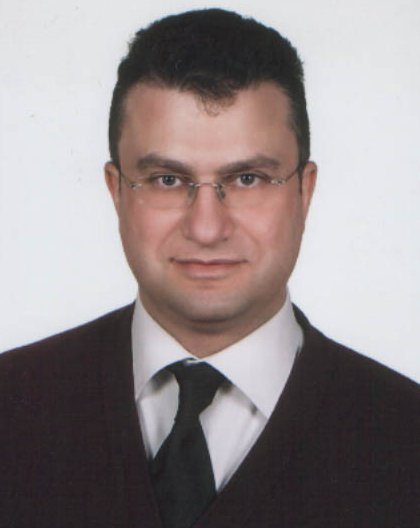
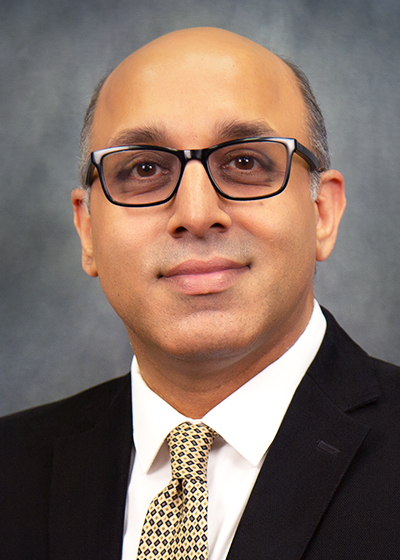
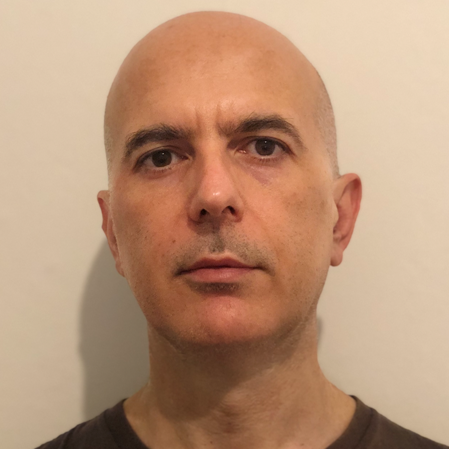
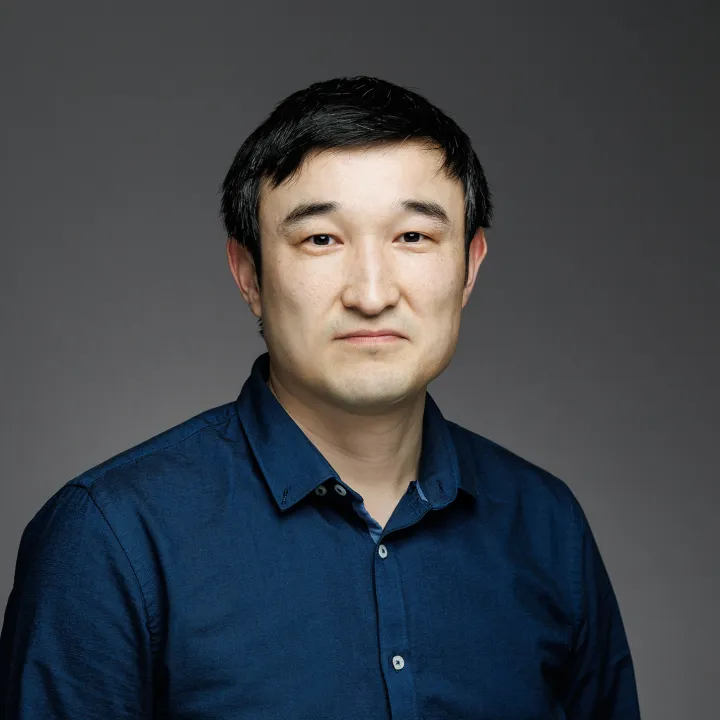
Professor Serdar Özoğuz is a full faculty member at the Department of Electronics and Communication Engineering , Istanbul Technical University . Holding a Ph.D. from ITU (2000) and a M.Sc. from ITU (1993) , he has taught courses like Active Network Synthesis , Basics of Electrical Circuits , and Scientific Research Ethics since 2014. His research focuses on Active RC filters Nonlinear electronic circuits Analog integrated circuit design Network synthesis . His recent publications emphasize machine learning applications in RF/microwave design , quantum computing for CAD tools , and emerging memory devices . The department's Devreler ve Sistemler Laboratuvarı Çok Geniş Ölçekli Tümdevre (VLSI) Tasarımı Laboratuvarı likely support his work. Despite no explicit awards listed, his 15+ recent articles in high-impact journals underscore his technical contributions.
Shahram Rahimi is a Professor and Department Head in the Department of Computer Science at the University of Alabama, College of Engineering. He concurrently holds an Adjunct Professor position at Mississippi State University. His research spans computational intelligence, machine learning, healthcare AI, cybersecurity, and quantum computing. He leads the PATENT Lab, focusing on predictive analytics, decision support systems, and AI-driven healthcare solutions. His educational background includes a Ph.D. in Computer Science. Key research areas include multi-agent systems, generative models, and predictive maintenance. He has served as an editor for journals like Scalable Computing: Practice and Experience and Informatica . Rahimi’s recent work emphasizes secure MLOps, quantum algorithms, and patient-centric medical systems. His publications address challenges in explainable AI, anomaly detection, and healthcare informatics. He actively contributes to conferences and journals in AI, cybersecurity, and computational intelligence. Editorial Roles: Scalable Computing, Engineering Letters, Informatica Labs: Predictive Analytics & Technology Integration (PATENT) Lab Key Focus Areas: Healthcare AI, Quantum Computing, Cybersecurity, Explainable Machine Learning
Stefano Markidis is a Professor of Computer Science at KTH Royal Institute of Technology, affiliated with the School of Electrical Engineering and Computer Science and the Digital Futures Faculty. He holds a Ph.D. from the University of Illinois at Urbana-Champaign and an MS from Politecnico di Torino. His research focuses on high-performance computing systems, including supercomputers and quantum computers, with expertise in plasma simulations, quantum algorithms, and scalable computational frameworks. Markidis leads the development of the Neko framework for high-fidelity computational fluid dynamics and the iPIC3D particle-in-cell code for plasma physics. He teaches courses such as Quantum Computing for Computer Scientists, High-Performance Computing, and Applied GPU Programming. His work addresses exascale computing challenges, including optimizing algorithms for GPUs, quantum systems, and distributed architectures. Key research interests include: Parallel Programming Models and HPC Frameworks Quantum Computing Applications in Scientific Simulations Physics-Informed Machine Learning Exascale System Optimization Turbulence Modeling and Plasma Dynamics His publications span over 100 articles in journals like Journal of Computational Physics and Scientific Reports , focusing on topics such as scalable CFD, quantum neural networks, and plasma simulation techniques. He has advised numerous students in these areas. Markidis collaborates with institutions like Los Alamos National Laboratory and RISE Research Institutes of Sweden through the Digital Futures initiative, aiming to solve societal challenges via digital technologies.
Simon Dixon is a Professor of Computer Science and Director of the UKRI Centre for Doctoral Training in Artificial Intelligence and Music (AIM CDT) at Queen Mary University of London. He also serves as Deputy Director of the Centre for Digital Music (C4DM). His work focuses on music informatics, AI, and computational musicology, with emphasis on music signal analysis, performance modeling, and MIR applications. He leads projects funded by UKRI, Innovate UK, and industry partners like Yamaha and Spotify. Dixon has supervised over 20 PhD students and contributed to major initiatives like the Jazz Digital Archives Project and the Dig that Lick study on jazz melodic patterns. His research has been recognized with awards including the Peter Claricoats Award and Turing Fellowship. Education: PhD in Computer Science, BSc(Hons) in related field, with music qualifications (AMusA LMusA) Roles: AIM CDT Director, C4DM Deputy Director, EU H2020 MIP-Frontiers PI Research: Music transcription, expressive performance analysis, MIR, and AI applications in music education Key projects include industry collaborations (e.g., Yamaha for jazz piano modeling), semantic audio analysis, and large-scale music corpus studies. His team has pioneered methods in chord detection, source separation, and alignment algorithms, with top rankings in MIREX evaluations. Publications span journals like TISMIR and ICASSP, with a focus on foundational MIR techniques and AI-driven music systems. His work bridges technical innovation with cultural heritage through projects like JazzDAP and the Dig that Lick analysis of jazz solos.
Bauyrzhan Primkulov is an Assistant Professor of Mechanical Engineering at Yale University. His research focuses on interfacial fluid dynamics and soft matter physics, with emphasis on fluid-fluid displacement in disordered environments and hydrodynamic pilot-wave theory. He holds a Ph.D. from MIT (2022) and B.Sc./M.Sc. from the University of Alberta. Primkulov's work bridges theoretical and experimental approaches to address energy and environmental challenges. His team investigates phenomena such as capillary flow dynamics in porous media, wettability effects on displacement patterns, and pilot-wave systems that mimic quantum behaviors. Key contributions include advancing Lenormand's phase diagram for multiphase flows and studying avalanches in imbibition processes. Recipient of InterPore PoreLab Award (2024) and MIT's CEE Best Doctoral Thesis (2022) Expertise spans experimental hydrodynamics, multiphase flow modeling, and granular media mechanics Active in developing novel methods like photoporomechanics to visualize stress fields in fluid-filled granular systems His recent studies explore crossover dynamics between stick-slip and steady sliding regimes in viscous slugs, as well as confinement effects in pilot-wave hydrodynamics. Primkulov collaborates across disciplines to translate fundamental fluid mechanics insights into practical solutions for energy storage and environmental systems.
Jay D. Sau is a Professor of Physics at the University of Maryland, College Park, and Co-Director of the Joint Quantum Institute (JQI). His research focuses on theoretical condensed matter physics, particularly topological quantum computing, quantum many-body systems, and Majorana fermions. He holds affiliations with the Condensed Matter Theory Center (CMTC) and JQI. Sau received his Ph.D. from UC Berkeley in 2008. His work bridges theoretical concepts in topological materials, superconductivity, and quantum information processing. Research Interests: Sau's primary interests include applying topological principles to solid-state and cold-atomic systems for quantum computation. Key areas include topological superconductivity, Majorana fermions, quantum Hall effects, and spin-orbit coupled systems. His group explores phenomena like topological degeneracy, Weyl semimetals, and cold atomic gases. Awards: He has been recognized with the National Science Foundation CAREER Award (2016) and the Sloan Research Fellowship (2016). His work has been published extensively in high-impact journals and covers topics ranging from Majorana physics to quantum phase transitions. Advising & Labs: Sau mentors graduate students including Tamoghna Barik, Stuart Thomas, Huan-Kuang Wu, and Shuyang Wang. His research group collaborates on projects at JQI and CMTC, focusing on experimental realizations of topological qubits and quantum devices.
Yongshan Ding is an Assistant Professor of Computer Science and Applied Physics at Yale University. He leads the Quantum Systems Lab (QSL) and directs Yale's Quantum Science and Engineering Certificate program. Affiliated with the Yale Quantum Institute (YQI) and Computer Systems Lab (CSL), his research focuses on quantum computing systems spanning algorithms, architecture, and hardware/software co-design. Dr. Ding earned his Ph.D. from the University of Chicago and a B.Sc. from Carnegie Mellon University. He has received prestigious awards including the Siebel Scholarship (2020) and William Rainey Harper Dissertation Fellowship (2020). Research Interests: Quantum computing architectures, noise-resilient quantum algorithms, error correction methods, quantum compilation, hardware-software co-design, and NISQ system optimization. Editorial Roles: Editor at Quantum journal and Associate Editor at ACM Transactions on Quantum Computing . Labs: Founder of Yale's Quantum Systems Lab (QSL) and contributor to the Computer Systems Lab (CSL). Awards: Siebel Scholarship (2020) William Rainey Harper Dissertation Fellowship (2020) QCE Best Paper Award (2024) IEEE Micro Top Picks Honorable Mention (2023, 2020) IBM Q Best Paper Award, First Prize (2020) Mathematics Competition Runner Up (2016)
Gina Crocenzi (Masterson) serves as a Professor in the Department of Modern and Classical Languages at George Mason University, teaching French literature and related disciplines. She maintains prior faculty appointments at Georgetown University and Princeton University, with active teaching responsibilities confirmed for Fall 2025 courses. Her academic foundation includes a summa cum laude B.A. in Philosophy/History from Georgetown University and a Ph.D. in Modern French Literature and Literary Criticism from the Catholic University of America. Professional certifications encompass Hybrid Learning (American University, 2018) and Online Instruction (NOVA, 2020). Research spans dual domains: French literary studies focusing on Kristeva, Bachelard, 20th-century philosophy, and theology; alongside computational geospatial work in traffic simulation and ZIP code systems. This unusual interdisciplinary range reflects publications in both humanities (e.g., Literature and the Science of the Unknowable ) and computer science venues. Scientific recognition includes: Excellence in Teaching Award, Northern Va Community College, Office of the Dean (Spring 2021) No verifiable information exists regarding graduate student mentorship, research grants, or laboratory leadership. Her professional background additionally incorporates international business project management within the US federal government.
Ethan N. Epperly is a Miller Research Fellow in the Department of Mathematics at the University of California, Berkeley, where he conducts cutting-edge research in applied mathematics with a focus on computational techniques for large-scale problems. Dr. Epperly received his PhD in Applied and Computational Mathematics from Caltech, where his research was supported by a Department of Energy Computational Science Graduate Fellowship. His educational background established a strong foundation in both theoretical and applied mathematics. His primary research interests include randomized and quantum algorithms, scientific computing, and large-scale machine learning. Dr. Epperly specializes in designing computational techniques for solving large-scale problems in machine learning, quantum information, and scientific computing, with particular expertise in kernel matrix approximation, low-rank approximation, and numerical linear algebra problems. His work bridges theoretical analysis with practical computational efficiency. Epperly's recent publications demonstrate a strong focus on developing efficient randomized algorithms for matrix computations. His research shows how randomized approaches can achieve accuracy and stability comparable to classical methods while offering significant computational advantages, particularly in settings where computational resources are limited. His work on Krylov subspace methods, Cholesky decomposition variants, and trace estimation has advanced the field of numerical linear algebra. Hertz foundation fellowship finalist Thomas A. Tisch Prize for Graduate Teaching in CMS W. P. Carey & Co. Prize in Applied Mathematics SIAM Student Paper Prize Department of Energy Computational Science Graduate Fellowship As a Miller Research Fellow, Dr. Epperly collaborates with leading researchers including Joel A. Tropp, Robert J. Webber, and Yifan Chen. His work has significant implications for machine learning applications requiring efficient handling of large-scale matrix computations, with potential applications across scientific computing and quantum information processing.
Ivana Nikoloska is an Assistant Professor at the Department of Electrical Engineering, Eindhoven University of Technology (TU/e). She is affiliated with the Center for Quantum Materials and Technology Eindhoven and BIASlab (Bayesian Intelligence and Stochastic Agents Lab). Her academic career includes prior roles as a Research Associate at King’s College London and a Visiting Researcher at Aalborg University. PhD: Monash University, Australia (2023) MSc & Dipl.-Ing.: University of Ss. Cyril and Methodius, North Macedonia Research Interests span foundational and applied machine learning, quantum computing, and information/communication engineering. Her work focuses on integrating Bayesian inference, variational methods, and quantum technologies for tasks like signal processing, channel estimation, and power control optimization. Quantum Machine Learning Bayesian Simulation-Based Inference Meta-learning for Wireless Systems Hybrid Quantum-Classical Architectures Stochastic Signal Processing Quantum Sensing & Metrology Notable Trends in Publications include quantum recurrent neural networks with adaptive gating, Bayesian frameworks for quantum sensing, and meta-learning applications in communication systems. She explores variational inference for planning and robust algorithms for channel estimation under non-ideal conditions.
Chris Monico is an Associate Professor in the Department of Mathematics & Statistics at Texas Tech University . He has been a faculty member there since 2003, following post-doctoral research at the University of Notre Dame. Education B.S. in Mathematics – Monmouth University M.S. in Mathematics – University of Notre Dame Ph.D. in Mathematics – University of Notre Dame Research Focus Monico’s scholarship centers on the intersection of cryptology , computational algebra , and number theory . A significant recent thrust has been the application of machine-learning techniques to mathematical finance , evidenced by work on random-forest models for option pricing and high-frequency trading risk metrics. Parallel lines of inquiry include post-quantum cryptographic schemes built on tropical algebra and semigroup actions, as well as classical problems in Ramsey theory and combinatorial semigroups . Publication Trends Between 2015 and 2025 Monico has published prolifically, with a clear shift around 2020 toward mathematical finance and machine-learning applications , alongside continued output in algebraic cryptanalysis and combinatorics . His 2024–2025 articles emphasize data-driven models in trading, whereas 2020–2021 works concentrate on cryptanalyses of tropical and group-based key-exchange systems. Earlier contributions focus on computational number theory and semigroup-based cryptography. Contact Information Email: c.monico@ttu.edu Phone: 806-834-4144 Office: Department of Mathematics & Statistics, Texas Tech University, 1108 Memorial Circle, Lubbock, TX 79409-1042 Advising & Grants No specific doctoral or master’s students, funded grants, or named awards are detailed in the provided text. Laboratory or Research Group The text does not mention any dedicated laboratory or research group.
Prof. Ady Arie is a Professor of Electrical Engineering at Tel Aviv University, where he serves as the Head of the Tel Aviv University Center for Light-Matter Interaction and holds the Marko and Lucie Chaoul Chair in Nano-Photonics. He has been a faculty member at the Iby and Aladar Fleischman Faculty of Engineering since 1993, previously serving as Head of the School of Electrical Engineering (2013-2017) and Vice Dean of Research (2011-2013). His educational background includes: B.Sc. in Mathematics and Physics from Hebrew University of Jerusalem (1983) M.Sc. in Physics from Tel-Aviv University (1986) Ph.D. in Engineering from Tel-Aviv University (1992) Prof. Arie's research spans multiple frontiers of optics and photonics. His work in nonlinear optics focuses on advanced frequency conversion techniques and shaping of light parameters using nonlinear photonic crystals. In quantum optics , he develops quantum light sources based on spontaneous parametric down conversion and explores applications in quantum sensing and communication. His plasmonics research investigates manipulation of surface plasmon polaritons on metal surfaces. In electron optics , he studies electron-matter-light interactions and techniques for sculpting electron wave functions. His lab also explores hydrodynamics through quantum simulations with water waves, creating analogies to quantum mechanical phenomena. Analysis of Prof. Arie's recent publications (2023-2025) reveals a strong focus on quantum technologies, particularly in quantum light generation, quantum sensing, and quantum information processing. His work increasingly integrates concepts from nonlinear optics, electron microscopy, and quantum physics, with growing emphasis on practical applications in quantum communication and computation. The research shows sophisticated manipulation of light-matter interactions across multiple platforms including nonlinear photonic crystals, plasmonic structures, and electron beams. Prof. Arie has received significant recognition for his work: Kadar Foundation Award for Excellence in Research (2016) Fellow of the Optical Society of America Editorial roles including Topical Editor of Optics Letters (2008-2014) and Associate Editor of Optica (since 2018) Prof. Arie leads the Nonlinear Optics and Wave Propagation Laboratory at Tel Aviv University, where his team investigates diverse wave phenomena from light frequency conversion to electron beam manipulation. He has served as chair of the national steering committee of the Israeli Planning and Budgeting Committee on Quantum Science and Technology. His research has been supported by various grants enabling the development of novel optical technologies and quantum systems. While specific grant details aren't provided in the text, his extensive publication record and leadership positions suggest substantial research funding. Prof. Arie's laboratory focuses on the intersection of classical and quantum wave phenomena. The lab investigates light manipulation through nonlinear optical processes, plasmonic structures, and electron microscopy techniques. Current research directions include quantum light generation, electron-photon interactions, and hydrodynamic analogs to quantum systems. The lab appears well-equipped for advanced optical experimentation with capabilities spanning visible to infrared wavelengths, nonlinear crystal engineering, and electron beam characterization.
Martin Ringbauer is an Associate Professor at the Department of Experimental Physics , University of Innsbruck . His research focuses on advancing quantum computing and quantum simulation through innovative applications of trapped ion qudits and high-dimensional quantum systems . Affiliation: Department of Experimental Physics, University of Innsbruck Research Areas: Lattice gauge theories, symmetry-protected topological phases, quantum verification protocols, and fidelity estimation Key Contributions: Development of qudit-based quantum processors for simulating complex physics, experimental demonstrations of quantum error correction and joint measurements His recent publications highlight advancements in quantum simulation (lattice gauge theories, Haldane phases), quantum verification (fidelity estimation, classical validation), and qudit engineering (mixed-dimensional frameworks, entanglement optimization). These works leverage trapped ion technology as a platform for scalable and precise quantum operations.
Christine Muschik is an Associate Professor at the Institute for Quantum Computing (University of Waterloo) and Associate Faculty at Perimeter Institute for Theoretical Physics. Her research bridges quantum technologies with particle physics to develop hybrid quantum-classical simulation techniques. University of Waterloo (2017–present) Perimeter Institute (2019–present) University Research Chair (2022–present) Her work focuses on quantum simulation, quantum sensing, and high-dimensional quantum computing (qudits). Key applications include lattice gauge theories, quantum chemistry, and fundamental particle interactions. Recent publications highlight advancements in qudit-based simulation of vacuum dynamics and SU(2) hadron models. Awards include the CIFAR Azrieli Global Scholar Fellowship (2020–2022), Sloan Fellowship (2019), and Emmy Noether Fellowship (2018). Nature Physics 2025: Qudit simulation of lattice gauge theories Nature Communications 2021: SU(2) hadron modeling Nature 2016: Few-qubit lattice gauge simulations She teaches advanced quantum physics courses at the University of Waterloo and leads the "Quantum Interactions" research group.
Roman Krems is a Professor and Distinguished University Scholar at the University of British Columbia (UBC) in the Department of Chemistry, with affiliations to the Stewart Blusson Quantum Matter Institute. His research focuses on the intersection of quantum physics, machine learning, and chemistry, particularly in quantum materials and quantum technologies such as quantum computing and sensing. Key Roles: Professor at UBC (2013–present), Distinguished University Scholar (2017–present) Education: Ph.D. from Göteborg University (2002), Postdoctoral Fellow at Harvard-MIT Center for Ultracold Atoms (2003–05) Research Interests include: Quantum machine learning (QML) for solving complex physics problems Quantum scattering theory in electromagnetic fields Applications of quantum computing to chemistry Developing machine learning algorithms for quantum dynamics Recent publications highlight advancements in extrapolating quantum observables, Gaussian process models for collision dynamics, and quantum walks in disordered systems. His work bridges theoretical physics, computational methods, and experimental applications in cold molecule research. Scientific Awards include the UBC Killam Teaching Prize (2017), election as Fellow of the American Physical Society (2015), and the Keith Laidler Award (2013). He has held editorial board positions for journals such as Machine Learning: Science & Technology and New Journal of Physics . Research Group members include graduate students and postdocs working on quantum technologies, machine learning, and molecular scattering. He also contributes to outreach through invited talks and seminars at institutions like MIT and Lawrence Berkeley National Laboratory.