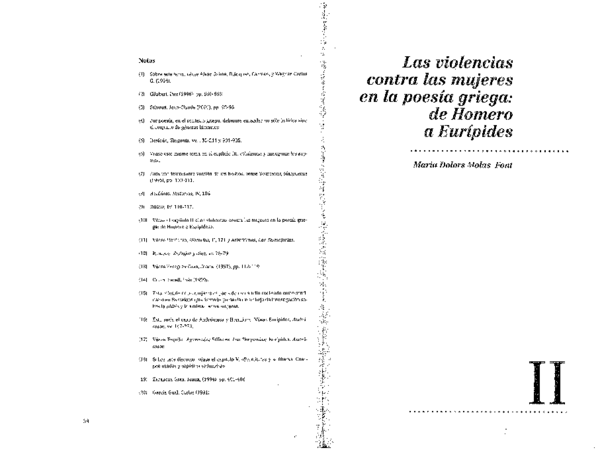
Maria Dolors Molas Font is an Associate Professor of Ancient History at the University of Barcelona and a researcher at the ADHUC-Research Center of Theory, Gender and Sexuality . She co-founded and coordinates the Tàcita Muta research group on women and gender in antiquity since 1998. Her work bridges Mediterranean protohistory and gender studies in antiquity. University of Barcelona (since 1998) ADHUC Research Center (since 2016) Her research spans various subfields, including: Archaeology of Childhood Feminist Archaeology Gender Dynamics in Antiquity Iberian World Studies Classical Reception of Women Violence in Ancient Societies Article themes reveal expertise in: Homeric and Euripidean textual analysis Roman Republican settlement archaeology Slavery and power structures in antiquity Transgressive practices in classical myth Perinatal archaeology in Iberian contexts Gendered interpretations of oratory
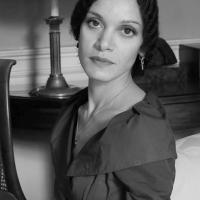
Dr. Marie Kawthar Daouda serves as a Stipendiary Lecturer in French at Oriel College, University of Oxford, where she teaches both literature and language courses across the undergraduate curriculum. Her academic work is situated within the French Department of Oxford's Faculty of Medieval and Modern Languages, one of the leading language departments in the UK. Dr. Daouda completed her academic training in French and English literature at La Sorbonne and the Université de Bretagne Occidentale. She earned her PhD with a thesis titled "L'Anti-Salomé, représentations de la féminité bienveillante au temps de la Décadence (1850-1920)", which was published as a monograph by Oxford, Peter Lang in 2020. Her second book project, "La Prière désespérée, de Baudelaire à Bernanos", is forthcoming from Garnier, continuing her exploration of spiritual dimensions in French literary tradition. Dr. Daouda's research focuses on challenging conventional understandings of femininity in literary history, particularly examining benevolent feminine figures in fin-de-siècle novels who counter the dominant "femme fatale" stereotype. Her work spans multiple interdisciplinary domains including the evolution of exoticism and orientalism from the Napoleonic era to the Third Republic, intersections between visual arts and literature, children's literature of the Second Empire, and the religious dimensions of literary works from the late 18th century through the 1930s. She demonstrates particular expertise in the literary movements of Naturalism, Decadence, and Symbolism and their complex interrelationships. Her scholarly publications reveal a consistent engagement with French literary traditions from the 19th and early 20th centuries, with special attention to Baudelaire's enduring influence, the reinterpretation of classical myths and fairy tales, and the complex relationship between religious thought and literary production. Dr. Daouda's research methodology demonstrates remarkable interdisciplinary breadth, connecting literary analysis with historical, theological, psychological, and gender studies perspectives to examine how literary figures negotiate authority, legitimacy, and creative expression within specific historical contexts. Monograph: "L'Anti-Salomé, Représentations de la féminité bienveillante au temps de la Décadence (1850-1920)", Oxford, Peter Lang, 2020 Monograph (forthcoming): "La Prière désespérée, de Baudelaire à Bernanos", Paris, Garnier As an educator, Dr. Daouda teaches across the full undergraduate curriculum at Oxford, covering Prelims Papers I-IV and Finals Papers I, II, VIII, and X. Her teaching spans major periods of French literature, from 17th-century works by Pascal and Racine to 20th-century texts by Proust and Camus. She has developed particular expertise in fin-de-siècle literature, teaching both canonical figures like Baudelaire and Mallarmé alongside less-studied authors such as Rachilde, Vivien, and Lorrain. Additionally, she serves as the Visiting Students Coordinator at Oriel College, supporting international students in their academic journey at Oxford.
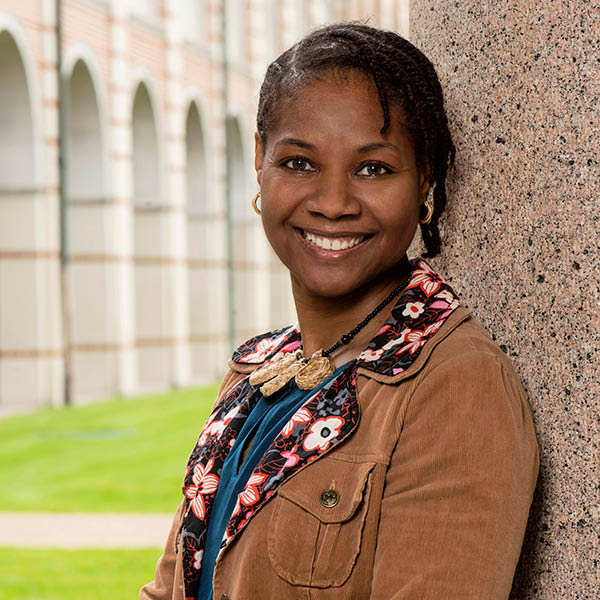
Jacqueline Couti is the Laurence H. Favrot Professor and Department Chair of Modern and Classical Languages, Literatures and Cultures at Rice University. She holds core faculty roles in French Studies and European Studies programs, and serves as Associate Director of the Center for the Study of Women, Gender, and Sexuality. Her academic journey includes previous appointments at the University of Virginia and the University of Kentucky. Couti has organized major conferences, including the 2020 landmark event Des féminismes noirs en contexte (post)impérial français? in Paris, which redefined French and Francophone Black womanhood. She has directed study-abroad programs in France, Morocco, and Martinique, and secured grants from organizations like the VolkswagenStiftung. Educated at the University of Virginia (PhD), her research focuses on transatlantic/transnational connections in French and Francophone cultural productions, with a particular emphasis on gender, race, sexuality, and postcolonial identity. She explores how colonial and postcolonial discourses shape Caribbean literatures and self-awareness through representations of sexuality. Teaching specialties include Francophone Studies, Women’s Gender and Sexualities Studies, and Transatlantic Studies. Couti’s work bridges literary analysis and activism, examining topics like ‘doudou’ rituals, Black feminist thought, and creole identities. Her publications span monographs, edited volumes, and articles in journals such as Cités and Nouvelles Études Francophones . She has also curated special issues on transnational identity in Caribbean literature and 19th-century Martinican narratives. Couti’s interdisciplinary engagement extends to collaborative projects with artists and institutions, reflecting her commitment to decolonizing knowledge and centering marginalized voices in academic discourse.
Dimitri Kasprzyk is a Lecturer in Greek Literature at the University of Brest. He is affiliated with the ERIAC (Rouen Normandy University) as a member, contributing to its research axes on spaces, cultures, and philosophy. His academic background includes an Aggregation of Classical Letters (1997) and a Doctorate in Greek Literature (2003). His research focuses on ancient Greek literature, particularly the Greek novel, rhetoric, and narratology. Key areas include the works of Philostratus, Dio of Prusa, and Artemidorus, with a special interest in dream interpretation (oneirocriticism) and symbolic geography in texts like Iamblichus’ Babyloniaka. Publications span monographs, peer-reviewed articles, and chapters in edited volumes, analyzing ancient discourse structures, dream narratives, and the intersection of belles-lettres with scientific disciplines. He has organized academic events like the 2012 study day on prose in antiquity and contributes to editorial boards of journals such as Lalies and Kentron . Teaching expertise includes Greek language and literature at bachelor’s and master’s levels. His work bridges classical philology, literary theory, and cultural studies, reflecting a commitment to interdisciplinary ancient Mediterranean scholarship.
Elena Cano Turrión is an Assistant Professor at the Department of Spanish Philology, University of Córdoba, specializing in Spanish Literature of the Golden Age. She earned her PhD in 2019 with a thesis on Alberto Díez y Foncalda's Poesías varias (1653). Her research focuses on: Baroque and post-Baroque poetry Paratextual elements in early modern texts Literary academies and networks Mythological reinterpretation in Hispanic literature Authorial self-positioning in prologues Editorial practices and poetic canon formation Notable publication: Aunque entiendo poco griego... Fábulas mitológicas burlescas del Siglo de Oro (2019), analyzing comic mythological poetry. She has participated in 9 international congresses and organized 6 academic events, including the 2017 International Congress of Young Researchers. Her current projects include "Sujeto e Institución Literaria en la Edad Moderna" and "El Canon Poético Barroco en el Siglo XVIII."
Michela Gardini is a Full Professor of French Literature at the University of Bergamo, Department of Languages, Literatures and Foreign Cultures, where she also serves as Coordinator of the PhD Program in Transcultural Humanities (2024–2027). She teaches French Literature and Intercultural Imaginaries in both undergraduate and master’s programs, including the international track in Intercultural Studies in Languages and Literatures. Her academic work is deeply rooted in interdisciplinary and transcultural approaches to French literary studies. Her research focuses on 19th- and 20th-century French literature, particularly the novel, with a strong emphasis on interdisciplinary and transcultural perspectives. Key areas include literature and religion, myth rewriting (e.g., Joan of Arc), literature and justice, word-image relationships (especially the motif of the portrait), intertextuality, metatextuality (with attention to the translator as a literary figure), narratives of place, intercultural imaginaries, and Maghrebian Francophone writings. These interests reflect a commitment to understanding literature as a dynamic site of cultural negotiation and transformation. The analysis of her recent publications (2020–2025) reveals a consistent engagement with French literary figures such as Georges Bernanos, Théophile Gautier, Léon Bloy, André Gide, and Maurice Barrès, often through the lenses of religion, identity, myth, and cultural memory. Her work spans original scholarly chapters and articles, as well as critical reviews in leading journals like French Studies and Revue d’Histoire Littéraire de la France , demonstrating both creative and evaluative scholarly contributions across French literary and cultural studies. Michela Gardini has not received any explicitly mentioned scientific awards in the provided text. She advises PhD students as Coordinator of the Transcultural Humanities PhD program and is actively involved in academic mentorship and curriculum development. While specific grant details are not listed, her sustained publication record and leadership role suggest active research funding and institutional support. She teaches core courses in French literature and intercultural studies, shaping the next generation of scholars in transcultural literary analysis. Michela Gardini is affiliated with the Department of Languages, Literatures and Foreign Cultures at the University of Bergamo, where she contributes to research, teaching, and doctoral supervision. She is part of a scholarly community focused on modern foreign languages and literatures, with particular strength in French studies and transcultural humanities.
Daniel Nisa Caceres is an Associate Professor in the Department of Philology and Translation at Pablo de Olavide University's Faculty of Humanities. He holds a PhD in English Literature from the University of Seville (2009) and is an active researcher in the HUM-857 Interlinguistic Communication and Intercultural Interpretation group and the WAÉIRE platform for Irish Studies in the West of Andalusia. His academic journey began with doctoral research on Dickens' reception in Pío Baroja's work under Dr. Miguel Juan Gronow Smith's supervision, establishing his enduring interest in literary reception and cross-cultural interpretation. Nisa Caceres' research centers on contemporary women writers' reinterpretations of classical mythology, with particular focus on how authors like Ursula K. Le Guin, Irene Vallejo, Pat Barker, and Madeline Miller subvert traditional narratives of gender and power. His scholarship consistently examines the intersection of mythological rewriting with feminist theory, exploring themes of consent, sexual violence, and gender fluidity through literary motifs like cross-dressing. His work bridges comparative literature, translation studies, and gender theory, with special attention to the aesthetics of the grotesque in both classical and contemporary contexts. His publication trajectory reveals a methodical evolution from early studies on Dickens and Baroja toward increasingly sophisticated analyses of how contemporary women authors reclaim classical narratives, with recent work demonstrating particular innovation in connecting mythological reception with critical discourse on consent culture. Rosa Regàs Award for curricular materials with co-educational value (2022/2023 academic year) As a mentor, Nisa Caceres has co-supervised multiple doctoral theses, including the award-winning "Feminism and Translation: The Reception of Margaret Atwood in Spain" (2024), and currently guides research on classical reception in contemporary Anglophone women's writing. His editorial projects, notably the 2023 volume "The Odyssey of Women Writers" and the 2025 Spanish edition of Virginia Woolf's "The Common Reader," demonstrate his commitment to reshaping literary canons through gender-inclusive frameworks. His work with the FECYT Project "FCT-21-17113" exemplifies his dedication to transforming educational approaches to literary history. Through his leadership in the Doctoral Program "Philological, Translation and Cultural Studies" at UPO/University of Poitiers, Nisa Caceres continues to influence emerging scholars in literary studies, translation theory, and gender-focused literary criticism.
Rosario Moreno Soldevila is a Professor at the Department of Philology and Translation, Pablo de Olavide University. Affiliated with the research groups Religion y Pensamiento en el Mundo Antiguo and Estudios sobre Europa, el Mundo Mediterráneo y su Difusión Atlántica , she specializes in Latin Philology with a focus on classical reception studies, gender dynamics in antiquity, and late Latin poetic traditions. Doctorate from Pablo de Olavide University (2003) with thesis on Martial's Epigrams Supervised by Dr. Juan Fernández Valverde and Dr. Francisco Socas Gavilán Her research examines: Metafictional techniques in Trojan-themed crime novels (Don Winslow's works) Reinterpretation of Virgilian motifs through liminal female characters Erotic and religious intersections in Prudentius' devotional poetry Evolution of female-authored classical epic rewritings in the 21st century Amatory topoi from Catullus to Late Antique poetry Humorous and satirical representations in Martial's epigrams Recent publications analyze: 2024 - Methodological approaches to rediscovering women writers in antiquity 2023 - Modern metafictional engagement with Virgilian epic structures 2022 - Symbolic love motifs in Prudentius and Vallejo's Aeneid reimaginings 2021 - Amatory patterns in Ausonius and Nemesianus' eclogues 2020 - Martial's sexual symbolism and Latin anthology riddles 2018 - Historical evolution of silence as a love motif in classical poetry
Sandra Gondouin is a Lecturer in Hispanic-American Literature at the University of Rouen Normandy, affiliated with the ERIAC research unit (UFR Letters and Human Sciences). She holds a Doctorate in Spanish-American Literature (2011) and has taught at multiple institutions including Aix-Marseille University and Universidad de Ambato (Ecuador). Her research focuses on Central and Latin American literature, with particular emphasis on gender studies, poetry analysis, and the representation of the body in artistic expression. Her academic roles include editorial responsibilities for journals like Crisol and participation in international research networks like REDISCA. She has organized conferences such as Feminism and Artivism in the Americas and contributed to cultural initiatives including translations and literary festivals. Her teaching spans contemporary Hispanic-American literature, cultural studies, and pedagogical training for language educators. Research interests intersect feminism, postcolonial theory, and interdisciplinary approaches to literature and music. She explores topics like intertextuality in rap, biblical influences in modern poetry, and the political dimensions of artistic expression. Her work often bridges literary analysis with sociocultural contexts, particularly in Central American and Caribbean contexts.
Emilia Di Rocco is a Full Professor at the Department of European, American and Intercultural Studies of Sapienza University of Rome . Her academic work bridges disciplines such as comparative literature , history of ideas , and theological hermeneutics , with a focus on the interplay between biblical narratives and classical traditions across medieval, modern, and contemporary contexts. Research Themes Intersections of Bible and literature through historical exegesis Reinterpretation of classical myths in medieval and modern texts Philosophical and literary history of ideas from Late Antiquity onward Transdisciplinary analyses of wonder and astonishment in foundational works Key Trends in Publications Medieval theological commentary engaging classical motifs Modernist and postmodernist reworkings of biblical parables Italian and English literary responses to Dante and Rilke Visual and textual dialogues around the Prodigal Son narrative Neoclassical aesthetics in literature and art Research Projects Imagining inclusive communities in European and American Culture New Intersections between Literature and Religion
Denis VIGNERON is a Lecturer in Contemporary Spanish Civilization at the École Supérieure du Professorat et de l'Éducation (ESPÉ) Lille North of France, affiliated with the University of Lille system. He teaches in master's programs at multiple institutions including Universities of Artois, Lille 3, and the University of the Littoral, focusing on Spanish language and didactics. His academic responsibilities include directing research seminars, supervising theses, and preparing students for teaching certification exams. Doctorate in Spanish civilization (2006): 'New discourses, new perspectives on artistic creation in Spain from the end of the nineteenth century to 1931' at University of Lille 3 under Professor Danièle Miglos VIGNERON specializes in Contemporary Spanish literature and civilization, with particular focus on Spanish modernity and avant-garde movements of the first half of the 20th century. His research spans aesthetics, painting, art history, and the correspondences between different art forms. He has also made significant contributions to the didactics of Spanish language teaching and the school teaching of Spanish. His scholarly work demonstrates a consistent engagement with literary figures such as Azorín, Ramón Gómez de la Serna, Francisco Umbral, and José Ortega y Gasset. His publication record shows a clear trajectory from early studies of Spanish modernity (2009) toward more contemporary analyses of Spanish democratic transition and post-truth literature (2016-2017). The research demonstrates deep interdisciplinary connections between literature, visual arts, and political history, with increasing attention to contemporary Spanish society and its literary representations in recent years. VIGNERON actively contributes to academic community through conference organization and participation. He has organized multiple study days and international conferences, notably on language teaching and the Spanish democratic transition. As an expert for France at the European Centre for Modern Languages (CELV) in Graz, Austria, he has contributed to European language education initiatives from 2016-2018. His academic service includes membership on selection committees, scientific conference committees, and the CNU (section 14) as a substitute. Beyond strictly academic work, VIGNERON serves as a local elected representative, demonstrating engagement with civic life beyond the university. His teaching extends to continuing education for various audiences under the AEFE (Ministry of Foreign Affairs) in North Europe, showing commitment to language education beyond traditional academic settings.
François Ripoll is a Professor of Latin Language and Literature at the University of Toulouse II - Jean Jaurès , with a focus on Latin epic poetry of the Early Empire, Flavian period literature, and Roman rewritings of Greek myths. He has been a pivotal figure in the Department of Letters, Languages and Ancient Civilizations since 2010, previously serving as its Deputy Director (2006-2008) and Director (2008-2015). Education : 1988-1994: Student at École Normale Supérieure 1991: Agrégé in Classical Literature 1996: Doctor of Letters, University of Paris-Sorbonne 2005: Habilitation to Supervise Research Ripoll's research explores intertextuality in Flavian epic, the dialectics of 'big' and 'small' in Virgil's Georgics, and sacred spaces in Roman poetry. His recent articles address themes like series of ruins in the Aeneid , emotional landscapes , and heroic transitions from Homer to Silius Italicus. His 2024 publications include co-edited volumes on Decay and Rehabilitation in Greco-Roman Antiquity , analyzing social, economic, and symbolic restorations of objects, spaces, and people. He has also contributed chapters on sacred places in Latin epic and genre confusion in Lucan's Pharsalia. Notable collaborations include co-editing Silva: Studies on Latin Epic and organizing international conferences on Flavian intertextuality. His work bridges literary analysis , cultural history , and archaeological contexts of Roman literature.
José Luis Teodoro Peris is an Associate Professor in the Department of Classical Philology at the Faculty of Philology, Translation and Communication, Universitat de València. He is a member of the GIRHTC Research Group on Rhetoric, Humanism and the Classical Tradition, focusing on the intellectual and philological legacy of classical antiquity in later European thought. His research spans Latin Philology, Humanism, Rhetoric, and Intellectual History, with a particular emphasis on the continuity and transformation of classical ideas during the early modern and Enlightenment periods. His work explores debates on the vitality of Latin, translation practices, political theory, and the philosophical use of classical forms. The analysis of his recent publications reveals a consistent focus on critical editions, translations, and philological commentary of Latin and early modern Spanish texts. His scholarship engages deeply with rhetorical theory, linguistic debates, and the reception of classical literature, especially in Iberian and Central European contexts. Themes of reason, language, and authority recur across his body of work. Scientific Awards: While no formal awards are listed in the provided text, his sustained scholarly output and editorial contributions reflect significant recognition within the field of classical philology. He has supervised doctoral research, including his own thesis on 18th-century Latin language debates, and has secured academic positions indicative of peer recognition. His collaborative projects, particularly in critical editing and translation, suggest involvement in funded or institutional research initiatives. He is actively involved in the GIRHTC research group, contributing to collective scholarly efforts in rhetoric, humanism, and classical tradition studies. His work often bridges philological precision with broader cultural and philosophical inquiry, positioning him as a key figure in contemporary Iberian classical scholarship.
Thomas Dutoit serves as a Professor at the University of Lille within the Faculty of Languages, Culture and Societies and Department of English Studies - Angellier. His academic work centers on British literature primarily, extending to North American and Irish literature across periods from the 18th century to contemporary works. He is actively affiliated with research laboratory ULR 4074 - Center for Studies in Civilizations, Languages and Foreign Literature. His research encompasses diverse literary domains: British, American, and Irish Literary Traditions Core Genres: Poetry, Novel, Short Story, and Essay Cinema Adaptations and Intertextuality Rewritings of Classical and Contemporary Myths Societal Institutions: Prison System and Educational Scene Representations Environmental Humanities: Climate Change Narratives and Ecocriticism Historical Movements: Romanticism and Gothic Fiction Through ULR 4074 laboratory collaborations, his scholarship critically examines literature's engagement with social structures and ecological crises, advancing interdisciplinary approaches to textual analysis and cultural studies in global contexts.
Scott Williams serves as Associate Professor of German within the Department of Modern Language Studies at Texas Christian University's AddRan College of Liberal Arts, specializing in Translation Studies, Classical Antiquity Reception, Contemporary Literature, and Language Learning Technology. His academic credentials include: Ph.D. in Comparative Literature from University of Texas at Austin Magister Artium in Greek and Roman History and Archaeology from Universität Hamburg BA in History from Stephen F. Austin State University Dr. Williams' research examines how classical Greco-Roman narratives transform in post-1945 German literature, particularly through myth reinterpretation in authors like Celan and Ransmayr. His translation studies explore cultural cannibalism dynamics in works by Faulkner and Baudelaire, while contemporary literature analysis intersects with technological applications for language pedagogy. His publication trajectory since 2003 reveals consistent scholarly engagement with antiquity's modern manifestations, demonstrating expertise in comparative literary analysis across German, American, and French contexts with emphasis on post-WWII cultural production. No scientific awards or grant activities are documented in the available profile information, though his extensive teaching portfolio demonstrates ongoing contribution to German language and literature education at TCU.