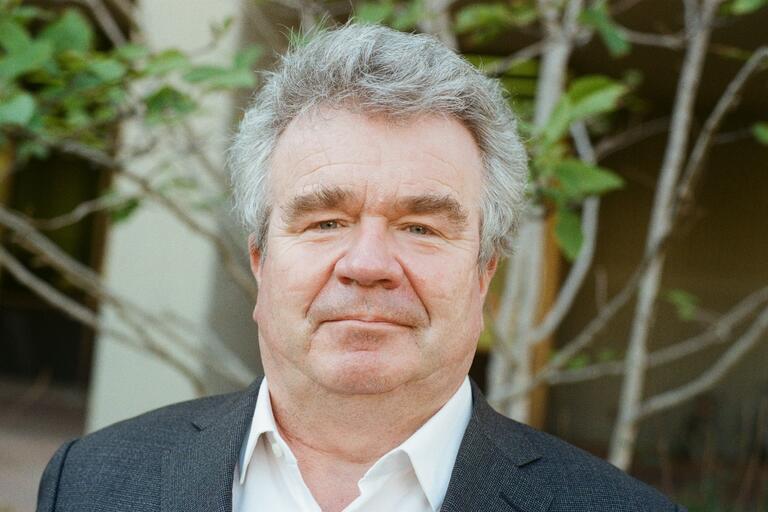
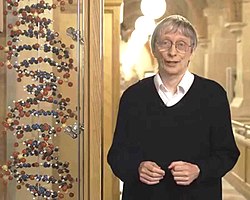
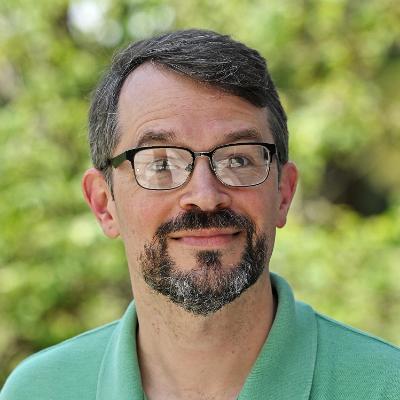
Geoffrey K Martin is an Associate Professor in the Department of Mathematics and Statistics at the University of Toledo, affiliated with the College of Natural Sciences and Mathematics. His research bridges differential geometry and theoretical physics. Research Interests : Dr. Martin specializes in geometric structures in mathematical physics, including nonlinear electromagnetism, Hermitian and complex geometries, and applications of differential geometry to Hamiltonian systems and electrodynamics. Publication Trends : His work spans 1987–2002, focusing on nonlinear electrodynamics , geometric modeling , and symplectic/differential geometry in theoretical contexts. Key themes include charge-energy conservation, Hamilton-Jacobi distributions, and fluorescence detector calibration. Contact : geoffrey.martin@utoledo.edu
Bill Hirsch serves as a Teaching Professor in the Physics Department at Marquette University, teaching core undergraduate courses including introductory physics for scientists/engineers and health professions, classical mechanics, electricity and magnetism (Parts 1 & 2), general relativity, and particle physics. His academic background includes a BS in Astrophysics from Pennsylvania State University, an MS with computational nuclear physics research from Indiana University of Pennsylvania, and a PhD from Wake Forest University focused on theoretical quantum gravity. His dissertation examined quantum effects of fermion fields in black hole and wormhole spacetimes. Dr. Hirsch's research centers on extreme spacetime curvature phenomena, investigating solutions to Einstein's field equations, neutron star/magnetar structure, and the plausibility of wormholes through semi-classical general relativity. His work bridges mathematical physics with quantum field theory in curved spacetimes, particularly analyzing fermion field interactions near astrophysical compact objects. His publication record demonstrates consistent focus on quantum gravitational effects, developing computational methods for stress-energy tensor calculations in static spherically symmetric spacetimes. This research contributes to understanding whether quantum effects might prevent the formation of astrophysical objects with extreme curvature.
MingLiang Cai serves as an Associate Professor in the Department of Mathematics within the College of Arts and Sciences at the University of Miami. His professional contact information includes email m.cai@miami.edu and phone number (305) 284-2328. Dr. Cai's research spans differential geometry, mathematical physics, and geometric analysis with particular expertise in Riemannian geometry, black hole physics, and curvature analysis. His work bridges pure mathematics with theoretical physics applications, exploring topics such as Ricci solitons, minimal surfaces, and asymptotically hyperbolic manifolds. More recently, he has expanded into mathematical biology with research on statistical genetics related to Alzheimer's disease. Analysis of Dr. Cai's publication timeline reveals an evolution from foundational geometric research in the 1990s toward increasingly physics-oriented applications in the 2000s, with a recent interdisciplinary expansion into biological applications. His collaborative work, particularly with Gregory J. Galloway, demonstrates sustained engagement with the mathematical physics community. His publications appear in prestigious journals including Pacific Journal of Mathematics, Annales Henri Poincaré, and Classical and Quantum Gravity. Dr. Cai has maintained an active research trajectory for nearly three decades, with publications spanning from 1994 to 2022. His collaborative network includes prominent researchers in mathematical physics such as Gregory J. Galloway, Lars Andersson, and Gang Pei. While specific grant information isn't detailed in the available text, his consistent publication record across multiple disciplines suggests sustained research funding and academic productivity.
Maciej Zworski is a Professor in the Department of Mathematics at the University of California, Berkeley , affiliated with the College of Letters and Science. His research focuses on mathematical aspects of quantum mechanics , particularly scattering theory, microlocal analysis, and spectral theory. He has contributed extensively to understanding quantum decay rates, fractal Weyl laws, and nonlinear soliton dynamics. Education: Not explicitly mentioned in the text. Research Interests: Scattering theory and microlocal analysis in quantum systems Partial differential equations in mathematical physics Chaotic dynamics in quantum and classical systems Applications to graphene and black hole physics Numerical analysis of resonance phenomena Recent Publications (2024–2025) emphasize semiclassical limits, quantum chaos in graphene models, and resonance dynamics in black holes. His work bridges analytical techniques with experimental physics, as seen in microwave system studies. Advising: Mentored 28+ PhD students and postdocs, including prominent names like Semyon Dyatlov, Jeff Galkowski, and Jian Wang. Labs/Teams: Co-organizes the Bay Area Microlocal Analysis Seminar and collaborates internationally on quantum scattering projects.
Eötvös Loránd University's Faculty of Science researcher Dávid Szeghy has been affiliated with the Department of Geometry since 2006. His work focuses on differential geometry, mathematical physics, and geometric analysis of Lorentz manifolds. PhD in Mathematics (2008, ELTE) Publications span 2003–2023 with emphasis on horizon differentiability, isometric group actions, and pseudo-Riemannian conjugate loci Key collaborations include J. Szenthe and A. Fothi Research trends show deep engagement with Lorentzian geometry , including studies on: Orbit type theorems for isometric actions Normalizable vs. non-normalizable orbits Horizon smoothness in general relativity Exponential mapping properties in spacetime His work appears in journals like Annales Henri Poincaré , Classical and Quantum Gravity , and Geometriae Dedicata , with citations across mathematics and physics domains.
David Elieser Deutsch is a British physicist and Visiting Professor at the Department of Atomic and Laser Physics, Centre for Quantum Computation (CQC), Clarendon Laboratory, University of Oxford. He is widely regarded as the 'father of quantum computing' for pioneering the field through his formulation of the quantum Turing machine and the Deutsch–Jozsa algorithm. His work spans theoretical physics, quantum information science, and constructor theory, a framework generalizing quantum computation to all physical processes. He is an Honorary Fellow of Wolfson College, Oxford, and a Fellow of the Royal Society (FRS). Education: William Ellis School, London Natural Sciences at Clare College, Cambridge (BA) Wolfson College, Oxford (DPhil in theoretical physics, 1978) Deutsch's research interests include quantum computing , quantum information , and constructor theory , which posits that all physical processes can be described in terms of possible and impossible transformations of physical systems. His work on the Deutsch–Jozsa algorithm demonstrated exponential quantum speedup over classical algorithms, while his quantum error correction schemes laid foundational principles for quantum computation. He also contributed to the Deutsch-Wallace approach in quantum mechanics' many-worlds interpretation. Scientific awards include the 1998 Institute of Physics Dirac Prize, 2017 ICTP Dirac Medal, 2018 Micius Quantum Prize, 2021 Isaac Newton Medal, and the 2023 Breakthrough Prize in Fundamental Physics. His books , such as The Fabric of Reality (1997) and The Beginning of Infinity (2011), integrate quantum mechanics, epistemology, and evolutionary theory into a 'Theory of Everything.' Doctoral student: Artur Ekert. He co-developed the Deutsch–Jozsa algorithm with Richard Jozsa and collaborated with Chiara Marletto on constructor theory. His philosophical views emphasize hard-to-vary explanations as the essence of scientific progress.
Luigi Martina is an Associate Professor of Theoretical Physics at the Department of Mathematics and Physics "Ennio De Giorgi" at the University of Salento (UniSalento). His research focuses on mathematical methods in theoretical physics, with particular emphasis on nonlinear systems, integrable models, and symmetry analysis. He maintains a dual affiliation with both UniSalento (luigi.martina@unisalento.it) and INFN (martina@le.infn.it), reflecting his strong connection to Italy's National Institute for Nuclear Physics. Prof. Martina earned his degree in Physics from the University of Lecce on September 28, 1978, with highest honors (110/110 cum Laude). He began his academic career as a Confirmed Researcher in Theoretical Physics (B02A) on September 28, 1985, and was appointed Associate Professor of Theoretical Physics (FIS/02) at UniSalento on January 10, 2001, a position he continues to hold. His academic journey spans over three decades of continuous research and teaching in theoretical physics. His research spans a wide spectrum of theoretical physics topics. Prof. Martina's work primarily focuses on nonlinear partial differential equations, integrable systems, and symmetry analysis. He has made significant contributions to the understanding of solitons, vortices, and topological structures in various physical contexts including liquid crystals and quantum systems. His research also extends to noncommutative geometry, quantum computation, and applications of mathematical physics to image processing. He has explored connections between exotic Galilean symmetry, Berry phases, and noncommutative geometry, with applications to condensed matter physics and quantum Hall effects. His recent work includes Skyrmion models in 2 and 3 dimensions, modular forms in conformal theories, and asymptotic groups in general relativity. Prof. Martina's publication record, with 153 publications and 2,175 citations (excluding self-citations) as of September 30, 2021, demonstrates his sustained contributions to mathematical physics. His work shows a clear evolution from classical studies of integrable systems and symmetry analysis toward more contemporary topics involving topological structures, quantum information, and applications to condensed matter physics. His research demonstrates consistent methodological rigor with a focus on symmetry preservation across different mathematical frameworks. Prof. Martina has held significant research responsibilities, serving as National Coordinator for the INFN-CSN4 Specific Initiative: MMNLP (2017-2019) and as local responsible for the MIUR-PRIN 2017 grant 2017KC8WMB on UV imaging systems in liquid argon detectors. He has coordinated multiple international research projects including a NATO-CR Grant (960717/1996/99) and joint initiatives with the Russian Foundation for Basic Researches (2006-2010) focusing on "Vortices, Solitone Topologies and their excitations". Throughout his career, Prof. Martina has advised numerous students, including 3 Doctorate students, 4 "vecchio ordinamento" Physics students, 18 bachelor's level Physics students, 12 Physics Master's students, and 1 Mathematics Master's student. His teaching portfolio is extensive, covering courses such as Theoretical Physics, Quantum Mechanics, Mathematical Methods, and specialized topics like Quantum Computing and Geometrical Methods in Physics. He has also contributed to educational outreach through the Organization of the Summer School of Physics for High School Students and Physics Italian Olympics. Prof. Martina has been actively involved in organizing international conferences, including multiple editions of "Physics and mathematics of nonlinear phenomena" (2011, 2013, 2015, 2017) and the "Geometric Structures in Integrable Systems" conference in 2018. He serves as a referee for prestigious journals including Journal of Physics A, European Journal of Physics Plus, and Physics Letters A, demonstrating his standing within the international physics community.
Ivica Smolić is an Associate Professor at the Institute for Theoretical Physics of Particles and Fields within the Faculty of Natural Sciences and Mathematics at the University of Zagreb. He completed his graduation in 2004 and earned his Ph.D. in 2010. His primary research focuses on theoretical physics with specialization in quantum gravity, black hole physics, noncommutative geometry, and nonlinear electrodynamics. He teaches courses including Classical Electrodynamics, Differential Geometry in Physics, and Topology in Physics at both graduate and doctoral levels. Smolić's research explores the intersection of gravity and quantum theory through black hole thermodynamics, spacetime symmetries, and quantum spacetime phenomenology. His recent work examines noncommutative geometry's implications for gravitational waves and singularity resolution. Educational aspects of electrodynamics also feature in his research portfolio. Analysis of his publications reveals consistent focus on quantum corrections to general relativity, particularly regarding black hole properties and electromagnetic field behavior in curved spacetime. Major themes include singularity resolution, symmetry inheritance, and pedagogical challenges in relativistic electrodynamics. No scientific awards or prizes are documented. No information is available regarding student advising, research grants, laboratory leadership, or collaborative teams.
Hans Kraus is a Professor of Physics at the University of Oxford, where he also serves as Head of Teaching in the Department of Physics. He is a member of the LUX-ZEPLIN (LZ) collaboration, focusing on dark matter detection using cryogenic detectors at the Sanford Underground Research Facility (SURF) in South Dakota. His expertise spans astroparticle physics, detector development, and advanced electronics. Education: Physics studies at Technische Universität München (TU Munich) in the early 1980s. Diplom thesis (1985) on superconducting detectors for neutrino physics. Dr. rer. nat. (1989) from TU Munich, with graduate work on cryogenic detector applications in x-ray astronomy. Dr. Habil. (1998) from TU Munich. Research interests centered on astroparticle physics and dark matter detection, leveraging cryogenic detector technology. His work bridges fundamental physics and applied engineering, including software development for data acquisition and advanced electronics design. Scientific awards and honors: Governing Body Fellow at Oxford In teaching, he specializes in nuclear physics, particle physics, cosmology, and data analysis. He also holds college roles as Vice President and IT Fellow, indicating leadership contributions beyond research. Labs and teams: Established a research group at Oxford focused on cryogenic detectors for particle and astroparticle physics. Active member of the LUX-ZEPLIN (LZ) collaboration.
Oliver Pooley is Vice Provost at Oriel College, University of Oxford, where he serves as Fellow and Tutor in Philosophy. He is also an Associate Professor in the Faculty of Philosophy at the University of Oxford. His academic appointments include teaching roles in multiple interdisciplinary programs: Computer Science and Philosophy, Mathematics and Philosophy, Philosophy and Modern Languages, Philosophy (Joint Honours), Philosophy and Theology, Philosophy, Politics and Economics, and Physics and Philosophy. Pooley's research focuses on the philosophy of physics, particularly the nature of space, time, and spacetime. His work intersects significantly with metaphysics and the philosophy of language. He is currently completing a book titled The Reality of Spacetime under contract with Oxford University Press. His research addresses fundamental questions about whether time really passes (concluding it doesn't) and how work in general metaphysics should inform the interpretation of physics. Analysis of Pooley's publication record reveals a sustained focus on spacetime ontology, particularly the substantivalist-relationalist debate. His work frequently engages with the hole argument, general covariance, and background independence in both classical and relativistic physics. A significant portion of his scholarship examines how metaphysical considerations interact with physical theories, especially regarding the interpretation of spacetime structure. His more recent work shows increasing attention to the relationship between dynamical symmetries and spacetime structure. Prior to his current position at Oriel, Pooley held a British Academy Postdoctoral Fellowship and college lectureship at Exeter College, Oxford. His teaching interests extend beyond philosophy of physics to include logic, metaphysics, epistemology, philosophy of language, and philosophy of science. He actively welcomes contact from potential graduate students whose research interests overlap with his own.
Gustav Holzegel is a Professor at the Mathematical Institute, Department of Mathematics and Computer Science, University of Münster. He serves as a Member of Mathematics Münster and an Investigator in Mathematics Münster, specializing in Applied analysis and theory of partial differential equations with applications to general relativity. His research focuses on the mathematical foundations of gravitational physics: Mathematical analysis of black hole stability and perturbations Theory and applications of the Teukolsky equation on various spacetimes Wave propagation on curved spacetimes including Schwarzschild and Kerr metrics Anti-de Sitter spacetimes and boundary correspondence problems Conservation laws in gravitational systems Geometric analysis of Einstein's field equations Professor Holzegel's recent publications demonstrate a consistent focus on rigorous mathematical analysis of problems in general relativity, particularly examining boundedness, decay properties, and stability of solutions to key equations in black hole physics. His work bridges pure mathematics with theoretical physics, providing foundational insights into gravitational phenomena. He actively contributes to major research initiatives: CRC 1442 - B06: Einstein 4-manifolds with two commuting Killing vectors EXC 2044 - B1: Smooth, singular and rigid spaces in geometry EXC 2044 - C1: Evolution and asymptotics EXC 2044 - C4: Geometry-based modelling, approximation, and reduction His work has significant implications for understanding the mathematical structure of spacetime and gravitational physics, with publications appearing in leading journals such as Communications in Mathematical Physics, Annals of PDE, Acta Mathematica, and Classical and Quantum Gravity.
Marina Guccione is a Contract Teacher of Physics and Chemistry at the University of Palermo , affiliated with the Emilio Segrè Department of Physics and Chemistry . She holds regular office hours on Tuesdays and Thursdays, offering students guidance on classical and modern physics topics. Her research spans several areas of theoretical and applied physics, with a strong emphasis on quantum optics, quantum electrodynamics, superconducting circuits, and condensed-matter systems. A recurring theme in her work is the investigation of entanglement dynamics and non-classical correlations in macroscopic quantum devices, such as Josephson-junction arrays and superconducting qubits. She also explores interaction-free and decoherence-free quantum states, contributing to the design of robust quantum-information protocols. A less expected but equally important strand of her activity concerns plant ecology and classification theory , where she applies quantitative methods to sustainable vegetation taxonomy. This interdisciplinary outlook underlines her ability to bridge physics with life-science challenges. Scientific output highlights Studies on entanglement sudden death and birth in uncoupled spin systems. Development of unitary decoupling techniques for bimodal cavity-QED models. Analysis of quantum-memory reset protocols in planar superconducting architectures. Spectroscopic characterisation of ceramic MgB₂ superconductors under microwave irradiation. Ecological modelling of plant synusiae for sustainable classification frameworks. Teaching & student supervision Over the past decade Marina Guccione has taught Physics II and Complements of Classical Physics to Mathematics and Engineering cohorts, and has supervised more than fifty bachelor and master theses. Representative thesis topics range from General Relativity and Gravitational Waves to Superconductivity Models , Wave Interference Phenomena , Electrostatic Interactions in Crystals , and Relativistic Particle Dynamics . Her advising style integrates rigorous theoretical analysis with computational and experimental insights. Laboratory & institutional involvement She conducts office hours in Building 18 and at Via Archirafi 36 of the Emilio Segrè Department, actively participating in the department’s undergraduate laboratories and curriculum development for classical and modern physics courses.
Vladimír Balek serves as Associate Professor in the Department of Theoretical Physics at Comenius University in Bratislava's Faculty of Mathematics, Physics and Informatics. Based at the Mlynská dolina campus (Office F2 105), he maintains active research engagement as confirmed by 2024 publications and September 2024 contact updates. His research program centers on theoretical gravitation and cosmology, specializing in black hole-plasma interactions, light propagation in extreme gravitational fields, and cosmic microwave background anisotropies. Key investigations include radiation dynamics in black hole environments and the impact of radiation-like solids on early universe structure formation, employing advanced mathematical frameworks from general relativity. Publication analysis from 2014-2024 reveals consistent contributions to high-impact journals including Journal of Mathematical Physics and Classical and Quantum Gravity, with recent work (2024) advancing black hole-plasma radiation models. The research trajectory shows deepening integration of plasma physics with gravitational phenomena while maintaining cosmological applications. No scientific awards were documented in the provided materials. Supervision activities appear active through his publication record, though specific student counts or grant details remain unspecified. His collaborations with Czech institutions indicate participation in regional research networks, but no dedicated laboratory structure is referenced beyond departmental affiliation.
Markus Pössel serves as Managing Scientist at Haus der Astronomie (House of Astronomy), Senior Outreach Scientist at the Max Planck Institute for Astronomy, and Director of the International Astronomical Union's Office of Astronomy for Education. Based at the MPIA Campus in Heidelberg, he has dedicated his career to astronomy education and outreach since completing his PhD in quantum gravity in 2003. His research interests focus on effective methods for teaching complex astrophysical concepts to non-specialists, with particular expertise in relativity physics, cosmology education, and science communication. Pössel has developed numerous educational resources and regularly contributes to teacher training programs through Heidelberg University partnerships. His recent publications reveal a consistent focus on making advanced astronomical concepts accessible, with work spanning gravitational waves, black holes, cosmic expansion models, and astronomy education methodology. The publications demonstrate his dual commitment to theoretical understanding and practical educational application. Hanno and Ruth Roelin Prize for Science Communication (2007) As an educator, Pössel mentors pupils during research internships and actively participates in teacher training events. His YouTube series 'Faszination Astronomie Online' (330 episodes), 'Fragen ans Universum' (34 episodes), and 'Astro & Co.' have reached wide audiences. He also contributes to the Einstein Online portal and maintains the 'Relativ einfach' blog. At Haus der Astronomie, Pössel oversees a variety of outreach activities including guided tours, educational resources for media and planetaria, and collaborations with Heidelberg University on teacher training programs for physics educators.
Michael Seifert serves as Associate Professor of Physics and Chair of the Department of Physics, Astronomy and Geophysics at Connecticut College, where he has taught since 2014. His academic credentials include: B.A. from Swarthmore College Ph.D. from the University of Chicago Professor Seifert's primary research investigates Lorentz symmetry—the fundamental space-time symmetry in Einstein's special relativity—and explores mathematically consistent models for potential symmetry violations and their observational consequences. Beyond this core work, he maintains active interests in the physics of music and sound, plus philosophical implications at the physics-philosophy interface. His teaching portfolio includes Classical Mechanics, Electromagnetic Theory, and General Physics laboratory courses. As an active researcher, he participates in professional societies including the American Physical Society, Topical Group on Gravity, and Anacapa Society. Under his departmental leadership, students access state-of-the-art facilities: a geophysical hydrology flume lab, photonics laboratory, observatory with 20-inch telescope, and one of only four operational 1-million volt positive ion accelerators at undergraduate institutions nationwide. The department supports extensive undergraduate research through honors theses, independent studies, and summer projects that frequently lead to co-authored publications and national conference presentations.