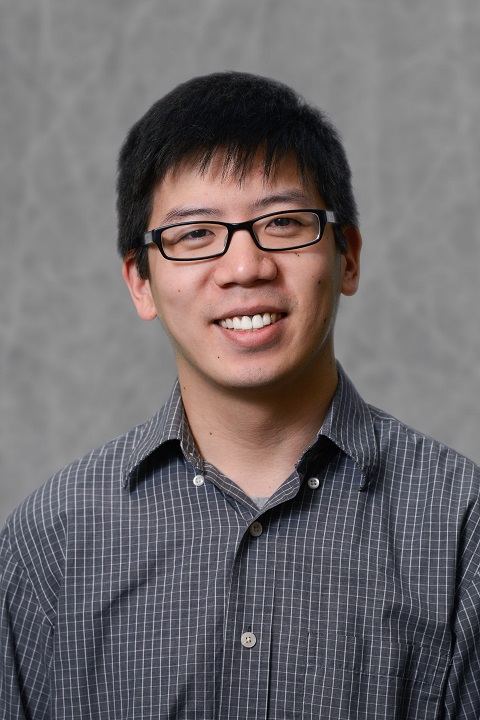
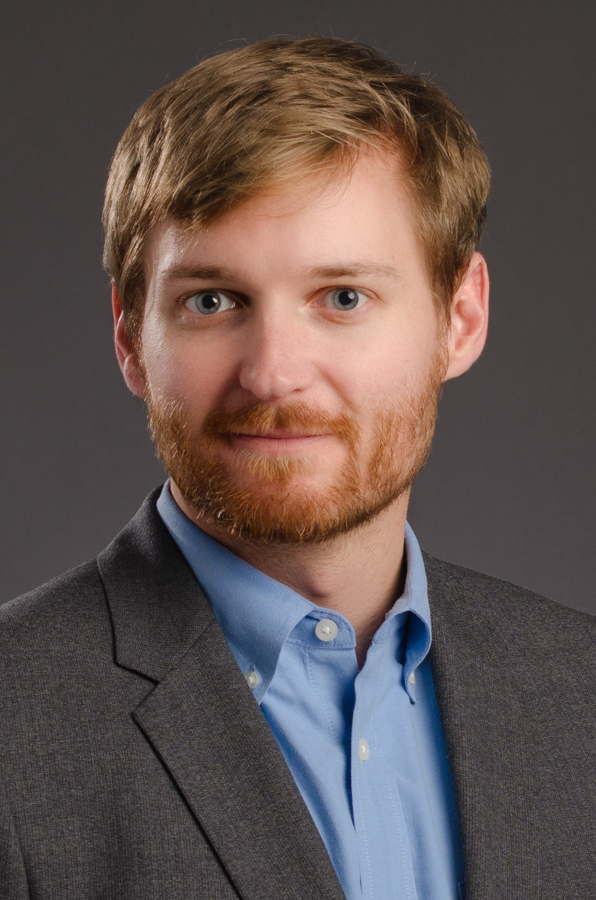
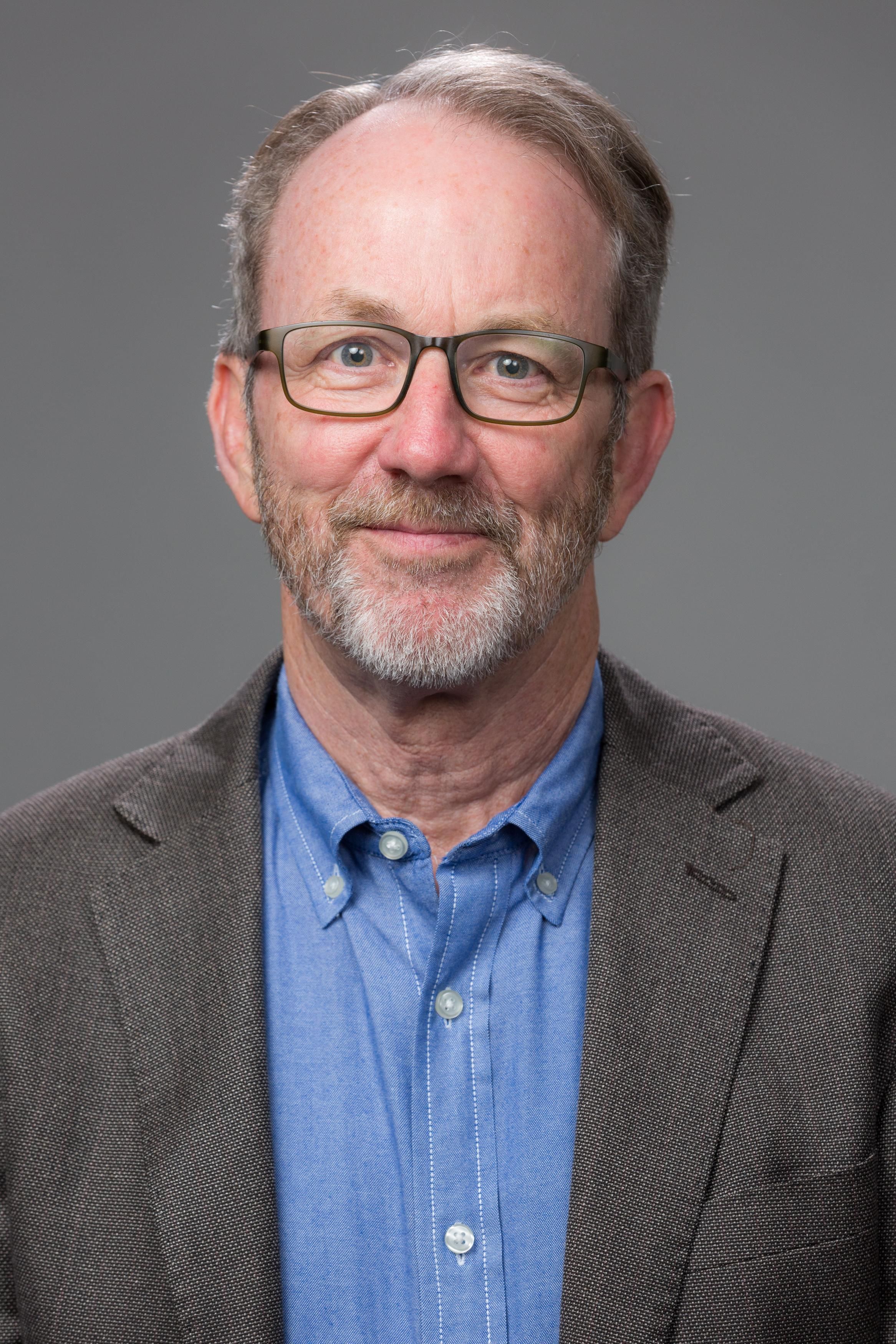
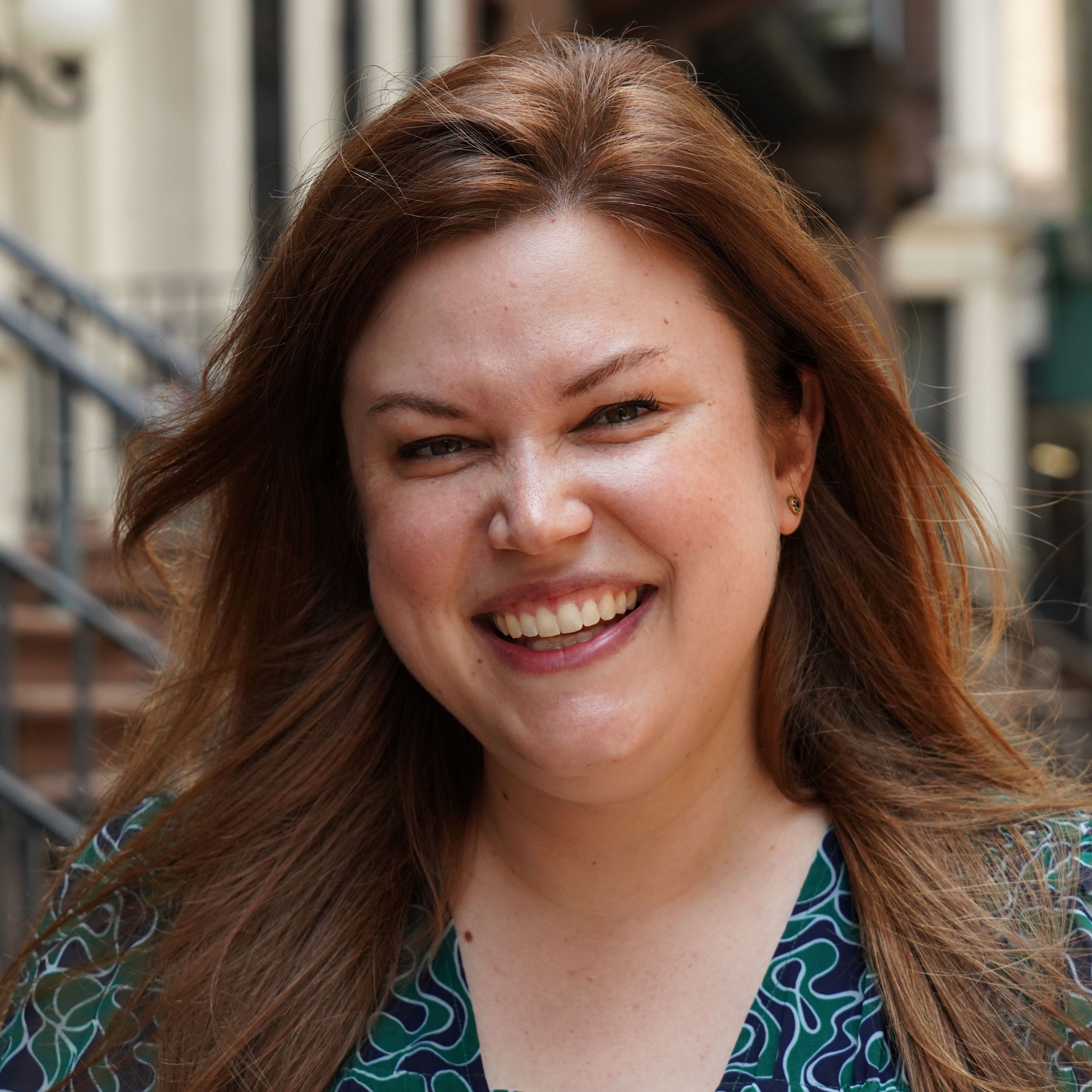
Ricky Ini Liu is an Associate Professor in the Department of Mathematics at the University of Washington. Previously, he held positions at North Carolina State University, the University of Michigan, and the University of Minnesota. He earned his Ph.D. in Mathematics from MIT in 2010 under Alexander Postnikov. His research focuses on algebraic combinatorics, particularly its intersections with algebraic geometry, combinatorial geometry, and representation theory. Key interests include Schubert polynomials, polytopes, Hopf algebras, and Kronecker coefficients. He has contributed to foundational work on birational rowmotion, Gelfand-Tsetlin polytopes, and Fomin-Kirillov algebras. Liu has taught a wide range of courses at UW, including special topics in dynamical algebraic combinatorics, combinatorial theory, and problem-solving. He has also been a key instructor at the Mathematical Olympiad Summer Program since 2007 and mentored undergraduates in research programs at the University of Minnesota, Duluth. His publications span high-impact journals like Selecta Mathematica and Journal of Combinatorial Theory , with recent work addressing topics such as determinantal formulas for Schubert polynomials and applications of flow polytopes to diagonal harmonics. Though no specific awards are listed, his extensive publication record and academic roles reflect significant contributions to combinatorial mathematics.
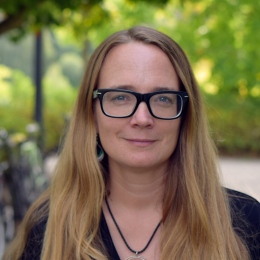
Andrea Voyer is a Professor of Sociology at Stockholm University , focusing on social norms, boundaries, and their role in shaping social inequality , particularly in the context of immigrant integration , class disparities, and ethnic inequality. She employs both qualitative and computational methods , including large-scale text analysis and cultural theory, to explore these themes. Her research has received funding from Riksbankens Jubileumsfond , the Swedish Research Council , the National Science Foundation (USA) , and the Russell Sage Foundation . Voyer serves as a program coordinator for master's programs in sociology and applied social research, and leads the department's research groups in qualitative methods , computational sociology , and cultural sociology . She is also an editorial board member for Sociological Theory and American Journal of Cultural Sociology , and contributes to public discourse on immigration, segregation, and social norms. Her recent publications highlight the use of computational techniques to analyze immigrant incorporation through shifts in mainstream discourse, the cultural processes of inequality during the COVID-19 pandemic , and the evolving role of class distinction-making in etiquette literature. These works bridge cultural theory with empirical analysis, offering actionable insights for addressing social inequality.
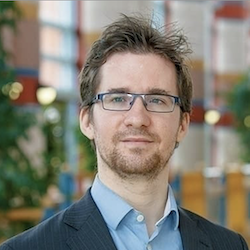
David Stillwell serves as Professor of Computational Social Science at Cambridge Judge Business School and Academic Director of The Psychometrics Centre, University of Cambridge. His research leverages big data to understand human psychology and behavior, with significant contributions in personality prediction from digital footprints and personalized advertising applications. His educational background includes: BSc in Psychology from the University of Nottingham (2007) MSc in Research Methods from the University of Nottingham (2008) PhD in Decision Making from the University of Nottingham (2012) Dr. Stillwell's research centers on computational social science and psychometrics, pioneering the myPersonality Facebook application that collected data from over 6 million users. His work demonstrates computers can predict personality as accurately as spouses, reveals psychological targeting's advertising effectiveness, and establishes links between personality-matched spending and life satisfaction. He also explores linguistic honesty markers through profanity analysis and personality-based dating patterns. His recent publications (2019-2025) reveal a strong trajectory toward AI evaluation using psychometric frameworks, particularly in medical and general-purpose AI assessment. Key themes include fairness metrics in language models, crisis emotional responses through social media, and computational personality recognition - demonstrating consistent innovation at the psychology-technology intersection. He has received significant recognition: Top 10 most influential papers of 2013 by Altmetric Nieman Journalism Lab highlight of 2013 Named in 'top 30 thinkers under 30' by Pacific Standard Magazine Dr. Stillwell maintains active industry engagement through consultancy with Barclays, Hilton, and Ubisoft on projects spanning computer-adaptive testing systems to interactive experiences like Predictive World for Watch Dogs 2. His policy impact is substantial, with citations by the European Data Protection Supervisor, World Bank, and multiple national governments, leading to speaking engagements at the European Parliament and Bank of England. As Academic Director of The Psychometrics Centre, he leads a global hub for advancing psychological assessment through innovative methods including Concerto open-source software, collaborating with organizations ranging from the European Commission to major corporations on psychometric applications in people analytics and digital behavior.
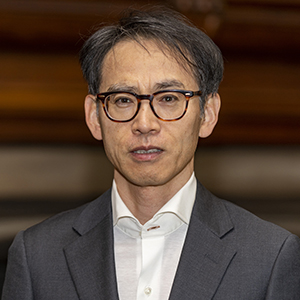
Shigehiro Oishi is the Marshall Field IV Professor of Psychology at the University of Chicago, a member of the American Academy of Arts and Sciences (2023). He holds a B.A. from International Christian University (Tokyo), Ed.M. from Columbia University, and Ph.D. from the University of Illinois at Urbana-Champaign. Prior to UChicago, he taught at the University of Minnesota (2000–2004), Columbia University (2018–2020), and the University of Virginia (2004–2018; 2020–2022). His research explores culture, social ecology, and well-being, focusing on questions like “What is a good life?” and how socio-ecological factors like income inequality and residential mobility impact well-being across cultures. His lab uses diverse data sources, including surveys, GIS, and experimental methods. Key awards include the 2017 Society of Experimental Social Psychology Career Trajectory Award, the 2018 Carol and Ed Diener Award, and the 2021 Outstanding Achievement Award for Advancing Cultural Psychology. His work bridges psychology, sociology, and cultural studies, with a global focus on understanding human thriving. The Oishi Lab at UChicago continues this mission, welcoming new Ph.D. students and hosting prominent social psychology talks.
Dean Eckles is an Associate Professor of Marketing at MIT Sloan School of Management and serves as an Associate Director of the MIT Institute for Data, Systems, and Society (IDSS). He is also affiliated with the MIT Schwarzman College of Computing through the Institute for Data, Systems & Society and its Statistics and Data Science Center. Additionally, he leads the analytics research area at the Initiative on the Digital Economy and organizes the annual Conference on Digital Experimentation (CODE@MIT). His educational background includes a BA in philosophy, BS and MS in cognitive science, MS in statistics, and PhD in communication, all from Stanford University. Prior to joining MIT, Eckles worked as a scientist at Facebook, where he contributed to areas including News Feed, messaging, advertising, tools for randomized experiments, and survey methods. He previously held research positions at Nokia and Yahoo. Eckles's research primarily focuses on social influence mediated by interactive technologies, examining how communication technologies mediate, amplify, and direct social influence. His work spans multiple specific areas including social interactions, contagion, and interventions in networks; experimental design and inference in networks; and methods for causal inference. His research often combines social science with advanced statistical methods. His notable publications include research on long ties in social networks and their relationship to economic prosperity, how network structure affects social contagions, and algorithmic transparency in social media platforms. His work has appeared in prestigious journals including PNAS and Nature Human Behaviour, and he has provided expert testimony before the US Senate on algorithmic ranking. Long ties, disruptive life events and economic prosperity (PNAS) Long ties accelerate noisy threshold-based contagions (Nature Human Behaviour) Algorithmic transparency and assessing effects of algorithmic ranking (Senate testimony) Eckles actively shares his research through social media platforms including Bluesky, Twitter, and Mastodon, as well as through his blog and contributions to the Gelman et al. blog. His work bridges academic research with practical applications in technology and policy.
Walter W. Powell is the Jacks Family Professor of Education at Stanford University, with courtesy appointments in Sociology, Organizational Behavior, Management Science and Engineering, and Communication. He serves as Faculty Co-Director of the Stanford Center on Philanthropy and Civil Society (PACS), which he co-founded in 2006, and leads the Civic Life of Cities Lab examining civil society organizations across global metropolitan areas. Powell is also an External Faculty member at the Santa Fe Institute and co-directs the CASBS summer institute on Organizations with MIT's Bob Gibbons. His educational background includes a PhD in Sociology from SUNY-Stony Brook (1978), an MA in Sociology from the same institution (1975), and a BA from Florida State University (1971). Powell's research fundamentally explores how ideas and practices transfer across organizational boundaries, with particular emphasis on network structures that enable or constrain knowledge diffusion. His work spans organizational theory, institutional analysis, university-industry relations, economic sociology, and comparative analysis of nonprofit, public, and private institutional forms. Powell's publications reveal consistent focus on network dynamics and institutional evolution, particularly examining how organizations navigate between market, hierarchy, and network governance structures. His research demonstrates how knowledge spillovers operate within biotechnology clusters, how institutional isomorphism shapes organizational fields, and how civil society organizations adapt to technological and economic pressures across different urban contexts. Dean's Award for Excellence in Graduate Teaching (2018-19) Max Weber Award for "Neither Market Nor Hierarchy" Viviana Zelizer Prize for "Network Dynamics and Field Evolution" Administrative Science Quarterly Recognition Member of Swedish Royal Academy of Science Member of The British Academy Member of American Academy of Arts and Sciences Honorary Degrees from Uppsala University, Copenhagen Business School, and Aalto University Powell has made substantial contributions to graduate education, receiving Stanford's highest teaching honor. His leadership of PACS and SCANCOR (1999-2010) demonstrates sustained commitment to advancing organizational research through collaborative initiatives. He supervises postdoctoral fellows and runs annual PhD workshops in Europe, fostering the next generation of organizational scholars. His research has been supported by grants enabling comparative studies of university-industry relations and civil society across multiple national contexts. Through the Civic Life of Cities Lab at PACS, Powell directs comparative research on civil society organizations across seven global cities, examining how these organizations navigate technological change, economic pressures, and political environments. His work bridges theoretical organizational sociology with practical applications in philanthropy, civil society development, and knowledge transfer between academic and commercial sectors.
James Tilley is a Professor of Politics at the University of Oxford's Department of Politics and International Relations (DPIR) and a Fellow and Tutor in Politics at Jesus College. His research focuses on public opinion, electoral behavior, and political identity, particularly in the context of Britain and the EU. He explores themes like voter responsibility attribution, class voting dynamics, and the emergence of post-Brexit political identities. Tilley has published influential works such as Blaming Europe (2014) and The New Politics of Class (2017), examining issues ranging from working-class political exclusion to the role of social cleavages. His media contributions include BBC Radio 4 documentaries on topics like political polarization and generational political attitudes. Teaching responsibilities include Political Sociology (PPE/HP) and Prelims Politics tutorials. His research spans over three decades, addressing evolving political identities, the impact of echo chambers on polarization, and the intersection of personality traits with political engagement. Tilley collaborates widely, with co-authors such as Sara Hobolt and Geoff Evans, and his work often intersects with contemporary issues like Brexit's societal effects and Northern Irish electoral behavior. Recent publications (2023–2025) analyze regional EU spending impacts, narcissism's role in polarization, and neighborhood effects on political divisions. His work bridges academic rigor with public engagement, contributing to debates on democracy, identity, and governance.
Alison J. Mackey is Professor and Chair of the Department of Linguistics at Georgetown University, College of Arts and Sciences. She is a leading scholar in second language acquisition (SLA), with a focus on interaction, feedback, research methodology, and language learning across the lifespan. Her research interests include second language acquisition , task-based language teaching , research methodology , interaction and corrective feedback , and language learning in children and adults . She has published extensively in top-tier journals and book series, shaping methodological standards in the field. Her recent publications reflect a strong trend in methodological rigor , interactionist approaches , and practical applications of SLA research. Themes include data elicitation , stimulated recall , task design , and pragmatic development , spanning both theoretical and classroom-based inquiry. Mildenberg Prize (2012) for The Handbook of Second Language Acquisition American Association for Applied Linguistics Distinguished Scholarship and Service Award International Association of Task-based Language Learning and Teaching Distinguished Achievement Award CHOICE Outstanding Academic Title (2012) Alison Mackey has advised numerous scholars through co-authorship and editorial leadership. She is Editor-in-Chief of Cambridge University Press Annual Review of Applied Linguistics and Editor of the Routledge Second Language Research series, guiding the publication of cutting-edge research. While specific grants are not listed, her editorial work and high citation count (>35,000) reflect significant research impact and funding support. She leads and contributes to major research initiatives such as the IRIS Repository , promoting open-access research instruments in SLA. Her work fosters collaboration across institutions and supports methodological transparency and replication in the field.
Laura Anderson is an Associate Professor in the Department of Mathematics at Binghamton University. She holds a Ph.D. from MIT (1994) and has been affiliated with Binghamton since 2001. Her research focuses on Combinatorics and Topology, with a specialization in matroid theory, hyperplane transversals, and topological combinatorics. She teaches advanced courses such as Introduction to Combinatorics (Math 511) and Discrete Mathematics (Math 314). Her academic contributions include groundbreaking work on oriented matroids, combinatorial Grassmannians, and hyperfield applications. Anderson has advised multiple Ph.D. students, including Olakunle Abawonse, Ulysses Alvarez, and Leandro Junes, whose theses explore topics like matroid extensions and tropical phased matroids. She actively participates in academic conferences, co-organizing the Binghamton University Graduate Conference in Algebra and Topology (BUGCAT). Anderson’s research integrates algebraic topology with discrete mathematics, addressing geometric realizations, hyperfield structures, and topological invariants. Her pedagogical innovations include experimenting with flipped classroom methods in calculus education. She maintains an active presence in academic service, contributing to journal reviews and editorial work in combinatorial geometry.
Professor Guy Williams is a leading academic at the University of Cambridge with a focus on imaging science and clinical neurosciences, affiliated with Downing College and the Wolfson Brain Imaging Centre . Holding a PhD in Physics from his initial Natural Sciences degree, he specializes in nuclear magnetic resonance (NMR) and MRI techniques for brain imaging. Education: BA, PhD in Physics His research centers on non-invasive imaging of brain structure and function, particularly in traumatic brain injury (TBI) and dementia. His work involves developing novel MRI pulse sequences and advanced data analysis algorithms, including AI-based diagnostic tools. He leads studies on white matter integrity post-trauma, longitudinal dementia assessment, and applications of MRI in disorders of consciousness and addiction. Recent publications highlight collaborations in traumatic brain injury outcomes, AI-guided dementia prediction, and neuroimaging of post-COVID cognitive deficits. His team's work on ultra-high field laminar fMRI and distortion correction methods has advanced clinical neuroscience applications. Key techniques include diffusion tensor imaging (DTI), 7 Tesla MRI, and positron emission tomography (PET/MR). His research spans from basic NMR physics to clinical translation, with a strong emphasis on multi-site studies and real-world diagnostic implementation.
Jan O. Jonsson is a Professor of Sociology at Nuffield College, University of Oxford. His primary research focuses on social stratification, including educational inequality, class structure, and social mobility. He also studies ethnic stratification, particularly through his role as Principal Investigator (PI) for Sweden in the comparative CILS4EU project on minority schoolchildren integration. Jonsson oversees the Swedish Level-of-Living Survey (LNU), shaping his interest in welfare distribution analysis. His work bridges macro-level social structures with micro-level individual experiences, emphasizing intergenerational processes and immigrant integration. Research interests prominently feature studies on educational attainment disparities, immigrant integration dynamics in Sweden and Europe, and the social consequences of economic hardship. His recent work explores occupational aspirations among immigrant youth, mental health advantages of immigrant backgrounds, and policy impacts on child poverty during economic crises. As PI for CILS4EU, Jonsson leads a multinational study investigating educational and social integration trajectories of second-generation immigrants across Europe. His contributions include analyzing Sweden’s ‘middle way’ between social mobility and inequality patterns, and evaluating educational expansion strategies’ equity impacts. He has authored numerous articles on poverty measurement, family influences on mobility, and the role of education in socioeconomic reproduction. Key projects include the Level-of-Living Survey (LNU), which tracks welfare metrics, and comparative studies on social mobility across nations. His work frequently engages with policy implications of structural inequities, offering evidence-based insights for educational and social policies.
Rick Hoyle is a Professor of Psychology and Neuroscience at Duke University, where he serves as Associate Chair of the Department of Psychology and Neuroscience. He is also a Faculty Network Member of the Duke Institute for Brain Sciences. His academic career spans decades, with significant contributions to understanding self-regulation and adolescent development. Dr. Hoyle earned his B.A. from Appalachian State University (1983), followed by an M.A. (1986) and Ph.D. (1988) from the University of North Carolina, Chapel Hill. He progressed from Assistant to Associate to Full Professor at the University of Kentucky from 1989 to 2003 before joining Duke University. His research focuses on how adolescents and emerging adults manage goal pursuit through self-regulation, taking a broad view that accounts for personality, environment, cognition, emotion, and social influences. He employs longitudinal methods with repeated assessments, sometimes spanning years with data collection multiple times per year, or intensive studies with assessments several times daily. His lab develops innovative measurement tools including self-report measures of self-control and grit, as well as unobtrusive approaches using mobile phones and wearable devices to track goal pursuit in natural settings. His recent publications reveal a strong focus on self-regulation in digital contexts, adolescent substance use, socioeconomic influences on development, and innovative measurement approaches. His work increasingly integrates technology (social media analysis, wearable devices) with traditional psychological research methods to understand real-world behavior. Fellow, Association for Psychological Science (2013) Dr. Hoyle has secured numerous research grants totaling millions of dollars, including the current Real-Time and Randomized Tests of Social Media and Mental Health Links in Early Adolescence (2024-2029), NCCU Duke - Substance Use Research & Education (2024-2029), and Mid-Life Health Inequalities in the Rural South: Risk and Resilience (2023-2028). His grant portfolio demonstrates sustained funding for research on adolescent development, substance use, self-regulation, and health disparities. He teaches advanced courses including Applied Structural Equation Modeling and Psychology and Neuroscience Grant Writing, mentoring the next generation of researchers in quantitative methods and research design. His work through the Center for the Study of Adolescent Risk and Resilience (2008-2025) has established a significant research infrastructure for longitudinal studies of adolescent development. Current projects examine social media effects on mental health, substance use patterns, and the impact of environmental factors on adolescent well-being using innovative digital tracking methods.
Rainer Watermann is a Full Professor for Empirical Research in Education at the Free University of Berlin since 2011, previously serving as Full Professor for Education and Empirical Research in Schools at Georg-August University of Göttingen (2005-2011). His academic career includes significant research positions at the Max Planck Institute for Human Development in Berlin (1997-2005). Watermann earned his Diploma in Educational Science from the University of Münster (1996), followed by a Dr. phil (2002) and Habilitation (2005), both from Freie Universität Berlin. His educational background established the foundation for his extensive research in educational transitions and disparities. His research focuses on educational transitions, particularly from primary to secondary school and into higher education, examining motivational factors, social background influences, and achievement goal development. Watermann's work consistently addresses how social disparities affect educational opportunities and outcomes, with particular attention to gender differences and longitudinal developmental patterns. His methodological expertise includes latent class analysis, structural equation modeling, and large-scale assessment design. Watermann's publication portfolio reveals consistent research trajectories examining motivational frameworks (particularly expectancy-value theory), educational transitions, social disparities in education, and political socialization. His work spans both theoretical development and practical applications for educational policy and practice, with increasing focus on intervention effectiveness in recent years. As an active member of the academic community, Watermann serves on multiple editorial boards including the Swiss Journal for Educational Sciences and Empirical Educational Science , and regularly reviews for major educational and psychological journals. He has also contributed to significant research centers, including serving as spokesman for the Center for Empirical Research on Teaching and Learning in Schools (ZeUS) at the University of Göttingen (2008-2010). Watermann maintains an active research program with numerous collaborations across Germany and internationally, evidenced by his consistent publication record through 2025. His work bridges educational psychology, sociology of education, and policy-relevant research, maintaining strong connections between theoretical frameworks and practical educational contexts.
Dinah Ribard is a Director of Studies at the École des Hautes Études en Sciences Sociales (EHESS), working within the Centre de Recherches Historiques (CRH). She serves as Center Director for the GRIHL (Groupe de recherche interdisciplinaire sur l'histoire du libéralisme) research group. Her academic career has been dedicated to the historical study of work, intellectual practices, and cultural production from the early modern period through the 19th century. Ribard completed her thesis in December 2000 at the University of Paris III - Sorbonne Nouvelle under the direction of Alain Viala, entitled "Live Tell Think. Research on the literary status of the philosopher: the Lives of philosophers in France 1650-1766." She was formerly a student at the École Normale Supérieure (Ulm) and holds a degree in Modern Literature. Prior to her position at EHESS, she served as an ATER (Attaché Temporaire d'Enseignement et de Recherche) at Paris III University from 1999 to 2001 and taught at Lycée Jacques-Feyder in Epinay sur Seine from 2001 to 2003. Ribard's research focuses on the history of work from multiple perspectives - examining both intellectual work (1600-1900) and material labor. She investigates how work has been conceptualized, narrated, and institutionalized throughout history. Her work explores the relationship between knowledge production and labor, analyzing how different professions and social statuses have shaped intellectual and cultural practices. She examines the historical construction of disciplines, professions, and social classifications, with particular attention to how writing practices intersect with work identities. Her recent publications reveal a consistent focus on the relationship between writing, work, and social identity across the early modern and modern periods. Ribard's scholarship demonstrates how textual practices were embedded in specific work contexts, from artisanal workshops to academic institutions. Her work shows how literary forms were used to construct professional identities and how writing practices served as forms of political action. She has made significant contributions to understanding the historical relationship between intellectual labor and material production. Ribard has published extensively, including the notable 2023 book "Le Menuisier de Nevers. Poésie ouvrière, fait littéraire et classes sociales (XVIIe-XIXe siècle)" which examines how working-class poetry was historically constructed and marginalized. Her scholarship challenges traditional literary classifications and reveals how social categories have been historically produced through cultural practices. As Director of Studies at EHESS, Ribard supervises doctoral students and contributes to the academic training of historians. She co-responsible for the Grihl seminar and teaches courses at EHESS on topics including "Writings of the Past. Literature and History: Methods, Theories, Fields" and "History and stories of work." Her teaching reflects her research interests in the intersection of literary practices, historical methodology, and social analysis. Within the CRH, Ribard is affiliated with the GRIHL research group, which focuses on the interdisciplinary history of liberalism. Her work bridges historical, literary, and sociological approaches to understanding the development of social and intellectual categories. Through her research, teaching, and institutional leadership, Ribard has made significant contributions to the historical understanding of work, knowledge production, and cultural classification.
Natasha Quadlin is an Associate Professor in the Department of Sociology at the University of California, Los Angeles (UCLA), and a faculty fellow at the California Center for Population Research. Her research focuses on social inequality in the U.S., particularly gender inequality, higher education access and economics, and debt's role in education. She holds advanced degrees from Indiana University (Ph.D., M.S. in Applied Statistics, M.A.) and a B.S. from Northwestern University. Key roles include associate editor for Science Advances and associate PI for Time-Sharing Experiments for the Social Sciences (TESS). She has been a Russell Sage Foundation Visiting Scholar (2022-23) and a William T. Grant Scholar (2024-29). Her work bridges sociology, statistics, and policy, emphasizing experimental methods to study social beliefs and behaviors. Research interests include: Gender disparities in education and labor markets Racial and economic stratification in education Public perceptions of social policies Notable awards include the Doris Entwisle Early Career Award (2021), Devah Pager Award (2019), and Lupia-Mutz Outstanding Publication Award (2021). Her book Who Should Pay? examines U.S. public views on college funding responsibilities. Grants and collaborations highlight her work with major foundations and institutions, including NSF support and partnerships with scholars at Harvard, Indiana University, and others. Ongoing projects address pandemic-era educational disparities, gendered wage gaps, and intersectional discrimination.