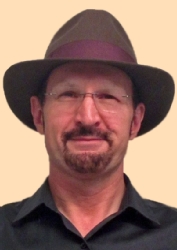
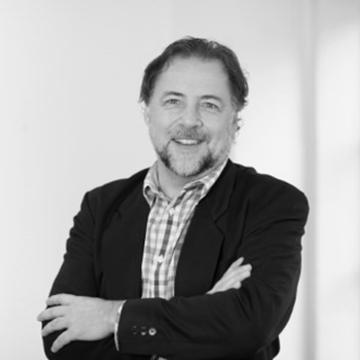
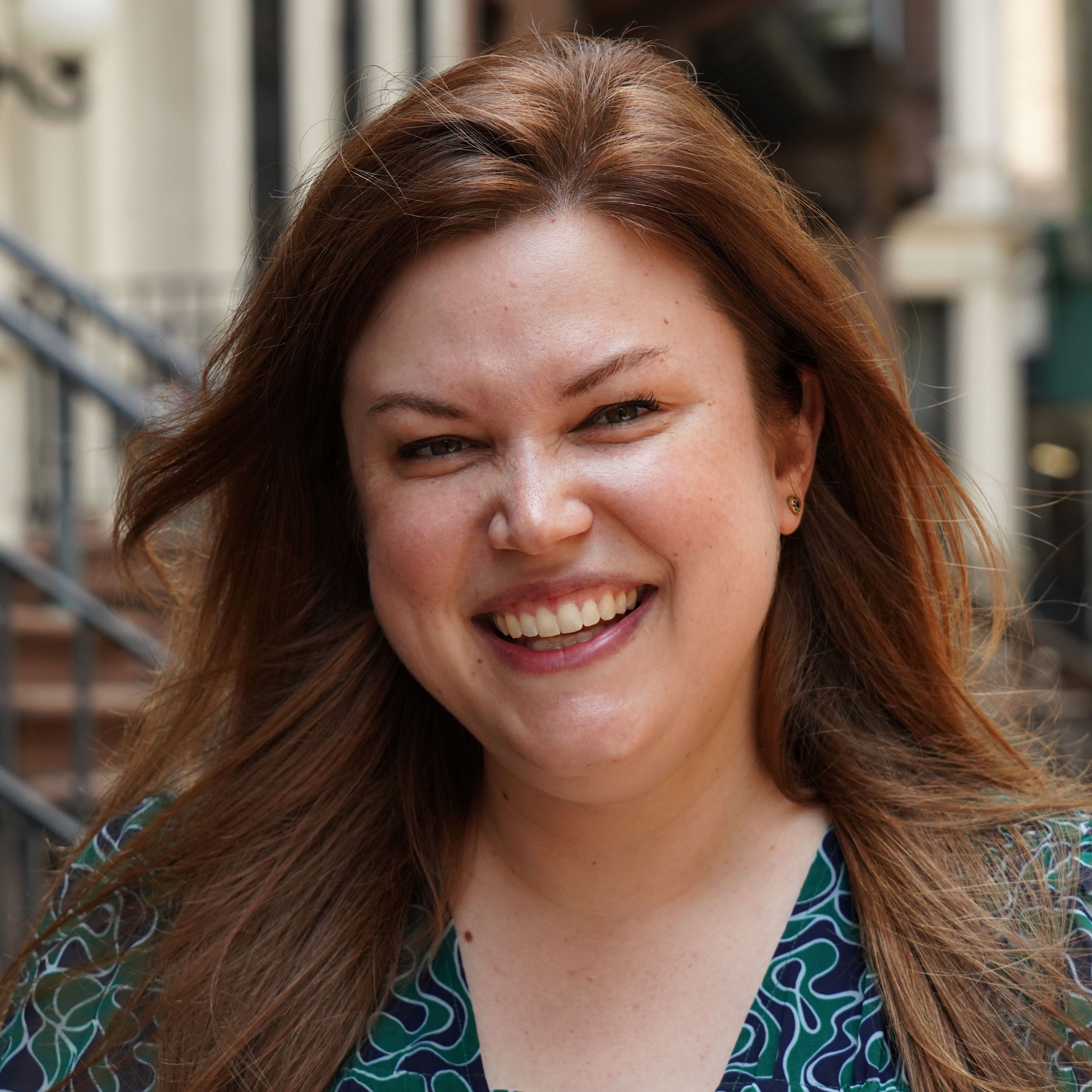
Emilio A. Parrado is the Dorothy Swaine Thomas Professor of Sociology at the University of Pennsylvania's School of Arts & Sciences and Director of the Population Studies Center. His research focuses on migration dynamics, particularly Hispanic populations in the U.S., international migration patterns, and social/demographic changes in Latin America. He combines quantitative and qualitative methods, including original survey and ethnographic data. Education: Ph.D. (Sociology, University of Chicago, 1997), M.A. (Sociology, University of Chicago, 1994), B.A. (Sociology, University of Buenos Aires, 1988). Key research areas include: Migrant health risks and transnational mobility (e.g., HIV/STI patterns at the U.S.-Mexico border) Gendered impacts of migration on labor markets and family structures Demographic transitions and social inequality in Latin America, including post-pandemic labor market shifts in Argentina Recent work emphasizes deportation effects on mental health, regional migration trends to Buenos Aires, and the intersection of immigration policy with fertility and urban development. His Migrante Project focuses on Mexico-U.S. border health observatories. Awards: None explicitly listed. Active in grants related to migrant health and labor studies. Labs/Teams: Leads the Population Studies Center and collaborates with the Latin American and Latino Studies Program at UPenn.
Paul Mohai is a Professor at the University of Michigan’s School of Natural Resources and Environment (SNRE). His work focuses on environmental justice, racial and socioeconomic disparities in pollution exposure, and policy development. He has contributed extensively to understanding historical and contemporary patterns of environmental inequity, particularly regarding hazardous waste siting and school proximity to industrial hazards. Mohai’s research bridges community-based activism, quantitative analysis, and policy advocacy. Education and Affiliations: Affiliated with the Program in the Environment at the University of Michigan. Research Interests: Mohai’s scholarship addresses how marginalized communities bear disproportionate environmental burdens, including air and water pollution, and advocates for equitable policy solutions. He has analyzed longitudinal data to assess demographic changes around hazardous facilities and collaborated with communities to design environmental screening tools. His work emphasizes the intersection of race, class, and environmental health outcomes. Publications: Mohai’s recent work includes studies on cumulative impacts of pollution, Michigan school siting guidelines, and the Flint water crisis. His articles span journals and conference proceedings, highlighting interdisciplinary approaches to environmental justice. Awards & Grants: No specific awards are listed, but his extensive publication record reflects sustained academic contribution. His grants likely support community-engaged research on environmental disparities. Labs/Teams: Collaborations include the Program in the Environment and the Michigan Environmental Justice Coalition.
Kathleen R. McNamara is Professor of Government and Foreign Service at Georgetown University, where she also co-founded the Global Political Economy Project with Professor Abe Newman. Her work centers on the European Union, globalization, and the cultural and political foundations of market authority. Her research interests include the political economy of the European Union, monetary politics, culture and identity in global markets, institutional change, and the democratic legitimacy of supranational governance. She examines how ideas, norms, and collective identities shape economic integration and state formation, especially in Europe. Her recent publications (2020–2024) reveal a strong focus on the EU’s geopolitical turn, industrial policy transformation, the impact of crises like COVID-19 on globalization, and the interplay between democracy and populism. These works reflect a deep engagement with both theoretical and policy-relevant dimensions of contemporary European and global political economy. International Studies Association 2018 Distinguished Scholar in International Political Economy ISA 2020 SWIPE Award for Mentoring Women in International Political Economy German Marshall Fund Fellow Fulbright Fellow Simone Veil Fellow at the European University Institute (2023) McNamara has been a visiting scholar at the Russell Sage Foundation, taught at Princeton University and Sciences Po (Paris), and advised the US National Intelligence Council. She is active in public scholarship, writing for Foreign Affairs , Foreign Policy , and The Washington Post . She is a founding figure in the Global Political Economy Project, which aims to reframe the study of global markets through interdisciplinary and critical lenses.
Stephen Billings is an Associate Professor of Finance at the Leeds School of Business, University of Colorado Boulder, where he holds the Global Real Estate Capital Markets Chair position. He serves as the faculty director of the MS in Real Estate program and research director for the CU Real Estate Center. His work spans multiple research centers including the Center for Research on Consumer Financial Decision Making and the Michael A. Klump Center for Real Estate. Billings received his PhD in Economics from the University of Colorado, a MS in urban planning from the University of North Carolina, and a BS in economics from Georgetown University. Prior to joining CU Boulder in 2016, he was faculty at the University of North Carolina Charlotte with appointments in both economics and public policy, where he also served as faculty director for the real estate center. His research focuses on the intersection of housing, schools, neighborhoods and crime, addressing critical policy issues including the impact of public investment in light-rail transit on neighborhoods, school segregation's influence on academic achievement and crime, neighborhood gentrification causes, lead-based paint in low-income housing, and the effects of sea level rise and natural disasters on neighborhood sorting and household finances. Billings employs sophisticated analysis of large micro-datasets with studies based on data and policies in Charlotte, NC and Denver, CO. His work connects urban economics with public policy, demonstrating how neighborhood environments shape individual outcomes across multiple dimensions. Billings' recent publication record demonstrates a consistent focus on neighborhood effects, school choice impacts, crime economics, and housing market dynamics. His work frequently examines the intersection of race, housing, and economic outcomes, with particular attention to policy implications. He has developed innovative methodological approaches to studying residential amenities and neighborhood spillovers, with increasing attention to climate change impacts on housing markets. His research appears in top journals including The Quarterly Journal of Economics, American Economic Review: Insights, and Journal of Urban Economics. As an educator, Billings teaches undergraduate and masters classes in real estate finance and economics, as well as doctoral and masters level courses on cost-benefit analysis and statistical methods. He has extensive consulting experience conducting economic impact studies, including assessments of North Carolina's public higher education system, affordable housing needs in Colorado communities, and the economic effects of marijuana legalization on property markets. His practical policy work complements his academic research, creating a bridge between theoretical insights and real-world applications. Billings leads significant research initiatives through the CU Real Estate Center, where he directs studies examining the impact of business improvement districts and other urban development policies. His work bridges academic research with practical policy applications, making substantial contributions to our understanding of how housing, education, and neighborhood environments shape individual outcomes and community development. His December 2023 memo on the HUD Officer Next Door Program exemplifies his engagement with current housing policy issues.
Sam Friedman is an Assistant Professor in the Department of Sociology at the London School of Economics and Political Science (LSE). His research focuses on social mobility, social class, elites, and cultural distinction. He co-authored the influential book Born to Rule , examining the transformation of the British elite over 120 years using biographical data and interviews. Friedman also explores the 'class ceiling' in professional and managerial occupations, revealing persistent class-based pay disparities. His work bridges sociology with cultural analysis, addressing how elites construct their identities and legitimize their status through 'ordinary' narratives. He directs the MSc in Inequalities and Social Science at LSE and teaches courses on class, culture, and meritocracy. Friedman has been recognized with prestigious awards, including the 2018 European Academy of Sociology Best Article Award and the 2016 ASA Inequality, Poverty and Mobility Section Best Article Award. Notable contributions include analyzing the role of private schools in elite recruitment, the gendered experiences of upward mobility, and the impact of inherited wealth ('the bank of mum and dad'). His interdisciplinary approach combines historical analysis, statistical data, and ethnographic insights to understand systemic social inequalities.
Aleksander Madsen is a Researcher at the University of Oslo (UiO), affiliated with the Department of Sociology and Human Geography under the Faculty of Social Sciences. His primary research interests include social stratification, immigrant assimilation in labor markets, welfare state policies, and statistical methods. He holds a PhD from Oslo Metropolitan University and an MA from UiO. Education: PhD in Sociology, Centre for the Study of Professions, Oslo Metropolitan University (2014–2018) MA in Sociology, University of Oslo (2013) His research explores labor market integration of immigrants, gender disparities in male-dominated workplaces, and the impact of education-occupation mismatch on health outcomes. He has conducted longitudinal studies on long-term sickness absence and labor market trajectories using sequence analysis. Dr. Madsen has held postdoctoral and research positions at UiO and NIFU, and was a visiting scholar at Stanford University's SCANCOR (2024) funded by the Fulbright Foundation. His work spans interdisciplinary collaborations, including projects on workplace diversity, ethnic stratification, and policy evaluations. Awards: U.S. - Norway Fulbright Foundation Grant (2023–2024) His research group affiliations include the Social Inequalities and Population Dynamics team and the ORGMIGRANT project, investigating work organizations and immigrant assimilation. Recent publications address residential networks among immigrants, workplace ethnic diversity, and women’s attrition from male-dominated sectors.
Bruce W. Smith is an Associate Professor at the University of New Mexico, College of Arts and Sciences, Department of Psychology. His research focuses on resilience , mindfulness interventions , and positive psychology with applications in health and stress management. Ph.D., Arizona State University (2002) Director, The Phoenix Lab Email: bwsmith@unm.edu Smith's research investigates how individuals bounce back from stress and adversity, including through mindfulness , positive psychology , and narrative-based approaches like the "hero’s journey". He developed the Brief Resilience Scale , widely used in stress and health research. His work spans health psychology, examining stress responses in chronic illness (cancer, cardiovascular disease) and emergency responders (firefighters). He has also explored mindfulness-based adaptations for Latino communities and positive psychology classes that improve student well-being. Smith teaches courses in Health Psychology , Positive Psychology , and Psychology Teaching Practicum . Current graduate students in his lab include Kaitlyn Schodt and Naila deCruz-Dixon . He is not accepting new students for Fall 2025 or 2024. Key themes across his publications (2008-2023) include: Resilience measurement and applications Mindfulness in stress reduction Positive psychology interventions Cultural adaptations for mental health His work emphasizes practical applications in both clinical settings and educational environments , with a focus on undergraduate well-being and trauma-informed approaches to personal growth.
Dr. phil. Andrej Holm is a Researcher at the Institute of Social Sciences , Humboldt University of Berlin, specializing in Urban and Regional Sociology . As a Women's Representative and active academic, he focuses on gentrification, housing policy in international comparison, and European urban policy. His work bridges academia and activism, contributing to housing referendums and social movement analysis. Research Themes : Gentrification dynamics, financialization of housing, socio-ecological housing transformation, and post-socialist urban development. Key Projects : Expert analysis for Berlin housing socialization referendum (2022), comparative studies on Amsterdam/Barcelona/Berlin/Vienna (2022), and social infrastructure reconceptualization (2021). Holm's publications span urban policy critiques and housing justice , with recent 2025 works examining financial investors' impact on Berlin housing and pandemic-era housing conditions. His research integrates political economy with spatial inequality frameworks.
Professor Guy Williams is a leading academic at the University of Cambridge with a focus on imaging science and clinical neurosciences, affiliated with Downing College and the Wolfson Brain Imaging Centre . Holding a PhD in Physics from his initial Natural Sciences degree, he specializes in nuclear magnetic resonance (NMR) and MRI techniques for brain imaging. Education: BA, PhD in Physics His research centers on non-invasive imaging of brain structure and function, particularly in traumatic brain injury (TBI) and dementia. His work involves developing novel MRI pulse sequences and advanced data analysis algorithms, including AI-based diagnostic tools. He leads studies on white matter integrity post-trauma, longitudinal dementia assessment, and applications of MRI in disorders of consciousness and addiction. Recent publications highlight collaborations in traumatic brain injury outcomes, AI-guided dementia prediction, and neuroimaging of post-COVID cognitive deficits. His team's work on ultra-high field laminar fMRI and distortion correction methods has advanced clinical neuroscience applications. Key techniques include diffusion tensor imaging (DTI), 7 Tesla MRI, and positron emission tomography (PET/MR). His research spans from basic NMR physics to clinical translation, with a strong emphasis on multi-site studies and real-world diagnostic implementation.
Marianne Nordli Hansen is a Professor at the Department of Sociology and Human Geography , University of Oslo. With a career spanning decades, her research focuses on social stratification , class and inequality , labor market conditions , economic inequality , and elites . She has taught courses like Sociological Theory (SOS4001), Theory Specialization in Sociology (SOS4011), and Inequality: Class, Gender and Ethnicity (SOS4100). Education: MA in Sociology (University of Oslo, 1984), Dr. philos in Sociology (University of Oslo, 1996) Positions: Associate Professor (ISS, UiO, 1996), Professor (ISS, UiO, 1999) Her research explores wealth accumulation , intergenerational mobility , social networks , and educational policy . Key collaborators include Professor Olav Korsnes and Associate Professor Johannes Hjellbrekke at the University of Bergen. Current projects focus on social inequality in Norway , with publications analyzing elite professions, wealth distribution, and class-based educational disparities. She has contributed to significant works on Nordic welfare models and public sector impacts on segregation and equality.
Jan O. Jonsson is a Professor of Sociology at Nuffield College, University of Oxford. His primary research focuses on social stratification, including educational inequality, class structure, and social mobility. He also studies ethnic stratification, particularly through his role as Principal Investigator (PI) for Sweden in the comparative CILS4EU project on minority schoolchildren integration. Jonsson oversees the Swedish Level-of-Living Survey (LNU), shaping his interest in welfare distribution analysis. His work bridges macro-level social structures with micro-level individual experiences, emphasizing intergenerational processes and immigrant integration. Research interests prominently feature studies on educational attainment disparities, immigrant integration dynamics in Sweden and Europe, and the social consequences of economic hardship. His recent work explores occupational aspirations among immigrant youth, mental health advantages of immigrant backgrounds, and policy impacts on child poverty during economic crises. As PI for CILS4EU, Jonsson leads a multinational study investigating educational and social integration trajectories of second-generation immigrants across Europe. His contributions include analyzing Sweden’s ‘middle way’ between social mobility and inequality patterns, and evaluating educational expansion strategies’ equity impacts. He has authored numerous articles on poverty measurement, family influences on mobility, and the role of education in socioeconomic reproduction. Key projects include the Level-of-Living Survey (LNU), which tracks welfare metrics, and comparative studies on social mobility across nations. His work frequently engages with policy implications of structural inequities, offering evidence-based insights for educational and social policies.
Dr Duncan Smith is an Associate Professor in GIS and Visualisation at the Centre for Advanced Spatial Analysis (CASA) at University College London (UCL). He serves as Programme Co-Director for the MSc Urban Spatial Science, focusing on digital visualisation and Geographical Information Systems (GIS) education. His research emphasizes urban sustainability, transport accessibility, and interactive urban visualisation, with a particular interest in global mega-cities like London, Singapore, and São Paulo. Dr Smith holds a PhD from UCL (2011), an MSc from the University of Edinburgh (2005), and a BA (2003). His recent projects include leading the ESRC-funded Driving Urban Transitions project (2024) exploring sustainable travel in small cities and outer metropolitan areas. Previously, he was Co-Investigator on the SIMETRI project (NSFC JPI Urban Europe) analyzing urban sustainability in London, the Randstad, and China's Greater Bay Area. His research interests span urban visualisation techniques, transport equity analysis, and polycentric urban development. Key areas include GIS-driven urban modelling, accessibility metrics, and the intersection of housing policy with sustainable urban form. His interactive visualisations, available on citygeographics.org , showcase innovative approaches to spatial data presentation. Dr Smith's work consistently addresses global sustainability challenges through geospatial methodologies. Recent studies highlight inequalities in transport accessibility and the spatial implications of urban policies. Upcoming projects will further investigate small-city mobility dynamics using multi-national collaborations with Amsterdam and Lisbon researchers.
Rainer Watermann is a Full Professor for Empirical Research in Education at the Free University of Berlin since 2011, previously serving as Full Professor for Education and Empirical Research in Schools at Georg-August University of Göttingen (2005-2011). His academic career includes significant research positions at the Max Planck Institute for Human Development in Berlin (1997-2005). Watermann earned his Diploma in Educational Science from the University of Münster (1996), followed by a Dr. phil (2002) and Habilitation (2005), both from Freie Universität Berlin. His educational background established the foundation for his extensive research in educational transitions and disparities. His research focuses on educational transitions, particularly from primary to secondary school and into higher education, examining motivational factors, social background influences, and achievement goal development. Watermann's work consistently addresses how social disparities affect educational opportunities and outcomes, with particular attention to gender differences and longitudinal developmental patterns. His methodological expertise includes latent class analysis, structural equation modeling, and large-scale assessment design. Watermann's publication portfolio reveals consistent research trajectories examining motivational frameworks (particularly expectancy-value theory), educational transitions, social disparities in education, and political socialization. His work spans both theoretical development and practical applications for educational policy and practice, with increasing focus on intervention effectiveness in recent years. As an active member of the academic community, Watermann serves on multiple editorial boards including the Swiss Journal for Educational Sciences and Empirical Educational Science , and regularly reviews for major educational and psychological journals. He has also contributed to significant research centers, including serving as spokesman for the Center for Empirical Research on Teaching and Learning in Schools (ZeUS) at the University of Göttingen (2008-2010). Watermann maintains an active research program with numerous collaborations across Germany and internationally, evidenced by his consistent publication record through 2025. His work bridges educational psychology, sociology of education, and policy-relevant research, maintaining strong connections between theoretical frameworks and practical educational contexts.
Natasha Quadlin is an Associate Professor in the Department of Sociology at the University of California, Los Angeles (UCLA), and a faculty fellow at the California Center for Population Research. Her research focuses on social inequality in the U.S., particularly gender inequality, higher education access and economics, and debt's role in education. She holds advanced degrees from Indiana University (Ph.D., M.S. in Applied Statistics, M.A.) and a B.S. from Northwestern University. Key roles include associate editor for Science Advances and associate PI for Time-Sharing Experiments for the Social Sciences (TESS). She has been a Russell Sage Foundation Visiting Scholar (2022-23) and a William T. Grant Scholar (2024-29). Her work bridges sociology, statistics, and policy, emphasizing experimental methods to study social beliefs and behaviors. Research interests include: Gender disparities in education and labor markets Racial and economic stratification in education Public perceptions of social policies Notable awards include the Doris Entwisle Early Career Award (2021), Devah Pager Award (2019), and Lupia-Mutz Outstanding Publication Award (2021). Her book Who Should Pay? examines U.S. public views on college funding responsibilities. Grants and collaborations highlight her work with major foundations and institutions, including NSF support and partnerships with scholars at Harvard, Indiana University, and others. Ongoing projects address pandemic-era educational disparities, gendered wage gaps, and intersectional discrimination.
Marta Veljkovic is a Lecturer and permanent academic member affiliated with Sorbonne University, specializing in sociology with a focus on social inequalities, intragenerational mobility, class and wage trajectories, and gender disparities. She earned her Doctorate in Sociology from Sciences Po, Paris, and the National Institute of Demographic Studies (Ined) between 2018 and 2022, following a Master of Research in Sociology from Sciences Po (2016–2018) and a Bachelor of Sociology from the University of Belgrade (2012–2016). Her academic work is deeply rooted in quantitative methods and large-scale empirical analysis of career dynamics in France. Her research interests include: Social inequalities and stratification Intragenerational mobility and career trajectories Class and wage mobility Gender inequalities in professional advancement The subjective experience of social mobility Quantitative methodologies in sociological research The trends in her recent publications reveal a consistent focus on analyzing long-term shifts in career mobility in France, particularly how class barriers persist despite increased fluidity in job transitions. Using data from the Formation-Qualification Professionnelle survey and EGP class schema, she investigates both absolute and relative mobility, demonstrating that while career paths have become more complex, structural class boundaries remain resilient. Her work bridges academic sociology and public discourse through contributions to outlets like Pour l’Éco and the Observatory of Inequalities. She holds active responsibilities in the academic community, including: Co-organizer of the Gemass scientific seminar Member of the editorial board of the Sociological Year Marta Veljkovic teaches a wide range of courses at undergraduate and graduate levels, including Theory and Concepts (L1), Sociological Tradition – Contemporary French Sociology (L2), Statistics and Computer Science (L3), and advanced methods such as Quantitative Methods I, Sociology of Inequalities, and Advanced Methodology at the M1 level. She has presented her research at numerous international conferences, including the ISA RC28 Spring Meeting, ECSR, and LIVES colloquia. Although no specific students or scientific awards are listed, her extensive publication record and institutional engagement underscore her growing influence in the field of sociological inequality research. She is involved in collaborative research with scholars such as Nicolas Duvoux, Richard Nennstiel, and Ettore Recchi, and her work is supported by access to major French social science data infrastructures like ELIPSS and Insee surveys. She does not appear to lead a lab, but her participation in Gemass—a joint research unit between CNRS, Sorbonne University, and Sciences Po—positions her within a vibrant interdisciplinary network focused on social mechanisms, networks, and inequalities.