Jonathan T. Barron is a Researcher at Google DeepMind in San Francisco, specializing in Computer Vision , Neural Rendering , and 3D Scene Reconstruction . He earned his PhD at UC Berkeley under Jitendra Malik and has pioneered advancements in NeRF (Neural Radiance Fields) and diffusion-based 3D generation. Research Interests : Computer Vision, Deep Learning, Generative AI, Image Processing, and 3D Reconstruction via Radiance Fields. His work includes Bolt3D for rapid 3D scene generation, CAT3D/CAT4D for text-to-3D/4D, and Zip-NeRF for anti-aliased radiance fields. He has also developed real-time rendering frameworks like SMERF and NeRF-Casting for reflections. Scientific awards: PAMI Young Researcher Award He has served as Area Chair for CVPR, ICCV, and NeurIPS, and his research is widely adopted in applications like Google's Lens Blur , Portrait Mode , and Jump VR .
Karsten Lambers is Professor of Digital and Computational Archaeology at the Faculty of Archaeology, Leiden University, where he leads research and teaching in the application of computational methods to archaeological data. His work integrates machine learning, remote sensing, text mining, and citizen science to advance archaeological prospection and heritage management. He is affiliated with the Department of Archaeological Sciences and plays key roles in research groups and university-wide initiatives such as SAILS and ARCHON. His research interests span Digital Archaeology , Machine Learning in Archaeology , Remote Sensing , Geoarchaeology , and Human-Environment Interaction . He investigates how computational tools can extract meaningful archaeological information from large datasets, including LiDAR imagery and excavation reports. His fieldwork spans Central Europe and Latin America, with a focus on prehistoric landscapes and cultural heritage. The analysis of his recent publications reveals a strong trend toward automated detection using deep learning (e.g., R-CNN, WODAN), named entity recognition in archaeological texts (e.g., ArcheoBERTje), and citizen science integration for data validation. His work bridges archaeology with computer science, geomatics, and environmental science, emphasizing interdisciplinary collaboration and methodological rigor. His scientific awards include: Best Thesis Award (University of Zurich, 2005) EUROPA NOSTRA Award (2020, 2022) Membership in the German Archaeological Institute (since 2022) Lambers actively supervises students and leads major research projects such as ABMA, EXALT, and Heritage Quest. He has secured substantial research funding and collaborates widely with computer scientists, geophysicists, and palaeoecologists. His teaching includes digital methods, modeling, and simulation, often linked to ongoing research. He has also contributed to open educational resources and digital textbooks in archaeology. He leads or participates in several research labs and teams, including the Digital Archaeology Research Group (which he chairs), the Heritage Quest citizen science project, and interdisciplinary teams focusing on alpine terraces and Iraqi prospection. His work emphasizes the integration of digital tools into practical archaeological workflows, advocating for complementary human-computer strategies.
Caterina Consani is a Professor of Mathematics at Johns Hopkins University's Krieger School of Arts & Sciences. She holds a PhD from the University of Chicago (1996) and a Dottore di Ricerca in Matematica from the Universities of Genoa and Turin (1993). Her research focuses on arithmetic geometry, non-commutative geometry, and the development of absolute geometry over the 'absolute point.' She has contributed to foundational work on the BC-system, the Arithmetic Site, and the Scaling Site, linking number theory with geometric frameworks. Education: PhD in Mathematics, University of Chicago (1996); Dottore di Ricerca in Matematica, Universities of Genoa & Turin (1993). Prior to Johns Hopkins, she taught at MIT (1996–1999) and the University of Toronto (1999–2005). Research Interests: Arithmetic geometry, non-commutative geometry, absolute geometry in characteristic one, connections to number theory and the Riemann Hypothesis. Collaborations include work with Alain Connes on adele class spaces and non-commutative algebraic geometry. Awards: Fellow of the American Mathematical Society (2024); 2025 Best Paper AOFA Award (Annals of Functional Analysis). Editorial roles include the Journal of Number Theory and Journal of Noncommutative Geometry. Teaching: Offers advanced courses in algebraic geometry and number theory, including topics like étale cohomology and the yoga of weights in 'Weil II.' Grants: Supported by the Simons Foundation. Organized major conferences such as the JAMI Conference on Riemann-Roch in Characteristic One (2019).
José Eduardo Villalobos Graillet is an Assistant Professor of Spanish at Idaho State University , specializing in Modern Peninsular Literature and Culture with a focus on visual culture (film and television) . He previously held a position as Spanish Instructor at Wilfrid Laurier University in the Department of Languages and Literatures. Research Areas : Spanish Film Studies, Spanish Medieval Literature, Latin American and Caribbean Studies, Teaching Spanish as a Foreign Language, Visual Culture, and Critical Pedagogy. His scholarly work examines film and television adaptations of 'La Celestina' , analyzing censorship dynamics across Francoist Spain, the Democratic Transition, and contemporary Spain. He also contributes to Spanish pedagogy , developing technological tools like Lang-8 for written expression and culturally immersive teaching units on topics such as winter festivals and Caribbean music. His publications span both critical academic analysis and methodological innovations for language instruction. Key Themes in Publications : Adaptation fidelity, political censorship, intercultural pedagogy, and the role of digital platforms in language learning.
David Harvey is a Distinguished Professor of Anthropology and Geography at the City University of New York (CUNY) Graduate Center and Director of Research at the Center for Place, Culture and Politics. He has been teaching and writing about Karl Marx’s Capital for over 50 years, earning recognition as a leading Marxist scholar and urban theorist. Research Interests Cultural anthropology Political economy Urbanization and capitalist development Environmental justice Geographical theory Advanced capitalist countries Publications & Trends Harvey’s work spans Marxist theory, neoliberalism, and urban studies, with recent focus on Grundrisse and capitalist contradictions. His scholarship connects historical materialism to contemporary crises, emphasizing spatial fixes, environmental limits, and anti-capitalist resistance. Awards & Honors Outstanding Contributor Award (Association of American Geographers) Centenary Medal (Royal Scottish Geographical Society, 2002) Isaac and Tamara Deutscher Book Prize (2010) for The Enigma of Capital Honorary degrees from University of Bristol, Goldsmith College, Kent, Buenos Aires, Roskilde, Uppsala, and Ohio State University
Zhuoyue Zhao is an Assistant Professor in the Department of Computer Science and Engineering at the University at Buffalo, School of Engineering and Applied Sciences. His office is located at 338I Davis Hall, Buffalo, NY 14260, and he can be reached at zzhao35@buffalo.edu or by phone at (716) 645-4735. Dr. Zhao received his PhD in Computer Science from the University of Utah in 2021, where he was advised by Prof. Feifei Li and Prof. Jeff Phillips. Prior to that, he earned his BS in Computer Science from Shanghai Jiao Tong University in 2016, where he was part of the prestigious ACM Class. During his undergraduate studies, he conducted research under Prof. Kenny Zhu and spent Fall 2015 as a research assistant at Hong Kong Polytechnic University supervised by Prof. Eric Lo. Dr. Zhao's research focuses on database management systems, with specific emphasis on traditional and approximate query processing, query optimization, database systems on modern hardware, transaction processing, indexing, and storage. His work bridges theoretical foundations with practical implementations, often resulting in systems that address real-world database challenges. He has made significant contributions to probabilistic query processing, transaction scheduling, and learned indexing techniques. His recent publications demonstrate a clear trajectory toward optimizing database performance in hybrid transactional/analytical processing environments. His research increasingly integrates systems techniques with machine learning approaches, particularly in the area of learned indexes. There's also a strong focus on making database operations more efficient through innovative scheduling mechanisms and query processing techniques that can handle concurrent updates. Google PhD Fellowship (2019-2021) Best Paper Award at SIGMOD 2016 for "Wander Join: Online Aggregation via Random Walks" Best Paper Award at SIGMOD 2025 for "Low-Latency Transaction Scheduling via Userspace Interrupts" Dr. Zhao currently advises several PhD students including Yunnan Yu, Congying Wang, Gaoxiang Liu (co-advised with Prof. Ziming Zhao), and Zhuoran Li. He has successfully guided MS student Nithin Sastry Tellapuri to graduation (Fall 2023), who is now employed at AirPay. His research is supported by significant funding including an NSF CAREER award (#2339596) totaling $599,977 for research on "Speedy and Reliable Approximate Queries in Hybrid Transactional/Analytical Systems" (2024-2029) and an unrestricted Google gift of $30,000 (2021). Dr. Zhao leads the ADBLab research group at UB, where students work on cutting-edge database systems research. His lab focuses on building practical database systems that address real-world challenges in query processing, transaction management, and indexing. The lab maintains strong connections with industry partners and regularly contributes to open-source database projects.
Philip Evans serves as Professor in the Department of Wood Science at the University of British Columbia's Faculty of Forestry, holding the British Columbia Leadership Chair in Advanced Forest Products Manufacturing Technology. He maintains an additional affiliation as Honorary Professor in the Department of Materials Physics at The Australian National University, reflecting his international research impact in sustainable forest products. His academic foundation includes a First Class BSc (summa cum laude) and Ph.D. from the University of Wales Bangor, followed by postdoctoral research at Abertay University in Scotland. Career progression led him from Lecturer to Professor and Director of ANU’s Centre for Science & Engineering of Materials before his current UBC appointment. Professor Evans' research integrates molecular-scale wood modification using plasma technology with practical material development. His portfolio addresses critical industrial challenges through plasma-modified wood surfaces for light absorption, X-ray micro-CT/VR systems for wood microstructure analysis, sustainable alternatives to old-growth mahogany in musical instruments, aerospace panel enhancements, and AI-driven detection of illegal timber trade. This dual focus on fundamental science and translational applications drives innovation in replacing non-sustainable materials. His exceptional contributions are recognized by: DOW Chemical Company Distinguished Lecturer Fellow of International Academy of Wood Science Fellow of Institute of Materials, Minerals & Mining Commonwealth Forestry Association Medal (Americas) Japanese Ministry for Science & Technology Research Award Oxford Commonwealth Forestry Bureau Book Prize As director of the Wood Surface Science Lab, he actively collaborates with industry partners to solve complex technical problems in forest products manufacturing, while mentoring junior colleagues through his integrated research-teaching approach. Current projects emphasize sustainable material development and advanced analytical techniques for global forestry challenges.
Dr. ONG Ghim Ping Raymond is an Associate Professor and Deputy Head (Research) at the Department of Civil and Environmental Engineering, National University of Singapore (NUS). He concurrently serves as Director (Operations) at the Coastal Protection and Flood Resilience Institute (CFI) Singapore. His expertise spans sustainable pavements, multimodal transport infrastructure, and urban mobility systems. Dr. Ong holds a B.Eng (Civil) with First Class Honours and a PhD from NUS, followed by postdoctoral research at Purdue University. He has authored/co-authored over 85 peer-reviewed journal articles and 120 conference papers. His research focuses on circular economy applications in infrastructure, car-lite urban design, and mega-projects like Tuas Port and Changi Airport expansions. Dr. Ong actively engages in policy advisory roles, serving on international committees for ASCE, ASTM, and EASTS. He has received prestigious awards including the Alfred Noble Prize (ASCE) and Takeuchi Yoshio Award (OCDI). His teaching accolades include multiple NUS Faculty of Engineering commendations. He advises on critical infrastructure projects for agencies like Changi Airport Group and Defence Science and Technology Agency. Dr. Ong frequently contributes to public discourse on transport and urban planning via media interviews and policy consultations.
Emilio A. Parrado is the Dorothy Swaine Thomas Professor of Sociology at the University of Pennsylvania's School of Arts & Sciences and Director of the Population Studies Center. His research focuses on migration dynamics, particularly Hispanic populations in the U.S., international migration patterns, and social/demographic changes in Latin America. He combines quantitative and qualitative methods, including original survey and ethnographic data. Education: Ph.D. (Sociology, University of Chicago, 1997), M.A. (Sociology, University of Chicago, 1994), B.A. (Sociology, University of Buenos Aires, 1988). Key research areas include: Migrant health risks and transnational mobility (e.g., HIV/STI patterns at the U.S.-Mexico border) Gendered impacts of migration on labor markets and family structures Demographic transitions and social inequality in Latin America, including post-pandemic labor market shifts in Argentina Recent work emphasizes deportation effects on mental health, regional migration trends to Buenos Aires, and the intersection of immigration policy with fertility and urban development. His Migrante Project focuses on Mexico-U.S. border health observatories. Awards: None explicitly listed. Active in grants related to migrant health and labor studies. Labs/Teams: Leads the Population Studies Center and collaborates with the Latin American and Latino Studies Program at UPenn.
Professor Peter John Edgley Robinson is a distinguished academic and poet at the University of Reading, where he holds the position of Professor in the Department of English Literature, part of the School of Humanities. He is renowned for founding the English Literature with Creative Writing joint degree program and the MA in Creative Writing. His research focuses on modern and contemporary poetry, publishing, and translation, with a particular interest in 20th-century literary movements and interdisciplinary studies. Responsibilities include leading the Poetry & Poetics strand of the Modern Studies Centre and supervising doctoral research in creative writing and academic topics such as post-war Japanese poetry, Muriel Rukeyser’s work, and travel writing. He has held roles as poetry editor for Two Rivers Press and contributed to academic publications like The Fortnightly Review . His career includes teaching at Tohoku University in Japan and organizing events like the Reading Poetry Festival. Key awards include the Cheltenham Prize (1988), the John Florio Prize (2008), and Poetry Book Society recommendations. His publications span poetry collections, critical essays, translations, and novels, reflecting his expertise in literary analysis and creative expression. Notable works include The Sound Sense of Poetry (2018), Ravishing Europa (2019), and Retrieved Attachments (2023). Education: BA from University of York (1974), PhD from University of Cambridge (1981). Translations: Includes works by Vittorio Sereni, Pietro De Marchi, and Giorgio Bassani. Editorial Roles: Numbers magazine, Reading Poetry Festival , and The Oxford Handbook of Contemporary British and Irish Poetry . His research explores intersections between poetry, economics, and cultural identity, with a focus on publishing policies and lyrical forms. He remains active in mentoring emerging writers and fostering interdisciplinary collaboration.
Baharan Mirzasoleiman is an Assistant Professor in the Department of Computer Science at the University of California, Los Angeles (UCLA), where she leads the BigML research group. Prior to joining UCLA, she was a postdoctoral research fellow in Computer Science at Stanford University working with Jure Leskovec. She received her Ph.D. in Computer Science from ETH Zurich advised by Andreas Krause. Her research focuses on addressing sustainability, reliability, and efficiency of machine learning, with particular emphasis on improving big data quality by developing theoretically rigorous methods to select the most beneficial data for efficient and robust learning. Her work spans several critical areas including data efficiency, robustness against label noise and data poisoning, and addressing spurious correlations in machine learning models. She has made significant contributions to understanding how neural networks exploit spurious features that correlate with certain categories during training but fail to generalize to minority groups. Professor Mirzasoleiman's research demonstrates how theoretically grounded approaches can lead to practical improvements in model robustness and efficiency across various applications including medical diagnosis and environmental sensing. Her work has resulted in the development of the SpuCo package, a Python library that provides modular implementations of state-of-the-art methods to address spurious correlations, along with controllable synthetic datasets like SpuCoMNIST and large-scale vision datasets like SpuCoAnimals. She has received numerous prestigious awards including the ETH medal for Outstanding Doctoral Thesis, being selected as a Rising Star in EECS by MIT, an NSF Career Award, a UCLA Hellman Fellows Award, and an Okawa Research Award. Her students have also received multiple fellowships and awards including Amazon Doctoral Student Fellowships and an OpenAI Superalignment Fast Grant. Professor Mirzasoleiman actively contributes to the academic community through invited talks at major conferences including ICML, ICLR, NeurIPS, and KDD, as well as co-organizing workshops on new frontiers in adversarial machine learning and sparsity in neural networks. She has developed educational resources including tutorials on Foundations of Data-efficient Learning presented at ICML 2024.
Dr. Mark B. Smith is an Associate Professor in Modern European History at the University of Cambridge’s Department of History. His research focuses on Soviet and European history, particularly the Soviet Union’s social structures, welfare policies, urban development, and cultural dynamics from Stalinism through late socialism. He teaches courses on welfare states, Soviet life, and 20th-century European violence. Key research areas include Soviet urban housing programs, welfare state evolution, and Cold War-era cultural exchanges. His publications analyze topics like Khrushchev’s housing reforms, post-Stalin urban welfare systems, and Soviet pension policies. Smith has co-edited special issues on European urban societies and authored books such as *The Russia Anxiety* (2019) and the forthcoming *Exit Stalin* (2026). He advises doctoral students on Soviet history, welfare states, and Cold War topics. His work bridges legal history, social policy analysis, and cultural studies, emphasizing how everyday life reflected broader ideological and structural changes in Soviet society.
Heidi R. Lewis is the David and Lucile Packard Professor of Feminist & Gender Studies at Colorado College. She serves as President of the National Women's Studies Association (2023-25) and Editor-in-Chief of the Oxford Bibliography in Women's & Gender Studies. Her research focuses on Black Feminisms, Hip Hop discourse, and Critical Media Studies, with a current project challenging narratives around Mumble Rap's authenticity. Lewis holds a Ph.D. in American Studies from Purdue University and has taught interdisciplinary courses including Hip Hop & Feminism and Critical Media Studies. Education: Ph.D., American Studies, Purdue University (2011) M.A., English Literature, Ohio University (2005) B.A., English Studies, Robert Morris University (2003) Research Interests: Lewis interrogates intersections of race, gender, and media through projects like her forthcoming book on Mumble Rap and a documentary on her experiences during the crack cocaine epidemic. She employs discourse analysis to challenge dominant narratives in Hip Hop and feminist theory, emphasizing marginalized voices and transnational collaborations. Service & Leadership: As Director of Feminist & Gender Studies, Lewis secured funding for new faculty lines, student programs, and community partnerships. Nationally, she co-created the #FemSTEMSymposium to bridge feminist inquiry and STEM fields. Her service prioritizes equity, including roles on promotion committees and external reviews for academic centers. Community Engagement: Lewis collaborates with organizations like the Kampagne für Opfer Rassistischer Polizeigewalt and the U.S. Olympic Committee. Her work extends beyond academia through public talks, media contributions, and initiatives like the Marsha P. Johnson Professorship.
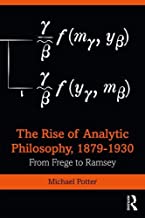
Michael Potter is Professor of Logic at the Faculty of Philosophy , University of Cambridge, and a Life Fellow at Fitzwilliam College. Previously at Balliol College, Oxford (D.Phil. in pure mathematics), he has held research fellowships at St Andrews, Harvard, and Stirling University (AHRC-funded). His work bridges historical and systematic philosophy, focusing on History of analytic philosophy (Frege, Russell, Wittgenstein, Ramsey) Philosophy of mathematics and logic Philosophy of religion Potter's research has produced major works like Set Theory and its Philosophy (OUP 2004) and The Rise of Analytic Philosophy (Routledge 2019), with significant contributions to understanding the Metaphysical underpinn't> of the Tractatus Neo-Fregean logicism Paradoxes in mathematical foundations He has supervised research on topics spanning dialetheism, predicative mathematics, and modal ontological arguments. Scientific awards include the AHRC Senior Research Fellowship (2004-2005). His recent publications analyze Transcendental arguments in Wittgenstein Sortition-based democratic theory Philosophical implications of Ramsey's infinite proofs via peer-reviewed chapters and journal articles.
Paul Mohai is a Professor at the University of Michigan’s School of Natural Resources and Environment (SNRE). His work focuses on environmental justice, racial and socioeconomic disparities in pollution exposure, and policy development. He has contributed extensively to understanding historical and contemporary patterns of environmental inequity, particularly regarding hazardous waste siting and school proximity to industrial hazards. Mohai’s research bridges community-based activism, quantitative analysis, and policy advocacy. Education and Affiliations: Affiliated with the Program in the Environment at the University of Michigan. Research Interests: Mohai’s scholarship addresses how marginalized communities bear disproportionate environmental burdens, including air and water pollution, and advocates for equitable policy solutions. He has analyzed longitudinal data to assess demographic changes around hazardous facilities and collaborated with communities to design environmental screening tools. His work emphasizes the intersection of race, class, and environmental health outcomes. Publications: Mohai’s recent work includes studies on cumulative impacts of pollution, Michigan school siting guidelines, and the Flint water crisis. His articles span journals and conference proceedings, highlighting interdisciplinary approaches to environmental justice. Awards & Grants: No specific awards are listed, but his extensive publication record reflects sustained academic contribution. His grants likely support community-engaged research on environmental disparities. Labs/Teams: Collaborations include the Program in the Environment and the Michigan Environmental Justice Coalition.