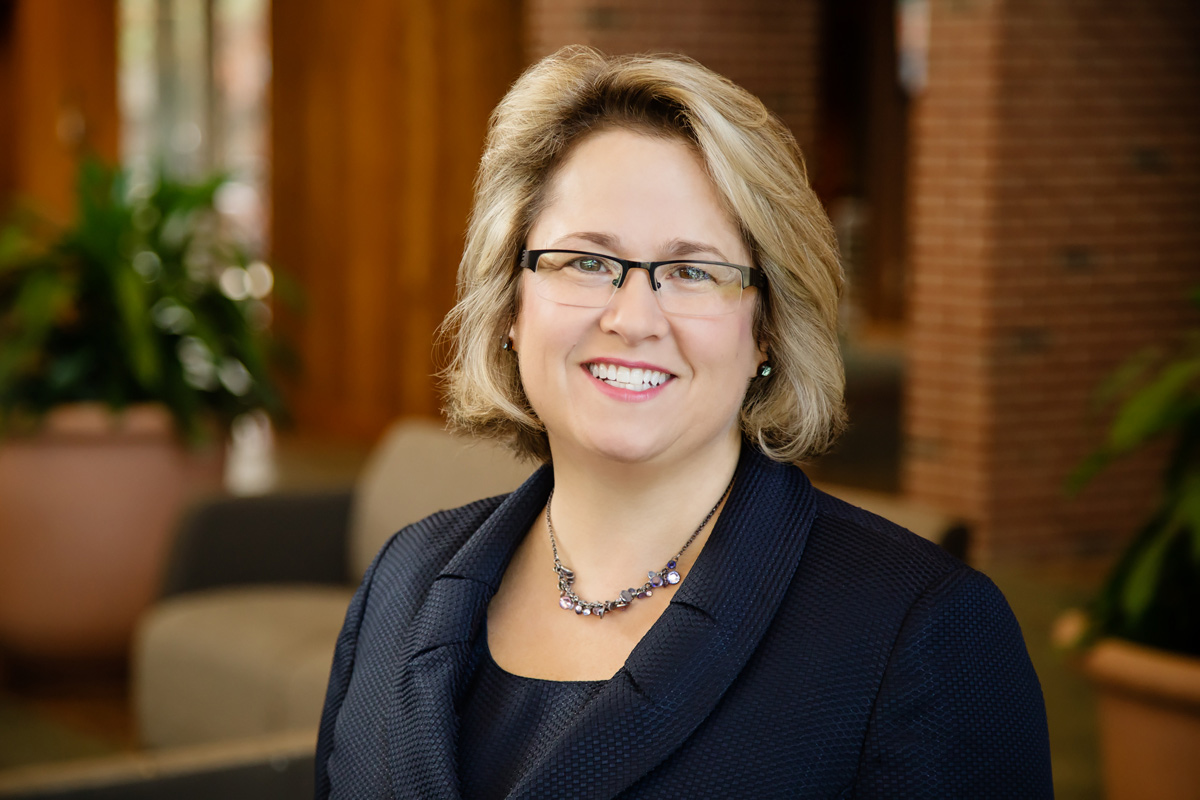
Rosemary Ndubuizu is an Assistant Professor of Black Studies at Georgetown University, specializing in the intersections of race, gender, political economy, and housing policy. Her research focuses on housing insecurity, displacement, and the activism of low-income Black women in Washington, D.C., particularly through community organizing with ONE DC. Research Interests: Historical and ethnographic analysis of post-1970s housing policies Black feminist frameworks in urban policy studies Eviction and displacement dynamics in gentrifying cities Intersection of ideology and social policy formulation Teaching: Dr. Ndubuizu teaches courses on social policy, post-Civil Rights Black politics, the Black radical tradition (including Black feminism), and social movements. Her pedagogy integrates critical perspectives on nonprofits and women of color feminisms. Education: B.A. from Stanford University (undergraduate studies in the Bay Area) Graduate studies at Rutgers University in Women’s and Gender Studies Community Engagement: She actively collaborates with Organizing Neighborhood Equity DC (ONE DC), advocating for affordable housing and living-wage jobs for long-time Black Washingtonians.
Marcel Erlinghagen is a Full Professor of Sociology at the University of Duisburg-Essen and a Fellow of the German Institute for Economic Research (DIW) in Berlin. His academic career spans over two decades with a focus on migration, labor markets, and social inequality. He is actively involved in the Research Training Group 'Cross-Border Labor Markets: Transnational 'Market Makers', Infrastructures, Institutions' funded by the German Research Foundation (DFG) since 2024. His educational background includes a Doctorate in Sociology from the University of Duisburg-Essen (2004), Habilitation in Social Economics from Ruhr University Bochum (2008), and a Diploma in Social Sciences from Ruhr University Bochum (1999). Professor Erlinghagen's research primarily focuses on migration and integration processes, labor market mobility, job security, and volunteer work. His work examines how these factors intersect with social inequality, particularly in the context of Germany and Europe. He has developed significant theoretical frameworks such as the 'transnational life course' concept for migration research and has conducted extensive empirical work using panel data to track migration patterns, job insecurity, and volunteering behaviors across different population groups. His publications show consistent trends toward understanding the complex interplay between individual migration decisions and broader structural factors, with particular attention to how migration affects family dynamics, subjective well-being, and social stratification. His research on job insecurity has documented changing perceptions across European labor markets, while his work on volunteering has highlighted patterns among older adults and gender differences in leadership roles within voluntary organizations. Professor Erlinghagen has received recognition for his methodological contributions to migration research, particularly through the German Emigration and Remigration Panel Study (GERPS), which provides valuable longitudinal data on German citizens who have migrated internationally. He has supervised numerous students in the BA and MA programs at the University of Duisburg-Essen, focusing on topics related to social inequality. His research has been supported by various funding bodies including the German Research Foundation (DFG). Within the academic community, he is actively involved in research networks focused on migration, labor markets, and social policy, collaborating with institutions across Europe and contributing to major edited volumes that shape contemporary scholarship in his field.
Sera Young is a Professor in the Department of Anthropology at Northwestern University's Weinberg College of Arts and Sciences. She holds a PhD from Cornell University (2008), an MA in Medical Anthropology from the University of Amsterdam, and completed an HIV Fellowship at the University of California San Francisco. Her research spans medical anthropology, nutrition science, and global health, with particular focus on water and food insecurity in low-resource settings. Dr. Young's research interests center on water insecurity, food insecurity, and pica (non-food cravings), with particular attention to maternal and child health in the first 1000 days. She developed the Household Water Insecurity Experiences (HWISE) and Individual Water Insecurity Experiences (IWISE) scales, which have been implemented in at least 50 countries by more than 100 governmental, policy, research, and civil organizations. Her work takes a biocultural approach to understanding how mothers in low-resource settings cope to preserve their health and that of their families, particularly in contexts of HIV. Recent publications demonstrate a clear trend toward measuring and understanding the connections between water insecurity and food insecurity, with research spanning multiple continents including Africa, Latin America, Australia, and high-income settings. Her work has evolved from developing measurement tools to examining the health, mental health, and social consequences of water insecurity, with increasing attention to gender disparities, climate change impacts, and policy applications. 2022 Norman Kretchmer Memorial Award in Nutrition and Development, American Society for Nutrition 2019 Carnegie Fellowship 2013 Margaret Mead Award, American Anthropological Association and the Society for Applied Anthropology 2009 Dissertation Award, Society for Medical Anthropology 2009 Allan Rosenfield Scholar, New Investigator in Global Health, Global Health Council 2003 Rudolf Virchow Award, Honorable Mention, American Anthropological Association 2002 Christine Wilson Award, American Anthropological Association Dr. Young serves on numerous committees including as Chair of the Global Nutrition Council (2020-2022) for the American Society for Nutrition, Executive Committee for the Institute for Policy Research (2021-present), and Tenure & Promotion Committee for Global Health Studies (2017-present). She teaches courses including "Water insecurity: anthropological and global health perspectives," "Ecology of infant feeding," and "Turning your numbers into a story," and also teaches through the Northwestern Prison Education Program. Her research group has secured significant funding for global water and food insecurity research, with findings directly influencing policy through organizations like WHO/UNICEF Joint Monitoring Programme. Dr. Young leads the Young Research Group which has established the Water Insecurity Experiences (WISE) Scales as a global standard for measuring water access and use. The WISE Research Coordination Network collaborates with scholars worldwide to expand the application of these scales across diverse settings and to investigate the human consequences of water insecurity. Recent work has focused on validating the scales in high-income settings and examining intersections with mental health, climate change, and food security.
Jesse Driscoll is a Professor of Political Science at the School of Global Policy and Strategy at the University of California at San Diego. He specializes in comparative state-building dynamics, with regional focus on Central Asia, the Caucasus, and the Russian-speaking world. His academic leadership includes serving as Academic Chair of the Global Leadership Institute since 2014. Education Ph.D., Political Science, Stanford University (2009) M.A., Security Studies, Georgetown University (2001) B.S., Foreign Service, Georgetown University (2001) Driscoll’s research centers on state emergence from post-Soviet chaos, conflict resolution, and methodological innovations in global fieldwork. His award-winning book Warlords and Coalition Politics in Post-Soviet States (Cambridge, 2015) examines hierarchical formation in Georgia and Tajikistan, while Doing Global Fieldwork (Columbia, 2021) provides a practitioner’s guide for mixed-methods research. He has supervised 12 Ph.D. students across political science and economics, including emerging scholars like Adam Fefer (University of Michigan) and Kevin Rossillon (U.S. Air Force). His contributions to journals include analyses of ethnic stacking, poverty’s impact on pandemic compliance, and social media’s role in Russian irredentism. Scientific Awards Central Eurasian Studies Society Book Award Furniss Award (for state-building scholarship) Driscoll co-hosts the Raiders of the Lost Archive podcast with Christian Davenport and has taught courses on international security and game theory at UCSD. His work bridges theoretical rigor with practical field research challenges, particularly in insecure environments like Somalia and Ukraine.
Heather Marek is a Lecturer at the School of Law, University of Oregon, affiliated with the Conflict and Dispute Resolution department. She works as a staff attorney with Oregon Law Center, focusing on housing and homelessness, and previously clerked for Judge Joel DeVore at the Oregon Court of Appeals. Ph.D. in Sociology, University of Oregon J.D., University of Oregon M.S. in Conflict and Dispute Resolution, University of Oregon B.A. in Sociology, University of Montana Her research centers on racial and economic discrimination and inequality, advocating for evidence-based solutions to systemic social issues. This aligns with her work in civil rights, democracy reform, and community advocacy through organizations like the American Civil Liberties Union of Oregon. She has also served on advisory boards related to housing code enforcement and civil rights in Eugene, Oregon. Heather’s professional experience includes roles in nonprofit legal advocacy, pro bono initiatives, and community dispute resolution. She has contributed to legal writing programs and student mentorship through the Galen Program. Her work bridges academic research with practical legal efforts to address housing insecurity and social justice. No specific scientific awards are mentioned in the provided text.
Dr. Kiah Smith is a Senior Research Fellow at The University of Queensland's Centre for Policy Futures, specializing in environmental sociology and sustainability transitions. Her research bridges academia, policy, and grassroots activism, focusing on food justice, financialisation of agriculture, and civil society's role in achieving the UN Sustainable Development Goals (SDGs). Academic Roles: ARC DECRA Fellow, Future Earth Fellow, and active participant in global policy dialogues including UN Food Systems Summit and SDG Summit. Research Themes: Explores intersections of food systems, climate resilience, gender empowerment, and ethical trade through qualitative participatory methodologies. Publications & Impact: Authored 69 works including books on ethical trade in Kenya, journal articles on farmland investment politics, and reports influencing Australian Senate inquiries. Her research informs global food security frameworks and local initiatives like the AFSA People’s Food Plan. Collaborations: Partnerships with organizations such as FIAN International, UN Women, UNRISD, and CSIRO. She leads the Social Justice, Rights and Empowerment research theme at CPF, emphasizing non-traditional research translation. Scientific Awards ARC DECRA Fellowship (2019–2023) Future Earth Fellow Executive Member, ISA RC40 on Food and Agriculture Advising & Grants: Supervises PhD candidates on topics like digital agriculture and women’s empowerment in Bangladesh. Secured significant funding from ARC Discovery Projects and Australia-Germany joint schemes for studies on horticulture networks and SDG implementation.
Robin Fretwell Wilson holds the Mildred Van Voorhis Jones Chair in Law at the University of Illinois College of Law, where she founded and co-directs the Family Law and Policy Program. She also co-directs the Epstein Health Law and Policy Program and maintains professor appointments in the Carle Illinois College of Medicine's Department of Biomedical and Translational Sciences and the University of Illinois College of Medicine's Department of Pathology. Her work bridges family law, health law, and biomedical ethics with a particular focus on reconciling religious liberty with LGBTQ+ rights. Education: J.D. from University of Virginia School of Law Appointments: College of Law, Biomedical and Translational Sciences, Pathology Department Wilson's research examines complex intersections between law, religion, and bioethics. She has authored 20 books and over 100 scholarly articles addressing family law, health law, and civil rights complementarity. Her recent focus includes Her scholarship addresses Religious Freedom vs. LGBTQ+ Rights Biomedical Ethics Frameworks Child Custody in Violent Contexts Pandemic Justice Access Transgender Athlete Policies Contraception Regulation Conflicts Wilson's recent publications 2024: Routledge Handbook on Transgender Athletes 2022: Review of Conscientious Exemption 2021: Domestic Relations Textbook 2020: Administrative State and Culture Wars 2019: Common Ground Lawmaking Award Highlights Fulbright Scholar (2024) Thomas L. Kane Religious Freedom Award (2018) 150 for 150 Women of Illinois (2018) Wilson leads the Fairness for All Initiative promoting dialogue between religious and LGBTQ+ communities. She co-investigates projects on Child Custody Decisions in Domestic Violence Cases Community Health Workers as Citizen Scientists Family Court Racial Disparities During Pandemics
Jannicke Stav is a Research Fellow at Oslo Metropolitan University's Faculty of Social Sciences. Her work focuses on the intersection of legal frameworks, child welfare, and domestic violence, particularly examining professional discretion in parental dispute cases within the court system. Faculty: Faculty of Social Sciences Department: Department of Social Sciences Academic Rank: Research Fellow Email: jannicke.stav@oslomet.no Stav's research interests include domestic violence , children's rights , and professional discretion in legal and social work contexts . She explores how judicial and expert judgments in parental disputes are influenced by reports of family violence, aiming to improve child protection mechanisms. Her recent publications address topics like online gender-based harassment , violence prevention in schools , and systemic challenges in child welfare. Stav's work often integrates interdisciplinary perspectives from law, psychology, and social work. Education: Psychology Specialist, Norwegian University of Science and Technology (NTNU), 2007 Prior Employment: Municipal psychologist, Child and Adolescent Psychiatry, Alternative to Violence (ATV) therapist/manager Projects: "Civil law as an arena for child protection" (2024-2027), "Dialogue groups in asylum centers," "Say it like it is! Violence prevention in schools"
Sarah Dickson-Anderson serves as Associate Dean of the Faculty of Engineering and faculty member in the Department of Civil Engineering at McMaster University. Her research expertise centers on hydrogeology with a focus on fractured rock systems and water security challenges in vulnerable communities. Her educational background includes a Ph.D. and B.A.Sc. from the University of Waterloo (1990-2001). Her research program spans multiple dimensions of water security: Characterization of fractured rock systems and contaminant transport Water security in rural, remote, and Indigenous communities Drinking water treatment resilience, particularly after environmental disturbances Gender dimensions of water access in developing regions Interdisciplinary approaches integrating physical, social, cultural and economic elements Dr. Dickson-Anderson's scholarly work demonstrates a clear evolution from technical hydrogeological studies toward increasingly integrated, interdisciplinary research addressing complex water challenges. Her recent publications examine wildfire impacts on water treatment systems, gender dynamics of water collection in Ghana, Indigenous water security in Canada, and innovative modeling approaches for fractured rock systems. Her research impact is evident through: References in patents and policy documents Citations across multiple academic platforms including Mendeley Media coverage in news outlets References in Wikipedia pages Discussion on social media platforms including X (Twitter) and Bluesky As an educator, she teaches Engineering: Communications and Social Impact (ENGINEER 2PX3) and Advanced Groundwater Flow and Contaminant Transport (CIVENG 770/EARTHSC 750), mentoring graduate students in hydrogeology and water security research. Her administrative role as Associate Dean reflects her leadership within the Faculty of Engineering. Her laboratory and research team employ experimental and computational methods to understand water flow and contaminant transport, with applications to real-world water security challenges in diverse community contexts.
John P. Wilson is a Professor of Spatial Sciences and Sociology at the University of Southern California , serving as founding director of the Spatial Sciences Institute. He holds adjunct appointments in the School of Architecture, Keck School of Medicine's Department of Population and Public Health Sciences, and Viterbi School of Engineering's Departments of Computer Science and Civil & Environmental Engineering. Ph.D. in Geography from the University of Toronto M.Sc. (with Distinction) in Geography from University of Canterbury B.Sc. Honors (1st Class) in Geography from University of Canterbury L.L.B. Honors (2nd Class, 2nd Division) in Law from University of Canterbury His research integrates spatial sciences with sociological analysis, focusing on urban health patterns, syndemics, food insecurity, and geospatial infrastructure. Recent work examines ecological risk factors during the COVID-19 pandemic and portable environmental monitoring systems. Publications trend: 3 recent works (2023) covering syndemics research , food insecurity analysis , and portable environmental technology applications in urban contexts. Contact: Office AHF B55F, Phone 213.740.1908, Email jpwilson@usc.edu
Mohammad Sepahvand is a Postdoctoral Researcher in the Department of Economics at Lund University. His work focuses on understanding risk preferences, gender dynamics, and their impact on agricultural productivity and sustainable development in Sub-Saharan Africa. Research spans Development Economics, Behavioral Economics, and Conflict Studies. Key projects include analyzing risk attitudes in Burkina Faso and gender-based solutions to food insecurity. Recipient of a 2022 prize for research on vaccine hesitancy in Sub-Saharan Africa. Collaborations with institutions in Sweden and Sub-Saharan Africa, emphasizing interdisciplinary approaches to the UN Sustainable Development Goals.
Professor Cherry Leonardi is a faculty member in the Department of History at Durham University . She specializes in African history , with a focus on South Sudan and Northern Uganda , exploring themes such as human-wildlife relations , colonial governance , and borderland dynamics . Her current research examines the historical role of elephants in South Sudan, supported by a Carson Fellowship (2020). Research Interests : African history, wildlife/environmental history, colonial and post-colonial governance, borderlands, land rights, and customary justice. Publications : Her work spans journals like Environmental History and Political Geography , books on land governance, and policy reports for institutions such as the Rift Valley Institute . Scientific Awards : Carson Fellowship (2020) Leverhulme Research Fellowship (2010) Grants : Funded by AHRC , ESRC , Leverhulme Trust , and British Academy . Supervision : Mentors students studying African history , including Amira Al Harthi (Zanzibar textiles trade). Labs/Teams : Collaborates with the Durham Sudan Archive and international organizations focused on eastern Africa.
James Mittelman is a Distinguished Research Professor and University Professor Emeritus at American University, specializing in global political economy, globalization, and international development. His work focuses on sub-Saharan Africa and Eastern Asia. He has held academic leadership roles as Dean at Queens College (CUNY) and the University of Denver’s Graduate School of International Studies (now Korbel School). His research explores global governance, international relations theory, and development challenges. Mittelman’s awards include the International Studies Association’s Distinguished Scholar Award (2010) and Honorary Fellow at the Helsinki Collegium for Advanced Studies. He has authored/co-authored influential books such as *The Globalization Syndrome* (2000) and *Implausible Dream* (2018). His media engagements include op-eds in *The New York Times* and appearances on National Public Radio. He has also worked with the United Nations and civil society organizations. His executive experience includes roles as Vice President of the International Studies Association (2006–2007) and Director of the Social Science Foundation (University of Denver). He has held fellowships at the Princeton Institute for Advanced Study and the National University of Malaysia (Pok Rafeah Chair).
Stefan Wahlen is a Professor of Food Sociology at Justus Liebig University (JLU) Giessen, Germany. He holds academic affiliations with the Center for Sustainable Food Systems at JLU and the steering committee of SCORAI (Sustainable Consumption Research and Action Initiative). As a leading scholar in food sociology, his work focuses on socio-cultural dimensions of food, including food culture, consumer politics, and the role of social movements in shaping sustainable food systems. He has coordinated major initiatives such as the European FOOdIVERSE project (2021-2024) and co-edits the Consumption and Society journal. Education: PhD in Consumer Studies from the University of Helsinki (2007-2012) Master’s in Food and Household Studies from the University of Bonn (2001-2007) Exchange studies at Universidad Politécnica de Valencia (Spain) and University of Helsinki (Finland) Research interests span food culture, socio-political dimensions of food systems, and the intersection of consumption practices with environmental sustainability. His work emphasizes neo-materialist movements, prefigurative politics, and the ethical dimensions of food provisioning. Recent publications explore transgender transitions and food socialization, community food initiatives, and scaling strategies for alternative food movements. Advancing sustainability through interdisciplinary collaborations, he supervises PhD students researching global food systems, gender dynamics in agriculture, and alternative food networks. His grants include leadership roles in EU-funded projects and cross-institutional partnerships. He is actively engaged with international academic networks such as the European Sociological Association’s Research Network for Sociology of Consumption. Labs/Teams: Member of the Center for Sustainable Food Systems at JLU and collaborates with global networks like SCORAI to bridge research and policy.
Jaime Kucinskas is an Associate Professor of Sociology at Hamilton College and a Visiting Professor at Mid Sweden University (2024-2025). Her research focuses on the sociology of morality, spirituality, social movements, and institutional change. She earned her Ph.D. and M.A. from Indiana University and a B.A. from Colorado College. Kucinskas is the author of The Mindful Elite (Oxford UP, 2019), which explores the mindfulness movement’s integration into secular institutions, and The Loyalty Trap (Columbia UP, 2025), analyzing federal civil servants’ responses to autocratic leadership. Her work has been featured in The New York Times , Wired , and The Atlantic . Research Interests : Morality in organizational contexts, spirituality’s role in contemporary society, social movements, inequality, and cultural change. Current projects include a cross-national study of rural climate change responses with Prof. Aaron Strong (Environmental Science). Recipient of 2019 ASA Sociology of Religion Honorable Mention and Hamilton College Early Career Achievement Award Teaches courses on sociology of religion, globalization, race/class/gender, and research methods Expert in mindfulness movements, federal governance, and transnational gender attitudes Her recent publications address federal civil servants’ moral dilemmas under autocratic leadership, spirituality’s civic significance, and the intersection of mindfulness and organizational power structures.