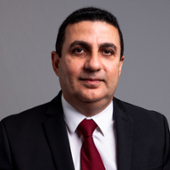
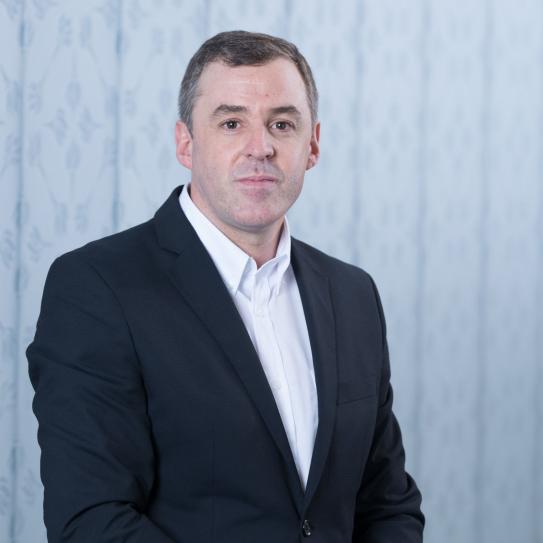
Sandra Orr is a Senior Lecturer in Civil Engineering at Ulster University's Faculty of Computing, Engineering and the Built Environment, based at the Belfast campus. She works in the Belfast School of Architecture and the Built Environment and can be contacted at sd.orr@ulster.ac.uk or +44 28 9536 5304. Her research interests are centered around two main areas: Water Engineering : including disinfection of drinking water in trunk mains, free chlorine residual, water quality monitoring, and pipe network analysis. Geotechnical Engineering : with a focus on the design of gravity retaining walls, adherence to standards (e.g., PD6694-1), and soil mechanics. Her publications reflect these interests, with a 2019 article on trunk main disinfection and a 2014 conference paper on retaining wall design. These works contribute to environmental protection and civil engineering practice, addressing critical infrastructure challenges.
Sherif El-Tawil is a Professor and Associate Chair in the Department of Civil & Environmental Engineering at the University of Michigan. He earned his Ph.D. from Cornell University (1996), M.S. (1991) and B.S. (1989) from Cairo University. Education Ph.D., Cornell University, Ithaca, NY (1996) M.S., Cairo University, Egypt (1991) B.S., Cairo University, Egypt (1989) His research focuses on structural behavior under extreme events, including: Progressive collapse modeling Seismic response of deep steel columns Catenary action in structural systems Ultra High-Performance Concrete (UHPC) Virtual reality applications for finite element analysis and education Egress simulation using agent-based models Hybrid coupled walls He has taught courses at both the University of Michigan (CEE-510, CEE-512, CEE-312, CEE-211, CEE-611, CEE-413) and University of Central Florida (CES-5606, CES-4605, CES-6116, EGN-3310, CES-4101). He has conducted workshops on structural bolting, steel bridge design, and seismic design. Current and former students include: Prof. Julie Fogarty (PhD 2015, UM) Dr. Jieshi Fang (PhD 2015, UM) Dr. Sukhoon Pyo (PhD 2014, UM) Prof. Honghao Li (PhD 2011, UM) Prof. Philip Park (PhD 2011, UM) Prof. Chung-Chan Hung (PhD 2010, UM) Prof. Dongjoo Kim (PhD 2009, UM) Dr. Kittinun Sirijaroonchai (PhD 2009, UM) Dr. Supat Suwwanakarn (PhD 2009, UM) Prof. Kapil Khandelwal (PhD 2008, UM) Dr. Ekin Ekiz (PhD 2007, UM) Dr. Mohamed Hassan (PhD 2003, UCF) Prof. Jin Jun (PhD 2002, UCF) He leads the Computational Structural Simulation Laboratory (CSSL) and has collaborated with NIST on large-scale collapse testing of steel subassemblages.
Chunendra K Sahu is an Assistant Professor in the Department of Civil Engineering at the Indian Institute of Technology Kanpur (IIT Kanpur) since 2020. He holds a PhD from the University of Alberta (2012-2016), MTech from IISc Bangalore (2009-2011), and BTech from BIT Durg (2005-2009). Previously, he was a Postdoctoral Researcher at the University of Cambridge (2017-2020) and Industrial Postdoc at the University of Alberta (2016-2017). His research focuses on: Flow dynamics in porous media Buoyancy-driven flows and density variations Carbon sequestration techniques Groundwater contamination mechanisms Geothermal energy extraction His publications predominantly explore fluid transport phenomena in porous structures, with recent work emphasizing gravity currents, convection patterns, and permeability transitions in geological systems. These studies bridge fundamental fluid mechanics with environmental applications. Significant honors include: Postdoctoral Fellowship from University of Oslo (2017) All India 6th Rank in GATE 2009 Silver Medal in National Mathematics Olympiad (2003) Multiple travel awards for geophysical research Best Paper Award (2011) He has held leadership roles including President of Trinity Postdoctoral Society at Cambridge and Mechanical Engineering Graduate Students Association at Alberta.
Dr. Rajesh Sathiyamoorthy is an Associate Professor in the Department of Civil Engineering at the Indian Institute of Technology Kanpur (IIT Kanpur), specialising in Geotechnical Engineering. Since joining IIT Kanpur in 2011, he has built a strong research portfolio, secured competitive funding, and received numerous accolades for his contributions to environmental geotechnology and unsaturated soil mechanics. Education PhD, Indian Institute of Technology Bombay, India (2010) M.E., College of Engineering Guindy, Anna University, India (2002) B.E., Vellore Engineering College, University of Madras, India (2000) Research Interests Dr. Sathiyamoorthy’s research is centred on the behaviour of unsaturated soils, environmental geotechnics, and innovative ground-improvement techniques. His work employs advanced numerical and physical modelling to address challenges in landfill barrier design, soil–structure interaction, and performance of geosynthetically reinforced systems. A distinctive feature of his investigations is the integration of field-scale problems with controlled laboratory and centrifuge testing, coupled with state-of-the-art computational tools. Scientific Awards & Fellowships IEI Young Engineers Award 2013-2014 (Civil Engineering) – The Institution of Engineers (India) Talented Young Scientist Fellowship 2019 – Ministry of Science and Technology, China Distinguished Alumni Award 2019 (Academic & Research) – VIT University Best Paper Awards (Environmental Geotechnology) – Indian Geotechnical Society, 2019 & 2015 Best Paper Award – International Geotechnical Engineering Conference on Sustainability 2016 IGS Prof. A.V. Shroff Biannual Award 2013 – Indian Geotechnical Society International Geosynthetics Society Student Award 2012 – IGS, USA Best Paper Award 2010 – Geotextiles and Geomembranes Research Funding & Collaborations Dr. Sathiyamoorthy has successfully led multiple sponsored projects worth several crores of rupees from agencies such as SERB-DST, BRNS-DAE, Shanghai Council of Science & Technology, RDSO Lucknow, and PAAB-MHRD. These projects span centrifuge modelling of embankments on encased stone columns, hydro-mechanical behaviour of compacted soils, reliability-based assessment of landfill slopes, and field validation of stabilised subgrade materials for pavements. His international collaboration includes joint research at Tongji University, Shanghai, under the Talented Young Scientist Fellowship. Laboratories & Teams He heads experimental activities in the Geotechnical Engineering Laboratory at IIT Kanpur, where his group maintains specialised equipment for unsaturated soil testing, geosynthetic evaluation, and centrifuge modelling. The research team comprises doctoral scholars, master’s students, and project staff working on inter-related themes of environmental geotechnology and ground improvement.
Guirong (Grace) Yan is a Professor in the Department of Civil, Architectural and Environmental Engineering at Missouri University of Science and Technology and serves as the director of the Wind Hazard Mitigation (WHAM) Laboratory. Her research focuses on mitigating hazards from extreme winds including tornadoes and hurricanes through engineering solutions and community resilience initiatives. Her primary research interests encompass numerical simulation of wind fields using computational fluid dynamics (CFD) and experimental methods in wind tunnels and tornado simulators, dynamic structural responses to extreme winds, and reproduction of real-world damage scenarios. She uniquely integrates engineering with social science to enhance public risk awareness and encourage proactive community resilience measures against wind hazards. Analysis of her recent publications (2023-2025) reveals dominant themes in tornado and typhoon wind modeling, particularly terrain and surface roughness effects using ultra-fine scale CFD simulations. Her work spans structural engineering, atmospheric science, and social dimensions of disaster recovery, with increasing emphasis on community resilience modeling, insurance mechanisms, and multidisciplinary approaches to risk reduction. Professor Yan has secured 20 research grants totaling $1.93 million. While specific student names are not listed in available materials, she mentors graduate students in the WHAM Laboratory through hands-on research in wind engineering and disaster resilience projects. As director of the WHAM Laboratory, she leads experimental research using specialized tornado simulators and wind tunnels to investigate extreme wind effects on civil structures. Her team develops advanced simulation techniques and mitigation strategies for wind-induced structural damage while collaborating with social scientists on community resilience initiatives.
William Schonberg is a Professor in the Department of Civil, Architectural and Environmental Engineering at Missouri University of Science and Technology, specializing in aerospace engineering applications within civil infrastructure frameworks. His research bridges terrestrial engineering disciplines with space exploration challenges, particularly in spacecraft protection systems and lunar resource utilization. His primary research domains include: Micrometeoroid and Orbital Debris (MMOD) risk analysis and mitigation strategies Development and refinement of ballistic limit equations for spacecraft shielding Lunar regolith processing for in-situ resource utilization (ISRU) Space law frameworks addressing orbital debris accountability Electrostatic and magnetic separation techniques for regolith beneficiation Aluminum extraction from lunar materials via molten salt electrolysis Analysis of his 2023-2025 publications reveals a dual research trajectory: advancing Mars Sample Return mission safety through MMOD risk uncertainty modeling for Earth Entry Systems, and pioneering lunar resource processing technologies. His MMOD work focuses on probabilistic risk assessment methodologies for spacecraft shielding, while his ISRU research demonstrates practical approaches for sustainable lunar exploration through regolith beneficiation and metal extraction. No scientific awards were documented in the source materials. Information regarding graduate student advising, grant funding, or laboratory facilities was not explicitly provided in the available texts.
Zhaozheng Yin is an Associate Professor in the Department of Biomedical Informatics and Department of Computer Science at Stony Brook University, affiliated with the College of Engineering and Applied Sciences. His research focuses on biomedical image analysis, computer vision, machine learning, and human-robot collaboration in smart manufacturing contexts. Ph.D. in Computer Science and Engineering from Pennsylvania State University (2009) M.S. in Electrical and Computer Engineering from University of Wisconsin-Madison B.S. in Automation from Tsinghua University Active in advancing microscopy image analysis through novel algorithmic approaches, Dr. Yin's work bridges theoretical computer science with practical applications in healthcare and industrial automation. His research emphasizes: Intelligent human-robot collaboration systems Cyber-physical sensing and augmented reality for manufacturing Medical image segmentation and classification techniques Temporal action localization and counting algorithms His publications demonstrate expertise in domain adaptation, vision-language integration, and graph-based modeling. Grant-funded projects include NSF CAREER support for microscopy analysis and NRI/CPS grants for collaborative robotics research. Best Doctoral Spotlight Award, CVPR 2009 Young Scientist Awards at MICCAI (2010-2015) NSF CAREER Award recipient (2014) Best Paper Awards at CVPR workshop (2015) and IISE (2018)
Kiyoshi Ono is a Professor at Waseda University's School of Creative Science and Engineering, Faculty of Science and Engineering, specializing in structural and earthquake engineering. He holds a Doctor of Engineering degree from Osaka University and has been actively contributing to academia since at least 2007, following his tenure as Associate Professor at Osaka University Graduate School of Engineering (2002-2007). His academic journey demonstrates a consistent focus on advancing structural engineering knowledge with practical applications for infrastructure resilience. Professor Ono's research interests center around structure engineering and earthquake engineering, with particular expertise in steel structures, bridge engineering, and high-performance steel materials. His work explores the seismic performance of steel structures, innovative bridge design methods, and the application of high-strength steel materials (particularly SBHS series) to improve structural safety and durability. He investigates how material properties affect structural behavior under seismic loads, developing evaluation methods that balance safety with economic considerations. His publication record shows a consistent research trajectory with 41 papers, 123 citations, and an h-index of 4 according to Scopus. The most recent publications (2015-2024) demonstrate his ongoing commitment to advancing knowledge in steel structure performance, particularly focusing on high-performance steel materials and their application in seismic-resistant design. His research spans fundamental material properties investigations to practical structural applications, showing a comprehensive approach from microscopic material behavior to macroscopic structural performance. Scientific Awards: New Road Technology 5-Year Plan Award (2003) Professor Ono actively contributes to academic knowledge dissemination through numerous publications, presentations, and his role in developing industry standards. His work on the 'Steel and Composite Structure Standard Specifications' and 'Buckling Design Guidelines' demonstrates his influence on engineering practice. He serves on committees including the Japan Society of Civil Engineers Kansai Branch (as General Affairs and Accounting Committee Member since 2010) and the Performance-Based Seismic Design Committee for Bridges. His professional memberships include the Japan Society of Civil Engineers Kansai Branch, Japanese Society of Steel Construction, and Japan Society of Civil Engineers, reflecting his active engagement with the engineering community. His research projects consistently address practical challenges in bridge engineering while advancing theoretical understanding of structural behavior under extreme loading conditions.
Prof. Dr.-Ing. habil. Robert Böhm is a faculty member at the Faculty of Engineering , Leipzig University of Applied Sciences (HTWK Leipzig) , where he holds the Professorship for Lightweight Construction with Composite Materials . His research focuses on sustainable composite material applications, structural health monitoring, and additive manufacturing technologies. Key projects: EuReCOMP (circular economy for composites), SoKoROMed (soft robotics in medicine), and PRINTCAP (3D-printed structural supercapacitors). Active in EU clusters like Essence and Carbon Fibres & Advanced High Performance Composites . Leads the Composite Circularity Lab and Advanced Materials and Structures Lab , collaborating with institutions like York University and TU Dresden. His work bridges lightweight construction with applications in renewable energy, medical devices, and CO2-free mobility systems. He presented at the 2025 Intec Trade Fair in Leipzig, showcasing innovations like rotor blade-repurposed seating and noise-dampening 3D-printed components. The 15 most recent publications emphasize wind turbine blade recycling, structural supercapacitors, 3D-printed composites, and environmental impact assessments. Articles span 2022-2025, with keywords covering materials science, mechanical engineering, and renewable energy.
Habeeb Abbas is an Associate Professor in the Department of Civil Engineering at Southern Illinois University Carbondale, specializing in structural engineering and earthquake-related research. He contributes to both undergraduate and graduate education through a diverse range of courses. Ph.D. in Civil Engineering (2018), Southern Illinois University Carbondale, IL, USA M.Sc. in Civil Engineering (2004), Mustansiriyah University, Baghdad, Iraq B.Sc. in Civil Engineering (2000), Mustansiriyah University, Baghdad, Iraq His research focuses on ground motion modeling , structural earthquake engineering , and the application of machine learning to analyze seismic data. He also explores structural design methodologies for steel and reinforced concrete in bridges and buildings. Recent publications highlight his work on seismic coherency analysis using machine learning techniques, such as relevance vector machines. Key themes include structural dynamics , ground motion modeling , and seismic design of infrastructure. He teaches foundational and advanced courses in civil engineering, including Statics , Structural Analysis , and Seismic Design , covering both theoretical and practical aspects of the discipline.
Cong Gao is a Research Fellow in the Department of Civil and Environmental Engineering at Princeton University's School of Engineering and Applied Science. His work focuses on civil and environmental engineering, with an emphasis on interdisciplinary approaches to infrastructure and environmental challenges.
Dr. Walter McDonald is an Associate Professor in the Department of Civil, Construction and Environmental Engineering at Marquette University . He specializes in water resources engineering, with a strong focus on stormwater management, hydrology, and environmental monitoring. His work integrates remote sensing, machine learning, and green infrastructure to address urban water challenges. Education: Ph.D. in Civil Engineering, Virginia Tech (2016) M.S. in Civil Engineering, Texas A&M University (2012) B.S. in Civil Engineering, Texas Tech University (2010) Research Interests: Dr. McDonald’s research is centered on urban water systems , particularly the impact of stormwater on environmental and public health. His work spans the use of green infrastructure to mitigate pollution, the detection and modeling of emerging contaminants such as antibiotic resistance genes, microplastics, and PFAS, and the application of drone-based remote sensing and machine learning for real-time monitoring of water systems. Scientific Awards: Way Klingler Early Career Award from Marquette University (April 2022) Grants and Funding: NSF Water Equipment & Policy I/UCRC – Principal Investigator on "Remote sensing and machine learning to assess urban watershed best management practices (Phase II)" ($89,962, 2024) U.S. Department of Defense Engineering Research and Development Center – Co-PI on "Novel Technologies to Mitigate Water Contamination for Resilient Infrastructure – Phase II" ($3.8M, 2022–2024) NSF STTR – PI on "Machine learning and video-based sensor for measuring sewer flows" ($256,000 total; $138,926 to MU, 2022–2024) NSF Water Equipment & Policy I/UCRC – PI on "Determining flow rates and flow sources in pipes using temperature data" ($50,000, 2023) Research Labs and Facilities: Dr. McDonald works closely with the Transportation Research Center (MUTRC) and utilizes departmental labs such as the Engineering Materials & Structural Testing Lab (EMSTL) , Hydraulics Lab , and the Water Quality Center to support his research activities.
Borja Garcia de Soto is an Associate Professor at New York University (NYU) and a Global Network Associate Professor in the Department of Civil and Urban Engineering at NYU's Tandon School of Engineering. He directs the S.M.A.R.T. Construction Research Group at NYU Abu Dhabi, focusing on construction automation, cybersecurity in the AEC industry, artificial intelligence, lean construction, and BIM. His research bridges technological innovation with practical construction challenges, emphasizing digital fabrication and smart infrastructure. He holds a PhD in Civil Engineering from ETH Zurich, an MSc in Engineering and Project Management from UC Berkeley, and dual MSc/BSc degrees in Civil Engineering from Florida International University (FIU), graduating cum laude. Research Interests: Construction automation, cybersecurity threats in AEC, AI applications, lean construction methodologies, BIM integration, digital twins, and robotic systems. Publications: Over 50 peer-reviewed works on topics spanning neural networks for construction scheduling, digital fabrication productivity, cybersecurity risk modeling, and BIM-based optimization tools. Awards: Honorary Fellow of ISTeA (2023), ALEC Innovation Day Partner of the Year (2023), SciRoc Competition Winner (2021), ICE Publishing Award (2016), and ETH Zurich Construction & Infrastructure Prize (2015). Editorial Roles: Associate Editor for Automation in Construction , Journal of Construction Robotics , and Smart and Sustainable Built Environment . Professional: Licensed Professional Engineer (California, Florida) with industry experience in structural engineering and project management.
Andrea Dorigato serves as an Associate Professor in the Department of Industrial Engineering at the University of Trento, Italy, with his office located at Via Sommarive, 9 - 38123 Povo. His contact information includes telephone 0461 283724 and email andrea.dorigato@unitn.it. He actively teaches courses including Circular Economy for Materials Processing , Engineering Properties of Materials , Recycling and Sustainable Materials , and Laboratory of Polymer Technologies and Sustainability across multiple degree programs in Materials Engineering and Industrial Systems Engineering. Dr. Dorigato's research spans sustainable materials engineering with expertise in biopolymers, carbon nanotube composites, thermo-mechanical characterization, and energy storage systems. His work emphasizes circular economy principles through polymer blend compatibilization, phase separation control, and development of silsesquioxane-enhanced composites. Key focus areas include self-healing structural materials, biodegradable packaging solutions, and agricultural applications of wood-derived topsoil covers. His recent 2025 publications reveal a strong trend toward environmental impact assessment and sustainable material innovation. Dominant themes include life cycle analysis of packaging/building materials, self-repairing composites for structural applications, biopolymer-based agricultural solutions, and furanoate polyester development for biodegradable products. The research consistently integrates experimental characterization with environmental performance metrics. No scientific awards were documented in the provided sources. Information regarding student advisement, research grants, laboratory facilities, or collaborative teams was not specified in the available materials.
Hubert Chanson is Professor of Civil Engineering at the University of Queensland, Australia, where he has held a faculty position since 1990 after six years in industry. His work focuses on environmental fluid mechanics and hydraulic engineering through theoretical, experimental, and numerical approaches. His research centers on environmental fluid mechanics and hydraulic engineering , particularly flows around hydraulic structures, gas-liquid/solid-liquid two-phase free-surface flows, and turbulence in steady/unsteady open channels. He integrates computational modeling, laboratory experiments, and field observations to study natural disasters like tsunamis and thunderstorms, emphasizing forensic analysis of real-world events. Professor Chanson leads a research group of 5–10 members and has published over 1,250 peer-reviewed works, including two dozen books. He serves as Senior Editor for Environmental Fluid Mechanics and on editorial boards of International Journal of Multiphase Flow and Flow Measurement and Instrumentation . His conference leadership includes chairing the 34th IAHR World Congress (2011) and 22nd Australasian Fluid Mechanics Conference (2020).