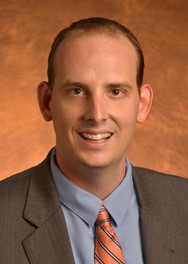
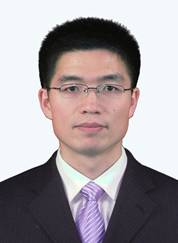
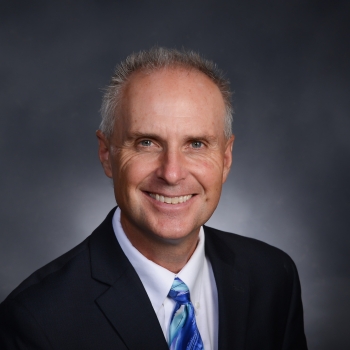
Jack T. Vandenberg is a Professor in the Department of Civil and Environmental Engineering at Carleton University's Faculty of Engineering, Ottawa, Canada. He is actively involved in teaching core undergraduate engineering courses including Statics, Mechanics of Solids, and Architectural Technology. His academic background includes a B.Eng. and M.Eng. from Carleton University, and he is a licensed Professional Engineer (P.Eng.). His research interests and teaching focus span Civil Engineering , Structural Engineering , Mechanics of Solids , and Engineering Education , reflecting his contributions to foundational engineering pedagogy. The available information does not include recent publications, preventing analysis of article trends. No scientific awards or honors are mentioned in the provided text. There is no information available regarding graduate student supervision, research grants, or funded projects. He is associated with the Civil and Environmental Engineering facilities at the Minto Centre for Advanced Studies in Engineering and the C.J. Mackenzie Building at Carleton University.
Prof. Ricardo Pereira Nogueira holds the position of University Professor at Grenoble INP/PHELMA, affiliated with the LEPMI laboratory. His research focuses on electrochemistry, corrosion science, and materials engineering, with particular emphasis on surface interactions, stochastic processes in electrochemical systems, and sustainable energy applications. He has significantly contributed to understanding corrosion mechanisms in various environments and developing advanced materials for energy storage and biomedical applications. His teaching activities include courses on electrochemistry, corrosion, and statistical analysis. With over 104 peer-reviewed articles and 6 book chapters, Prof. Nogueira has also supervised 25 doctoral theses and 19 Master's theses. His work spans topics such as electrocatalyst design for biofuel production, corrosion inhibition in CO₂ environments, and the electrochemical behavior of metals in aggressive media. He has delivered 12 invited lectures and participated in over 100 international conferences, showcasing his global academic impact. Prof. Nogueira's research group at LEPMI investigates interfaces in metal-electrolyte systems, stochastic modeling of electrochemical processes, and the development of durable materials for infrastructure and energy systems. His contributions to understanding hydrogen evolution reaction dynamics and material degradation mechanisms have advanced both fundamental science and industrial applications.
Dr. Dharma Wijewickreme is a Professor in the Department of Civil Engineering at the University of British Columbia (UBC), part of the Faculty of Applied Science. He joined UBC in 2001 and specializes in geotechnical engineering, with a focus on earthquake geotechnical engineering and pipeline integrity. He holds a Ph.D. and M.A.Sc. in Civil Engineering from UBC (1990 and 1986), following 11 years of industry experience in seismic and pipeline engineering consulting. Dr. Wijewickreme pioneered the Pipeline Integrity Institute (PII) at UBC in 2015, serving as its Co-Director. His research interests include soil-pipeline interaction, liquefaction of silts, advanced laboratory testing, and geotechnical material characterization. He teaches courses such as Soil Mechanics II, Soil Dynamics, and Pipeline Engineering. His awards include the Horst Leipholz Medal (2013), Canadian Geotechnical Journal Editor’s Choice Award (2011), and Fellowships from the Canadian Academy of Engineering and Canadian Society for Civil Engineering. He served as President of the Canadian Geotechnical Society (2017–2018) and Vice President Finance (2013–2017). Recent research trends emphasize advanced imaging techniques (e.g., X-ray μ-CT for silt fabric analysis) and pipeline integrity under seismic and environmental stresses. His work bridges laboratory experimentation with field applications, addressing challenges in geotechnical material behavior and infrastructure resilience.
Denis Duhamel is a Professor and researcher at the Navier Laboratory, affiliated with École des Ponts ParisTech. He teaches mechanics courses at École nationale des ponts et chaussées and previously lectured at École Polytechnique. He earned his doctorate from École des Ponts ParisTech (1994) and research accreditation from University of Marne la Vallée (1998). His research focuses on structural acoustics, railway dynamics, tire-road noise, and numerical modeling of vibrations using Wave Finite Element (WFE) methods. Key areas include railway track dynamics, vibration control, and acoustic barrier performance. Notable projects involve dynamic analysis of periodic structures like railway tracks and metamaterials. Recent publications (2020–2025) emphasize wave-based methods for periodic structures, nonlinear foundation modeling, and in-situ measurements of acoustic barriers. His work bridges theoretical models with practical applications in transportation and structural engineering. Lab affiliations include the Navier Laboratory, a leading center for mechanics and materials research. He collaborates on projects like DEUFRABASE for pavement noise evaluation and ODSurf for optimized road surface design.
Erika Quaranta is a Senior Consulting Engineer at ISVR Consulting, part of the Institute of Sound and Vibration Research (ISVR) at the University of Southampton. She specializes in numerical modeling of Computational Fluid Dynamics (CFD), acoustics (Finite Element and Boundary Element Methods), and High Performance Computing (HPC), combined with analytical modeling and experimental data analysis. Her affiliations include collaborations with RR-UTC on turbomachinery noise research and diverse consultancy projects. Education: MSc in Aeronautical Engineering (Italy), MSc (USA), PhD in Cranfield (UK). Former role: Research Assistant in the University of Southampton's Computational Engineering and Design group, focusing on civil UAV development. Research interests include acoustics, CFD, noise control, and HPC applications, with projects spanning aerospace propulsion, railway noise, and structural acoustics. Her work emphasizes practical solutions for engineering challenges, leveraging both computational and experimental methodologies. Her publications and conference contributions reflect expertise in active noise control, vibration analysis, and systems engineering. She has advised on value-driven design methodologies for UAVs and complex systems. Current projects involve advancing acoustic modeling techniques and collaboration with industry partners.
Tiziana Vanorio is an Associate Professor in the Earth and Planetary Sciences Department at Stanford University, affiliated with the School of Sustainability. She leads the Rock Physics and Geomaterials Laboratory, focusing on integrating laboratory experiments with analytical techniques to study rock and geomaterial properties across scales. Her research emphasizes composite structures' influence on mechanical behavior, with applications in CO2 mineralization, sustainable cement, and energy transition technologies. She holds a courtesy appointment in Civil and Environmental Engineering. Her work explores novel processes for subsurface engineering, including enhancing CO2 reuse through accelerated mineralization and replicating natural cementation processes. Recent projects investigate hydrogen production mechanisms and fibrous nanostructures' role in material reinforcement. Vanorio's interdisciplinary approach bridges geophysics, materials science, and environmental engineering to address global challenges like resource efficiency and decarbonization. Her lab employs advanced methods such as deep-learning for seismic analysis, micro-CT imaging, and 3D printing of rock microstructures. Key contributions include studies on Campi Flegrei caldera dynamics, Chicxulub impact hydrothermal systems, and THCM processes in low-porosity rocks. These efforts aim to improve subsurface monitoring, carbon storage safety, and sustainable construction materials.
Visar Farhangi is an Assistant Professor in the Department of Civil & Environmental Engineering at the University of California Merced. His work focuses on integrating advanced engineering techniques with sustainability principles. Research: Design optimization of deep foundations Anomalies in drilled shafts Soil-structure interaction AI-based optimized models for sustainable and improved concrete Effects of extreme environmental and load conditions on concrete structures Teaching: Core courses in geotechnical and structural engineering
Maurizio Marco Bocconcino is an Associate Professor in the Department of Structural, Building and Geotechnical Engineering (DISEG) at Politecnico di Torino. He is a member of the Interdepartmental Center R3C (Responsible Risk Resilience Center) and serves as Coordinator of basic subjects for the 2nd year of Engineering. His academic work bridges civil engineering and architectural design, with a strong focus on representation and digital modeling. His research interests include engineering drawing, territorial and urban surveying, geographic information systems (GIS), Building Information Modeling (BIM), data representation, and tools for urban and social regeneration. He investigates methods for surveying historic buildings, urban resilience, and the integration of digital technologies in heritage and urban planning. His work is aligned with UN Sustainable Development Goals 11 and 17, emphasizing sustainable cities and collaborative research. Bocconcino's recent publications explore digital archives for academic heritage, analog artifacts in engineering education, urban form, LEAN-BIM integration, and the visualization of social impact. His research outputs span journals such as DISEGNO , International Archives of the Photogrammetry, Remote Sensing and Spatial Information Sciences , and AGATHÓN , as well as conference proceedings in representation and urban planning disciplines. He is actively involved in research projects, including the EU-funded MAINCODE project on urban climate shelters and multiple commercial consulting contracts as Scientific Manager, focusing on urban and social regeneration. His teaching responsibilities include courses in engineering drawing, digital modeling, and graphic language across Civil, Environmental, and Building Engineering programs. Bocconcino collaborates with researchers such as Mariapaola Vozzola, Giorgio Garzino, Martino Pavignano, and Fabio Manzone. His affiliations with ERC sectors highlight expertise in civil engineering, computational modeling in culture, computer graphics, design, and information systems.
Nicholas Wierschem is an Assistant Professor in the Department of Civil and Environmental Engineering at the University of Tennessee, Knoxville, within the Tickle College of Engineering. He leads the Innovative and Smart Infrastructure Group (ISIG), focusing on cutting-edge research in structural dynamics, control, and health monitoring. Education: PhD in Civil Engineering, University of Illinois, Urbana, IL, 2014 MS in Civil Engineering, University of Illinois, Urbana, IL, 2010 BS in Civil Engineering, University of Arizona, Tucson, AZ, 2007 Dr. Wierschem's research centers on structural control, nonlinear dynamics, and sustainable infrastructure. His work integrates experimental methods and advanced modeling to develop innovative solutions for protecting structures against extreme loads such as earthquakes and blasts. A key focus is on nonlinear energy sinks (NESs) and vibro-impact systems for passive damping and vibration isolation. His recent publications demonstrate a strong trend in structural resilience, with emphasis on nonlinear control devices, seismic protection systems, and experimental validation through large-scale testing. The integration of smart materials and real-time monitoring is a recurring theme across his work. Scientific Awards: 2023 UTK Tickle College of Engineering Professional Promise Award 2023 Faculty Research Mentoring Award 2019 UT CEE Outstanding Teaching Award 2016 ASCE ExCEEd Teaching Fellowship Top 5 Most Cited Paper, International Journal of Non-Linear Mechanics (2014–2016) University of Illinois Teaching Excellence (2014–2015) Multiple fellowships and scholarships from NSF, ASCE, and university sources Dr. Wierschem has mentored multiple graduate and undergraduate students, including Anika Sarkar, Simona Abolghasemi, and Jonathan Shell. He has secured research funding enabling student assistantships and experimental projects. His lab, the Innovative and Smart Infrastructure Group (ISIG), conducts dynamic testing using photogrammetry and operates a 6-DOF shake table for structural experiments. Laboratory and Research Facilities: The ISIG lab includes the High Bay Laboratory in the John D. Tickle Building, equipped with advanced tools for laser metrology, structural testing, and real-time monitoring. The group actively develops and tests nonlinear energy sinks and other smart structural systems.
Yiguo Xue is a Professor and PhD Tutor at the Geotechnical and Structural Engineering Center, School of Civil Engineering, Shandong University. He has contributed extensively to tunnel engineering, subsea infrastructure, and slope stability analysis through advanced prediction models and numerical simulations. Research Interests: New tunnel geological condition prediction technologies Subsea tunnel and underground energy storage systems High slope stability evaluation Engineering exploration methods His recent work focuses on tunnel safety, subsea structural mechanics, and AI-driven hazard prediction models. Publications highlight his expertise in rockburst analysis, water inrush risk, and excavation optimization using machine learning and numerical frameworks. Scientific Awards: Recipient of China's Top 100 Most Influential Domestic Academic Paper Award (2008 paper on tunnel geological hazard forecasting) He has secured multiple national invention patents for tunnel monitoring devices (e.g., vibration sensors, collapse prediction systems) and developed specialized software for displacement prediction and rock classification.
Dunja Perić is a Professor in the Department of Civil Engineering at Kansas State University's College of Engineering. She earned her Ph.D. and M.S. in Civil Engineering from the University of Colorado, Boulder, and a Dipl.-Ing. from the University of Zagreb. Perić has held visiting positions at Northwestern University and the University of New South Wales, and currently serves on the ASCE Geo-Institute Unsaturated Soils Committee. Education: Ph.D. (University of Colorado, Boulder), M.S. (University of Colorado, Boulder), Dipl.-Ing. (University of Zagreb) Research Focus: Strain localization in soils, computational modeling of soil-structure interaction, sustainable infrastructure using bio-derived materials, and geotechnical hazards like sinkholes Awards: NSF POWRE Award, AAAS Award, 4x Who’s Who Among America’s Teachers, multiple K-State Civil Engineering Awards
Prof. Dr.-Ing. Katharina Schmitz serves as Institute Director and Vice Dean at the Institute for Fluid Power Drives and Systems, RWTH Aachen University. Her leadership within the Production Technology Cluster and extensive contributions to fluid power engineering establish her as a leading authority in mechanical engineering research and education. Her research spans fluid power systems, hydraulic component design, tribology, and physics-informed machine learning applications. She pioneers sustainable propulsion solutions through bio-hybrid fuels research while addressing fundamental challenges in polymer material behavior under hydraulic stresses. Current work focuses on carbon-neutral heavy-duty transportation, physics-based neural networks for lubrication modeling, and advanced control systems for electro-hydraulic actuators. Analysis of her 15 most recent publications reveals a dominant trend toward integrating physics-based modeling with deep learning to solve complex engineering problems. Her team consistently develops novel frameworks for cavitation prediction, flow rate determination, and material compatibility assessment - significantly advancing fluid power system reliability, efficiency, and digitalization. Scientific recognition includes: GfT Förderpreis 2023 for experimental and simulative investigation of partially hydrostatic relieved contacts in variable speed axial piston machines As head of the Institute for Fluid Power Drives and Systems, she leads cutting-edge research in sustainable fluid power technologies. The institute maintains strong industry partnerships while driving innovation in hydraulic component design, digital twins for condition monitoring, and next-generation propulsion systems through its position within RWTH Aachen's Production Technology Cluster.
Teemu Ojala is a Postdoctoral Researcher in Civil Engineering at Aalto University, specializing in concrete materials and mechanics. He works within the Mineral Based Materials and Mechanics research group, focusing on automated workability control and compositional property measurement in concrete production. Research Interests His work bridges Civil Engineering and Materials Science, emphasizing: Concrete durability and segregation monitoring Digital image analysis for microstructure characterization Smart sensing techniques (AC impedance, stereovision) Optimization of air content and compaction Key Contributions He has advanced automated quality control methods in concrete mixing through: Developing stereovision-based workability estimation Investigating freeze-thaw resistance mechanisms Pioneering AC impedance spectroscopy for segregation detection
Ronald Ziemian is a Professor of Civil & Environmental Engineering at Bucknell University specializing in structural engineering with expertise in steel and aluminum structures. He serves as Editor-in-Chief of Elsevier’s Journal of Constructional Steel Research and acts as technical consultant to the Aluminum Association. His educational background includes BSCE, MENG, and PhD degrees from Cornell University. Ziemian’s research centers on stability analysis and design of metal structures, contributing significantly to U.S. building codes through leadership roles in AISC, AISI, and AA Committees on Specifications. He developed the educational software MASTAN2 and co-authored the textbook Matrix Structural Analysis , advancing structural engineering pedagogy and practice. His awards include: ASCE Norman Medal AISC Special Achievement Award ASCE Shortridge Hardesty Award AISC TR Higgins Award SSRC Lynn S. Beedle Award Presidential Award for Teaching Excellence Presidential Professorship Ziemian chairs AISC’s TC3 - Loads, Analysis and Stability and previously chaired the Structural Stability Research Council. Renowned for teaching excellence, he frequently delivers professional workshops incorporating his research on state-of-the-art analysis methods and structural design trends.
Paola Stefanelli is a Tenured Assistant Professor (Ricercatrice RTDb) at the University of Salento, Department of Mathematics and Physics "Ennio De Giorgi". She has been with the university since October 2022 and holds the National Scientific Qualification as a Full Professor (2025-37) and Associate Professor (2023-35). Her educational background includes a Ph.D. in Mathematics from the University of Salento (2015), a Master's Degree in Mathematics (2011), and a Bachelor's Degree in Mathematics (2008). Dr. Stefanelli's research primarily focuses on the interaction between set-theoretical solutions of the Yang-Baxter equation and algebraic structures such as skew braces, cycle sets, and racks. She has made significant contributions to understanding constructive aspects of solutions and their reflections. Her work also extends to determining set-theoretical solutions to the pentagon equation on specific classes of semigroups and describing regular subgroups of affine groups of vector spaces. Her research sits at the intersection of algebra, mathematical physics, and discrete mathematics, with applications spanning theoretical physics and computer science. Her recent publications demonstrate a strong focus on classification problems, constructive methods for generating solutions, and exploring connections between different algebraic structures. She has been particularly active in advancing the understanding of skew braces and their relationship to Yang-Baxter solutions, as well as developing new approaches to pentagon equation solutions using semigroup theory. Dr. Stefanelli actively participates in the academic community, serving as Scientific Committee member for conferences and organizing seminars since 2021 with colleagues Francesco Catino and Marzia Mazzotta. She is also the Managing Editor of the open-access journal "Advances in Group Theory and Applications" since April 2024. As an advisor, she has supervised PhD student Andrea Albano since November 2023 (jointly with Salvatore Siciliano) and has previously co-supervised Master's and Degree theses for Valerio Fedele in 2020/21 and 2016/17. She has also served as Contract Professor of "Mathematical Analysis" for the Bachelor's Degree in Civil Engineering at the University of Salento in academic years 2020/21 and 2021/22. Dr. Stefanelli maintains an active research schedule with upcoming speaking engagements including the "XI International Workshop on Non-Associative Algebras in Bari" (April 2026) and participation in organizing the conference "Solving the Yang-Baxter equation: new frontiers and approaches" (May 2025).