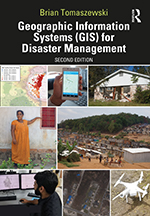
Brian Tomaszewski is a Professor at the Rochester Institute of Technology (RIT) within the School of Interactive Games and Media , Golisano College of Computing and Information Sciences. He also holds an Adjunct Professor position at the Centre for Disaster Management and Mitigation, Vellore Institute of Technology, India. Education : BA (University at Albany), MA (University at Buffalo), PhD (Pennsylvania State University) Research Interests focus on Geographic Information Science applications for Disaster Management , Forced Displacement , and Geovisual Analytics . His work bridges Spatial Thinking with Serious Games for crisis response and mitigation. Recent Publications (2023-2014) emphasize LLM-driven refugee camp analysis , geospatial resilience modeling , and serious games for disaster education , with fieldwork spanning Rwanda, Jordan, and Poland. Scientific Awards : Fulbright Scholar (2018) Grants & Collaborations include US National Science Foundation (NSF) funding for international projects and partnerships with UNHCR and IEEE . He leads the RefuGIS project and the Center for Geographic Information Science and Technology at RIT.
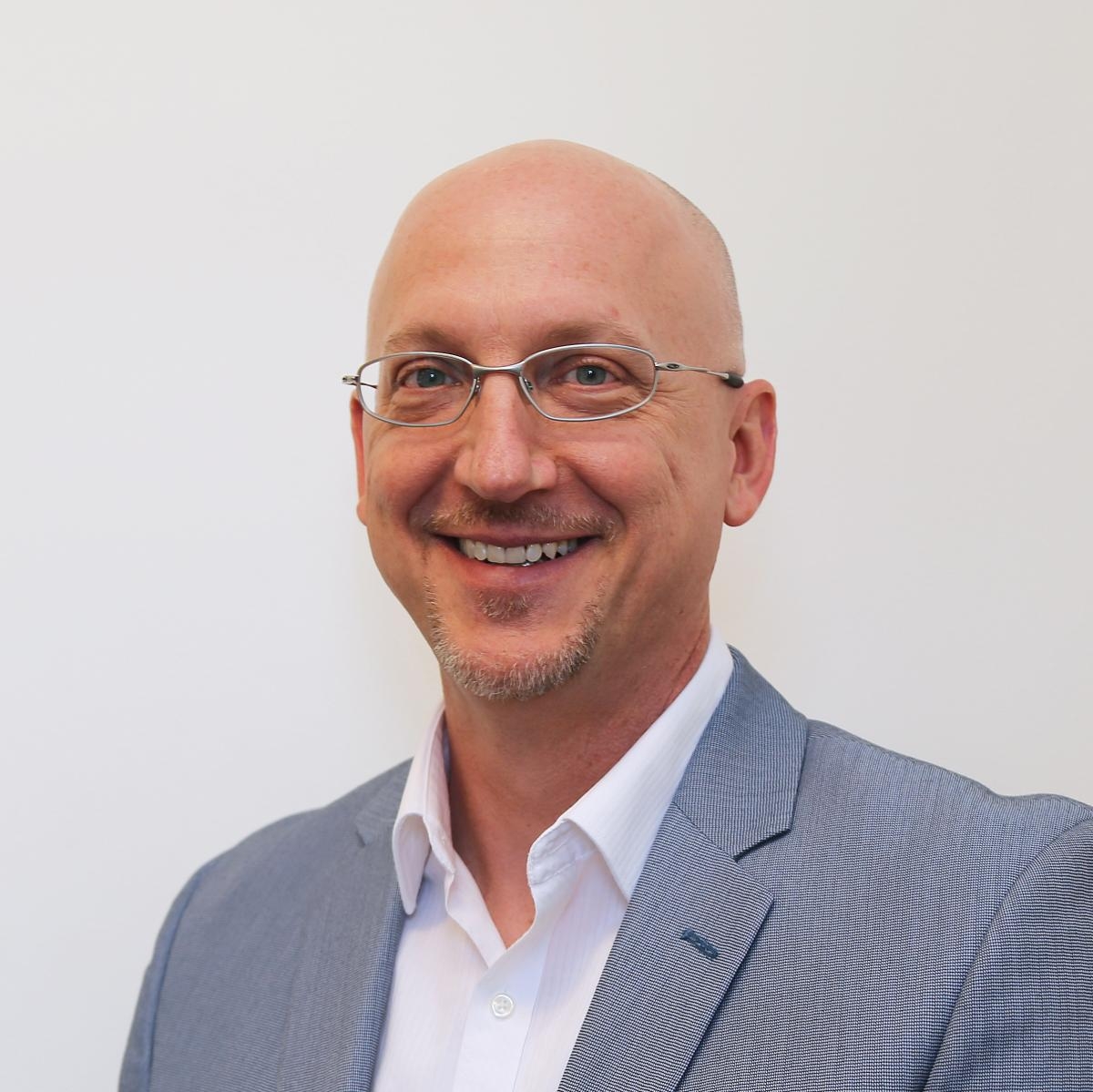
Dr. Ulas Bagci is an Associate Professor at Northwestern University's Feinberg School of Medicine, Department of Radiology. He holds courtesy appointments in Biomedical Engineering (BME), Electrical and Computer Engineering (ECE) at Northwestern, and Computer Science at the University of Central Florida. As the director of the Machine and Hybrid Intelligence Lab, his research focuses on AI and machine learning applications in biomedical and clinical imaging. Education: BS: Bilkent University (2003) MS: Koç University (2005) Fellow: University of Pennsylvania (2009) PhD: University of Nottingham (2010) ISTP Fellow: NIH (2012) Research Interests: Dr. Bagci’s work spans artificial intelligence, machine learning, and their integration into medical imaging workflows. His lab develops algorithms for tumor segmentation, radiomics analysis, and ethical AI frameworks in healthcare. Notable projects include large-scale MRI segmentation of cirrhotic livers and predictive models for clinical outcomes in oncology and cardiology. Publications: His recent work emphasizes AI-driven solutions for challenges in radiology, including lung disease detection, pulmonary embolism mortality prediction, and ethical considerations in foundational AI models. His articles reflect a focus on bridging clinical needs with advanced computational methods. Lab & Affiliations: The Machine and Hybrid Intelligence Lab collaborates with the Robert H. Lurie Comprehensive Cancer Center. Research themes include federated learning, medical image synthesis, and AI ethics in clinical decision-making.
Marat I. Latypov serves as Assistant Professor in the Department of Materials Science and Engineering at the University of Arizona's College of Engineering. He is also a member of the Applied Mathematics Graduate Interdisciplinary Program and leads the Materials Informatics Lab. His research spans computational materials science, sustainable alloy design, and machine learning applications for materials development. Dr. Latypov holds a PhD in Materials Science and Engineering from Pohang University of Science and Technology (POSTECH, South Korea, 2014) and a Dipl.-Ing. in Engineering Physics from Ufa State Aviation Technical University (Russia, 2011). His postdoctoral training included appointments at Georgia Tech/CNRS in France and the University of California, Santa Barbara. His research focuses on materials informatics , physics-informed machine learning , and sustainable structural alloys . Key methodologies include graph neural networks for polycrystal mechanics, vision transformers for microstructure representation, and adaptive experimental design for materials optimization. Recent work emphasizes circular economy applications through construction waste recycling and copper mine tailings valorization. Analysis of his publication record reveals strong emphasis on computational microstructure-property linkages (35% of recent work), machine learning for materials design (30%), and sustainable materials processing (25%), with growing integration of large language models for materials knowledge extraction. NSF CAREER Award (2025) : For damage control in recycled aluminum alloys ISTI Distinguished Faculty Scholar (2024) : At Los Alamos National Laboratory Novelis Hackathon First Prize (2021) : Computer vision application Acta Materialia Outstanding Reviewer (2018) Young Researcher Award (2017) : NanoSPD7 Conference Dr. Latypov advises PhD students including Herbold Fellow Zhuocheng Huang and leads projects funded by NSF and the Grantham Foundation. Current initiatives include chalcopyrite leaching optimization for copper mining and graph neural network development for fatigue prediction. His Materials Informatics Lab maintains collaborations with Los Alamos National Laboratory, MIT, and industry partners including Novelis. The lab operates at the intersection of metallurgy , machine learning , and high-performance computing , with capabilities spanning deep learning, Bayesian inference, and cloud-based computational infrastructure. Recent news highlights participation in CODAS-HEP summer school and publication of vision transformer work in Acta Materialia.
John E. Taylor is the Frederick Law Olmsted Professor and Associate Chair for Faculty Development and Research Innovation at the Georgia Institute of Technology's School of Civil and Environmental Engineering within the College of Engineering. His research focuses on the intersection of human and engineered networks, with particular emphasis on creating resilient infrastructure systems that serve society's needs while creating more livable communities. Taylor's research interests span multiple domains including Smart City Digital Twins , Urban Infrastructure Resilience , Network Dynamics , and Building-Occupant Interaction . His work examines how human behavior, infrastructure systems, and environmental factors interact during normal operations and extreme events. He has developed innovative approaches to understanding urban systems through the lens of network theory and computational modeling. His publication record demonstrates consistent contributions to the fields of urban analytics and infrastructure resilience, with a recent focus on digital twin technologies for urban systems. Taylor's work shows a clear trajectory toward increasingly sophisticated integration of AI, network science, and civil infrastructure engineering to address complex urban challenges. His research has particular relevance for cities facing climate change impacts and seeking to build more equitable and resilient communities. Taylor leads the Network Dynamics Lab at Georgia Tech, where he mentors PhD students and postdoctoral researchers. His lab has produced significant work on human-infrastructure interaction, particularly during disasters and extreme events. The lab's research combines computational modeling, data analytics, and field studies to understand and improve urban systems. His work has been applied to real-world challenges including river emergency response systems, urban heat exposure forecasting, and disaster response optimization. Taylor has collaborated with city officials and agencies to implement systems that have demonstrable community benefits, such as the AI-enabled camera system for drowning prevention on the Chattahoochee River and crime reduction systems using mobile cameras guided by AI algorithms.
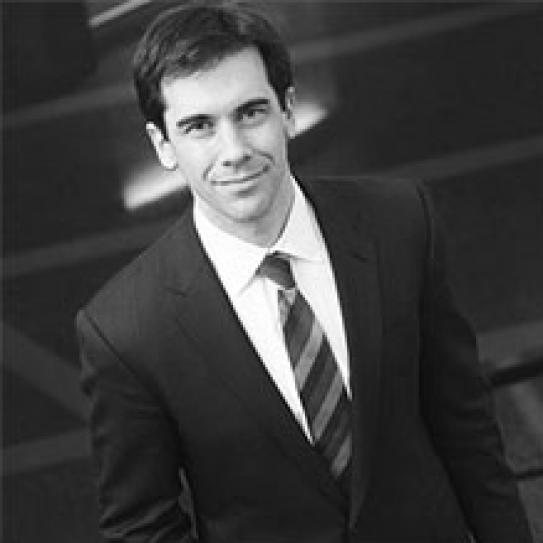
Leonardo Rosado is an Associate Professor at the Department of Water Environment Technology (School of Architecture and Civil Engineering) at Chalmers University of Technology . His work focuses on Urban Metabolism , developing methods to analyze cities' resource flows through the Urban Metabolism Analyst framework. His research spans: Circular Economy implementation Waste Management systems Household consumption modeling Agent-based urban scenario analysis Recent publications (2025–2021) cover geospatial sharing economy frameworks, behavioral modeling of waste sorting, and machine learning applications for infrastructure analysis. Major funded projects include: Digital Twin Cities Centre (VINNOVA, 2020–2024) CREATE (Swedish Energy Agency, 2022–2025) SEsam (Kamprad Family Foundation, 2020–2023) Contact: rosado@chalmers.se | ORCID
Professor Min An is a Professor of Construction and Risk Management at the University of Salford, leading the Infrastructure Research Group within the School of Science, Engineering & Environment. He holds an honorary professorship at two overseas universities (China and Portugal) and serves on the editorial boards of 12 international journals. With over 40 years of experience, his career spans academic roles at Heriot-Watt University, Coventry University, and the University of Birmingham, alongside industry roles as a civil engineer and researcher. His research focuses on safety and risk management in construction, transportation systems, and energy sectors, with over 200 publications. Key areas include railway and highway safety, offshore oil & gas risk assessment, and nuclear reliability management. He has secured funding from EPSRC, EU, DfT, and industry partners, leading 20+ projects. Notable achievements include developing methodologies for infrastructure safety and maintaining collaborations with 30+ industrial partners. Professor An has supervised 30 PhD students and over 280 postgraduate projects, contributing to industry workshops and best practices. Awards include multiple science technology prizes and conference best paper/keynote recognitions. His teaching spans risk management, construction safety, and project management across MSc programs.
Jorge Gil is an Associate Professor in Urban Analytics and Informatics at Chalmers University of Technology's Department of Architecture and Civil Engineering. His research focuses on integrated urban models, Smart Cities, City Information Modelling (CIM), and Urban Digital Twins, with applications in sustainable mobility, social inclusion, energy transition, and circular economy. He develops GIS solutions and open science methodologies. Teaching includes GIS, sustainable mobility, and spatial data science courses. He supervises Bachelor, Master's, and PhD students. Current projects include LogiNets (logistics network flows analysis), ComCy (cycling safety), and FlowSense (traffic flow data). Key research outputs span agent-based modeling of waste sorting behavior, mobility equity analysis, and multimodal urban network frameworks. He co-authored over 50 publications and actively contributes to interdisciplinary urban planning initiatives.
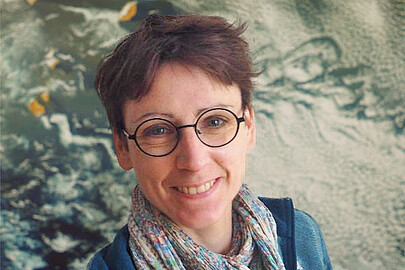
Dr. Gaël Kermarrec is a researcher at the Boundary Layer Meteorology Group , part of the Institute of Meteorology and Climatology within the Faculty of Mathematics and Physics at Leibniz University Hannover . His work focuses on atmospheric turbulence, GNSS applications, and remote sensing for environmental monitoring. Boundary layer meteorology Turbulence theory GNSS signal processing Terrestrial laser scanning Climate change impacts Geodetic time series analysis His research integrates advanced mathematical models like LR B-splines and Matérn covariance with large eddy simulations to study: Atmospheric turbulence effects on optical/GNSS signals Hydrospheric mass loading Deformation analysis of terrain/port infrastructure Climatic sea-level changes Machine learning for remote sensing The 15 most recent articles (2025-2023) demonstrate his focus on: GNSS-based turbulence detection AI-enhanced climate mapping Advanced surface approximation techniques Multi-sensor data fusion Stochastic modeling of geodetic observations Environmental impacts on optical measurements He has developed tools like the Klimascanner QGIS plugin for urban climate resilience and contributes to: Understanding atmospheric scale lengths Improving TLS/GNSS deformation monitoring Analyzing hydrospheric changes Wavefront modeling Ionospheric corrections
Constantine E. Kontokosta is Professor of Urban Science and Planning at NYU Marron Institute of Urban Management, Director of Civic Analytics and Urban Intelligence Lab, with cross-appointments at Center for Urban Science and Progress (CUSP) and Department of Civil and Urban Engineering. He serves as affiliated faculty at Wagner School of Public Service and previously held leadership roles including inaugural Deputy Director of CUSP. His educational background includes: PhD, Urban Planning (Minor: Econometrics) from Columbia University MPhil, Urban Planning from Columbia University MS, Urban Planning; Quantitative Analytics from Columbia University MS, Real Estate Finance and Economics from New York University BSE, Systems Engineering - Civil from University of Pennsylvania Kontokosta leverages large-scale data and computational methods to advance urban energy/climate policy, neighborhood dynamics, and bias detection in public decision-making. His research integrates urban planning with data science to develop equitable solutions for sustainable development, with recent projects analyzing COVID-19 disparities through mobility data and creating methods to reduce building emissions. The work emphasizes evidence-based policy, information transparency, and uncovering algorithmic discrimination. His honors include the IBM Faculty Award, UN Data for Climate Action Challenge Award, Goddard Junior Faculty Fellowship, and multiple best paper awards. Key recognitions: 2023 Best Paper Award (ICLR Climate Workshop) 2021 Article of the Year (Journal of American Planning Association) 2017 Microsoft Azure Research Award 2014 IBM Faculty Award 2012 Fellow of Royal Institution of Chartered Surveyors Funded by National Science Foundation, MacArthur Foundation, Sloan Foundation, U.S. Department of Transportation, NYC Mayor’s Office of Sustainability, Lincoln Institute, and HUD, Kontokosta has served on UNEP Sustainable Buildings Council, Royal Institution of Chartered Surveyors Americas Board, and Suffolk County Planning Commission. His entrepreneurial ventures translate research into practical urban solutions. He leads the Urban Intelligence Lab focused on data-driven urban methodologies and Civic Analytics program advancing evidence-based policy through transparent knowledge democratization, with research featured in Nature Communications, PNAS, and major media outlets.
Dr. Frederic Bosche is a Reader in Construction Informatics at the University of Edinburgh's School of Engineering, leading the CyberBuild Lab. His research focuses on advancing digital construction technologies, including BIM, sensing systems, and digital twinning to enhance infrastructure management and workforce safety. Education: PhD in Civil Engineering (University of Waterloo), M.Sc. from University of Texas at Austin, and M.Eng. from Ecole Centrale de Lille. Research interests include automated construction processes, data-driven infrastructure lifecycle management, and integrating emerging technologies like AI and IoT into construction workflows. His CyberBuild Lab has pioneered projects in defect detection, roof monitoring, and smart construction inspection. Notable contributions include over 100 publications, 12 research projects (e.g., 'Digital Facility' and 'Monitoring Roofs of Traditional Buildings'), and awards such as the Charles M. Eastman Top PhD Paper Award. He actively engages in public outreach through science festivals and collaborates internationally with institutions like ETH Zurich and Heriot-Watt University.
Stephen E. Still is a Professor of Practice in the Department of Civil, Structural and Environmental Engineering at the University at Buffalo (UB), affiliated with the Institute for Sustainable Transportation and Logistics. His roles include teaching applied transportation planning and technology courses, advising students, and collaborating across disciplines between the School of Engineering and Applied Sciences and the School of Management. Prior to academia, he served as founder and managing director of Seabury Airline Planning Group and Diio, LLC, specializing in aviation consulting and IT. With over 30 years of industry experience, he held leadership roles at US Airways and United Airlines, focusing on strategic route planning, fleet management, and alliance development. Dr. Still holds a PhD in Civil Engineering and Operations Research from Princeton University, with a focus on transportation systems and economics, and a BS in Engineering (magna cum laude) from UB with a concentration in transportation planning. He has also completed advanced coursework in demand modeling at MIT. His research interests emphasize sustainable transportation systems and logistics, integrating engineering principles with operational efficiency. While his academic contributions primarily reside in transportation engineering, his interdisciplinary work incorporates wearable technology and sensor-based solutions for health monitoring, as evidenced by his extensive publication record in smoking cessation and behavioral health research. Scientific awards and grants are not explicitly mentioned in the provided information. Dr. Still’s advising and teaching focus on fostering student engagement in transportation innovation and real-world problem-solving. His professional experience bridges academia and industry, reflecting a commitment to practical applications of engineering and logistics principles.
Maria Papathoma-Köhle is an Associate Professor at the Institute of Alpine Natural Hazards , University of Natural Resources and Life Sciences, Vienna. She holds a PhD in Tsunami Vulnerability Assessment from Coventry University (UK) and has held roles as Academic Coordinator of the MSc 'Risk Prevention and Disaster Management' at University of Vienna. Her research focuses on natural hazard vulnerability , particularly wildfire and flood risks in alpine regions, with methodological expertise in indicator-based vulnerability assessment and physical vulnerability indices . Education: PhD in Natural Hazards (Coventry University, UK) MSc in Environmental Management (University of Durham, UK) Geology Degree (University of Athens, Greece) Research: Specializes in wildfire vulnerability indices, flood risk modeling, and climate change adaptation frameworks. Developed the Physical Vulnerability Index (PVI) for buildings and contributed to EU-funded projects like FLOODLABEL and EXTEND. Awards: Elise Richter Scholarship (2016) Back to Research Grant (2012) Young European Scientist Award (2002) Projects: Led FWF-funded research on physical vulnerability indicators and collaborated on EU programs for wildfire preparedness. Current work includes climate change adaptation tools for Austrian infrastructure. Advising: Supervised 6 Master's/PhD students on wildfire and flood vulnerability topics. Publications: Over 106 peer-reviewed works; recent articles focus on wildfire indices, IPCC risk diagrams, and dynamic flooding assessment.
Chaopeng Shen is a Professor in the Department of Civil and Environmental Engineering at Pennsylvania State University. His research bridges hydrology with state-of-the-art deep learning and differentiable modeling techniques, focusing on advancing our understanding of hydrologic cycles and their interactions with ecosystems, energy, and carbon cycles. He leads the Multi-scale Hydrology, Processes and Intelligence group (MHPI) and has developed the Process-based Adaptive Watershed Simulator (PAWS) for large-scale hydrologic modeling. Shen's work emphasizes physics-informed machine learning , where deep learning components are integrated with process-based equations through differentiable modeling. This approach enables training neural networks using big data while respecting physical laws, leading to improved generalizability and robustness. His group has demonstrated advantages of differentiable models in rainfall-runoff prediction, routing, ecosystem modeling, and water quality studies. Notably, his team's deepLDB project addresses landslide prediction using AI and big datasets. Recent publications highlight his contributions to global water modeling (grid-LSTM, differentiable Muskingum-Cunge routing), extreme flood forecasting (probabilistic diffusion models), and hydrologic uncertainty quantification . Shen actively engages in interdisciplinary collaborations through the PRISM Cooperative Institute, which aims to integrate multi-domain data for systemic risk assessment. His group has advised students including Dapeng Feng, Wen-Ping Tsai, Kuai Fang, Xinye Ji, and Tasnuva Mahjabin. Shen's research is supported by the National Science Foundation (NSF), Department of Energy (DoE), USGS, Google.org, and the Gates Foundation. He serves as Editor for the Journal of Geophysical Research - Machine Learning & Computation and Chief Editor for Frontiers in Water: Water & AI. His open-source software tools like PAWS and deepLDB are available through dedicated project websites.
Yu Nie is a Professor in the Department of Civil and Environmental Engineering at Northwestern University, affiliated with the NU-TREND research group within the McCormick School of Engineering. His work focuses on optimizing transportation networks, integrating human behavior, infrastructure design, and network topology to enhance mobility, reliability, and sustainability. He holds a Ph.D. from the University of California, Davis, an M.S. from the National University of Singapore, and a B.S. (cum laude) from Tsinghua University. His research interests span interdisciplinary approaches combining optimization, network science, traffic flow theory, economics, and statistics. Key areas include congestion pricing strategies, ride-hailing market dynamics, autonomous vehicle integration, and transit system design. He has contributed to studies on dockless bike-sharing systems, ethics-aware transit design, and traffic management in autonomous vehicle zones. Nie’s recent publications (2024–2025) highlight advancements in modular autonomous vehicle systems, co-modal freight solutions, and policy frameworks for sustainable urban mobility. His work often bridges theoretical insights with practical applications, addressing challenges like EV charging chaos and ride-pooling impacts. He received the 2021 Transportation Science Meritorious Service Award for his editorial contributions. His research also explores freight exchange platforms, taxi market resilience during pandemics, and the role of route choice models in transit design. Labs/Teams: Yu Nie is associated with the NU-TREND research group, specializing in innovative transportation solutions through interdisciplinary collaboration.
April Z. Gu is a Professor of Civil and Environmental Engineering at Cornell University, joining the faculty in 2018. She holds a B.S. from Tsinghua University and a Ph.D. from the University of Washington. Previously, she served as a full professor and program leader at Northeastern University's Department of Environmental Sciences. Her research focuses on applying microbial agents to mitigate environmental pollutants, with emphasis on water quality monitoring, bioremediation, and sustainable wastewater treatment. She is a WEF Fellow (2017) and served on the AEESP Board (2017). Her research interests include microbial processes in phosphorus cycling, enhanced biological phosphorus removal, and next-generation biosensors. Current projects address climate change impacts on phosphorus utilization, energy-efficient wastewater treatment, and mechanistic toxicity assessment platforms. She has authored over 100 peer-reviewed articles and led interdisciplinary collaborations on water sustainability. Education: B.S., Environmental Engineering and Science, Tsinghua University (China) Ph.D., Civil and Environmental Engineering (with Microbiology), University of Washington (USA) Awards: WEF Fellow, AEESP Board Member Grants/Projects: Includes studies on side-stream EBPR systems, ENRe biotechnology for manure management, and hurricane-impacted water quality. Her teaching philosophy emphasizes integrative problem-solving and mentors students in water engineering and biotechnology. She leads a research group advancing translational technologies for sustainable water systems.