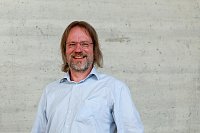
Prof. Dr. Dr. Martin Stieger is a Professor of Vocational Education and Business Education at Allensbach University of Applied Sciences Konstanz since 2017. He holds dual doctorates in Political Science/History (2002) and Education (2014), with extensive academic experience across Austria, Germany, Finland, and South America. Education: Law, Politics, Social Sciences, Economics, History from Linz, Salzburg, WU Vienna, and IUB/BiH Positions: Rector of Allensbach University (current), Director of e-learning initiatives Research interests include: European vocational education standards Distance learning pedagogy and didactics Real estate economics and tax policy Software reliability modeling Public administration reform Publication trends show interdisciplinary work spanning: Real estate economics (2022-2023) Education technology (2014-2019) Legal studies (2007-2013) Software reliability (2019)
Martin Slepicka is a researcher at the Chair of Computing in Civil and Building Engineering at the Technical University of Munich. His work focuses on bridging Building Information Modeling (BIM) with additive manufacturing and digital twinning technologies. Department: Civil and Building Engineering Research Group: Digital Twinning, Construction Robotics Research Highlights: Slepicka specializes in: Integrating BIM with digital fabrication workflows Developing closed-loop systems for additive manufacturing Real-time data exchange in construction robotics Automated parameter calibration using machine learning Semantic enrichment of BIM through multi-sensor platforms Academic Contributions: Recent publications demonstrate expertise in: Extrusion-based additive manufacturing control Non-planar path planning for 3D-printed components Autonomous robot grasping solutions From fabrication models to simulation frameworks Laboratories: Active in: BIM-Lab Robotic Fabrication Lab Mobile Machinery development
Dr. Christian K. Karl, Senior Lecturer in Civil Engineering Didactics at the University of Duisburg-Essen, combines engineering practice with educational innovation. As Head of the Civil Engineering Didactics group and Chair of the VDI 2552 Guidelines Committee, he pioneers simulation games, BIM training frameworks, and AI integration in pedagogy. Lead developer of simulation tools like 'Einsatz in Grimhausen' for disaster management Recipient of the Best Workshop Award at ISAGA 2025 Principal investigator for projects: KI4Edu , DigiTeamsBau , and BIM Kommunal Author of 20+ publications on BIM, AI, and educational games His research focuses on competency-oriented teaching methods, digital transformation in construction, and immersive learning technologies. Recent work explores AI's impact on teacher roles, Smart Home systems, and circular construction practices. Articles highlight trends in simulation games for crisis training, BIM education frameworks, and AI applications for personalized teaching. He emphasizes human-centered technology development and collaborative digital workflows . Scientific recognition includes: Best Workshop Award (ISAGA 2025) Hochschuldidaktische Innovationen (2010) As Chair of the VDI 2552 committee, he shapes national BIM training standards. His leadership in EU Academy platform development and initiatives like 'Personalisierte KI-generierte Podcasts' underscores his commitment to accessible, forward-thinking education.
Jiabin Wu is a researcher at the Chair of Computing in Civil and Building Engineering, Technical University of Munich (TUM), specializing in Building Information Modeling (BIM) and AI-driven solutions for building design compliance. His work focuses on automating regulatory adherence in early design stages through computational innovation, with contact via j.wu@tum.de and +49 (89) 289-23147. His research centers on automated code compliance checking, design adaptation, and BIM conflict resolution using artificial intelligence techniques. Key methodologies include reinforcement learning for conflict resolution, graph-based semantic enrichment, and parametric modeling to enhance IFC (Industry Foundation Classes) models. This work addresses critical gaps in construction informatics by enabling self-healing building designs that dynamically adapt to regulatory requirements while preserving design intent. Analysis of Wu's 2022-2025 publications reveals a cohesive trajectory toward intelligent BIM ecosystems. Core themes include the 'Design Healing' framework for automated compliance, spatial logic integration in IFC models, and machine learning applications for conflict resolution. His research bridges civil engineering with computer science, emphasizing practical implementations that reduce manual review cycles and improve design efficiency in architectural workflows. Wu actively mentors graduate students, supervising theses on BIM-based issue resolution, circulation design optimization, and egress compliance. He contributes to TUM's educational mission through teaching 'BIM.fundamentals' in summer semesters 2022 and 2023, focusing on scalable assessment methods for large student cohorts. His academic service extends to developing pedagogical frameworks that integrate industry standards with computational thinking. As part of TUM's research infrastructure, Wu collaborates within the BIM-Lab and specialized groups including Information Management and Digital Twinning. His work leverages the university's Robotic Fabrication Lab resources and aligns with cross-departmental initiatives in spatial computing, advancing the integration of physical construction processes with digital model evolution.
apl. Prof. Dr.-Ing. Claus Brenner is an Adjunct Professor at the Institute of Cartography and Geoinformatics within the Faculty of Civil Engineering and Geodetic Science at Leibniz University Hannover. His research focuses on LiDAR mapping, point cloud processing, and robust estimation, with applications in autonomous systems, urban mapping, and disaster risk assessment. He leads the Graduiertenkolleg 2159 research group on integrity and collaboration in dynamic sensor networks. Key research areas include 3D reconstruction, SLAM (Simultaneous Localization and Mapping), semantic segmentation of mobile mapping data, and cooperative perception systems. His work integrates advanced machine learning techniques with geospatial data analysis, addressing challenges in sensor fusion, uncertainty modeling, and real-time localization. Recent publications span topics like voxel-based point cloud localization for smart spaces, flood risk mapping using LiDAR, and adversarial shape completion. Brenner has contributed to benchmark datasets such as LuCoop and LUMPI, advancing research in cooperative perception and urban navigation. His methods emphasize robustness and scalability, often leveraging generative models and statistical frameworks for urban environment analysis. Notable projects include the development of high-definition mapping using LiDAR, trajectory-based road network reconstruction, and semantic annotation from user trajectories. His work bridges theoretical advancements in computer vision with practical applications in autonomous systems and smart infrastructure.
Prof. Dr.-Ing. Christian Baier is a Professor in the Department of Construction at Technische Hochschule Mittelhessen. His expertise spans Building Information Modeling (BIM), construction informatics, and sustainable construction practices. He holds a diploma from Gießen-Friedberg University of Applied Sciences (2002), a Master's in Lean Construction from Coventry University (2005), and a Doctorate from the University of Cantabria (2016) focusing on BIM methodology in public sector construction. His research emphasizes holistic BIM integration, process modeling for sustainable construction, and digital transformation in the construction industry. Key contributions include work on BIM standards, LOD implementation, and mobile defect management systems. He actively supervises theses and manages the construction department's research initiatives. Notable publications include analyses of BIM adoption in Germany and international contexts, collaborative process management frameworks, and advancements in construction simulation technologies. His work bridges academic research with practical applications in public infrastructure projects.
Rüdiger Wilhelmi is a Professor at the Department of Law, University of Konstanz, focusing on civil law, commercial and corporate law, business law, and comparative law. He is also the Director of the Institute for Legal Research and Vice Rector for Academic Affairs since 2024. His research spans liability law, family and inheritance law, and Legal Tech. Professor, Department of Law, University of Konstanz (since 2010) Director, Institute for Legal Research (since 2012) Vice Rector for Academic Affairs (since 2024) Principal Investigator, Cluster of Excellence "The Politics of Inequality" (since 2019) His work emphasizes comparative legal analysis across jurisdictions like the USA, UK, and Netherlands, with a focus on patent law , financial regulation , and digitalization of law . Publications include monographs on capital maintenance in GmbH law, environmental liability, and EMIR regulation. He has contributed extensively to legal commentaries and handbooks. Wilhelmi's lectures and conferences address topics like AI liability , multi-party arbitration , and banking regulation . He co-edits volumes on legal digitalization and participates in interdisciplinary workshops on topics like "Banking beyond Banks" and "Diversity in Financial Markets".
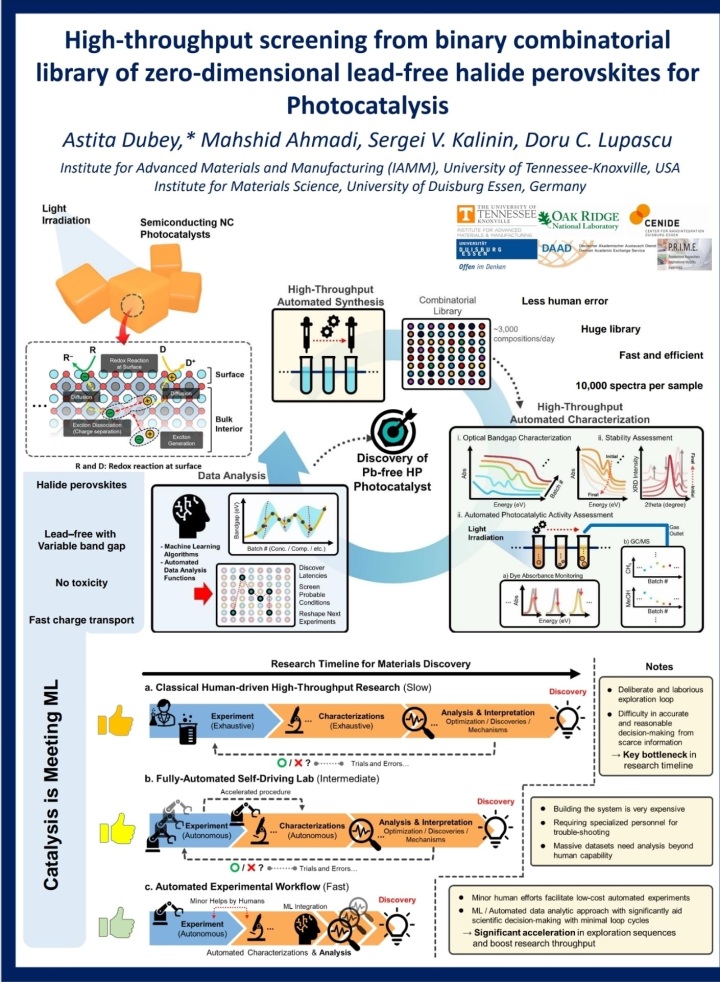
Prof. Doru C. Lupascu is a leading academic in Materials Science at the University of Duisburg-Essen . His research spans ferroic materials , perovskite solar cells , cement recycling , and electrocaloric effects . He supervises PhD students like Astita Dubey and Andrei Karabanov , whose work on photocatalysis and mechanical ice properties has earned recognition. Key Research Themes: Ferroic and multiferroic materials Lead-free perovskites for solar and photocatalytic applications Recycling of cement and concrete via thermal reactivation Electrocaloric and dielectric properties for cooling technologies Recent Article Trends highlight his group’s focus on machine learning in materials discovery , high-throughput screening of perovskites, and novel composite structures for energy storage. These works often intersect with environmental sustainability (e.g., UpCement project) and fundamental physics of ferroic systems. Notable Collaborations: The institute works with institutions like University of Cape Town (Antarctic sea ice expeditions), CentraleSupélec (relaxor ferroelectrics), and Oak Ridge National Lab (postdoctoral research). Projects such as UpCement and RelaxSolaire are funded by German and European agencies , including the Ministry for Economic Affairs and Climate Action (NRW) and DFG .
Dr. Vladimir Golkov is a Postdoctoral Researcher at the Technical University of Munich (TUM) within the School of Computation, Information and Technology, specifically in Informatics 9 (Computer Vision Group). He works under the supervision of Prof. Dr. Daniel Cremers and maintains an active research profile in deep learning applications for medical imaging and biomedical data analysis. His primary research interests focus on deep learning since 2014, with specialization in high-dimensional and geometric data structures, data-processing goals beyond supervised learning (including clustering and anomaly detection), and applications in biomedicine and physics. Dr. Golkov has successfully mentored students who have gone on to pursue PhD studies at prestigious institutions including TUM, LMU, Mila, ETHZ, Cambridge, and Stanford. Analysis of his recent publications reveals a strong trend toward medical imaging applications, particularly in MRI technology, where he combines deep learning approaches with traditional physics-based methods. His work frequently bridges the gap between theoretical machine learning advances and practical medical applications, with significant contributions to diffusion MRI, sequence optimization, and 3D data processing. He has also expanded into emerging areas including large language models for medical applications and equivariant deep learning architectures. Dr. Golkov receives grant support from the Deutsche Telekom Foundation and maintains an active publication record with numerous contributions to leading conferences including ISMRM, MICCAI, and NeurIPS workshops. His research demonstrates a consistent trajectory of innovation at the intersection of computer vision, deep learning, and biomedical applications. He is actively involved in teaching and mentoring, with students from his projects advancing to top PhD programs worldwide. His office is located at Boltzmannstrasse 3, 85748 Garching, Germany (Office: 02.09.061), and he can be contacted at vladimir.golkov@tum.de.
Dr. Martin Stefan Toni Wiener is a Full Professor at the Chair of Business Information Systems, specializing in Business Engineering, at Technische Universität Dresden. Affiliated with the Faculty of Business and Economics under the School of Civil and Environmental Engineering, his research focuses on digital transformation, business analytics, and data governance in organizational contexts. His recent publications highlight trends in Chief Data Officer roles in public sectors, algorithmic management in platform work, and open government data utilization. Collaborative works appear in journals like Management Accounting Research and Journal of Strategic Information Systems . Key research keywords include: Business Information Systems, Digital Transformation, Business Analytics, and Data Governance.
Prof. Dr. Stefan Sackmann is a full Professor and Chairholder of Business Information Management at the Institute of Business Information Systems, Faculty of Law and Economics, Martin Luther University Halle-Wittenberg. He holds a doctorate and habilitation from Albert-Ludwigs-University Freiburg and has been a professor at MLU since 2010. His academic leadership includes organizing major conferences and workshops in IT security, risk, and compliance. His research interests include: Business Information Systems IT Risk Management Compliance Automation in Cloud and Flexible Workflows Business Process Management (BPM) Resilience in Socio-Technical Infrastructures Data Privacy and Ubiquitous Computing Disaster Response and Volunteer Coordination Systems His recent work emphasizes the integration of compliance controls in dynamic environments (e.g., 'Sticky Controls') and the development of mobile platforms like 'Hands2Help' for crisis response. These projects bridge academic research with practical applications in public safety and enterprise IT governance. His publications from 2010–2015 reflect a strong focus on IT risk, compliance automation, and resilience, particularly in business processes and disaster management. The recurring themes include control mechanisms in flexible workflows, privacy in ubiquitous computing, and the economic aspects of compliance. His scientific accolades include: Best Paper Award, ISCRAM 2015 Distinguished Paper Award, Business Information Systems Conference 2013 Adolf Lampe Dissertation Prize, University of Freiburg (2003) Best Paper Awards at HICSS 2001 and Business Information Systems Conference 2001 Scidea Competition Winner (Service Category, 2013) State Graduate Funding (LGFG Scholarship, 2002) Prof. Sackmann has actively advised on IT risk and compliance in industry collaborations (e.g., with VW Financial Services) and has secured recognition for innovative research applications. He has chaired tracks and workshops at major conferences such as MKWI, ARES, and IEEE CPSCom, demonstrating leadership in the academic community. His work on 'Hands2Help' indicates engagement with applied grants or innovation funding, though specific grants are not listed. He has also contributed as editor to special issues in journals like Electronic Markets and Wirtschaftsinformatik . He leads research initiatives focused on resilient information systems, particularly through workshops like RISI (Resilience and IT-Risk in Social Infrastructures) and ReISOC. His team explores how IT can enhance organizational and societal resilience, especially in crisis scenarios. The 'Hands2Help' project exemplifies a lab-like initiative aimed at real-world deployment of volunteer coordination technology.
Andrea Aquino is a postdoctoral researcher and academic in the Department of Geosciences at the University of Tübingen, Germany, affiliated with the Faculty of Science and the Terrestrial Sedimentology Workgroup. She holds a dual expertise in geology and forest science, bridging sedimentology, mineralogy, and ecological systems. Her academic work spans teaching, research, and cultural heritage conservation, with a growing focus on the interplay between geology and vegetation. University: University of Tübingen School: Faculty of Science Department: Department of Geosciences Research Group: Terrestrial Sedimentology Email: andrea.aquino@uni-tuebingen.de Dr. Aquino earned her PhD in geology focusing on stone decay in historical buildings, and later completed a Master's in Forest Science from the University of Padova with top honors (110/110). Her educational path reflects a deep commitment to interdisciplinary science, combining earth sciences with ecological and conservation applications. PhD in Geology – Focus: decay of natural and artificial stones in cultural heritage Master of Science in Forest Science – University of Padova (110/110) Background in mineralogy, petrology, and sedimentology Her research interests are highly interdisciplinary, centered on Vegetation Geology —a novel framework she is developing that places geology at the core of ecological interpretation. She investigates how geological substrates influence forest vegetation, soil moisture, and ecosystem resilience. She also continues active research in sedimentology, focusing on loess, soil micromorphology, and the mineralogical analysis of building stones. Her methodological toolkit includes XRD, XRF, SEM, micromorphology, and remote sensing (e.g., satellite-derived vegetation and water indices). The 15 most recent publications reflect a strong trend in cultural heritage conservation , ore and building stone mineralogy , and sedimentary processes . A significant portion of her work applies analytical techniques to historical materials, assessing durability, decay mechanisms, and conservation strategies. There is also a clear thread in interdisciplinary methodologies , including 3D modelling, image analysis, and mobile applications for on-site heritage assessment. While her earlier work focused on geochemical and petrographic analysis, her recent trajectory shows an expansion into ecological integration and digital tools. Andrea Aquino has not received any publicly listed scientific awards in the provided text. She is actively involved in academic mentoring and teaching, though no formal students are listed. She teaches courses in sedimentology, stratigraphy, rock identification, and the geology of building stones, and leads field excursions to Mainz and the Black Forest. She is also engaged in research grants and collaborative projects related to cultural heritage and environmental geology, though specific grant names are not mentioned. Her work often involves multi-institutional collaborations, particularly with Italian research groups. She is a key member of the Terrestrial Sedimentology Workgroup at the University of Tübingen’s Geo- and Environmental Research Centre (GUZ). This team focuses on sediment dynamics, loess studies, and applied geology. Her lab work integrates mineralogical and geochemical analyses with conservation science, and she collaborates on digital heritage projects involving 3D modelling and image analysis. Her evolving research integrates field teams for vegetation-geology studies and remote sensing applications in forest ecosystems.
Ion Androutsopoulos is a Professor in the Department of Informatics at Athens University of Economics and Business (AUEB), where he leads the AUEB NLP Group. With over 180 publications spanning three decades, he is a prominent figure in Natural Language Processing research, particularly known for his work bridging NLP with legal informatics, Greek language processing, and biomedical applications. His research interests focus on several interconnected areas of Natural Language Processing: Legal Informatics : developing NLP systems for legal document analysis, legal judgment prediction, and legal reasoning, with recent work including GreekBarBench and Archimedes-AUEB systems Greek Language Technology : creating specialized tools for Modern Greek processing, including GR-NLP-TOOLKIT and Greeklish transliteration systems Biomedical Text Mining : working on diagnostic captioning and medical image analysis through participation in ImageCLEFmedical challenges Financial NLP : developing systems like EDGAR-CRAWLER for financial document analysis and XBRL tagging His recent publications (2023-2025) show an increasing focus on Greek-specific NLP resources and practical applications of large language models in legal reasoning. His work often combines theoretical NLP advances with practical implementations, particularly through his leadership of the AUEB NLP Group which regularly participates in international evaluation campaigns. Professor Androutsopoulos has supervised numerous PhD students who have become active researchers in their own right, including John Pavlopoulos, Prodromos Malakasiotis, and Ilias Chalkidis. His collaborative network spans multiple institutions and disciplines, reflecting the interdisciplinary nature of modern NLP research.
Mohammad Sharif is a Researcher at the Institute for Mobility and Urban Planning within the Department of Building Sciences at the University of Duisburg-Essen. His work integrates transportation engineering, climate science, and computational methods to address urban mobility challenges under climate change scenarios, with particular focus on infrastructure resilience and sustainable transport systems. His research spans urban mobility modeling, climate-resilient transport infrastructure, trajectory analytics, and AI-driven environmental prediction systems. Key interests include first/last-mile connectivity solutions, dust storm pathway forecasting, tropical cyclone trajectory prediction, and context-aware movement analysis. He develops hybrid machine learning frameworks that incorporate spatiotemporal data, geographic context, and fuzzy logic to solve complex transportation and environmental problems. Recent publications demonstrate a strong interdisciplinary trend, combining transportation engineering with atmospheric science and health informatics. His work frequently employs convolutional neural networks, ensemble learning, and context-aware systems to model phenomena ranging from urban road network resilience to asthma exposure risks. Collaborations with Ali Asghar Alesheikh and Dirk Wittowsky highlight his focus on practical climate adaptation tools. Dr. Sharif contributes to the "R2K-Klim+" project developing strategic decision support tools for climate change adaptation in the Rhine river basin. His office is located at Berliner Platz 6-8, Room WST-A.09.06 in Essen, with office hours by email arrangement.
Dr. Gholamali Hoshyaripour leads the "ART" working group at the Institute of Meteorology and Climate Research (IMK-TRO) within the Karlsruhe Institute of Technology (KIT). His research focuses on atmospheric aerosols, volcanic ash dispersion, Saharan dust modeling, and their impacts on climate systems through radiation-cloud interactions. He collaborates with institutions like the University of Hamburg and Max Planck Institute for Meteorology. Earth System Sciences PhD (University of Hamburg, 2013) MSc Environmental Engineering (University of Tehran, 2009) BSc Civil & Environmental Engineering (University of Najafabad, Iran, 2005) His research explores aerosol lifecycle processes, including ash iron solubility modulation in volcanic plumes, dust optical properties, and climate feedback mechanisms. Recent work emphasizes machine learning applications for atmospheric modeling (e.g., MieAI neural network) and satellite-based plume height estimation. Analysis of 15 recent publications reveals interdisciplinary trends combining atmospheric modeling (ICON-ART, COSMO-ART), volcanic impact studies, dust-cloud-radiation interactions, and remote sensing techniques. Key keywords include atmospheric chemistry, climate modeling, aerosol dynamics, and satellite data applications.