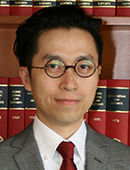
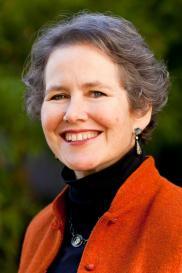
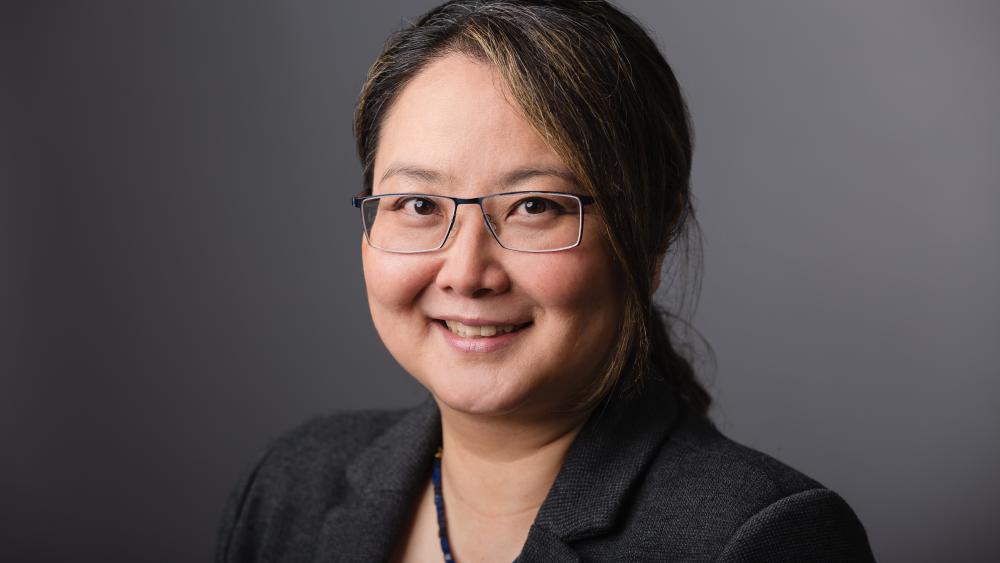
Karl Gustafsson is a Professor at Stockholm University within the Department of Economic History and International Relations. His work bridges security studies , collective memory , and digital research methods in international relations. Current Role: Professor of International Relations, Stockholm University Previous Positions: Post-Doc at Lund University, Researcher at Swedish Institute of International Affairs Visiting Appointments: University of Tokyo, Osaka University, Keio University, Academia Sinica, Nordic Institute of Asian Studies Research Focus: Karl specializes in memory politics , ontological security , and anxiety-driven international dynamics , particularly in Sino-Japanese relations and digital platforms . His studies explore how historical narratives and online memory construction influence state identity and policy. Awards & Grants: Recipient of the Wang Gungwu Prize (2014) and Stockholm University Association’s award (2011). Holds Swedish Research Council and Marianne & Marcus Wallenberg Foundation grants for projects on apologies in international politics and digital memory in East Asia . Publications: His work appears in journals such as International Studies Quarterly , European Journal of International Relations , and Memory Studies , addressing topics like narrative power in East Asia, anxiety’s role in policy change , and digital humanities applications in IR.
Kevin E. Davis is the Beller Family Professor of Business Law at New York University School of Law and Faculty Director of the Hauser Global Law School Program. He joined NYU in 2004, serving as Vice Dean for Global Affairs from 2012 to 2017. His research focuses on law's role in economic development, anti-corruption regulation, and legal system performance measurement. Davis holds a BA in Economics from McGill University (1990), an LLB from the University of Toronto (1993), and an LL.M. from Columbia University (1996). His academic contributions include over 50 articles, four edited volumes, and the monograph Between Impunity and Imperialism (2019). He has held visiting appointments at institutions worldwide, including Cambridge University and the University of the West Indies. Key awards include the 2018 Distinguished Article Prize from the American Law and Economics Review. Teaching focuses on contracts, law and development, and secured transactions. His work bridges legal theory with practical challenges in global governance, finance, and anti-corruption policy.
Ayesha Jalal is a distinguished Professor of History at Tufts University's School of Arts and Sciences and holds a joint appointment at The Fletcher School of Law and Diplomacy. She currently serves as the Mary Richardson Professor and directs the Center for South Asian and Indian Ocean Studies. With a career spanning over three decades, Professor Jalal has established herself as a leading scholar in South Asian history, particularly focusing on Pakistan studies, the partition of India, and Muslim political thought in the region. Professor Jalal's academic journey began with a double major in History and Political Science from Wellesley College in 1978. She then pursued doctoral studies at the University of Cambridge, earning her PhD in History in 1983. Her early career included prestigious fellowships at Trinity College, Cambridge (1980-84), the Centre of South Asian Studies (1984-87), the Woodrow Wilson Center for International Scholars (1985-86), and the Harvard Academy for International and Area Studies (1988-90). Professor Jalal's research primarily centers on South Asian history with special emphasis on Pakistan, the partition of India, and Muslim political thought. Her work explores the complex interplay between religious identity, nationalism, and state formation in the region. She has made significant contributions to understanding democratic development in Pakistan, sectarian dynamics in South Asia, and the historical connections between the Indian subcontinent and the wider Indian Ocean world. Her recent scholarship has focused on 'Oceanic Islam,' examining transregional Muslim networks and universalist aspirations that transcended colonial boundaries. Professor Jalal's extensive publication record demonstrates a consistent focus on South Asian political history, with particular attention to Pakistan's formation and development. Her recent works show a progression from studies of partition and state formation toward broader examinations of Muslim intellectual history and transregional connections. The 2020-2024 publications reveal a sophisticated engagement with themes of democratic erosion, sectarianism, and the historical roots of contemporary political challenges in South Asia, while also exploring more cultural and religious dimensions through works on Muslim enlightened thought and oceanic connections. Patrus Bukhari Award for the best English language book, The Pity of Partition , Academy of Letters, Government of Pakistan (2015) Britannica Book of the Year recognition (2015) MacArthur Fellowship (1998-2003) As an educator, Professor Jalal has mentored numerous graduate students through thesis supervision and directed research projects. Her teaching portfolio includes courses on Modern South Asia, Contemporary South Asia, Islam and the West, and specialized seminars on South Asian history. She has taught at several prestigious institutions including the University of Wisconsin-Madison, Columbia University, and Harvard University before joining Tufts in 1999. In her role as Director of the Center for South Asian and Indian Ocean Studies, she has fostered interdisciplinary research and provided guidance to emerging scholars in the field. Professor Jalal directs the Center for South Asian and Indian Ocean Studies at Tufts University, which serves as a hub for interdisciplinary research on South Asia and its connections to the wider Indian Ocean world. The center facilitates collaborative projects, hosts visiting scholars, and organizes events that bridge historical, political, and cultural perspectives on the region. Under her leadership, the center has become a prominent institution for South Asian studies, promoting dialogue between academic research and contemporary policy issues.
Ronald J. Colombo is Professor of Law and Associate Dean for Distance Education at Hofstra University's Maurice A. Deane School of Law. He teaches courses in Business Organizations, Securities Regulation, Contracts, and corporate law seminars. He has been on the faculty since 2006 and previously served as Associate Dean for Academic Affairs (2013–2015). Education: JD, New York University School of Law (magna cum laude, Order of the Coif), 1998 BS, Cornell University, 1994 Clerkship: Judge Jerry E. Smith, U.S. Court of Appeals for the Fifth Circuit Professor Colombo’s research focuses on corporate law, securities regulation, financial regulation, and the constitutional rights of corporations, especially First Amendment protections. His work explores the moral and philosophical underpinnings of corporate personhood, religious liberty in business, and the role of trust in financial systems. He is particularly known for bridging legal doctrine with ethical and theological perspectives. His recent scholarly publications reveal a strong thematic trend: the intersection of religion, corporate governance, and constitutional law. He has also contributed to legal education, especially in online teaching methodologies, and continues to publish on financial regulation and corporate ethics. Scientific Awards: Stessin Prize for Outstanding Scholarly Publication Lawrence A. Stessin Prize for Outstanding Scholarly Publication (2008) Professor Colombo has been actively involved in professional service, including serving on the editorial review board of the Review of Business and as an arbitrator for the Financial Industry Regulatory Authority (FINRA). He has not listed any formal research grants or PhD students, but his influence extends through media engagement—quoted in The New York Times , Wall Street Journal , and Bloomberg —and through his widely read op-eds in The Financial Times and Huffington Post . He has held leadership roles in academic administration and is a recognized expert in both practitioner and scholarly legal communities. His treatise Law of Corporate Officers and Directors is republished annually by Thomson Reuters, indicating sustained scholarly and practical impact.
Alessandro Monsutti is a Professor of Anthropology and Sociology at the Graduate Institute of International and Development Studies in Geneva. He holds additional roles as Faculty Associate at the Centre on Conflict, Development and Peacebuilding, Global Migration Centre, and Albert Hirschman Centre on Democracy. His research focuses on transnational networks, forced migration, and conflict dynamics in Afghanistan, Iran, Pakistan, and Europe. Education: PhD in Social Anthropology from the University of Neuchâtel (2002). Prior roles include Research Fellowships at Yale University (2008–2010) and the School of Oriental and African Studies (1999–2000), and Visiting Professorships at the University of Vienna and Arizona State University. Research Interests: Migration studies, border studies, political economy of post-conflict reconstruction, diaspora dynamics, and the intersection of globalization with local practices. His fieldwork spans Afghanistan, Pakistan, Iran, and Western countries, emphasizing the agency of displaced populations and the socio-economic strategies they employ. Scientific Contributions: Over 30 peer-reviewed articles and authored/edited books including Homo itinerans: Towards a Global Ethnography of Afghanistan (2021) and War and Migration (2005). His work bridges ethnographic rigor with policy relevance, addressing themes like refugee integration, urban migration, and global governance. Grants & Awards: MacArthur Foundation Grantee (2004–2006), Swiss National Science Foundation grants for projects on urban cohabitation and Afghan crisis analysis. Co-led initiatives on adolescent migration and border policy in South Asia. Labs/Teams: Collaborates with the Refugee Studies Centre (Oxford), Global Migration Centre (Geneva), and international NGOs like UNHCR. Active in editorial boards of journals like Tsantsa and ethnographiques.org .
Abdi Aidid is an Assistant Professor at the University of Toronto Faculty of Law , teaching Civil Procedure and First Year: Tort Law . He is also a Visiting Associate Professor at Yale Law School (2024–2025) and a Faculty Affiliate at the Centre for Ethics and the Future of Law Lab, focusing on interdisciplinary research at the intersection of law and artificial intelligence. Education: LL.M, University of Toronto J.D., Yale Law School B.A., University of Toronto His research explores access to justice , legal ethics , and the transformative potential of artificial intelligence and machine learning in legal systems. He has published extensively on topics including AI regulation, procedural fairness, and the ethical challenges of integrating technology into legal practice. Recent publications span juridification , human-computer labor division , and generative AI in legal contexts, reflecting his focus on the convergence of law, ethics, and technology. His work has been recognized with awards such as the PROSE Award and a Donner Prize nomination. Scientific Awards: PROSE Award (Association of American Publishers) The Donner Prize (finalist)
Ji Li is the John S. and Marilyn Long Professor of U.S.-China Business and Law at the University of California, Irvine School of Law, where he joined in July 2019. Previously, he served as a Professor of Law and Zhuang Zhou Scholar at Rutgers University with associate faculty affiliations at the Division of Global Affairs. Ph.D. in Political Science, Northwestern University J.D., Yale Law School (Olin Fellow in Law, Economics, and Public Policy) Professor Li's research focuses on Chinese law and politics, international business transactions, comparative law, contracts, and empirical legal studies. His scholarship examines how Chinese multinational companies adapt to U.S. legal systems, state-owned enterprise compliance, and the intersection of U.S.-China geopolitical rivalry with international legal norms. His recent publications (2023-2024) explore topics like foreign investment screening regulations, digital age civil rights challenges, and evolving rule of law concepts in China. These works span disciplines including international law, comparative law, corporate law, and civil rights law, with a specific emphasis on cross-jurisdictional legal adaptation, regulatory compliance, and geopolitical implications. Scientific awards include: Zhuang Zhou Scholar at Rutgers University Olin Fellow in Law, Economics, and Public Policy at Yale Law School Professor Li's ongoing research projects investigate China's engagement with international legal orders and transnational actor responses to U.S.-China tensions. He has presented at prestigious venues including the Institute for Advanced Study in Princeton, UC San Diego School of Global Policy and Strategy, and international conferences in Amsterdam and New York.
Paul Huth is a Professor and Director of the Center for International Development and Conflict Management (CIDCM) at the University of Maryland, where he also serves as Editor of the Journal of Conflict Resolution. He earned his PhD in Political Science from Yale University in 1986. His research spans international relations with concentrated expertise in interstate armed conflict, territorial disputes, international law applications, deterrence theory, civil war dynamics, civilian impacts of warfare, and aid-conflict interactions. He employs rigorous statistical methodologies and develops original datasets for large-N empirical analysis, frequently collaborating with graduate students and faculty to advance theoretical frameworks in conflict resolution. Professor Huth actively integrates students into his research projects to bridge academic theory with practical methodology, emphasizing real-world relevance for undergraduates through current event applications while fostering advanced research skills among graduate students.
Rosana Garciandia is a Senior Lecturer in Public International Law and Co-Director of the Centre for International Governance and Dispute Resolution (CIGAD) at The Dickson Poon School of Law, King's College London. She holds a PhD in Law from the University of Navarra and previously taught at the University of Murcia. Her research focuses on international law responses to human rights abuses, including modern slavery, racial discrimination, and corruption, with an emphasis on state accountability and intersectionality. She is also a Research Leader at the British Institute of International and Comparative Law and a Fellow of the Macrocrimes Center. Education: PhD in Law (University of Navarra) Previous Positions: Secretary General of the European Law Institute, UNODC, EU Agency for Fundamental Rights Her research interests include state responsibility, EU law, migration law, and the law of international organizations. She has published widely on topics such as inter-state communications in UN treaty bodies, domestic servitude, and human rights scrutiny in international trade policies. Recent work includes editing a special issue on inter-state communications (2024) and contributing to the Intersectional Rewrites project. She collaborates with the Leverhulme Centre for Research on Slavery in War, exploring the slavery-war nexus. Her teaching and research address global challenges, linking legal frameworks to issues like modern slavery, corruption, and human dignity. She actively engages with international organizations and policy development.
Mazdak Nik-Bakht is an Associate Professor at Concordia University's School of Building, Civil, and Environmental Engineering. His work bridges construction engineering with digital innovation, focusing on smart infrastructure and sustainable development. PhD, Construction Engineering & Mgmt., University of Toronto PhD, Structural Engineering, Iran University of Science & Technology MASc & BASc, Structural and Civil Engineering, Iran University of Science & Technology His research integrates Artificial Intelligence and Social Network Analysis into construction management systems. Key areas include: Smart infrastructure and urban computing Deconstruction and circular economy principles Building Information Modeling (BIM) and digital twinning Process mining in Architecture, Engineering, and Construction (AEC) industry Decision models in construction project management Semantic computing and computational linguistics applications Recent publications show a focus on BIM analytics , urban resilience , and social media's role in infrastructure planning . Papers often combine AI and network theory to solve complex construction challenges. 2015 Outstanding paper award - Built Environment Project and Asset Management journal He teaches courses on: Big Data Analytics for Smart City Infrastructure Building Information Modeling (BIM) for Construction Building Economics Project Cost Estimating
Dr. Dicky Tsang is an Associate Professor at the Faculty of Law , The Chinese University of Hong Kong. He holds degrees from Georgetown University (S.J.D.), Columbia University (LL.M., J.D.), University College London (LL.M.), and the University of Hong Kong (LL.B., PCLL). His practice experience includes corporate finance law at Linklaters and Shearman & Sterling across New York, London, Hong Kong, Beijing, and Shanghai. Admitted to practice in New York, England & Wales, and Hong Kong Research Interests : Dr. Tsang specializes in Private International Law and Company Law , focusing on cross-border corporate liability, veil-piercing, arbitration agreements, and FRAND litigation. His work bridges empirical legal analysis with comparative law frameworks. Publication Trends : His recent scholarship examines jurisdictional conflicts, enforcement of foreign judgments, and regulatory challenges in global corporate law. Publications span journals like Virginia Journal of International Law and Journal of Private International Law . Scientific Awards : Outstanding Research Impact Award 2022-23 CUHK Research Excellence Award 2019-2020 CUHK Teaching Excellence Award 2016-2017 Grants : He has led multiple RGC-funded projects, including empirical studies on China’s choice-of-law regime and foreign judgment enforcement. Collaborative grants explore corporate governance and legal education in Asia.
Willy E. Rice is a tenured Professor of Law and Englehardt Research Fellow at St. Mary’s University School of Law in San Antonio, Texas. He holds a J.D. from the University of Texas at Austin, a Ph.D. from the University of North Carolina at Chapel Hill, and a postdoctoral fellowship from Johns Hopkins University. His career includes roles as a Visiting Public-Law Professor at the University of Texas at Austin, a Scholar-In-Residence at The American Bar Foundation, and a legal expert/statistician for law firms globally. Rice specializes in Insurance Law, Consumer Litigation, Contract Law, and Legal Practice Technology. His research focuses on empirical analyses of judicial decisions, particularly in insurance disputes and consumer rights litigation. Notable works include Legal Practice Technology and Law (2017) and Consumer Litigation and Insurance Defense (2011), which critically examine legal frameworks and industry practices. His awards include the Distinguished Faculty Award for Excellence in Teaching (2005–2006) and recognition for scholarly contributions to law and economics. Rice’s expertise bridges legal theory and statistical analysis, influencing both academic discourse and practical legal strategies in insurance litigation and regulatory compliance.
Mariane C. Ferme is a Professor in the Department of Anthropology at the University of California, Berkeley. Her research focuses on sociocultural dynamics in West Africa, particularly Sierra Leone, with expertise in political anthropology, legal studies, and material culture. She holds a PhD in Anthropology from the University of Chicago and has taught at prestigious institutions including the University of Cambridge and École des Hautes Études en Sciences Sociales. Education : PhD in Anthropology (University of Chicago), MA in Political Science (University of Milano), BA in Anthropology (Wellesley College). Ferme’s research spans the political imagination in conflict zones, agrarian transformations, and the interplay between humanitarian law and local justice systems. Her work has been supported by major grants from the National Science Foundation and the France-Berkeley Fund. She has published extensively on Sierra Leone’s post-war societies and the socio-cultural dimensions of the Ebola outbreak. Scientific awards include funding from the National Science Foundation, Hellman Family Faculty Fund, France-Berkeley Fund, Harvard Academy for International and Area Studies, and the Carter Woodson Institute for African and African-American Studies.
Yuka Kobayashi is a Senior Lecturer (Associate Professor) in China and International Politics at SOAS University of London. Currently on leave as a British Academy Global Innovation Fellow at the German Council on Foreign Relations (DGAP), she specializes in China's global governance strategies, economic diplomacy, and international law. Her research integrates fieldwork-based analysis of trade (Belt and Road Initiative/WTO), climate change, human rights, and technology. Education: LLB (Kyoto University, Public International Law specialization), MPhil & DPhil (Oxford University, International Relations). Research focuses on China's economic activities in Central Asia, Europe, Southeast Asia, and Pacific Islands, alongside UK-Japan collaborative projects on geopolitical partnerships. Key advisory roles include specialist advisor to the UK government (2021) and advisory board member for Stiftung Asienhaus (2019-2021). Publications span over two decades, addressing China's compliance with international trade norms, climate diplomacy, and evolving global governance frameworks. Supervises PhD students examining China's Pacific Island strategies and EU-China tech competition dynamics.
Sara McLaughlin Mitchell is Professor of Political Science and courtesy Professor at the College of Law at the University of Iowa, where she holds the Collegiate Fellow honor. Her interdisciplinary work bridges international relations, political methodology, and gender dynamics in academia. Her educational background: PhD in Political Science, Michigan State University, 1997 BS in Economics and Political Science, Iowa State University, 1991 Professor Mitchell's research centers on international conflict with deep expertise in maritime disputes, identity claims, and climate-conflict linkages. She pioneers political methodology through large-scale datasets like the Issue Correlates of War (ICOW) project, while her groundbreaking work on gender in academia examines citation patterns and career advancement barriers for women scholars. Her analytical rigor spans quantitative conflict modeling and qualitative institutional analysis. Recent publications reveal three dominant trajectories: environmental security (climate volatility impacts on human rights and disasters), geopolitical conflict (Russia-Ukraine War analysis, maritime/river disputes), and gender equity (academic networks, citation practices). She consistently integrates methodological innovation with real-world policy relevance, particularly in disaster response and international adjudication. Her major scientific awards include: Collegiate Fellow, University of Iowa Quincy Wright Distinguished Scholar Award (2015) Foreign Policy Analysis Distinguished Scholar Award (2023) Conflict Processes Lifetime Achievement Award (2023) Distinguished alumni award from Iowa State University A dedicated mentor, Mitchell co-founded the Journeys in World Politics workshop for junior women in international relations, earning university mentoring awards. Her research program is sustained by substantial grants from: Department of Defense National Science Foundation United States Agency for International Development She leads the Issue Correlates of War project and collaborates extensively through the Peace Science Society (where she served as President), driving interdisciplinary research on conflict management regimes and gender equity initiatives across academic networks.