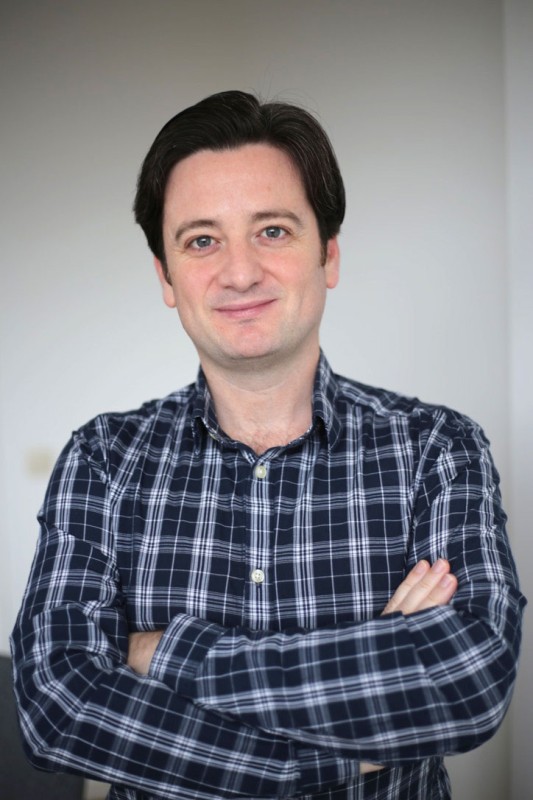
Prof. Dr. Gonzalo Guillén Gosálbez is a Full Professor at the Department of Chemistry and Applied Biosciences , ETH Zürich. He holds a PhD in Process Systems Engineering (UPC, 2005) and has held academic positions at Imperial College London (Reader), University of Manchester (Senior Lecturer), and Universitat Rovira i Virgili (Assistant/Associate Professor). His research focuses on Sustainable Chemical Processes , integrating life cycle assessment, optimization techniques, and planetary boundary analysis to evaluate and design low-carbon technologies. Current position: Full Professor, ETH Zürich (2019–present) Prior roles: Imperial College London (2016–2019), University of Manchester (2014–2016), URV Spain (2008–2014) Education: PhD (UPC, 2005), MEng/BEng (University of Murcia) His research explores CO2 valorization , green methanol synthesis , circular marine fuels , and planetary boundary compliance in energy and chemical systems. Recent work emphasizes machine learning for process modeling, single-atom catalysis , and decentralized ammonia production . Scientific contributions include 15+ peer-reviewed articles (2023–2025) in journals like Nature Chemical Engineering , ACS Sustainable Chemistry & Engineering , and Energy & Environmental Science . Key themes: Optimization of hybrid fossil/renewable carbon systems Environmental impacts of energy transitions Catalyst design for sustainable chemistry Life cycle assessment of emerging technologies Awarded UPC Top Doctoral Student Award and Top National Student Award , he combines process systems engineering with sustainability metrics to address global challenges in chemical and energy systems.
Nancy G. Love is the Borchardt and Glysson Collegiate Professor and JoAnn Silverstein Distinguished University Professor of Environmental Engineering at the University of Michigan, affiliated with the Department of Civil and Environmental Engineering and the African Studies Center. Her research focuses on water infrastructure, public health, and environmental systems, emphasizing interdisciplinary approaches to address challenges in both domestic and global contexts. Education: Ph.D. (1994) in Environmental Systems Engineering from Clemson University; MS (1986) and BS (1984) in Civil Engineering from the University of Illinois. Research interests include water quality, pathogen fate and transport, sustainable resource recovery (e.g., urine-derived fertilizers), and infrastructure resilience in shrinking cities. She leads the Love Research Group, which integrates chemical, biological, and computational methods to develop technologies for contaminant removal, resource recovery, and public health protection. Her work addresses pressing issues like drinking water equity in Detroit, Legionella outbreaks in Flint, and global sanitation in Ethiopia. She advocates for transdisciplinary collaboration and community-informed solutions to environmental challenges. Awards include prestigious professorships at the University of Michigan. She serves on editorial boards (e.g., ACS ES&T Engineering) and contributes to policy initiatives on water infrastructure and environmental justice. Labs/Teams: Love Research Group; Collaborations span academia, industry, and NGOs, including projects on urine diversion, sensor-mediated wastewater treatment, and civic engagement in infrastructure decisions.
Olli Dahl is a Professor at Aalto University's Department of Forest Products Technology, specializing in Clean Technologies and Environmental Management. His work focuses on waste valorization, biorefinery processes, and sustainable resource utilization. Key areas include microplastic dynamics in composting systems, biochar applications for heavy metal decontamination, and optimization of mineral processing with recycled water. Research highlights include an international award for biorefinery innovation and groundbreaking studies on nickel recovery in flotation processes. He leads interdisciplinary projects addressing water quality impacts on ore processing and thermochemical conversion of agricultural residues into bioenergy. Dahl's recent work emphasizes closing material loops through circular bioeconomy strategies and advancing sustainable industrial practices. Awards: 2015 International Biorefinery Competition 2nd Place (Ministry of Employment & Economy, Finland) Key Themes: Waste-to-resource systems, industrial water management, bio-based materials, and metallurgical sustainability
Professor Bing-Jie (Bruce) Ni is an Adjunct Professor at the University of Technology Sydney (UTS) within the School of Civil and Environmental Engineering and a full Professor at UNSW Sydney. He is an internationally recognised leader in environmental engineering, wastewater treatment, greenhouse-gas mitigation, microplastics fate, electrocatalysis and sustainable energy systems. Education PhD in Environmental Engineering, University of Science and Technology of China, Hefei (2005–2009) Research Interests Professor Ni’s research integrates process engineering, microbial biotechnology, materials science and mathematical modelling to develop sustainable technologies for high-efficiency pollutant removal, minimal carbon footprint and maximal energy recovery from wastewater. He is a global pioneer in: Modelling and control of nitrous oxide (N₂O) and methane (CH₄) emissions from wastewater systems, Micro- and nano-plastics ecotoxicity and mitigation in anaerobic digestion, Transforming sewage sludge into high-value liquid bio-energy (medium-chain fatty acids and long-chain alcohols), Designing cost-effective electrocatalysts from natural minerals for green hydrogen production and wastewater electrolysis. Research Output & Impact Over the last decade he has published 2 research books, 30 book chapters and >400 refereed journal papers , including 35 in Environmental Science & Technology and 85 in Water Research . His work has influenced global policy: the IPCC adopted his nitrous-oxide-emission model in 2019 to revise national greenhouse-gas inventories for the first time in 13 years. Awards & Recognition ARC Future Fellowship & ARC DECRA Fellowship Clarivate Analytics Highly Cited Researcher (Web of Science) Royal Society of Chemistry Highly Cited Researcher (2020–present) Mendeley Data Top 2 % Cited Researchers worldwide Listed among “Australia’s Most Innovative Engineers” (Engineers Australia, 2018) 50+ additional awards including Scopus Young Researcher Award, South Australian Water Awards, UQ Research Excellence Awards, and Outstanding Doctoral Dissertation Awards. Research Funding & Leadership He has secured ≈ AUD $10 million in competitive funding (six major ARC grants plus >20 government, university and industry projects). He serves as: Lead Guest Editor, Water Research Editorial Advisory Board, Environmental Science & Technology Associate Editor for Journal of Cleaner Production , Environmental Chemistry Letters , Environmental Research , Journal of Environmental Management Editorial Board member for five additional high-impact journals. Teaching & Supervision At UTS he teaches Renewable Energy Technologies , Environmental and Sanitation Engineering , Process Dynamics and Control , and Water and Wastewater Treatment . He is available to supervise Masters and PhD students in environmental biotechnology, process modelling and sustainable energy systems. Laboratory & Commercial Translation He heads active research teams at both UNSW and UTS and is the inventor of >10 granted patents , some of which are currently being commercialised to deliver real-world impacts in greenhouse-gas-neutral wastewater treatment and renewable energy production.
Virginia Davis is the Dr. Daniel F. and Josephine Breeden Professor in the Department of Chemical Engineering at Auburn University's College of Engineering. She holds a Ph.D. in Chemical and Biomolecular Engineering from Rice University, and M.S. and B.S. degrees in Chemical Engineering from Tulane University. Research Focus: Self-assembly of nanomaterials, rheology, lyotropic liquid crystals, additive manufacturing, polymers, nanocomposites, and biosensors Key Projects: USDA-funded agricultural outreach, NSF grant for MXene dispersion studies, Alabama STEM Council member Her recent publications explore cellulose nanocrystals, MXene 3D printing, and sustainable polymer recycling. Davis has received multiple honors including the Breeden Professorship, AIChE Fellowship, and Auburn University Faculty Awards for research and mentorship. Research Trends: Dominated by bio-based nanomaterials (cellulose nanocrystals, MXenes), with applications in additive manufacturing, environmental remediation (PFAS adsorption), biosensors (carbofuran detection, cancer biomarkers), and agricultural delivery systems. Scientific Awards Auburn University Faculty Awards (2023, 2025) AIChE Fellow (2023) Dr. Daniel F. and Josephine Breeden Professorship Davis leads outreach initiatives like the Tomorrow’s Community Innovators camp and collaborates with interdisciplinary teams on plastic recycling innovations. Her work emphasizes both fundamental material science and practical applications addressing environmental and agricultural challenges.
Dr. Richard Culas is an Associate Professor in Agricultural Economics/Agribusiness at Charles Sturt University's School of Agricultural, Environmental and Veterinary Sciences. He holds degrees from the University of Peradeniya (BScAgr), Norwegian University of Life Sciences (MScAgEcon), Norwegian School of Economics (MEcon), and the University of Sydney (PhD). His expertise spans teaching, research, and advisory roles, including external PhD examining and peer-reviewing for 20+ journals. Dr. Culas' research focuses on agricultural economics, environmental economics, development economics, and agribusiness management. He has led and contributed to projects funded by ACIAR, Hort Innovation Australia, and the Soil CRC, totaling ~A$7.5m. Key projects include assessing organic fertilizer benefits and regenerative agriculture's socioeconomic impacts. His work addresses global challenges such as water resource management, climate-smart agriculture, and sustainable farming practices. He has published extensively in journals like Agricultural Systems , Australian Journal of Agricultural and Resource Economics , and Sustainability . Notable achievements include the Emerald Literati Award for Outstanding Reviewer (2018) and a team award for Research Excellence (2016). He has also contributed to curriculum development for Charles Sturt's Master of Agriculture program. His research and advisory roles include leadership in soil health projects, groundwater management in Pakistan, and value chain analyses in Bangladesh and Nepal. Dr. Culas collaborates internationally on climate adaptation strategies, trade policies, and food security initiatives, reflecting his commitment to bridging academic research with real-world agricultural challenges.
Dr. Renske Hijbeek is an Associate Professor at the Plant Production Systems group of Wageningen University & Research. Her research focuses on nutrient management in arable farming systems, emphasizing soil fertility improvement through organic waste recycling, legume cultivation, and minimizing environmental impacts like greenhouse gas emissions. She teaches courses including 'The Carbon Dilemma - A Soil Perspective' and 'Analysing Sustainability of Farming Systems'. Key projects include the GRA Benchmarking Nutrient Circularity and EDF Soil Carbon Sequestration initiatives. Her work integrates agronomy with ecological principles to achieve sustainable agricultural practices globally. Research Contributions: Dr. Hijbeek's projects address nutrient circularity, soil carbon dynamics, and organic amendment efficiency across temperate and tropical regions. Recent work explores dietary impacts on nitrogen fertilizer dependency and systemic redesign of food production systems. Collaborations: Active in international collaborations like the Global Crop Nutrient Removal Database and the CATCH-C Legumes project in Tanzania. Her interdisciplinary approach bridges crop science, environmental management, and policy analysis.
Alfons Oude Lansink is a Professor and Chairholder in Business Economics at Wageningen University, Netherlands. He holds adjunct professorships at Universitas Padjadjaran (Indonesia) and the University of Florida (USA), and serves on the Dutch Ministry of Agriculture's CDM committee and Rabobank's scientific advisory board. His academic career spans roles as director of Wageningen School of Social Sciences (WASS) and Secretary-General of the European Association of Agricultural Economists. Education: MSc and PhD in Agricultural Economics from Wageningen University Leadership: Head of Business Economics group since 2003 His research focuses on dynamic technical and economic efficiency , sustainable performance of food supply chains , and economics of plant health . Recent work examines climate adaptation strategies, circular economy applications, and cross-border agri-food innovation dynamics using advanced econometric models. Key projects include MINDSTEP (modeling farm decisions), Closing the Loop (insect-based agriculture), and Food Pro-tec-ts (transboundary food technologies). Publications address topics like: Technical efficiency in dairy and arable farming Economic impacts of climate change on agriculture Corporate social responsibility in food manufacturing Policy evaluation for biogas and organic farming He serves as: Secretary/Treasurer of agricultural economics journal foundation Advisor to Universitas Padjadjaran (Indonesia) on policy and PhD supervision Editorial board member of Agronomy Journal and European Review of Agricultural Economics
Muhammad Muddasar is a Researcher at the University of Limerick's School of Engineering, affiliated with the Bernal Institute. His primary research focuses on developing sustainable materials derived from lignin for energy harvesting and storage applications. Under the supervision of Professor Maurice Collins, he investigates advanced materials such as hydrogels, ionic conducting membranes, and carbon nanomaterials to enhance renewable energy systems. His work emphasizes reducing environmental impact through innovative synthesis techniques and lifecycle analysis. Key research areas include thermoelectric materials, bioenergy production, microbial electrolysis cells, and lignin valorization. Collaborations span topics like low-grade thermal energy recovery, supercapacitor optimization, and carbon fiber production improvements. Despite no explicit awards listed, his contributions include over 17 peer-reviewed publications between 2021-2025, showcasing impactful work in Materials Today Sustainability, Advanced Functional Materials, and ACS Applied Polymer Materials. His articles highlight trends in lignin-derived materials for energy applications, sustainable manufacturing, and nanomaterial-driven bioenergy systems. Active in international networks, his research bridges material science and renewable energy engineering, addressing global sustainability challenges.
Lea R. Winter is an Assistant Professor in the Department of Chemical and Environmental Engineering at Yale University's School of Engineering & Applied Science. Her research focuses on electrified processes at the nexus of food, energy, water, and climate, with emphasis on sustainable CO 2 conversion, green nitrogen fixation, wastewater valorization, and plasma-electrochemical systems. She leads an active research group and mentors multiple PhD students, postdocs, and undergraduates. Ph.D., Columbia University B.S., Yale University Dr. Winter's research interests lie at the intersection of sustainability and chemical engineering. She pioneers electrified membrane technologies, plasma-activated reactions, and catalytic processes for converting waste streams (CO 2 , nitrates, wastewater) into valuable fuels, chemicals, and fertilizers. Her work integrates electrochemistry, plasma chemistry, and heterogeneous catalysis to develop distributed, circular solutions for environmental challenges. Key themes include green ammonia production , on-demand fertilizer synthesis , and electrified water treatment with resource recovery. Analysis of her recent publications reveals a strong focus on electrified membranes for nitrate and CO 2 conversion, plasma-activated co-processing of N 2 and C 1 gases, and single-atom catalysis for environmental applications. Her research spans fundamental reaction mechanisms to scalable engineering solutions, often published in high-impact journals such as Nature Water , PNAS , and Joule . The work demonstrates a consistent trajectory toward enabling a distributed hydrogen and nitrogen economy through sustainable electrochemical and plasma-driven technologies. Scientific Awards: Beckman Young Investigator Award (2024) Department of Energy Early Career Award (2024) Caltech Young Investigators Lecture Series Award (2022) NEWT Distinguished Postdoctoral Fellowship (2020) NSF Graduate Research Fellowship (2015) North American Catalysis Society Kokes Award (2019) Dr. Winter actively mentors students and has advised several who have gone on to PhD programs and faculty positions. Her lab receives significant research funding, as evidenced by her early-career awards from DOE and NSF. She leads projects on mining nontraditional water sources for hydrogen, plasma-based fertilizer synthesis, and electrified membrane systems. The Winter Lab fosters a collaborative, creative, and safe research environment centered on the principles of CRISP: Creativity, Respect, Investment, Safety, and Partnership. She also contributes to scientific discourse through invited viewpoints on climate education and critiques of emerging technologies like seawater electrolysis. Her lab collaborates widely, including with researchers at Columbia, Caltech, and international institutions.
Dr. Liang Yu is an Adjunct Professor at Washington State University (WSU) within the College of Agricultural, Human, and Natural Resource Sciences (CAHNRS), Department of Biological Systems Engineering. He holds roles as a Guest Editor for the Journal of Fermentation (Energy Converter-Anaerobic Digestion), Faculty Senator for Non-Tenure Track Faculty, Anti-Hazing Advisory Committee member, and Review Committee member for undergraduate research scholarships at WSU. His research focuses on biorefinery-based industrial symbiosis and the circular economy, employing multi-scale mathematical modeling (molecular simulation, CFD, bioprocess control, machine learning) to optimize anaerobic digestion systems. His work aims to convert organic waste (animal manure, food waste) into renewable natural gas, fertilizers, and bioproducts. He has secured funding from the DOE and USDA, with over 60 peer-reviewed publications and five patents. Key research themes include hydrothermal pretreatment, ammonia recovery, microbial community dynamics, and techno-economic analysis. Recent articles emphasize anaerobic digestion innovation, biodesulfurization, and biohydrogen production. His contributions bridge environmental engineering, biotechnology, and sustainable systems design. Dr. Yu’s grants and patents reflect a commitment to applied sustainability solutions, with projects addressing agricultural waste valorization and energy recovery. Collaborative efforts drive his work, integrating computational modeling with experimental validation for scalable bioenergy systems.
Hannah van Zanten is a Full Professor in Earth Systems and Global Change at Wageningen University & Research, specializing in sustainable food systems, regenerative agriculture, and biodiversity conservation. Her work emphasizes circular food systems, livestock production optimization, and environmental impact mitigation. She has received multiple awards, including the Storm-van der Chijs award (2015) and several Best Oral Presentation accolades at academic conferences. Her research spans topics like protein upcycling, soil biodiversity, and the environmental implications of livestock feed. She supervises PhD projects on regenerative agriculture, circular food transitions, and ecosystem services in South American grasslands. Recent projects include redesigning European food systems to enhance food security under climate change and modeling circularity impacts. Key research interests include: sustainable diets, land-use efficiency, and the integration of biodiversity conservation with agricultural practices. She has published extensively on topics like earthworm farming, circular protein systems, and the compatibility of animal-sourced foods with circular principles. Awards: 5 major prizes for academic contributions, including innovation in animal sciences and sustainability. Grants/Projects: Leading 19 active projects, including EU-funded initiatives on sustainable livestock and circular food system modeling. Labs/Teams: Collaborates with interdisciplinary teams on projects like SUSFANS (Sustainable Food Systems) and Re-Livestock (resilient livestock systems).
Carsten Sievers serves as Adjunct Professor in the Department of Chemical and Biomolecular Engineering at Georgia Institute of Technology, where he leads research in sustainable catalytic processes for fuel and chemical production from alternative resources. His work bridges fundamental spectroscopy with industrial reactor design to address petroleum dependence. Education: Diploma, Technical University of Munich, Germany (2003) D.Sc., Technical University of Munich, Germany (2006) Research Focus: Sievers' program integrates fundamental studies using IR, NMR, XAS, and Raman spectroscopy to probe catalyst structure-reactivity relationships with applied research on flow reactor systems for biomass conversion (hydrodeoxygenation, sugar upgrading) and mechanocatalytic polymer depolymerization. Key initiatives target CO 2 -neutral chemical production from biomass and waste plastics, emphasizing catalyst stability and regeneration. Publication Trends: Recent work (2023-2025) reveals a strategic pivot toward mechanocatalysis for plastic recycling (polyethylene, polystyrene) and ammonia synthesis, while maintaining expertise in hydrocarbon catalysis. Dominant themes include reaction environment engineering in ball mills, metastable surface characterization, and process intensification for CO 2 electrolysis. Scientific Recognition: 2012 Young Scientist Award, International Congress on Catalysis 2023 ACS Fellow designation Academic Leadership: As Director and Past President of the Southeastern Catalysis Society, former ACS Division Director, and Editor of Applied Catalysis A: General , Sievers shapes catalysis research direction. His Sievers Group has secured competitive fellowships for students like Yuchen George Change (Eastman Chemical Fellowship) and Victor Brandão (Ziegler Award), reflecting strong mentorship in sustainable reaction engineering. Research Infrastructure: The group operates advanced flow reactors, spectroscopic characterization suites, and mechanochemical systems for in-situ catalyst analysis, supporting collaborations with industry partners on technology translation.
Meire Ellen Gorete Ribeiro Domingos is a Lecturer and Postdoctoral Researcher at École Polytechnique Fédérale de Lausanne (EPFL), affiliated with the School of Engineering (STI) and Industrial Process and Energy Systems Engineering (IPESE) department. She works on process modeling, techno-economic and environmental analyses, and optimization of energy conversion systems, particularly in biorefineries, hydrogen production, and industrial decarbonization. Education PhD in Chemical Engineering, Polytechnic School of the University of Sao Paulo (2022) BSc in Chemical Engineering, University of Brasilia (2017) Research Interests Exergy and energy integration of chemical/industrial processes Modeling and optimization of energy systems Decarbonization via renewable energy integration Techno-economic and environmental analysis of industrial processes High-temperature heat pumps and carbon capture Multi-time scale optimization for industrial-urban systems Publication Trends Focus on decarbonization pathways (2023-2025) Black liquor gasification for integrated chemical/fuel production (2019-2022) Renewable energy and solid oxide cells for industrial-urban symbiosis (2024-2025) Development of decision-support tools like ROSMose (2023-2024) Life cycle assessment and CO2 management strategies Thermal integration and process simulation for sustainability Laboratory & Teams Industrial Process and Energy Systems Engineering (IPESE), EPFL Valais Wallis SCI-STI-FM and SCI-STI-JVH research groups EPFL School of Engineering (STI)
Dr. Asieh Hosseini Tabaghdehi is a Senior Lecturer in Strategy & Business Economy at Brunel Business School, Brunel University of London. She serves as Programme Lead for the BSc International Business Programme and Trade2Grow Executive Education Programme. Additionally, she is Impact Lead at the Brunel Centre for AI: Social and Digital Innovation, where she leads the capability area in the Future of Work. Dr. Tabaghdehi is also an economist and social impact advisor for the independent NGO, Social Innovation Movement. Dr. Tabaghdehi earned her PhD in Economics and Finance (2008) and MSc in International Money, Finance, and Investment (2015), both from Brunel University London. She also holds a BA in Theoretical Economics from University of Mazandaran. She completed the Postgraduate Certificate in Academic Practice and is a Fellow of the Higher Education Academy. Dr. Tabaghdehi is internationally recognized for her research on digital transformation, with particular expertise in the ethical integration of artificial intelligence and digital technologies. Her work focuses on how emerging technologies shape industries, labor markets, and society, with emphasis on enhancing SME growth through technological innovation. She explores applications across critical sectors including social care, supply chain management, and environmental sustainability. A central theme in her research is smart data governance, ensuring ethical, transparent, and responsible use of data in decision-making processes. Her research portfolio demonstrates a consistent focus on the intersection of technology, ethics, and business strategy. She has developed frameworks like the Digital Business Auditing Framework, which has been adopted internationally for smart city initiatives. Her work connects academic research with practical policy applications, as evidenced by her presentations as oral and written evidence to the House of Commons Select Committee. Her publications span AI ethics, digital footprint implications, fertility economics, and healthcare cost analysis, showing interdisciplinary breadth while maintaining thematic coherence around digital transformation's societal impact. Scientific Awards and Recognition Semi-finalist: Research Impact Award at Brunel University London, 2023 Staff Award: Exceptional in Collegiality and Supportive to Colleagues at Brunel University London, 2022 Exceptional Performance at Regents University London, 2018-19 Staff Award in Teaching, Learning and Assessment at Regents University London, 2016 Best Lecturer Award at London Brunel International College, 2014 Best Lecturer Award at London Brunel International College, 2013 Dr. Tabaghdehi actively supervises PhD students researching areas including Smart Data Governance, Ethical AI Governance, Digital Innovation Impact, Responsible AI Adoption Strategies, Sustainability, and Future of Labour Market. She has secured research funding from multiple sources including the Economic & Social Research Council (ESRC), Brunel University London, and Brunel Business School. Her current projects include research on AI Adoption and Governance, Youth digital addiction, Algorithm Reliability Framework, and SMEs digital footprints. She has also co-designed the "Digital Adoption" module for the UK Government's Help to Grow Management program, demonstrating the practical application of her research. As a member of multiple professional organizations, Dr. Tabaghdehi serves as an associate practitioner at Social Value International, associate member of the Big Innovation Centre, and member of the All-Party Parliamentary Group on AI. She is also a member of the ESRC Review College, British Academy of Management Review College, and Energy Institute UK, contributing to the broader academic and policy communities through these roles.