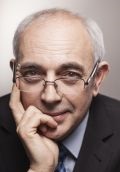
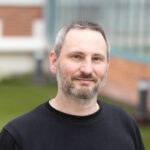
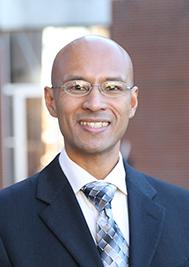
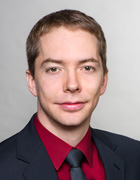
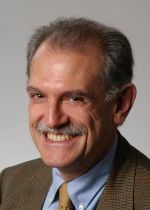
Dr. Uwe Pelz is a Researcher at the Chair of Microsystem Construction within the Department of Microsystems Engineering (IMTEK) at the University of Freiburg. He serves as a Responsible Investigator for projects in the livMatS (Living, Adaptive and Energy-autonomous Materials Systems) cluster, focusing on thermoelectric energy harvesting and microsystem technologies. His work includes developing advanced materials for energy systems and microfabrication processes using printed circuit board (PCB) technologies. Key research areas include thermoelectric materials, 3D printing of phase change materials, and micro-thermoelectric generator (μTEG) fabrication. Pelz has contributed to projects like ThermoMetaS (thermoelectric metamaterial surfaces) and ThermoBatS (thermoelectric battery systems), funded by the DFG (German Research Foundation). His publications span topics such as paraffin-based photoresins for additive manufacturing, PCB-integrated micro-TEGs, and nano-scale material dispersions for energy harvesting. Pelz is actively involved in academic activities through livMatS, including organizing colloquia and contributing to outreach programs like IDEASfactory@FIT. His interdisciplinary approach bridges materials science, microengineering, and sustainable energy solutions.
Tadeusz Więckowski is a Professor and Head of the Department of Telecommunications and Teleinformatics at the Faculty of Information and Communication Technology, Wrocław University of Science and Technology. His work bridges advanced electromagnetic theory with practical telecommunications systems. His research interests include: Electromagnetic Compatibility (EMC) of devices and systems Antenna theory and design Radio wave propagation Radiocommunication systems Gyrotron and microwave source technologies Testing methodologies for EMC infrastructure The recent publications highlight a strong focus on high-frequency electromagnetic systems, particularly gyrotrons for spectroscopy and electromagnetic compatibility testing. His work spans both theoretical modeling and experimental validation, with applications in telecommunications, broadcasting (e.g., DAB), and scientific instrumentation. There is also engagement with modern topics such as IoT testing, intrusion detection, and neural networks for document verification, indicating interdisciplinary reach. Tadeusz Więckowski leads the Department of Telecommunications and Teleinformatics, which is involved in the operation of the Laboratory for Electromagnetic Compatibility. This infrastructure supports advanced research in signal integrity and system compatibility.
Martin Marie Hubert Choux is an Associate Professor at the Department of Engineering Sciences , University of Agder, Norway. He holds dual M.Sc. degrees in Mechatronic Engineering from École Nationale Supérieure d'Art et Métiers (France) and University of Queensland (Australia), and a Ph.D. in Automatic Control from Technical University of Denmark (2011). Education: M.Sc. in Mechatronic Engineering, École Nationale Supérieure d'Art et Métiers, Paris, 2006 M.Sc. in Mechatronic Engineering, University of Queensland, Brisbane, 2006 Ph.D. in Automatic Control, Technical University of Denmark, Copenhagen, 2011 His research focuses on mechatronics , robotics , and battery recycling , with over 15 recent publications (2024–2019) on: Automated Disassembly of lithium-ion batteries Fault Diagnosis in motor drives using structural analysis and neural networks Efficiency Optimization of electric drivetrains in offshore applications Comparative Studies of hydraulic vs. electric actuation systems AI and Robotics for EV battery recycling Control Algorithms for mechanical systems His work spans robotics , automatic control , and sustainable engineering , contributing to electric vehicle and offshore technology advancements.
Olaf Schenk is a Professor at the Institute of Computing within the Faculty of Informatics at Università della Svizzera italiana (USI), Switzerland. He serves as Director of the Institute of Computing and Co-Director of the Master in Computational Science. He is also an adjunct member of the Computer Systems Institute at USI. PhD in Information Technology and Electrical Engineering, ETH Zurich (2001) Venia Legendi in Mathematics and Computer Science, University of Basel (2009) Applied Mathematics, Karlsruhe Institute of Technology (KIT), Germany His research focuses on high-performance computing , computational science and engineering , and applied algorithms for extreme-scale simulations. He bridges computer science with scientific computing needs, particularly in parallel algorithms , sparse solvers , graph analytics , and manycore architectures . His work emphasizes scalable software tools and programming models for emerging HPC systems. The 15 most recent publications reflect a consistent focus on sparse matrix computations , parallel and task-based algorithms , graph partitioning , and performance optimization for heterogeneous and manycore systems. Keywords span high-performance computing, numerical linear algebra, and large-scale data analysis, showing strong integration of theoretical algorithm design with practical implementation. Olaf Schenk has received several prestigious honors: Elected Fellow, Society for Industrial and Applied Mathematics (SIAM) Senior Member, IEEE and ACM SIAM Supercomputing Prize 2023 IBM Faculty Award Two Leadership Computing Awards from the U.S. Department of Energy He has held leadership roles as Chair, Vice Chair, and Program Director of the SIAM Activity Group on Supercomputing. He serves as Associate Editor for ACM Transactions on Mathematical Software and on the editorial board of SIAM Journal on Scientific Computing . He has participated in over 60 international program committees, including top-tier conferences such as SC, IPDPS, and IEEE CSE. He advises PhD and Master’s students in computational science and leads research projects funded by national and international agencies. He is also the Founder & Director of Panua Technologies Sagl, focusing on high-end software for simulation and optimization. His research group at USI works on next-generation computing tools for extreme-scale scientific simulations, with ongoing work in adaptive algorithms, resilience, and hybrid CPU-GPU computing. He leads collaborative projects with institutions in Europe and the U.S., aiming to develop scalable, robust, and efficient software for future exascale systems.
Grégory Batt is a Researcher and Head of the InBio joint research group at the Institut Pasteur and Inria Paris. The lab operates at the intersection of wet and dry biology, focusing on systems and synthetic biology with an emphasis on automation, modeling, and real-time control of cellular processes. The team is affiliated with both institutions and hosts a multidisciplinary group of researchers, engineers, and students. The research interests of Grégory Batt span systems biology, synthetic biology, quantitative modeling, lab automation, bioproduction, and single-cell analysis . His work integrates computational and experimental approaches to develop frameworks for understanding and controlling cellular behavior. Key methodologies include the use of synthetic biology, microfluidics, optogenetics, and robotics. The lab has developed innovative software tools such as ReacSight and MicroMator to enable automated and reactive experimentation. Recent publications highlight trends in real-time control of bioproduction, optimization of protein secretion, parameter inference in stochastic models, and ecological frameworks for antibiotic resistance . These works demonstrate a strong focus on integrating modeling with high-throughput experimentation to solve problems in biotechnology and medicine. Scientific contributions include: Development of ReacSight for bioreactor automation and reactive control Creation of MicroMator for reactive microscopy Application of ecological concepts to bacterial antibiotic responses Modeling stochastic kinetics coupled with auxiliary processes Batt advises several PhD students and postdoctoral researchers, including Henri Galez, Alicia Da Silva, Cecilia Capela, and Viktoriia Gross. His lab has received support from ANR, Inria, and other funding bodies. The InBio team operates a state-of-the-art laboratory equipped with bioreactors, liquid handling robots, flow cytometers, automated microscopes, and high-performance computing resources, enabling advanced research at both population and single-cell levels. The lab, located at the Yersin and Lwoff buildings of the Institut Pasteur in Paris, fosters a collaborative environment integrating molecular biology, microbiology, and computational modeling to advance quantitative understanding of cellular systems.
Matti Hämäläinen is a Professor at the Department of Neuroscience and Biomedical Engineering , Aalto University. He is a leading expert in Magnetoencephalography (MEG) , with a focus on sensor design, neural connectivity, and clinical applications. His work contributes to understanding brain disorders like autism and epilepsy. Doctorate in Materiaalifysiikka, Teknillinen Korkeakoulu (1989) Diplomi-insinööri in Teknillinen Fysiikka, Teknillinen Korkeakoulu (1983) Hämäläinen's research spans MEG technology , auditory and visual cortex dynamics , and functional connectivity analysis . He develops open-source tools like MNE-Python and HNN-Core for neural data interpretation. Scientific Awards : None explicitly mentioned. He has led projects such as NIH Scalable Software for MEG/EEG and Device-Independent Real-Time MEG EEG Source Localization , with media coverage in outlets including Massachusetts General Hospital and Targeted News Service.
Ichiro Hasuo is a Professor at the National Institute of Informatics (NII) in Tokyo, Japan, where he serves as Director of the Research Center for Mathematical Trust in Software and Systems. He holds a joint appointment at The Graduate University for Advanced Studies (SOKENDAI). Since 2016, he has been the Research Director of the JST ERATO Metamathematics for Systems Design Project, and founded Imiron Co., Ltd. in 2024. Education: PhD in Computer Science (cum laude) from Radboud University Nijmegen (2008) MSc in Mathematical and Computing Sciences from Tokyo Institute of Technology (2004) BSc in Mathematics from University of Tokyo (2002) His research focuses on foundational aspects of software science, particularly formal verification techniques using mathematical structures from category theory and coalgebra. He develops methods for ensuring reliability in cyber-physical systems and systems incorporating machine learning components. Current work emphasizes logical frameworks for autonomous vehicle safety and mathematical trust in complex systems. Hasuo's publications demonstrate consistent focus on theoretical foundations with practical applications. His recent work spans coalgebraic verification methods, temporal logic for hybrid systems, quantum programming semantics, and applications to autonomous driving systems. Key themes include compositional reasoning, probabilistic modeling, and the integration of discrete and continuous system verification. Awards and Honors: Best Paper Award at ICTAC 2024 Minister of Education, Culture, Sports, Science and Technology Commendation (2024) Distinguished Paper Award at CAV 2023 Outstanding Reviewer Award at EMSOFT 2022 Best Paper Award at ICECCS 2018 Best Paper Award at CONCUR 2014 Hiroshi Fujiwara Encouragement Prize (2012) PhD cum laude (2008) He leads multiple major research grants including: JST ASPIRE (2024-2029) for international collaboration on software trust JST START (2022-2025) for autonomous driving verification JST ERATO Metamathematics for Systems Design (2016-2025) Several JSPS KAKENHI grants As head of the MMM laboratory (Hasuo-Lab) at NII, he supervises PhD students and postdoctoral researchers in formal methods and mathematical systems design.
Dr. Enrique Blair is an Associate Professor in the Department of Electrical and Computer Engineering at Baylor University, where he has served since 2015, advancing to his current rank in 2021. His academic journey includes prior roles as a Military Instructor at the U.S. Naval Academy and service in the U.S. Navy submarine force. He is actively engaged in research, teaching, and mentoring within the College of Engineering. His research focuses on the theoretical and computational aspects of quantum engineering, particularly in quantum-dot cellular automata (QCA), open quantum systems, and quantum information sciences. He explores molecular computing paradigms, quantum decoherence, and the quantum mechanical basis of olfaction, aiming to develop ultra-dense, low-power nanoelectronic devices and novel quantum technologies. His interdisciplinary work bridges electrical engineering, physics, chemistry, and materials science. The recent articles highlight a strong trend in molecular QCA design, quantum simulation for NISQ devices, and the application of ab initio methods to understand counterion effects and molecular stability. His research increasingly integrates machine learning for material discovery and emphasizes robustness in quantum circuits against environmental noise and external fields. The publications reflect a consistent focus on foundational quantum phenomena with practical applications in computing, sensing, and security. Research Grant, Office of Naval Research, Code 312 Nanoscale Computing Devices and Systems (May 2020 - May 2023) Summer Sabbatical, Baylor University (Summer 2019) Senior Member, IEEE (2019) Outstanding Faculty Award (untenured, tenure-track faculty), Baylor University (2018) Proposal Development Award, Office of the Vice Provost for Research, Baylor University (2017) Rising Star Program, Baylor University (2017-2018) Undergraduate Research and Scholarly Achievement Award, Office of the Vice Provost for Research, Baylor University (2017-2018) Rising Star Program, Baylor University (2016-2017) Graduate Research Fellowship Program, National Science Foundation (2010-2015) National Defense Science and Engineering Graduate Fellowship, American Society for Engineering Education (2010-2013) Dr. Blair has advised multiple Ph.D. and Master’s students, including Colin Burdine, Nischal Gautam, and Nishat Liza, and has mentored numerous undergraduate researchers. His research is supported by competitive grants, particularly from the Office of Naval Research, reflecting the strategic importance of his work in nanoscale computing. He integrates teaching and research, offering courses such as Quantum Mechanics for Engineers and Introduction to Quantum Computing, and promotes scholarly productivity through tools like Emacs Org Mode and LyX. He leads an active research team focused on molecular QCA and quantum information, with current members including Ph.D. students and undergraduates. The team conducts simulations, theoretical modeling, and design of quantum devices, contributing to advancements in nanoelectronics and quantum computing. Collaborations with experts in chemistry, physics, and computer science further extend the impact of the research.
Michel Besserve is a Senior Research Scientist in the Empirical Inference department at the Max Planck Institute for Intelligent Systems in Tübingen, Germany. His research bridges machine learning theory with applications in neuroscience and complex systems analysis. He leads a research group focused on developing causal machine learning tools to uncover the internal structure and transformations of complex artificial, physical, and socioeconomic systems. Dr. Besserve's primary research interests center on causal machine learning and its applications to understanding complex systems. His work investigates how causality can provide principled ways to study and improve AI algorithms, particularly focusing on the identifiability of causal models and the principle of Independence of Causal Mechanisms (ICM). He develops theoretical frameworks and practical tools for causal inference in complex equilibrium systems, neural circuits, and socioeconomic contexts. His research has significant implications for building trustworthy and interpretable AI systems that can reliably handle real-world complexity. Analysis of Dr. Besserve's recent publications reveals a strong focus on causal representation learning, with significant contributions to independent mechanism analysis and the identifiability of nonlinear generative models. His work spans both theoretical foundations and practical applications, connecting machine learning with neuroscience to understand brain function through causal inference. The interdisciplinary nature of his research is evident in publications spanning top machine learning conferences (NeurIPS, ICML, ICLR) and leading neuroscience journals (Nature, PLOS Biology). Dr. Besserve has established productive collaborations across multiple institutions, particularly with researchers at the Max Planck Institute and ETH Zurich. His work demonstrates how integrating causal principles with machine learning can address fundamental challenges in AI robustness and interpretability, with applications ranging from brain network analysis to economic modeling. His research group focuses on developing the Causal Computational Model (CCM) framework, which aims to create digital representations of real-world systems that integrate data, domain knowledge, and interpretable causal structure. This work has potential applications in climate modeling, industrial digital twins, and economic simulation.
Prof. Dr. Matthias Althoff is an Associate Professor of Cyber-Physical Systems at the Technical University of Munich (TUM), leading the Chair of Cyber-Physical Systems within the TUM School of Computation, Information and Technology. His research focuses on formal safety verification, model-based design, and reachability analysis for systems such as autonomous vehicles, robotics, and power grids. Education: He earned his diploma in Mechatronics and Information Technology (2005) and PhD (2010, summa cum laude) from TUM. He held postdoctoral positions at Carnegie Mellon University (2010–2012) and served as a junior professor at TU Ilmenau (2012–2013) before joining TUM as a full professor in 2013, becoming an associate professor in 2019. Research Interests: His work spans cyber-physical systems, formal methods for safety assurance, autonomous vehicles, modular robotics, and smart grid control. He develops tools like CommonRoad and CORA for scenario-based testing and reachability analysis. Awards: He has received the IEEE/ACM William J. McCalla ICCAD Best Paper Award (2012) and the Best Poster Award at the IEEE Intelligent Vehicles Symposium (2009). Labs/Projects: Leads the Cyber-Physical Systems group, collaborating on projects such as the Scenario Factory for automated vehicle testing and CommonPower for safe smart grid control. He also co-founded startups RobCo and aiina .
Christian Fibich is a Researcher and Lecturer at the Department of Electronic Engineering, University of Applied Sciences Technikum Wien, Austria. He leads the Research Group Embedded Systems, focusing on FPGA reliability and high-level synthesis. His roles include project management for R&D initiatives like VECS (2013-2018), INES (2018-2023), and the 2024 Drohnentechnik integration project. Fibich holds an MSc in Embedded Systems from Technikum Wien and has been active in the field since 2010. Research interests include fault-tolerant FPGA design, reliability analysis of SRAM-based FPGAs, and high-level synthesis optimization. His work emphasizes practical applications of open-source tools and automated design exploration. Recent projects explore temperature-dependent fault effects and drone integration in academic programs. Publications span FPGA reliability, fault injection methods, and embedded systems design, with a focus on open-source IP cores and hardware security. His contributions include Fiji (a fault injection tool) and HLShield (a reliability framework for HLS).
Lionel Pichon is a leading researcher at the Laboratory of Electrical and Electronic Engineering of the University of Paris. His primary affiliations include the Department of Electrical and Electronic Engineering of Paris, where he specializes in advanced electromagnetic research. His work focuses on Electromagnetics , Electromagnetic Compatibility (EMC) , and Wireless Power Transfer , with particular emphasis on composite materials, biomedical applications, and automotive systems. Expertise in numerical methods (FDTD, FIT, DGTD) for electromagnetic simulations Pioneer in shielding effectiveness analysis for composite materials Developer of AI-driven approaches for dielectric property characterization Over 70 publications since 2017 highlight his contributions to fields like inductive power transfer systems, medical device EMC, and GPR imaging techniques. Collaborates extensively with institutions globally, including research on antenna design for implantable medical devices and electromagnetic compatibility in healthcare facilities. Current research trends emphasize machine learning integration with traditional electromagnetic analysis to optimize system performance and safety standards.
Haitham Kanakri is a Lecturer in the Department of Electrical and Computer Engineering at Purdue University's Indianapolis campus. His research focuses on power electronics, biomedical engineering, and electromagnetic systems with applications in medical devices, renewable energy systems, and semiconductor technologies. He is affiliated with Purdue Engineering and contributes to interdisciplinary projects spanning nanoengineering, sustainable housing design, and neurostimulation therapies for Alzheimer’s disease. Key research interests include capacitorless power converter designs, planar electromagnetic components, and neuroengineering innovations. His work integrates nanotechnology fabrication processes with traditional electrical systems to achieve compact, high-performance solutions. Recent projects explore electromagnetic field therapy for neurological disorders and high-efficiency DC-AC conversion systems for electric vehicles. Notable contributions include developing portable neurostimulation devices using meander line antennas and advancing resonant converter technologies for renewable energy applications. His work bridges theoretical electromagnetic models with practical engineering solutions, particularly in transformer design and semiconductor cooling systems. While no specific awards are listed, his publications indicate sustained innovation in power electronics and biomedical engineering. Academic advising and grant activities are not detailed in available records. Collaborations likely involve multidisciplinary teams given the breadth of his research portfolio.
Victoria Shao is a Teaching Associate Professor in the Department of Electrical and Computer Engineering at the University of Illinois Urbana-Champaign (UIUC). She specializes in electromagnetic compatibility (EMC), computational electromagnetics (CEM), and high-power microwave technology. Her work focuses on advancing numerical methods for transient electromagnetic analysis, stochastic modeling in complex enclosures, and the design of integrated electronic systems. Affiliations: Holonyak Micro and Nanotechnology Laboratory at UIUC Education: B.S. in Electrical Engineering (USTC, 2003), Ph.D. in Electromagnetics (Chinese Academy of Sciences, 2008) Prior positions: Researcher at ElectroScience Laboratory, Ohio State University (2009–2014) Research Interests: Dr. Shao’s work bridges computational methods with practical engineering challenges, emphasizing: Stochastic Green’s function approaches for statistical wave physics Multi-physics analysis of electronic systems Development of scalable algorithms for high-performance computing Nanotechnology integration for 3D RF components Her research has led to innovations in: Self-rolled-up membrane (S-RuM) nanotechnology for compact inductors Supercomputing-driven radio wave propagation models for urban environments Parallel-in-space-and-time electromagnetic simulation methods Awards: She has received multiple recognitions, including Best EMC Paper finalist awards (2022, 2023) and a Best Paper Award in IEEE Transactions (2017). Teaching and Contributions: Dr. Shao teaches core ECE courses such as ECE 110, ECE 210, and specialized EMC courses (ECE 498 YS3/YVS). She pioneers educational strategies using visualization tools and asynchronous learning to enhance STEM accessibility.
Alberto L. Sangiovanni-Vincentelli holds the Edgar L. and Harold H. Buttner Chair of Electrical Engineering and Computer Sciences at the University of California, Berkeley. He is a pioneer in Electronic Design Automation (EDA) and co-founder of Cadence and Synopsys. His research focuses on Cyber-Physical Systems (CPS), embedded systems, hybrid systems, and formal methods for AI. He has authored over 800 papers and 17 books, with major contributions to design automation and methodologies. Education: Dr. Ing., EECS, Politecnico di Milano (1971) Research interests include design methodologies, CPS, and AI integration. He has received numerous awards, including the IEEE James Clerk Maxwell Medal (2008) and ACM/IEEE A. Richard Newton Technical Impact Award (2009). He serves on multiple corporate boards and advisory councils, including the Strategic Committee of the Italian Strategic Fund and the Executive Committee of the Italian Institute of Technology. His work spans academia, industry, and policy, with a focus on innovation ecosystems and CPS design automation. Awards: Over 20 major honors, including Fellowships from IEEE and ACM.