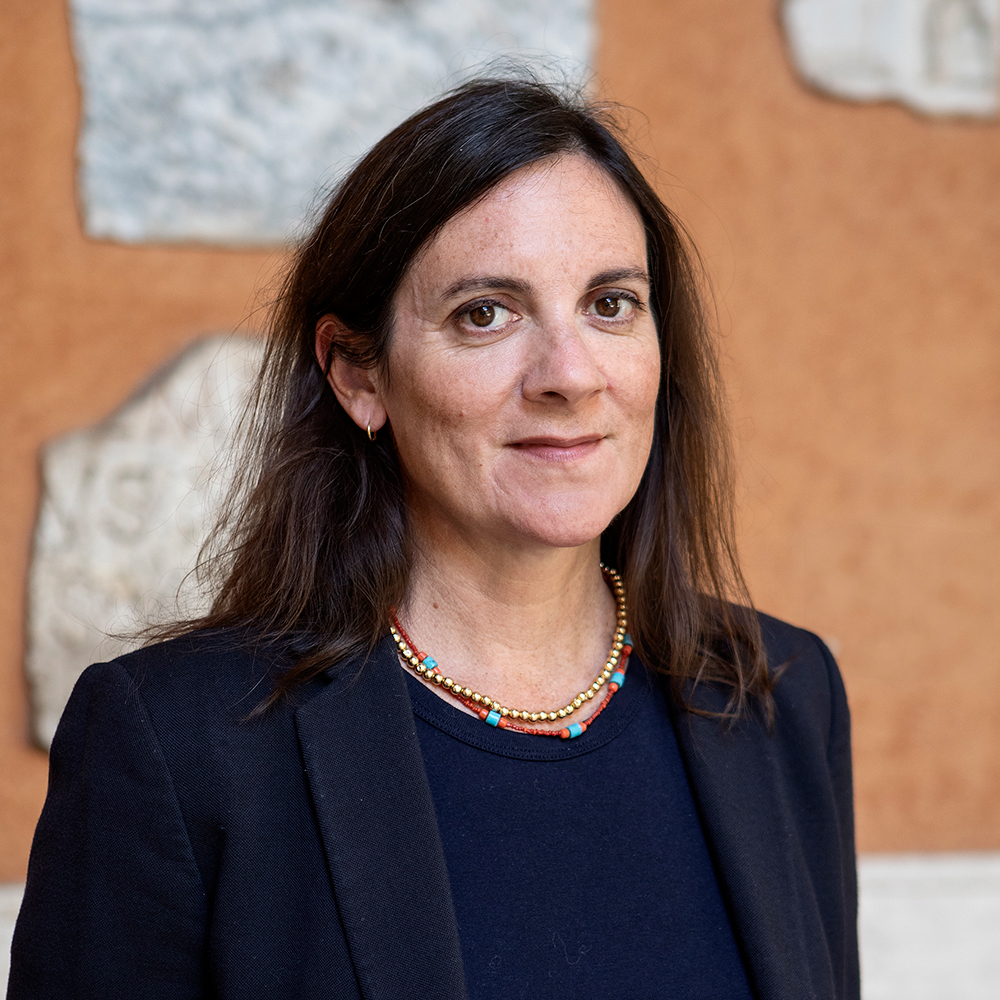
Renée J. Miller is a Professor and Canada Excellence Research Chair in Data Intelligence at the Cheriton School of Computer Science, University of Waterloo. Her research focuses on data integration, data management, and open data systems. She holds a PhD in Computer Science from the University of Wisconsin-Madison and bachelor’s degrees in Mathematics and Cognitive Science from MIT. Her work addresses challenges in data preparation, integration, and curation, aiming to reduce the burden on data scientists. She co-authored foundational papers on data exchange and schema mapping, earning the ICDT Test-of-Time Award (2013) and the Alonzo Church Award (2020). Miller has led major initiatives like the NSERC Business Intelligence Network and the International Very Large Data Base Foundation. Her grants include NSERC Accelerator Awards and funding from IBM, SAP, and Microsoft. Notable students include Ariel Fuxman (SIGMOD Dissertation Award winner) and Oktie Hassanzadeh (IBM PhD Fellow). Her research group, the Miller Lab, develops tools like Clio for schema mapping and systems for data lake exploration (RONIN, JOSIE).
Otto Maduro is a Venezuelan-born Professor of World Christianity & Latin American Christianity at Drew University (Madison, New Jersey) since 1992. He chairs the Division of Church & Society in the Theological School and co-leads the Hispanic Institute of Theology and Hispanic D.Min. Program. Married to Dr. Nancy Noguera, they share a passion for social justice, music, and intercultural dialogue. His research focuses on liberation theology, social justice, and the intersection of religion with marginalized communities. Education: PhD (1977), MA (1975), and MA (1973) in Philosophy/Sociology of Religion from the Université Catholique de Louvain (Belgium), all summa cum laude. Licentiate in Philosophy from Universidad Central de Venezuela (1968). Research Interests: Liberation theology, social justice, ecological ethics, epistemological critiques, religious resistance, and LGBTQ+ rights. His work emphasizes global South perspectives, particularly Latin America’s socio-religious dynamics. Grants & Awards: Henry Luce III Fellowship (2006), Ford Foundation grants (2000–2002), Will Herberg Award (1997), and international recognition for his book Marxismo y Religión (1977). Professional Contributions: Associate editor of Concilium , Journal of Hispanic/Latino Theology , and others. Served on editorial boards of leading journals and as council member of PARAL, SSSR, and ACHTUS. Current Projects: Researching Pentecostal congregations among Latina/o immigrants in Newark and directing the Hispanic Summer Program in Religion & Theology.
Professor Alison G. Salvesen (University of Oxford, Asian and Middle Eastern Studies) is a leading scholar in Early Judaism and Christianity, affiliated with the Oxford Centre for Hebrew and Jewish Studies and Mansfield College. Her work bridges textual criticism, translation history, and reception studies. Current Projects: Hexapla Institute Executive Committee (electronic database of Origen's Old Testament), monograph on Jacob of Edessa (d. 708 CE) Teaching: Septuagint studies, Patristic texts, Textual criticism, Syriac literature Specializing in ancient Hebrew Bible interpretations, she examines Greek (Septuagint), Aramaic (Targums), Syriac (Peshitta), and Latin (Vulgate) traditions. Her research spans rabbinic Judaism and early Christian exegesis. Scientific leadership includes co-editing major reference works and directing the Polonsky Fellowship. Current DPhil students include Joel Bell, Yael Krämer, and Paul Ulishney. Key grants/awards: Polonsky Fellow in Early Judaism and Christianity
John H. Arnold is Professor of Medieval History at the University of Cambridge and Fellow of King's College. Educated at the University of York (BA History, D.Phil Medieval Studies), his academic career includes positions at University of East Anglia and Birkbeck, University of London before joining Cambridge in 2016. He holds editorial roles at Cultural and Social History, Past & Present, and directs publication series at both York Medieval Press and Cambridge University Press. Arnold's research centers on medieval religious culture, particularly lay belief, heresy, inquisition, and the history of gender. His monograph 'The Making of Lay Religion in Southern France' (2024) exemplifies this focus. Current projects investigate the social history of confession and the repression of usury. Analysis of Arnold's 15 most recent publications reveals consistent engagement with medieval religious dissent and belief systems. Key themes include: reinterpretations of heresy trials (2019), sensory dimensions of faith (2018), historiographic debates about Catharism (2016), and methodological examinations of archival sources (2022). His work frequently employs theoretical frameworks from sociology and philosophy to reinterpret medieval religious conflict. Arnold maintains active research networks through editorial leadership and supervision. His Cambridge Studies in Medieval Life and Thought series promotes innovative scholarship in medieval history.
Caroline Goodson is a Professor of Early Medieval History at the University of Cambridge and a Fellow of King’s College. She holds a dual affiliation with the American Academy in Rome as the Andrew H. Mellon Humanities Professor (2024-2026). Her work bridges history, archaeology, and material culture studies, focusing on early medieval Mediterranean polities and urban dynamics. Education: BFA from Rhode Island School of Design (1997), PhD in Art History and Archaeology from Columbia University (2004). Prior to Cambridge, she taught at Birkbeck College, University of London (2005–2017). Research interests include urban archaeology, medieval power structures, and the interplay between material culture and political authority. She has led excavations at sites like Villa Magna in Italy and authored influential works on papal urbanism and medieval garden spaces. Recent publications include Cultivating the City in Early Medieval Italy (2021) and edited volumes such as Graphic Signs of Identity, Faith, and Power (2017). Her current work explores environmental impacts on medieval urban life. Awardee of the Rome Prize (2003) and a Fellow of the Royal Historical Society (2010), she serves on editorial boards for Speculum and Oxford Studies in Medieval European History .
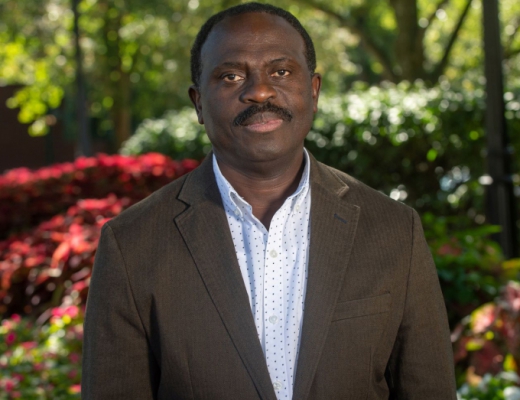
Eric Beeko is a Teaching Assistant Professor in the Department of Africana Studies at the University of Pittsburgh, affiliated with the Kenneth P. Dietrich School of Arts and Sciences. His teaching focuses on African studies, including courses like African Civilization, Liberation Movements, and Music in Africa. He holds a Ph.D. in Ethnomusicology from the University of Pittsburgh (2005), alongside advanced degrees from institutions in Ghana. His research explores African musical traditions, cultural practices, and performance aesthetics. Current projects include studies on Neo-Pentecostal/Charismatic church music in Ghana and the interplay between tradition and modernity. Future research plans involve multi-volume studies on African linguistic-cultural distribution and Black performance practices globally. Publications include analyses of Akan music rights, Ghanaian choral innovations, and African cultural heritage. He is developing works on Neo-Pentecostal worship aesthetics and the role of music in identity expression across the African diaspora. Advising and grants are not explicitly listed, but his scholarly activities emphasize collaborative research in ethnomusicology and cultural studies. He is based in Posvar Hall, Office #4152.
Steven Rutt is an Associate Professor of Biblical & Theological Studies and the founding Director of the Master of Arts in Theology, Worldview, and Culture at Arizona Christian University. He has over four decades of experience in pastoral ministry, mission work, and theological education across fourteen countries, including roles in New Zealand, Lithuania, the UK, and the United States. His educational background includes a Ph.D. from the University of Lancaster, an M.A.T. from Fuller Theological Seminary, and a B.Th. from Sweetwater Bible College. Dr. Rutt's research focuses on missiology, particularly the life and theology of Roland Allen, ecclesiology, historical theology, and the intersection of Christian faith with culture. He has taught courses in Systematic Theology, Hermeneutics, Pauline Studies, and Early Christianity. His work emphasizes apostolic principles, church planting, and the priesthood of the laity. His recent publications and presentations reveal a consistent focus on missionary ecclesiology, the legacy of Roland Allen, and the application of historical theological insights to contemporary mission practice. His writings span journals like Transformation and books published by The Lutterworth Press. He remains an active lecturer at the Oxford Centre for Mission Studies and within the Reformed Episcopal Church. He is also a member of The Society of Anglican Theologians and founder of Covenant Renewal Ministries, Inc. Dr. Rutt has supervised Ph.D. candidates and contributed to theological training globally. Though no specific grants are mentioned, his leadership in founding academic programs and non-profit ministry indicates significant institutional and scholarly engagement. He has delivered lectures and seminars across Europe and North America, contributing to clergy training and intercultural theological dialogue. He is affiliated with several academic and ecclesial bodies, including the Yale-Edinburgh Group and the Oxford Centre for Mission Studies, and continues to influence theological education through writing, speaking, and teaching.
Neil Pembroke is a Lecturer in Studies in Religion at the University of Queensland , affiliated with the School of Historical and Philosophical Inquiry . His academic work bridges theology, philosophy, and pastoral care, with a focus on spiritual formation, healthcare ethics, and the intersection of psychology and religion. Education : B.Eng (Agric.), B.Th (B.C.T.), BA (Hons), PhD (Edin) Teaching interests : Jung and Human Spirituality, Religion and Health, Mysticism, Psychology of Religion, Religion and Psychotherapies His research explores therapeutic preaching, spiritual maturity, and the role of empathy in Christian and interfaith contexts. He has contributed to organizational spirituality, particularly in church-sponsored healthcare, and examined compassion fatigue through Christian and Buddhist perspectives. Publications include books like Divine Therapeia and the Sermon and Renewing Pastoral Practice , with over 50 journal articles and 10 book chapters. Collaborative projects span international studies on pastoral care models and interdisciplinary dialogues on ethics. Neil Pembroke's work emphasizes the integration of theological and psychological insights into personal and communal spiritual growth, with a particular focus on shame, identity, and the relational Trinity as frameworks for pastoral practice.
Bart Wallet is Professor of Jewish Studies specializing in Early Modern and Modern Jewish History at the University of Amsterdam's Faculty of Humanities, where he is affiliated with the Department of Semitic Languages and Cultures. His academic work focuses on the intricate relationship between Jewish communities and Dutch society throughout history, with particular emphasis on the connections between the Dutch Royal House and Jewish communities. Wallet's research interests span Dutch Jewish history from the early modern period to the contemporary era, with special attention to Yiddish studies, religious history, cultural integration, and the development of Jewish identity in the Netherlands. His scholarly output reveals a consistent focus on how Jewish communities navigated their position as a religious minority within Dutch society, particularly examining the complex dynamics between Jewish citizens and the Dutch state and monarchy. His work often explores the tension between religious tradition and modernization, and how Jewish communities maintained their identity while integrating into broader Dutch society. Analysis of his recent publications shows a strong thematic concentration on Orange-Jewish relations throughout Dutch history, Jewish military service, religious education, and the material culture of Jewish communities. His scholarship demonstrates a methodological approach that combines cultural history with religious studies, often revealing how seemingly mundane aspects of daily life reflect broader societal patterns of integration and identity formation. The geographic focus remains predominantly on the Netherlands, though with comparative perspectives on Jewish communities in other European contexts. Professor Wallet has been active in public scholarship through media appearances, radio programs, and contributions to encyclopedias. His work has appeared in both academic journals and public-facing media outlets, demonstrating his commitment to making Jewish history accessible to broader audiences. He has contributed to numerous radio programs on Jewish history for Dutch Jewish radio stations and has written for newspapers including the Reformatorisch Dagblad. His academic contributions include extensive work on Dutch-Jewish relations, particularly focusing on the relationship between Jewish communities and the Dutch Royal House throughout history. He has also produced significant scholarship on Jewish integration in Dutch society, religious education, and the development of Jewish identity in the Netherlands from the early modern period to the present day. His work often examines how Jewish communities maintained religious traditions while adapting to changing social and political contexts.
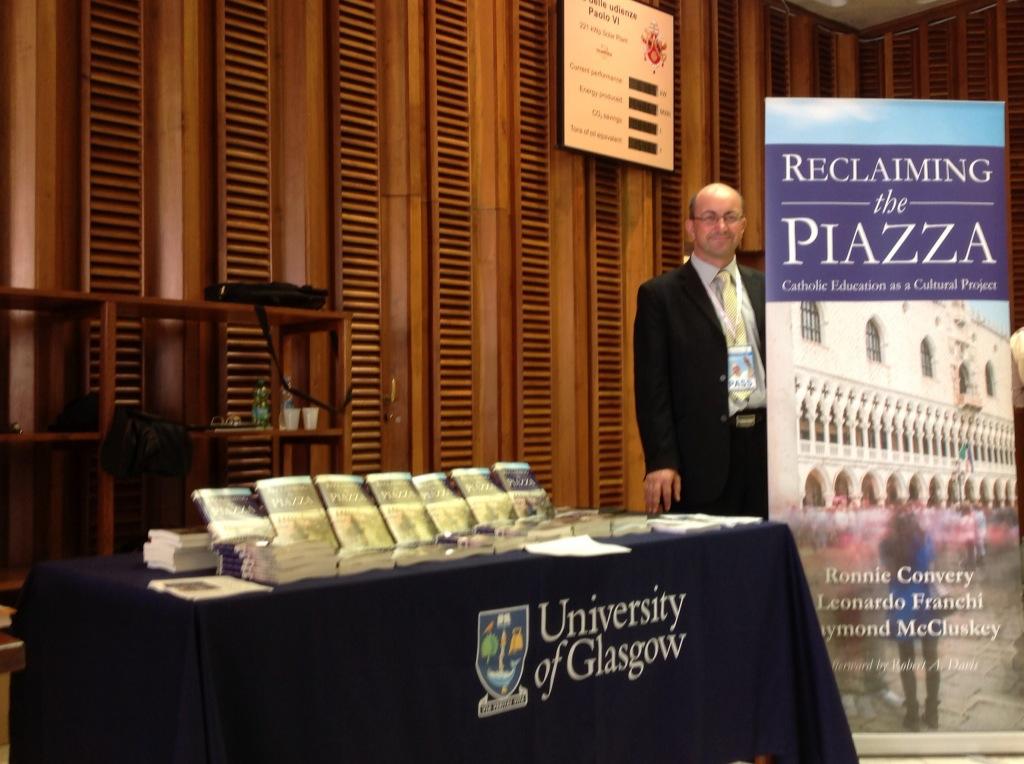
Dr. Leonardo Franchi serves as a Senior Lecturer in Pedagogy, Praxis & Faith at the University of Glasgow's School of Education. He is an internationally recognized scholar in Catholic education, holding significant editorial roles including Series Editor for both Catholic Education Globally - Challenges and Opportunities (Springer) and Education and Integral Human Development (Catholic University of America Press). In September 2024, he was appointed co-convenor of the Scottish Catholic Historical Association and maintains an active role as Executive Member of the Association of Catholic Institutes of Education. Franchi's educational background includes a Master of Arts (Hons), Post Graduate Certificate in Education, Master of Education, Post Graduate Certificate in Academic Practice, and a PhD. His academic journey reflects both theoretical depth and practical teaching experience in educational settings. His research interests center on Catholic education with particular focus on religious education, teacher formation, and the integration of liberal arts in higher education. Franchi has made significant scholarly contributions through the Reclaiming the Piazza series and numerous publications exploring how Catholic educational philosophy can address contemporary challenges while maintaining theological integrity. His work consistently examines the intersection of faith, culture, and educational practice, with increasing attention to character formation, intercultural dialogue, and the application of Catholic social teaching to educational policy. Analysis of his recent publications reveals a consistent trajectory examining Catholic educational identity in pluralistic contexts, with growing emphasis on character formation, teacher professional identity, and the integration of Catholic intellectual tradition with contemporary educational challenges. His 2023-2025 work shows increased focus on Scottish Catholic educational history, the application of papal encyclicals to educational practice, and the role of music and arts in religious formation. Series Editor for Catholic Education Globally - Challenges and Opportunities (Springer) Series Editor for Education and Integral Human Development (Catholic University of America Press) Co-convenor of Scottish Catholic Historical Association (since 2024) Executive Member of Association of Catholic Institutes of Education (since 2016) Academic Adviser to Academic Advisory Forum for Religious Education Reform in England and Wales (2019-2022) Franchi actively supervises doctoral students on diverse topics including professional identity of Catholic school teachers, music and religious education, Jesuit educational charism, and solidarity in Jesuit higher education. His supervision portfolio demonstrates his commitment to both theoretical exploration and practical application in religious educational contexts. He has received grant funding, including £10,000 from Porticus UK to support academics from developing countries attending the ACISE 2018 conference. Franchi also serves on multiple editorial boards including Review of Religious Education, Formation and Theology, and Studia Pedagogica Ignatiana. His professional activities extend to international presentations, with keynotes at institutions including Australian Institute of Theological Education and Radboud University, demonstrating his global influence in Catholic educational discourse. Franchi also serves as Director of Mater Christi Multi Academy Trust in Lancaster and holds a 0.5 FTE position as Professor of Catholic Education at the University of Notre Dame Australia.
Norman Doe is Professor of Law at Cardiff University's School of Law and Politics, where he serves as Director of the Centre for Law and Religion and course director of the LLM in Canon Law. He has held significant leadership roles including Director of Research at the Law School (2011-2014) and has been instrumental in establishing key academic programs such as the LLM in Canon Law (1991) and the LLB module Law and Religion (2002). His international academic presence includes being a visiting professor at the University of Paris since 1999, KU Leuven (2013-16), and Pontifical University of St Thomas in Rome (2009). Doe earned his law degree at University College Cardiff, completed his doctorate at Magdalene College, Cambridge, and studied theology at St Michael's Theological College, Llandaff and Mansfield College Oxford University. His academic credentials include LLD (Cambridge), LLM (Wales), MTh (Oxford), PhD (Cambridge), DCL (Lambeth), and he is a Barrister (Middle Temple). Professor Doe's research focuses on Anglican canon law, comparative church law, law and religion, and the history of ecclesiastical law. His scholarly work has established foundational frameworks for understanding Christian legal systems across denominations. His book Canon Law in the Anglican Communion (1998) formed the basis for The Principles of Canon Law Common to the Churches of the Anglican Communion (2008), while his Christian Law: Contemporary Principles (2013) contributed to the Statement of Principles of Christian Law (2016) that was launched at the World Council of Churches in 2022. His recent publications demonstrate a sustained focus on historical Anglican priest-jurists, ecclesiastical legal history, and the development of Christian legal principles across traditions. His scholarly impact is reflected in his election as a Fellow of the British Academy (2024), appointment as honorary King's Counsel (2024), and previous recognition as one of the 'top ten' law and religion scholars worldwide (2018). He has received numerous honors including election to the Council of the Selden Society (2023), becoming an Academic Bencher of the Inner Temple (2021), and being listed among the 50 most influential Anglicans in the world by The Telegraph (2008). Professor Doe serves as Chancellor of the Diocese of Bangor (since 2012), functioning as president of the Diocesan Consistory Court. He has been deeply involved in global Anglican structures, serving on the Lambeth Commission (2003-2004), contributing to the Windsor Report, and working with the Anglican Communion Network of Legal Advisers. He co-founded the Interfaith Legal Advisers Network (2007) and the Law and Religion Scholars Network (2008), demonstrating his commitment to practical applications of his scholarship. His current research focuses on the history of English ecclesiastical law since the Reformation and a series of articles on clergy jurists published in the Ecclesiastical Law Journal . He is also active in multiple networks of the Cardiff Centre for Law and Religion, including the Colloquium of Anglican and Roman Catholic Canon Lawyers and the Church Law History Network. His 2023 canon law play Thrice to Rome about Gerald of Wales has been performed at St Davids Cathedral and the Temple Church London, with upcoming performances planned for Canterbury and Rome.
Revd Professor Andrew Atherstone is the Professor of Modern Anglicanism , Tutorial Fellow in Church History , and Latimer Research Fellow at Wycliffe Hall, University of Oxford. His career spans academic scholarship, parish ministry, and ecclesiastical advisory roles. Institutional Affiliation: University of Oxford (Wycliffe Hall) Academic Roles: Professor, Tutorial Fellow, Research Fellow Church Roles: Served on Church of England's Faith and Order Commission and Liturgical Commission Andrew’s research focuses on the intersection of Anglicanism and Evangelicalism , with particular emphasis on historical and theological dynamics. He has authored and edited numerous volumes exploring: Christian Fundamentalism (2023 Oxford Handbook) Charismatic Renewal (2021 Transatlantic Study) Reformation History (2011-2015 publications) Modern Anglican Leadership (2014 Welby biography) His work combines rigorous historical analysis with practical ecclesiological insights, examining how theological movements shape denominational identity and practice. Scientific contributions and awards include: Latimer Research Fellow (successor to Latimer House, Oxford-based Anglican Evangelical institute) Editorial leadership in key theological handbooks Andrew teaches courses on Anglicanism, Church History, Ecclesiology, and Evangelicalism, maintaining active engagement with contemporary church governance and theological discourse.
Dana Pe'er is a Professor and Chair of the Computational and Systems Biology Program at the Sloan Kettering Institute (SKI) of Memorial Sloan Kettering Cancer Center. She is also an Investigator of the Howard Hughes Medical Institute and holds the Alan and Sandra Gerry Endowed Chair. Dr. Pe'er leads an interdisciplinary research group that combines advanced genomics approaches with machine learning to address fundamental questions in biomedical science, with particular focus on cancer biology, developmental biology, and immunology. Dr. Pe'er earned her PhD from Hebrew University in Jerusalem, Israel. Her academic journey includes a postdoctoral fellowship with George Church at Harvard Medical School. Before joining Memorial Sloan Kettering Cancer Center in 2016, she held faculty positions at Columbia University. Dr. Pe'er's research focuses on understanding cellular plasticity, the consequences of intra-tumor heterogeneity, cancer evolution and metastasis, and the mechanisms by which regulatory circuits go awry in disease. Her lab combines single-cell and spatial profiling technologies with machine learning approaches to investigate gene regulation, cellular plasticity, and cell-cell communication in the contexts of cancer, immunity, and development. They are particularly interested in how organisms develop from a single cell to generate diverse cell types, how epigenetic control rewires during development, and how cells communicate to execute multicellular responses. Analysis of Dr. Pe'er's recent publications reveals a strong focus on developing computational methods for single-cell and spatial genomics data analysis. Her work spans cancer types including pancreatic, prostate, colorectal, and breast cancer, with emphasis on tumor heterogeneity, metastasis mechanisms, and cellular plasticity. A significant portion of her research involves creating novel algorithms and tools like CellRank, REUNION, and SEACells that enable researchers to extract meaningful biological insights from complex genomic datasets. 2023 Class of 2023 Inductee - American Academy of Cancer Research (AACR) Academy 2023 Innovator Award - International Society for Computational Biology (ISCB) 2021 Fellow - International Society for Computational Biology (ISCB) Howard Hughes Medical Institute Investigator (2021) 2019 Ernst W. Bertner Memorial Award - University of Texas MD Anderson Cancer Center 2016 Lenfest Distinguished Faculty Award - Columbia University 2014 Director's Pioneer Award - National Institutes of Health 2014 Overton Prize - International Society for Computational Biology (ISCB) Dr. Pe'er is known for her dedicated mentorship approach, describing herself as "a mama bear" who cares deeply about her trainees while expecting independence, innovation, and hard work. She mentors numerous PhD students and postdocs in her lab. Her HHMI Investigator award provides approximately $9 million over seven years, enabling ambitious research directions. She also collaborates extensively with the Single-cell Analytics and Innovation Lab (SAIL) at MSK to generate new data from emerging technologies, working closely with wet-lab collaborators at MSK and beyond to apply computational methods to cutting-edge datasets across multiple disease areas. The Pe'er Lab is an interdisciplinary group of computational biologists with diverse backgrounds ranging from pure mathematics to clinical medicine. They work closely with wet-lab collaborators to apply their computational methods to cutting-edge datasets across cancer, immunology, and developmental biology. The lab is described as open, supportive, collaborative, and fun, with access to world-class facilities at the Sloan Kettering Institute. Dr. Pe'er's work continues to push the boundaries of computational biology and cancer research, with the ultimate goal of developing more effective, personalized therapies for cancer patients.
Susan Smith-Peter is a Professor of History at the College of Staten Island, City University of New York, specializing in Russian history beyond Moscow and St. Petersburg. Her research focuses on regional identity, civil society development, and imperial governance in 19th-century Russia, with particular attention to Siberia and provincial dynamics. She holds a Ph.D. from the University of Illinois at Urbana-Champaign and a B.A. from Ohio University. Her work analyzes how Tsarist administrative frameworks fostered subnational identities through statistical bureaus, agricultural societies, and provincial newspapers. Notable contributions include *Imagining Russian Regions* (2018), which argues that autocracy’s civil society initiatives inadvertently fueled revolutionary movements. Her research has been supported by grants from the Fulbright Program, American Historical Association, and IREX. Professor Smith-Peter’s publications span journals like *Slavic Review* and *Kritika*, exploring topics from sugar beet industries to colonial Alaska. She has translated key texts into Russian and edited historical documents such as *The Great Republic Tested by the Touch of Truth*. She serves on campus committees and previously chaired Columbia University’s Seminar on Slavic History and Culture. Key Awards: Fulbright Fellowship, American Historical Association Grant, IREX Grant Grants: Fulbright-Hays Fellowship, University of Illinois Grant, CUNY Grant Her interdisciplinary approach bridges economic, cultural, and political history, emphasizing regional agency within imperial contexts. Ongoing projects explore Siberian historiography and the legacy of 19th-century provincial activism.
Dr. Carys Brown is Head of Academic, Personal, and Professional Development at Trinity College and an Affiliated Lecturer in the Faculty of History at the University of Cambridge. She holds a BA, PGCE, MPhil, and PhD from the University of Cambridge and is a Fellow of both the Higher Education Academy and the Royal Historical Society. Her research centers on the social, cultural, and religious history of late seventeenth- and eighteenth-century Britain, with a focus on religious tolerance, inter-confessional relations, and the history of childhood. She is currently developing a project on children and play in England (c.1660–1780), examining how play intersected with social exclusion based on status, gender, and religion. Her recent publications span monographs, articles, and edited volumes, reflecting interdisciplinary engagement with themes such as auditory religious experience, anti-Catholicism, politeness culture, and religious freedom. Her work often analyzes how religious difference shaped social identity and cultural norms in early modern England. Fellow of the Higher Education Academy Fellow of the Royal Historical Society She teaches Part 1A papers in Early Modern Britain and the Global Eighteenth Century and convenes a Sources paper on Children and Childhood in Early Modern England. She welcomes dissertation supervision on British social, cultural, and religious history (c.1660–1800). She is also a member of the AHRC-funded research network 'Anti-Catholicism in British history, 1520-1900' at Newcastle University. Dr. Brown has held previous roles as a Research Fellow at Trinity College, Research Associate on the AHRC-funded 'Faith in the Town' project at the University of Manchester, Bye-Fellow in Study Skills at Girton College, and History teacher at Saffron Walden County High School. She has co-edited volumes and contributed to significant scholarly collections on religious coexistence and freedom.