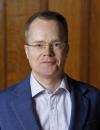
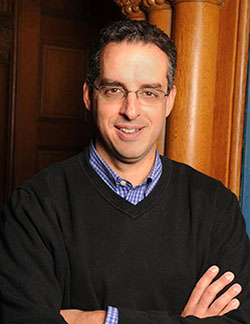
Dr David Grumett is a Senior Lecturer in Theology and Ethics at the University of Edinburgh's School of Divinity. He holds a BA(Hons), MPhil, and PhD, and is a Senior Fellow of the Higher Education Academy (SFHEA). His research focuses on theology, ethics, and philosophy, with particular attention to themes like sacramental theology, animal welfare, and historical theologians such as Henri de Lubac and Teilhard de Chardin. **Education**: BA(Hons) MPhil PhD SFHEA **Responsibilities**: Convener, Divinity Research Ethics Committee Academic cohort lead for Philosophy and Theology External roles include Assessor at the Office for Students and membership in the AHRC Peer Review College His work bridges theological theory with practical ethics, including animal ethics and liturgical studies. He has published extensively on sacramental theology, biblical interpretation, and contemporary ethical issues in Christianity.
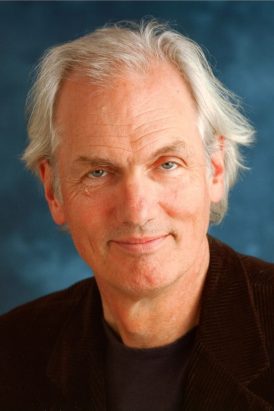
Alexander R. Pruss is a tenured Professor in the Department of Philosophy at Baylor University , within the College of Arts and Sciences . He holds a dual PhD in Philosophy (University of Pittsburgh, 2001) and Mathematics (University of British Columbia, 1996), and has held previous academic positions at Georgetown University. His work is deeply interdisciplinary, bridging metaphysics, philosophy of religion, formal epistemology, and ethics. Education: Ph.D. in Philosophy, University of Pittsburgh (2001) Ph.D. in Mathematics, University of British Columbia (1996) B.Sc. (Hon.) in Mathematics and Physics, University of Western Ontario (1991) Pruss’s research interests include metaphysics—particularly the Principle of Sufficient Reason , modality , and infinity —philosophy of religion, divine attributes , cosmological arguments , and sexual ethics . He is known for integrating rigorous formal methods with classical theistic metaphysics. His recent publications explore the intersection of probability theory, paradox, and theology, particularly in infinite domains. He has authored influential books such as The Principle of Sufficient Reason: A Reassessment (2006), Infinity, Causation and Paradox (2018), and One Body: An Essay in Christian Sexual Ethics (2012). The trends in his recent articles show a sustained focus on the philosophical implications of infinity, symmetry, and probability. He frequently investigates paradoxes in probability (e.g., infinite lotteries), challenges to modal realism, and the metaphysical coherence of divine attributes. His work combines analytic rigor with theological depth, often aiming to defend classical theism through logical and mathematical reasoning. Scientific awards and honors: Aquinas Medal, American Catholic Philosophical Association (2025) Wilde Lecturer, Oriel College, University of Oxford (2019) Outstanding Tenured Faculty Research Award, College of Arts and Sciences (2013) National Endowment for the Humanities Summer Stipend (2002) Social Sciences and Humanities Research Council of Canada Fellowship (1997–2000) Pruss has been actively involved in academic service, including serving on the Executive Council of the American Catholic Philosophical Association (2021–2024) and the Society of Christian Philosophers (2011–2013) . He has held editorial roles for journals such as American Philosophical Quarterly and Analysis and Existence . He has delivered numerous invited lectures globally, including at Oxford, Notre Dame, and MIT. There is no mention of formal PhD or Master’s students in the provided text, but he advises through graduate seminars and research supervision. He has not received specific grant mentions beyond fellowships and stipends. He is affiliated with research groups such as the Baylor Institute for Faith and Learning and the Thomistic Institute , and contributes to philosophy of science and theology dialogues. His work continues to shape contemporary debates in analytic philosophy of religion and metaphysics.
Webb Keane is the George Herbert Mead Collegiate Professor of Anthropology at the University of Michigan. He is affiliated with the Center for Southeast Asian Studies, Global Islamic Studies Center, and the Interdisciplinary Program in Anthropology and History. His research focuses on ethics, semiotics, material culture, and religion in Southeast Asia and beyond. He holds a PhD and AM from the University of Chicago and a BA from Yale College. His major publications include Signs of Recognition , Christian Moderns , and Ethical Life , with his latest book Animals, Robots, Gods (2025) exploring non-human ethics. Keane has held fellowships from the Guggenheim Foundation and the National Endowment for the Humanities, and has lectured globally, including at Cambridge and the London School of Economics. Research Interests: Moral philosophy, semiotics, materiality, religion, media, and historical consciousness. Awards: Guggenheim Fellowship, Annette B. Weiner Memorial Lecturer, Edward Westermarck Memorial Lecturer. Teaching: Courses on language and culture, anthropology of religion, and Southeast Asian studies. Affiliations: Center for Southeast Asian Studies, Global Islamic Studies Center, Interdisciplinary Program in Anthropology and History.
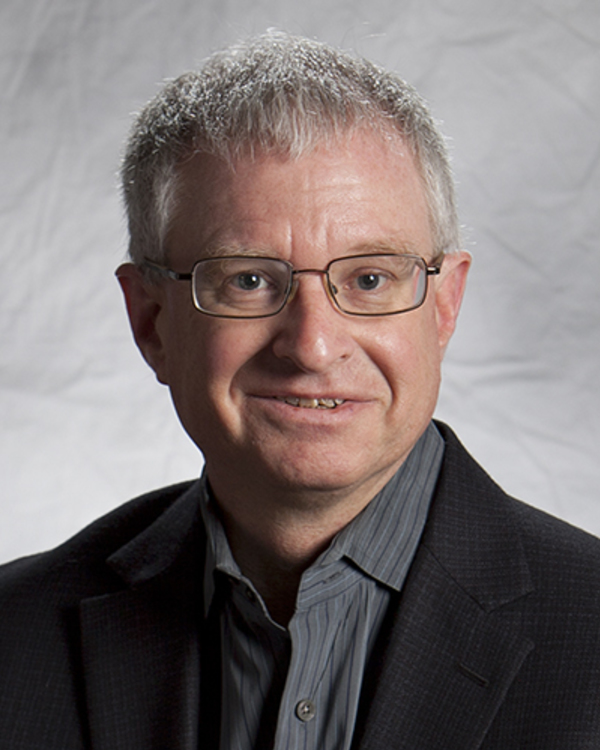
Martin Schlag is Professor at the University of St. Thomas holding the Alan W. Moss Endowed Chair for Catholic Social Thought and serving as Co-director of the Terrence J. Murphy Institute for Catholic Thought, Law, and Business within the Opus College of Business's Department of Ethics and Business Law. His educational background includes: JD from University of Vienna Licentiate in Theology (Lic. Theol.) from Pontifical University of the Holy Cross, Rome Doctorate in Sacred Theology (STD) from Pontifical University of the Holy Cross, Rome Schlag's research centers on Catholic social thought's application to political and economic systems, examining historical Christian perspectives on markets, trade, money, private property, and social justice. He advocates for principled business leadership that promotes the common good and integrates the poor into market economies through Christian humanism. His work emphasizes truth, goodness, and beauty as foundational to business as a noble vocation. Analysis of his 2022-2025 publications reveals dominant trends in subsidiarity theory, gift economies in business, digital ethics, and pandemic policy through theological frameworks. His scholarship consistently connects Catholic social teaching to contemporary challenges including e-commerce morality, technological unemployment, diversity initiatives, and integral ecology of work. As Co-director of the Terrence J. Murphy Institute, Schlag leads interdisciplinary initiatives bridging Catholic thought with business practice, organizing global conferences that inform his research and publications. No information is available regarding student advising or research grants.
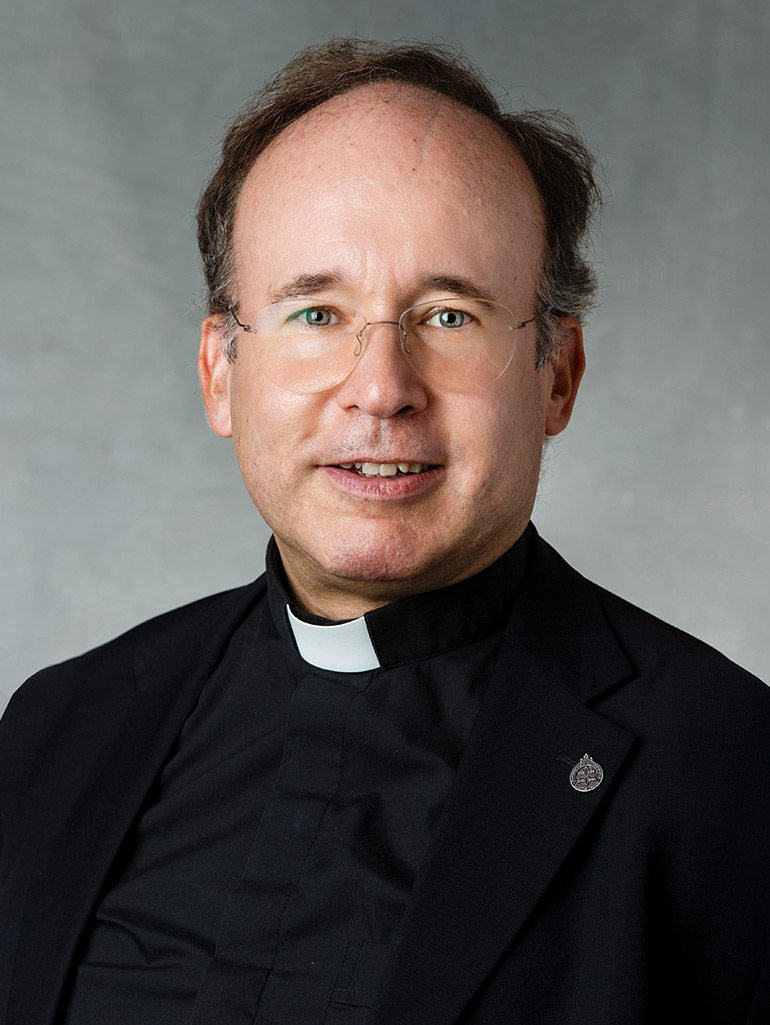
Enrique Sanz Giménez-Rico, SJ is a Professor at the Faculty of Theology of Comillas Pontifical University , where he has taught for over two decades. His academic journey includes a Licentiate in Trilingual Biblical Philology (Pontifical University of Salamanca, 1990) Licentiate in Sacred Scripture (Pontifical Biblical Institute, 1997) Doctorate in Theology (Comillas Pontifical University, 2000) . Specializing in Old Testament theology and spirituality , his research focuses on the Theology of the Pentateuch , Theology of the Psalter , and Greek Philology . His recent publications explore themes like prophetic literature , divine mercy , and biblical foundations for environmental ethics , reflecting a synthesis of Hebrew Bible studies and contemporary theological challenges . Scientific contributions include Sexenio Campo 11 accreditation in Philosophy, Philology, and Linguistics (2011-2018) ACAP certification as Professor Doctor of Private University (2007) . Professional roles encompass Rector of Comillas Pontifical University (2021-2024) Dean of Theology and Canon Law Faculties (2015-2021) Director of the Department of Sacred Scripture and Church History (2011-2015) .
Prof. Dr. Johanna Rahner serves as Professor of Dogmatics, History of Dogma and Ecumenical Theology at the Catholic Theological Faculty of the Eberhard Karls University of Tübingen since 2014. She also holds the position of Director of the Institute for Ecumenical and Interreligious Research at the same institution. Her research interests span a wide range of theological topics including: Biblical Hermeneutics for Systematic Theology (especially Christology), Ecumenical theology and its ecclesiological problem areas, the relationship between religion, culture, educational processes, politics and society, interaction of contemporary culture with worship and theology of the sacraments, theoretical foundations of dialogue between world religions in a globalized world, relationship between reason and faith, theology and philosophy, theology and natural sciences, patchwork religiosity and subjective religious pluralism, and religiosity of children and adolescents with special consideration of youth and cult literature and pop music. Prof. Rahner's publications demonstrate a consistent focus on contemporary challenges facing the Catholic Church, ecumenical dialogue, and the intersection of theology with modern culture. Her work frequently addresses the Second Vatican Council's implications for contemporary theology, the relationship between science and faith, and the practical application of theological concepts in interreligious contexts. She has made significant contributions to understanding eschatology, ecclesiology, and the practical application of theological concepts in interreligious contexts. Wissenschaftlicher Beirat des Kuratoriums zur Vorbereitung des Reformationsjubiläums 2017 Ökumenischer Arbeitskreis evangelischer und katholischer Theologen Editorial-Board der Ökumenischen Rundschau Wissenschaftlicher Beirat der Europäischen Melanchthonakademie, Bretten Societas oecumenica AG der deutschsprachigen katholischen Dogmatiker und Fundamentaltheologen Europäische Gesellschaft für Katholische Theologie. Deutsche Sektion e.V. AGENDA – Forum katholischer Theologinnen e.V. Prof. Rahner has been involved in several significant research projects including Moralische Urteilsfindung im säkularen Diskurs als Herausforderung für die christlichen Konfessionen, Intergenerationelle LehrerInnen-Ausbildung, Theorie und Praxis des interreligiösen Lernens, Kirche und Bildungsregime in Lateinamerika, Reformationsgedenken und Ökumene, and Grundfragen theologischer Anthropologie in Auseinandersetzung mit aktuellen naturwissenschaftlichen Modellen. She leads the Institute for Ecumenical and Interreligious Research, which serves as a hub for scholarly research on contemporary challenges in interfaith relations and ecumenical theology.
Gerald McKenny is the Walter Professor of Theology at the University of Notre Dame. His primary research focuses on Moral Theology/Christian Ethics, with expertise in natural and revealed law, the Decalogue, and the ethical implications of biotechnology. He holds a Ph.D. from the University of Chicago. His research interests span Christian ethics, biomedical ethics, biotechnology ethics, religious ethics, and the philosophy of medicine. Notable publications include Biotechnology, Human Nature and Christian Ethics (2018), The Analogy of Grace: Karl Barth’s Moral Theology (2010), and To Relieve the Human Condition (1997). He has authored over fifty articles and co-edited four books, including The Ethical (2003) and Altering Nature (2008). McKenny’s work bridges theology and contemporary ethical challenges, particularly in biotechnology and medical ethics. He is currently completing a second book on Karl Barth’s ethics and developing a Gospel-based Christian ethics framework.
Aana Marie Vigen is an Associate Professor of Christian Social Ethics at Loyola University Chicago, specializing in interdisciplinary approaches to healthcare and medical ethics. Her work bridges sociology, anthropology, ethnography, and theology, with a focus on racial-ethnic and socio-economic disparities in health and healthcare. She actively engages in teaching at both undergraduate and graduate levels and contributes to academic discourse through publications and collaborations. Bachelor of Arts in Spanish, Religion, and Hispanic Studies from St. Olaf College Masters in Theology and Ethics from the Graduate Theological Union and Pacific Lutheran Theological Seminary Doctorate in Social and Theological Ethics from Union Theological Seminary, New York City Dr. Vigen’s research explores the intersection of human and ecological health, particularly in the context of climate change, as well as feminist ethics, white anti-racism, and theological anthropology. Her recent publications address prenatal genetic testing, reproductive justice, and the role of Christian ethics in confronting systemic health inequities. She employs ethnographic methods to engage with marginalized voices and contemporary bioethical challenges. Dr. Vigen co-edited Ethnography as Christian Theology and Ethics (2011) and contributed to interdisciplinary anthologies on bioethics, gender, and religious authority. Her work emphasizes the integration of theological reflection with empirical research to address issues like racial disparities in healthcare and ethical implications of genetic counseling. She is a member of the Society of Christian Ethics (SCE) and the American Academy of Religion (AAR) and served on the national ELCA Genetics Taskforce from 2008–2011.
Pamela Klassen is Professor and Chair in the Department for the Study of Religion at the University of Toronto, cross-appointed to Anthropology. She is a Fellow of the Royal Society of Canada and has held distinguished positions including William Lyon Mackenzie King Chair at Harvard University and Distinguished Visiting Professor at the University of Tübingen. Professor Klassen's research focuses on the anthropology of religion with particular attention to: Colonialism, treaties, and public memory in North America and Turtle Island Global Christianities and their relationship to Indigenous lands Religion, ritual, and museum studies Digital humanities approaches to religious history Gender, spirituality, and religious authority Her scholarly work demonstrates a consistent engagement with how religion shapes and is shaped by colonial histories, public memory, and contemporary political struggles. Klassen's research bridges academic inquiry with public-facing projects that collaborate with Indigenous communities, particularly the Rainy River First Nations. Among her notable awards are the American Academy of Religion Award of Excellence (2012), the Northrop Frye Award of Excellence (2015), and the Anneliese Maier Research Award from the Humboldt Foundation (2015-2020). She was elected as a Fellow of the Royal Society of Canada in 2019. Professor Klassen actively mentors graduate students and has supervised numerous PhD candidates working at the intersection of religious studies, anthropology, and Indigenous studies. Her current research includes a book on the public memory of gold rushes in settler colonies and ongoing collaborative work with the Kay-Nah-Chi-Wah-Nung Historical Centre. She leads several major collaborative projects including "Kiinawin Kawindomowin Story Nations," a digital storytelling initiative focused on restorying colonial documents about Manidoo Ziibi (Rainy River), and "Treaty Conversations," an educational resource about treaty relationships in Ontario.
Simeon Zahl is the Professor of Christian Theology at the Faculty of Divinity , University of Cambridge, and a Fellow at Jesus College. His work bridges historical and constructive theology, focusing on the Protestant Reformation, the Holy Spirit, and the role of affect and embodiment in Christian life. Education: BA in History and Literature, Harvard; PhD in Theology and Religious Studies, Cambridge. Prior roles: Junior Research Fellow, St John’s College, Oxford; Assistant Professor of Systematic Theology, University of Nottingham. His 2020 monograph The Holy Spirit and Christian Experience reinterprets pneumatology through affect theory and embodiment. Current research explores the theology of sin and its contemporary relevance, alongside projects integrating cognitive science and theological epistemology. Recent publications span topics like soteriological individualism, biotechnological ethics, and the affective dimensions of doctrinal formulation. He served as Principal Investigator for a Templeton World Charity Foundation-funded project on affect and knowledge-production in theology (2018–2022). Advises PhD students in systematic theology and religious studies. Active in interdisciplinary collaborations, particularly at the intersection of theology, philosophy, and cognitive sciences.
M. Cathleen Kaveny is the Darald and Juliet Libby Professor of Theology at Boston College, specializing in the intersection of law, ethics, and religious morality. She holds a J.D. and Ph.D. from Yale University, alongside multiple degrees from Princeton and Yale. Her research focuses on law’s role in pluralistic societies, health care ethics, rhetoric’s ethical implications, and the balance between mercy and justice. Education: A.B., Princeton University M.A., Yale University M.Phil., Yale University J.D., Yale University Ph.D., Yale University Research Interests: Professor Kaveny explores how law interacts with religious and moral frameworks, particularly in bioethics, medical ethics, and complicity with wrongdoing. She emphasizes the ethical dimensions of legal rhetoric and the societal implications of mercy in judicial systems. Publications: Her work includes award-winning books like *Law’s Virtues* (2012) and *Prophecy without Contempt* (2016), alongside articles addressing topics from Vatican II to family law cases like *Watts v. Watts*. Her scholarship bridges theological, legal, and ethical perspectives. Awards: First Place Award in “Faithful Citizenship” from the Catholic Press Association (2012) Teaching and Engagement: She teaches contract law and interdisciplinary seminars on topics like “Law and Religion” and “Complicity.” Her columns in *Commonweal* further highlight her public engagement with ethical and legal issues.
Dr. Geoffrey Fulkerson is a Professor of Philosophy & Theology at Dordt University, where he combines Christian theology with interdisciplinary approaches to address challenges in the church and broader society. His work bridges theology, social theory, and contextual analysis, emphasizing collaborative scholarship. PhD in Systematic Theology, Trinity Evangelical Divinity School (2018) MDiv, Trinity Evangelical Divinity School (2006) BS in Journalism, University of Illinois (2001) His research focuses on the intersection of creation theology, ecclesiology, and place-based contextual analysis, with a strong emphasis on integrating modern scientific insights into theological frameworks. He has contributed to projects exploring the doctrine of creation, theological responses to death, and the evolution of evangelical thought. Dr. Fulkerson has secured substantial grants, including a $4.16 million John Templeton Foundation award (2019–2022) for 'Evangelical Theology and the Doctrine of Creation,' and has served as guest editor for the Trinity Journal in 2018 and 2017. His work highlights collaboration across disciplines and institutions. 2021 DoSER Science for Seminaries Grant ($75,000) 2019 John Templeton Foundation Award ($4.16 million) 2015 Templeton Religion Trust Grant ($3.38 million) 2014 & 2013 Kern Family Foundation Oikonomia Grants (contributor) Dr. Fulkerson teaches courses in Christian Philosophy, Ethics, Ecclesiology, and place-based theological studies, reflecting his commitment to applying theological insights to practical and cultural challenges.
Hakan Coruh is a Senior Lecturer in Islamic Studies at the Centre for Islamic Studies and Civilisation, Charles Sturt University. He joined the university in 2015 as a lecturer and was promoted to Senior Lecturer in November 2021. Dr. Coruh has served as the Higher Degree Research Coordinator (HDR) for master's and PhD candidates at the center from 2020 to 2022. He is actively involved in multiple academic associations including the Australian Association of Islamic and Muslim Studies (AAIMS), CRES (Centre for Religion, Ethics and Society), and PAPER (Practical and Public Ethics Research group) at Charles Sturt University. Dr. Coruh obtained his Bachelor of Divinity (Ilahiyat) degree from the Faculty of Divinity at Sakarya University. In 2007, he completed his master's degree in Qur'anic exegesis (tafsīr) at the same university. Between 2003 and 2008, he actively participated in academic circles and centers such as İSAM (Centre for Islamic Studies) in Istanbul. In 2015, he successfully earned his PhD from Australian Catholic University, focusing his research on the early modern exegesis of the Qur'an, specifically studying the works of Said Nursi, Muhammad 'Abduh, and Sir Ahmad Khan. Dr. Coruh specializes in Qur'anic exegesis (tafsīr) and actively teaches and writes on subjects related to Qur'anic studies, classical exegesis, and contemporary approaches to the Qur'an and Islam. His academic interests encompass various fields, including classical and modern Qur'anic exegesis, contemporary Islamic thought, Islamic Legal Theories (usul al-fiqh) and Jurisprudence (fiqh), Islamic Ethics (akhlaq), Islamic theology, Medieval Classics (Islamic, Christian, and Jewish), and Comparative Theology. His teaching includes subjects such as Usul al-Tafsir, Usul al-Fiqh, Islamic Family Law and Society, and Islamic Jurisprudence of Five Pillars. Dr. Coruh's research output shows a strong focus on Qur'anic hermeneutics, particularly examining the works of key figures like Bediuzzaman Said Nursi and Muhammad 'Abduh. His publications demonstrate interdisciplinary approaches, connecting Islamic studies with contemporary issues such as religious freedom, science and religion dialogue, bioethics, and interfaith relations. He has made significant contributions to understanding the relationship between traditional Islamic scholarship and modern contexts, especially regarding topics like religious freedom (Qur'an 2:256), the methodology of Qur'anic exegesis, and Islamic responses to contemporary challenges. Dr. Coruh supervises multiple research students, including PhD candidates David Drennan, Sarkhan Gasimov, and Nadia El-Mouelhy (as co-supervisor), as well as Master's students Ikramullah Ahmad and Ensar Cutahija. His supervision topics cover diverse areas such as Islamic legal theory, interfaith relations, and contemporary Islamic thought. Dr. Coruh is actively engaged with various academic communities, serving as a member of the CISAC Research Team, CISAC School Board, Sufi Studies Network at Monash University, and the Comparative Theology Reading Group at Australian Catholic University. In 2023, he held a visiting research fellow position at the Center for Islamic Legislation and Ethics (CILE) at Hamad Bin Khalifa University in Qatar.
Joseph Capizzi serves as Dean and Ordinary Professor of Moral Theology at the Catholic University of America's School of Theology and Religious Studies, where he also directs the Institute for Human Ecology. His academic leadership spans social ethics, development of doctrine, medieval moral theology, and peace and justice initiatives within Catholic theological frameworks. His educational foundation includes: B.A. from the University of Virginia M.T.S. (Salutatorian) from Emory University's Candler School of Theology M.A. and Ph.D. in Theology as a John A. O'Brien Fellow at the University of Notre Dame, with dissertation research on slavery's challenge to moral theology Capizzi's research integrates Augustinian theology with contemporary ethical dilemmas, particularly in just war theory, bioethics, and political liberalism. His work examines the historical development of Catholic moral teaching while addressing modern challenges in law and religion, human rights, and virtue-based ethical frameworks. This synthesis positions him at the intersection of theological tradition and urgent societal questions. Analysis of his publication history reveals consistent engagement with Catholic social teaching applied to evolving ethical landscapes. His 2014 co-edited book A Catechism for Business bridges theology with corporate ethics, while his journal articles demonstrate deep historical analysis (particularly regarding slavery and medieval thought) alongside contemporary applications in war ethics and bioethics. The recurring theme across his work is the dynamic relationship between doctrinal development and practical moral reasoning. Through the Institute for Human Ecology, Capizzi leads interdisciplinary initiatives exploring human dignity and the common good. His media contributions—including commentary on pandemic response ethics, climate policy, and sustainable food systems—demonstrate active translation of theological principles into public discourse. Current teaching responsibilities include courses on Christian social ethics, beginning-of-life issues, and law in moral theology.
Ruth Braunstein is an Associate Professor of Sociology at the University of Connecticut and Director of the Meanings of Democracy Lab. Her research focuses on religion’s role in American political life, particularly exploring how religious morality intersects with citizenship, taxation, and social movements. She holds a PhD and MA from New York University and a BS in Foreign Service from Georgetown University. Education: PhD in Sociology, New York University (2013) MA in Sociology, New York University (2008) B.S. in Foreign Service, Georgetown University (2003) Research Interests: Braunstein examines contested moral narratives in politics, including Christian nationalism, Tea Party activism, and progressive interfaith organizing. Her current project investigates the moral dimensions of taxation practices in the U.S. Her work bridges cultural sociology with political theory, emphasizing how everyday practices reflect broader ideological struggles. Awards: ASA Religion Section Early Career Award UConn Sociology Department Faculty Mentor Award (2021) Clifford Geertz Best Article Award (2014) AAUW American Fellowship Grants & Labs: Braunstein’s research is supported by the Louisville Institute, SSSR, and UConn. She directs the Meanings of Democracy Lab, exploring how citizens navigate political divides. She has held fellowships at Princeton’s Religion Center and the UConn Humanities Institute. Editorial Roles: She serves on editorial boards for Sociology of Religion , American Sociological Review , and others. She co-edits the Political Power and Social Theory series.