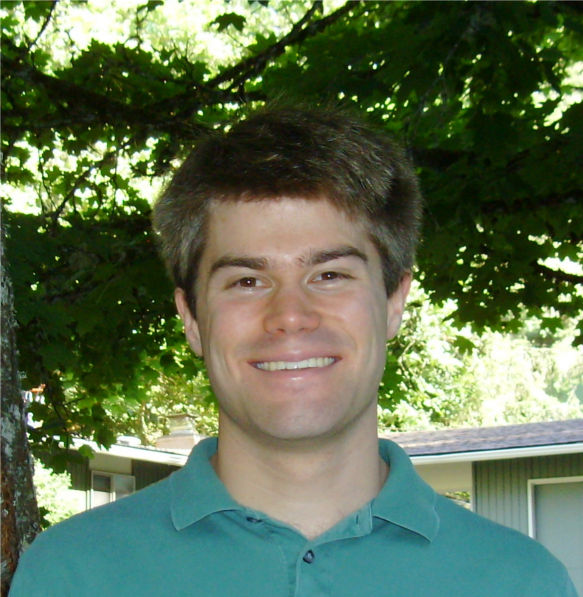
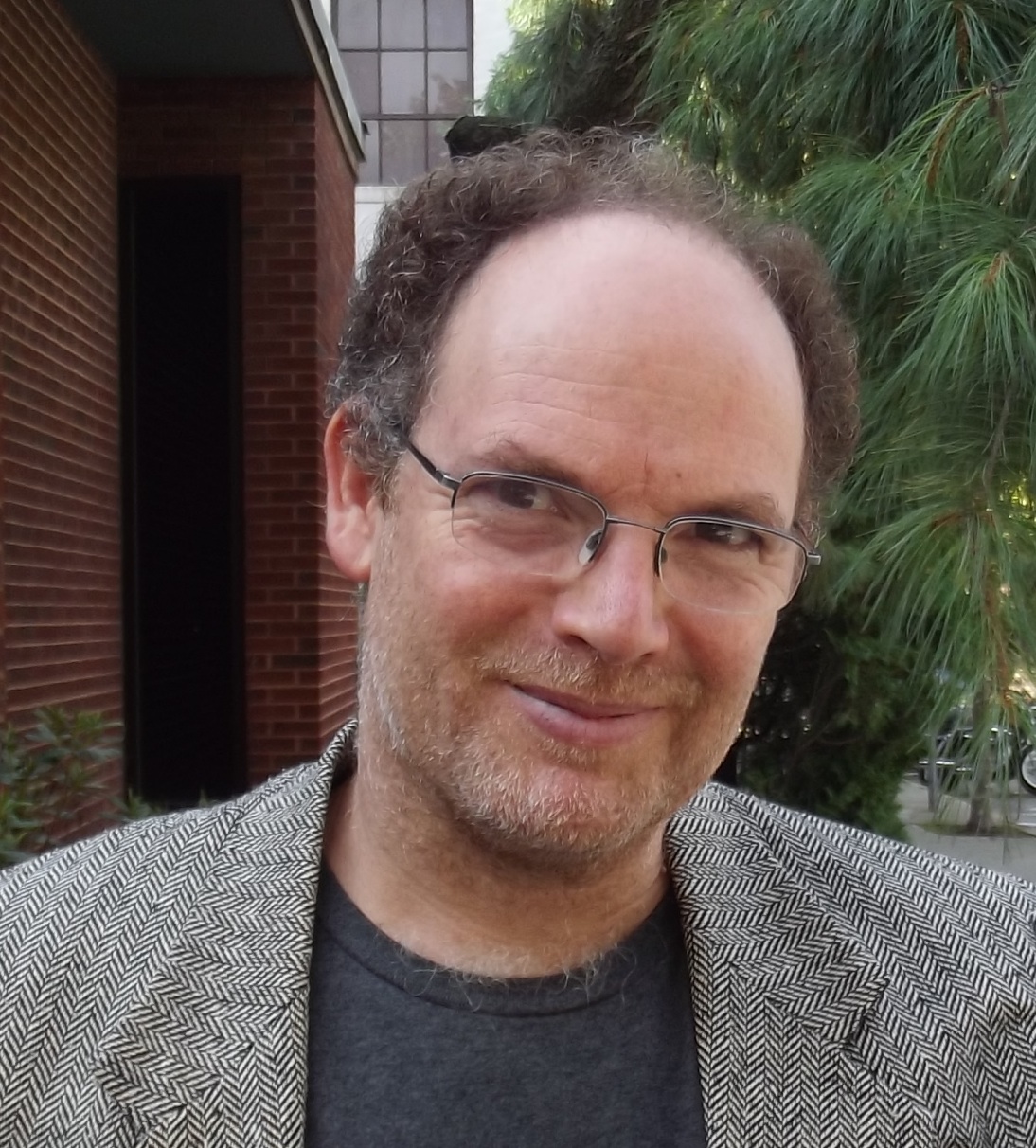
Eric Larson is an Associate Professor at Brown University's Department of Mathematics, specializing in algebraic geometry. His research focuses on moduli spaces, Brill-Noether theory, and algebraic curves. He collaborates with notable mathematicians such as Isabel Vogt and Izzet Coskun on topics like normal bundles, Chow rings, and stability conditions. Larson actively engages in academic outreach, organizing Putnam competition practices and undergraduate colloquia. He has developed computational tools for studying elliptic curves' Galois representations and contributed to expository works on interpolation problems and LaTeX accessibility.
Mark D. Haiman is a Professor at the University of California, Berkeley, Department of Mathematics, with research interests spanning algebra, combinatorics, and algebraic geometry. His work connects symmetric function theory with geometric objects like Hilbert schemes and algebraic structures such as Cherednik algebras and Hecke algebras. Appointed: 2001 Contact: mhaiman@math.berkeley.edu Teaching: Math 256B—Algebraic Geometry (Spring 2025), Math 249—Algebraic Combinatorics (Spring 2024), and others in calculus and Lie groups. Research Interests : Haiman's research focuses on Macdonald polynomials, LLT polynomials, Hilbert schemes of points in the plane, and their combinatorial and geometric implications. His work includes resolving the Macdonald positivity conjecture and the n! conjecture through algebraic geometry. Publications : Haiman has contributed to foundational papers in combinatorial and algebraic structures, including generalizations of the shuffle theorem and positivity results for LLT polynomials. His articles often bridge representation theory, symmetric functions, and geometric methods. Students : He has supervised numerous PhD students, including Magda Hlavacek (2023), Foster Tom (2022), Jeremy Meza (2021), Maryam Farahmand-Asil (2018), Maria Monks Gillespie (2016), and others working on combinatorial algebraic geometry and related fields.
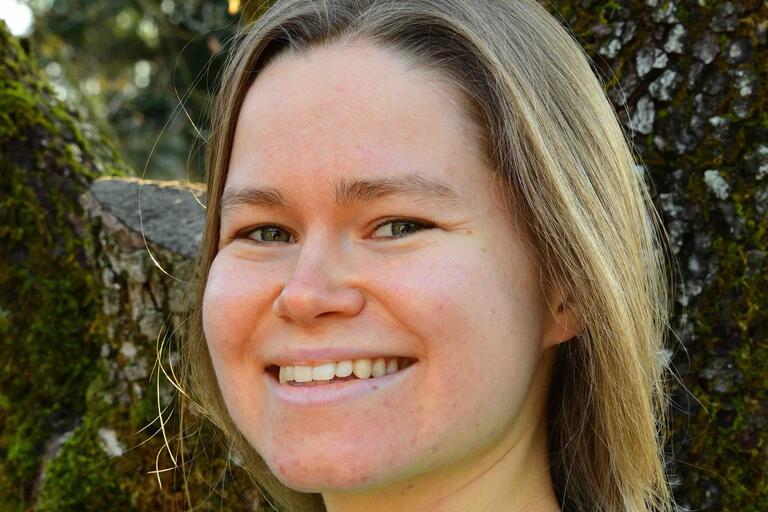
Hannah K. Larson is an Assistant Professor in the Department of Mathematics at the University of California, Berkeley. She is also a Clay Research Fellow (2022-2027) and recipient of the 2024 Maryam Mirzakhani New Frontiers Prize. University: University of California, Berkeley Academic Rank: Assistant Professor Clay Research Fellow: 2022-2027 Educational Background: PhD in Mathematics from Stanford University (2022), advised by Ravi Vakil Research Interests focus on algebraic geometry and intersection theory , particularly moduli spaces of curves, tautological rings, and Chow rings. Her work investigates cohomological structures of moduli spaces and extends Brill-Noether theory to special curve classes. Publications trend emphasizes moduli spaces , Chow rings , and tautological structures across 15 recent articles. Collaborators include Samir Canning, Sam Payne, and Ravi Vakil. Scientific Awards: 2024 Maryam Mirzakhani New Frontiers Prize Hertz Thesis Prize (2022) Advising and Grants: She has no listed advisees but collaborates extensively. The Clay Research Fellowship (2022-2027) supports her research. Labs and Teams: She participates in the Berkeley mathematics community and collaborates with institutions like Harvard Society of Fellows and ETH Zürich researchers.
Dr. Niranjan Ramachandran is a Professor of Mathematics at the University of Maryland, College Park, specializing in the deep structural connections between Arithmetic Geometry and Number Theory. His work centers on motives, zeta functions, and algebraic cycles, with significant contributions to foundational conjectures in modern mathematics. His primary research domains include: Arithmetic Geometry Algebraic Geometry Number Theory Motives Zeta Functions Cohomology K-theory Prof. Ramachandran's research explores the intricate relationships between algebraic cycles, special values of L-functions, and motivic cohomology, advancing understanding of the Birch and Swinnerton-Dyer conjecture, Artin-Tate conjecture, and higher Euler characteristics through innovative approaches to zeta functions and motivic complexes. Analysis of his 15 most recent publications reveals sustained focus on zeta function special values (2023), derived categories of elliptic curves (2022), and Artin-Tate conjecture proofs (2022), with recurring themes in fiber integration of gerbes (2020), higher Euler characteristics (2016), and motivic measure exponentiation (2014). His work consistently bridges abstract motivic frameworks with concrete arithmetic problems. No scientific awards were documented in the provided materials. Information regarding academic advising, Ph.D. students, or research grants was not specified in the available text.
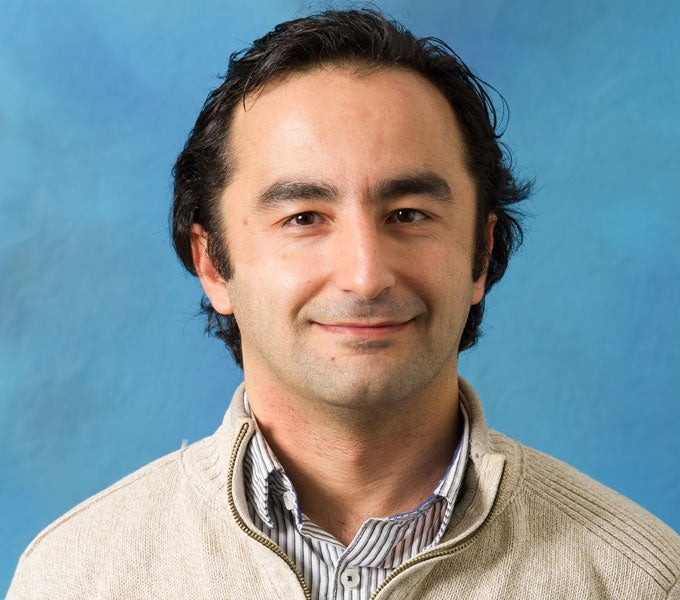
Zsolt Patakfalvi is an Associate Professor at École Polytechnique Fédérale de Lausanne (EPFL), holding positions in the School of Basic Sciences (SB) within the Department of Mathematics (MATH). He is affiliated with the Chair of Algebraic Geometry (CAG) and the Section of Mathematics for Engineers (SMA-ENS). Additionally, he serves as Director of SMA-GE and holds roles in academic governance bodies like the Conference of Section Directors (CDS) and SB Faculty Management. His research focuses on Algebraic Geometry, particularly in birational geometry, positive characteristic methods, moduli theory, and mixed characteristic algebra. He explores topics such as Hodge theory, singularities, and applications to arithmetic geometry. Notable contributions include work on the minimal model program, test ideals, and counterexamples to classical conjectures in positive characteristics. He supervises doctoral students in areas like algebraic geometry and commutative algebra, including Jefferson Baudin, Léo Navarro Chafloque, and Linus Rösler. His past advisees include Emelie Arvidsson and Quentin Posva. Patakfalvi’s publications frequently address foundational questions in geometry, with recent work extending into perfectoid spaces and globally-regular varieties. He coordinates courses such as 'Algebra III - Rings and Fields' and 'Perfectoid spaces' at EPFL, reflecting his commitment to both research and education. His academic service includes managing educational programs within SB-SMA and contributing to institutional decision-making through CDS membership.
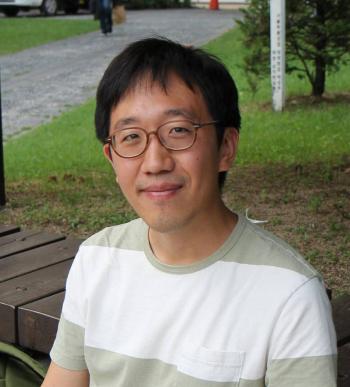
June Huh is a Mathematics Professor at Princeton University's Department of Mathematics. His research focuses on the interplay between algebraic geometry, combinatorics, and matroid theory, with notable contributions to Hodge theory, tropical geometry, and log-concavity phenomena. He is actively involved in collaborative projects such as the FRG initiative on matroids, graphs, and algebraic geometry. Key research interests include matroid polytopes, Chow rings, Lagrangian geometry, and combinatorial applications of Hodge-Riemann relations. His work bridges discrete and continuous mathematics, with implications for enumerative geometry and geometric combinatorics. Recent publications explore topics like volume polynomials, Bergman fans, and singular Hodge theory in combinatorial geometries. He has received funding for interdisciplinary research through grants like the FRG Collaborative Research program. His contributions highlight innovative methods in geometric and algebraic combinatorics.
Ryomei Iwasa serves as Associate Professor in the Department of Mathematical Sciences at the University of Copenhagen, where his research bridges algebraic geometry and algebraic topology through advanced investigations in motivic homotopy theory and cohomology frameworks. His core research spans Algebraic Geometry, Algebraic Topology, Motivic Homotopy Theory, and K-Theory, with specialized focus on motivic spectra, algebraic cobordism, and the structural relationships between cohomology theories and moduli spaces. Recent publications demonstrate deep engagement with foundational aspects of Milnor excision, cdh descent, and modulus conditions in cycle theory. Analysis of his publication trajectory reveals a concentrated effort toward geometrization of cohomology theories, particularly evident in his 2025 Journal of the American Mathematical Society paper on Conner-Floyd isomorphisms and ongoing seminar work. Collaborations with leading mathematicians including Toni Annala, Marc Hoyois, and Wataru Kai underscore his position at the forefront of these mathematical frontiers. Scientific recognition includes: ERC MOSHOT grant He actively directs a weekly seminar on geometrization of cohomology theories, structuring comprehensive explorations from filtered modules to de Rham cohomology and prismatization. The seminar program—featuring presentations by Qingyuan Bai, Adrien Morin, and Florian Riedel—demonstrates his commitment to advancing collective understanding and mentoring emerging researchers in specialized mathematical domains.
Ravi Vakil is the Robert Grimmett Professor of Mathematics at Stanford University and the President of the American Mathematical Society (AMS). He specializes in algebraic geometry, with contributions to enumerative geometry, moduli spaces, intersection theory, and Schubert calculus. His research interests also extend to mathematics education and public outreach. He earned his Ph.D. from Harvard University under Joe Harris. Vakil is renowned for his book The Rising Sea: Foundations of Algebraic Geometry , set for publication by Princeton University Press in 2025. He co-founded MathOverflow and Proof School, and serves on editorial boards of journals like Algebra and Number Theory and Involve . His awards include the AMS Centennial Fellowship, Coxeter-James Prize, Sloan Fellowship, and the Chauvenet Prize for mathematical exposition. He has advised numerous Ph.D. students and is known for his dedication to teaching, receiving the Dean’s Award for Distinguished Teaching. Vakil actively participates in academic service, including roles on the AMS Board and the National Math Stars advisory board. His research explores foundational questions in algebraic geometry, often with connections to combinatorics and representation theory.
Ryomei Iwasa is an Associate Professor at the Department of Mathematical Sciences , University of Copenhagen. His research focuses on advancing motivic homotopy theory, particularly extending Voevodsky's framework to address non-A1-homotopy invariant phenomena. He has made significant contributions to algebraic K-theory, étale cohomology, and related fields through his work on derived correspondences and motivic spectra. University: University of Copenhagen Department: Department of Mathematical Sciences Academic Rank: Associate Professor Iwasa's research aims to unify cohomology theories in algebraic geometry, such as crystalline cohomology and syntomic cohomology, within a novel motivic spectra category (MSp). His work establishes equivalences between Grassmannians and vector bundles and provides new characterizations of algebraic K-theory. Recent publications highlight his applications of motivic homotopy theory to Milnor excision, cdh descent, and deformation theory. These papers also explore connections to Beilinson's conjecture and Weibel's conjecture via derived blow-ups. Notable awards include the Marie Skłodowska-Curie Grant (Horizon 2020, Grant Agreement No. 896517), supporting his research into foundational motivic homotopy theory. Email: ryomei@math.ku.dk Office: Universitetsparken 5, 2100 Copenhagen Ø
Rob Silversmith is a Warwick Zeeman Lecturer in the Warwick Mathematics Institute at the University of Warwick, with a focus on algebraic geometry and combinatorics. Starting Fall 2025, he will transition to an Assistant Professor role at Emory University. His academic journey includes a Ph.D. from the University of Michigan (2017), advised by Yongbin Ruan, and postdoctoral positions at Northeastern University and the Simons Center for Geometry and Physics. His research interests span algebraic geometry—particularly moduli spaces of curves, tropical geometry, and combinatorial structures—as well as connections to string theory, geometric rigidity, and dynamics. Key contributions include work on Gromov-Witten invariants, cross-ratio degrees, and the T-graph of Hilbert schemes. His recent publications (2021–2025) explore topics such as moduli spaces, tropical geometry, and combinatorial algebraic geometry, reflecting a blend of geometric and computational methods. Notable collaborations include work with R. Cavalieri, T. Kelly, and R. Ramadas on projects like Genus-zero r-spin theory and Equations at infinity for critical-orbit-relation families of rational maps . Rob has advised no listed graduate students but has contributed to interdisciplinary projects involving computer-aided conjecture-making. His scholarly activities include organizing seminars and maintaining an active presence in geometric research communities. He is affiliated with the Warwick Mathematics Institute and holds a position in the Zeeman Building. His work frequently intersects with combinatorial and computational approaches to algebraic geometry, emphasizing explicit polynomial constructions and data-driven conjectures.
Amit Kuber is an Associate Professor in the Department of Mathematics & Statistics at Indian Institute of Technology Kanpur . He specializes in representation theory of associative algebras, order theory, and K-theory of model-theoretic structures, with a growing portfolio of high-impact publications and teaching accolades. Education PhD (2011-14) – University of Manchester, UK (Thesis: "K-theory of theories of modules and algebraic varieties"; Supervisor: Prof. Mike Prest) Master of Advanced Studies/Part III of Mathematical Tripos (2010-11) – University of Cambridge, UK M.Sc. (2008-10) – University of Pune B.Sc. (2006-08) – Garware College, Pune Research Interests & Focus Kuber's work lies at the intersection of algebra, model theory, and combinatorics. He explores combinatorial aspects of the representation theory of bound quivers , arithmetic properties of linear orders, and Grothendieck rings arising from model-theoretic structures. His research often bridges abstract categorical frameworks with concrete combinatorial problems, yielding insights into both tame and wild representation types. Scientific Awards & Honors Gopal Das Bhandari Memorial Distinguished Teacher Award (2023) Excellence-in-Teaching Award (2022) Sushila and Kantilal Mehta Award (2019) Eduard Čech Institute Post-doctoral Fellowship (2016) University of Manchester Overseas Students Scholarship (2011-14) Cambridge Commonwealth Trust Scholarship (2010-11) NBHM M.Sc. Scholarship (2008-10) Lt. Padmabhushan A. Garware & Lt. R.G. Kunte Memorial Awards for First Rank in B.Sc. Mathematics (Pune University) Professional Experience & Grants After completing his PhD, Kuber held post-doctoral positions at Masaryk University, Brno (2014-15) and the Second University of Naples, Caserta (2016). While explicit grant details are not provided, his continuous appointment at IIT Kanpur and multiple teaching awards indicate sustained institutional support for his research and pedagogical initiatives. Extracurricular Interests Beyond academia, Kuber engages in Indian classical and light music (vocal, harmonium, tabla) and poem writing .
Moritz Kerz is a Professor of Mathematics at the University of Regensburg's Faculty of Mathematics. His research spans arithmetic geometry and algebraic K-theory, with significant contributions to class field theory and cohomological methods. He leads a research group including postdoctoral scholars and doctoral candidates. Research Focus: Kerz's investigations center on: Non-archimedean K-theory and its applications to geometric problems Arithmetic invariants in positive characteristic Higher-dimensional class field theory constructions Monodromy representations and density theorems Publication Trends: Recent work demonstrates a consistent focus on K-theoretic invariants in arithmetic contexts, particularly through: Innovative applications to rigid analytic geometry Interactions between étale cohomology and representation theory Non-commutative generalizations of class field theory Awards: Minkowski Medal (2020) K-theory Prize (2014) Carus Medal (2011) Heinz Maier-Leibnitz Prize (2011) Cultural Prize of Bavaria (2009) Research Group: Current team members include Carolyn Echter, Lukas Krinner, Andrea Panontin, Yanshuai Qin, Yuenian Zhou, and Paul Ziegler, with research spanning arithmetic geometry and K-theory applications.
Dan Petersen is a Professor of Mathematics at Stockholm University, specializing in the intersection of algebraic geometry and algebraic topology with a focus on moduli spaces. His research explores topics such as cohomology theories, homological stability, and geometric structures. He has advised PhD students including Erik Lindell, Louis Hainaut, Josefien Kuijper, and Oliver Lindström. His work frequently intersects with geometric topology, number theory, and representation theory, as seen in his recent publications on handlebody groups, Mumford conjectures, and configuration spaces. Collaborations with postdocs such as Johan Alm, Marcel Rubió, and Sylvain Douteau highlight his involvement in advanced research networks. His contributions to algebraic structures and topological methods have advanced understanding in both pure and applied mathematics contexts.
Kiumars Kaveh is a Professor of Mathematics at the University of Pittsburgh, affiliated with the Dietrich School of Arts and Sciences. He holds a PhD from the University of Toronto and a B.Math from Sharif University of Technology. His research focuses on algebraic geometry, Lie theory, and combinatorics, with particular emphasis on the interplay between geometric structures and convex polytopes. He has taught advanced courses such as Algebraic Geometry, Combinatorial Algebraic Geometry, and Lie Groups. Education : PhD, University of Toronto (2002) B.Math, Sharif University of Technology (1996) Research interests include toric varieties, flag varieties, Schubert calculus, Newton-Okounkov bodies, and applications to quantum information. His work bridges algebraic geometry with convex geometry and combinatorics, as seen in his exploration of tropical geometry and Bruhat-Tits buildings. He has published extensively in top-tier journals, with notable contributions to the theory of toric vector bundles and equivariant cohomology. Teaching responsibilities include graduate-level courses in algebra and geometry. While no specific awards are listed, his prolific publication record reflects significant scholarly impact. His research often involves collaborations, as evidenced by projects like 'Collaborative Research: Toric Geometry, Tropical Geometry, and Combinatorial Buildings.'
**Dan Abramovich** is a Professor in the Department of Mathematics at Brown University, affiliated with the College of Arts and Sciences. His research focuses on algebraic geometry, particularly in resolution of singularities, logarithmic geometry, moduli spaces, and birational geometry. He has authored numerous papers and contributed to foundational work in these areas, supported by NSF and BSF grants. **Teaching**: He teaches courses like Math 1540 (Galois theory and representations of finite groups) and has extensive past teaching records dating back to 2015. His seminars include Algebraic Geometry and Topology. **Research**: Abramovich's work bridges algebraic structures and geometric applications, with notable contributions to logarithmic geometry and moduli theory. His recent articles address weighted blow-ups, dynamical systems in resolution, and functorial monomialization. **Grants & Collaboration**: He collaborates internationally, organizing conferences like AGNES and BATMoBYle. His work is disseminated via arXiv, with over 50 publications since the 1990s.