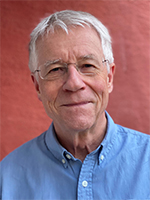
Harald Martin Hjelle is a Professor at the Faculty of Logistics, Molde University College (HiMolde). He chairs the PhD Logistics committee and serves on the university's board. His research focuses on transport economics, environmental performance of transport modes, and logistics systems. He has held leadership roles including department head and vice-rector for research. Education: Bachelor’s in Economics, University of Oslo (1989) PhD in Transport Technology, NTNU (2003) Research Interests: Hjelle’s work examines sustainable logistics, comparative environmental impacts of transport (road vs. short sea shipping), and supply chain optimization. His studies often address China-Europe trade dynamics and emissions mitigation strategies in maritime transport. Grant Projects: He has managed EU-funded and Norwegian Research Council projects on topics like container supply chain design (SeaConAZ), LNG vs. pipeline emissions, and offshore wind logistics. His research bridges academic inquiry with industry collaboration, particularly in maritime and transport policy. Labs/Teams: Member of the Transport Research Group (TRG), focusing on cross-modal transport efficiency and environmental sustainability.
Annechen Bahr Bugge is a sociologist and Researcher I at Consumption Research Norway (SIFO), Oslo Metropolitan University. Her work focuses on food culture, culinary heritage, and sustainable consumption patterns, with particular emphasis on Norwegian dietary traditions and their evolution from the 16th century to present day. PhD in Sociology (2005) from Norwegian University of Science and Technology (NTNU) Current leader of FoodStories project (2025-2028) examining Norwegian food heritage Previously led FoodLessons project (2021-2024) connecting culinary history with future food development Her research explores: dietary transitions, plant-based diets, food policy interventions, and the sociocultural dimensions of food consumption. She has published extensively on Norwegian food culture, including the book Fattigmenn, tilslørte bondepiker og rike riddere (2019) and upcoming Food Cultures of Norway: Cuisines, Customs, and Issues (2025, co-authored with Henry Notaker). Recent publications focus on: food heritage revitalization, sustainable diets, retail interventions for healthier choices, and digital marketing influences on youth consumption patterns. Her work combines historical analysis with contemporary food challenges to inform future sustainable food systems. For a complete overview of her research and publications, see her Cristin profile: Cristin Profile
Damon Clark is an Associate Professor (with tenure) in the Department of Economics at the University of California, Irvine, within the School of Social Sciences. He is also affiliated with several prestigious research institutions, including the National Bureau of Economic Research (NBER), IZA Institute of Labor Economics, and the Institute for Fiscal Studies (IFS) in London. Research Interests: His primary research focuses on the economics of education, with additional expertise in labor economics and public economics. His work explores school choice, educational policy, the signaling value of credentials, and the long-term impacts of education on health and economic outcomes. He employs rigorous empirical methods, including field experiments and quasi-experimental designs, to evaluate educational reforms and policies. The most recent publications reflect a consistent focus on education policy evaluation, school effectiveness, peer effects, and human capital formation. His research often uses large-scale administrative datasets and natural experiments to identify causal effects, contributing significantly to debates on equity, accountability, and efficiency in education systems. Scientific Awards and Honors: UC Irvine Faculty Mentoring Award (2015–2016) Excellence in Refereeing Award, Journal of the European Economic Association (2003) Excellence in Refereeing Award, American Economic Review (2012) Excellence in Refereeing Award, Quarterly Journal of Economics (2011) National Academy of Education/Spencer Post-Doctoral Research Fellow (2007–2008) European Economic Association Young Economist Award (2005) Advising and Grants: While specific student names are not listed, his role as a tenured associate professor and principal investigator on multiple grants indicates active mentoring of graduate students. He has secured significant external funding from agencies such as the National Institutes of Health (NIH), the Institute of Education Sciences (IES), the WT Grant Foundation, and the Nuffield Foundation, supporting research on test-based retention, school access, and intergenerational education transmission. Labs and Research Teams: Clark collaborates extensively with researchers at institutions like NBER, IZA, IFS, and universities across the U.S. and Europe. His work is often conducted through collaborative research networks rather than a single lab, reflecting the interdisciplinary and policy-oriented nature of his scholarship.
Professor Yngve Karl Frøyen works at the Department of Architecture and Planning, Faculty of Architecture and Design, Norwegian University of Science and Technology (NTNU). With expertise in sustainable transport solutions, urban spatial modeling, and GIS applications for planning, he has taught and supervised urban and regional planning topics since 2010. His work spans multiple master programs and involves improving transport modeling tools for walking, transit, and bicycling modes. Research Focus: Sustainable urban transport (walking, bicycling, public transit), urban density, GIS methods, land use-transport interactions, and urban logistics. Teaching: Courses in GIS methods, land use-transport integration, regional planning, and master thesis supervision. Publications: 15+ works on transport modeling, urban density impacts, bicycle infrastructure, and planning methodology. Outreach: Regularly presents at conferences and seminars on topics like urban logistics, walking modeling, and transport policy. His academic career spans from 1981 civil engineer graduation to current professorship, with prior roles at Norwegian Institute of Urban and Regional Research (NIBR) and SINTEF. He combines technical GIS proficiency with policy-oriented planning expertise.
Bård Harstad is the David S. Lobel Professor in Business and Sustainability and Professor of Political Economy at Stanford University's Doerr School of Sustainability. He holds courtesy appointments as Professor of Economics at Stanford's School of Humanities and Sciences. Previously at the University of Oslo and Kellogg School of Management, Harstad's research bridges Environmental Economics , Political Economy , and Game Theory . Key Research Themes: Climate treaty design and international cooperation Supply-side environmental policy Political economy of conservation Dynamic games in environmental economics Recent Work Trends: Focus on self-enforcing agreements and pledge-and-review mechanisms (2023-2025) Analysis of natural gas transition risks (2025) Trade-deforestation linkages and contingent trade agreements (2023-2024) Scientific Recognition: Double Erik Kempe Award (2013, 2019) ERC Advanced Grant (2022), Consolidator (2016-2021), and Starting Grant (2012-2016) Fellow of Econometric Society (2021) and Det Norske Videnskaps-Akademi (2019) Teaching & Leadership: Currently teaching Environmental Economics (PhD) at Stanford, with past appointments at Harvard, MIT, and Toulouse School of Economics. Served as Editor, Review of Economic Studies (2015-2022).
Ingvil Bjordal is an Associate Professor at the Department of Teacher Education, Norwegian University of Science and Technology (NTNU). Her research focuses on educational policy, multicultural pedagogy, and social justice theory. She has been actively involved in analyzing the privatization and marketization of public education systems in Norway, particularly examining issues of segregation, equity, and policy implementation. Education Policy Educational History Multicultural Pedagogy Social Justice Theory Policy Analysis Curriculum Analysis Her work reveals increasing privatization trends in Norwegian education, highlighting how market-oriented reforms affect social equity and democratic principles. Research spans from critical analyses of public-private partnerships in failing schools to longitudinal studies on parental choice patterns and systemic segregation. Bjordal's publications include empirical studies on school avoidance behaviors, theoretical contributions on structural racism in education, and historical policy analyses tracing Norway's shift from collective schooling models to competitive educational landscapes. She actively participates in public debates through media appearances and academic presentations, advocating for equitable education systems. Her research group affiliations include the Educational Policy, Diversity and Inequality (UMU) group and the Critical Perspectives in Teacher Education (CritTEd) group. She contributes to the Gemini Center and OppInk center, focusing on inclusive education practices.
Tor Iversen is a Professor of Health Economics at the University of Oslo, affiliated with the Department of Health Management and Health Economics within the Institute of Health and Society. He holds a Ph.D. in Economics (1993) and a cand. oecon. (1978) from the University of Oslo. His research focuses on market conditions in healthcare, economic incentives for healthcare providers, and policy evaluations such as free choice reforms and primary care team models. Education: Doctorate in Economics (1993), University of Oslo; cand. oecon. (1978), University of Oslo. Research Interests: Non-price rationing mechanisms in healthcare, economic incentives in long-term care, digital surveillance for chronic disease management, and cross-country comparisons of treatment outcomes and costs. Current projects include evaluations of Norway’s primary healthcare teams pilot program, telemedicine interventions for chronic conditions, and cost-effectiveness analyses of healthcare policies. Professional Activities: Iversen has held editorial roles at the International Journal of Health Care Finance and Economics and the Nordic Journal of Health Economics . He collaborates with institutions globally, including Karolinska Institutet, Harvard University, and the University of Melbourne. His research emphasizes healthcare access, provider behavior, and policy impacts. Grants/Advising: Led evaluations of healthcare reforms and pilot programs, including the Norwegian Primary Healthcare Teams project. His work often involves interdisciplinary teams and practical policy applications. Labs/Teams: Part of the Health Economics Research Programme (HERO) and contributed to initiatives like NORCHER (Norwegian Centre for Health Services Research) and the OMIT cohort study on diabetes outcomes.
Richard Wood is an Adjunct Professor at the Industrial Ecology Programme, Department of Energy and Process Engineering, Norwegian University of Science and Technology (NTNU), and a part-time Professor at the School of Environment, University of Newcastle, Australia. He leads research consultancy XIO-SA, focusing on environmental-economic analysis for public good. His expertise includes sustainability science, systems approaches, and quantitative modeling techniques like carbon footprinting, life-cycle assessment, and input-output analysis. **Research Interests**: Globalization and environmental impacts of trade Sustainable consumption and production Circular economy and material efficiency Environmental footprints and policy design EXIOBASE multi-regional input-output modeling **Awards**: Recognized as a Web of Science Highly Cited Researcher (2019–2022), and Co-Editor in Chief of the Journal of Industrial Ecology. His work has produced over 100 publications, including foundational contributions to EXIOBASE, a global environmental input-output database. **Grants & Labs**: Key developer of EXIOBASE, widely used for environmental footprint quantification. Advises on methodologies for consumption-based carbon accounting and sustainable investment strategies. Active in global policy initiatives addressing climate change and biodiversity loss.
Ida Scheel is an Associate Professor in Statistics and Data Science at the University of Oslo , Department of Mathematics. She specializes in Bayesian hierarchical modeling, recommendation systems, and stochastic processes on networks. Her research interests include: Bayesian statistics and model diagnostics Data science applications in environmental and health domains Network-based machine learning Uncertainty quantification in predictive modeling Recent publication trends show a focus on Bayesian model validation, machine learning for product adoption prediction, and real-estate analytics. She contributes to interdisciplinary projects like BigInsight and CELS . Scientific awards : Sverdrup Prize for Young Researchers (2011) Advising : Supervised 8 PhD students (main/co-supervisor) in areas spanning Bayesian causal effects, neural network survival analysis, and model conflict detection. Key grants include participation in the Data Science@UiO and Integreat projects. Labs/teams : Active member of the Center for Computational Inference in Evolutionary Life Science (CELS) and the BigInsight center.
Roar Bakken Stovner is an Associate Professor at the Department of Primary and Secondary Teacher Education within the Faculty of Education and International Studies at Oslo Metropolitan University (OsloMet), where he also serves as Head of Studies - Area of Responsibility 2. His academic career at OsloMet began as an Assistant Professor (2021-2023) before his promotion to Associate Professor in 2023. Prior to his university position, he worked as a teacher in lower and upper secondary schools in Oslo (2012-2018) and completed his PhD at the University of Oslo (2016-2020). He holds a Master of Science and Technology from NTNU (2007-2012) with a thesis on applied computational topology. Stovner's research spans several interconnected domains within educational science: Developing methodologies for describing and measuring teaching quality across multiple classrooms, with special emphasis on mathematics education Metascience research examining how citation practices distort findings and confer unwarranted authority to claims in educational research Creating programming tools for educational research, including the gptworkr package for text analysis in R using ChatGPT His scholarly work focuses on classroom research, mathematics education, mathematical competencies, metascience, and citation analysis. He actively participates in research groups focused on Classroom Research and Task Design in Mathematics Education, and leads significant involvement in the Teacher Education Panel Study (TEPS), a comprehensive longitudinal study examining teacher education implementation in Norway. Stovner's recent publications demonstrate substantial engagement with contemporary issues in educational research methodology, AI applications in education, and critical examination of scientific practices. His work on the EDUCATE project has produced influential reports on algorithmic thinking in mathematics education across different grade levels and exploratory teaching approaches in upper secondary education. His contributions to educational discourse include conference presentations, book chapters, and practical resources for teacher education, such as "Bedre masterskriving – en bok for lærerstudenter" (Better Master's Writing - A Book for Teacher Students), which supports academic writing development among future educators.
Shengwu Li is a Professor of Economics at Harvard University, specializing in economic theory and behavioral economics. His research focuses on designing simple and transparent economic systems, particularly addressing computational complexity challenges. He has contributed to mechanism design, auctions, and market design, emphasizing cognitive simplicity and bounded rationality. Key research interests include obviously strategy-proof mechanisms, cursed equilibrium extensions, and the effects of salary benchmarking. His work spans dynamic matching markets, fairness in bargaining, and the ethical dimensions of market design. Awards: Aliprantis Prize (2017), Exeter Prize (2018), EC'18 SIGecom Best Paper Award Notable Projects: Salary benchmarking studies, cursed equilibrium dynamics, and fair bargaining norms Literature Contributions: Maintains a curated page on obviously strategy-proof mechanisms and related literature His research integrates theoretical insights with empirical data, addressing real-world applications in labor markets, auctions, and negotiation systems.
Yngve Karl Frøyen is a Professor at the Department of Architecture and Planning within the Faculty of Architecture and Design at the Norwegian University of Science and Technology (NTNU). Since 2010, he has taught and coordinated spatial and transport planning in the master's program in physical planning, while also leading GIS and geodata activities across academic programs. His research focuses on sustainable urban transport , emphasizing walking, cycling, and public transit as tools to enhance urban systems. He investigates how urban form —including land use, density, and functional mix—affects travel behavior, with specific projects on retail location transport impacts, cycling infrastructure modeling, and park-and-ride solutions in urban peripheries. Key trends in his recent publications include urban ecology , smart city geospatial analysis , and pedestrian/cycling mobility . His work integrates GIS, accessibility metrics, and land use-transportation interdependencies, reflecting collaborations with institutions like SINTEF and Asplan Viak. Doctoral training in transport economics and impact analysis 9-year research at the Norwegian Institute of Urban and Regional Research (NIBR) Consulting and project management in transport modeling, electronic ticketing, and GIS applications Contributions to Norwegian transport policy frameworks
Rune Jansen Hagen is a Professor at the Department of Economics at the University of Bergen. His research focuses on development economics, international aid policy, and political economy, with particular emphasis on aid effectiveness, NGO operations, and policy dynamics in aid-dependent countries. He has presented at numerous international conferences including events at NHH, FAIR, the University of Bari, and the Royal Economic Society Annual Conference. Key research areas include the strategic interactions in charitable donation markets, the boomerang effect of assisted return schemes, and the role of international institutions like the IMF in shaping policy choices. His work often employs game theory and experimental economics methodologies. Recent contributions address global collective action problems, optimal NGO regulation, and public funding effects. Publications span topics from aid dispersion measurement to the political economy of debt relief. He holds a PhD and has advised multiple international development projects, though specific grants or lab affiliations are not detailed in provided texts.
Jussi Tervola is a Research Manager at the Finnish Institute for Health and Welfare (THL), within the Social Security and Services unit under Welfare State Research, part of the Healthcare and Social Welfare department. He holds a Doctor of Social Sciences from the University of Helsinki and is a Docent in Social Policy at the University of Turku. Doctor of Social Sciences (D.Soc.Sci), Social and Public Policy, University of Helsinki, 2018 Master of Social Sciences, Statistics, University of Helsinki, 2010 Docent (Adjunct Professor), Social Policy, University of Turku, 2023 His research centers on social and health policy, with a strong emphasis on the Finnish social security system, policy analysis through microsimulation, and the financial burden of health out-of-pocket payments. He specializes in developing microsimulation tools for evaluating the impact of policy reforms on income distribution and poverty. His work spans topics such as parental leave, refugee integration, unemployment insurance reforms, and healthcare affordability, using advanced register-based and microsimulation methods. His recent publications reveal a consistent focus on evaluating the distributional effects of social and health policies in Finland and the Nordic region. Key themes include poverty alleviation, equity in healthcare financing, the integration of immigrants, and the design of minimum income schemes. His research often involves comparative analysis and collaboration with international institutions like WHO Europe. Analysing the Effects of Healthcare Payment Policies on Poverty Smaller net or just fewer to catch? Disentangling minimum income schemes Comparing labor market integration of different refugee groups Distributional impacts of behavioral effects in unemployment insurance reform Promoting parental leave for immigrant fathers Jussi Tervola has been actively involved in research at Kela and THL, contributing to national policy discussions. He has collaborated with researchers from Stockholm University and has published extensively on social security and health policy. His work provides critical evidence for policymakers aiming to improve financial protection and equity in the welfare state. He leads research on microsimulation tools and conducts in-depth studies on social security reforms, healthcare financing, and the socio-economic integration of vulnerable populations. His projects often involve policy evaluation and the development of analytical frameworks for assessing the impact of social interventions.
Jo Thori Lind is a Professor in the Department of Economics at the University of Oslo, Faculty of Social Sciences. He is actively engaged in research and teaching, with recent courses including Data Science for Economists (Fall 2024). His scholarly work spans political economics, development economics, economic inequality, and econometrics, with a strong focus on behavioral and institutional dimensions of economic decision-making. His research interests include: Political economics and the political economy of beliefs Development economics and conflict-induced production Economic inequality and redistribution Econometric methodology, including instrumental variables and tests for nonlinear relationships Behavioral aspects of public goods, altruism, and information avoidance Lind's recent publications (2019–2025) reveal a consistent trajectory in political and behavioral economics, with increasing attention to health, technology, and climate. His work often employs rigorous empirical methods, including instrumental variables and experimental designs, to explore questions of voter behavior, physician decision-making, information avoidance, and social cooperation. Themes such as asymmetric information, strategic ignorance, and institutional design recur across his research. Notable scientific contributions include: Co-development of the Stata module utest for testing U-shaped relationships Research on fractionalization and government size Studies on altruism across professions (e.g., nurses vs. real estate brokers) Analysis of conflict-induced narcotics production in Afghanistan Work on the role of information in welfare and voting behavior Lind has advised or collaborated with numerous economists and has been affiliated with research groups such as the Centre of Equality, Social Organization, and Performance (ESOP) and the Nordic Welfare Developments (NoWeDe) project. He has not been noted to supervise specific students in the provided texts, nor are any grants or awards explicitly mentioned. His research is supported by ongoing institutional affiliations and publications in leading economics journals. He is associated with the following research initiatives: Centre of Equality, Social Organization, and Performance (ESOP) Environmental Exploitation of Political Economics (EXPLOIT) Nordic Welfare Developments (NoWeDe) – completed