

Dr. Saumen Mandal is a Professor in the Department of Statistics at the University of Manitoba, Faculty of Science. He holds a PhD from the University of Glasgow, UK, and MSc/BSc (Gold Medal) from the University of Calcutta, India. His research focuses on optimal experimental design, biostatistics, data science, shrinkage estimation, and constrained optimization. He has received numerous teaching awards including the Dr. and Mrs. H.H. Saunderson Award for Excellence in Teaching, Students Choice Best Professor Award, and multiple Merit Awards. He is also a P.Stat. designee from the Statistical Society of Canada. Education: PhD (Statistics), University of Glasgow, UK MSc (Statistics), University of Calcutta, India (First Class First, Gold Medal) BSc Honours (Statistics), University of Calcutta, India Research Interests: Optimal design theory and applications Biostatistical methods for clinical trials and healthcare data Data science and machine learning techniques Shrinkage estimation and model selection Linear models and goodness-of-fit testing Publications span topics like optimal regression designs, response-adaptive clinical trial methods, and statistical models for healthcare data. His work emphasizes practical applications in medicine and data-driven decision making. Awards include: Teaching Excellence Awards (2005-2007) Merit Awards for Teaching and Research (2010-2019) Faculty of Science Innovation in Teaching Award (2020) He advises graduate students in statistics and contributes to research teams in biostatistics and data science. His office is temporarily located at 256 Parker Building during construction.
جستجوی استاد راهنمای دانشگاهی
برای مسیر پژوهشیتان، استاد راهنما، استاد دانشگاه و پژوهشگر مناسب را پیدا کنید و با آنها ارتباط بگیرید.
نمایش ۷۳۶-۷۵۰ از ۱۰٬۶۸۱ استاد راهنما
اطلاعات پروفایلها از صفحات عمومی دانشگاهها گرفته شده و ممکن است بهروز نباشد.
Yong Zhangمشاهده پروفایل
پژوهشگر
- Computer Science
- Machine Learning
- Data Science
- +۴ مورد دیگر
Yong Zhang is affiliated with Tsinghua University's Research Institute of Information Technology in Beijing, China. His research focuses on machine learning, optimization algorithms, edge computing, and their applications in areas like time series analysis, federated learning, and sensor networks. He has collaborated on projects involving neural networks, scheduling problems, and privacy-preserving techniques. Education: Yong Zhang earned a PhD in Computer Science and Engineering from Fudan University in 2007. His academic career includes roles at institutions like the Chinese Academy of Sciences and the University of Hong Kong, reflecting a strong interdisciplinary background. Research Contributions: His work spans theoretical computer science, algorithm design, and applied machine learning. Notable areas include developing efficient scheduling algorithms for energy systems, creating robust federated learning frameworks for industrial demand forecasting, and advancing methods for sentiment analysis using multimodal data. He has also contributed to biomedical engineering through smartphone-based health monitoring systems. Collaborations: He frequently collaborates with researchers at institutions like the University of Electronic Science and Technology of China, Nanyang Technological University, and The Hong Kong Polytechnic University. Key projects involve data caching optimization in edge computing, distributed algorithms for dynamic networks, and combinatorial optimization problems. Labs & Future Work: His team explores cutting-edge topics in AI-driven systems, including trust-aware machine learning, distributed resource allocation, and real-time data processing for IoT applications. Current research emphasizes scalable solutions for complex optimization challenges in both academic and industrial settings.

- Immunology
- Molecular Biology
- Cell Biology
- +۳ مورد دیگر
Ellen Robey is a Professor of Immunology and Molecular Medicine at the University of California, Berkeley, serving as Division Head of the IMM Division. Her research focuses on signaling pathways controlling T cell fate decisions, using mouse models to study T cell development and immune responses, including mechanisms of thymic selection and CD4/CD8 lineage commitment. She employs 2-photon imaging to analyze T cell behavior in situ, particularly during parasitic infections like Toxoplasma gondii . Robey’s lab investigates how self-reactivity influences thymic selection timing and develops collaborative projects combining multi-omics approaches with spatial and temporal analyses of thymic development. Key research areas include understanding negative/positive selection mechanisms in the thymus, immune response dynamics during chronic infections, and the role of unconventional T cell subsets recognizing non-classical MHC molecules. The lab has pioneered studies on Qa1-restricted T cells and their role in host defense against pathogens. Her work bridges basic immunology with cutting-edge imaging and systems biology tools to unravel complex immune processes. Lab collaborations include projects with Nir Yosef and Aaron Streets to create high-resolution thymic developmental maps using single-cell multi-omics. Current efforts also explore how ERAAP downregulation alters antigen presentation, influencing T cell responses. The Robey Lab emphasizes diversity in its team, fostering an inclusive environment for scientific innovation.

Luigi Alberto Franzoni is a Professor of Public Economics at the University of Bologna , specializing in Law and Economics. He serves as Director of the international Ph.D. programme 'European Doctorate in Law and Economics' (Bologna, Hamburg, Rotterdam, Rennes) and is a leading scholar in intellectual property rights and liability law. Education : D.Phil. in Economics (Nuffield College, Oxford, 1996), Dottorato in Finanza Pubblica (Università di Pavia, 1994), MA in Economics (Warwick University, 1992), Laurea in Economia e Commercio (Università di Bologna, 1989). His research focuses on economic analysis of law, particularly intellectual property and liability law . Recent publications examine legal change under uncertainty, trade secrets, and liability frameworks for risk-correlated accidents. Key article trends include economic modeling of legal systems , innovation incentives through IP law , and liability rules under ambiguity . His work bridges legal theory with practical economic implications. Scientific Awards : Distinguished Article Prize (2015), Fulbright Scholarship (1998), Prize 'Rivista il fisco' (1997), Bok Visiting Professor (2018), Honorary Professor (2012). He has directed the European Doctorate in Law and Economics (since 2007) and co-founded the Italian Society for Law and Economics (2007-2010). Grants include €6 million for the EDLE Erasmus Mundus project (2008).
Whitney S. Riceمشاهده پروفایل
استادیار
Whitney S. Rice, DrPH, MPH serves as Assistant Professor in the Department of Behavioral, Social, and Health Education Sciences at Emory University Rollins School of Public Health (RSPH), where she directs the Center for Reproductive Health Research in the Southeast (RISE). Her research program investigates social and structural determinants of sexual and reproductive health equity through participatory, justice-oriented frameworks utilizing mixed methods approaches. Her educational trajectory includes a BS from Georgia Institute of Technology, MPH from Emory University, DrPH from University of Alabama at Birmingham, and postdoctoral training at UAB. Dr. Rice teaches BSHES 540 - Research Methods and actively mentors emerging scholars through RISE's research training initiatives. Research interests center on: Structural drivers of reproductive health disparities Policy impacts on abortion and contraceptive access Intersectional stigma in HIV care for women Community-engaged health services research Reproductive justice frameworks in the U.S. South Her work consistently addresses marginalized populations with emphasis on racial equity and policy translation. Recent publications demonstrate methodological diversity spanning systematic reviews, policy evaluations, and qualitative analyses of post-Roe impacts, with strong geographic focus on Southern U.S. contexts and thematic emphasis on structural barriers to care, disinformation challenges, and community resilience strategies. Scientific recognition includes: 2019 Outstanding Young Professional Award (APHA Sexual and Reproductive Health Section) 2023 Inaugural RSPH Faculty Leadership Award 2024 BSHES Distinguished Teaching Award As RISE Director, Dr. Rice leads collaborative research initiatives examining reproductive health policy impacts while providing critical mentorship to junior investigators. Her media engagement—including the 'Health Wanted' podcast—translates research for public discourse on reproductive rights. Current work addresses evolving post-Roe landscapes through community-academic partnerships focused on actionable solutions for health equity.

Antoni Verger i Planells is Professor of Sociology at the Autonomous University of Barcelona and ICREA Acadèmia researcher specializing in educational policy and comparative education. He serves as editor-in-chief of the Journal of Education Policy and World Yearbook of Education, and coordinates the European Master GLOBED (Education Policies for Global Development) and GLANCE research group within GEPS-UAB. His research centers on the political economy of global education governance, with primary focus on privatization, marketization, and accountability systems. He examines how international organizations drive policy convergence through instruments like large-scale assessments and public-private partnerships, while analyzing equity implications across diverse national contexts including Spain, Latin America, and OECD countries. His work critically engages with theories of policy transfer, network governance, and the emerging global education industry. Verger's recent publications (2024-2025) reveal intensifying research on privatization dynamics, showing how corporate strategies shape education reform through policy entrepreneurship and regulatory innovation. His analysis of accountability regimes demonstrates how hybrid systems create contradictory pressures on schools, while his work on teacher governance exposes tensions between performance metrics and professional autonomy across regulatory contexts. Scientific recognition: ICREA Acadèmia award for research excellence He has directed major funded projects including ILSAINC (2019-2023) mapping the global assessment industry, REFORMED (2016-2022) analyzing autonomy/accountability policies, and EDUPARTNER (2013-2016) studying public-private partnerships. His grant portfolio demonstrates sustained funding for critical analysis of global education governance structures and their implementation. Through GLANCE research group and GLOBED master program, Verger fosters international collaboration on comparative education studies, connecting scholars from Global South and North to examine power dynamics in transnational education policy processes.
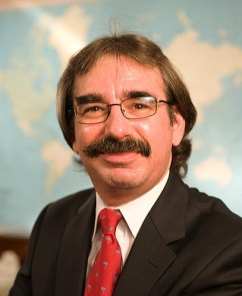
Lawrence M. Ausubel is a Professor of Economics in the Department of Economics at the University of Maryland. He received his PhD in Economics (1984), Master of Legal Studies, and MS in Mathematics from Stanford University. His research focuses on microeconomic theory, game theory, and the economics of asymmetric information, with applications to auction theory and market design. PhD in Economics (Stanford University, 1984) Master of Legal Studies (Stanford Law School) MS in Mathematics (Stanford University) AB in Mathematics (Princeton University) A leading expert in auction theory, Ausubel has made significant contributions to dynamic auctions, combinatorial bidding, and market mechanisms. His work includes developing the efficient ascending-bid auction format (known as the 'Ausubel auction'), analyzing durable goods monopoly, and studying bargaining under incomplete information. He has also explored credit card market dynamics, financial rescue strategies, and electricity market design. Recent research involves cryptographic choice mechanisms, core-selecting auctions with incomplete information, and iterative pricing models. His publications span journals like Review of Economic Studies , American Economic Review , and Econometrica , with patents in auction technology and applications in telecommunications, energy, and finance. 23 U.S. patents related to auction technology Testified before U.S. Congress on credit card markets Founded Power Auctions LLC (2003) Co-inventor of auction formats used by FCC, ISED Canada, and ACMA

Matthew Pecencoمشاهده پروفایل
استادیار
Matthew Pecenco is an Orlando Bravo Assistant Professor of Economics at Brown University, specializing in labor economics with a focus on criminal justice system impacts, education policy, and development economics. His research employs experimental and quasi-experimental methods to analyze topics such as incarceration effects, peer preferences in education, and entrepreneurship drivers. He holds a PhD from UC Berkeley (2020). Research Interests: Criminal justice system policy evaluation Educational market dynamics and peer effects Climate change's labor market implications Entrepreneurship through labor experience His recent work explores incarceration's socioeconomic consequences, workplace discrimination in digital markets, and climate adaptation strategies for labor productivity. Pecenco's methodologies emphasize causal inference and policy relevance.
Christian Fermüller is an Associate Professor in the Department of Theory and Logic at the Faculty of Informatics, Technische Universität Wien (TU Wien). His research focuses on theoretical computer science, artificial intelligence, automated deduction, and formal logic systems. He specializes in fuzzy logic, proof theory, and non-classical logics, with contributions to semantic games, dialogue systems, and computational models of reasoning under vagueness. **Research Interests:** Foundations of fuzzy logic and many-valued logics Proof theory and analytic calculi Game-based semantics for non-classical logics Formal models of judgment aggregation and argumentation theory Applications in automated reasoning and computational intelligence **Grants & Projects:** Austrian Science Fund (FWF) projects on graded deontic reasoning (2025–2027), semantic games and analytic calculi (2019–2023), and fuzzy logic foundations (2008–2013) Co-PI of the LogICCC initiative exploring contextualism and fuzzy logic **Teaching:** Courses include logical methods in computer science, quantum computing, and theoretical computer science. Supervised over 15 PhD and master’s theses on topics ranging from semantic games to argumentation frameworks. **Affiliations:** Active in the LogiCS research group and regularly organizes seminars on logic and computation.
Hedy Koberمشاهده پروفایل
دانشیار مدعو
- Cognition
- Emotions
- Meditation
- +۴ مورد دیگر
Hedy Kober is an Adjunct Associate Professor in Psychiatry at Yale School of Medicine and an Adjunct Associate Professor of Law. She serves as Director of the Clinical and Affective Neuroscience Laboratory at Yale. Her work bridges psychology, neuroscience, and clinical interventions, with a focus on emotion regulation, mindfulness, and addiction. Education PhD in Clinical Psychology (Respecialization), Fielding Graduate University (2021) PhD, Columbia University (2009) MPhil, Columbia University (2008) MA, Columbia University (2007) Research Interests Dr. Kober's research focuses on the cognitive and neural mechanisms underlying emotion regulation, with particular emphasis on mindfulness-based interventions for various conditions including addiction, eating disorders, and depression. Her work explores how individuals regulate cravings, manage negative emotions, and develop healthier behavioral patterns through cognitive strategies and mindfulness practices. She employs a range of methodologies including fMRI, ecological momentary assessment, and clinical trials to investigate these processes in both healthy individuals and those with clinical conditions. Her recent work has increasingly focused on digital interventions that make evidence-based therapies more accessible, particularly for substance use disorders and eating disorders. She examines how brief, scalable interventions can effectively target core mechanisms of behavior change. Research Trends Dr. Kober's recent publications demonstrate a strong focus on the intersection of emotion regulation, mindfulness, and clinical applications. Her work connects basic cognitive neuroscience with clinical interventions, particularly examining how individuals regulate cravings and negative emotions. Recent studies have expanded to include digital delivery of interventions, network approaches to understanding emotional processes, and the development of neuromarkers for addiction. Her research increasingly incorporates longitudinal and ecological momentary assessment methods to capture real-world emotional dynamics. Scientific Awards Outstanding Mentor Award (2019) from American Academy of Child and Adolescent Psychiatry Early Career Investigator Award (2018) from NIDA and NIAAA Teaching Excellence at Yale (2017) from Yale Center for Teaching and Learning Helmsley Fellowship in Cross Disciplinary Science (2016) from Helmsley Charitable Trust Scholar Award (2011) from Yale Center for Clinical Investigation Advising and Grants Dr. Kober has received significant grant funding for her research on emotion regulation and addiction. She serves as Principal Investigator on clinical trials examining brief training for alcohol craving regulation and the role of reward learning and decision making in addiction. Her work has been supported by organizations including NIDA and NIAAA. As a mentor, she has guided numerous students and early-career researchers, recognized by her Outstanding Mentor Award from the American Academy of Child and Adolescent Psychiatry. Laboratory Dr. Kober directs the Clinical and Affective Neuroscience Laboratory at Yale, which investigates the neural and cognitive mechanisms of emotion regulation and their application to clinical problems. The lab employs a multi-method approach including neuroimaging, behavioral experiments, and clinical interventions to understand how people regulate emotions and cravings, with the goal of developing more effective treatments for conditions like addiction and eating disorders.
Richard Woodمشاهده پروفایل
استاد مدعو
Richard Wood is an Adjunct Professor at the Industrial Ecology Programme, Department of Energy and Process Engineering, Norwegian University of Science and Technology (NTNU), and a part-time Professor at the School of Environment, University of Newcastle, Australia. He leads research consultancy XIO-SA, focusing on environmental-economic analysis for public good. His expertise includes sustainability science, systems approaches, and quantitative modeling techniques like carbon footprinting, life-cycle assessment, and input-output analysis. **Research Interests**: Globalization and environmental impacts of trade Sustainable consumption and production Circular economy and material efficiency Environmental footprints and policy design EXIOBASE multi-regional input-output modeling **Awards**: Recognized as a Web of Science Highly Cited Researcher (2019–2022), and Co-Editor in Chief of the Journal of Industrial Ecology. His work has produced over 100 publications, including foundational contributions to EXIOBASE, a global environmental input-output database. **Grants & Labs**: Key developer of EXIOBASE, widely used for environmental footprint quantification. Advises on methodologies for consumption-based carbon accounting and sustainable investment strategies. Active in global policy initiatives addressing climate change and biodiversity loss.

Marco Castillo is a Professor of Economics at Texas A&M University, specializing in Behavioral/Experimental Economics, Public Economics, and Economics of Education. He holds a PhD from the University of Wisconsin-Madison and previously served as a Professorial Fellow in the Education and Child Development research group at the University of Melbourne’s Melbourne Institute. His work employs experimental methods to design optimal policies in areas like child development, education, and criminal justice. He is affiliated with the IZA Institute of Labor Economics as a Research Fellow and the CESIfo Research Network as a Fellow. Education: PhD in Agricultural and Applied Economics, University of Wisconsin-Madison Bachelor’s Degree in Economics, Catholic University of Lima, Peru Research Interests: Experimental methods in policy design Child development interventions Education economics Charitable giving mechanisms Risk preferences and decision-making His research bridges theory and practice, often involving field experiments to assess policy impacts on real-world behaviors. Awards & Fellowships: Fellow of the CESIfo Research Network Research Fellow at IZA Institute of Labor Economics Grants & Advising: While no specific grants are listed, his work frequently involves policy-relevant experimental research. He advises students through his teaching and research collaborations at Texas A&M. Labs/Teams: Active in the Economics Science Association’s initiatives and collaborates with institutions like the Melbourne Institute on child development projects.
- Disability Studies
- Public Health
- Health Policy
- +۳ مورد دیگر
Dr. Mary-Ann O’Donovan is a Conjoint Associate Professor of Disability Studies at the University of Sydney and Executive Director of the Centre for Disability Studies, a research affiliate of the University. She is also a member of the Brain and Mind Centre. Her research focuses on housing stability, homelessness, and health service utilization for people with intellectual disabilities, with particular emphasis on policy analysis and de-institutionalization. She has led major national projects, including the Intellectual Disability Supplement to the Irish Longitudinal Study of Ageing (IDS-TILDA), and secured significant funding for studies examining the National Disability Insurance Scheme (NDIS) and supported living models. Dr. O’Donovan’s work bridges academic research with practical policy implementation, aiming to improve the quality of life and healthcare access for marginalized groups. Education: PhD (specific discipline not explicitly stated in text). Key Research Projects: ARC-funded study on NDIS realities versus rhetoric. AHURI-funded research on supported living models for high-support needs individuals. EIT Health-funded interventions for physical activity leadership programs. Department of Health (Ireland) evidence review on de-institutionalization outcomes. Grants: Designing a Continuum of Best Practices for Inclusion in Higher Education (Department of Social Services/NDRP). Homelessness Policy and Systems for People with Disabilities (AHURI). NDIS: Reality versus Rhetoric (ARC Linkage Project). Labs/Teams: Centre for Disability Studies, Brain and Mind Centre. Future Work: Continuation of global research agendas on disability inclusion, policy evaluation, and innovative support models for vulnerable populations.

Andrew King is the Allen and Kelli Questrom Professor in Strategy & Innovation at the Questrom School of Business, Boston University, and an affiliated faculty member of the Boston University Institute for Global Sustainability (IGS). His academic career includes a PhD from MIT Sloan School of Management, an MS in Mechanical Engineering from UC Berkeley, and a BA in Mechanical Engineering from Brown University. His research focuses on corporate sustainability, environmental policy, and the credibility of academic research. Key themes include ESG investing flaws, model uncertainty in sustainability frameworks, and the interplay between financial and environmental performance. He critiques conventional strategies like win-win scenarios and emphasizes rigorous empirical methods to address research biases. King’s articles span over two decades, addressing topics like ESG valuation shortcomings, corporate transparency, and the dangers of methodological overconfidence. He has contributed to debates on academic rigor through critiques of statistical practices and calls for improved empirical methodologies. His work bridges strategy, environment, and ethics, influencing both corporate practices and academic discourse. No notable awards are listed, but his extensive publications reflect significant scholarly impact.

Professor Hazel Bateman is a Professor and Deputy Dean in the School of Risk and Actuarial Studies at UNSW Sydney’s Business School. She also serves as Deputy Director of the ARC Centre of Excellence in Population Ageing Research (CEPAR). Her research focuses on pension economics, behavioral retirement finance, and lifecycle financial decisions, particularly exploring how choice architecture, financial literacy, and information influence retirement planning, superannuation, and housing wealth utilization. Roles: Deputy Dean (Business School), CEPAR Deputy Director, Professor of Risk & Actuarial Studies Research Themes: Pension systems, long-term care insurance demand, reverse mortgages, behavioral economics in retirement finance Her work addresses critical issues such as the role of housing wealth in retirement portfolios, intergenerational wealth transfer dynamics, and the impact of financial advice on consumer decisions. She has contributed to policy debates on retirement income strategies and public reverse mortgage schemes in Australia. Key Trends in Publications: Recent studies emphasize behavioral factors in financial decision-making, the intersection of health and retirement finance, and policy design for aging populations. Her research often combines experimental methodologies with longitudinal data to assess consumer preferences and systemic impacts. Grants & Collaborations: Involved in CEPAR’s multidisciplinary projects, though specific grant details are not listed here. Research partnerships include analyses of aging demographics in China and Australia. Labs/Teams: Leads research initiatives within the School of Risk and Actuarial Studies and collaborates with CEPAR teams on population aging challenges.
نمایش نتایج تا ۷۵۰ مورد اول. برای یافتن نتایج دقیقتر، جستجوی خود را با فیلترها محدود کنید.