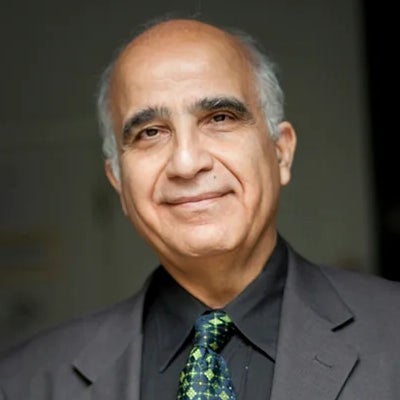
Prof. Mohammad Faghri is a Professor of Mechanical, Industrial, and Systems Engineering at the University of Rhode Island's College of Engineering. He specializes in computational fluid dynamics, microfluidics, and heat transfer at micro/nanoscales. His research focuses on lab-on-paper devices, gas dynamics in microtubes, and biomedical diagnostics applications. Education: BS/M.S. (1969/1970) and PhD (1973) in Mechanical Engineering from UC Berkeley, followed by postdoctoral research at Oregon State University and the University of Minnesota. Key research areas include: Microfluidic actuators and paper-based biosensors Heat exchanger design and thermal process modeling Nanoscale fluid dynamics and gas flow regimes Fuel cell transport phenomena Thermal management in microsystems Recent work emphasizes lab-on-paper platforms for ELISA testing, nitrate/phosphate detection systems, and advanced valve designs for autonomous microfluidic circuits. His 2023 papers explore paper-based bi-material actuators and microtube thermal recovery factors. Over 100 peer-reviewed articles and 2 patents (e.g., US9687846B2 for enhanced microfluidic valves). Grants and collaborations include work on portable diagnostics systems and microscale heat transfer mechanisms. Active in developing field-deployable devices for environmental and clinical applications.
Dr. Deborah Gater serves as an Assistant Professor of Chemistry and Associate Director for Enrolment Management at Northeastern University London, part of the CoMENS Faculty. She holds dual Master’s degrees (Chemistry and Protein/Membrane Chemical Biology) and a PhD in Chemistry from Imperial College London. Her research bridges membrane biophysics, solid-state NMR, and educational innovation, focusing on cholesterol-membrane interactions and technology-enhanced chemistry teaching. She previously worked at Khalifa University and UCL’s Centre for Languages and International Education. Her research explores cholesterol’s role in membrane systems, semiconductor-based biosensors, and vitamin D’s effects on membranes. She collaborates across disciplines to advance biophysical techniques and educational accessibility. Teaching areas include general/organic chemistry and drug discovery for apprenticeships. Key Research Areas : Membrane biophysics, solid-state NMR, amino acid detection via GaAs sensors, vitamin delivery systems, and evidence-based teaching methods. Notable Projects : Development of transdermal vitamin D3 systems, chip-based biochemical sensors, and Moodle-based online assessment analytics. Locations : Based at Northeastern’s London campus (Devon House, E1W 1LP). Dr. Gater’s work emphasizes interdisciplinary collaboration, with publications spanning chemical education, biophysical methods, and material science applications. Her teaching innovations address inclusivity and technology integration in STEM education.
Marius Volmer is an Associate Professor at the Technical University of Brașov , affiliated with the Department of Electrical Engineering and Applied Physics within the Faculty of Electrical Engineering and Computer Science . His research focuses on nanostructured magnetic systems , spintronics , magnetic sensors , and graphene-based devices , with expertise in magnetic and electrical characterization techniques . He has contributed to advancements in biosensor design, low-field magnetic sensing, and nanotechnology applications. Volmer’s work spans lab-on-a-chip systems , nanoparticle detection , and IoT-enabled monitoring solutions . His recent publications highlight innovations in planar Hall effect sensors, magnetoresistive bridge sensors, and optoelectronic microfluidic devices for biomedical applications. He has also explored the integration of LoRa networks for renewable energy monitoring and cost-effective telemedicine systems. His research often bridges materials science and applied physics , with a focus on translating fundamental discoveries into practical technologies. Notable contributions include optimizing GMR-based current sensors and developing antibody-functionalized nanoparticles for cancer diagnostics. Volmer’s expertise is further reflected in his simulation work using tools like OOMMF for magnetization dynamics modeling and structural analysis of thin films and nanomaterials.
Çağlar Arpalı is an Associate Professor at Çankaya University's Faculty of Engineering, Department of Mechatronics Engineering. He has held full-time academic roles since 2001, including Department Chair since 2021 and Associate Professor since 2010. His expertise spans optical communications, laser beam propagation, and biomedical imaging. He holds a Ph.D. in Electrical and Electronics Engineering from Gazi University and a postdoctoral fellowship at UCLA. Education: Ph.D. in Electrical and Electronics Engineering, Gazi University (2004–2009) M.Sc. in Computer Engineering, Çankaya University (2001–2004) B.Sc. in Computer Engineering, Çankaya University (1997–2001) Research Interests: Focuses on laser beam shaping, underwater optical communication, adaptive optics, and biomedical applications. His work includes developing novel optical systems for imaging and communication in challenging environments. Publications: Over 30 peer-reviewed articles in journals like Optics Communications and Journal of Modern Optics , with recent work on underwater turbulence effects and beam shaping algorithms. Awards: Received the Bronze Medal at the 3rd İstanbul International Buluş Fuarı (ISIF 2018). Grants/Projects: Led national/international projects such as 'New Generation Optical Sensor Microscope System' (2014–2015) and 'Underwater Optical Wireless Communication System Design' (2014–2016).
Daniel McCluskey is an Associate Professor and Deputy Dean of the School of Physics, Engineering & Computer Science at the University of Hertfordshire. He leads strategic initiatives in STEM education, research, and enterprise, focusing on operational excellence. He is a Chartered Engineer with security clearance and has held leadership roles in research centers such as the Wolfson Centre for Biodetection and Instrumentation. Education: BEng (Hons) in Aerospace Engineering, University of Hertfordshire (2003) PhD in Computational Fluid Dynamics, Coventry University (2009) Research Interests: Microfluidics and electrowetting-based systems Aerosol biodetection and autonomous detection systems Security applications in engineering Computational fluid dynamics Projects include the All-in-one Personal Aerosol Sampler and the Integrated Breadboard Biological Detection System , emphasizing real-world applications in security and environmental monitoring. His work often bridges academia and industry, addressing challenges in biodetection, microengineering, and environmental technologies. He leads the Microfluidics & Microengineering Research Group and previously directed the Centre for Research in Biodetection Technologies. Current projects focus on integrated autonomous systems for biowarfare agent detection and fieldable optical pathogen detection systems.
Maciej Besta is a leading researcher at ETH Zurich's Institute for Computing Platforms, where he heads research initiatives at the Scalable Parallel Computing Lab (SPCL) and contributes to the ETH Future Computing Laboratory (EFCL). Working under the mentorship of Professor Torsten Hoefler, he has established himself as a prominent figure in high-performance computing, graph processing, and large language models. Position: Researcher at Institute for Computing Platforms, ETH Zurich Research Leadership: Head of Sparse Graph Computations and Large Language Models Research at SPCL Collaboration: Leads project management for SPCL's contributions to ETH Future Computing Laboratory Besta's research spans multiple abstraction levels, from hardware and network topologies to middleware, algorithms, and programming models. His primary focus areas include graph-enhanced language models, graph neural networks, graph databases, and sparse models, with applications across various computational settings. He approaches these problems through rigorous performance modeling and formal reasoning, emphasizing both scalability and practical implementation. His recent publications reveal a clear trend toward integrating graph structures with language models and AI systems. Besta has pioneered work on graph databases, knowledge graphs of thoughts, and higher-order graph neural networks, while maintaining his strong foundation in high-performance computing and network topology design. His research bridges traditional HPC with cutting-edge AI, creating novel approaches for efficient large-scale computation. IEEE TCSC Award for Excellence in Scalable Computing (Early Career, 2023) Multiple Best Paper Awards at Supercomputing conferences (2022, 2023) ACM SIGHPC Doctoral Dissertation Award (2022) ETH Medal for outstanding doctoral thesis (2021) Fellow of The Explorers Club (2022) Besta actively mentors ETH Zurich students through semester projects, Bachelor's, and Master's theses, focusing on graph processing and related computer science challenges. His mentorship extends beyond technical guidance, incorporating lessons from his extensive polar and mountaineering expeditions that emphasize mental resilience, efficient risk management, and leadership. He has supervised numerous student projects that have resulted in high-impact publications at top-tier conferences. As a core member of the Scalable Parallel Computing Lab, Besta collaborates with researchers across ETH Zurich and international institutions. His unique approach integrates insights from extreme environment expeditions into research methodology, creating a distinctive framework for tackling complex computational problems. The lab's work under his leadership spans theoretical modeling, practical implementation, and real-world deployment of high-performance systems.
Manoj Singh Gaur is a Professor in the Department of Computer Science and Engineering at Malaviya National Institute of Technology Jaipur (MNIT Jaipur), India. With a publication record spanning over two decades from 2003 to present, he has established himself as a prominent researcher in computer security and architecture. His work primarily focuses on network security, Android security, and Network-on-Chip architectures, with extensive collaborations with researchers from institutions worldwide including University of Padua (Italy), University of Southampton (UK), and other Indian institutions. Dr. Gaur's research interests encompass a broad spectrum of cybersecurity challenges, particularly in mobile and cloud environments. His work addresses critical issues such as Android malware detection, information leakage prevention, DDoS mitigation in cloud environments, and secure deduplication techniques. In computer architecture, he has made significant contributions to Network-on-Chip design, fault tolerance mechanisms, and power-efficient router microarchitectures. His research methodology often combines theoretical analysis with practical implementation, resulting in solutions that address real-world security and performance challenges. Analysis of his recent publications (2020-2023) reveals a continued focus on mobile security, particularly Android application security, with numerous papers on vulnerability detection, permission analysis, and information leakage prevention. Simultaneously, his work in Network-on-Chip architectures demonstrates sustained interest in fault-tolerant routing algorithms and performance optimization for multi-core systems. The interdisciplinary nature of his research, bridging security and architecture concerns, represents a distinctive contribution to the field. Dr. Gaur has mentored numerous students who have co-authored publications with him, indicating an active research group focused on cutting-edge security and architectural challenges. His collaborative approach is evident in the diverse set of co-authors spanning multiple continents, reflecting international recognition of his expertise.
Timo Meinders is affiliated with the MESA+ Institute at the University of Twente, focusing on advanced materials science and forming technologies. His research emphasizes nonlinear material behavior, friction modeling in metal forming, and high-strength steel applications. He contributes to EU policy initiatives in semiconductor manufacturing and smart industry development, as seen in recent collaborations and editorial roles. Research interests include material behavior under extreme conditions, finite element simulation techniques, and optimizing industrial processes through interdisciplinary approaches. His work aligns with sustainable development goals, particularly in advancing manufacturing technologies. Recent activities include organizing conferences on forming technology and editing peer-reviewed journals in material forming. He has supervised 5 academic works and actively participates in collaborative projects like the Smart Industry Roadmap, aiming to integrate HTSM (High-Tech Systems and Materials) with ICT for industrial innovation. His contributions bridge academic research and practical applications in high-tech sectors.
Dr. Richard Oleschuk is a Professor in the Department of Chemistry at Queen's University, affiliated with the Faculty of Arts and Science. He holds a cross-appointment with the Carbon to Metal Coating Institute at Queen's University. His research focuses on microfluidics, mass spectrometry, and materials chemistry, with applications in analytical chemistry and biomedical engineering. Dr. Oleschuk obtained his B.Sc.H. (1994) and Ph.D. (1998) from the University of Manitoba. His postdoctoral work at the University of Alberta involved developing miniaturized analysis devices. He has supervised postdoctoral fellows including Stanislav Beloborodov and Lishen Zhang. His research interests include microfluidic device fabrication, mass spectrometry coupling, and polymer-based analytical systems. Recent work explores 3D-printed microfluidic platforms, nanoelectrospray emitters, and ambient ionization techniques. His publications span over 20 years, emphasizing innovations in lab-on-a-chip technologies and high-throughput analytical methods. Dr. Oleschuk's work has been supported by grants from the Natural Sciences and Engineering Research Council (NSERC) and other agencies. His contributions to microfluidic design and mass spectrometry instrumentation have advanced applications in environmental monitoring, biomedical diagnostics, and materials science.
Prof. Dr. Elma Ekinović is a Full Professor at the Department of Mechanics, University of Zenica. She holds a Doctor of Science degree and has extensive experience in mechanical engineering education and research. Born and raised in Zenica, she graduated from the Faculty of Mechanical Engineering with exceptional academic performance, earning the Hasan Brkić Award multiple times. Her academic journey includes master's and doctoral studies at the same faculty. She has taught courses across multiple institutions, including the Faculty of Mechanical Engineering (Zenica), Polytechnic Faculty, and the Faculty of Engineering and Natural Sciences. Her research focuses on structural dynamics, fluid mechanics, and advanced manufacturing processes. Notable contributions include damage detection in beams, fluid dynamics in mixers, and optimization of cutting processes. She has authored numerous scientific publications and textbooks, and actively participates in international academic networks like ResearchGate and Google Scholar. Prof. Ekinović is proficient in English and contributes to the field through her lectures on dynamics, kinematics, and technical mechanics. Her scientific awards highlight her academic excellence, particularly the Hasan Brkić Award. While specific grants or lab affiliations are not explicitly mentioned, her research spans applied mechanics, vibration analysis, and industrial equipment design. Her work integrates theoretical and experimental approaches, addressing challenges in both academia and industry.
Lorenzo Vannozzi is an Assistant Professor at The BioRobotics Institute of Scuola Superiore Sant’Anna, specializing in biomaterials for tissue engineering and piezoelectric materials for regenerative medicine. He earned his Ph.D. in Biorobotics in 2017 from the University of Pisa after completing his Master's thesis cum laude in Biomedical Engineering. Research Interests: Design of muscle cell-based actuators for biohybrid robotics Development of piezoelectric hydrogels for cartilage regeneration Smart responsive ultra-thin films for localized therapies 3D bioprinting of regenerative materials Recent Publication Trends: His work focuses on biodegradable piezoelectric materials (2025), ultrasound-stimulated cartilage repair (2024-2025), arthroscopic hydrogel delivery systems (2024), and biohybrid actuator integration (2023-2025). These publications demonstrate cross-disciplinary innovation in biomedical robotics, regenerative medicine, and smart material design. Collaborative Projects: He collaborates with Prof. Leonardo Ricotti's "Regenerative Technologies" group and has contributed to novel steerable catheters actuated by muscle cells (BioMeld project, 2023), ultrasound-responsive nanomaterials (2018), and self-assembling polymeric structures (2013-2015).
Edgar Goluch is an Associate Professor in the Department of Chemical Engineering at Northeastern University, affiliated with the College of Engineering. His research focuses on developing biosensor technologies and microfluidic systems for studying microbial communities, infectious diseases, and environmental samples. He specializes in electrochemical detection methods for pathogens and biomolecules, with applications in chronic wound infection monitoring, gut microbiome analysis, and water quality assessment. Dr. Goluch's work integrates nanotechnology and biomedical engineering principles to create innovative diagnostic tools, such as antibody-based biosensors and nanofluidic devices for isolating unculturable bacteria. His lab also explores quorum sensing mechanisms in polymicrobial infections and develops forward osmosis systems for sample concentration. Key areas of expertise include microbial ecology, electrochemistry, and lab-on-a-chip technologies. His recent publications (2020–2023) emphasize in-situ bacterial capture, gut sulfur cycling dynamics, and portable diagnostic systems. He advises students like Pranali J. Buch, whose research aligns with his focus on clinical and environmental microbiology.
Zheng Zhang is a Professor in the Department of Electrical and Computer Engineering at the University of California, Santa Barbara. His research focuses on neural networks, quantum computing, uncertainty quantification, and optimization, with particular emphasis on tensor networks, low-rank compression methods, and hardware-efficient machine learning systems. He leads efforts in developing memory-efficient training algorithms for large language models (LLMs), tensorized optical networks, and physics-informed neural PDE solvers. Key contributions include FLAT-LLM for LLM compression, FETTA hardware accelerators, and DeepOHeat for thermal simulation in 3D-IC design. His work spans cross-disciplinary areas such as quantum-inspired algorithms, stochastic control, and yield-aware optimization of photonic ICs. He holds a faculty position in the College of Engineering and is affiliated with the ECE department. Research trends in his 2025 publications emphasize scalable training techniques for transformers, zeroth-order optimization methods, and optical computing integration. His work consistently addresses computational efficiency, memory constraints, and hardware acceleration across domains like AI, quantum computing, and electronic design automation. Notable grants and lab affiliations include projects on FPGA-based neural training, quantum circuit simulation, and tensor-compressed PDE solvers. He advises on edge computing, neuromorphic systems, and uncertainty-aware design tools for integrated circuits.
Dr. Alan Kan is an Honorary Lecturer in the School of Engineering at Macquarie University, affiliated with the Hearing Research Centre and Future Communications Research Centre. He holds roles across multiple institutions, including past positions at the University of Wisconsin-Madison as a Research Associate and Assistant Scientist, and a Lecturer in the Department of Communication Sciences and Disorders there. His research focuses on hearing technology, spatial hearing, and cochlear implants, with a strong emphasis on audio virtual reality and biomedical signal processing. Education: PhD in Engineering from the University of Sydney (2010). Teaching includes digital systems units (ELEC2042, ELEC3042, etc.) and software design modules at Macquarie. Previously taught electroacoustic instrumentation calibration at UW-Madison. Research interests span signal processing, auditory neuroscience, and computational modeling. Recent projects include the PRISM study (2023–2026) on predicting interaction difficulty and the MOSAIC project (2023–2024) on motion and sound sensors for communication analysis. He serves on the editorial board of the Journal of Speech, Language and Hearing Research and contributes to the Acoustical Society of America. Grants and collaborations involve interdisciplinary teams focusing on hearing technology and sensor applications. Active in editorial and review roles for journals and conferences in signal processing and acoustics. Labs/Teams: Collaborates within the Hearing Research Centre and Future Communications Research Centre at Macquarie, engaging with global networks in auditory neuroscience and biomedical engineering.
Dr. Amir Ebrahimi is a Senior Research Fellow at the School of Engineering, RMIT University. His research focuses on microwave-based sensing technologies, metamaterials, and their applications in biomedical engineering, environmental monitoring, and communications. He holds an ORCID identifier (0000-0002-0858-4958) and is open to supervising Masters and PhD students in areas such as microwave sensors for concrete structures, IoT antennas, and microfluidic devices. Research interests include Electrical Engineering, Communications Technologies, Materials Engineering, Optical Physics, and Analytical Chemistry . His work bridges theoretical design and practical implementation, addressing challenges in sensor sensitivity, material characterization, and reconfigurable RF systems. Recent projects include developing wearable sweat sensors, detecting honey adulteration via microwave techniques, and designing graphene-based terahertz absorbers. Though no scientific awards are explicitly mentioned, his contributions span over 100 peer-reviewed articles and innovative sensor prototypes. Dr. Ebrahimi supervises research projects on flexible electronics, microwave-enabled microfluidics, and metamaterial antennas. He collaborates on lab-on-a-chip technologies for cancer cell detection and nano-scale vacuum circuits for satellite communications.