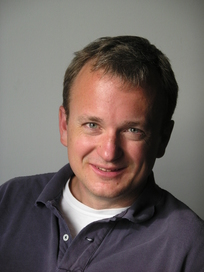
Meredith Tamminga is an Associate Professor of Linguistics at the University of Pennsylvania, where she directs the Language Variation and Cognition Lab . Her work bridges sociolinguistics , psycholinguistics , and theoretical linguistics , focusing on how linguistic variability is represented in mental grammar and how social context influences speech perception and production. She co-leads the Philadelphia Signs Project , exploring sign language sociolinguistics with collaborators at Penn and Gallaudet University. PhD in Linguistics (2014), University of Pennsylvania BA in Linguistics (2009), McGill University Her research integrates experimental methods with naturalistic speech analysis to study individual and group-level language change. Keywords include phonetics-phonology mapping , intraspeaker variation , and quantitative modeling . Notable grants include NSF awards and SAS Dean’s Mentorship Award . Key affiliations include MindCORE , Penn’s hub for integrative mind sciences, and collaborative ties to the Phonetics Lab , Child Language Lab , and Cultural Evolution of Language Lab . Her lab emphasizes cross-departmental research and welcomes undergraduate RAs and PhD students.
Ksana Blank is a Senior Lecturer at Princeton University’s Department of Slavic Languages and Literatures. She coordinates the Russian Language Program and directs the Princeton-in-Petersburg Program, fostering academic exchange and interdisciplinary research. With a PhD in Russian Literature (Columbia University, 1997) and a BA in French Philology (St. Petersburg State University, 1979), her academic career spans over two decades at Princeton, preceded by teaching roles at Hunter College and Middlebury College Russian Summer School. Education: PhD, Russian Literature, Columbia University (1997) BA, French Philology, St. Petersburg State University (1979) Her research centers on Russian literature, emphasizing stylistic analysis and interdisciplinary connections with music, visual arts, folklore, and religious philosophy. Notable works include studies on Dostoevsky’s dialectics, Gogol’s The Nose , and the interplay between Russian modernism and Western art movements. She has authored multiple books and articles, many translated into Russian, and has published in academic journals across Russia, Europe, and China. Recent publications explore Dostoevsky’s paradoxes, Gogol’s linguistic innovation, and the intersection of Russian literature with music (Shostakovich), art (Malevich), and philosophy. Her 2023 book Парадоксы классики expands traditional interpretations of classic works through interdisciplinary lenses, while her 2021 The Nose guide deciphers Gogol’s wordplay and its narrative function. Earlier works address Tolstoy’s spiritual crisis and Bakhtinian dialogism in Russian literary theory. While no scientific awards are listed, her contributions to pedagogy include advanced Russian language courses and graduate-level Tolstoy studies. She currently works on Leo Tolstoy’s The Prisoner of the Caucasus and teaches courses on Russian literature, spirituality, and translation.
Jiwon Yun is an Associate Professor in the Department of Linguistics at Stony Brook University. She holds a Ph.D. in Linguistics from Cornell University (2013) and a B.S.E. in Computer Science & Engineering from Seoul National University (cum laude with honors). Her research focuses on speech prosody, syntax-semantics interfaces, and computational modeling of sentence processing, with special attention to East Asian languages like Korean, Mandarin, and Japanese. Dr. Yun teaches undergraduate and graduate courses in computational linguistics, semantics, pragmatics, and experimental phonetics. Her work bridges theoretical linguistics and experimental methods, examining how prosody interacts with syntactic and semantic structures. Recent publications investigate prosodic disambiguation of syntactic ambiguities, computational models of relative clause processing, and intonation patterns in Korean and Mandarin. She has developed tools for automated speech corpus analysis and maintains a Hangul-Yale Romanization Converter for linguistic research. Her research has been published in journals like Humanities and Social Sciences Communications , Linguistic Inquiry , and Journal of East Asian Linguistics . Teaching responsibilities include courses such as LIN 335 (Computational Linguistics) and LIN 627 (Computational Semantics).
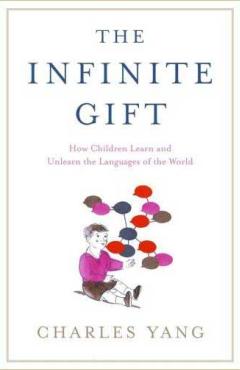
Charles Yang is a Professor of Linguistics and Computer Science at the University of Pennsylvania , where he also directs the Cognitive Science Program. His research integrates computational models with studies of language acquisition, processing, and evolution. Education: Ph.D. in Computer Science, MIT, 2000 Yang's work spans language acquisition , computational linguistics, and the evolution of cognition. He has authored The Price of Linguistic Productivity (2016), which received the Leonard Bloomfield Award from the LSA. Recent publications focus on large language models as cognitive models, the Chinese aspectual system , and statistical approaches to linguistic patterns. His 15 most recent articles (2025-2021) demonstrate a trajectory from computational models of language change to machine translation and multiword expression analysis . Yang has received significant funding from the National Science Foundation and the Guggenheim Foundation . He co-directs the Integrated Language Science and Technology group with John Trueswell and mentors students in linguistics, computer science, and psychology.
Ximian Xu (preferred name: Simeon) is a Senior Research Associate in the Faculty of Divinity at the University of Cambridge , with a PhD in Systematic Theology from the University of Edinburgh (2020). His research bridges theology with technology, focusing on artificial intelligence (AI) ethics, Dutch Neo-Calvinism, Karl Barth, and contextual theology in mainland China. Xu’s work explores the intersection of AI and Christian ethics, the role of Reformed theology in contemporary Chinese Christianity, and the ontological implications of technology on human sustainability. Research Interests Theology and Technology (AI, Surveillance) Dutch Neo-Calvinism (Herman Bavinck) Karl Barth Contextual Theology (Reformed in China) Grants and Organisational Roles He received the CAHSS KE Grant for the workshop "Artificial Intelligence and the Christian Churches" and the Alan Turing Institute Postdoctoral Enrichment Award for research on AI in pastoral care. Xu co-founded the Studies in Dutch Neo-Calvinism Series (Chinese) and is a co-editor for its publications. Publications and Awards His recent works include studies on AI’s moral agency, technomoral futures, and Reformed theological frameworks. Xu’s book The Digitalised Image of God: Artificial Intelligence, Liturgy, and Ethics (2024) addresses AI’s theological challenges. He has contributed to journals like Perspectives on Science and Christian Faith and Modern Theology .
Dr. Winnie Lem is a Professor in the Department of International Development Studies and Gender and Social Justice program at Trent University. Her research focuses on migration, transnationalism, citizenship, and political economy with a regional emphasis on Europe and Asia. She holds a Ph.D. from the University of Toronto. Her academic work spans migration studies, urbanization, gender, and rural politics. Notable contributions include analyses of Chinese migrant entrepreneurs in France, militant populism in contemporary France, and the dialectics of migration. Lem has co-edited several volumes on migration and capitalism, including Migration Temporalities and Capitalism (2018) and Confronting Capital (2012). Lem teaches courses on global inequality, migration, and development studies. She actively contributes to interdisciplinary research through collaborations with institutions like the Canadian Anthropology Society. Her work often bridges anthropological theory with critical political economy frameworks, examining how global capitalism shapes migrant experiences and social structures. Her recent scholarship (2020) contextualizes the Gilets Jaunes movement within broader populist trends in France, while earlier work (2001–2009) explored labor dynamics in rural France and transnational migrant economies. Lem’s research emphasizes the intersection of class, gender, and ethnicity in migration narratives.
Zhiqiang Yu serves as an Associate Professor in the Department of Modern Languages and Comparative Literature at Baruch College's Weissman School of Arts and Sciences, City University of New York. With over two decades of teaching experience, he has established himself as a dedicated educator specializing in Chinese language, cinema, and civilization courses. Education: Ph.D. in Chinese, University of Washington M.A. in Asian Civilization, University of Iowa B.A. in Chinese Literature, Fudan University (Shanghai) Professor Yu's research focuses on innovative approaches to Chinese language pedagogy, with particular interest in applying economic principles and artificial intelligence to language teaching. His work bridges traditional linguistic scholarship with modern educational technology, examining how efficiency, resource allocation, and technological advancements can enhance language learning outcomes. His research spans Chinese linguistics, dialectology, cinema studies, and cultural elements in language teaching. His publication record reveals a consistent trajectory toward optimizing language instruction through systematic analysis. Recent work increasingly focuses on AI applications in language education and the economic framework of pedagogical efficiency. His scholarship demonstrates a progression from traditional linguistic analysis toward innovative teaching methodologies that incorporate modern technological and theoretical frameworks. Scientific Awards: Award of Excellent Academic Research Reviewer from Journal of International Chinese Education (2016) Graduate Teaching Fellowship from University of Washington (1993) Graduate Teaching Fellowship from University of Iowa (1989) Graduate Research Fellowship from University of Iowa (1988) Student Excellency Award from Fudan University (1984) Professor Yu has served extensively on departmental committees including as Department Assessment Coordinator and Secretary of the Asian and Asian-American Studies Committee. He has organized numerous academic events featuring prominent Chinese cultural figures and has contributed to developing Chinese language curriculum resources including online placement tests. His professional service extends to editorial work for CUNY publications and Chinese language training for the New York Police Academy. He maintains active involvement with multiple professional organizations including the American Name Society, American Oriental Society, American Society of Geolinguistics, Association for Asian Studies, and Chinese Language Teachers Association, frequently presenting at international conferences on Chinese language pedagogy.
Guofang Li is a Professor in the Department of Language and Literacy Education at the Faculty of Education, affiliated with the Centre for Early Childhood Education & Research (CECER). Her work centers on bilingual development and literacy education within multicultural contexts, particularly focusing on Chinese-Canadian communities. Her research interests include: Early bilingual development Family literacy practices Early literacy instruction methodologies Early education for minority learners Teacher education for multilingual classrooms Analysis of her 2021-2025 publications reveals a concentrated focus on Chinese-Canadian children's bilingual development, examining home literacy environments, digital technology impacts, and pandemic-related disruptions. She consistently advocates for equity-focused approaches in superdiverse educational settings, emphasizing translanguaging practices and critical perspectives on linguistic justice. Scientific Awards: No awards explicitly mentioned in source materials Advising and Grants: No specific student names or grant information provided in source materials Labs and Teams: Centre for Early Childhood Education & Research (CECER): An interdisciplinary hub facilitating collaborative research between academics, educators, and community partners focused on advancing evidence-based early childhood education practices through longitudinal studies and community-engaged projects.
Prof. Dr. Henning Klöter is Professor of Modern Chinese Languages and Literatures at Humboldt University of Berlin (HU Berlin) and serves as Dean of the Faculty of Culture, Language and Education. He is affiliated with the Institute of Asian and African Studies and the Department of East Asian Studies. He has been a faculty member since 2015 and leads significant research in sociolinguistics, language planning, and Sinophone studies. His educational background includes studies in Sinology, German Studies, and Linguistics at the University of Trier, Capital Normal University (Beijing), Leiden University, and National Taiwan University. He earned his doctorate from Leiden University in 2003 and completed his habilitation at Ruhr University Bochum in 2010. Henning Klöter's research focuses on multilingualism, language planning, the history of Chinese linguistics in Europe—especially missionary and colonial linguistics—historical sociolinguistics, Overseas Chinese communities, and Taiwan Studies, with regional interests spanning the PRC, Hong Kong, Macao, Singapore, the Philippines, and Taiwan. His work often explores the ideological and political dimensions of language standardization and visibility in public space. Since 2023, he has been Chief Editor of the Journal of Asian Pacific Communication. His recent scholarly output reveals a strong trend in historical and sociopolitical aspects of Chinese language use, particularly across Sinophone regions. Themes include language policy divergence between Taiwan and the PRC, linguistic landscape analysis in Taipei, missionary lexicography, and the evolution of Chinese linguistic standards. His publications bridge historical documentation with contemporary sociolinguistic theory, emphasizing pluricentricity and ideological influences on language. Chief Editor, Journal of Asian Pacific Communication (since 2023) Principal Investigator, ChinGram (Erasmus+ project) Principal Investigator, EMHo (DFG Weave project) He has not received any explicitly mentioned scientific awards in the provided texts. Prof. Klöter is actively engaged in major research initiatives and editorial leadership, contributing significantly to the academic understanding of language in Chinese-speaking societies. He is involved in the Mori-Ōgai Memorial and contributes to the academic community through research projects, publications, and institutional leadership. His work often intersects with cultural memory, colonial history, and linguistic identity in East Asia.
Paul Boersma is a Professor of Phonetic Sciences at the University of Amsterdam within the Faculty of Humanities. His research explores how phonetic, phonological, and morphological phenomena emerge through computational modeling using artificial neural networks and Optimality Theory, with a focus on multi-level constraint interactions and distributional learning. University of Amsterdam Faculty of Humanities Phonetic Sciences Key research areas include: Computational Modeling : Simulations of phonological category emergence from phonetic data Optimality Theory : Gradual Learning Algorithm applications BiPhon Framework : Parallel bidirectional phonology/phonetics models Statistical Learning : Cross-situational and distributional learning mechanisms Recent publications emphasize: 2025: Inclusive speech recognition systems using Whisper model 2025: F0 ratio analysis for creaky voice diagnostics 2024: Prosodic clitics in child speech and checked tones in Shanghai Chinese 2023: Distributional learning in developmental language disorder contexts 2022: Substance-free phonological features and ghost segment phenomena He has also contributed extensively to the Praat software for phonetic analysis, with continuous updates since 1993.
Milad Abedi is a PhD candidate in Linguistics at the University of Zurich and Institut national des langues et civilisations orientales (INALCO), Paris, focusing on the cultural history of Sino-Iranian lexical contacts. He has taught Zoroastrian Middle Persian and Middle Iranian languages at the University of Zurich while conducting research on topics including language contact mechanisms and historical Persian grammar. PhD in Linguistics (2020–Present), University of Zurich & INALCO, Paris MA in Ancient Languages and Cultures of Iran (2015–2019), Allameh Tabataba'i University (Highest Distinction) BSc in Cellular-Molecular Biology (2010–2015), Islamic Azad University His research spans ancient Iranian language contact (Elamite-Iranian, Sino-Iranian, Arabic-Iranian), historical grammar of Persian, and Classical Persian literature. He has published on topics such as kinship term evolution, cuneiform epigraphy, and metonymic phrases in Achaemenid Elamite. Recent publications highlight his focus on lexical diffusion across Eurasia, with key works on donkey terminology in cross-cultural contexts and the origins of felt words in Iranian languages. His collaborative research with Wolfgang Behr and Samira Müller demonstrates interdisciplinary approaches combining linguistics and archaeology. 2021 Travel grant, University of Zurich 2016 Travel grant, Allameh Tabataba'i University 2016 Top student award, Allameh Tabataba'i University As a Lecturer at the University of Zurich, he has taught courses on Zoroastrian Middle Persian and historical linguistics. His digital humanities expertise includes ELAN software, GIS, and SQL for language documentation.
Dr. He Tai-Sen is a Senior Lecturer in Economics at Nanyang Technological University (NTU), Singapore. Holding a PhD in Economics from Brown University (2013), he also earned an MA in Economics and a Bachelor of Finance from National Chengchi University, Taiwan. He was an honorary member of the Phi Tau Phi Scholastic Honor Society and recipient of the Reginald D. Archambault Award for Teaching Excellence at Brown in 2009. Education : PhD (Economics, Brown University, 2013); MA (Economics, National Chengchi University, 2003); Bachelor of Finance (National Chengchi University, 2001) Dr. He specializes in Behavioral Economics , Experimental Economics , and the intersection of Psychology , Linguistics , and Economics . His research explores how linguistic features (e.g., future tense, pronoun drop) and acoustic manipulations (e.g., vocal pitch, speech rate) influence economic decisions. He also investigates parental strategies to develop children’s pro-sociality, patience, and strategic reasoning. His publications reveal interdisciplinary trends: Language-Decision Interactions (4 papers) Temporal Discounting & Risk Preferences (5 papers) Trust & Prosocial Behavior (3 papers) Behavioral Policy Analysis (2 papers) Scientific Awards : Reginald D. Archambault Award for Teaching Excellence (Brown University, 2009) At NTU, he teaches Experimental Economics , Financial Economics , and Microeconomics Principles . He also instructs Behavioral Economics for Policy Analysis in Mandarin at the Nanyang Centre for Public Administration. Dr. He emphasizes inquiry-based teaching, fostering student creativity through conversational methods. His research involves interdisciplinary collaborations, often co-authoring papers with students. Married to a psychologist, he draws inspiration from family interactions, blending personal and academic insights into his work on behavioral economics.
Eric Thun is a Tutorial Fellow in Management at Brasenose College and the Peter Moores Associate Professor in Chinese Business Studies at the University of Oxford’s Saïd Business School. He has taught at Princeton University and joined Oxford in 2005, focusing on undergraduate management education and executive programs. Thun holds a BA from Princeton University (1990) and a PhD from Harvard University (1999). He served as a postdoctoral fellow at MIT’s Industrial Performance Center before returning to Princeton as an Assistant Professor in the Woodrow Wilson School and Department of Politics. His research interests center on China’s political economy, particularly how industrial structures and policies influence firm capabilities and competition. Thun has extensively studied China’s automotive industry, multinational corporations, and the integration of China into global production networks. More broadly, he explores strategies of indigenous and multinational firms in emerging markets and the impact of digital transformation on global value chains. Thun’s recent articles (2021–2025) highlight themes of modular ecosystems, state-market dynamics, and challenges in reshoring supply chains. Earlier works (2019–2000) emphasize innovation, policy impacts on GVCs, and sustainability in global trade. No scientific awards are explicitly listed. While he teaches and advises across multiple programs, no formal advisees or grants are detailed in the provided texts. His affiliations include Brasenose College and Saïd Business School, with no lab or team affiliations mentioned.
Lauren Hall-Lew is a Professor and Personal Chair of Sociolinguistics at the University of Edinburgh's School of Philosophy, Psychology and Language Sciences. She holds a BA from the University of Arizona (2002) and MA/PhD from Stanford University (2009). Her research focuses on phonetics, social meaning, language change, and sociopolitical identity. She has pioneered projects like the Lothian Diary Project, studying linguistic impact of the pandemic, and analyzed Scottish political speech, tourist language attitudes, and ethnicity-linked variation in San Francisco. Teaching contributions include courses on sociophonetics and language variation/change, earning her EUSA Teaching Award (2013). She has supervised over a dozen PhD students and is involved in EDI initiatives, including founding the Staff BAME Network Mentoring Programme (2019-2021), recognized via CAHSS Award and Principal's Medal nominations. Active in grant work, she leads projects on homelessness and linguistic variation (British Academy-funded), Scottish tour guide discourse, and political identity in phonetics. Awards include teaching accolades and EDI recognition. Her publications span sociolinguistic theory, phonetic analysis, and applied linguistic methods.
Robert Sharf is the D.H. Chen Distinguished Professor of Buddhist Studies in the Department of East Asian Languages and Cultures at the University of California, Berkeley . He also serves as Chair of the Numata Center for Buddhist Studies and Head Graduate Advisor for the Group in Buddhist Studies . With a PhD in Buddhist Studies from the University of Michigan (1995), he previously taught at McMaster University (1989-1995) and the University of Michigan (1995-2003). Research Interests: Medieval Chinese Buddhism (especially Chan) Japanese Buddhism Buddhist Art and Archaeology Ritual Studies Buddhist Modernism Philosophical Paradoxes Methodology in Religious Studies Critical Buddhist Discourse Publications & Collaborations: Author of Coming to Terms with Chinese Buddhism: A Reading of the Treasure Store Treatise (2002) Co-editor of Living Images: Japanese Buddhist Icons in Context (2001) Co-author of What Can’t Be Said: Contradiction and Paradox in East Asian Thought (2021) Co-author of How to Lose Yourself: An Ancient Guide to Letting Go (2025) Editor of Chinese translations of his works: Xiafu Chanxue zixuan ji and Xiafu Mijiao Yanjiu zixuan ji (2022) Academic Leadership: Director of the Group in Buddhist Studies Director of Religious Studies Chair of the Center for Buddhist Studies