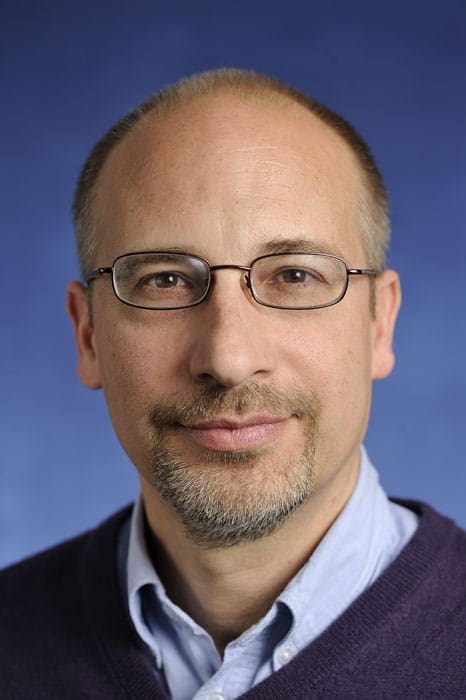
Joel Andreas is a Professor of Sociology at Johns Hopkins University since 2003, serving as Program Director of the East Asian Studies Program. His research focuses on political contention, social inequality, and social change in contemporary China. He holds a PhD in Sociology from UCLA and teaches social theory, political sociology, and courses on Chinese society. He has held visiting positions at universities including the University of Sydney, Hong Kong University, and Ningxia University. His work examines labor movements, rural land policies, and class dynamics in China. Recent research includes analyses of staff-worker congresses, rural land dispossession, and the persistence of militarism in U.S. policy. He critiques market reforms and explores the legacy of the Cultural Revolution. Andreas has contributed to debates on China’s transition to capitalism and the decline of socialist systems. His publications span topics from urbanization to state coercion in rural development. He maintains an active role in academic exchanges and policy-relevant research on China’s socio-political landscape.
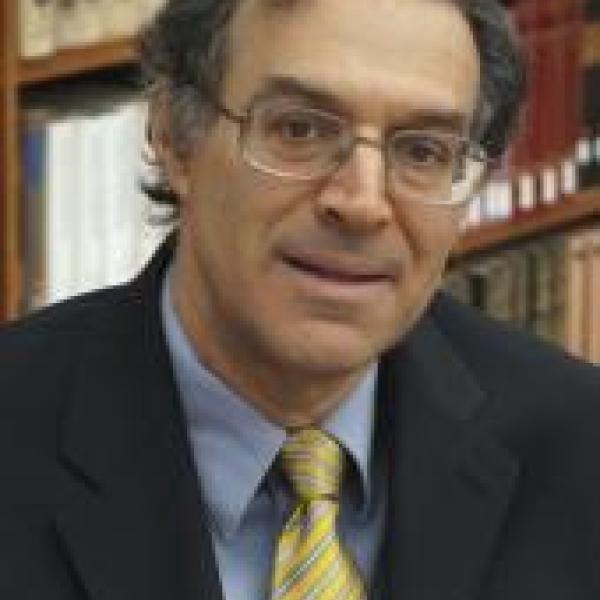
Kenneth Pomeranz is the University Professor of Modern Chinese History at the University of Chicago in the Department of East Asian Languages and Civilizations (EALC). Previously taught at the University of California, Irvine , his research spans late Imperial and twentieth-century China , comparative world history , and global economic systems . Research Focus: Reciprocal influences between state, society, and economy; origins of the world economy through mutual regional influences; comparative studies of labor, family organization, and economic history. Current Projects: A history of Chinese political economy from the seventeenth century to the present; a book titled Why Is China So Big? exploring China's political unity despite its vast size. Scientific Awards and Fellowships: John K. Fairbank Prize (twice) World History Association Book Prize (shared) Guggenheim Fellowship American Academy of Arts and Sciences Fellow Publications: Key works include The Great Divergence , The Making of a Hinterland , and The World that Trade Created . His articles address topics such as labor-intensive industrialization, global environmental history, and Qing state-building.
Ruth Mostern is Associate Professor of History at the University of Pittsburgh and Director of the Institute for Spatial History Innovation (ISHI). She is Vice-President and President-Elect (2025-2026) of the World History Association and leads the award-winning World Historical Gazetteer project. Education Ph.D. in History, University of California, Berkeley, 2003 Research Interests Mostern is an interdisciplinary historian specializing in world, Chinese, environmental, and spatial history. She investigates long-term human–environment interactions at continental and millennial scales, focusing on how societies organize space, resources, and risk. Her work integrates GIS, digital gazetteers, and environmental science to reconstruct historical geographies of empire, water management, and ecological change. Current projects include: Place: A Global History – a study of itineraries, gazetteers, and databases as technologies of spatial knowledge. The Medieval Climate Anomaly and the Global Medieval Era – cultural adaptations to climate change c. 950-1250 CE. Research Trends Her recent publications span digital environmental humanities, historical GIS, Song-dynasty political economy, and pre-industrial Asian political ecology. A dominant theme is the coupling of state power with environmental transformation, exemplified by her 2021 book The Yellow River: A Natural and Unnatural History (Yale), winner of the 2023 Joseph Levenson Prize. Awards & Honors Joseph Levenson Prize, Association for Asian Studies, 2023 NEH Digital Humanities Advancement Grant, 2023-2025 Digital Humanities Awards 2021 – Best DH Tool (World Historical Gazetteer) Fudan University Fellowship for Studies of Chinese Civilization, 2019 NEH Humanities Connections Implementation Grant, 2018-2020 Chiang Ching-kuo Foundation Summer Institute Grant, 2015-2016 NSF Collaborative Research Grant, 2013-2015 ACLS Digital Innovation Fellowship, 2011-2012 Advising & Grants Mostern welcomes graduate students interested in environmental, global, Asian, or digital history. She has directed multiple externally funded projects, including the NSF-funded Center for Historical Information and Analysis and NEH-supported initiatives on water in Central Asia and global historical gazetteers. Labs & Teams She directs the Institute for Spatial History Innovation (ISHI) at the University of Pittsburgh, a hub for interdisciplinary research integrating spatial technologies with historical inquiry. ISHI hosts the World Historical Gazetteer , providing open tools and datasets that link knowledge about historical places across world regions.
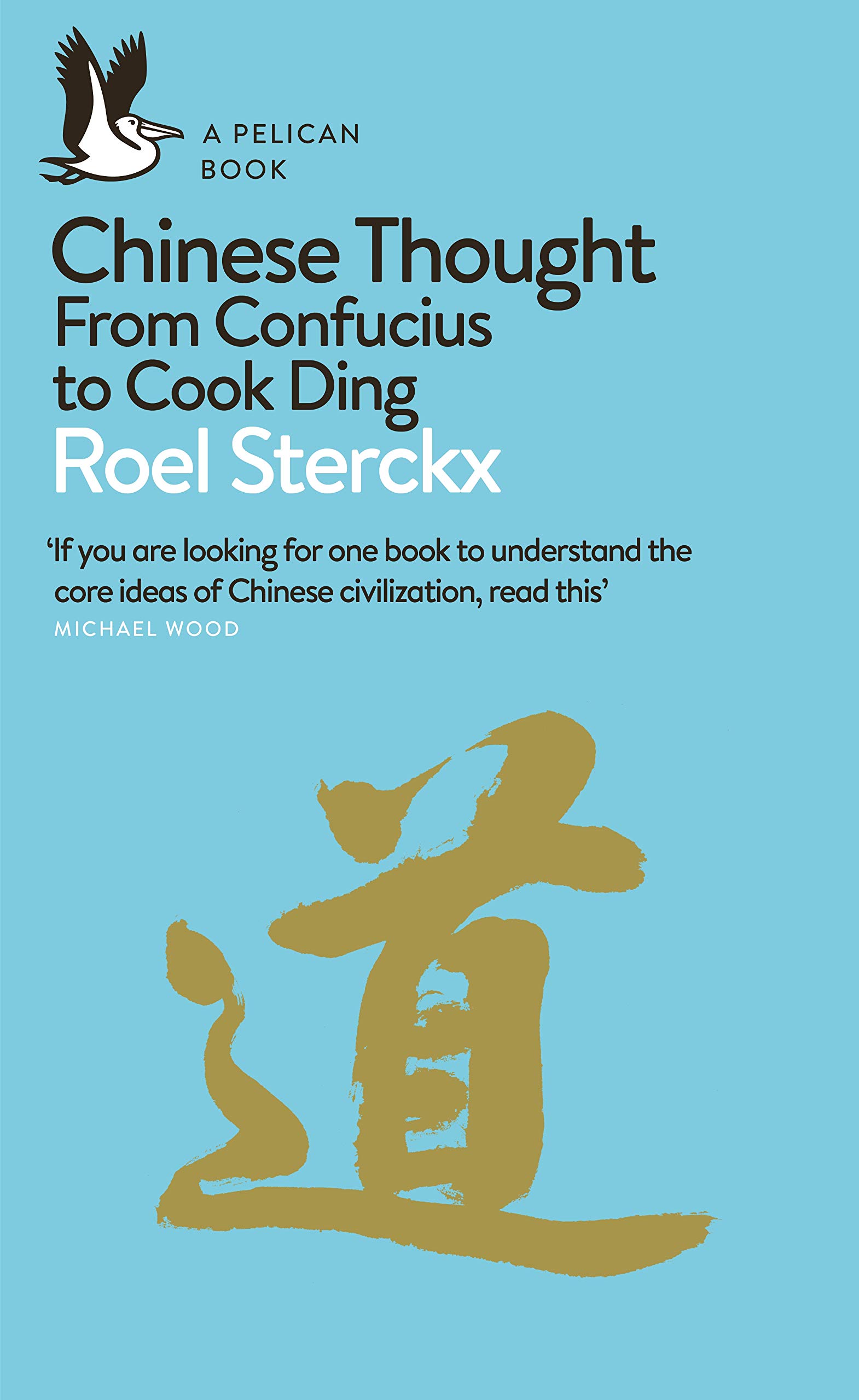
Professor Roel Sterckx is the Joseph Needham Professor of Chinese History, Science, and Civilization at the University of Cambridge, affiliated with Clare College. He specializes in pre-imperial and early imperial Chinese thought, classical Chinese language, and natural history. His research bridges anthropology and the history of science, focusing on topics like ritual, economic thought, and animal studies. He has authored influential books including Food, Sacrifice, and Sagehood in Early China and Animals through Chinese History . Sterckx is a Fellow of the British Academy (since 2013) and holds leadership roles at the Needham Research Institute. He supervises PhD students on subjects ranging from Warring States rhetoric to Han Dynasty apocrypha. Education: BA/PGCE in Sinology and History, Katholieke Universiteit Leuven Masters in Classical Chinese and Philosophy, National Taiwan University PhD in Chinese History, University of Cambridge Research Interests: Early Chinese cultural ecology, ritual economy, and the interplay of moral and material values. His work analyzes texts like the Rites of Zhou , Mozi , and Huainanzi , emphasizing agricultural thought and animal symbolism. Awards: British Academy Fellowship (2013) Grants and Labs: Directs the Cambridge-based Needham Research Institute, focusing on East Asian science and technology history. Current projects include studies on Han perceptions of southern regions and the economics of ritual in early China.
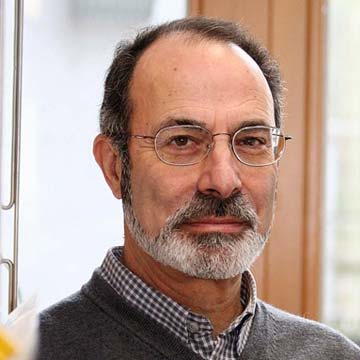
Professor Jack Barbalet is a distinguished academic at the Australian Catholic University (ACU), affiliated with the Institute for Humanities and Social Sciences at the Melbourne campus. His research centers on sociological theory, political and economic sociology, the sociology of emotions, and the sociology of modern China, with a focus on social solidarity, interaction, and institutionalization. His educational background includes an undergraduate degree from Flinders University and a PhD from Adelaide University. He has held academic positions at the University of Papua New Guinea, Australian National University, University of Leicester, and Hong Kong Baptist University before joining ACU. His research emphasizes conceptual refinement and theoretical development, particularly in interpreting Max Weber and analyzing Chinese society through the lens of guanxi, trust, and rural social structures. His recent publications reflect a sustained engagement with foundational sociological texts and their contemporary relevance. The body of his recent work demonstrates strong thematic continuity in examining classical sociological theory, especially Weberian thought, while extending it into non-Western contexts, particularly China. Topics include political violence, cultural imperialism, emotional dynamics in social exchange, and institutional transformation. Member, Editorial Board, Sociology (from 2022) Member, Editorial Board, Sociological Theory (from 2021) Member, Editorial Board, Journal for the Theory of Social Behaviour (from 2020) Member, Advisory Board, Emotions and Society (from 2019) As a Full HDR Supervisor, Professor Barbalet mentors higher degree research students, though no specific students are listed in the provided text. While no grants are explicitly mentioned, his sustained publication record and editorial roles indicate active research funding and academic leadership. His work continues to influence theoretical and comparative sociology globally. Professor Barbalet is actively involved in academic service through editorial and advisory roles across major sociology journals, reflecting his leadership in sociological theory and the sociology of emotions. He contributes to shaping scholarly discourse in core areas of the discipline.
Jun Uchida is the Asian Cultures and Society Professor and Professor of History at Stanford University, holding dual appointments in the Department of History and the Center for East Asian Studies. His research focuses on modern East Asian history, Japanese colonialism, migration, and diaspora. He has served as Director of the Center for East Asian Studies (2016-2019) and currently leads the Asian Cultures and Society program. Uchida holds a Ph.D. from Harvard University and has held fellowships at institutions including the Weatherhead Center for International Studies and the Social Science Research Council. His current book project traces the transpacific diasporic activities of Ōmi merchants from Shiga Prefecture, examining their roles in Japan’s imperial expansion. Key research areas include Japanese settler colonialism, colonial Korea, and transnational migration patterns. Uchida has authored influential works like Brokers of Empire (2011), which won the John K. Fairbank Prize, and has contributed to journals such as the Journal of Japanese Studies and Past & Present . Education: Ph.D. in History, Harvard University (2001) M.A. in History, University of California, Berkeley (1996) B.A. in History, Cornell University (1995) Uchida’s teaching spans modern Japanese history, colonial studies, and transpacific themes. He advises doctoral candidates and chairs graduate admissions committees. His awards include the NEH Fellowship (2019-2020) and the Stanford Pattee Fellowship (2013-2014). He maintains active roles in professional organizations such as the American Historical Association and the Association for Asian Studies.
London School of Economics and Political Science (LSE)United Kingdom
John T. Sidel Summary Professor John T. Sidel is the Sir Patrick Gillam Chair in International and Comparative Politics at the London School of Economics and Political Science (LSE), holding joint appointments in the Government and International Relations Departments. He is also Director of the Saw Swee Hock Southeast Asia Centre. His career spans over three decades of research on Southeast Asia, with a focus on the Philippines, Indonesia, and Vietnam. Education B.A. and M.A. in Political Science from Yale University Ph.D. in Government from Cornell University Research Interests Sidel specializes in Southeast Asian politics, including local power dynamics, comparative historical sociology, Islam in politics, reform advocacy campaigns, and infrastructure politics. Key themes include: Local Politics: Analysis of political bossism, dynasties, and subnational governance in the Philippines and beyond. Comparative History: Long-term patterns of state-building, nationalism, and colonial legacies in Southeast Asia. Islam & Politics: Study of religious violence, political mobilization, and transnational Islam in Indonesia. Reform Advocacy: Advising development initiatives like the Philippines' Coalitions for Change program. Infrastructure Politics: Urban transport reforms and their socio-political implications in Metro Manila. Key Publications Major works include Republicanism, Communism, Islam: Cosmopolitan Origins of Revolution in Southeast Asia (2021), Riots, Pogroms, Jihad (2006), and Capital, Coercion, and Crime (1999). His recent research explores transport policy reforms and the political economy of development in the Philippines. Teaching Sidel teaches courses on Southeast Asian politics, comparative historical sociology, and Islam in world politics at LSE. Notable courses include GV4D3 (Local Power in Globalization) and IR461 (Islam in International Relations). Public Engagement He advises international organizations such as The Asia Foundation and UNHCR, contributing reports on Indonesia's refugee policies and Philippine development initiatives. Active in public lectures and podcasts, he promotes Southeast Asian studies through platforms like the LSE's 'Dialogues on Southeast Asia' series.
Jakob Klein is a faculty member in the Department of Anthropology and Sociology at SOAS University of London. His research focuses on the anthropology of food, with emphasis on Chinese and Asian culinary cultures, ethical consumption, heritage politics, and the interplay between state policies and market forces in shaping food systems. Klein's work explores themes such as: Culinary modernity and identity in China State-led food security initiatives (e.g., potato promotion) Heritage commodification of regional foods Buddhist vegetarianism and changing meat consumption Alternative food movements in postsocialist contexts His publications demonstrate consistent focus on: Cultural adaptation of global food trends Political economy of dietary change Ethnographic analysis of food practices across urban/rural divides He has supervised doctoral research on food tourism in Istria, gastronomic reinvention in Bulgaria, and cultural capital in Chinese leisure industries.
Yi Gu is an Associate Professor of modern and contemporary art and visual culture at the University of Toronto Scarborough (UTSC), with cross-appointments in the Department of Arts, Culture and Media and the Department of East Asian Studies. Her scholarly work centers on Asian visual culture, particularly China's artistic and photographic history from the early twentieth century to the present. Her research interests include cold war visual culture, post-socialist art, Chinese photography history, contemporary photography in Asia, mass art and amateurism, and visual methodologies across disciplines. Gu's work is driven by examining the political ambitions and social functions of art, as well as the politics of aesthetics. Her recent research has focused on aesthetic capitalism and digital surveillance in China, leading to studies of the Digital Countryside initiative and CCP aesthetics anchored in agrarian imaginary. Gu's publications reveal a consistent engagement with visual epistemology, particularly how Chinese artists and photographers have negotiated modernity, nation-building, and transnational influences. Her work spans from early twentieth-century open-air painting practices to contemporary digital visual culture, demonstrating how visual practices serve as critical sites for understanding China's social and political transformations. As co-editor of the open-access academic journal Trans Asia Photography and convening member of the research project 'Alternative Collections and Digital Humanities: Twentieth-Century Chinese Art and Visual Culture,' Gu actively contributes to expanding the field of Asian visual studies through collaborative scholarly initiatives. At UTSC, Gu teaches undergraduate courses on modern and contemporary Asian art, lens-based media in Asia, public art, and art and digital culture. Her scholarly approach combines art historical methods with visual culture studies, media theory, and cross-disciplinary perspectives to examine how visual practices shape and are shaped by political and social contexts in China and beyond.
Mariane C. Ferme is a Professor in the Department of Anthropology at the University of California, Berkeley. Her research focuses on sociocultural dynamics in West Africa, particularly Sierra Leone, with expertise in political anthropology, legal studies, and material culture. She holds a PhD in Anthropology from the University of Chicago and has taught at prestigious institutions including the University of Cambridge and École des Hautes Études en Sciences Sociales. Education : PhD in Anthropology (University of Chicago), MA in Political Science (University of Milano), BA in Anthropology (Wellesley College). Ferme’s research spans the political imagination in conflict zones, agrarian transformations, and the interplay between humanitarian law and local justice systems. Her work has been supported by major grants from the National Science Foundation and the France-Berkeley Fund. She has published extensively on Sierra Leone’s post-war societies and the socio-cultural dimensions of the Ebola outbreak. Scientific awards include funding from the National Science Foundation, Hellman Family Faculty Fund, France-Berkeley Fund, Harvard Academy for International and Area Studies, and the Carter Woodson Institute for African and African-American Studies.
Yiqun Zhou serves as Associate Professor of East Asian Languages and Cultures and, by courtesy, of Classics at Stanford University. Holding dual appointments since 2013, Zhou is actively engaged in teaching and research within Stanford's Department of East Asian Languages and Cultures and the Department of Classics, with program affiliations at the Center for East Asian Studies. Research interests span Chinese and comparative women's history, early Chinese literature, Ming-Qing fiction, China-Greece comparative studies, and the reception of classical antiquity in modern China. Zhou's scholarly approach emphasizes cross-cultural analysis between ancient Chinese and Greek civilizations, particularly examining gender relations, literary traditions, and the modern Chinese reception of classical antiquity. Zhou's publications demonstrate consistent scholarly output with recent works appearing in 2024, focusing on imperial performance, gender dynamics, and intellectual history. The research trajectory reveals a sustained engagement with comparative methodologies, particularly examining intersections between Chinese and Greco-Roman civilizations across historical periods. Zhou actively mentors graduate students through multiple roles including Doctoral Dissertation Advisor for Xiaoyi Huang and Bingxiao Liu, Master's Program Advisor for Helen Bovi and Yuan Wei, and Doctoral Program advisor for ZiFan Yang. Teaching responsibilities include courses such as Beginning Classical Chinese, Heroes and Heroism (co-listed with Classics), Proseminar in East Asian Humanities, and The Use of Classical Antiquity in Modern China. Academic background includes a Ph.D. in Comparative Literature from the University of Chicago (2004). Zhou maintains an active research agenda with publications spanning journal articles and book chapters, primarily focusing on comparative approaches to Chinese literature and history with Greco-Roman antiquity.
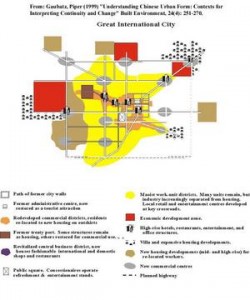
Piper Gaubatz is a Professor of Geography at the Department of Geosciences, University of Massachusetts Amherst, and a Faculty Affiliate at the Department of Landscape Architecture & Regional Planning. Her career spans urban transformation studies in China, Japan, and the U.S., with a focus on public space, globalization, and environmental history. Princeton University (AB in Sociology, Secondary in Architecture) UC Berkeley (MA and PhD in Geography) Postdoctoral: East-West Center (1990-91), Yale Agrarian Studies (2005-06) Research explores four themes: urban form (political economy of space), urban change (historical continuity), urban ecology (environmental interactions), and social justice (inequality in urbanization). Current work analyzes public squares in China through GIS, fieldwork, and policy analysis. Grants include Fulbright, National Academy of Sciences, Henry Luce Foundation, Chinese Academy of Sciences, and Japan Society for the Promotion of Science. Recent publications focus on urban sustainability (2020), public squares (2019), and regional inequality (2017). Advises PhD students like Sainan Lin Editorial roles: Cities, Urban Morphology, Eurasian Geography Field research in 18 cities across China, Japan, and the U.S.
Huaiyin Li is the Karen and Patrick Walker Professor in History at the University of Texas at Austin, where he has been a faculty member in the Department of History and Asian Studies since 2000. He earned his Ph.D. from the University of California, Los Angeles (UCLA) and specializes in modern and contemporary Chinese history, economy, society, and politics. Education: Ph.D., UCLA, Department of History His research spans multiple subfields including agrarian studies, gender and family dynamics, rural governance, and comparative development. He has authored several award-winning books such as Village China under Socialism and Reform (2009) and The Master in Bondage: Factory Workers in China, 1949-2019 (2023), analyzing China's socio-political transformations through micro-histories and macro-historical frameworks. Recent publications focus on Qing state formation, rural taxation, socialist labor relations, and historiographical shifts in modern China. His work integrates fiscal analysis, institutional studies, and cultural transitions, often comparing China's developmental trajectory with global contexts. Scientific Awards: 2009 Cecil B. Currey Book Award (Association of Third World Studies) 2010 Robert W. Hamilton Book Runner-up Award (University of Texas at Austin) 2010 CHUS Award for Academic Excellence 2014 Robert W. Hamilton Book Runner-up Award (University of Texas at Austin) Huaiyin Li teaches courses on Modern China, Women and Gender in China, and Post-Mao transformations, with office hours in GAR 3.202. His research continues to influence debates on state-society relations and China's modernization processes.
Dr. Mingyuan Zhang Betancourt is a socio-cultural anthropologist affiliated with the University of Oslo's Institute of Community Medicine and Global Health. Specializing in cross-cultural analysis between China and Africa, her work examines pharmaceutical supply chains and postcolonial development dynamics. PhD in Anthropology, University of Western Ontario (2018) Former Writing Fellow, University of Toronto Scarborough Her research spans multiple disciplines: Pharmaceutical Anthropology : Analyzing antibiotic shortages across India/China production networks China-Africa Relations : Investigating cultural identity formation through historic sugar plantations and Confucius Institute operations Political Ecology : Documenting resource conflicts in Malagasy agrarian systems Recent publications demonstrate: 2024 study on pharmaceutical production history 2023 comparative analysis of China-India trade disputes 2022 critique of cultural standardization in educational programs 2021 pandemic discourse analysis She actively explores: Global antibiotic accessibility Postcolonial development paradigms Transnational identity politics
Jinba Tenzin is an Associate Professor in the Department of Sociology and Anthropology at the National University of Singapore. Born in Gyalrong on the Tibetan Plateau, his research explores borders, state-society dynamics, and cultural resilience. He holds a PhD in Anthropology from Boston University and completed postdoctoral research at Yale University's Program in Agrarian Studies. His interdisciplinary research spans: Medical and environmental anthropology Sociology of knowledge and critical theory China, Inner Asia, and Himalayan studies Borderland politics and oral traditions He serves on editorial boards for American Ethnologist , American Behavioral Scientist , and the European Bulletin of Himalayan Research . His publications critically examine academic dependency, postcolonial knowledge systems, and Tibetan cultural resilience, with recent work focusing on China's intellectual decolonization. He mentors Honours, MA, and PhD students in social theory, medical anthropology, and environmental studies, emphasizing critical perspectives.