

Emily Hannum is a Professor of Sociology and Education at the University of Pennsylvania's College of Arts & Sciences, where she also serves as Associate Dean for Social Sciences. She is affiliated with the Population Studies Center, Center for the Study of Contemporary China, Graduate School of Education, and Penn Development Research Initiative. Education: PhD in Sociology from University of Michigan (1998) Research Focus: Poverty and child welfare, gender and ethnic stratification, sociology of education Projects: Gansu Survey of Children and Families, climate-environment-childhood inequalities in LMICs Workshops: Co-organizer of Penn Education and Inequality Workshop Her research explores childhood poverty in China, demographic impacts on education systems, and climate risks affecting children's welfare. She investigates environmental hazards, educational disparities, and family separation effects across China, India, and low/middle-income countries. Recent publications analyze educational expansion in East Asia, climate crisis impacts on child health, and gender disparities in Latin America. She directs longitudinal studies on rural poverty and collaborates on cross-national projects related to environmental and educational equity. Scientific awards include the Stanley I. Sheerr Term Professorship in Social Sciences.
جستجوی استاد راهنمای دانشگاهی
برای مسیر پژوهشیتان، استاد راهنما، استاد دانشگاه و پژوهشگر مناسب را پیدا کنید و با آنها ارتباط بگیرید.
نمایش ۱-۱۵ از ۵٬۰۷۸ استاد راهنما
اطلاعات پروفایلها از صفحات عمومی دانشگاهها گرفته شده و ممکن است بهروز نباشد.

Peninah Murageمشاهده پروفایل
استادیار
Dr Peninah Murage is an Assistant Professor at the London School of Hygiene & Tropical Medicine in the Department of Public Health, Environments and Society under the Faculty of Public Health and Policy. She specializes in environmental epidemiology with a PhD in Health Geography and focuses on health impacts of environmental changes, particularly climate change mitigation and adaptation strategies. Affiliation: Centre on Climate Change and Planetary Health Her research explores climate change effects on health outcomes like heat-related mortality, cardiovascular diseases, and cognitive development in children. She integrates GIS/spatial analysis with public health and policy frameworks to identify nature-based solutions for sustainable development. Current work examines systemic inequalities in heat risk exposure and interventions such as tree-based strategies in low-income settings. Key grants include: Health Protection Research Unit on Climate Change and Health Security (2025-2030, NIHR) Climate Change and Non-Communicable Diseases in Senegal (2024-2027) Pathfinder 2: Accelerating Climate Action for Health (2023-2026) She actively contributes to the Lancet Pathfinder Commission and serves on the Executive Committee of the International Society of Environmental Epidemiology (African Chapter).

Professor Andrew Murray is a leading academic in Law with expertise in New Media and Technology Law. He holds the position of Professor of Law at the LSE Law School and directs the LSE Law, Society and Technology Group. His research focuses on digital rights, AI ethics, and regulatory frameworks for emerging technologies. Murray has held roles including Fellow of the Royal Society for the Arts and advisor to the Saudi Arabian government on e-commerce law. He has advised parliamentary committees, including the House of Lords Communications Committee on digital regulation, and delivered the prestigious TMC Asser Lecture on AI and human agency. Education: LL.B. Hons from Edinburgh University (1994), followed by academic roles at Stirling University and LSE since 2000. Professional memberships include the Society of Computers and Law (SCL) and the Higher Education Academy (HEA). He has been a visiting professor at Amsterdam Law and Technology Institute and Sciences Po Paris. Research interests span cyberspace regulation, AI governance, and the intersection of technology with human rights. Key publications include Human Rights in the Digital Age (2004) and The Regulation of Cyberspace (2007). Awards include recognition as an Independent Expert in Nominet UK dispute resolution (2001–2008) and a 2024 Leibniz Prize reviewer. Advocacy includes contributions to EU e-commerce directives and UK surveillance law debates. His work emphasizes balancing innovation with legal accountability in digital spaces.
Associate Professor Kiat Boon, Daniel SENG is a leading academic at the National University of Singapore (NUS), specializing in technology law and infocommunications law. He currently serves as Director of the LLM (Intellectual Property & Technology Law) program and IT Coordinator. Previously, he held roles as Director of Research at the Singapore Academy of Law (2001–2003), partner and head of technology practice at Rajah & Tann, and non-residential fellow at Stanford Law School’s Center for Legal Informatics (CodeX). His education includes a JSD and JSM from Stanford University, BCL (Oxford, Rupert Cross Prize recipient, 1994), and LLB (NUS with first-class honors). His research employs machine learning, NLP, and big data to analyze digital law challenges, particularly in copyright takedown notices and AI governance. Research interests span information technology law, empirical legal studies, quantitative research, and AI’s intersection with legal reasoning. He contributes to global legal reform via advisory roles at the World Intellectual Property Organization (WIPO), focusing on copyright exceptions, music licensing, and intermediary liability. Key awards include the 1994 Rupert Cross Prize. His work bridges law and technology through publications on digital evidence, metaverse legal frameworks, and AI’s impact on private law. He is actively involved in shaping Singapore’s legal infrastructure through government committees and academic initiatives.
Martin Elliottمشاهده پروفایل
پژوهشگر ارشد
Dr Martin Elliott is a Senior Research Fellow at the Children's Social Care Research and Development Centre (CASCADE), Cardiff University, and holds roles as Research Development Adviser for Health and Care Research Wales and academic lead for the all-Wales ExChange programme. His work focuses on child welfare inequalities, poverty, secure accommodation, and services for disabled children. With 17 years in statutory children’s services, he transitioned to academia via a PhD analyzing looked-after children in Wales. He has secured £3.4M+ in research funding, including a major CASCADE partnership grant. Educated with a DipSW (1997), BA(Hons) Community Studies (1998), MSc Social Science Research Methods (2013), and PhD (2018), his expertise spans mixed-methods research. Awards include the ESWRA doctoral thesis award (2020) and BASW’s British Journal of Social Work prize (2021). His research explores socio-economic dimensions in social work practice, policy impacts, and system equity. Key grants include studies on child welfare interventions, kinship care, and secure accommodation outcomes. He leads projects analyzing Wales’ Flying Start program, workforce regulation impacts, and crisis mental health services. CASCADE collaborates internationally on child welfare systems, reflecting his strategic focus on translating research into policy. His work bridges academic inquiry with frontline practice, addressing systemic challenges in child protection and welfare delivery.
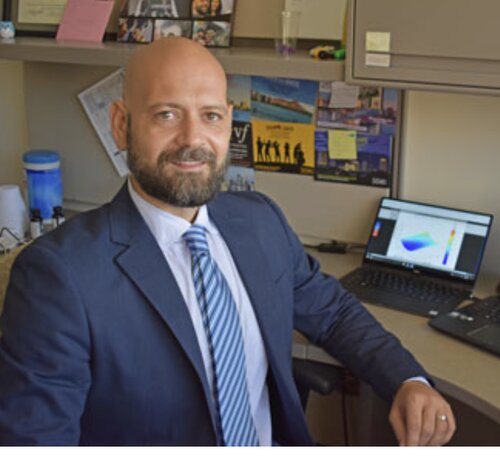
Pasquale Bottalico serves as Associate Professor in the Department of Speech and Hearing Science at the University of Illinois, with dual appointments as Associate Professor at the Center for Latin American and Caribbean Studies and Affiliate Faculty in the School of Music. His unique interdisciplinary profile bridges engineering, music performance, and speech science, reflecting his dual academic training and professional artistry. His educational foundation includes: Bachelor's in Telecommunications Engineering from Univeristà Mediterranea di Reggio Calabria, Italy Concurrent Opera Singing degree from F. Cilea Music Academy, Reggio Calabria Master's in Telecommunications Engineering from Politecnico di Torino, Italy Ph.D. in Metrology specializing in acoustics measurement uncertainty and classroom acoustics Dr. Bottalico's research centers on vocal load quantification and professional voice techniques , with significant contributions to understanding vocal fatigue in teachers and singers. His work spans Speech Intelligibility in educational environments, Room Acoustics for performance and learning spaces, and Musical Acoustics of historical vocal styles. A distinctive thread throughout his research examines how acoustic conditions modulate voice production and perception, increasingly incorporating virtual reality and bone conduction technologies for innovative assessment and intervention approaches. His Colombian vocal health study demonstrates cross-cultural applications of his work. Analysis of his 2023-2025 publications reveals three dominant research trajectories: (1) The impact of noise and dysphonia on children's speech processing in educational settings, using multimodal assessment including EEG; (2) Virtual reality applications for voice production research and therapeutic intervention; (3) Cross-cultural validation of vocal fatigue metrics and development of biofeedback systems. His work consistently bridges engineering precision with clinical applicability, particularly for professional voice users in challenging acoustic environments. No scientific awards were documented in the available information. While specific advising relationships aren't detailed, his research collaborations span international institutions including Colombian and Italian universities, suggesting graduate mentorship in interdisciplinary projects. No grant information was provided, though his systematic reviews and cross-cultural studies imply externally funded research activities. Though no dedicated laboratory is specified, his virtual reality voice studies and acoustic parameter assessments suggest affiliations with audio engineering facilities and voice clinics, likely through the Speech and Hearing Science department's research infrastructure.

- Criminal Law
- EU Criminal Law
- Constitutional Law
- +۴ مورد دیگر
Sakari Melander is a Professor at the Faculty of Law , University of Helsinki, specializing in Criminal Law , with a focus on constitutionalization, Europeanization, and sentencing policies. His work bridges theoretical criminal law with practical legislative and policy challenges. Key research areas include EU criminal law, constitutional constraints on criminal legislation, and general doctrines of criminal law. He has extensive experience in parliamentary legal consultation, providing expert opinions to Finland’s Legislative Committees (e.g., on immigration control, anti-corruption directives, and digital evidence handling). Recent publications address topics like EU corporate sanction policies, constitutionalization of criminal law, and reforms in Finnish sentencing systems. His 2025 article in the New Journal of European Criminal Law explores balancing administrative and criminal sanctions in the EU. Scientific awards include: Hilkka ja Otto Brusiin Foundation Thesis Prize (2001) Magister Bonus – Good Teacher Award (2014) Primustohtori Award (2010) Year’s Teacher (2010) Year’s Opponent (2008) He leads research projects such as Criminal Law Under Pressure: Differentiation and Harmonization (2012-2015) and Assessment of Human Trafficking Sanction Practices (2021-2022), and supervises doctoral theses on criminal law topics.

- Criminal Law
- Capital Punishment
- Criminal Defense
- +۵ مورد دیگر
Patrick Metze is Professor of Law at Texas Tech University School of Law, where he has served since 2008. He initially joined as an adjunct professor teaching the criminal defense clinic in 2007 and became a full-time Associate Professor of Law and Director of the Criminal Defense Clinics in May 2008. He was promoted to Professor of Law with tenure in September 2012. Professor Metze has established several groundbreaking clinical programs including the Capital Punishment Clinic (2010), the Caprock Regional Public Defender Office and Clinic (2010) - the first full-time public defender office operated from within a law school, and the Texas Tech School of Law Innocence Clinic (2016). Professor Metze earned his B.A. from Texas Tech University in 1970 and his J.D. from the University of Houston in 1973. Before joining academia, he maintained a private law practice in Levelland and Lubbock, Texas for over 30 years, initially handling general practice including banking, collections, corporate law, and oil and gas matters, but shifting focus to criminal and family law following the 1986 oil industry collapse in West Texas. He was one of only 14 attorneys qualified for appointment as first chair in Capital Murder cases in the 9th Administrative Judicial Region. Professor Metze's research focuses on criminal law and procedure, with particular emphasis on capital punishment, innocence projects, and the school-to-prison pipeline. His publications reveal a consistent concern with constitutional protections, ethical obligations of courts and practitioners, and systemic reforms in criminal justice. His work spans both theoretical analysis of legal principles and practical guidance for criminal defense attorneys. Among his professional recognitions, Professor Metze is a Life Fellow of The Texas Bar Foundation and maintains membership in The Pro Bono College of the State of Texas. His presentations at numerous professional seminars demonstrate his active engagement with the criminal defense bar and commitment to advancing legal practice. Professor Metze has served on various committees including the Criminal Justice Council of the State Bar of Texas, the Advisory Committee to the Lubbock Special Needs Defenders Office, and as a former board member of the Lubbock Criminal Defense Lawyers Association (where he served as President) and the Texas Criminal Defense Lawyers Association.
Valeska Ferrer Usóمشاهده پروفایل
دانشگاهی
Professor Valeska Ferrer Usó is a canon lawyer and theologian at Comillas Pontifical University, specializing in abuse prevention in ecclesiastical environments. She coordinates the UNIJES-funded Jordán research project (since 2021) and teaches subjects including 'Christianity and Social Ethics' and 'State Ecclesiastical Law' since 2022/23. Education: Doctorate in Canon Law (2022), Law Degree (2002), Ecclesiastical Studies (2012), Expert in Neuropsychology (2017), Specialist in Spiritual Exercises (2008). Her research focuses on canonical criminal law, restorative justice, and structural analysis of abuse mechanisms in religious institutions. Recent publications address procedural reforms, memory spaces for reconciliation, and interdisciplinary abuse prevention frameworks. She practices law at Madrid's Ecclesiastical Tribunal in marriage annulment cases and contributes to the Society of Jesus' Safe Environment System team (since 2024). Her work integrates theological, legal, and neuropsychological perspectives.
Jeremy K Foxمشاهده پروفایل
دانشیار
Jeremy K Fox is Associate Professor of Psychology at Montclair State University's College of Humanities and Social Sciences, where he directs the RECAP (Research on Emotion, Coping and Anxiety in Pediatrics) laboratory. His research examines developmental pathways to childhood anxiety and depression. Education includes: PhD in Clinical Psychology, State University of New York at Albany MA in Psychology, State University of New York at Albany BA in Psychology, Johns Hopkins University Research focuses on temperament-environment interactions, emotion regulation deficits, and school-based interventions. Current work investigates parental influences on anxiety development and peer-supported treatment models for minority youth. Articles demonstrate consistent focus on improving mental health service accessibility. Leads graduate training in clinical psychology and mentors doctoral students in anxiety research. RECAP lab investigates affective mechanisms underlying adolescent distress and develops digital interventions for school settings.
Yvonne Rogers is a Professor of Interaction Design and Director of the UCL Interaction Centre (UCLIC), with a joint appointment as Deputy Head of the Department of Computer Science at University College London. She joined UCL in 2011 after holding professorships at the Open University (2006-2011) and Indiana University (2003-2006). Her pioneering work spans ubiquitous computing, interaction design, and human-computer interaction, with a current focus on human-centered AI. She co-authored the definitive 'Interaction Design' textbook (6 editions, 300,000+ copies) and serves as CTO of LetThink.com. Research interests center on designing technologies that enhance human cognition and daily activities: Ubiquitous Computing: Augmenting learning/work activities through pervasive technologies Human-AI Interaction: Developing AI systems that enhance human decision-making Health Technologies: Creating VR therapies and ADHD support systems Community Resilience: Designing tools for environmental monitoring and sustainable practices Publication analysis reveals three dominant trends: (1) VR applications for mental health (emotion regulation, ADHD support), (2) AI systems for cognitive augmentation, and (3) community-centered tools for healthcare/environmental challenges. Recent work demonstrates strong emphasis on vulnerable populations including children with ADHD, older adults, and postoperative patients. Major scientific recognition includes: International Member, National Academy of Engineering (2024) ACM SIGCHI Lifetime Research Award (2022) Royal Society Robin Milner Medal (2022) Royal Society Fellowship (2022) Microsoft Outstanding Collaborator Award MRC Suffrage and Science Award (2020) Triple Fellow status (ACM, BCS, CHI Academy) Advises PhD students including Leon Reicherts, Sheena Visram, and Tu Duong. Secured major grants including EPSRC Dream Fellowship on ageing/computing and led the Intel Collaborative Research Institute on Sustainable Connected Cities (2012-2018). Directs UCLIC research center and previously established the Pervasive Interaction Lab at Open University.

Professor Marina Jirotka is a leading academic in Human-Centred Computing at the Department of Computer Science, University of Oxford, and a Governing Body Fellow at St Cross College. She directs the Responsible Technology Institute and leads interdisciplinary research on responsible innovation in AI, robotics, and digital systems. University: University of Oxford School: Department of Computer Science Position: Professor of Human-Centred Computing Leadership: Director, Responsible Technology Institute Fellowships: EPSRC Established Career Fellowship (RoboTIPS) Her research focuses on integrating ethical, societal, and human values into technology design. Key areas include responsible innovation, human-computer interaction, algorithmic accountability, and socio-technical systems. She explores trust, transparency, and governance in autonomous systems, digital mental health, and quantum computing ethics. Her recent publications reflect a strong trend in responsible robotics, explainable AI, digital wellbeing, and ethical governance. Articles emphasize interdisciplinary methods, stakeholder engagement, and practical tool development such as the Ethical Black Box and TrustScapes. Themes span autonomous vehicles, social robots, algorithmic bias, and sustainability in digital innovation. Excellence in Teaching Award, University of Oxford (2006) ESRC/SSRC Fellowship (2007) UCLA Scholar Award (2011) EPSRC Established Career Fellowship (2018, 2019) Vice Chancellor’s Innovation Award Highly Commended (2020) She supervises numerous PhD and Master’s students and leads major grants including RoboTIPS, RAILS, PARIS-DE, and Adolescent Mental Health in the Digital World. She co-directs ORBIT, a leading RRI training provider, and contributes to policy through advisory roles with the House of Lords, All-Party Parliamentary Groups, and industry consortia. She is a member of the IEEE P7000 working group and the UK Committee for IIASA. Her lab work involves interdisciplinary teams focused on responsible technology design, public engagement, and ethical tool development.
- Advertising Law
- Consumer Law
- E-Commerce
- +۶ مورد دیگر
Bram Duivenvoorde is an Associate Professor at the Molengraaff Institute for Private Law , Utrecht University , specializing in advertising law , consumer law , and e-commerce . He holds a PhD from the University of Amsterdam (2014) and combines academic research with practical legal experience, including roles as an attorney-at-law at Hoogenraad & Haak (2014-2020) and interim legal counsel at Heineken International (2018). His work focuses on digital society , personalized marketing , and AI regulation in consumer contexts. Education : PhD (UvA, 2014), LLM (Utrecht, 2009), LLB (Utrecht, 2007) Key Research Areas : Advertising Law, Consumer Law, Digital Regulation, EU Law, Personalized Marketing Recent publications analyze generative AI , deepfakes , and DSA compliance , emphasizing consumer protection in evolving digital landscapes. He supervises PhD candidates Thijs Kelder and Jorn Torenbosch and leads the LLM Honours Programme . Duivenvoorde contributes to European consumer law through RENFORCE initiatives and serves as Editor for journals like Intellectuele Eigendom en Reclamerecht .

Roberta Sinatra is a Professor in Social Data Science at the University of Copenhagen, with part-time affiliations at ITU Copenhagen, ISI Foundation (Italy), and CSH (Austria). She co-founded the NERDS Research Group at ITU and co-leads the Pioneer Centre for AI in Copenhagen. Research Interests: Her work spans computational social science, network science, and data science, focusing on fairness in AI, scientific careers, and human mobility. Recent projects include analyzing child protection algorithms and modeling urban bicycle networks. Scientific Awards: ERC Consolidator Grant Villum Young Investigator Grant Complex Systems Society Junior Prize DPG Young Scientist Award for Socio- and Econophysics Sapere Aude: Starting Grant Publications: Her research, often in top-tier venues like Nature and Science , explores interdisciplinary themes, including AI ethics, gender disparities in science, and social network dynamics. Labs & Teams: She leads research initiatives at the Center for Social Data Science (KU) and co-founded the NERDS Research Group at ITU, fostering international collaboration in network science and AI ethics.
Jan Oliver Borchers is a full professor of computer science and head of the Media Computing Group at RWTH Aachen University, where he holds the endowed Chair in Media Informatics and Human-Computer Interaction (Computer Science 10). He established his research group in 2003 and pioneered modern HCI academic research and teaching in Germany, becoming a leading lab in terms of archival publications at CHI, the top international conference in HCI. Before joining RWTH, he held faculty positions at Stanford University and ETH Zurich. His research focuses on Human-Computer Interaction with particular interest in new user interfaces for soft robotics, textile user interfaces, 3D printing and personal fabrication, augmented reality, wearable and tangible computing, interfaces for software development, deceptive patterns, and interactive guides and exhibits. He opened Germany's first Fab Lab in 2009 and has been instrumental in advancing digital fabrication and maker culture in academia. His work bridges theoretical HCI research with practical applications, as evidenced by his consulting for major companies including AirBus, Apple, ARD, Bayer, Children's Museum Boston, Daimler, Handelsblatt, OTIS, Scout24, TEDx, and Deutsche Telekom. His recent publications show a strong focus on deceptive patterns in UI design, textile interfaces, and the intersection of AI with human interaction. The research demonstrates consistent innovation in tactile interaction techniques, with numerous honorable mentions at top conferences like CHI. His lab has produced significant contributions to eyes-free interaction, textile computing, and the ethical implications of dark patterns, particularly regarding children's experiences with deceptive designs. IDC 2025 Best Work in Progress for research on children's assessment of deceptive designs CHI'25 Student Games Competition Winner for The Deceptive Dungeon RWTH-Wissenschaftsnacht 2024 Best Science Slam for Usability: 4 Prinzipien guter User Interfaces Multiple CHI Honorable Mentions spanning from 2008-2021 Best Note and Best Demo awards at ITS and UIST conferences Borchers has served in numerous leadership roles including heading the Computer Science Department's Examination Board (2015-2025), coordinating the department's public relations since 2010, and organizing the weekly Faculty Lunch since 2003. He is an active member of the ACM, SIGCHI, SIGCHI Germany, and GI, and introduced the Interactivity format to the CHI conference in 2005. His PhD thesis, A Pattern Approach to Interaction Design, became the first book to bring design patterns to HCI. The Media Computing Group under his leadership has developed significant expertise in physical computing, textile interfaces, and fabrication technologies, with a strong emphasis on both theoretical contributions and practical applications. His lab continues to push boundaries in interactive technologies while maintaining a strong ethical stance on user experience, particularly regarding deceptive design patterns.
نمایش نتایج تا ۷۵۰ مورد اول. برای یافتن نتایج دقیقتر، جستجوی خود را با فیلترها محدود کنید.