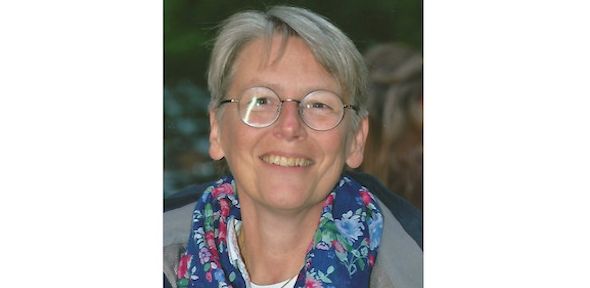
Dr. Cassandra Sampaio Baptista is a Lecturer at the University of Glasgow's School of Psychology & Neuroscience. Her research focuses on brain plasticity in adulthood, particularly exploring how experiences like skill learning or rehabilitation influence structural and functional changes in the brain. She employs neuroimaging techniques such as fMRI neurofeedback and MRI to investigate mechanisms of myelin and white matter plasticity. Her work emphasizes translational applications, including stroke rehabilitation and promoting healthy aging. Key contributions include demonstrating myelin's role in motor learning and developing MRI protocols for white matter analysis. She collaborates on projects funded by the BIAL Foundation (2025–2026) and has supervised multiple postgraduate students. Recent publications highlight studies on oligodendrocyte dynamics, neurofeedback interventions for stroke survivors, and cross-species neuroscience approaches. While no specific awards are listed, her extensive publication record reflects her leadership in neuroplasticity research.
Professor Sara Baker is a Professor of Developmental Psychology and Education at the University of Cambridge's Faculty of Education and a Fellow at Darwin College, where she served as Vice Master from 2021-2024. She is also a 2022 Senior Fellow in the Science of Learning with UNESCO-IBE/IBRO. Her work bridges cognitive science and educational practice, focusing on how children develop executive functions and self-regulation skills. Baker leads the Early Years Library project, co-founded the Research Centre for Play in Education, Development and Learning (PEDAL), and is a founding member of the Global Executive Functions Initiative. Sara Baker specializes in the science of learning, with research aimed at improving children's lives by identifying factors at home and school that support their agency over learning. Her work emphasizes developing executive functions and self-regulation through playful learning approaches. She uses lab-based experiments and collaborates with educators to translate cognitive science research into educational contexts. Her research spans multiple countries including the UK, USA, Mexico, Denmark, Slovakia, South Korea, Ghana, Rwanda, Nigeria, Kenya, South Africa, and more, reflecting a strong commitment to culturally relevant and globally applicable educational practices. Analysis of Professor Baker's recent publications reveals a strong focus on executive functions, self-regulation, and playful learning across diverse cultural contexts. Her work increasingly addresses cultural adaptation of assessment tools and educational practices, particularly for Global Majority countries. There's a clear trajectory from basic cognitive research toward practical applications in educational settings, with growing emphasis on teacher training, culturally relevant assessment, and the role of play in early childhood development. Her interdisciplinary approach connects developmental psychology, educational theory, and practical classroom applications. 2022 Senior Fellow in the Science of Learning with UNESCO-IBE/IBRO Professor Baker leads the doctoral program in the Faculty of Education and serves as an Academic Project Director in the School of Humanities and Social Sciences. She is the Cambridge academic lead on the Close the Gap partnership between Cambridge and Oxford, focused on postgraduate widening participation. Her research has been funded by prestigious organizations including the Newton Trust, Cambridge Humanities Research Grant, Economic and Social Research Council, LEGO Foundation, Nuffield Foundation, and Office for Students/Research England. She actively supervises doctoral students and seeks highly motivated candidates for October 2026 entry whose research aligns with her focus areas. Professor Baker co-founded and is actively involved with the Research Centre for Play in Education, Development and Learning (PEDAL), which investigates how children's play affects their development. She leads the Early Years Library project, a curated collection of evidence-based practices for early years educators, and is a founding member of the Global Executive Functions Initiative. Her work with the Connections international professional learning network focuses on self-regulation, while the Close the Gap project addresses widening participation in postgraduate education between Oxford and Cambridge.
Stephen Billings is an Associate Professor of Finance at the Leeds School of Business, University of Colorado Boulder, where he holds the Global Real Estate Capital Markets Chair position. He serves as the faculty director of the MS in Real Estate program and research director for the CU Real Estate Center. His work spans multiple research centers including the Center for Research on Consumer Financial Decision Making and the Michael A. Klump Center for Real Estate. Billings received his PhD in Economics from the University of Colorado, a MS in urban planning from the University of North Carolina, and a BS in economics from Georgetown University. Prior to joining CU Boulder in 2016, he was faculty at the University of North Carolina Charlotte with appointments in both economics and public policy, where he also served as faculty director for the real estate center. His research focuses on the intersection of housing, schools, neighborhoods and crime, addressing critical policy issues including the impact of public investment in light-rail transit on neighborhoods, school segregation's influence on academic achievement and crime, neighborhood gentrification causes, lead-based paint in low-income housing, and the effects of sea level rise and natural disasters on neighborhood sorting and household finances. Billings employs sophisticated analysis of large micro-datasets with studies based on data and policies in Charlotte, NC and Denver, CO. His work connects urban economics with public policy, demonstrating how neighborhood environments shape individual outcomes across multiple dimensions. Billings' recent publication record demonstrates a consistent focus on neighborhood effects, school choice impacts, crime economics, and housing market dynamics. His work frequently examines the intersection of race, housing, and economic outcomes, with particular attention to policy implications. He has developed innovative methodological approaches to studying residential amenities and neighborhood spillovers, with increasing attention to climate change impacts on housing markets. His research appears in top journals including The Quarterly Journal of Economics, American Economic Review: Insights, and Journal of Urban Economics. As an educator, Billings teaches undergraduate and masters classes in real estate finance and economics, as well as doctoral and masters level courses on cost-benefit analysis and statistical methods. He has extensive consulting experience conducting economic impact studies, including assessments of North Carolina's public higher education system, affordable housing needs in Colorado communities, and the economic effects of marijuana legalization on property markets. His practical policy work complements his academic research, creating a bridge between theoretical insights and real-world applications. Billings leads significant research initiatives through the CU Real Estate Center, where he directs studies examining the impact of business improvement districts and other urban development policies. His work bridges academic research with practical policy applications, making substantial contributions to our understanding of how housing, education, and neighborhood environments shape individual outcomes and community development. His December 2023 memo on the HUD Officer Next Door Program exemplifies his engagement with current housing policy issues.
Jeremy K Fox is Associate Professor of Psychology at Montclair State University's College of Humanities and Social Sciences, where he directs the RECAP (Research on Emotion, Coping and Anxiety in Pediatrics) laboratory. His research examines developmental pathways to childhood anxiety and depression. Education includes: PhD in Clinical Psychology, State University of New York at Albany MA in Psychology, State University of New York at Albany BA in Psychology, Johns Hopkins University Research focuses on temperament-environment interactions, emotion regulation deficits, and school-based interventions. Current work investigates parental influences on anxiety development and peer-supported treatment models for minority youth. Articles demonstrate consistent focus on improving mental health service accessibility. Leads graduate training in clinical psychology and mentors doctoral students in anxiety research. RECAP lab investigates affective mechanisms underlying adolescent distress and develops digital interventions for school settings.
Bernadka Dubicka is a Clinical Professor and Honorary Clinical Chair in the Division of Neuroscience at the University of Manchester. She holds dual roles as a research lead at Pennine Care NHS Foundation Trust and as the child and adolescent mental health research lead for Health Innovation Manchester. She is the Editor-in-Chief of the Journal of Child and Adolescent Mental Health and previously served as Chair of the Child and Adolescent Faculty at the Royal College of Psychiatrists (2017–2021). Her academic qualifications include a BSc in Psychology and MBBs from University College London, followed by FRCPsych accreditation in child psychiatry. She earned a gold medal for her MD thesis on behavioral disorder implications in depression. Dubicka’s research focuses on adolescent depression, mood disorders, and brief interventions, including the IMPACT and STADIA trials evaluating psychological treatments and standardized diagnostic assessments. Her work also addresses technology’s role in youth mental health and the eco-crisis’s mental health impacts. Education: BSc Psychology, University College London MBBs, University of London MD Thesis (Gold Medal), University College London FRCPsych, Royal College of Psychiatrists Her research spans depression treatment efficacy, behavioral activation, and cross-national studies on pediatric bipolar disorder. She collaborates internationally and has led over 49 publications. Awards include a gold medal for her thesis and recognition as an RCPsych Fellow. Her work also emphasizes policy advocacy, such as addressing digital rights for children and mental health responses to climate change (e.g., COP26 contributions). She trains clinicians in brief psychosocial interventions and behavioral activation through academic programs and national courses. Grants & Funding: Co-investigator on the £1.1M HTA-funded STADIA trial evaluating remote mental health assessments. Principal investigator on the IMPACT trial, one of the largest adolescent depression trials globally. Labs/Teams: Collaborations include the University of Cambridge (IMPACT trial), University of Nottingham (STADIA), and international taskforces on treatment-resistant depression.
Professor Valeska Ferrer Usó is a canon lawyer and theologian at Comillas Pontifical University, specializing in abuse prevention in ecclesiastical environments. She coordinates the UNIJES-funded Jordán research project (since 2021) and teaches subjects including 'Christianity and Social Ethics' and 'State Ecclesiastical Law' since 2022/23. Education: Doctorate in Canon Law (2022), Law Degree (2002), Ecclesiastical Studies (2012), Expert in Neuropsychology (2017), Specialist in Spiritual Exercises (2008). Her research focuses on canonical criminal law, restorative justice, and structural analysis of abuse mechanisms in religious institutions. Recent publications address procedural reforms, memory spaces for reconciliation, and interdisciplinary abuse prevention frameworks. She practices law at Madrid's Ecclesiastical Tribunal in marriage annulment cases and contributes to the Society of Jesus' Safe Environment System team (since 2024). Her work integrates theological, legal, and neuropsychological perspectives.
Dr. Tobias Hauser is a Professor of Computational Psychiatry at the University of Tübingen, Germany, and a Group Leader at the Max Planck UCL Centre for Computational Psychiatry and Ageing Research. His research spans clinical neuroscience, developmental psychiatry, and computational modeling, focusing on the neurocognitive mechanisms underlying psychiatric disorders like OCD and ADHD. MSc in Psychology (2010), University of Zurich PhD in Psychology (2014), University of Zurich Hauser's work employs a translational approach, integrating clinical, pharmacological, and basic neuroscience to characterize neural network deficiencies in mental health. His developmental perspective investigates how psychiatric symptoms emerge through deviations from canonical brain development trajectories. Recent publications highlight his focus on dopaminergic midbrain activity, frontostriatal myelination, and computational mechanisms of decision-making. These studies utilize techniques like fMRI, EEG, and computational modeling to explore compulsivity, impulsivity, and developmental neurocognitive processes. Sir Henry Dale Fellowship (Wellcome Trust & Royal Society) Research Fellowship (Jacobs Foundation) Kramer-Pollnow Award for ADHD research Hauser leads the Developmental Computational Psychiatry Group and co-founded the Brain Explorer app, a citizen science project investigating brain development and mental health. He actively seeks PostDocs and PhD students for collaborative research in computational psychiatry and cognitive neuroscience.
Shiri Azenkot is an Associate Professor at the Jacobs Technion-Cornell Institute at Cornell Tech and Cornell University, affiliated with the Information Science Department and Technion’s Computer Science Department. Her research focuses on accessibility innovations in emerging technologies, particularly addressing needs of people with vision impairments and neurodiverse populations. She holds a PhD from the University of Washington, advised by Richard Ladner and Jacob Wobbrock, and has been recognized with prestigious awards including the NSF Graduate Research Fellowship. Education: PhD in Computer Science & Engineering from University of Washington (advisors: Richard Ladner, Jacob Wobbrock). Research interests include VR/AR accessibility, assistive technology design, inclusive education tools, and ethical AI applications. Current projects explore social VR avatars for invisible disabilities, AR navigation aids, and AI moderation systems against ableist hate speech. Her work is funded by NSF, AOL, Verizon, and Facebook. Recent publications address video accessibility for ADHD users, AI-driven scene descriptions for blind users, and tactile learning materials co-designed with educators. She leads the XR Access initiative promoting inclusive virtual/augmented reality. Awards include the UW Graduate Medal (2020), NSF CRII Award (2017), and AT&T Labs Fellowship (2014). Her research bridges academic innovation with industry impact through collaborations with tech companies and disability advocacy groups.
Henriëtte Hendriks is a Professor in Language Acquisition and Cognition at the University of Cambridge, affiliated with the Faculty of Modern and Medieval Languages and Linguistics and the Theoretical and Applied Linguistics (TAL) department. She leads the Cambridge Processing and Acquisition of Language lab (CAMPAL) and serves as Deputy Director of the Centre for Lifelong Learning and Individualised Cognition (CLIC). Education: Sinology at Leiden University Early Career: Coordinator at Max-Planck Institute for Psycholinguistics (DFG/ESF projects) Her research explores how languages encode concepts (person, time, space, causality) and their impact on language acquisition. Key themes include: Cognitive Linguistics and Language-Cognition Interfaces First and Second Language Acquisition Mechanisms Multilingualism and Cognitive Flexibility Typological Variation in Semantic Structures Deictic Terms and Dynamic Space Representation Recent publications focus on motion event typology across English, German, French, and Uyghur, examining cross-linguistic influences in acquisition processes. Her work combines experimental methods with syntactic analysis to study semantic mapping and grammaticalization in multilingual contexts. Current projects include: Centre for Lifelong Learning and Individualised Cognition (CLIC) - Principal Investigator MEITS Project (Strand 5) - Co-Investigator Cambridge Language Sciences Incubator projects on cognitive pacing and parental linguistic contributions International DeicTeS project on deictic meaning processes Labs & Teams: Cambridge Processing and Acquisition of Language lab (CAMPAL) Collaborations with Zoe Kourtzi, Vicky Leong, and Clare Hughes
Armin Falk is a Professor of Economics at the University of Bonn, leading the BonnEconLab since 2004 and co-founding the briq Institute on Behavior & Inequality. He holds affiliations with the IZA, DIW, CEPR, and Max-Planck-Institut. His research focuses on behavioral economics, exploring how social preferences like fairness and trust influence decision-making, and investigates early childhood development's role in inequality. Falk has received prestigious awards, including the Leibniz Prize and Yrjö Jahnsson Award. His work combines lab experiments, field studies, and representative data analysis. Education includes a PhD in Economics from the University of Zurich after studies in Economics, Philosophy, and History at the University of Cologne. Key research highlights include global climate action support studies (Nature Climate Change, 2024), socioeconomic disparities in child development (JPE, 2021), and global economic preferences surveys (QJE, 2018). He co-authored the book *Warum es so schwer ist, ein guter Mensch zu sein* to popularize behavioral economics. Awards include recognition for contributions to behavioral and development economics. Mentoring programs like *Balu und Du* aim to reduce educational inequality. His work bridges academic research with public discourse through media contributions and policy engagement.
Xiaoyue Shan is an Assistant Professor of Economics at the National University of Singapore (NUS), located at 1 Arts Link, AS2 #05-36. She holds a Ph.D. in Economics from the University of Zurich (2021) and previously conducted postdoctoral research at the Wharton School of the University of Pennsylvania. Her research focuses on labor economics, behavioral/experimental economics, and gender economics, employing experimental and quasi-experimental methods to study topics like gender disparities, discrimination, social interactions, and skill development. Her work explores how peer groups influence personality traits (e.g., conscientiousness, competitiveness), discrimination mechanisms in labor markets, and the impact of policies on gender dynamics. Notable studies include examining sequential spillover effects in resume evaluations and analyzing pension systems' effects on child investment in China. Teaching interests align with her research, emphasizing behavioral and experimental economics. She is reachable at x.shan@nus.edu.sg .
Karin Allor Pfeiffer is a Professor in the Department of Kinesiology at Michigan State University (MSU) and Director of the Institute for the Study of Youth Sports. She holds additional membership in the Center for Physical Activity and Health. With a Ph.D. from MSU, her research focuses on physical activity measurement methodologies and population health interventions, particularly among children and adolescents. Her work addresses obesity prevention, environmental design impacts on activity levels, and sociocultural factors influencing youth sport participation. Education: Ph.D. in Kinesiology from Michigan State University Her research interests emphasize: - Quantitative methods for physical activity assessment - Schoolyard redesign strategies and their health impacts - Cardiometabolic risk factors in pediatric populations - Longitudinal tracking of physical fitness and health outcomes Recent work explores accelerometer fragmentation metrics, GPS-linked activity tracking, and disparities in sedentary behavior across demographic groups. She has pioneered interdisciplinary approaches integrating spatial analysis, wearable technology, and policy evaluation. Key contributions include developing the Observational System for Recording Physical Activity in Children and advancing consensus methods for accelerometer data interpretation. Her studies frequently highlight socioeconomic and environmental determinants of health behaviors. Dr. Pfeiffer collaborates with public health agencies and urban planners to translate research into actionable policies. Her lab focuses on scalable interventions for underserved communities, leveraging community-engaged methods to address greenspace accessibility and safety concerns.
Yvonne Rogers is a Professor of Interaction Design and Director of the UCL Interaction Centre (UCLIC), with a joint appointment as Deputy Head of the Department of Computer Science at University College London. She joined UCL in 2011 after holding professorships at the Open University (2006-2011) and Indiana University (2003-2006). Her pioneering work spans ubiquitous computing, interaction design, and human-computer interaction, with a current focus on human-centered AI. She co-authored the definitive 'Interaction Design' textbook (6 editions, 300,000+ copies) and serves as CTO of LetThink.com. Research interests center on designing technologies that enhance human cognition and daily activities: Ubiquitous Computing: Augmenting learning/work activities through pervasive technologies Human-AI Interaction: Developing AI systems that enhance human decision-making Health Technologies: Creating VR therapies and ADHD support systems Community Resilience: Designing tools for environmental monitoring and sustainable practices Publication analysis reveals three dominant trends: (1) VR applications for mental health (emotion regulation, ADHD support), (2) AI systems for cognitive augmentation, and (3) community-centered tools for healthcare/environmental challenges. Recent work demonstrates strong emphasis on vulnerable populations including children with ADHD, older adults, and postoperative patients. Major scientific recognition includes: International Member, National Academy of Engineering (2024) ACM SIGCHI Lifetime Research Award (2022) Royal Society Robin Milner Medal (2022) Royal Society Fellowship (2022) Microsoft Outstanding Collaborator Award MRC Suffrage and Science Award (2020) Triple Fellow status (ACM, BCS, CHI Academy) Advises PhD students including Leon Reicherts, Sheena Visram, and Tu Duong. Secured major grants including EPSRC Dream Fellowship on ageing/computing and led the Intel Collaborative Research Institute on Sustainable Connected Cities (2012-2018). Directs UCLIC research center and previously established the Pervasive Interaction Lab at Open University.
Elizabeth A. Simpson is an Associate Professor in the Department of Psychology at the University of Miami's College of Arts and Sciences. She serves as Associate Director of the Child Division and directs the Social Cognition Laboratory, focusing on infant social and cognitive development through interdisciplinary methodologies. Education: Ph.D. in Psychology (unspecified institution) Key Research Areas: Developmental Psychology, Autism, Social Cognition, Primate Studies, Visual Attention, Infant Behavior Her research investigates individual differences in infant visual attention, social motivation, and physiological markers like salivary oxytocin. Recent studies demonstrate: Stability of attentional patterns from newborn to 14 months Sex differences in early face detection Links between oxytocin levels and social affect in infants Neurophysiological markers in newborns later diagnosed with ASD Scientific awards include the NSF CAREER grant for neonatal imitation research. She contributes to open science initiatives through the ManyBabies consortium and develops remote eye-tracking methods for broader accessibility. Current lab work explores: Parent-infant affective interactions during still-face episodes Predictive power of early attentional biases Development of pathogen avoidance behaviors Cross-species comparisons of social cognition
Professor Marina Jirotka is a leading academic in Human-Centred Computing at the Department of Computer Science, University of Oxford, and a Governing Body Fellow at St Cross College. She directs the Responsible Technology Institute and leads interdisciplinary research on responsible innovation in AI, robotics, and digital systems. University: University of Oxford School: Department of Computer Science Position: Professor of Human-Centred Computing Leadership: Director, Responsible Technology Institute Fellowships: EPSRC Established Career Fellowship (RoboTIPS) Her research focuses on integrating ethical, societal, and human values into technology design. Key areas include responsible innovation, human-computer interaction, algorithmic accountability, and socio-technical systems. She explores trust, transparency, and governance in autonomous systems, digital mental health, and quantum computing ethics. Her recent publications reflect a strong trend in responsible robotics, explainable AI, digital wellbeing, and ethical governance. Articles emphasize interdisciplinary methods, stakeholder engagement, and practical tool development such as the Ethical Black Box and TrustScapes. Themes span autonomous vehicles, social robots, algorithmic bias, and sustainability in digital innovation. Excellence in Teaching Award, University of Oxford (2006) ESRC/SSRC Fellowship (2007) UCLA Scholar Award (2011) EPSRC Established Career Fellowship (2018, 2019) Vice Chancellor’s Innovation Award Highly Commended (2020) She supervises numerous PhD and Master’s students and leads major grants including RoboTIPS, RAILS, PARIS-DE, and Adolescent Mental Health in the Digital World. She co-directs ORBIT, a leading RRI training provider, and contributes to policy through advisory roles with the House of Lords, All-Party Parliamentary Groups, and industry consortia. She is a member of the IEEE P7000 working group and the UK Committee for IIASA. Her lab work involves interdisciplinary teams focused on responsible technology design, public engagement, and ethical tool development.