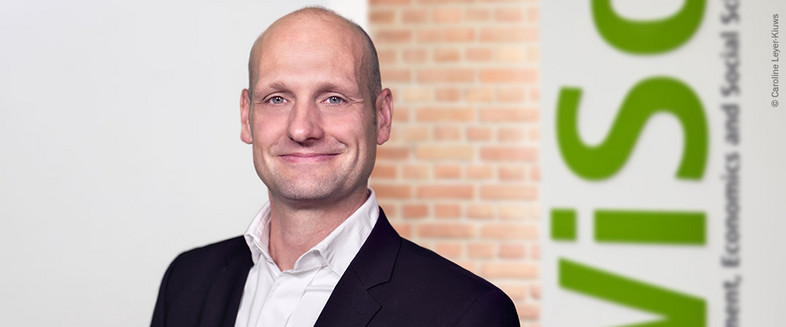
Hiroyuki Ishii is a Professor at Waseda University's School of Creative Science and Engineering, Faculty of Science and Engineering. With over 15 years of academic experience at Waseda University, he was promoted to full Professor in 2022 after serving as Associate Professor from 2016-2022. His research spans robotics, control systems, and mechanical engineering, with particular expertise in soft robotics and continuum manipulators. His educational background includes: Ph.D. from Waseda University (2004-2007) Master's degree from Waseda University Graduate School of Science and Engineering (2002-2004) Bachelor's degree from Waseda University School of Science and Engineering (1998-2002) Professor Ishii's research focuses on Robotics and Intelligent Mechanics and Mechanical Systems , with particular emphasis on soft robotics, continuum manipulators, and human-robot interaction. His work bridges theoretical control systems with practical applications in medical robotics, rehabilitation devices, and inspection systems. He has pioneered novel approaches in pneumatic actuation, growing robots, and bimanual continuum robot control, demonstrating exceptional creativity in solving complex mechanical challenges. His recent publications reveal a strong trend toward medical applications of robotics, particularly in surgical assistance and rehabilitation. There's also significant work on soft growing robots and continuum manipulators with innovative actuation mechanisms. His research shows increasing interdisciplinary collaboration, spanning mechanical engineering, computer vision, and biomedical applications. His notable awards include: Best Paper Award Finalist at IEEE ICMA2024 The Robotics Society of Japan 3rd Outstanding Research and Technology Award (2022) Minister of Education, Culture, Sports, Science and Technology Young Scientists Award (2018) Advanced Robotics Best Paper Award (2015) ICRA2014 Best Cognitive Robotics Paper Award Finalist Professor Ishii actively participates in research committees and professional societies, serving as Director of the Robotics Society of Japan since 2024. His research has received substantial funding through competitive grants, supporting his work on innovative robotic systems with practical applications in healthcare, infrastructure inspection, and human-robot collaboration. His laboratory develops specialized robotic systems including small mobile robots for animal interaction, soft growing robots, and continuum manipulators for surgical applications. The team combines mechanical design expertise with advanced control algorithms to create robots capable of operating in complex environments.