
Associate Professor Chandralal Hewage is a structural biologist at the School of Biomolecular and Biomedical Science, University College Dublin, with over 30 years of expertise in NMR spectroscopy. His research focuses on biologically active peptides for diabetes therapy, antimicrobial drug development, and liver disease metabolic studies. Research Interests: Structural analysis of diabetes-related peptides Design of GIP and endothelin receptor drugs NMR-based antimicrobial peptide studies Liver cell metabolic profiling in disease states Development of computational peptide modeling tools Scientific Contributions: Organizer of international conferences EUROMAR 2012 and ICMRBS 2018. Author of >100 publications. Developer of bioinformatics tools APPTEST and ENNAVIA for peptide structure/activity prediction. Professional Affiliations: ICMRBS Council Member European Peptide Society Council Member Chairman of Irish Peptide Society
جستوجوی استاد و پژوهشگر
استاد راهنما، استاد دانشگاه یا پژوهشگر مناسب برای مسیر پژوهشیتان را پیدا کنید و با او ارتباط بگیرید.
نمایش ۲۷۱-۲۸۵ از ۲۹۰ استاد راهنما
اطلاعات این پروفایلها از صفحات عمومی دانشگاهها جمعآوری شده و ممکن است بهروز نباشد.
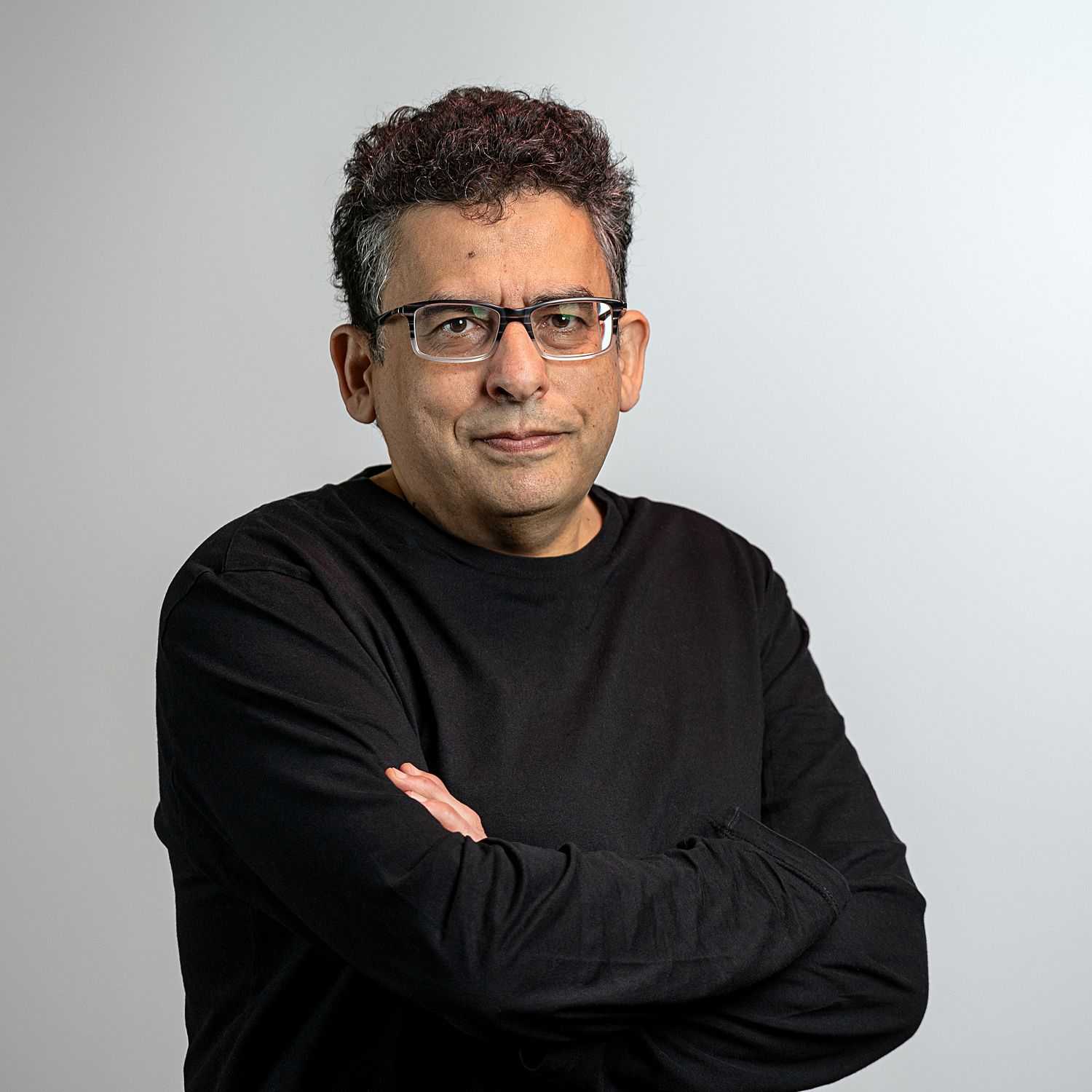
Tomás Fernández Pena is a Full Professor at the University of Santiago de Compostela (USC) and Senior Researcher at the Research Center in Intelligent Technologies (CiTIUS) . With a career spanning over three decades, he has held academic positions since 1990 and contributed extensively to High Performance Computing (HPC), Big Data, and emerging quantum computing fields. Ph.D. in Physics from USC (1994) Senior Member of IEEE Associate Editor for IEEE Transactions on Computers and IEEE Access Research Contributions : His work focuses on parallel systems architecture, cloud computing middleware, and quantum simulation optimization. He has pioneered methods for NUMA systems, LiDAR data processing, and Big Data applications in bioinformatics/cheminformatics. His recent articles show increasing emphasis on quantum computing frameworks and distributed quantum processing. Scientific Recognition : Holds four Spanish Ministry of Education six-year research excellence periods (sexenios de investigación) and has served as Principal Investigator in 3 public projects and co-investigator in 31 EU/Xunta de Galicia funded initiatives. Supervised 7 Ph.D. theses and published 43+ international journal papers. International Collaborations : Maintains academic connections through funded research stays at Loughborough University, University of Tennessee, and University of Illinois Urbana-Champaign. Active in IEEE and participates in global conferences like Euro-Par and CHEP.
Dr. Marília Dias Vieira Braga is an active researcher at the University of Bielefeld, holding appointments across multiple departments with primary affiliation in the Faculty of Engineering's Genome Informatics Group and the Center for Biotechnology (CeBiTec). She maintains active research connections with both the Algorithmic Cheminformatics Group and BiSEd members of the Faculty of Education, demonstrating interdisciplinary engagement across engineering, biotechnology, and educational domains. Her research interests focus on computational approaches to biological data analysis, particularly in genome informatics and algorithmic methods for cheminformatics. This work aligns with University of Bielefeld's strategic research area in The Material World , which examines structures and processes at the interfaces of physics, chemistry, biology and bioinformatics. Her expertise bridges theoretical computational methods with practical biological applications, contributing to the university's emphasis on interdisciplinary research that transcends traditional academic boundaries. Dr. Dias Vieira Braga works within CeBiTec (Center for Biotechnology), one of Bielefeld's Central Academic Institutes that pursues research on an interdisciplinary basis by combining expertise from multiple faculties. Her position situates her within the university's strong tradition of collaborative research, particularly in areas connecting mathematics, computer science, and biological sciences.
Juri Kolcakمشاهده پروفایل
پژوهشگر
Dr. Juri Kolcak is a researcher at Bielefeld University, holding dual affiliations with the Faculty of Engineering and the Center for Biotechnology (CeBiTec) . He is an active member of the Algorithmic Cheminformatics Group, which operates across both institutional units, indicating interdisciplinary work at the intersection of computer science and chemical sciences. His research focuses on cheminformatics and computational approaches to chemical data analysis . The Algorithmic Cheminformatics Group specializes in developing algorithms for chemical structure analysis, molecular modeling, and bioinformatics applications. His work likely involves creating computational methods to process and analyze complex chemical datasets, bridging engineering principles with biochemical applications. Dr. Kolcak maintains an office at UHG U10-128 with direct contact number +49 521 106-5298. While currently listed in the university directory, the system notes that he does not yet have a formal research profile in the university's FIS portal, suggesting he may be relatively new to his position or still developing his independent research program. The Algorithmic Cheminformatics Group operates as a collaborative unit between engineering and biotechnology domains, indicating Dr. Kolcak works in an environment that emphasizes interdisciplinary research connecting computer science methodologies with chemical and biological applications. His position within this specialized group suggests expertise in both algorithmic development and chemical domain knowledge.
Caterina Fraschetti is a researcher at the Department of Pharmaceutical Chemistry and Technology, Sapienza University of Rome, Italy. She specializes in analytical chemistry, computational spectroscopy, and pharmaceutical applications of natural products. Teaches General and Inorganic Chemistry, Analytical Chemistry, and Organic Chemistry Focuses on food chemistry, medicinal plant analysis, and drug formulation Applies computational methods to study molecular systems like ionic liquids Her research spans functional foods (pomegranate, sour cherry), antibiofilm agents (lentisk oil nanoemulsions), and epigenetic drug discovery (KAT8 inhibitors). Publications highlight collaborations between pharmaceutical chemistry and biological applications. She is involved in multidisciplinary projects exploring pi-anion interactions in gas-phase molecular systems and integrating mass spectrometry with computational platforms for anion coordination studies.
Aftab Ahmedمشاهده پروفایل
پژوهشگر
Dr. Aftab Ahmed is a Research Associate Professor and Core Laboratory Manager at the School of Pharmacy, Chapman University , and an Adjunct Professor at the University of Karachi . His expertise spans Proteomics, Protein & Peptide Chemistry, and Plant-Based Bioactives , with a focus on cancer therapeutics and computational materials science . Education : University of Karachi (B.Sc., M.Sc., Ph.D. in Protein Chemistry) Max-Planck Institute of Biochemistry (Ph.D. research on hemoglobin structure) Research Interests : Profiling bioactive proteins and peptides from medicinal plants using purification, characterization, and sequencing techniques (FPLC/HPLC, mass spectrometry). Computational investigations of dye-sensitized solar cells and photovoltaic materials. Scientific Contributions : Authored 45+ peer-reviewed publications and 40+ conference abstracts. Established core research facilities at Chapman University and the University of Rhode Island. Worked on retroviral proteins (HTLV-1, BLV) and human fibrinogen at NCI and UC Irvine.
- Organic Chemistry
- Pharmacology
- Medicinal Chemistry
- +۳ مورد دیگر
John Boulos is a Professor of Chemistry at Barry University. He earned his Ph.D. and M.Phil. in Organic Chemistry from the Graduate School of CUNY and a B.A. in Chemistry from Queens College-CUNY. Ph.D. in Organic Chemistry, Graduate School of CUNY (1991) M.Phil. in Organic Chemistry, Graduate School of CUNY (1990) B.A. in Chemistry, Queens College-CUNY (1985) His research focuses on synthesizing functionally selective muscarinic agonists and antagonists for treating neurodegenerative diseases like Alzheimer's, Parkinson's, Schizophrenia, and COPD. He has contributed to computational studies on receptor conformations and drug design. Recent publications highlight his work on muscarinic receptor-targeted therapies, particularly M2-selective agonists and non-competitive antagonists, using molecular modeling and synthetic chemistry to advance treatments for neurological disorders. Scientific Awards: The Apple Award (2003) Outstanding Teaching Award (1995) He has secured patents for bitopic muscarinic ligands and mentored students in research symposiums. His professional memberships include the American Chemical Society and Gamma Sigma Epsilon Chemistry Honor Society.
Jan Halborg Jensen is a Professor in the Department of Chemistry at the University of Copenhagen, with a distinguished research career in computational chemistry and molecular modeling. His work spans quantum chemistry, cheminformatics, and machine learning applications in chemical research, with significant contributions to drug design, catalyst discovery, and chemical reaction prediction. His primary research interests focus on Computational Chemistry , Molecular Modeling , and Quantum Chemistry , with particular expertise in applying machine learning techniques to chemical problems. Jensen's research integrates computational methods with practical chemical applications, including retrosynthesis planning, catalyst design, and drug discovery. His work bridges theoretical chemistry with practical applications in organic synthesis and pharmaceutical development. Analysis of Jensen's recent publications (2023-2025) reveals a strong focus on machine learning applications in chemistry, particularly for predicting chemical reactivity, designing catalysts, and advancing drug discovery. His work demonstrates increasing integration of artificial intelligence with traditional computational chemistry methods, with significant contributions to cheminformatics, transition metal chemistry, and biomolecular simulation standards. The research spans theoretical developments and practical applications across organic chemistry, biochemistry, and materials science. Jensen maintains an active research program with extensive publication output, including 88 research contributions comprising journal articles, book chapters, and books. His work shows strong collaborative networks across computational chemistry and related fields. He has presented on educational technology topics, including a lecture titled "Make a difference - teach and learn with technology" in April 2018, demonstrating engagement with pedagogical developments alongside research activities. His online presence includes a professional blog (molecularmodelingbasics.blogspot.com) and comprehensive CV documentation.
Maria Harris Rasmussenمشاهده پروفایل
پژوهشگر ارشد
Maria Harris Rasmussen is a Postdoctoral Researcher in the Department of Chemistry at the University of Copenhagen, where she conducts cutting-edge research at the intersection of computational chemistry, cheminformatics, and artificial intelligence. Her work focuses on developing and applying computational methodologies to solve complex chemical problems, with particular emphasis on reaction discovery, molecular representation, and catalyst design. Her research interests span multiple domains of computational chemistry, with primary focus on Cheminformatics where she develops algorithms for molecular representation including SMILES notation for transition metal complexes. In Quantum Chemistry , she investigates photoinduced electron transfer processes and reaction mechanisms using advanced simulation techniques. Her work in Machine Learning for Chemistry includes developing explainable AI methods for molecular property prediction and uncertainty quantification in chemical data sets. She also contributes significantly to Catalysis Research through computational approaches for de novo catalyst discovery and reaction screening. Analysis of her publication record reveals strong trends in developing computational tools that bridge theoretical chemistry with practical applications. Her recent work shows increasing integration of machine learning with traditional quantum chemical methods, particularly in the areas of reaction space exploration and catalyst discovery. The interdisciplinary nature of her research connects chemistry with computer science, physics, and data science, reflecting the evolving landscape of modern computational chemistry. Maria maintains active research collaborations with prominent scientists including Jensen J.H., Mikkelsen K.V., and several international researchers as evidenced by her publication record. Her computational methodologies have gained attention across academic and research communities, with multiple publications receiving significant readership on platforms like Mendeley and social media engagement.
Julius Johannes Seumerمشاهده پروفایل
پژوهشگر ارشد
Julius Johannes Seumer is a Postdoctoral Research Fellow in the Department of Chemistry at the Faculty of Science, University of Copenhagen. His research focuses on computational approaches to catalyst design and chemical synthesis optimization, with expertise in quantum mechanics simulations and evolutionary algorithms. His primary research interests include computational chemistry, catalysis, quantum chemical modeling, and machine learning applications in chemical synthesis. Key areas involve regioselectivity prediction, transition metal complex analysis, nitrogen fixation catalysts, and automated synthesis planning using genetic algorithms. Analysis of his recent publications reveals strong trends in computational catalyst discovery, particularly using genetic algorithms for exploring chemical space beyond traditional libraries. His work spans organic, inorganic, and physical chemistry domains with emphasis on Morita-Baylis-Hillman reactions, C-H activation, and dinitrogen fixation. Seumer collaborates extensively with Professor Jens H. Jensen and other researchers at the University of Copenhagen, with publications appearing in high-impact journals including Angewandte Chemie , Chemical Science , and Beilstein Journal of Organic Chemistry . His computational methodologies have garnered attention across academic networks, with citations in Scopus and engagement on platforms including X (Twitter), Bluesky, and Mendeley. His work demonstrates significant interdisciplinary impact across chemistry and computational sciences.
Kana Shimizu is a Professor at Waseda University’s Faculty of Science and Engineering, School of Fundamental Science and Engineering, and a leading authority on privacy-preserving algorithms for genome and biomedical data. Since obtaining her Dr.Eng. from Waseda, she has held positions at AIST and a visiting investigator role at Memorial Sloan-Kettering Cancer Center, advancing to full Professor at Waseda in 2018. Education: Dr.Eng., Waseda University M.Eng., Waseda University (Dept. of Information Science) B.Eng., Waseda University (School of Science and Engineering) Research Interests: Prof. Shimizu integrates cryptography with life-science data analytics, developing homomorphic encryption and secret-sharing protocols that enable secure genome search, private chemical database queries, and privacy-preserving machine learning. She also contributes to computational biology through algorithms for next-generation sequencing, structural bioinformatics, and prediction of intrinsically disordered proteins. Publication Trends: Her recent works (2022-2024) emphasize practical privacy technologies—secure range queries, function secret sharing, and gradient-clipping for synthetic genomes—while earlier high-impact papers established fast similarity search (SlideSort), binding-site databases (PoSSuM), and encrypted genomic search using the Burrows-Wheeler transform, collectively bridging algorithmic innovation and real-world biomedical privacy needs. Scientific Awards: KDDI Foundation Achievement Award 2022 MEXT Commendation for Science and Technology (Research) 2018 Multiple best-paper/demo awards at CSS, IIBMP, and domestic bioinformatics meetings Grants & Advising: She currently leads JSPS KAKENHI (S) on “Compressed Secure Computation for Large-Scale Data” and an AMED project on precise cancer-genome graphs. She serves as advisor/evaluator for JST PRESTO, AMED, NBDC, and the Tokyo High Court, and has supervised numerous bachelor theses at Waseda. Labs & Teams: Prof. Shimizu heads a laboratory within the School of Fundamental Science and Engineering at Waseda, collaborating with national centers (AIST, RIKEN) and international partners (MSKCC, Finland Tekes/AF), focusing on encrypted bioinformatics platforms and high-performance genomic algorithms.
Mahdi Vasighiمشاهده پروفایل
استادیار
Mahdi Vasighi is currently serving as an Assistant Professor at the Department of Computer Science and Information Technology, Institute for Advanced Studies in Basic Sciences (IASBS) in Zanjan, Iran, a position he has held since February 2012. Prior to this, he was a Post-doc Researcher at the same institution from February 2011 to February 2012. He has also served as a Visiting Researcher at the Milano Chemometrics and QSAR Research Group, University of Milano - Bicocca, Milan, Italy from September to October 2009, and as a Guest Lecturer at the Pasteur Institute, Tehran, Iran since September 2016. Dr. Vasighi earned his educational qualifications from the Institute for Advanced Studies in Basic Sciences (IASBS) in Zanjan, Iran, where he completed his Ph.D. in Chemometrics in May 2010 and his M.Sc. in Analytical Chemistry between 2002 and 2005. His undergraduate education was in Pure Chemistry at Imam Khomeini International University, Qazvin, Iran, from 1998 to 2002. Dr. Vasighi's primary research interests lie at the intersection of bioinformatics, machine learning, and data analysis. His work focuses on structural bioinformatics, particularly on modeling relationships between biological sequences and their corresponding structure or function. He has made significant contributions to the field of self-organizing maps with dynamic structure, developing innovative approaches like the Directed Batch Growing Self-Organizing Map (DBGSOM) that enhance topology preservation and visualization of high-dimensional data. His research spans multiple domains including protein structural classification, cancer diagnostics using fluorescence spectroscopy, and drug discovery for diseases like COVID-19. Dr. Vasighi's publication record demonstrates a strong trajectory in applying machine learning techniques to solve complex problems in bioinformatics and medical diagnostics. His recent work shows an increasing focus on applying computational approaches to healthcare challenges, including cancer detection, protein analysis, and drug discovery for viral diseases. He has successfully bridged the gap between theoretical machine learning advancements and practical applications in biology and medicine, with a particular emphasis on developing interpretable models that can be used by domain experts. Dr. Vasighi has actively contributed to the academic community through teaching and conference organization. He has served as Local Chair for the International Conference on Contemporary Issues in Data Science 2019 (CiDaS 19) and as Scientific Committee Member and Organizing Chair for previous CICIS conferences. His teaching portfolio includes graduate courses in Artificial Neural Networks, Computational Data Mining, Bioinformatics, Statistical Pattern Recognition, and Multimedia Systems. Dr. Vasighi has supervised numerous MSc students, with over twenty graduated students and nine current students listed in his profile. His research has been supported through collaborations with institutions like the Pasteur Institute, where he worked on projects related to nuclear magnetic resonance-based screening of thalassemia and determination of coronary heart disease risk using NMR spectra of plasma lipoproteins. Through his Directed Batch Growing Self-Organizing Map (DBGSOM) package and other software contributions, Dr. Vasighi has made his research tools accessible to the broader scientific community. His work continues to push the boundaries of how machine learning can be applied to solve challenging problems in bioinformatics and medical diagnostics.
- Bioinformatics
- Computational Biology
- RNA Biology
- +۴ مورد دیگر
Peter Florian Stadler is a Professor of Bioinformatics at the University of Leipzig since 2002 and Director of the Interdisciplinary Center for Bioinformatics (IZBI) since 2023. He holds affiliations with the Max Planck Institute for Mathematics in the Sciences (scientific member since 2009), the Austrian Academy of Sciences (corresponding member since 2010), and the Santa Fe Institute (external member since 1994). Doctorate in Chemistry (University of Vienna, 1990) Habilitation in Theoretical Chemistry (University of Vienna, 1994) His research focuses on Bioinformatics , Computational Biology , and Evolutionary Dynamics , with specific interests in RNA structure prediction , non-coding RNA , and genome-wide data analysis . Recent work involves developing ViennaRNA Package tools and studying translational control mechanisms in melanoma. Professional milestones include: Co-development of Vienna RNA Package , FRANz (phylogenetic tree reconstruction), code2aln (alignment tools) Key contributions to RNA gene finding algorithms and ncRNA family characterization Honors: Corresponding member, Austrian Academy of Sciences (2010) Honorary professor, Faculty of Science, Bogota (2018)
Julia Westermayrمشاهده پروفایل
استادیار
- Machine Learning in Computational Chemistry
- Theoretical Chemistry
- Excited-State Molecular Dynamics
- +۱۰ مورد دیگر
Junior Professor Dr. Julia Westermayr leads the Theoretical Chemistry of Materials Design group at the Wilhelm-Ostwald-Institute for Physical and Theoretical Chemistry (Leipzig University). Her interdisciplinary research bridges machine learning , quantum chemistry , and materials science to advance molecular simulations and reaction mechanism discovery. Academic rank: Assistant Professor (Junior Professor) Research focus: AI-driven excited-state dynamics, interatomic potentials, CO₂ conversion, and photocatalysis Key collaborators: Bell Flavors & Fragrances GmbH, ScaDS.AI, TU Berlin, University of Vienna Her team develops transferable ML models for nonadiabatic molecular dynamics , enabling long-timescale simulations of photodriven processes at metal surfaces and solvent environments . Recent work includes equivariant neural networks for UV absorption spectra and generative AI for molecular design . The group actively trains PhD students like Daniel Bitterlich, Peter Fichtelmann, and Robin Curth, while hosting international researchers from institutions like Bologna and Vienna. Research trends span Computational Chemistry (15/15 articles), with subfields including Excited-State Nonadiabatic Dynamics , Interatomic Potential Modeling , Photochemistry , Semiconductor Design , Reaction Mechanism Discovery , and ML-Augmented Quantum Simulations . The group participates in major scientific collaborations (DFG Cluster of Excellence, ScaDS.AI) and industry partnerships (Bell Flavors & Fragrances GmbH). They host regular research stays (e.g., Sascha Mausenberger from Vienna) and student internships , while maintaining active presence at conferences like PsiK2025 .
Justin Teeguardenمشاهده پروفایل
پژوهشگر ارشد
Justin Teeguarden is a Lab Fellow at Pacific Northwest National Laboratory (PNNL) and serves as Chief Science Officer for the Environmental Molecular Sciences Laboratory (EMSL) User Program. He holds a joint appointment in the Department of Environmental and Molecular Toxicology at Oregon State University, where he leads the NIH Superfund research program. With a PhD in Toxicology (University of Wisconsin-Madison, 1999) and BS in Biochemistry (UC Davis, 1990), his research integrates computational modeling, toxicology, and exposure science. His work focuses on three core areas: 1) Computational modeling of chemical transport and biological interactions; 2) Nanoparticle fate and toxicity paradigms; and 3) Quantitative assessment of environmental estrogens in humans. This spans interdisciplinary domains including nanotoxicology, pharmacokinetics, and molecular epidemiology. Teeguarden's publications emphasize mechanistic toxicology, computational dosimetry, and multi-omics approaches. Recent work explores circadian biology, aerosol toxicity, and high-throughput exposure assessment, frequently employing advanced mass spectrometry and computational frameworks. As PI of the NIH Superfund program, he coordinates translational research on environmental contaminants. He maintains extensive professional service, including EPA advisory roles, National Academies committees, and editorial positions for Computational Toxicology and Nanotoxicology .