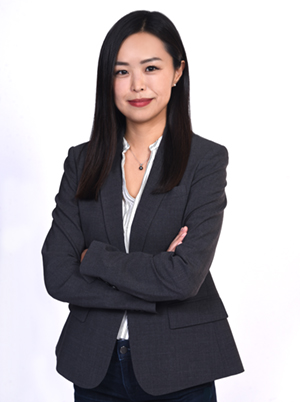
Seunghyun Sim is an Assistant Professor at the University of California, Irvine (UCI), leading the Sim Lab. His research focuses on interdisciplinary materials science, biotechnology, and polymer chemistry, with an emphasis on creating biohybrid systems, programmable materials, and catalytic platforms using engineered bacterial spores and synthetic polymers. Key areas include supramolecular hydrogels, stress-tolerant biocatalysts, and dissipative living materials driven by chemical fuels. His work bridges synthetic biology, nanotechnology, and soft matter physics to design adaptive and responsive materials with applications in healthcare, environmental sustainability, and industrial biocatalysis. Dr. Sim’s lab develops innovative materials through dynamic covalent chemistry and protein engineering, such as coiled-coil protein interactions for macroscopic assembly and Janus GroEL systems for sequence-controlled polymerization. His research also explores underwater adhesives, 3D-printable cellular composites, and nanoantibiotics leveraging orthogonal binding motifs. These projects highlight a commitment to creating sustainable, recyclable, and autonomously renewable materials. His publications span topics from bacterial spore-programmed polymer degradation to elastic droplet networks, demonstrating a focus on both fundamental material science and practical applications. While no specific awards or grants are listed, his work reflects active engagement in high-impact, cross-disciplinary research.
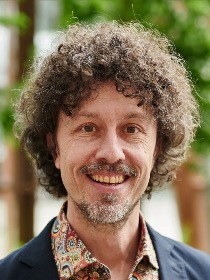
Alexander Deiters is a Distinguished Professor of Chemistry at the University of Pittsburgh where he serves as founding Director of the Institute for Synthetic Biology. He joined the University of Pittsburgh in September 2013 after previously serving as a Full Professor at North Carolina State University. His research spans chemical biology, synthetic chemistry, and optochemical biology with applications to understanding and treating human diseases including cancer, neurological disorders, and viral infections. Deiters received his education in Germany, studying Chemistry at the University of Münster from 1993-1998, where he earned both his diploma degree (1998) and doctoral degree (2000). He completed postdoctoral work at the University of Texas at Austin (2001) and The Scripps Research Institute (2002-2004) before beginning his independent career at NC State University in 2004. Professor Deiters' research program focuses on developing novel chemical tools to elucidate biological processes. His multidisciplinary work combines synthetic organic chemistry, nucleic acid chemistry, biochemistry, and photochemistry to create optochemical tools that enable external control of biological processes with high spatial and temporal resolution. Key research directions include the development of light-activated proteins through synthetic biology approaches, photocaged oligonucleotide chemistry for controlling gene function, and small molecule inhibitors of the microRNA pathway for potential therapeutic applications. His lab consists of students and researchers with diverse backgrounds in multiple scientific disciplines working together to engineer DNA, RNA, and proteins with new functions. His recent publications demonstrate a continued focus on optochemical control of biological systems, with significant contributions in genetic code expansion, light-activated therapeutic agents, and novel approaches to controlling cellular signaling pathways. The work spans multiple model systems including mammalian cell culture, zebrafish embryos, and Xenopus laevis, with applications in cancer research, virology, and immunology. Editorial Board of Scientific Reports, Springer Nature Group (2016-) Editorial Advisory Board of ChemBioChem, Wiley-VCH (2016-) Charles E. Kaufman Foundation New Initiative Research Grant (2014) American Cancer Society Research Scholar Award (2011) National Science Foundation CAREER Award (2009) Beckman Young Investigator Award (2007) March of Dimes Foundation Basil O'Connor Starter Scholar Award (2006) Professor Deiters has trained over one hundred graduate students, postdocs, and undergraduates in his laboratory. His research has been supported by numerous grants from federal agencies including NIH and NSF, as well as private foundations. He serves as faculty advisor to the University of Pittsburgh's iGEM teams and has co-founded Monarch Therapeutics. Several compounds and reagents developed in his lab are commercially available, and his technologies have been licensed to biotech companies including Coeptis Therapeutics. His work has significant therapeutic potential, particularly in developing fundamentally new therapeutic agents through small molecule targeting of cellular pathways. The Deiters Lab at the University of Pittsburgh brings together students and researchers with diverse backgrounds in synthetic organic chemistry, nucleic acid chemistry, biochemistry, analytical chemistry, chemical engineering, and functional genomics. The lab maintains active collaborations with researchers at the Hillman Cancer Center, the Molecular Biophysics and Structural Biology Program, the Medical Scientist Training Program, and the Center for Systems Immunology at the University of Pittsburgh, as well as the Center for Nucleic Acids Science & Technology at Carnegie Mellon University.
Prof. Paolo Pescarmona is a Full Professor in Catalysis & Sustainability at the University of Groningen, Netherlands. He leads research in green chemistry, catalytic materials for CO2 utilization, electrocatalysis (including green hydrogen production), and photocatalysis. His roles include Programme Director of the Master in Chemical Engineering and leadership positions in the Dutch Zeolite Association (DZA) and Dutch Catalysis Society (DCS). He has extensive experience in designing catalysts for industrial applications and sustainable processes. His research focuses on heterogeneous/homogeneous catalysis, CO2 fixation into carbonates, biomass conversion, and nanomaterial development. He has secured significant funding through projects like D-Carbonize (MSCA) and HydroHub, involving collaborations with industries and institutions worldwide. He teaches courses on catalysis design, green chemistry, and industrial organic chemistry, and has been recognized as Teacher of the Year (2017-18). Prof. Pescarmona’s work aligns with UN SDGs 7 (Affordable Energy), 9 (Industry), 12 (Sustainable Consumption), and 13 (Climate Action). His lab develops novel materials like zeolite beads, metal borides, and photocatalysts for environmental and energy applications. Key innovations include CO2-based polypropylene carbonates and efficient electrocatalysts for hydrogen production.
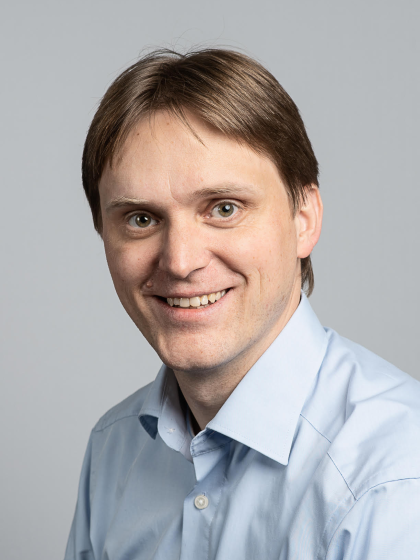
Richard Hildner is an Associate Professor at the University of Groningen's Faculty of Science and Engineering, leading the Optical Spectroscopy of Functional Nanosystems group at the Zernike Institute for Advanced Materials. His research focuses on optical and electronic properties of functional nanosystems, including conjugated polymers and supramolecular structures, using advanced spectroscopic techniques like single-molecule microscopy and ultrafast spectroscopy. He has held positions at the University of Bayreuth (Germany) and the Institute of Photonic Sciences (ICFO, Spain), and earned a PhD in Experimental Physics from the University of Bayreuth (2007). His work explores energy transport, light propagation, and quantum coherence in nanomaterials, with applications in nanophotonics and energy conversion. Notable achievements include developing quantum coherence spectroscopy for single molecules and optimizing energy transport in supramolecular architectures. He has been recognized with the Michael D. Sturge Prize and Teacher of the Year in the Nanoscience Master programme. Research interests include: optical spectroscopy of functional nanosystems, exciton dynamics, polymer self-assembly, and nanostructure design. His teaching roles include courses on nanophotonics, laser physics, and materials characterization.
Frank Niklaus is a Professor at KTH Royal Institute of Technology, specializing in Micromanufacturing within the Department of Micro and Nanosystems. His research focuses on developing flexible micro- and nanoscale manufacturing technologies for industrial and medical applications, including MEMS, photonics integration, and 3D printing. He explores novel fabrication methods like femtosecond laser processing, wafer bonding, and additive manufacturing to create advanced microsystems. His work emphasizes scalable production strategies for sensors, energy storage devices, and biomedical applications. Niklaus leads projects in silicon photonics, nanoelectromechanical systems (NEMS), and integrated microfluidic platforms. He teaches courses on microsystem technology and advises on degree projects in electrical engineering and nanotechnology. His contributions bridge academic research with industrial needs, aiming to enhance Sweden's competitiveness in micro/nano manufacturing. Education details are not explicitly stated in the provided texts. His research spans interdisciplinary areas such as materials science, photonics, and sensor development. Key projects include gas sensing using mid-IR waveguides, ultrafast 3D printing of glass and polymers, and energy-efficient nanoelectromechanical relays. Collaborations involve developing vacuum-sealed photonic MEMS and graphene-based sensors. His work has been published in high-impact journals like ACS Nano , Nature Communications , and Optics Express . Research Interests: MEMS, Nanotechnology, Silicon Photonics, Additive Manufacturing, Gas Sensing, Energy Harvesting Courses Taught: Microsystem Technology (EK2350), Degree Project Supervision in Electrical Engineering and Nanotechnology His lab focuses on creating innovative microsystems through advanced fabrication techniques, with applications in environmental monitoring, biomedical devices, and programmable photonics. Current projects explore programmable photonic circuits using MEMS and low-cost infrared imaging sensors.
Mikko Heikkilä is a Doctoral Researcher at the University of Helsinki , affiliated with the Department of Chemistry and the Doctoral Programme in Materials Research and Nanosciences . He also serves as a Lab Engineer in the HelsinkiALD research infrastructure. Research Interests: His work focuses on Atomic Layer Deposition (ALD) , Thin Film Synthesis , and Materials Characterization for applications in energy, electronics, and environmental technologies. Techniques include high-temperature XRD/XRR, in situ wafer curvature measurements, and coherent Raman spectroscopy. Recent Publications highlight advancements in superconductive materials, photoanode optimization, and waste-derived functional materials, reflecting interdisciplinary trends in Chemistry of Materials , ACS Omega , and Chemical Engineering Journal . Labs & Teams: Heikkilä is a key operator in the HelsinkiALD laboratory, contributing to atomic-scale material processing and characterization.
Annmary Anto is a Doctoral Researcher affiliated with the Department of Chemistry at the University of Helsinki's College of Science. She is also part of the Doctoral Programme in Materials Research and Nanosciences. Education: Master of Science in Chemistry, Central University of Kerala Her research interests span chemical sciences, materials research, nanotechnology, and atomic layer deposition techniques in surface chemistry. Projects: Participating in the Putkonen project (2024–2027) funded by Jane ja Aatos Erkon säätiö Academic Activities: Attendee at AVS 24th International Conference on Atomic Layer Deposition (ALDALE 2024)
Alexey Ganzhinov is a Doctoral Researcher affiliated with the Department of Chemistry at the University of Helsinki, Finland. He is part of the Doctoral Programme in Materials Research and Nanosciences, contributing to advanced materials synthesis and nanoscale engineering. Research Focus: Chemical vapor deposition, transition metal oxides, thin film characterization Collaborations: Active network in materials science, with international research partnerships In 2024-2027, he participates in the project JAES-1/2024-12/2027-Putkonen funded by Jane ja Aatos Erkon säätiö. His 2025 publication in the Journal of Vacuum Science & Technology demonstrates expertise in atomic layer deposition techniques.
Valtteri Mikko Antero Lasonen is a Doctoral Researcher at the Department of Chemistry, University of Helsinki, affiliated with the Doctoral Programme in Materials Research and Nanosciences. His research focuses on chemical sciences, particularly in polymer etching via catalytic processes, as evidenced by his peer-reviewed publications in Chemistry of Materials . He participated in the MAM2025 – Materials for Advanced Metallization Conference in March 2025 as an attendee, collaborating with senior researchers like Mikko Ritala. His work explores advanced techniques for area-selective etching of polymers such as poly(lactic acid) and poly(methyl methacrylate), utilizing catalytic hydrogenolysis and decomposition methods. These studies contribute to material synthesis and thin film fabrication, with applications in nanotechnology and surface engineering.
Anton Vihervaara is a Doctoral Researcher affiliated with the Doctoral Programme in Materials Research and Nanosciences at the University of Helsinki. His work focuses on advanced thin film synthesis techniques and materials engineering. University: University of Helsinki Program: Doctoral Programme in Materials Research and Nanosciences Email: anton.vihervaara@helsinki.fi Research Interests: Anton's research intersects chemical sciences and materials engineering, with emphasis on: Atomic Layer Deposition (ALD) chemistry and methodology Thin film technology for superconductive and catalytic materials Surface engineering and nanomaterials Photoanode materials for renewable energy applications Sustainable synthesis approaches Plasma and thermal etching processes Recent Publications highlight his contributions to atomic layer deposition of functional materials, including superconductive niobium carbonitride, Ti x Fe 2- x O 3 photoanodes, and recyclable palladium-based thin films. His work spans experimental optimization, process development, and materials characterization for next-generation technologies.
Prof. Dr. John Bessant is Professor of Innovation and Entrepreneurship at Friedrich-Alexander-Universität Erlangen-Nürnberg and University of Exeter. He is co-Director of the EPSRC/AIM collaborative programme and holds a PhD in innovation within the chemical industry. His career includes positions at Aston's Technology Policy Unit, University of Sussex, and Brighton University where he directed the Centre for Research in Innovation Management. Research interests focus on discontinuous innovation, high-involvement innovation strategies, and diffusion of innovation through learning networks. He has advised governments and international bodies including the UN, World Bank, and OECD. Awards: Fellowship with the Advanced Institute for Management Research (2003) Fellow of the British Academy of Management (2003) He has authored 15 books including 'Managing Innovation' and 'High Involvement Innovation'.
Esat Alpay is a Professor and Associate Dean (Education) at the University of Surrey, within the Faculty of Engineering and Physical Sciences. He holds a BSc (Hons) in Chemical Engineering from the University of Surrey and a PhD from the University of Cambridge. Additionally, he earned an MA in Psychology of Education (with distinction) from the Institute of Education (UCL). His research focuses on enhancing educational practices in engineering, particularly in transferable skills development, inclusive education, formative assessment, and the integration of gamification and virtual reality. He is a Senior Associate Editor of the European Journal of Engineering Education and a Fellow of the Higher Education Academy (HEA). Alpay's work has been recognized with awards, including a Best Paper at the 3rd International Symposium for Engineering Education (2010). He also contributes to the PhD transferable skills programme for the Helmholtz Association in Germany. His teaching responsibilities include courses such as Advanced Chemical Reaction Engineering, Chemical Thermodynamics, and Engineering Dynamics. He acts as a tutor for final-year design projects, emphasizing hands-on, interdisciplinary learning. In terms of academic service, he actively promotes scholarship in Engineering Education Research and collaborates with institutions like the Instituto de Inovação e Gestão de Desenvolvimento de Produto (IGDP). His research and administrative roles reflect a commitment to advancing pedagogical innovation and student development within engineering disciplines.
Professor Davide Mattia holds the position of Professor in the Department of Chemical Engineering at the University of Bath. He leads the Sustainable Membrane Manufacturing and Processes Group, addressing climate challenges through innovations in sustainable membrane-based separation processes. His research spans three core areas: development of novel nanomaterials for membrane fabrication, sustainable large-scale manufacturing, and environmentally sustainable industrial processes. Key research interests include: Energy-efficient separation technologies 3D printing of advanced membranes Green solvent applications Cellular agriculture manufacturing Photocatalytic water treatment Professor Mattia leads major research initiatives including the EPSRC Programme Grant SynHiSel (2022-2027) focused on highly selective membranes for energy-efficient separations, and the CARMA Hub (2023-2030) developing sustainable food production through cellular agriculture. His work has led to the spin-off company Naturbeads Ltd. commercializing biodegradable cellulose microspheres. His recent publications demonstrate strong focus on sustainable material development, 3D printing applications in separation technology, and photocatalytic degradation of environmental contaminants.
Johan Berg Pettersen is an Associate Professor in the Industrial Ecology Programme at the Norwegian University of Science and Technology (NTNU), affiliated with the Department of Energy and Process Engineering and the Faculty of Engineering. He holds adjunct positions at several Norwegian universities and has over 20 years of experience in life cycle assessment (LCA) and sustainable engineering. His research focuses on circular economy and sustainable production/consumption systems, particularly in metallurgy (e.g., silicon and aluminum processes), waste valorization, and consumer goods durability. Collaborations include Sintef Energy, the Department of Materials Science and Engineering, and international projects like the FME ZeMe center for zero-emission metal production. He leads studies in Energy and Sustainability at NTNU and manages the MSc program in Industrial Ecology, including the International MSc in Industrial Ecology (MSINDECOL). Key projects include SisAl Pilot (low-impact silicon production), LASTING (durability of consumer goods), and CircWtE (circular municipal waste systems). Teaching spans undergraduate sustainability concepts, graduate LCA methods, and applied sustainability courses across marine resources, aquaculture, and process industries. Supervision includes PhD candidates researching waste management, metallurgical innovation, and LCA applications, plus numerous master’s students addressing topics like textile recycling, smartphone refurbishment, and food waste impacts. He actively contributes to policy debates on circular economy transitions and environmental governance in Norway. His work emphasizes interdisciplinary approaches to environmental sustainability, combining technical innovation with behavioral and cultural change to achieve equitable ecological transitions.
Dimitris Paraskevopoulos is an Associate Professor (Reader) in Operations and Supply Chain Management at Bayes Business School, City, University of London. He holds a Chemical Engineering degree from the National Technical University of Athens, an MBA, and a PhD in Operational Research from the Athens University of Economics and Business. His research focuses on developing optimization methods for complex problems in manufacturing, service operations, and transportation logistics, including project scheduling, vehicle routing, and network design. He has developed decision support systems for industries and received international awards for his research. Teaching excellence has been a hallmark of Paraskevopoulos’ career, recognized through awards such as a Mary Tasker Award nomination and participation in the International Teachers Programme (ITP) at CEIBS. He teaches Business Analytics, Machine Learning, and Operations Management across MBA and executive education programs at Bayes. He previously served as Course Director for MSc programs in Operations and Supply Chain Management at the University of Bath and Bayes. Paraskevopoulos’ research contributions include over 20 peer-reviewed journal articles in top-tier journals such as Production and Operations Management , European Journal of Operational Research , and Transportation Research Part E . His work explores combinatorial optimization, scheduling algorithms, and metaheuristics. He has led projects funded by EPSRC and collaborated with institutions like the University of Southampton and Athens University of Economics and Business.