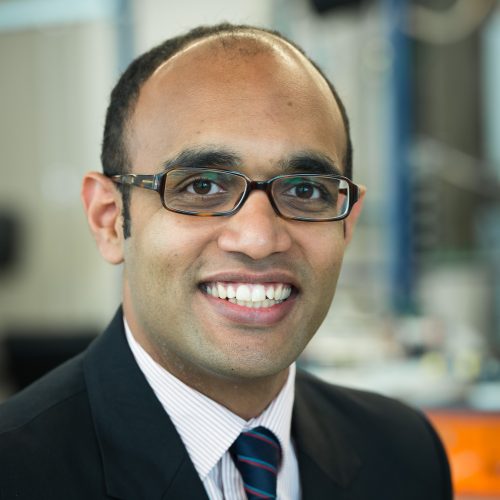
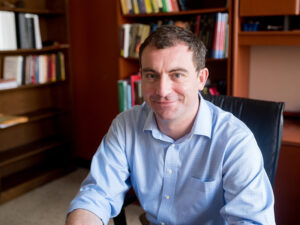
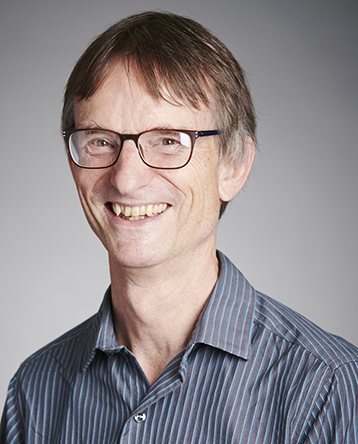
Dr Henry Moss is a Researcher at the Department of Applied Mathematics and Theoretical Physics within the School of Physical Sciences at the University of Cambridge. His work focuses on machine learning applications in climate modeling, Bayesian optimization, and Gaussian processes, bridging computational mathematics with environmental science and chemistry. His research interests include: Bayesian optimization for environmental and chemical systems Reinforcement learning in climate modeling Gaussian processes for molecular property prediction High-throughput machine learning in scientific domains Interpretable AI for coastal flooding prediction Hybrid ML-physics modeling Dr Moss's publications highlight his contributions to federated learning for climate models, sparse Gaussian process techniques, and multi-objective optimization frameworks. These works span applications in weather prediction, chemical engineering, and oceanography. Email: hwm26@cam.ac.uk
Vikramaditya G. Yadav is an Associate Professor at the University of British Columbia (UBC) in the Department of Chemical and Biological Engineering, Faculty of Applied Science. He directs the Master of Engineering Leadership (MEL) Program in Sustainable Process Engineering and leads the BioFoundry research group. Education: B.A.Sc., University of Waterloo (2007) Ph.D., Massachusetts Institute of Technology (2013) Postdoctoral Associate, Harvard University (2014) His research spans sustainable chemical manufacturing, metabolic engineering, and biotechnology. Key areas include: Designing biosynthetic enzymes for biomass valorization Developing bioremediation strategies for industrial water quality Creating innovative drug delivery systems and tissue engineering solutions Advancing synthetic biology for pharmaceutical and bioenergy applications His recent work focuses on ocular drug delivery, cannabinoid biosynthesis in E. coli, lignin-based nanoparticles for cancer therapy, and computational analysis of plant secondary metabolites. Collaborations with start-ups, industry, and medical labs drive innovation in Canada's bioeconomy. Professional Leadership: Chair, Biotechnology Division of the Chemical Institute of Canada Associate Editor, The Canadian Journal of Chemical Engineering He is affiliated with UBC's BioProducts Institute and contributes to project-based learning pedagogy.
Michael McAlpine is a Professor in the Mechanical Engineering department at the University of Minnesota . He also holds affiliations with the Biomedical Engineering and Electrical and Computer Engineering departments. His research focuses on 3D printing functional materials & devices , Nanoscale inks , Biomedical devices , Bioelectronics , and Flexible Microsystems . Research Interests : 3D Printing, Biomedical Engineering, Nanotechnology, Flexible Electronics, Microfluidics Labs : ME 361/363 Contact : mcalpine@umn.edu , (612) 626-3303, ME 117 Recent Research Trends include 3D Printed Biomedical Devices , Flexible Electronics , and Bioprinting Applications . His work spans from Spinal Organoid Formation to Programmable Drug Release Capsules . Scientific Award : Circulation Research 2020 Best Manuscript Award
Mark Foster is an Associate Professor in the Department of Electrical and Computer Engineering at Johns Hopkins University, with a primary appointment in the Whiting School of Engineering. He is also a Fellow of the Hopkins Extreme Materials Institute. His research focuses on developing ultrahigh-speed optical systems at the intersection of photonics and electronics, emphasizing photonic devices and information theory to advance imaging, sensing, and communications technologies. Applications include quantum-optical systems, ultrawide-bandwidth microwave photonics, and terahertz-rate imaging systems. Dr. Foster received his BS (2003), MS (2007), and PhD (2008) in Applied and Engineering Physics from Cornell University. Before joining Johns Hopkins in 2010, he served as a postdoctoral associate there. His work has been funded by the NSF, IARPA, DTRA, and NIH, resulting in over 200 publications and eight patents. He has held leadership roles, including chairing the IEEE Photonics Society’s Baltimore chapter (2011–2014). Research Highlights: World-leading imaging systems achieving terahertz frame rates Quantum-optical platforms and nonlinear photonic materials (e.g., NbTiOx) Secure authentication via physically unclonable functions (PUFs) Applications in fusion energy diagnostics and medical imaging His awards include the NSF CAREER Award (201?), DARPA Young Faculty Award, and ONR Young Investigator Award. Current projects explore machine learning-resistant PUFs, multi-modal imaging systems, and photonics for extreme environments.
Zhanwei Wang is an Unpaid employee at the Department of Applied Mechanics and the Federated labs AI and Robotics at Vrije Universiteit Brussel. His research focuses on soft robotics, self-healing materials, fluid dynamics, and vacuum technology. He holds a PhD in Mechanical Engineering from VUB (2024), focusing on encoding physical intelligence into soft robotics via smart materials and continuum mechanics. Prior degrees include a Master's in Chemical Process Equipment (Northeastern University, China, 2020) and a Bachelor's in Process Equipment and Control Engineering (Northeastern University, China, 2017). His work emphasizes interdisciplinary innovation in robotics, sustainability, and material science. Key Research Areas: Self-healing robots, 3D printing for robotics, fluid dynamics in soft systems. Recent Collaborations: Peer reviews for Sensors Journal, IEEE Robotics & Automation Letters, and the 2025 IEEE/RSJ IROS conference. His publications explore adaptive robotic systems, sensor integration, and sustainable material solutions. He participated in the IMEC ITF World 2024 conference and contributed to media discussions on self-locking suction cups for robots.
Aberham Hailu Feyissa is an Associate Professor at the National Food Institute of the Technical University of Denmark , specializing in process modeling and sustainable food engineering. His research bridges complex transport phenomena with practical food manufacturing challenges. Ph.D. in Food Process Engineering, Technical University of Denmark MSc in Food Science, K.U.Leuven and Universiteit Gent BSc in Chemical Engineering, Bahir Dar University His work focuses on coupled mass and heat transfer during solid food processing, aiming to develop robust first-principles models for predictive process optimization. Key applications include Ohmic heating , digital twin technology , and bioactive ingredient extraction . Recent publications highlight his contributions to sustainable food processes , including insect-based feed modeling , seaweed bread kinetics , and clean-label cheese formulation . His methodological innovations span FTIR spectroscopy , computational fluid dynamics , and kinetic modeling . Supervisor for PhD students S. S. Turgut , M. E. Jabali , and Dahal S. Principal Investigator for projects like Modelling and Digitalisation of Food Processes and Sustainable Extraction of Bioactive Insect Fractions Active in conference presentations and peer review , he drives advancements in food process understanding through mechanistic modeling and mathematical simulation .
Michael Baldea is an Associate Professor in the Department of Chemical Engineering at the University of Texas at Austin . He holds a Ph.D. in Chemical Engineering from the University of Minnesota (2006), with prior degrees from 'Babeş-Bolyai' University in Romania (M.Sc. 2001, Diploma 2000). His research group develops theoretical and computational methods for Process and Energy Systems Engineering , focusing on integrated decision-making, performance optimization, and process intensification with industrial validation. Education: Ph.D., Chemical Engineering, University of Minnesota (2006) M.Sc., Interface Process Engineering, 'Babeş-Bolyai' University (2001) Diploma, Chemical Engineering, 'Babeş-Bolyai' University (2000) Research Thrusts: Integrated decision-making in chemical/energy supply chains Process performance monitoring and optimization Process integration and intensification Key applications include grid-responsive chemical plants, intensified distillation/column designs, and renewable energy integration for building systems. Scientific Awards: Frank A. Liddell, Jr. Fellowship NSF CAREER Award (2015-2020) Moncrief Grand Challenges Faculty Award (2014) AIChE Outstanding Young Researcher Award (2017) Implementation : His group has translated research into commercial tools through partnerships with industrial test beds and is working to integrate methods into commercial simulators. They explore predictive approaches for building energy management and strategic capital investment analysis in next-generation energy systems.
Carlos G. Levi is a Research Professor in the Department of Materials at the University of California, Santa Barbara (UCSB), part of the College of Engineering. He holds the additional title of Professor Emeritus. His research focuses on microstructure evolution in inorganic materials, particularly in the design of advanced coatings, composites, and alloys for extreme environments. He has contributed significantly to thermal barrier coatings, ceramic matrix composites, and high-temperature alloys for aerospace and energy applications. Education: Ph.D. in Metallurgical Engineering, University of Illinois at Urbana-Champaign (1981) M.Sc. in Metallurgical Engineering, University of Illinois at Urbana-Champaign (1977) Degree in Chemical Engineering, Universidad Autonoma de Nuevo Leon, Mexico (1972) Research Interests: Levi’s work addresses challenges in structural materials, including advanced thermal/environmental barrier coatings resistant to molten silicates, ceramic matrix composites, hypersonic materials, and high-temperature alloys such as multi-principal element alloys. His studies explore degradation mechanisms, phase stability under extreme conditions, and novel synthesis techniques like vapor-mediated melt infiltration. Awards and Honors: 2014 TMS Morris Cohen Award 2012 Fellow of the American Ceramic Society 2008 NIMS Award (shared) for breakthroughs in materials science for energy/environment 2004 DLR Wissenschaftspreis (collaborative paper) 2002 Alexander von Humboldt Research Prize Advising and Grants: No formal student advisees are listed, though his research group likely includes graduate students/postdocs. Grant details are not specified in the provided texts. Labs/Teams: Levi’s research is conducted within UCSB’s Materials Department, leveraging advanced characterization tools (e.g., TriBeam tomography) and computational modeling to study material behavior under extreme conditions.
Hugo de Lasa is a Full Professor at the Department of Chemical and Biochemical Engineering, Faculty of Engineering, University of Western Ontario. He holds a Bachelor in Chemical Engineering (1968) from Universidad Nacional del Sur, Argentina, and a Doctoral degree (1971) from Université de Nancy, France. Research Focus: Catalysis, Photocatalysis, Chemical Reactor Engineering, Fluidization, Biomass Gasification Awards: Research Excellence Prize (1998), Fellow of the Chemical Institute of Canada (2000), Medal of Research and Development (2000), Doctor Honoris Causa (2004, 2018) His work spans chemical reactor design , photocatalytic hydrogen production , and fluidized bed technologies . Recent publications highlight machine learning applications in chemical equilibrium modeling and CO2 capture using microalgae. He founded the Chemical Reactor Engineering Centre (CREC) and Recat Technologies Inc. , a university spin-off commercializing reactor innovations. Awards include the Vanguard Award (2019) and Commemorative Issue in Catalysts Journal (2020). His research has generated 389 peer-reviewed publications , 14 patents , and over 10,000 citations .
Cherie Kagan serves as the Stephen J. Angello Professor at the University of Pennsylvania, holding primary appointment in the Department of Electrical and Systems Engineering within the School of Engineering and Applied Science, with secondary appointments in Chemistry and Materials Science and Engineering. Her interdisciplinary research bridges chemistry, materials science, and electrical engineering to develop novel functional materials and devices that integrate optical, electrical, magnetic, mechanical, and thermal properties. Professor Kagan's research group combines the flexibility of chemical synthesis and bottom-up assembly with top-down fabrication techniques to design innovative nanomaterials. They employ advanced characterization methods including spatially- and temporally-resolved optical spectroscopies, AC/DC electrical measurements, electrochemistry, and various microscopy techniques. Her recent work demonstrates particular strength in colloidal nanocrystals and quantum dots for applications in quantum information science, sensing technologies, and energy conversion devices. Scientific Recognition Induction to the American Academy of Arts and Sciences (2025) IEEE Fellow (2024) for contributions to colloidal nanocrystals and their integration in optical and electronic devices George H. Heilmeier Faculty Award for Excellence in Engineering (2024-25) Humboldt Research Award Fellowship (2024) MRS Fellow for distinguished research accomplishments in materials science National Academy of Inventors Fellow for innovation in nanomaterials Professor Kagan actively mentors PhD students across multiple departments, with recent graduates including Gary Chen, Chavez Lawrence, and Shobhita Kramadhati. Her research is supported by significant grants including the IoT4Ag project focused on precision agriculture sensing systems. She maintains active collaborations with Nobel Laureate Moungi Bawendi, her former PhD advisor at MIT, and works with institutions including the Max-Planck Institute for Chemical Physics of Solids through her Humboldt Fellowship. The Kagan Research Group operates comprehensive facilities for nanomaterials synthesis, characterization, and device fabrication, combining expertise across chemistry, physics, and engineering disciplines. Current team members include PhD students from Electrical and Systems Engineering and Chemistry departments, postdoctoral researchers like Anamika Singh and Akhila Mallavarapu, and undergraduate researchers supported through programs like CURF.
Arthur Merkel is a Research Fellow in the Department of Food Science at the University of Copenhagen, specializing in membrane and electromembrane processes for the dairy industry. His research focuses on electro-chemical membrane systems, including electrodialysis and bipolar membrane electrodialysis, for applications in dairy processing and sustainable food production. His primary research interests include membrane technology for dairy science, particularly in the areas of whey processing, electro-acidification, and demineralization. He investigates fouling and scaling of ion-exchange membranes and promotes green and sustainable science in food engineering. His work bridges fundamental electrochemical processes with industrial dairy applications. Recent publications (2021-2025) demonstrate a strong trend in applying electrodialysis and bipolar membrane electrodialysis to dairy streams such as skim milk and whey, with a focus on improving process efficiency, valorizing byproducts, and addressing challenges like fouling and scaling. His research integrates experimental and modeling approaches to optimize membrane processes for sustainable dairy production. Merkel actively contributes to the scientific community through peer review for several journals: Desalination Separation and Purification Technology Future Foods He is a member of the European Membrane Society and the Czech Membrane Platform, and has participated in conferences including EuroMembrane 2022 and the European Membrane Summer School (2024).
Wengong Jin is an Assistant Professor at the Khoury College of Computer Sciences, Northeastern University, and a visiting research scientist at the Eric and Wendy Schmidt Center at the Broad Institute. He holds a PhD from MIT CSAIL, advised by Prof. Regina Barzilay and Prof. Tommi Jaakkola. Research Interests: His work focuses on geometric and generative AI models for drug discovery, biology, and chemical engineering. Key areas include equivariant neural networks (e.g., FAFormer), diffusion models for binding energy prediction, antibody/enzyme design (RefineGNN, SurfPro), and molecular design through graph neural networks (Junction Tree VAE). He also explores domain generalization and systems for autonomous molecular discovery. Publications: His research has been published in top venues like NeurIPS, ICLR, ICML, Nature, Science, and Cell. Recent breakthroughs include discovering novel antibiotics using explainable AI and designing synergistic drug combinations for cancer treatment. Awards: He has received the BroadIgnite Award, Dimitris N. Chorafas Prize, and MIT EECS Outstanding Thesis Award for his contributions to computational biology and AI-driven drug discovery. Teaching: Currently teaches a PhD seminar on AI for Science, focusing on integrating machine learning into scientific discovery processes.
Connor Coley is the Henri Slezynger (1957) Career Development Assistant Professor at the Massachusetts Institute of Technology (MIT) School of Engineering. His research bridges chemistry and machine learning, focusing on autonomous molecular discovery, predictive chemistry, and laboratory automation. Education: Ph.D., MIT (2019) M.S.CEP., MIT (2016) B.S., Caltech (2014) Research Interests: Dr. Coley’s work centers on domain-informed machine learning for chemistry, computer-aided molecular design, and autonomous laboratories. Key themes include predictive modeling of chemical reactivity, optimization of synthesis pathways, and integration of AI with experimental data for drug discovery and materials science. Publications: His recent articles highlight advancements in AI-driven reaction prediction, molecular representation learning, and laboratory automation. Trends include applications of Bayesian optimization, contrastive learning, and diffusion models to chemical discovery. Scientific Awards: Camille Dreyfus Teacher-Scholar Award (2025) James W. Swan Outstanding Faculty (2025) Schmidt Futures AI2050 Early Career Fellow (2022) NSF CAREER Award (2021) Forbes 30 Under 30: Healthcare (2019) Software & Tools: He leads the open-source ASKCOS software suite for synthesis planning, adopted by 35,000+ chemists and deployed at 15+ pharmaceutical companies. His team also develops tools for metabolomics and molecular representation learning.
Anthony Rollett is a Professor in the Department of Materials Science and Engineering at Carnegie Mellon University , where he has been a faculty member since 1995. He serves as the Principal Investigator and Co-Director of the NASA-supported Institute for Model-Based Qualification & Certification of Additive Manufacturing (IMQCAM) and co-director of the Next Manufacturing Center . Prior to CMU, he held leadership roles at Los Alamos National Laboratory (1991-1995). Education: Ph.D., Materials Engineering, Drexel University (1987) MA, Metallurgy and Materials Science, Cambridge University (1977) Research Interests: Rollett’s work focuses on microstructural evolution and microstructure-property relationships in 3D using experiments and simulations. His expertise spans additive manufacturing , metal 3D printing , materials for energy systems , grain growth , recrystallization , and stereology , with techniques like high-energy diffraction microscopy (HEDM) and dynamic x-ray radiography (DXR) . Scientific Contributions: He has over 320 peer-reviewed publications and an h-index >80 . His recent articles highlight machine learning for laser processing , fatigue analysis of additively manufactured alloys, and design optimization for heat exchangers in supercritical CO2 and solar thermal applications . Scientific Awards: Fellow of ASM International (1996) Fellow of the Institute of Physics (UK) (2004) Fellow of The Minerals, Metals & Materials Society (TMS) (2011) Cyril Stanley Smith Award (TMS, 2014) Member of Honor, French Metallurgical Society (2015) US Steel Professor (2017) Francqui International Professor (2020-2021) International FAME Award (2023) Leadership & Impact: Rollett co-led the development of a NASA Space Technology Research Institute for additive manufacturing and established a new master’s program in additive manufacturing (2018). His research group is funded by industry , federal agencies , and Pennsylvania state grants . He also serves on the Basic Energy Science Advisory Committee and Defense Programs Advisory Committee for the Department of Energy.
Min Hu is an Assistant Professor in the Department of Economics, Philosophy, and Political Science at the University of British Columbia, Okanagan Campus. He holds an adjunct position at Dalhousie University's School of Health Administration. His primary research focuses on Health Economics, Applied Microeconomics, and Labour Economics, with an emphasis on vulnerable populations in Canada, Indigenous health, income inequalities, and cancer economics. He teaches courses in Microeconomics, Health Economics, and Statistics. Education: PhD in Economics (2019), Dalhousie University; Postdoctoral Fellowship in Health Economics (2019–2020), Dalhousie University. Previous degrees include an M.A. (2014–2016) and B.A. in Economics from Dalhousie University. Research interests include the socio-economic determinants of health disparities, particularly among Indigenous peoples and immigrants, and the economic impacts of cancer-related policies. He employs applied econometric methods to analyze labor market outcomes and social policy effectiveness. His recent articles explore sustainable biomass utilization, energy policies, and environmental engineering innovations. Key themes include biomass supply chain optimization, CO₂ reduction strategies, and waste-to-energy technologies. Scientific Awards: Recipient of SSHRC New Frontiers Grant (2023–2026), CIHR Team Grant (2024–2026), and multiple UBC startup grants. His work is supported by SSHRC, CRDCN, and Indigenous Services Canada. He advises students in Economics and Global Studies (IGS) programs. Grants and funding span health economics, Indigenous well-being, and sustainable energy systems. Collaborations include interdisciplinary teams in health administration and environmental policy. Labs/Teams: Engaged with UBC's Okanagan Sustainability Initiatives and Dalhousie's Health Economics Research Group. Affiliated with professional organizations like the American Economic Association and Canadian Health Economics Study Group.