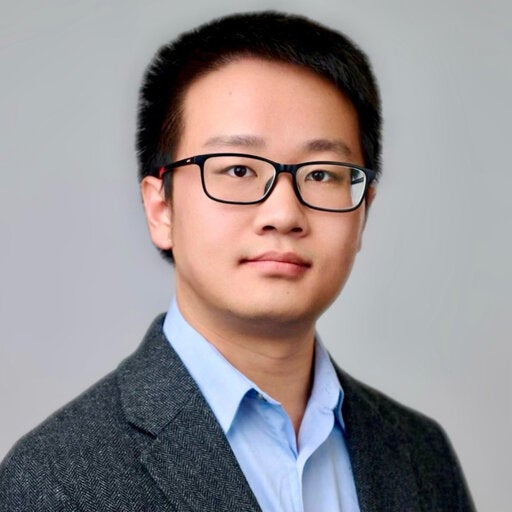
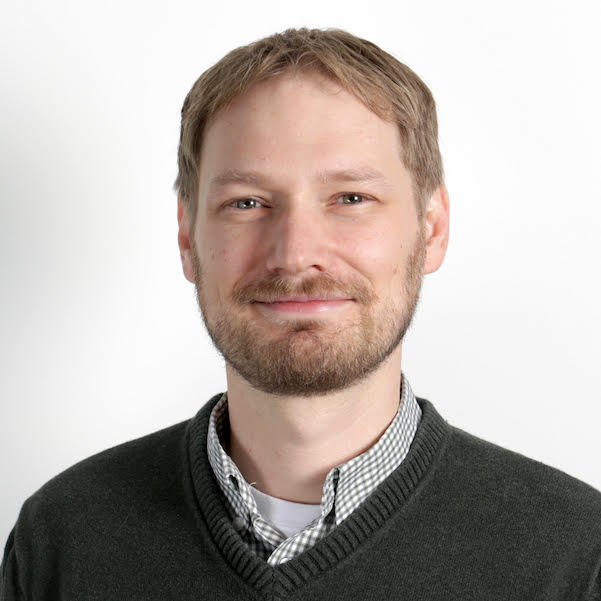
Dr. Peichen Zhong is an Assistant Professor in the Department of Materials Science and Engineering at the National University of Singapore (NUS). He leads the Applied Machine Learning and Materials Modeling (AM³) Group, focused on advancing computational methods for clean energy technologies. His research integrates machine learning with atomistic simulations to tackle challenges in battery materials, disordered materials, and sustainable energy systems. Education: B.S. in Physics from University of Science and Technology of China (2018); Ph.D. in Materials Science from UC Berkeley (2023, advised by Prof. Gerbrand Ceder); Postdoctoral training at Lawrence Berkeley National Lab and BIDMaP, co-advised by Persson, Cheng, and Krishnapriyan. Research Interests: Computational modeling of battery cathodes/electrolytes, AI-driven interatomic potentials, statistical mechanics in disordered materials, and generative models for scientific discovery. Key areas include Li/Na-ion batteries, solid-state reactions, and sustainable energy materials. Awards: BIDMaP Emerging Scholar Fellowship (UC Berkeley CDSS, 202?), 2023 Rising Stars in Materials Science (CMU/MIT/Stanford). Labs/Teams: The AM³ Group at NUS MSE focuses on interdisciplinary research combining theory, computation, and AI4Science. Current openings include PhD students and postdoctoral researchers.
William Chueh is a Professor in the Departments of Materials Science and Engineering and Energy Science & Engineering at Stanford University. He serves as Director of the Precourt Institute for Energy and Faculty Director of the Energy Innovation and Emerging Technologies Program. His research focuses on redox-active materials for energy storage, conversion, and carbon-neutral energy cycles. Education: PhD, Materials Science, Caltech (2010) BS, Applied Physics, Caltech (2005) Research Interests: Energy storage and conversion systems (batteries, fuel cells, electrolyzers) Multi-scale electrochemical and chemical reaction dynamics Materials design rules for redox-active solids Thermodynamic frameworks for sustainable energy Publication Trends: His work spans fundamental materials synthesis, electrochemical characterization, and modeling of redox reactions. Key themes include solar thermochemical cycles, ceria-based systems for CO2/H2O conversion, and advanced battery technologies. Scientific Honors: Outstanding Young Investigator Award (MRS, 2018) Camille Dreyfus Teacher-Scholar Award (2016) Sloan Research Fellowship (2016) CAREER Award (NSF, 2015) Advising: He advises students in energy technologies, materials science, and electrochemistry, including doctoral and master’s candidates. Contact: wchueh@stanford.edu
Professor Thomas Bein is affiliated with the Department of Chemistry at Ludwig-Maximilians-Universität München (LMU) , where he leads the Functional Nanosystems research group. His work focuses on synthesizing and characterizing nanostructured materials with applications in energy, catalysis, and biomedical delivery. Mesoporous nanoparticles for drug delivery Semiconductor nano-morphologies for photovoltaics Photoelectrochemical water splitting Metal-organic frameworks (MOFs) Electroactive networks His research emphasizes atomic-scale control of material architectures using self-assembly, hydrogen bonding, and covalent interactions, enabling precise tuning of electronic, optical, and catalytic properties. A review of his recent publications reveals cutting-edge investigations into covalent organic frameworks (COFs), perovskite-inspired solar materials, and functional nanoparticle systems. Key trends include optimizing energy conversion efficiency, enhancing stability in optoelectronic devices, and exploring bio-compatible nanocarriers for targeted therapies. Professor Bein’s group actively contributes to interdisciplinary projects at the intersection of chemistry, physics, and biomedical engineering, with ongoing collaborations in solar energy, sustainable materials, and nanomedicine.
Professor CHEN Wei (National University of Singapore) holds the Provost's Chair Professorship (2023-2026) and serves as Vice-Dean (Research) with joint appointments in the Departments of Chemistry and Physics. His research focuses on molecular-scale interface engineering for 2D materials-based devices and interface-controlled nanocatalysis in energy/environmental applications. PhD in Material Science, NUS (2004) Lee Kuan Yew Research Fellow (2006-2008) Established Surface and Interface Lab (2009) Director, NUS Research Institute (Fuzhou) His work on 2D optoelectronic memory (Nat. Comm. 2018), Kagome lattice design (Nano Lett. 2020), and single-atom catalysis (Nat. Comm. 2021) has been recognized by multiple high-impact publications and the Clarivate Highly Cited Researcher status (2017-2021). Awards include the NRF Investigatorship (2023) , Mitsui Chemicals-SNIC Industry Award (2020) , and Singapore Young Scientist Award (2012) . Grants from NUS, Singapore MOE, CREATE/CRP programs, and A*STAR support his exploration of interface engineering for neuromorphic computing and energy-efficient nanocatalysts . Current projects include monolayer blue phosphorus synthesis and solid electrolyte interphase engineering for lithium batteries.
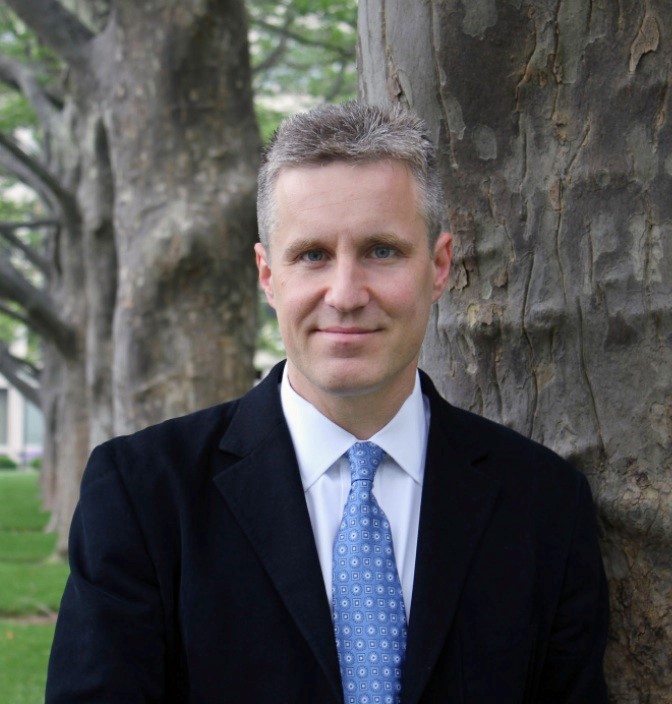
Gilbert Fridgen is Full Professor in Digital Financial Services and holder of the PayPal-FNR PEARL Chair at the University of Luxembourg's Interdisciplinary Centre for Security, Reliability and Trust (SnT). He leads the FINATRAX research group focusing on blockchain, digital identity, and sustainable digital solutions. His research explores decentralized technologies in finance, energy systems, and public administration. Current projects investigate blockchain applications in industrial demand response, NFT markets, EU digital identity wallets, and DeFi institutional adoption. Prof. Fridgen examines the intersection of technology with regulatory frameworks and user behavior in energy and financial systems. He collaborates extensively with industry partners including PayPal and Spuerkeess. Prof. Fridgen actively contributes to EU digital policy discussions, particularly regarding the European Digital Identity Wallet framework and decentralized finance governance.
Professor Harry E. Ruda holds the Stanley Meek Chair in Advanced Nanotechnology at the University of Toronto's Faculty of Applied Science and Engineering. He directs the Centre for Advanced Nanotechnology and leads the Electronic-Photonic Materials Group. His research spans semiconductor nanostructures, focusing on nanoelectronics and nanophotonics, with notable contributions to nanowire growth, quantum transport, and plasmonic effects. Education: B.Sc. in Physics, Imperial College London Ph.D. in Physics, MIT His research interests include: Semiconductor nanowire growth via VLS process Quantum transport and spintronics Nonlinear optical effects in quantum dots/nanowires Surface state control through passivation Photonic crystal structures for optical devices Carrier dynamics in low-dimensional systems Recent publications highlight advancements in InAs nanowire sensors, Coulomb impurity effects, photonic crystal design, and hybrid superconducting/semiconductor devices. His work bridges fundamental electron dynamics and applied quantum technologies. Scientific Awards: Fellow, Canadian Academy of Engineering Fellow, Royal Society of Canada Fellow, Institute of Physics (UK) Fellow, Institute of Nanotechnology Fellow, Institution of Engineering and Technology Fellow, Institute of Materials, Minerals and Mining Fellow, Canadian Academy of Engineering Teaching: MSE335: Materials Physics MSE490: Professional Ethics and Practice MSE1023: Quantum Transport
New Jersey Institute of Technology (NJIT)United States
Steven I-Jy Chien serves as Professor and Director of the Transportation Program within the Department of Civil and Environmental Engineering at the New Jersey Institute of Technology (NJIT). His career spans academia, government, and industry with significant contributions to transportation engineering research and practice. His educational credentials include: Ph.D. in Civil and Environmental Engineering from University of Maryland-College Park (1995) M.S. in Civil and Environmental Engineering from University of Maryland-College Park (1991) B.S. in Civil Engineering from Tamkang University (1983) Professor Chien's research focuses on transportation system resilience, sustainable transit operations, and advanced traffic modeling. His work addresses critical challenges in urban rail networks, demand-responsive transit services, and energy-efficient transportation systems. He employs sophisticated computational methods including genetic algorithms, machine learning, and Bayesian approaches to solve complex transportation problems involving network vulnerability, passenger behavior, and infrastructure optimization under uncertainty. Analysis of his recent publications reveals strong emphasis on transportation resilience against cascading failures, sustainable operations for electric transit systems, and pandemic-responsive aviation scheduling. His research spans diverse geographic contexts including major Chinese metropolitan areas and U.S. transportation networks, demonstrating global applicability of his methodologies. His professional recognition includes: 2024 Keynote Speaker at Union-Tech Lecture, National Taiwan Ocean University 2022 Keynote Speaker at International Conference of Chinese Institute of Transportation 2022 Best Poster Award from New Jersey Department of Transportation Professor Chien has secured research funding from federal agencies including the Federal Highway Administration (FHWA) where he contributed to CORSIM traffic simulation software development. His industry experience with China Engineering Consultants Inc. and Information Dynamic Inc. informs his practical approach to transportation challenges. As Transportation Program Director, he oversees curriculum development and industry partnerships that prepare students for transportation sector careers. He maintains active collaboration with transportation agencies globally, particularly through his leadership in the Transportation Program at NJIT which serves as a hub for innovation in urban mobility solutions.
Michael J. Aziz is the Gene and Tracy Sykes Professor of Materials and Energy Technologies at Harvard University's John A. Paulson School of Engineering and Applied Sciences (SEAS). He serves as Area Chair for Materials Science and Mechanical Engineering and is a Faculty Associate at the Harvard University Center for the Environment. His research focuses on electrochemical engineering for energy and environmental applications, including redox flow batteries, carbon capture, and sustainable energy technologies. Aziz leads the Aziz Group, which develops grid-scale energy storage solutions and innovative methods for CO₂ removal. He holds equity in Quino Energy, a startup commercializing his battery research, and serves as Chief Scientist and Board Member. His work bridges fundamental materials science with practical engineering, emphasizing ClimateTech solutions. Key contributions include aqueous organic redox flow batteries, quinone-based carbon capture systems, and wearable energy storage devices. Education & Affiliations: Affiliated with SEAS since joining Harvard, his academic roles include coordinating the Graduate Consortium for Energy and Environment (2009–2018). His lab (Materials Science Group) is located at McKay 504, with administrative support from Sabrina Azinheira. Research Interests: Aziz's group investigates electrochemical energy storage, CO₂ capture via electrochemical systems, and novel materials for sustainable technologies. They employ advanced techniques like operando electrochemical fluorescence microscopy to study porous electrode dynamics and battery degradation mechanisms. Their work emphasizes scalability and real-world applicability, such as grid-scale battery infrastructure and decarbonization strategies. Recent Trends in Publications: Aziz's recent work emphasizes carbon capture innovations (e.g., acid-base concentration swing methods), hydrogen storage under ambient conditions, and electrochemical synthesis of industrial chemicals like hydrogen peroxide. His group also develops open-source tools like RFBzero for battery modeling and explores bioinspired materials (e.g., self-gelling hydrogel batteries). Awards & Recognition: While no personal awards are explicitly listed in the text, his team members (e.g., Dawei Xi) have received accolades such as the 2025 Carbon Future Young Investigator Award. Aziz's contributions have been recognized through industry partnerships and startup ventures. Advising & Industry Impact: Aziz advises PhD students focusing on electrochemical systems (e.g., Jordan Sosa, Tommy George). His industry engagement includes licensing intellectual property to Quino Energy, which achieved a manufacturing milestone in 2024 for grid-scale battery systems. His research bridges academia and industry, addressing climate challenges through technological innovation. Labs & Teams: The Aziz Group includes interdisciplinary researchers from electrochemistry, chemical engineering, and materials science. Collaborators include institutions like MIT and industry partners. Current projects target next-gen batteries, CO₂ removal systems, and scalable energy storage solutions.
Prof. Dr. Malte Oppermann is a full Professor at the University of Basel , leading the Ultrafast Chiral Dynamics Laboratory within the Department of Chemistry. His group specializes in developing cutting-edge time-resolved spectroscopic techniques to probe molecular transformations on femtosecond to microsecond timescales, focusing on chirality and structural dynamics in complex systems. Research Focus: Ultrafast Chiral Spectroscopy : Using circularly polarized laser pulses to resolve structural changes in chiral systems. Molecular Motors & Protein Dynamics : Capturing conformational changes in synthetic motors and proteins in native environments. Photoactive Materials : Investigating light-energy conversion mechanisms in chiral photochemical systems. His research bridges physics and chemistry, employing state-of-the-art laser technology and collaborating internationally across synthesis, spectroscopy, and theory. Publications & Impact: Prof. Oppermann’s work (2011–2025) spans ultrafast spectroscopy , chiral dynamics , nanomaterials , and biomolecular photophysics . Key themes include spin-crossover dynamics, DNA photodamage, and plasmonic nanoparticles, with techniques like transient X-ray absorption and deep-UV circular dichroism. Team & Opportunities: The group actively recruits MSc/PhD students and postdocs in physics, chemistry, and materials science. Interested candidates are encouraged to contact Prof. Oppermann directly.
Alanson Sample is an Associate Professor in the Department of Electrical Engineering and Computer Science at the University of Michigan (since 2018), leading the Interactive Sensing and Computing Lab. His research focuses on Human-Computer Interaction, Cyber-Physical Systems, and wireless technology innovations. He holds a PhD in Electrical Engineering from the University of Washington (2011), with prior postdoctoral work there developing implantable medical devices. Before academia, Sample held senior roles at Disney Research (2013-2018) as Executive Lab Director and Principal Research Scientist, leading teams in Robotics, AI, Computer Vision, and HCI. Earlier, he worked at Intel Labs (2008-2013) on energy harvesting for wearables and IoT. Key research themes include wireless power systems, embedded sensing, and privacy-aware technologies. Over 150+ publications span topics like magnetic sensing (MagDesk), acoustic gesture recognition (HandSAW), and privacy-preserving activity tracking (PrivacyMic). His work bridges academic and industry innovation, particularly in scalable interactive systems and medical technology. Notable projects include the Quasistatic Cavity Resonance wireless charging system, RFID-based sensing platforms (WISP), and wearable health monitoring devices. His lab develops hardware-software co-design frameworks for energy-efficient embedded systems. Current research emphasizes medical applications, smart infrastructure, and ubiquitous computing interfaces.
Rui Ni is an associate professor in the Department of Mechanical Engineering at Johns Hopkins University, directing the Fluid Transport Lab. His research focuses on experimental fluid mechanics, turbulence, multiphase flows, and their applications in energy systems, environmental engineering, and physiological processes. He holds a PhD in Physics from the Chinese University of Hong Kong (2011), followed by postdoctoral work at Yale and Wesleyan Universities. Before joining JHU, he held the Kenneth Kuan-Yun Kuo Early Career Professorship at Penn State University. His research interests include dusty flows, Lagrangian particle tracking, and animal collective behaviors. Notable projects include collaborations with NASA on plume-surface interaction and the development of advanced diagnostic tools like physics-informed machine learning and 3D particle tracking. He has received prestigious awards, including the NSF CAREER Award and ACS-PRF New Investigator Award, and leads studies on turbulence modulation by deformable bubbles, fish schooling efficiency in turbulent environments, and interfacial mass transfer dynamics. Key Projects: Plume-Surface Interaction (NASA collaboration), Fish Aquarium with Turbulent Environment (FATE) facility, V-ONSET multiphase flow facility. Grants: Gordon and Betty Moore Foundation’s Experimental Physics Investigators Initiative Grant. Lab Focus: Experimental and computational studies of multiphase flows, physiological flows, and complex systems. Ni’s work bridges fundamental fluid dynamics with practical applications, such as improving energy efficiency and understanding biological systems like fish schooling and nasal drug delivery mechanisms.
Jungsang Kim is the Schiciano Family Distinguished Professor of Electrical and Computer Engineering and Professor of Physics at Duke University. He serves as Associate Director of the Duke Quantum Center and leads the Multifunctional Integrated Systems Technology group. Quantum Computing with Trapped Ions Quantum Information Science Photonic Device Development Quantum Communication Networks His research focuses on scalable quantum information processors using trapped atomic ions and advanced photonic technologies. Key innovations include microfabricated ion traps, optical MEMS, and cryogenic systems for quantum integration. Recent publications highlight trapped ion quantum simulation, high-fidelity gate design, and photonic error mitigation. His group develops practical quantum hardware and co-founded IonQ, the first publicly traded pure-play quantum computing company. Fellow, American Physics Society (2021) Stansell Family Distinguished Research Award (2016) Fellow, National Academy of Inventors Fellow, Optica (formerly OSA) Kim's work bridges quantum physics and engineering, with over 80 patents and leadership in Duke's quantum computing initiatives. He recently stepped down as IonQ's CTO while maintaining active research and strategic roles at Duke.
Robert J. Hamers is a Professor of Chemistry and the Steenbock Professor of Physical Science at the University of Wisconsin-Madison . He serves as the Director of the Center for Sustainable Nanotechnology , a multi-institutional collaboration, and is a Senior Editor for Accounts of Chemical Research . Additionally, he co-founded the startup Silatronix, Inc. and leads the ACS/UW-Madison Bridge to the Chemistry Doctorate Program . B.S. in Chemistry, University of Wisconsin-Madison (1980) Ph.D. in Chemistry, Cornell University (1986) Hamers' research focuses on surface chemistry, nanotechnology, and renewable energy , with specific interests in electrochemical energy storage, photoelectron emission mechanisms, and environmental impacts of nanomaterials . His group develops ultra-stable surface chemistries for energy devices and investigates charge-transfer processes at material interfaces . Recent publications highlight advances in diamond-based materials , organosilicon electrolyte additives , and environmental fate of nanomaterials . Scientific recognitions include the Wisconsin Distinguished Professor title. His work bridges fundamental surface science with applied technologies through collaborations with academic institutions, national laboratories, and industry partners like Dow Chemical . The Hamers Group actively trains graduate students and postdoctoral researchers in multidisciplinary approaches.
Bri-Mathias Hodge is an Associate Professor at the University of Colorado Boulder's Department of Electrical, Computer, and Energy Engineering, while also serving as Chief Scientist at NREL's Grid Planning and Analysis Center and Associate Director of the Renewable and Sustainable Energy Institute. His career spans academic and industry roles in power systems analysis and renewables integration. Bachelor's, Master's, and PhD in Chemical Engineering from Carnegie Mellon, Åbo Akademi, and Purdue respectively His research focuses on Renewables integration , Net-zero energy systems , and Wind and solar power forecasting . Recent publications explore energy storage dispatch modeling, electric vehicle wireless charging impacts, and AI-driven grid foundation models. His 299+ research outputs (2011-2025) emphasize Renewable energy grid integration Power system forecasting AI applications in energy systems EV infrastructure impacts Carbon capture technologies Scientific recognition includes Fulbright Fellowship (2016) Five IEEE Power and Energy Society Best Paper Awards (2015-2018) Active in professional networks as Member of IEEE Transactions on Sustainable Energy Member of multiple IEEE working groups Contributor to Journal of Renewable and Sustainable Energy
Massachusetts Institute of TechnologyUnited States
Martin Z. Bazant is the E. G. Roos (1944) Professor of Chemical Engineering and Professor of Mathematics at the Massachusetts Institute of Technology (MIT), holding the Digital Learning Officer role in the Department of Chemical Engineering. His research focuses on mathematical modeling of electrochemical systems, transport phenomena, and applied mathematics, with significant contributions to battery technology and electrochemical energy storage. He is affiliated with MIT’s Department of Mathematics and the MIT Energy Initiative (MITEI), leading initiatives like the Center for Battery Sustainability and D3BATT. Education: Ph.D. from Harvard University (1997), M.S. and B.S. from the University of Arizona (1993, 1992). His work bridges theory and application, addressing challenges in lithium-ion batteries, solid-state systems, and electrolyte dynamics. Notable achievements include pioneering studies on coupled ion-electron transfer mechanisms and phase separation in battery materials. He is an elected member of the National Academy of Engineering (2025) and a Fellow of the Electrochemical Society (2023). As an educator, he develops MOOCs on transport phenomena and contributes to digital learning initiatives. His research group explores advanced battery diagnostics, machine learning for materials science, and environmental applications of electrochemical processes. Key collaborations include startups like Lithios, Inc., and leadership roles in professional societies such as the International Electrokinetics Society.